



Uncategorized
Synagogues size up security after Michigan attack amid intensifying risks
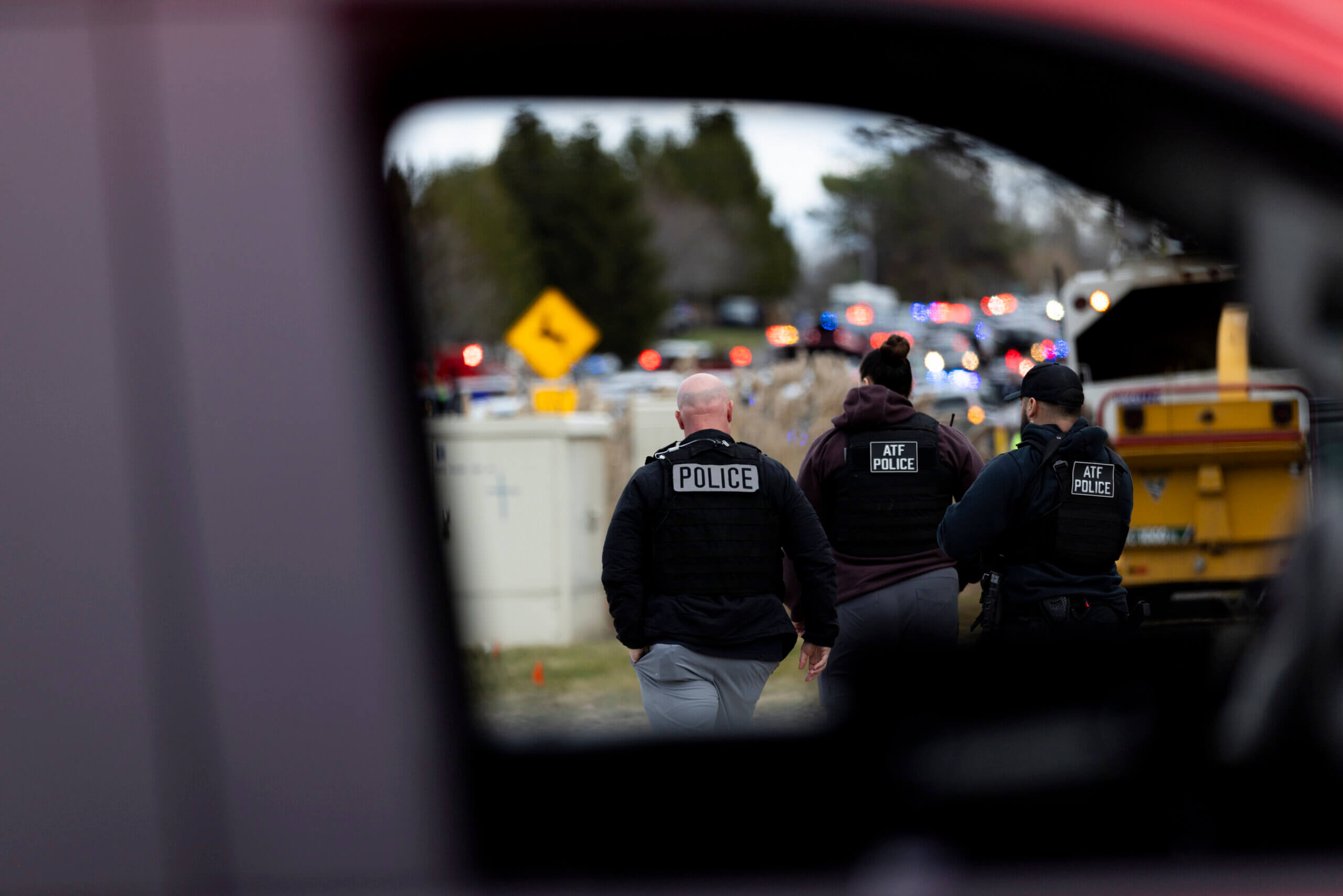
Jewish security professionals say the attack on Temple Israel in the Detroit suburbs Thursday highlights a need for Jewish institutions to prepare for more such “two-staged” assaults in which attackers use both a vehicle and weapons, as the threat of antisemitic violence grows following the Israel-U.S. launch of war on Iran.
“We crossed a threshold yesterday in terms of the way we think about Jewish security,” said Mitch Silber, who runs the Community Security Initiative in New York City. His organization is considering helping to pay for synagogues around the city to have at least two guards capable of stopping assailants who are carrying knives or guns.
Right now, some synagogues in the city only have a single unarmed guard intended to serve as a deterrent. “You need to have not one but multiple armed guards on the external part of the institution certainly for as long as the war continues,” Silber said. “An unarmed guard is insufficient given the nature of the threats we seem to be facing.”
But following years of massive investments in security infrastructure and a rising number of antisemitic incidents, many Jewish leaders say they were saddened but unsurprised by the attack on Temple Israel, in which an assailant armed with a rifle and smoke bombs drove his truck into the building before being shot and killed by a security guard, and already feel prepared to address such threats.
“The Jewish people are constantly attacked,” said Rabbi Natalie Shribman of Temple Kol Ami in West Bloomfield, Michigan, located just half a mile from Temple Israel. “So unfortunately, my fear remains at the same level of heightened.”
Shribman is from Pittsburgh, where a mass shooting at the Tree of Life Synagogue in 2018 killed 11 congregants. At Temple Kol Ami, the congregation already has a security guard who carries a concealed weapon.
Shribman said she would follow the West Bloomfield police department’s guidance if it recommends additional security — but so far, it hasn’t recommended any changes.
Years of investment
One reason that more synagogue leaders may not be scrambling is that many already feel prepared. “The Jewish community has been at an 11 out of 10 for many years now,” said Rusty Rosenthal, a former FBI agent who runs regional security for the Jewish Federation of Greater Washington.
Adam Zimmerman has spent the past decade teaching Hebrew school at Temple Beth Ami in Rockville, Maryland — a job description that as of late includes running security drills with police officers and keeping a constant eye on the door.
When he enters the building, he passes multiple armed guards.
“We get so used to it that sometimes we don’t even notice. And the fact that we’re so used to it speaks to the type of environment we’re living in,” Zimmerman said. “What the incident in Michigan exposed yesterday is that every time Jews gather anywhere for any reason, we are at risk of harm.”
“Jewish life in America is now accompanied by security presence.”
Rabbi Rick KellnerCongregation Beth Tikvah
The Jewish Federation of Detroit, which covers the region where both Temple Israel and Kol Ami are located, has one of the longest-running security programs in the Jewish community, spinning it off into an independent organization four years ago.
Temple Israel hired Danny Phillips, the guard who was injured in the attack, as its full-time security director in June and he oversaw a sophisticated operation that included a combination of in-house security team with metal detectors, guards for hire, police and even overhead drones during events like High Holiday services.
Nationwide, the Jewish community spends an estimated $765 million each year on security, according to the Jewish Federations of North America — representing an investment that surged in the aftermath of the Tree of Life shooting.
Rick Kellner, senior rabbi at Congregation Beth Tikvah in Worthington, Ohio, also said that was when his synagogue increased its security. The congregation pays police officers who are regularly stationed outside the synagogue.
“Jewish life in America is now accompanied by security presence,” Kellner said. “That is a reality that we are facing and living with every day.”
Iran war prompted new measures
Even before Thursday’s attack, Kellner said his congregation had taken extra precautions in recent weeks amid heightened security concerns related to the Iran war. Secure Community Network, which coordinates nationwide security for synagogues and other Jewish institutions, said during a briefing on Friday that the number of violent social media posts aimed at Jews nearly doubled in the week after the U.S. and Israel began bombing Iran and has continued to grow.
“We’ve seen a significant increase in calls for acts of violence targeted at Israel and the American Jewish community not only by Iran but also on Russian-linked forums, on al-Qaeda and Islamic State forums and white supremacist forums,” said Kerry Sleeper, chief of threat management at SCN, which sent a bulletin warning about these threats to its members on March 1.
Michael Masters, director of SCN, said that his main advice for Jewish institutions was to focus on maintaining the kind of active shooter training and “layered” physical security that has been encouraged for years — including bollards, window film and limiting public access — while increasing communication with local law enforcement.
Cost a consideration
But all these steps can come at a steep cost. Temple Israel advertises itself as the nation’s largest Reform synagogue, with more than 3,000 families, but smaller congregations and Jewish nonprofits can struggle to afford the $90,000 to $160,000 it can cost each year for an armed security guard or director.
Even properly installed bollards meant to stop vehicles can also cost thousands of dollars and require government approval to be installed on sidewalks outside of buildings.
A poll of Conservative synagogues last year found that most congregations assessed a separate fee to members for security costs, and some charged participants for security at life cycle events like bar and bat mitzvahs.
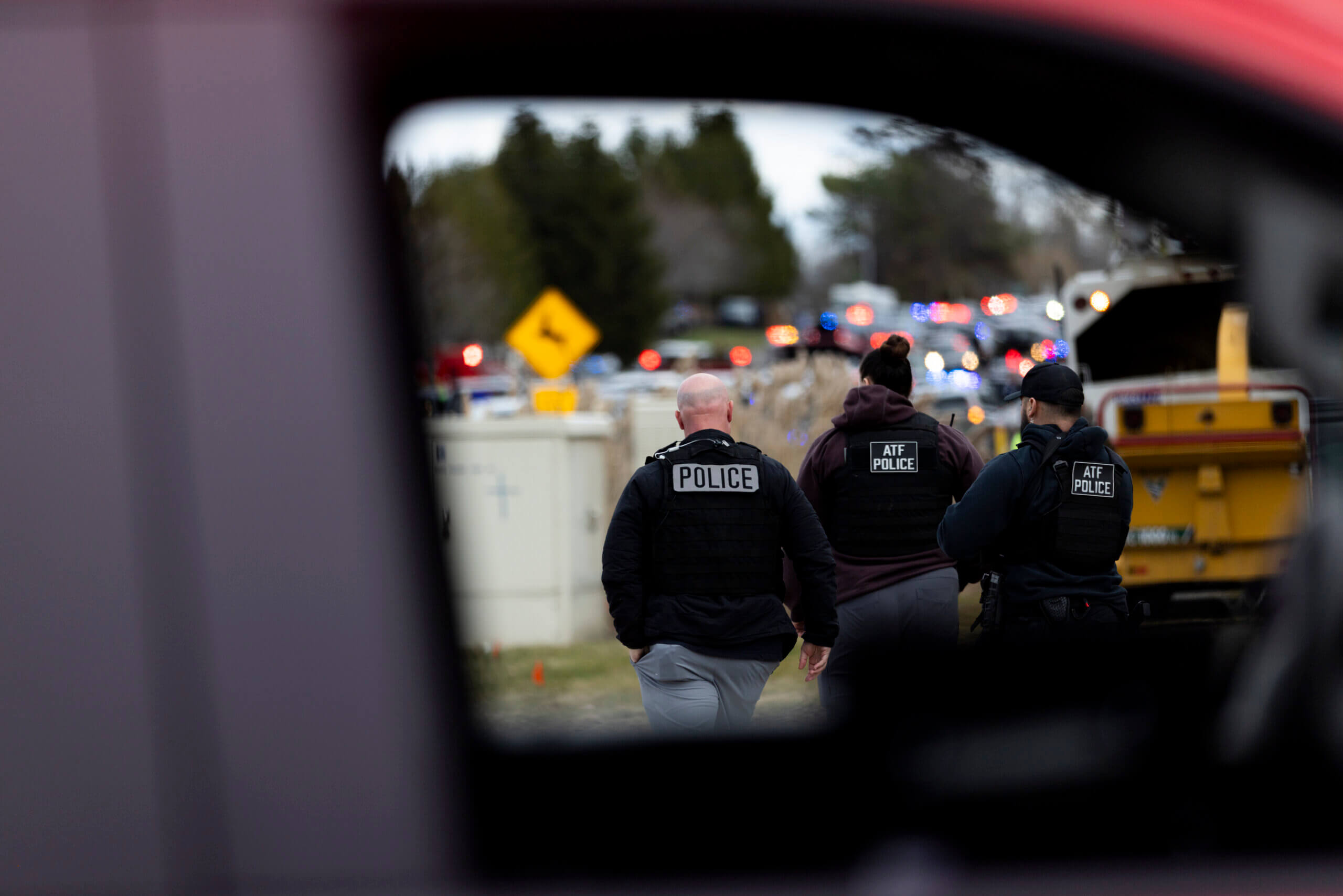
Millions of dollars in security costs are covered by the federal government in the form of grants from the Department of Homeland Security, but those dollars have been repeatedly tied up during the second Trump administration. They were initially frozen as an apparent cost-cutting measure, before being partly released last June after the shooting at the Capital Jewish Museum in D.C. and the fire attack in Boulder, Colorado.
The federal government subsequently added restrictions to the grants, including a requirement that synagogues receiving the funding eliminate diversity programs and cooperate with immigration enforcement — requirements some congregations have deemed intolerable — and they’ve again been frozen after Congress failed to fund DHS.
Gary Togrow, chair of the Jewish Federations of North America, said on Friday that the money should be released and the total pool increased to $1 billion. He and other leaders have also called for more flexibility so synagogues can use them to pay for more security in addition to camera systems and physical infrastructure improvements.
While much of the conversation about security in the aftermath of Temple Israel has suggested a certain fatalism that threats of antisemitic violence will persist, some leaders have focused on a simpler appeal: discouraging the attacks themselves.
Rabbi Josh Weinberg, a vice president of the Union for Reform Judaism, wrote an article Friday titled: “Stop Shooting at Synagogues,” referencing both the Temple Israel attack in addition to those in Canada and Norway.
He said that while the Temple Israel attacker’s motive remains unclear, his assault felt like yet another sign that anger at the Israeli government is being directed toward Jews.
“Attacking synagogues is not OK. And don’t blame kids at preschool for war,” Weinberg said in an interview. “I mean, that’s not terribly profound.”
The post Synagogues size up security after Michigan attack amid intensifying risks appeared first on The Forward.
Uncategorized
Boston suburb votes to divest from Israel
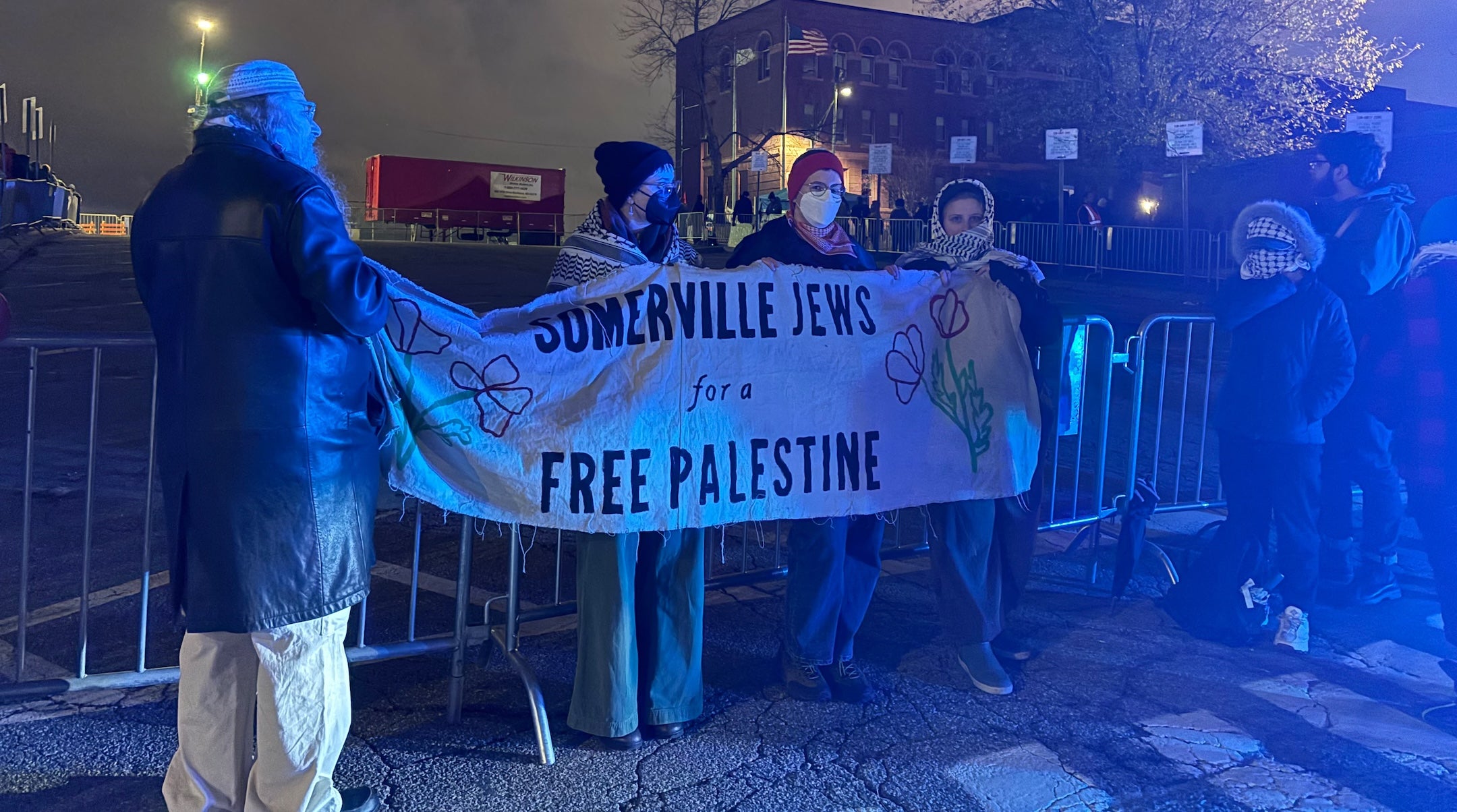
(JTA) — SOMERVILLE, Mass. — The City Council in this city north of Boston voted 10-1 Thursday night to ban the municipality from doing business with companies complicit in humanitarian violations, specifically naming those operating in “Israel and Palestine.”
Councilor Kristen Strezo cast the only opposing vote on the 11-member board.
Opponents of the ordinance fear that in execution it would be akin to a boycott of Israel, and as such would create a negative environment for the city’s Jewish and Israeli residents. The ban only involves companies that work with the municipality and does not impact companies that operate privately in Somerville. It also excludes sole proprietors (individuals operating as companies).
Somerville Mayor Jake Wilson’s office said given that the ordinance passed with a veto-proof majority, the measure is now considered final.
The ordinance was originally introduced in June by Councilors Ben Ewen-Campen and Ben Wheeler, after the City Council voted in November 2025 to implement ballot Question 3 on Israel divestment, which had been approved by 55.7% of voters earlier that month. Question 3 spoke of banning businesses that sustain “Israel’s apartheid, genocide, and illegal occupation of Palestine.”
During his campaign in 2025, Wilson did not endorse Question 3.
Nine councilors on Thursday night offered comments in advance of the vote.
Ewen-Campen, who wrote and revised the ordinance along with Wheeler, spoke about the importance of a Massachusetts city passing an ordinance about a country across the world, especially at a time when the federal government has clamped down on pro-Palestinian student protesters, noting two incidents of protesters being detained by ICE allegedly for speaking against Israel.
“I think the reason that people want us to be quiet about it is because when you do talk about it, there is just no way to justify it,” Ewen-Campen said.
“I am not under any illusion that Somerville is going to have some enormous impact on the world [by passing this ordinance], but I do think that all of us collectively deciding to be silent about this does have an impact on the world,” he said. “That is why I think it is worth it to have taken this action, and that is why I have asked for all of your support tonight.”
Strezo invoked the Holocaust to explain why she considered the ban antisemitic, referring to Kristallnacht, the Nov. 9-10, 1938, pogrom against Jews in Germany and Austria.
“A few years before Kristallnacht, the Nazis worked to deter the public from shopping at Jewish businesses,” she said. “Their efforts started in moments like tonight.” On behalf of her Jewish community, Strezo emphasized that the ordinance “makes us feel targeted. It makes us feel unsafe. It makes us feel unwelcome.”
As she spoke, members of the group Somerville for Palestine (S4P), who had gathered outside City Hall for a rally in advance of and throughout the meeting, could be heard through the window, the chanting getting increasingly louder until the words were clearly audible over Strezo’s speech: “Disclose, divest, we will not stop, we will not rest.”
“This ordinance will do nothing to solve the real conflict in the Middle East,” Strezo said. “What it will do and has been doing is make Jewish people and Israelis feel less welcome in our city spaces.”
One councilor pointed out that the ordinance, while worth passing, was not what she’d hoped. Councilor Emily Hardt said, “Supporting Palestinian human rights and standing firmly against antisemitism are not contradictory positions. I believe that both are essential to our commitment to human dignity.” She went on to say that she would have preferred an ordinance that was focused on the actions of the U.S. government, “our government,” but given that this was the ordinance up for the vote, she would support it. “I appreciate the attempts to align use of our resources with our commitments to the rights and dignity of all people, in Israel and Palestine and around the world,” she said.
When the vote was finalized, members of the group Somerville for Palestine and other supporters of the ordinance, many wearing keffiyehs, stood up and cheered as they left the chamber. Shalom Somerville members and others opposing the ordinance, many of whom wore white shirts with blue square pins and had stickers with “I’m not welcome here” on their chests, stood silently as most of the room emptied.
“It’s disappointing seeing councilors knowingly abdicating their responsibility,” said Sam Gechter, president of Shalom Somerville, the local community group that has been active in opposing both the 2025 ballot question and the ordinance. “[Mayor Wilson] made several promises that he would veto it during the campaign. He said he would veto anything that named a country, so we would love to see him do that.”

“It feels so clear that this is what the majority want given that ten of our councilors voted yes,” said Mo Katz-Christy, a member of S4P’s leadership and Jewish Caucus. S4P was a major advocate for the original ballot Question 3 and worked with Councilor Ewen-Campen on the ordinance.
“They passed a strong ordinance that named Israel and Palestine, that named the genocide,” Katz-Christy said, as the S4P group played music in celebration behind them. “It’s targeting companies that are really bad actors.”
Under the ordinance, any vendor who is submitting a bid for the city’s business would have to certify it meets the criteria outlined in the ordinance. If their certification is contested, the city will consult the findings of a number of international organizations and lists, including the database of business enterprises maintained by the United Nations Office of the High Commissioner for Human Rights, and the divestment short-list database maintained by the American Friends Service Committee’s Investigate Project. The ordinance specifies that a company could be excluded from this prohibition should the director of finance deem that their services “are essential to the operation of the city, including by avoiding a significant financial burden.”
In the final Legislative Matters Committee meeting discussing the ordinance on Oct. 27, chief procurement officer Angela Allen, echoing the earlier sentiments of City Solicitor Cindy Amara, expressed concerns that the ordinance “would likely not sustain a legal challenge.” She noted that the city does not have the legal authority to debar bidders (prospective vendors) and that she was unsure who would be responsible for making the final call on whether or not a company met the criteria in the ordinance.
“This adds another layer of complexity that I am concerned, from a practical standpoint, could cause confusion and delay that would not be in the best interest of the city,” she said.
The vote came after several rounds of negotiations in the city’s Legislative Matters Committee, during which councilors debated the ethical and financial merits of the ordinance. The final ordinance that was voted on included updates in language that specified the companies that would be included in the ban must be “directly, knowingly and consistently” enabling or facilitating violations of humanitarian law, including in “Israel and Palestine.”
Longtime Somerville resident and Shalom Somerville member Kate Auspitz, who was present at the meeting, said, “I will never vote for any of them [city councilors] again except for Kristen Strezo… I do think it’s antisemitic, whatever they say. I think it’s denying Jews self-determination.”
Outside, in line to enter the City Council chambers, Willie Burnley Jr., a member of Boston Democratic Socialists of America who ran for mayor against Wilson last year and supported ballot Question 3, said: “I’m here to support my neighbors who are fighting for a better world, who are trying to get their city councilors to fight for the will of the people.”
This article originally appeared on JTA.org.
The post Boston suburb votes to divest from Israel appeared first on The Forward.
Uncategorized
House Democratic leader Hakeem Jeffries calls for ‘dramatic change’ in Israel policy
(JTA) — U.S. House of Representatives Minority Leader Hakeem Jeffries, a New York Democrat poised to become the chamber’s speaker in January, called for a significant shift in the U.S.-Israel relationship but stopped short of opposing defense partnerships.
“The status quo is unacceptable, and we need dramatic change,” Jeffries told reporters at a Thursday press conference.
Jeffries expressed a need for such change with respect to the West Bank, to Gaza and to a memorandum of understanding with Israel over military aid set to expire in 2028. That agreement, signed by the Obama administration in 2016, pledged $38 billion in military aid for Israel from fiscal years 2019 through 2028.
President Donald Trump has said he will wind the aid down before it is set to lapse, citing Israel’s unpopularity, and Israeli Prime Minister Benjamin Netanyahu also backs ending military aid and replacing it by strengthening U.S.-Israel military cooperation.
But when asked about recent demands from Sen. Chris Van Hollen to remove provisions on defense collaborations with Israel from the National Defense Authorization Act – the model of what Netanyahu hopes to sustain – Jeffries responded that he hadn’t spoken with the senator. Van Hollen, a Democrat from Maryland, plans to challenge Senate Minority Leader Chuck Schumer leadership of the Senate Democratic caucus when Democrats take over the chamber in January.
Instead, Jeffries said that “things have to dramatically change over in the Middle East,” without elaborating on the details of such changes. He stressed the importance of ensuring “a safe and secure Israel living side by side as a Jewish and democratic state with an independent Palestinian state that provides dignity and self-determination for the Palestinian people.” Netanyahu and much of the Israeli public oppose the establishment of a Palestinian state.
While Jeffries noted that he wasn’t saying anything he hasn’t “previously said publicly,” his decision to reiterate this need for change following the election as Democrats are set to seize control of Congress demonstrates how the party is adopting a more critical posture on Israel.
This past summer, Jeffries wrote to colleagues urging them to reject an amendment proposed by Rep. Thomas Massie, a Republican from Kentucky, that would have cut military aid to Israel. While a slight majority of Democrats voted in favor of the measure, it was defeated after getting no Republican support aside from its sponsor.
Jeffries had argued at the time that “there are more decisive ways to achieve the urgent change necessary when it comes to the far-right Netanyahu government,” warning that Massie’s amendment would have restricted Israel’s ability to confront Hamas, Hezbollah and other terror groups.
Nonetheless, Jeffries also noted in the letter that the Obama-era memorandum of understanding “expires imminently,” and that “a meaningful change in direction is needed.” Writing that Israel has a robust economy and is capable of paying for its own weapons, he said that future security arrangements “should be structured consistently with defense agreements that exist with our other Western allies.”
Since writing that letter in July in the lead-up to the midterm elections, Jeffries focused primarily on domestic issues and didn’t often address the Israeli-Palestinian conflict. On Thursday, however, the topic was back on the table.
“We’ll work as a caucus to make sure that we can bring about the just and lasting peace that Israelis and Palestinians deserve,” Jeffries said.
This article originally appeared on JTA.org.
The post House Democratic leader Hakeem Jeffries calls for ‘dramatic change’ in Israel policy appeared first on The Forward.
Uncategorized
Ahmed Moor, John Fetterman’s first challenger, envisions ‘Palestine-Israel, from the river to the sea’
(JTA) — When Ahmed Moor started his freshman year at the University of Pennsylvania in 2002, he remembers navigating an atmosphere of Islamophobia around the one-year anniversary of Sept. 11.
He recounted how as he was exiting a derelict math building known for what Moor described as its “dungeon-like” interior, he overheard a kippa-clad student commenting on the grossness of the neighborhood, noting that “it’s not like Ramallah or anything.”
“It was a tough environment,” Moor said, recalling that during a campus protest in 2003 against the Iraq war, he was met with “Go home, terrorist” and other such slogans. “You kind of build a muscle around that early on.”
More than two decades later, the 42-year-old Palestinian American writer is now Pennsylvania’s first candidate to announce a 2028 bid for Democrat John Fetterman’s U.S. Senate seat – running on a platform of dignity, equal rights and affordability.
Though still two years away, this high-stakes race could change how much support Israel gets from the Democratic Party. Fetterman, who hasn’t declared if he will run again, has irked many fellow Democrats by joining Republicans on certain issues, particularly in defending Israel, but has also maintained a powerful voice in a caucus that has held just 47 seats for the past two years. But that influence may soon dissipate, with the Democratic caucus poised to have at least 55 out of 100 seats when Congress convenes in January.
Regardless of whether Fetterman chooses to run, for Moor – a Democratic Socialists of America member from Philadelphia – to secure the seat would require a dramatic shift in voter trends across purplish Pennsylvania.
Moor enters the playing field with radically different stances on Israel and foreign policy from those that Fetterman has espoused. Moor’s priorities include stopping the funding of wars and trimming the military’s budget in general, as well as many domestic issues that Fetterman has historically supported, such as universal healthcare and childcare and affordable housing.
“The DSA presents a really good opportunity for the Democratic Party to re-energize, reinvent itself,” Moor said, describing the DSA as “a blood transfusion.”
An avowed anti-Zionist, Moor wants economic sanctions against Israel and to hold the country’s leaders accountable for what he alleges are war crimes. Ultimately, he said he hopes to see the development of one “Palestine-Israel” state that has equal rights for all — a dream that he said is rooted in American principles of emancipation.
Born in Gaza, Moor moved to Philadelphia as a child and went on to earn degrees from both Penn and Harvard, and started a career in finance. He then switched to journalism, reporting in Beirut and Egypt for The Guardian and other outlets, and co-editing the book “After Zionism: One State for Israel and Palestine.” He also spent many years in Jordan, where he launched a peer-to-peer lending organization, before returning to Philadelphia in 2021.
Looking back at his years as a college student, Moor recalled experiencing some “ambivalence about being an American, the promise of life, liberty, pursuit of happiness, the equality before the law,” particularly while he felt like people viewed him as an outsider.
But he said that things began to look up when he joined the Free Palestine Action Network, a fledgling campus group that existed before Students for Justice in Palestine.
Turning to the situation in the Middle East today, Moor said he still has family members in Gaza, as well as some in the West Bank. Many of his relatives in Gaza, he added, were killed during the war.
He noted that his aunt “was diagnosed with cancer and died a very painful death shortly after that because the hospital itself was destroyed.”
In the future, Moor said he would envision “all of Palestine-Israel, from the river to the sea” as one state with equal rights for “Jews, Palestinians, Druze” and everyone else, including “all of the East Asians who work there, who built lives there.” Lebanese areas currently under Israeli military occupation would go back to Lebanon, while the Golan Heights, captured by Israel in 1967, would go back to Syria, he added.
The leaders of this hypothetical state, according to Moor, would need “to represent everyone who lives under its authority,” with the Knesset legislating laws, the military serving all the people and Palestinians earning a right of return.
Moor compared the current phase of this conflict to mile 15 of a marathon: “Every footfall from here to the finish, 11 more miles, is painful.” Crossing the finish line, he argued, will require “the emancipation of the Palestinians, the right-sizing of our understanding of equal rights, where Jews don’t have superior rights in that country.”
Whether Moor’s Middle East positions will resonate with Pennsylvania voters when they choose their next senator in 2028 remains uncertain.
“If we look at the surveys leading up to the election, that issue didn’t come up a great deal,” Berwood Yost, a public policy expert at Franklin & Marshall College, told JTA. “It was the concerns about personal finances and economics and affordability that were largely driving voters.”
Daniel Hopkins, a political science professor at the University of Pennsylvania, told JTA that although the conflict is “highly evocative and emotive,” his polls have shown that “relatively few voters rank it as an important issue,” except in deep blue Philadelphia.
Yet even if the conflict doesn’t have a direct influence on most voters, Hopkins said that its divisiveness helps candidates distinguish themselves from rivals. For example, he continued, a stance on this subject can often serve as a shortcut to other views.
“The issue partly functions as a within-party issue that helps certain Democrats differentiate themselves from other Democrats,” he added.
For Moor, the idea of maintaining the status quo, which he described as preserving alliances just “to shore Israeli apartheid” would be inconsistent with American ideals.
He rejected the notion of a possible path forward with Gadi Eisenkot, the leader of Israel’s opposition bloc, who recently received a mandate to form a government to replace Prime Minister Benjamin Netanyahu’s ruling coalition.
“Jewish Israelis are confronted with a difficult frame now,” Moor said. “They don’t have any credible leaders who aren’t also implicated in genocide or massive war crimes.”
Asked if he considered Hamas militants to be war criminals, he responded that “everybody who’s committed a war crime is a war criminal.” But he argued that naming Hamas as such would be irrelevant, as the Israeli military had already killed most Hamas combatants, including former leader Yahya Sinwar.
Fetterman was still posting on X this week about “disarming Hamas,” noting that “this vote and voice will always follow our special ally.” Fetterman’s office did not respond to a request for comment.
Moor characterized the senator as “in the rearview mirror for Democrats,” adding that “Fetterman’s story is finished.”
Hopkins, from Penn, disagreed with that conclusion, pointing out that “no one knows whether Fetterman will seek reelection,” and that if he does so, it’s also unclear “whether he will do that as a Democrat.” Hopkins acknowledged, however, that the senator’s vote would be less powerful when it comes to legislating because of the decisive Democratic majority.
As for other possible candidates, Hopkins is looking at potential contenders such as U.S. Rep. Chris Deluzio, who represents southwestern Pennsylvania residents in Beaver and Allegheny counties, including some Pittsburgh suburbs. He also named Conor Lamb, an attorney who served in Congress from 2018 to 2023.
Yost, from Franklin & Marshall, cited these names as well, while noting that “Fetterman has alienated a number of people in his party.”
“There’s been increasing dissatisfaction among his base, including people who voted for him,” added Yost, who directs the college’s Center for Opinion Research and its Floyd Institute for Public Policy.
But Yost also stressed that “running in a state like Pennsylvania for an office like the U.S. Senate is a significant undertaking” that requires large amounts of travel, networking and fundraising.
“Starting now is not a bad idea,” he said. “Two years will be here before you know it.”
Although voters might not be “dialed in” to the 2028 elections for a while, Penn’s Hopkins added that “now is the period of time when candidates are beginning to jockey.”
“One strategy by declaring early might be to try to tell other contenders who would be in your lane, ‘Hey, I’m in this lane,’” Hopkins said.
As for the chances of a Democratic socialist in a swing state like Pennsylvania, Hopkins didn’t rule Moor out but said that “any such individual would have an uphill climb.”
Another Democratic socialist who Moor said he finds inspiring, Chris Rabb, recently won a U.S. House seat in Pennsylvania, but he did so in a heavily Democratic district of Philadelphia, Hopkins noted.
“Pennsylvania has not often nominated candidates who are on the extremes of their party,” he said.
But Yost also acknowledged that “these days, people want to see non-politicians running,” so Moor’s novice status would not necessarily create a barrier to his success.
Despite his relative inexperience, Moor said he is reaching for the Senate seat due to his passion for foreign policy. He said he has concrete ideas for optimizing the military, by deflating a “bloated weapons program,” focusing more on drones and then reinvesting in both jobs programs and climate resilience initiatives.
Recognizing the mammoth expense that running in a state like Pennsylvania involves, Moor said that his fundraising efforts have started out strong, with a lot of “small-dollar” contributions, including from many Jewish donors.
Asked if he had a message for Jewish voters, Moor said that he would convey that “we’re Americans first” and that he believes “in the dignity agenda for all Americans.”
“Poverty is indifferent about whether you’re Jewish or Palestinian, Black, white, whatever,” he said.
This article originally appeared on JTA.org.
The post Ahmed Moor, John Fetterman’s first challenger, envisions ‘Palestine-Israel, from the river to the sea’ appeared first on The Forward.
