


Features
Joe Kent Suggests Israel Behind Charlie Kirk Assassination, Controls US Foreign Policy in Tucker Carlson Interview
Joe Kent Suggests Israel Behind Charlie Kirk Assassination, Controls US Foreign Policy in Tucker Carlson Interview
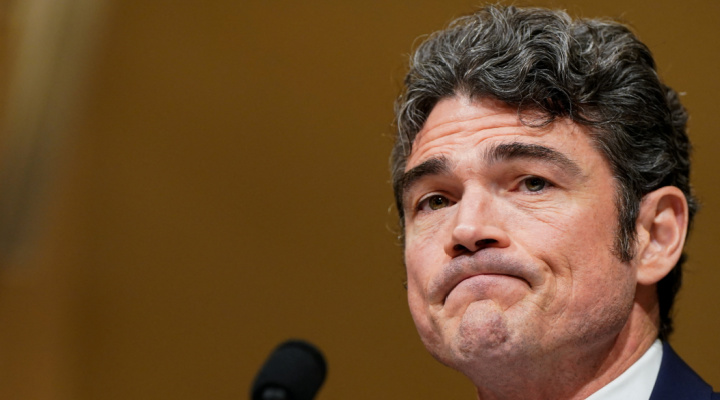
After Joe Kent, director of the US National Counterterrorism Center, resigned in protest of President Donald Trump’s military campaign against Iran, he appeared on Tucker Carlson’s podcast on Wednesday.
While on the podcast, Kent, who resigned from his position on Tuesday, argued that Israel dragged the US into the war against the Iranian regime, suggested that Israel may have been involved in the murder of conservative activist Charlie Kirk, claimed that Iran posed no imminent threat to the United States, and said that Iran was not pursuing a nuclear weapon.
Themes of Israel controlling US policy and conspiracy theories about Kirk’s assassination have become commonplace on Carlson’s podcast in recent months.
“We don’t know what happened with Charlie Kirk. I’m not saying the Israelis did this — I’m saying there are a lot of unanswered questions there, and there’s enough data to say there’s a good chance that President Trump feels he is under threat,” Kent said.
“The last time I saw Charlie Kirk on this earth was in June, in the West Wing stairway,” Kent said on Carlson’s podcast. “And he said very loudly to me … ‘Joe, stop us from getting into a war with Iran.’ Very loudly. He was single-minded.”
“So, when one of President Trump’s closest advisers who was vocally advocating against a war with Iran is suddenly publicly assassinated, and we’re not allowed to ask questions about that — it’s a data point. A data point that we need to look into,” Kent said, suggesting that Israel may have something to do with the assassination.
There has been no evidence to support claims of Israeli involvement in Kirk’s assassination. Tyler Robinson, 22, has been charged for murdering Kirk and potentially faces the death penalty. He was romantically involved with his transgender roommate, and prosecutors have reportedly argued that Kirk’s anti-trans rhetoric was a key factor that allegedly led him to shoot the Turning Point USA founder.
Kent also argued that the US is not really in charge of its own foreign policy: “Who is in charge of our policy in the Middle East? Who is in charge of when we decide to go to war or not?” he asked.
Ther former counterterrorism chief argued that Israel forced Washington’s hand by saying it would attack Iran and that the US would be forced to be caught up in Iran’s inevitable retaliation.
“The Israelis felt emboldened that no matter what they did, no matter what situation they put us in, they could go ahead and take this action, and we would just have to react. That speaks to the relationship — but also it just shows there was a lobby pushing for us to go to war,” Kent said.
In addition to claiming Israel was driving US foreign policy, he also claimed Iran was not close to achieving, or even pursuing, a nuclear-weapons capability. “No, they weren’t [on the verge of getting a nuclear weapon] — not three weeks ago when this started, and not in June [2025] either,” Kent said, referring to last year’s 12-day war between Iran and Israel
“The Iranians have had a religious ruling — a fatwa — against actually developing a nuclear weapon since 2004. That’s been in place since 2004. That’s available in the public sphere. But we also had no intelligence to indicate that that fatwa was being disobeyed or was on the cusp of being lifted,” Kent added.
Experts on Iran have widely dismissed the Iranian regime’s so-called fatwa against having nuclear weapons, noting Tehran has repeatedly lied about and tried to hide aspects of its nuclear program.
The interview occurred one day after Kent resigned from his senior intelligence position, saying he could not support the war and arguing Tehran posed “no imminent threat” to the United States. But it was Kent’s broader assertion, that pressure from Israel and pro-Israel voices influenced the decision to go to war, that especially drew swift pushback from the White House and national security experts.
In his resignation, Kent also drew parallels to the Iraq War, suggesting that similar dynamics shaped both conflicts by arguing that Israel pushed the US into the war.
“Iran posed no imminent threat to our nation, and it is clear that we started this war due to pressure from Israel and its powerful American lobby,” Kent wrote in his resignation letter.
The Trump administration forcefully disputed Kent’s claims, maintaining that the decision to strike Iran was based on credible intelligence about threats to US forces and interests in the region. Trump dismissed Kent as “weak on security,” defending the operation as necessary to deter Iranian aggression and protect American personnel and allies.
“When I read the statement, I realized that it’s a good thing that he’s out, because he said that Iran was not a threat,” Trump said. “Iran was a threat.”
Kent himself previously described Iran as a major threat that needed to be addressed.
In a September 2024 post on X, for example, he wrote that “Iran has been after Trump since January of 2020 after he ordered the targeted killing of the terrorist Qasem Soleimani. This isn’t a new threat.”
White House press secretary Karoline Leavitt lambasted Kent’s resignation letter as inaccurate.
“The absurd allegation that President Trump made this decision based on the influence of others, even foreign countries, is both insulting and laughable. President Trump has been remarkably consistent and has said for DECADES that Iran can NEVER possess a nuclear weapon,” she posted on social media.
Kent previously faced scrutiny during his US congressional runs in Washington state over links to far-right, antisemitic, and white nationalist figures, including Nick Fuentes.






Uncategorized
Why NBA Teams Start Defending Before Half Court
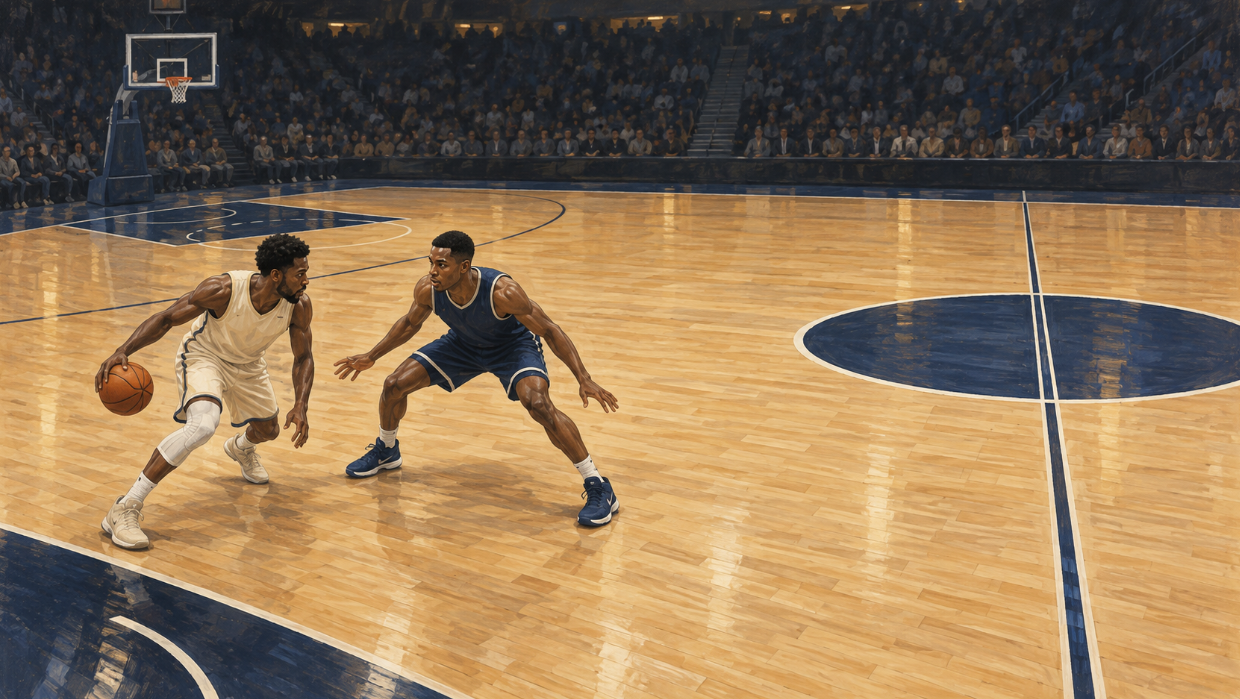
An NBA defender who meets a ball handler near the opposite baseline is trying to interfere with the possession before the offense gets organized. The immediate reward need not be a steal. Making a guard change direction, protect the ball, or find another receiver can interrupt the route into a play. But pressure has several possible results, and slowing that first journey does not necessarily slow the whole game.
In Logan Murdock’s November 2025 report on full-court defense, Phoenix Suns guard Jordan Goodwin described his aim: “Try to make them take at least six seconds off the clock.” That was his target, not a measured average. Indiana Pacers coach Rick Carlisle described another purpose: getting opponents to play faster than they prefer. Both approaches interfere with timing, though one delays the setup while the other hurries decisions.
The shot clock helps explain the difference. In a normal NBA possession following a made basket, the offense has 24 seconds, with the countdown starting when the inbound pass is legally touched on the court. It must also advance out of the backcourt within eight seconds. Crossing half court does not start a fresh shot clock. Time spent getting there leaves less time to create a shot. A defensive deflection that stays inbounds does not restart the countdown.
Defensive pressure also needs careful interpretation in basketball betting. An NBA matchup on the Bovada website cannot be reduced to whether one team presses: the combined score depends on how often both sides get the ball and what they do with their chances. A defender delaying the first pass into an offense can leave less time for a good attempt. A turnover followed by a quick basket has a different effect.
Those possibilities make defensive intensity an incomplete description of a scoring outlook. A team can force its opponent to work harder while creating quick attacking chances for itself. It can also concede an easy chance when pressure fails. Understanding the tactic means separating its purpose from its outcome, rather than treating an aggressive defender as evidence that the game must produce fewer points.
Pressure does not always mean a trap
One defender following the ball is different from two defenders closing around it. The first can contest the dribbler while teammates remain with their own assignments. A trap commits another player to the ball, so teammates elsewhere must cover the passing options and protect the basket.
A stopped dribble changes the contest. Once a player voluntarily picks up the ball, he cannot simply start dribbling again. He can still pivot, pass, or shoot, but moving away from pressure with another dribble is no longer an option. A defender can therefore restrict movement without taking possession. This is also why a guard’s choice to keep the dribble alive deserves attention: it preserves a way to move while searching for a pass.
Watch where the ball goes next. A trap can succeed by forcing an awkward pass that another defender intercepts. The players surrounding the ball do not have to be the ones who take it away. Reaching for a steal also differs from keeping the ball handler contained; abandoning position can give the guard a route past the pressure.
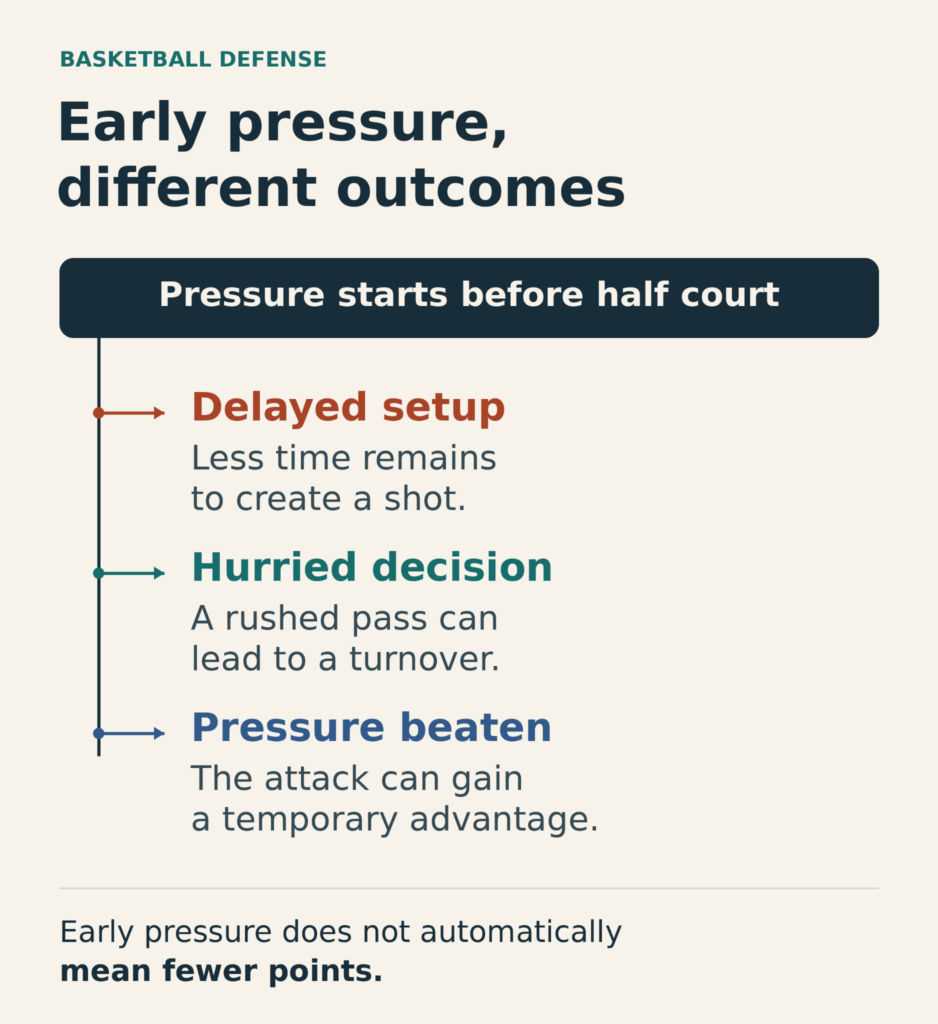
The offense has answers. In the Murdock report referenced earlier, Golden State guard Brandin Podziemski described using his body to shield the ball against smaller defenders and quickness to get beyond longer opponents. Beating the first defender can leave that player trailing, creating a temporary advantage farther upcourt. The remaining defenders then have to respond to an attack before their teammate has time to recover.
The work before a highlight
Former NBA guard Keith Bogans gives a defender’s perspective in his conversation with Vernon Maxwell. Discussing Jaden McDaniels, Bogans says that seeing a defender pick up a superstar across the court gets him excited in the way a dunk or crossover excites other viewers.
*
His reaction focuses on the challenge being accepted. The scorer has someone to deal with before reaching a preferred attacking position. Bogans also describes the recognition that such defensive work receives from teammates and coaches, even when it attracts little attention elsewhere.
The assignment does not end when the scorer passes. The defender still needs to follow the play and be ready for the ball to return. Early pressure can force a star to give up the ball without removing him from the possession. Watching the next pass shows whether the defense has actually disrupted the attack or merely moved it.
When defense creates offense
Indiana scored 19 points off turnovers in Finals Game 6 against Oklahoma City on June 19, 2025. The figure does not isolate full-court pressure.
A change of possession ends one team’s opportunity and begins another’s. The team winning the ball can attack immediately or organize its offense, depending on the space and defenders ahead. Pressure therefore cannot be assessed only by the time an opponent spends bringing the ball forward.
Look beyond the pickup point. Does the offense arrive late but still organized? Does it make a hurried pass? Does the ball handler escape and make the remaining defenders cover extra ground? The first defender can use up time without winning the ball. If the guard gets past him, watch whether the other defenders can stop the drive without leaving someone open.
Features
In new ‘Fauda’ season, the aftershocks of Oct. 7, without a thought for Gaza
By PJ Grisar September 8, 2026
This story was originally published in the Forward. Click here to get the Forward’s free email newsletters delivered to your inbox.
When Fauda Season 4 ended an eternity and a devastating war ago, our hero was at death’s door, reciting both the central prayer of Judaism, the Shema, and the Muslim Fatiha.
It was a cliffhanger with monumental implications for Doron Kavillio (Lior Raz), an Israeli Jew who spent his days undercover as a Muslim Arab — an identity crisis long in coming. Zoom out and you can see the doomed duality of Israel and Palestine, Jew and Muslim, connected in a cycle of death and more alike than they may seem.
Season 5 begins bilingually, with Hebrew and Arab definitions of the Arabic word Tha’r, blood revenge, “restoring violated honor or avenging injustice.” This concept is now the point of commonality — not how men pray, but how they seek revenge.
Welcome to a post-Oct. 7 Israel. Doron is in therapy, struggling to recall eight missing hours of his life on the day of Hamas’ attack on the Gaza envelope.
Comrades have left the country — Steve (Doron Ben-David) is protecting oligarchs in London, Sagi and Nurit are in Australia. Eli (Yaakov Zada-Daniel) is now Orthodox, living in a settlement and reeling from the murder of his wife and stepchildren at his now-torched kibbutz. When a Bedouin friend, Salem (Bian Anteer) who lost his son in the raid on Eli’s home, approaches him with a tip on the Nukhba fighter responsible, they depart for Marseille to answer the call of Tha’r.
It would hardly be Fauda if this act of vengeance didn’t give way to a much larger plot. Marseille is the staging ground for Saeed el Hatib (French-Algerian actor Hakim Djaziri), “the Sinwar of Europe,” who is recruiting sympathetic, white continentals for a fresh massacre in Israel.
Fauda has always made some viewers uncomfortable. Massively entertaining, bingeable to those of us who stream it in the Netflix aftermarket, its existence was premised on ongoing injustices in the West Bank and Gaza and the violence that bursts through their borders. (The BDS movement labelled it a “war-crimes glorifying” series;” Haaretz called it “morally dubious.”)
And yet as late as the last season it contained very real criticism of Israel’s conduct, including its costly campaigns to recover captured soldiers and the torture used to extract information on their whereabouts. The show always alluded to real operations — Cast Lead, Brother’s Keeper — in dialogue. But because it can’t merely mention an attack as raw and monumental as Oct. 7, and because it has no desire to question the response to it, it chooses to recreate its savagery.
Episodes 7 and 8, flashbacks to that day, are front-loaded with a trigger warning and a disclaimer that you can skip them and still be able to follow the main plot.
It’s hard for me to recommend those episodes. If not exactly atrocity porn, their central, race-against-time set piece is too anchored in recent events and constructed too much like an action movie. It feels in a sense exploitative, even if intended as a tribute. (To give them credit, both Lior Raz and his co-creator Avi Issacharoff, who said they “wrote from their trauma,” were on the ground helping the south of the country evacuate in the aftermath.)
The new season starts with the promise of complexity. It opens on a grieving Muslim father and shifts to a milksop accountant who worked for Hamas, seemingly tortured by Eli in a blind rage for a crime he didn’t commit. Could an excessive devotion to Tha’r, a tribal code of retribution, be the diagnosis of the show’s creators of Israeli society at this moment?
If it is, it’s not a critical one. The villains are the villains, and, most revealingly, they now number people with no connection to the conflict.
Hatib’s enlistment of white Europeans for a mass-casualty terror attack services a trite narrative of postcolonial guilt finding an outlet in the pro-Palestinian cause. It works on another level too: This fighting force is squaring off against Doron’s corps of Mizrahi Jews, whose mere presence dismantles the lie that Israelis are themselves all white colonizers, and that Israel and the European empire of yore are in any way analogous.
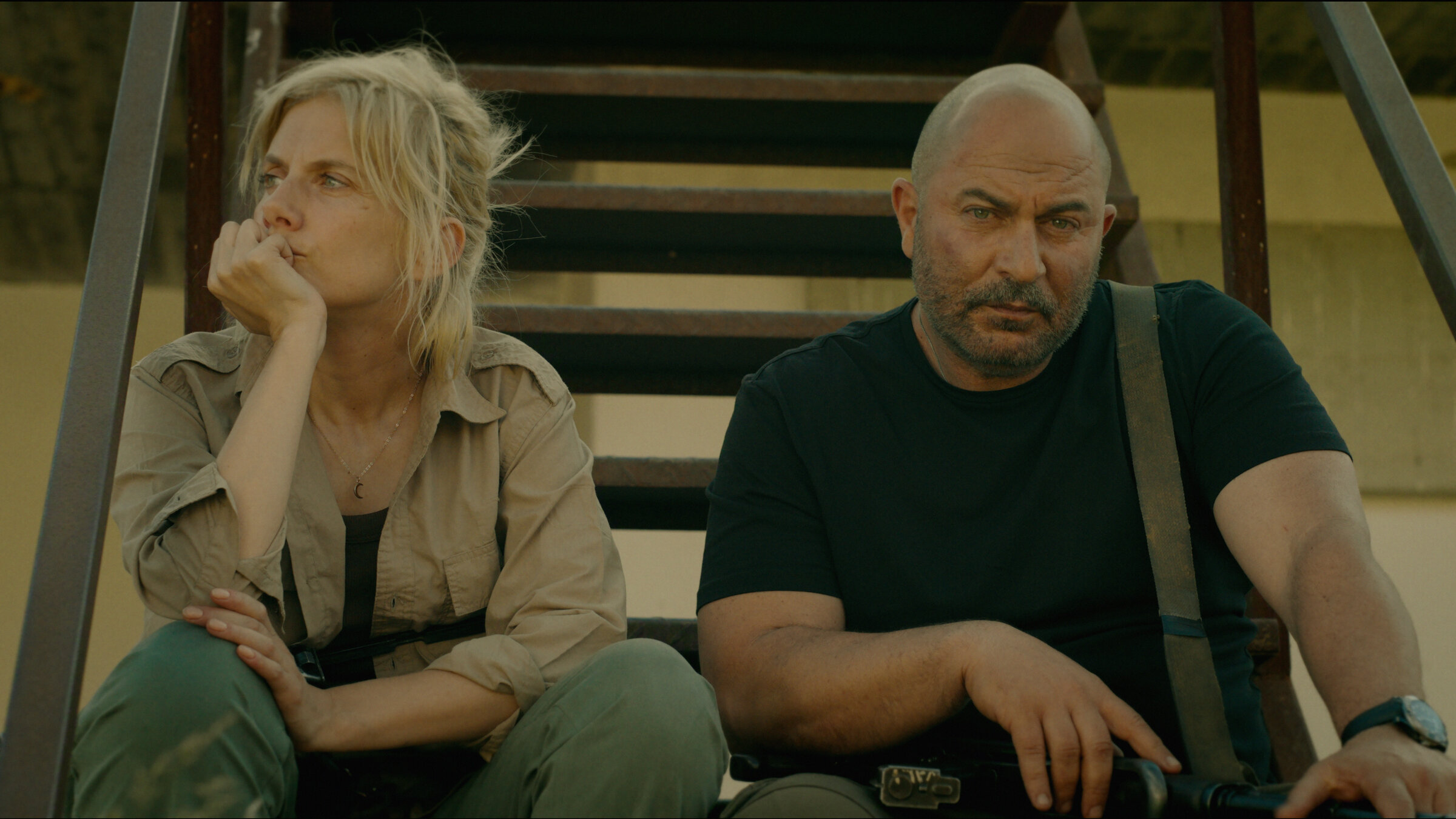
When, back at mission control, the counterterrorists speak of “suspicious-looking Europeans” who are “in their 30s,” the derision for this type of fellow traveller is palpable. Their standard bearer, Mélanie Laurent, formerly Tarantino’s “face of Jewish vengeance,” plays Anne, a blonde, “high middle-class Catholic French woman” who straps up with C-4, a keffiyeh ever-draped around her neck. Through her, and in a quite literal way, the show suggests the Western love affair with Palestinians — which in this season’s logic means Hamas — is misguided.
All the while, we never see Gaza, where much of Season 3 was set, with some among its population humanized. We never reckon with the destruction there. We hear about it, and a kind of lip service is paid to the crime of collective punishment — the sort that we hear at the end of almost every season — but it’s secondary to storytelling as elegy and justification. One could just have easily placed the Hebrew word Zachor before that first cold open: Remember what they did to us.
At one point, after a shootout with more blood spatter than I ever recall seeing on the show, Doron empties his clip into an enemy with the words “this is for October 7.” Seconds later, in a Shin Bet command room his handler Gabi (Itzik Cohen, whose between-seasons weight gain is a running joke) quips, a la Danny Glover in Lethal Weapon, “I’m too old for this.”
He’s not the only one.
In the past week I’ve chatted with some folks older than me — they don’t know each other and are largely to my right on Israel — who don’t relish the thought of another season. Not just because they don’t want to watch Oct. 7 reenacted, but because following the exploits of Israeli security agents has vastly different optics after the Hamas-Israel war, unprecedented settler violence and National Security Minister Itamar Ben-Gvir’s recently-stated ideal scenario of killing “30 or 40” Palestinians in Gaza each night.
This may well be the privilege of the diaspora, but the fatigue points to a shift in attitude that’s worth paying attention to. If these horrors are out of sight, out of mind this season, they’re top of mind to many who are watching — and many others who might have once tuned in.
PJ Grisar is a Forward culture reporter. Read full bio →
This story was originally published on the Forward.
Features
“Jerusalemites” – Photographer Sharon Gabay talks about his new book in a spectacular photo essay
By JOANNE PALMER (reprinted with permission from the New Jersey Jewish News and the Jewish Standard) If every person is a world, as our tradition tells us, then a city is filled with so many worlds that it’s impossible to imagine all those rubbing-together universes.
That’s particularly true of Jerusalem, one of the world’s oldest cities, at just about 5,000 years old, give or take; a recent demographic study, done in 2026, estimates its population at around 1,181,760. It has grown remarkably quickly; maybe people are drawn by its ancient, stony beauty, or by the history and other-worldliness that shimmers around it, or by the vibrant, modern cacophony of its diverse residents.
For the last 15 years, Sharon Gabay, a highly successful professional photographer whose bread-and-butter is stunning headshots, party pictures, and portraits of politicians and other social and legal strivers, has wandered through the city, just looking and taking pictures. He’s a 15th-generation Yerushalmi, and although now he lives in the Judean hills, in Moshav Nes Harim, near Ein Kerem and Beit Shemesh, he goes to Jerusalem every week to photograph what he sees.
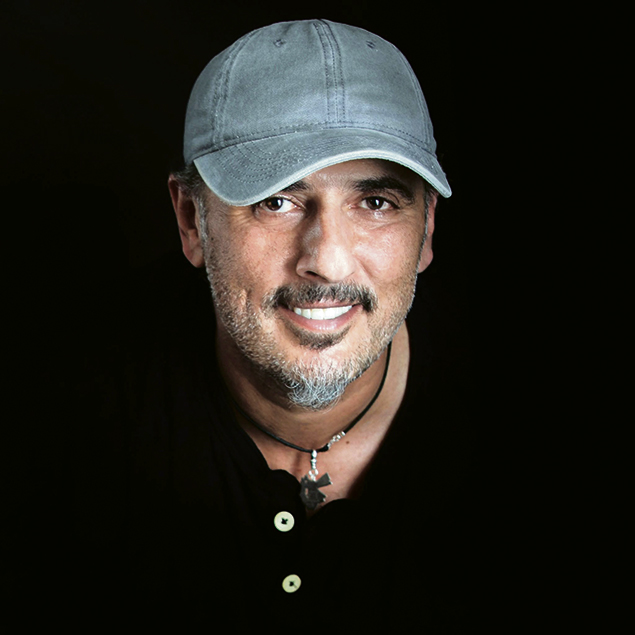
He’s published six books of photography about Jerusalem. All are both beautiful and emotional. The most recent of them, “Jerusalemites,” is the newest and perhaps the most emotional, created with love, gestated in fear, and now born into a world that perhaps surprisingly radiates with hope.
Okay. What could that possibly mean?
It means that on October 11, 2023, Mr. Gabay went to Kfar Aza. “Everybody who could do anything did something, and I wanted to do something too,” he said. Some kind of response to the barbarism and terror and grief of the Hamas attack. Kfar Aza, one of the southernmost kibbutzim in Israel, was one of the hardest hit. “Because I am a documentary photographer, I asked to join Zaka,” Israel’s emergency response, rescue, and recovery nonprofit organization, “the first time they went in. I went in with them.

“I took pictures. I had two exhibitions using these pictures” — one of them “Holocaust in the Village,” is online — “but it hurt my mind. It was a trauma for me. And I didn’t touch my camera for two years. I just stayed in my studio in Nes Harim, taking psychiatry pills and trying to forget what I saw.
“And during this time I decided to make this book. I sat on it for two years, just learning how to do it effectively.

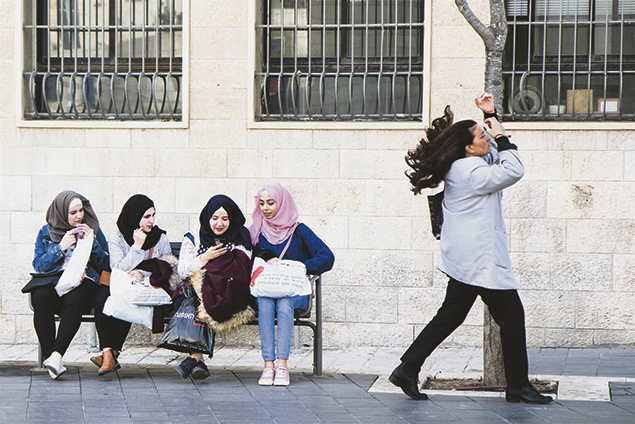
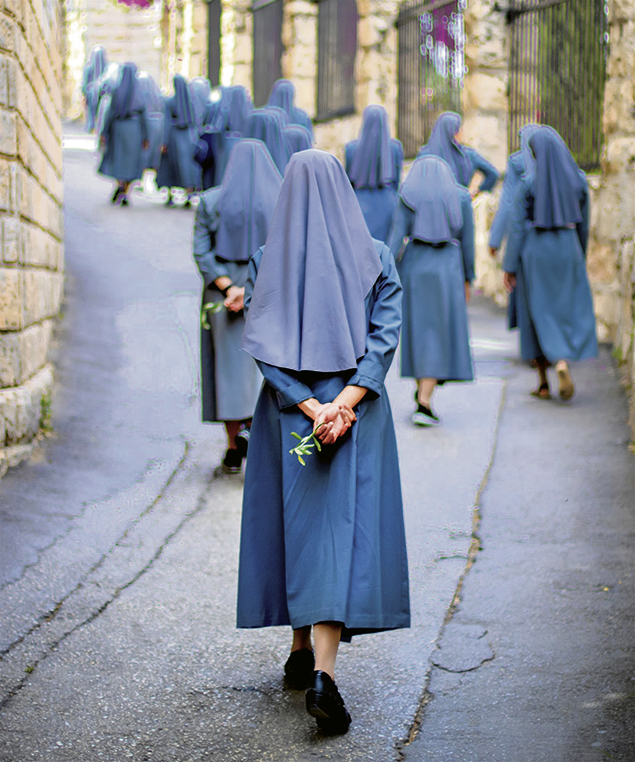
“There are almost no words in this book. Only pictures. And this is the message: We all live together 99 percent of the time. What the world sees about Jerusalem in the news is what happens maybe three or four percent of the time. All the rest of the time, all 99 percent of the people, other people around the world don’t know about. So I decided to make this book.
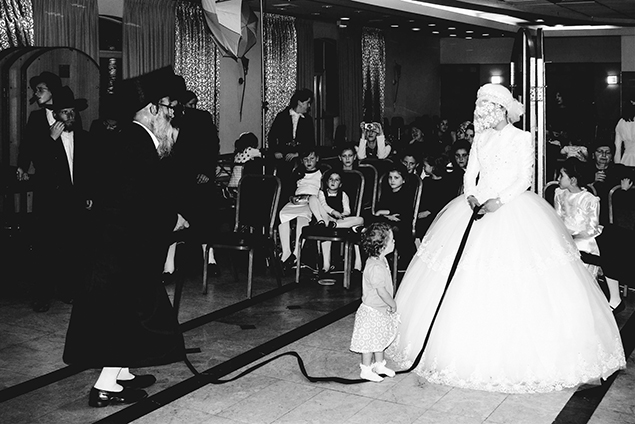
“The little text that I do have is in three languages — Hebrew, English, and Arabic. The languages spoken by the people of Jerusalem.”

The small number of Hebrew words in the text are written in a font created from the handwriting of Aner Shapira, who was 22 when he went to the Nova music festival in southern Israel on Simchat Torah — October 7, 2023. He took cover in a shelter with a group of other young Israelis, and he saved many of their lives by throwing seven explosive grenades that Hamas operatives threw into the shelter back out at the terrorists. The eighth exploded in his hand and killed him.
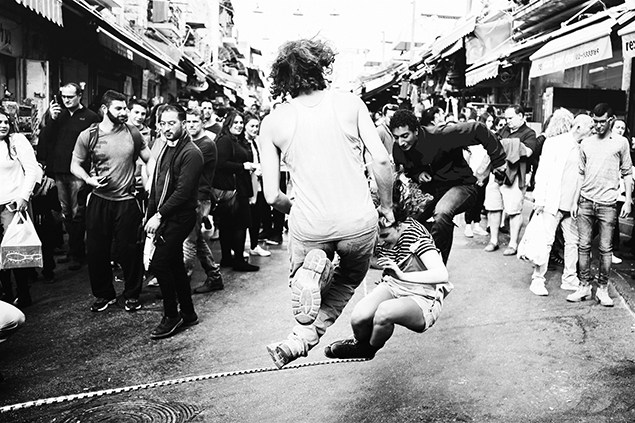
When Aner died, “he left behind a lot of songs that he wrote. They took his handwriting and made a font of it, and I chose to use it for the text.
“He was a Yerushalmi and he loved the city. He wrote about the diversity inside the city, and how you can see everything there. So I decided to put the text in his handwriting as a memorial to him.
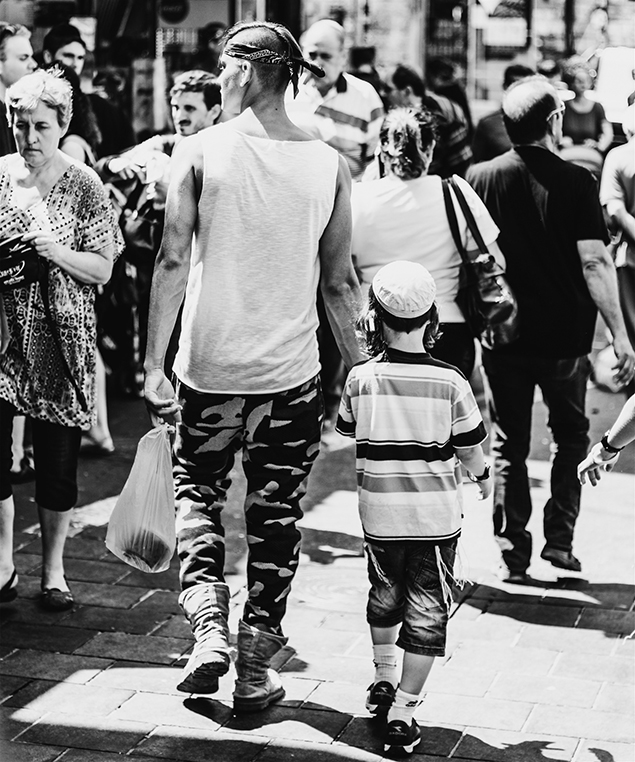
When he began to make the book, Mr. Gabay had to look through the enormous archive he’d created. For 15 years he’s roamed the city. His camera is small, old, and unthreatening, a beaten-up Fuji with a visible crack on the case. He takes pictures unobtrusively, he said. He doesn’t ask permission. He just shoots. Usually people don’t even know they’ve been photographed. Sometimes they come across pictures of themselves in his work, and sometimes they email or message him, asking for a copy. Of course, he said, he always sends one.
Culling his vast collection of images was not easy, Mr. Gabay said. Putting it together “made me go out on the streets again.” The vast majority of the photos in the book were taken before October 7, but he took some later, to fill in logical gaps. Even now, with the book finished, he wanders the city’s streets one day every week, camera in hand.
As he prepared the book, he winnowed the vast library of images to 2,000, and from there he whittled it down to 300. For that first cull, “I went through them one by one, me and my cat, hiding from the missiles when they came in, because this is the Middle East. I did it day by day by day by day, until I managed to take it from one and a half million to 2,000.”
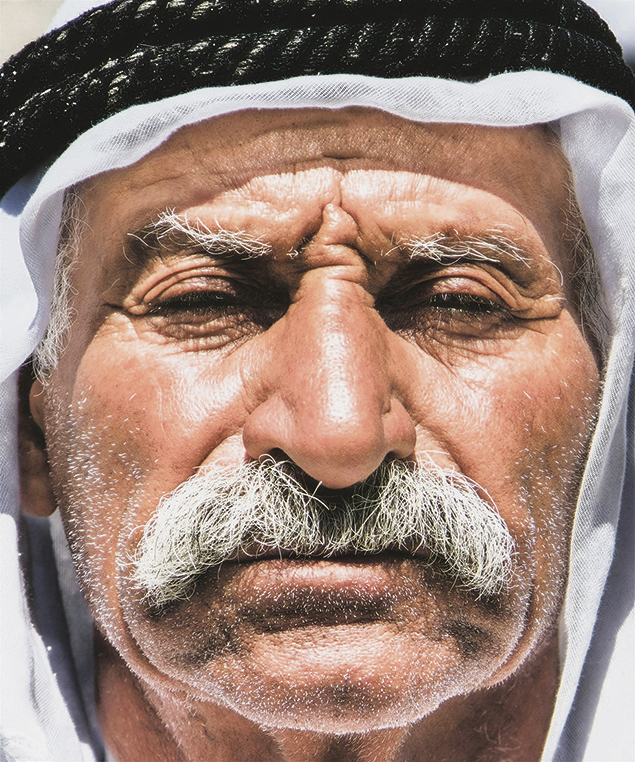
The second selection process “was much easier, because by then I knew how I wanted to do it. It is not a random collection of pictures. It is a story, from beginning to end; it is the long story of a city. So there is always a connection from each picture to the picture before and the picture after. But this took a long time.”
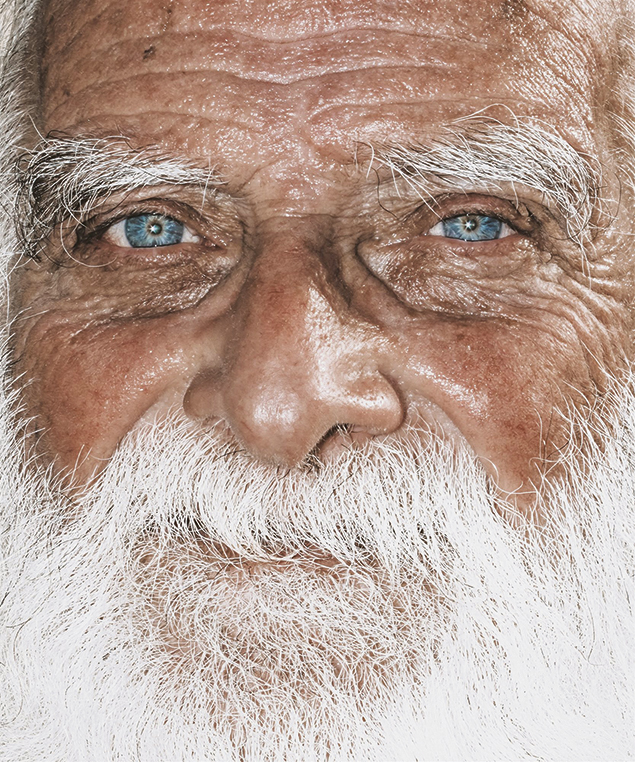
“The book turned out to be very successful. I sold all the copies before I launched it. One museum in Israel took 1,000 copies. It got to Herzog”— Israeli President Isaac Herzog —“and Huckabee” — Mike Huckabee is the U.S. ambassador to Israel — “and they both wrote letters about the book.

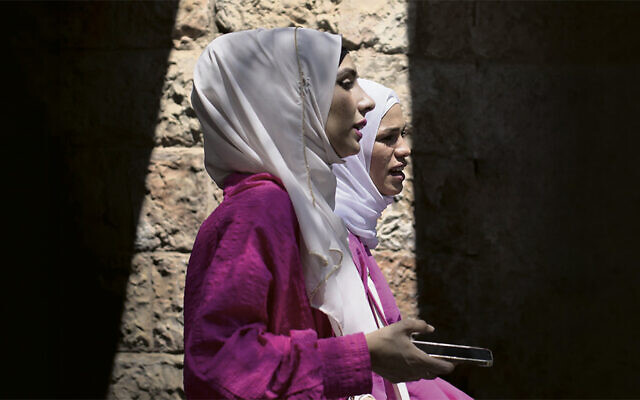
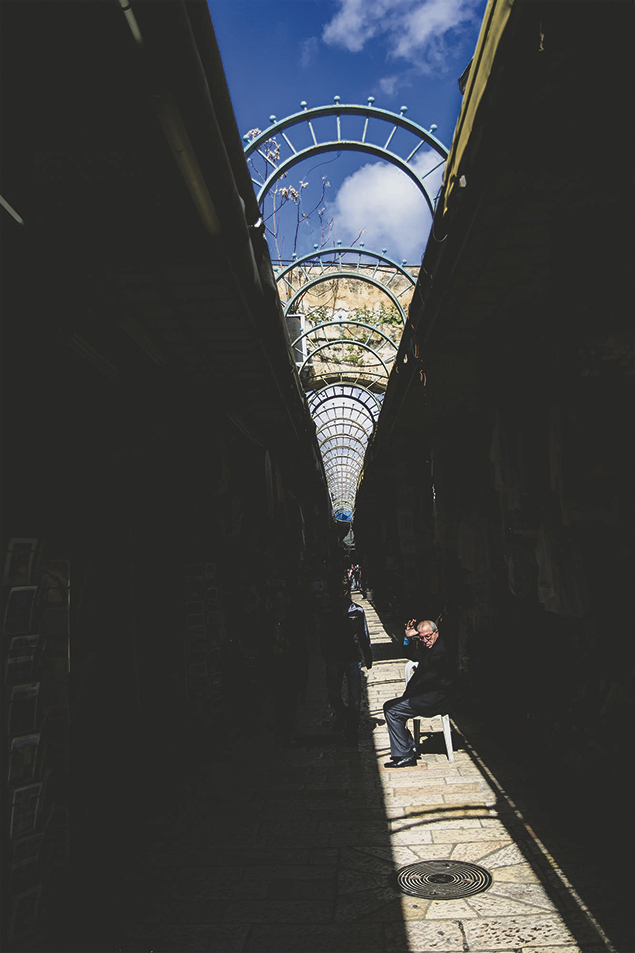
“Now I am working on the second edition. I want to distribute it to all the Jewish communities and Christian communities and Muslim communities that don’t hate us. There are no politics in this book. It is just people. The background to the pictures is all black because the only light we have in Jerusalem is the people.”
His message, Mr. Gabay said, is that “Jerusalem is not an apartheid city. Everyone lives here.
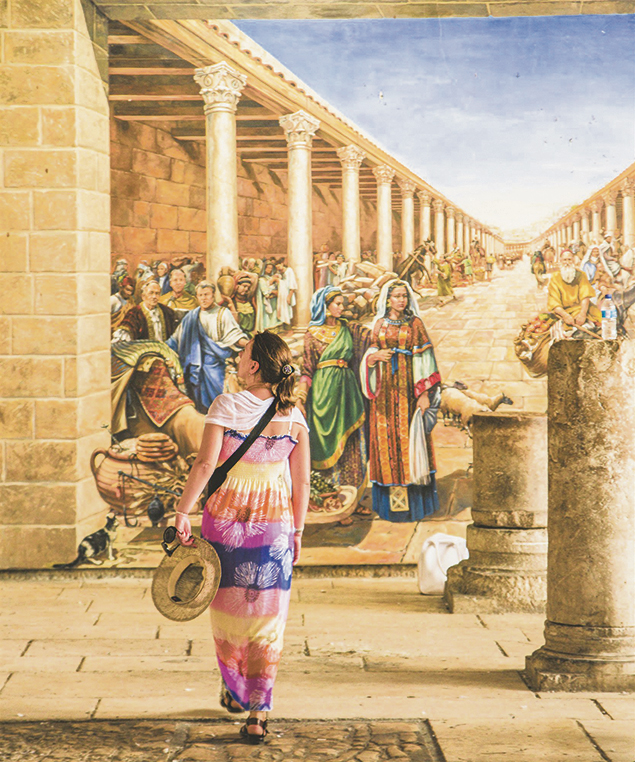
“I was raised in Jerusalem,” he said. “When we were little, my friends and I went to the Muslim quarter. Nothing happened. Once in a while there’d be some trouble, but most of the time we lived together with no trouble. My family has been here for more than 300 years. I have a picture of my great-great-grandpa in the Old City of Jerusalem. We are connected to the city, all my family is, and we really love it.
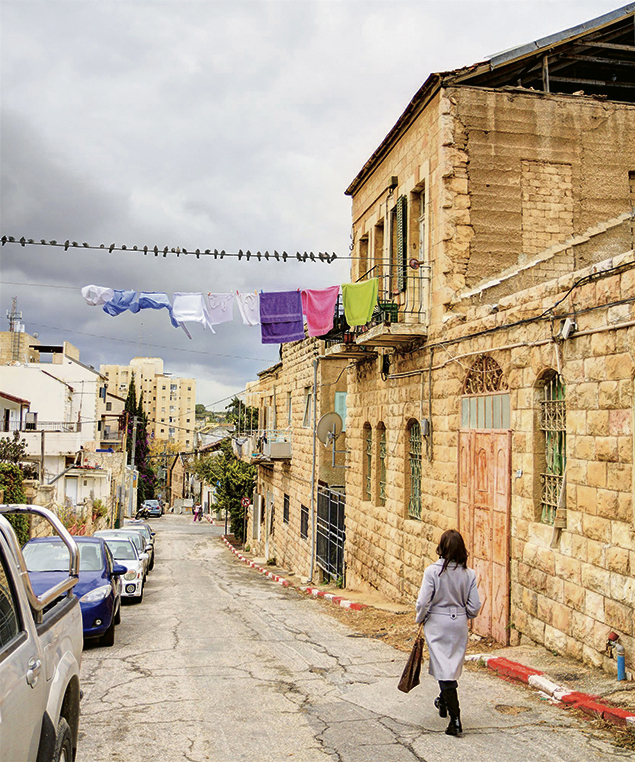
“Jerusalem should have tourists the way Vatican City does. People don’t come to Jerusalem.” His attempt to cure that problem is to show the city’s glories on social media. “I have more than 100,000 followers, and they are from all over the world,” he said. “I have Iranian followers and Saudi followers. Suddenly they see the city and they are surprised. They want to come to visit. They all of a sudden see that if they come here, they won’t be arrested because they are Muslim.
“I want to dedicate my work to telling the truth about Jerusalem.”

Mr. Gabay still takes pictures in Jerusalem because “I always go out to see if there is something new, because there is always something new to take pictures of in Jerusalem.”

He also takes pictures of politicians, and that’s a particularly busy area now because of the Israeli election set for October 27. “Today I had a member of the Knesset from Ram, the Muslim party. Mansour Abbas’s party. They want to participate in Israeli politics. They say, ‘We have a life here, and we want to live.’ And on the other side, I did a lot of people from the government we have now. Which, you know, is not the best government we’ve ever had.
“I tell them to their faces what I’m thinking. They know me. They know that I have a big mouth, and that I never, ever lie. So every politician from every side, even the one who was here today, sees the book. And I’ve never had anyone ever say that it’s one-sided or that it doesn’t tell the truth. It’s about all the tribes of Israel.
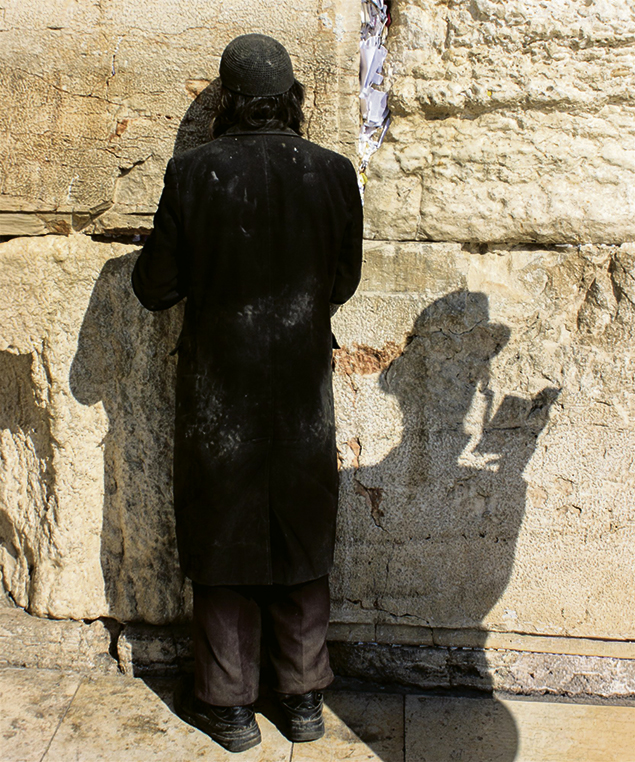
“I’ve put all my knowledge about Jerusalem and its people in the book, and I try to bring in exactly what happens in real life. I don’t try to stage anything. I am a viewer. I come. I see. I take a picture, and I save it. And people can see what life is like in Jerusalem.
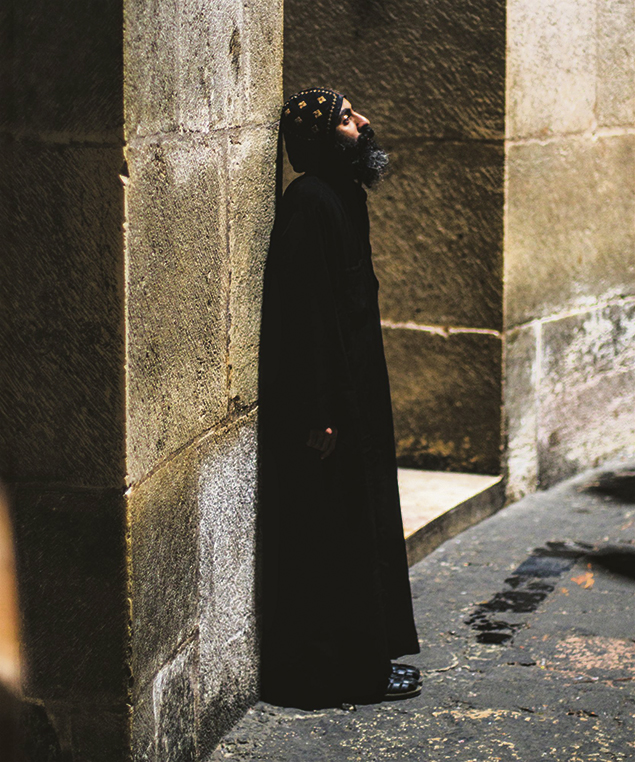
Mr. Gabay also spends a great deal of time doing pro bono work. He takes photos for “At Eye Level,” a nonprofit that works with people with autism. His website showcases much of who he is and what he does; readers can learn more about his book here.
He has a traveling exhibit for the book; the photos can be printed locally so there are no shipping or customs costs, and he often comes to speak in the United States, talking about “Jerusalem and its unique human diversity.
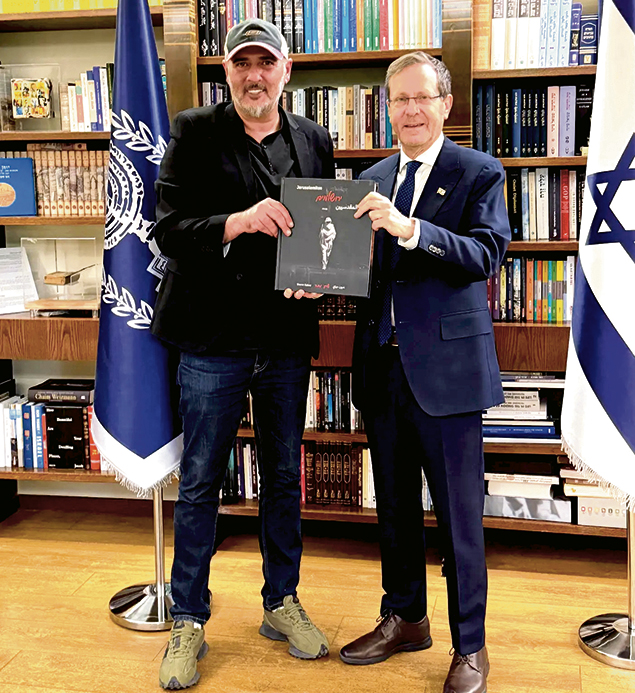
“This book, ‘Jerusalemites,’ is about hope,” he said. “It tells people around the world that what you know about Jerusalem isn’t right. We live together, day by day, all of us, everyone. Yes, we have been at war for three years, but Jerusalem is still vibrating.
“Jerusalem is a hope that if you let people just live, they can live together, and they can make it a great city.”
