


Uncategorized
How New York Jews made pickles a big dill
The Pickled City: The Story of New York Pickles
By Paul van Ravestein and Monique Mulder
Chronicle Books, 224 pages, $27
“Pickles are a favorite food in Jewtown,” muckraker Jacob Riis, referring to the Lower East Side, wrote in How the Other Half Lives, his seminal exposé on poverty. “They are filling and keep the children from crying with hunger. Those who have stomachs like ostriches thrive in spite of them and grow strong — plain proof that they are good to eat.”
Other thinkers from the turn of the last century disagreed, one lamenting, of the children of New York who got their meals from pushcarts, “it speaks volumes for their digestive powers that they don’t die at once.” That was Teddy Roosevelt.
But appropriately for a preserved foodstuff, pickles have had a remarkably long cultural shelf life. The Pickled City: The Story of New York Pickles, a new coffee table book about the ubiquitous cukes, reaches deep into the barrel to chronicle the rise of the pickling industry, giving pride of place to the Jewish immigrants who sealed the business for posterity.
The book is the work of Paul van Ravestein and Monique Mulder of the Dutch branding company Mattmo, and is a successor to their previous book De Zure Stad (The Sour City) about the pickle history of the Netherlands, pioneered by a different set of Jewish immigrants who were, overwhelmingly, murdered in the Shoah.
The Pickled City is a brighter work, though in the early going its emphasis on Jews, stated early and often, is a bit of a head scratcher. Going back to Mesopotamia for early pickling practices, and outlining the largely gentile-owned pickle businesses in the U.S. (the first American pickle outfit, the William Underwood Company, trademarked devilled ham) the Jews appear to be relative latecomers. It was Dutch settlers in what was then New Amsterdam who kickstarted the process of farming and preserving cucumbers.
An earlier wave of German immigrants brought pickle culture to Manhattan before Eastern European Jews took to their pushcarts. But the Jews brought a piquant innovation to their pickles, brining them not in vinegar, but salt water with dill and garlic: the kosher pickle we all know. That variety soon became a bestseller even among the goyische operations like Heinz, a business that was early to apply for kosher certification.
The Jewish love affair with pickles was itself not novel. The Talmud mentions pickled veg as a symbol of abundance and survival and, per van Ravestein and Mulder, the “transformation through pickling — turning a simple, earthy root into a tangy, vibrant dish — was often seen as a metaphor for renewal and the endurance of the Jewish people through adversity.”
We see the enterprise, in pages of archival photos and maps of the pickle shops of yesteryear alongside long-running institutions like Russ & Daughters and Katz’s.
At times, beyond the handsome packaging of the book, the branding agency origins of the authors stick out: A primer on B&G pickles reports their $2.16 billion in net sales, and calls it a “testament to entrepreneurial spirit and innovation in the food industry.” But there are just as many colorful stories that don’t read like investor reports.
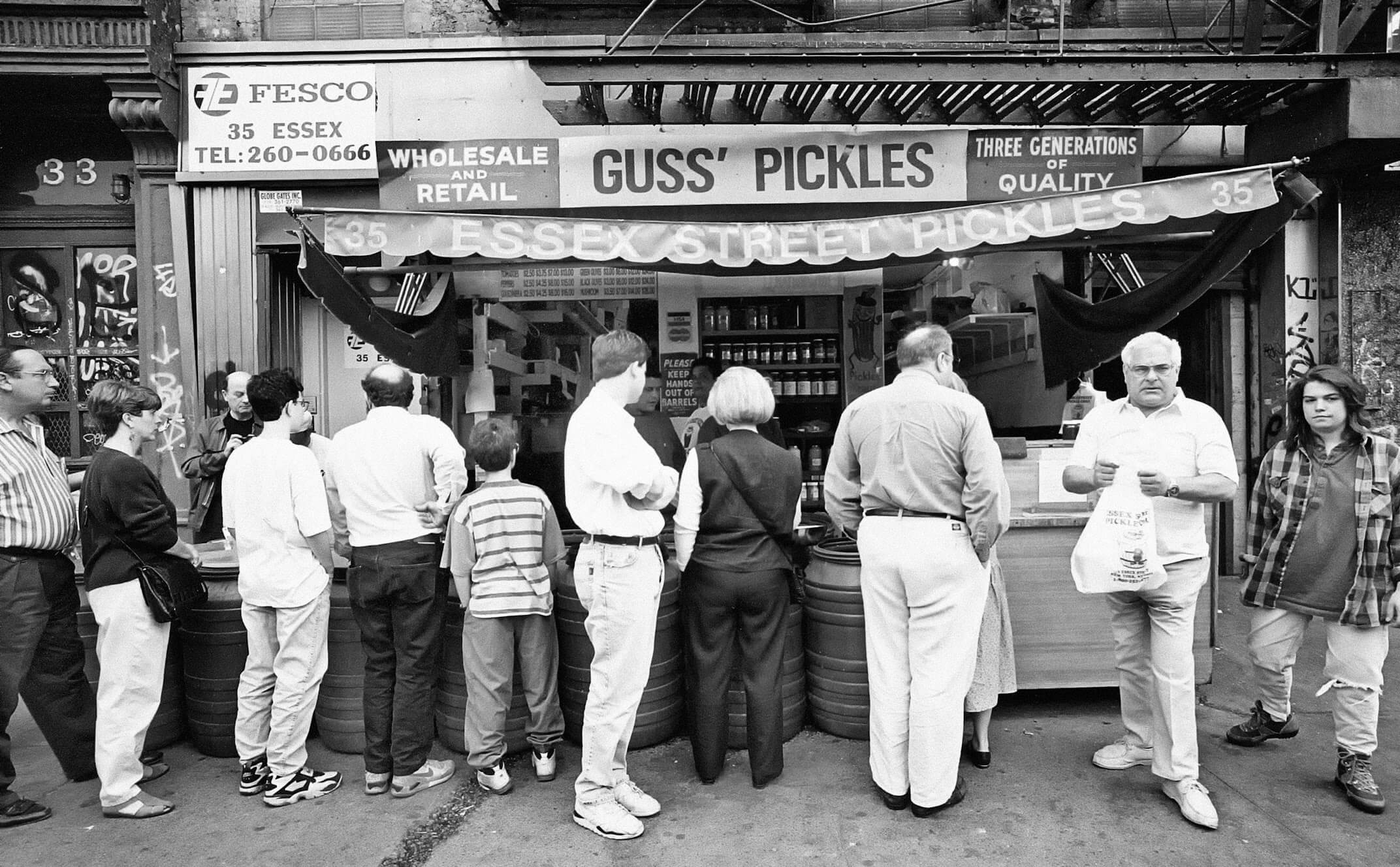
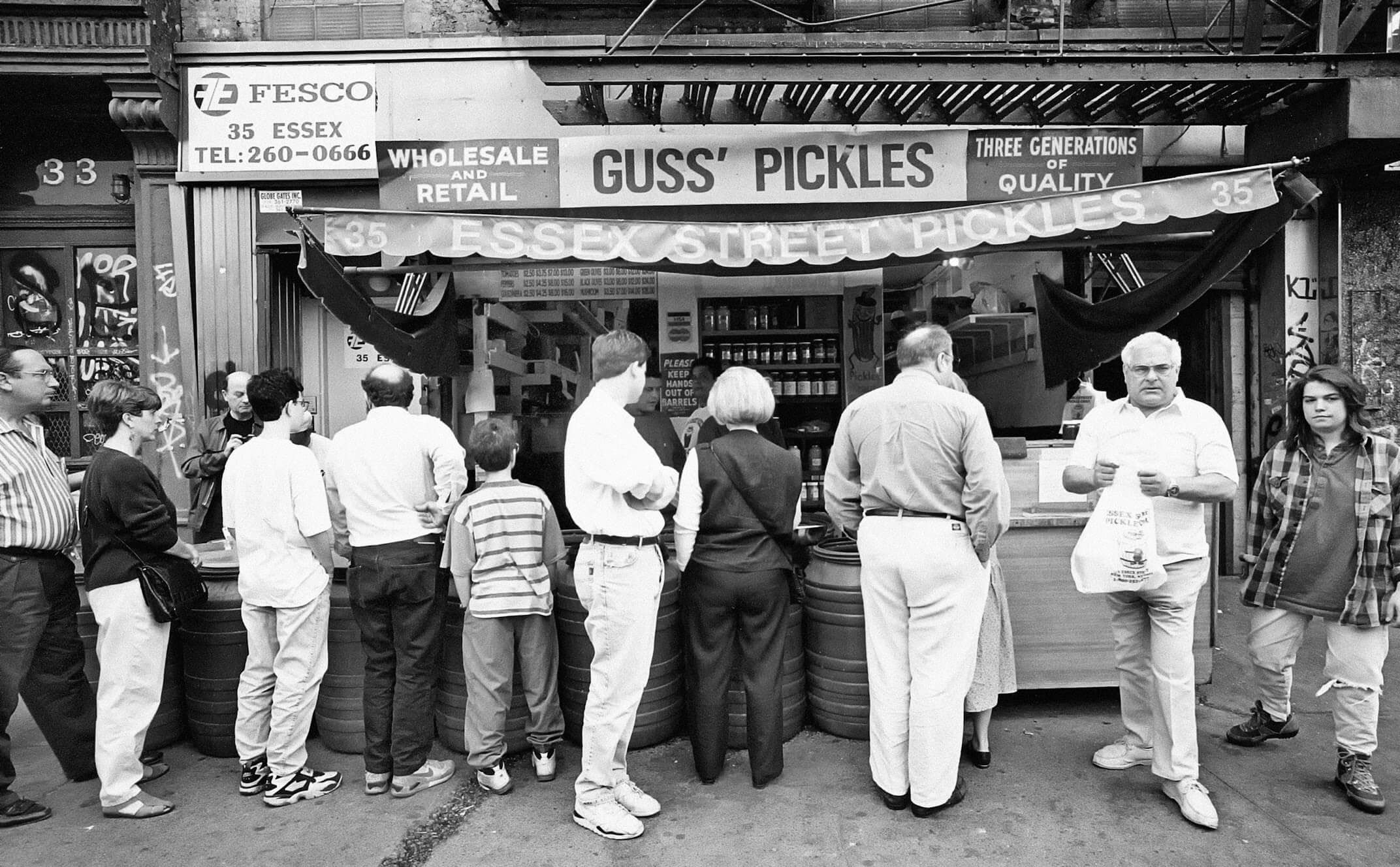
We learn, for instance, that Izzy Guss, of Guss’ pickles, beat out the competition after a neighbor in his tenement offered to hook his cart up to electricity with an extension cord, giving the cart a light and allowing Guss to sell at night. (We’re told the cord was cut when Guss refused to marry the neighbor’s daughter.)
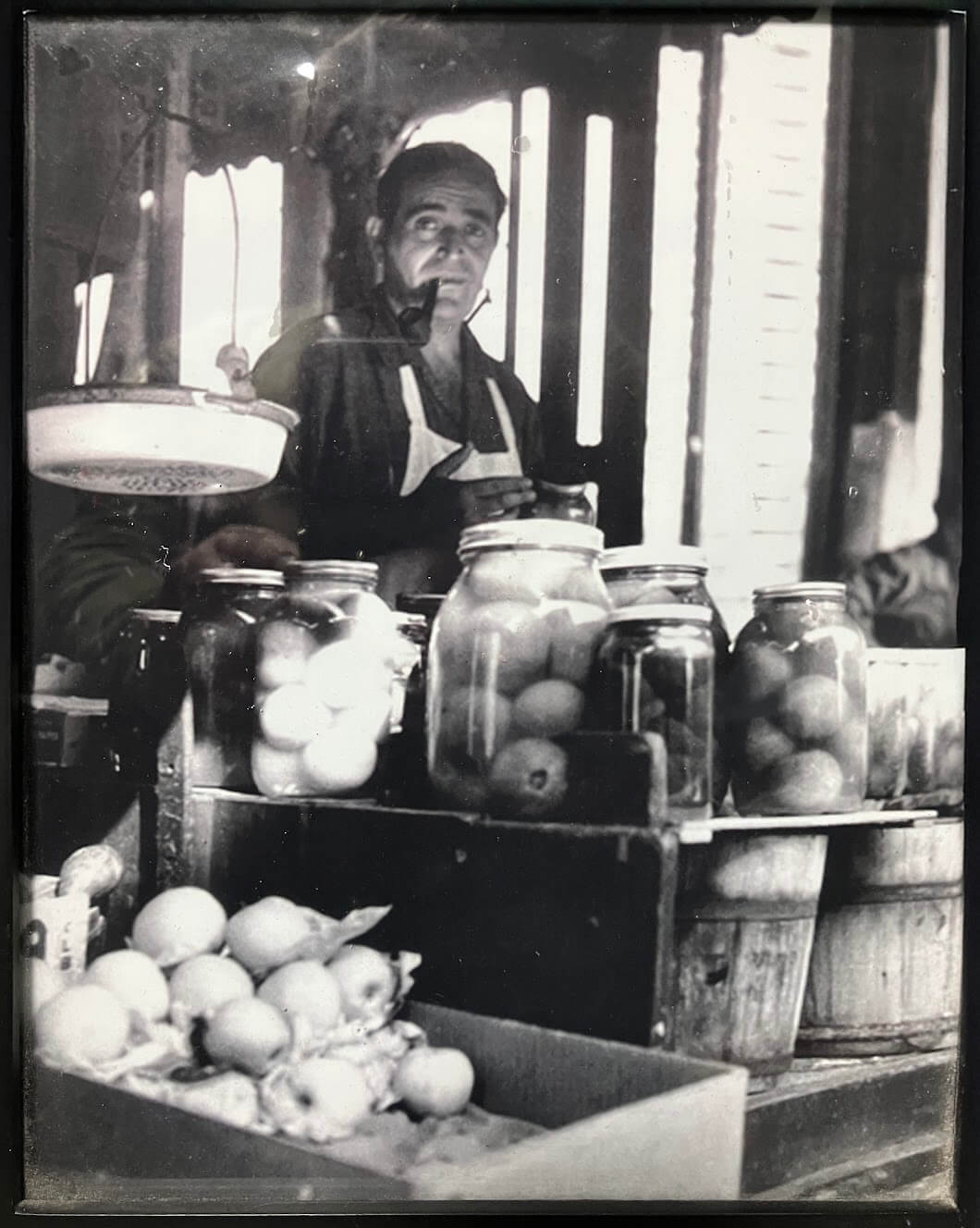
The book also touches on the pickling history of Long Island, with a mention of a Samuel Ballton — Pickle King of Greenlawn, a formerly enslaved man and Union veteran who produced 1.5 million pickles in a single season. The industry in Syosset was dealt a major blow with a blight called the “white pickle” disease, and subsequently pivoted to potatoes.
Even with these New York histories, the book often crosses Delancey into a wider world, making a kumbaya case for pickles as a conduit for cultural exchange.
Japanese pickled plums, Indonesian atjar and Indian chutneys are given space toward the back, but their current imprint in New York, on the same streets that once held tenements and peddlers, is oddly glossed over. (I could have tipped them off to the Astoria bagel shop that serves beef bulgogi and kimchi sandwiches.)
“For Jewish families fleeing persecution, pickling was more than a way to save food — it was a way to preserve identity and heritage,” the authors write.
This is not an exclusively Jewish phenomenon. There are 8 million stories in the pickled city. This book cracks the lid, but only skims the surface.
The post How New York Jews made pickles a big dill appeared first on The Forward.
Uncategorized
Rabbi who coached Adam Brody for ‘Nobody Wants This’ calls him ‘ignorant Jew’ over Gaza ‘genocide’ comments
(JTA) — The rabbi who coached Adam Brody for Netflix’s “Nobody Wants This” has bashed him for saying that Israel committed genocide in Gaza.
Steve Leder, the former senior rabbi of Wilshire Boulevard Temple in Los Angeles, served as a consultant on depictions of Judaism for Season 1 of “Nobody Wants This,” a rom-com in which Brody plays a rabbi who falls for an agnostic non-Jewish podcaster.
Leder denounced Brody on Wednesday over recent comments in which the Jewish actor for the first time publicly expressed his views on Israel’s actions in Gaza. Brody told GQ, “Put me down as thinking it’s a genocide. Put me down as wanting a free Palestine.”
Leder said in an Instagram video that Brody’s statements were “truly shocking,” “flippant” and “disgusting,” asserting his own view that “there is no genocide in Gaza.”
“You, by your own admission, are a relatively ignorant Jew, and your ignorance really showed the other day,” said Leder. “If you’re going to use a word like genocide, you ought to know what it means.”
Leder appeared to be referring to Brody’s previous descriptions of his limited Jewish education. Brody has said he is an atheist who “barely got bar mitzvahed and retained nothing from it,” adding that he prepared for the role of rabbi Noah Roklov in “Nobody Wants This” by attending a Shabbat service and working through books, podcasts and documentaries about Judaism.
Brody played high-profile Jewish characters including Seth Cohen in “The O.C.” and Seth Morris in “Fleishman Is in Trouble” before “Nobody Wants This,” which returns for a third season on Oct. 22.
The show itself has conspicuously avoided the subject of Israel. “Nobody Wants This” creator Erin Foster — who converted to Judaism in Leder’s synagogue — told The Free Press last year that she made a deliberate choice not to deal with the issue.
“We never say Israel or Palestine in the show, and that’s intentional because I think it would be a distraction and that this is just not the show to tell that story,” said Foster.
Brody told GQ that the Gaza war, alongside other national and global crises in recent years, revealed that he and his Hollywood peers were not as “like-minded” as he previously believed.
“Between COVID, a second Trump term, Israel-Gaza, it’s really brought out some different beliefs that I was ignorant to, and then disheartened by,” he said.
Israel’s actions in Gaza have divided the entertainment industry — and Jewish stars. While celebrities such as Jerry Seinfeld, Gal Gadot and Amy Schumer have voiced support for Israel since the Hamas attacks on Oct. 7, 2023, other Jewish actors have said that Israel subsequently committed genocide, including Hannah Einbinder and Wallace Shawn.
The genocide accusation is heavily disputed. A United Nations Commission of Inquiry, along with international and Israeli human rights groups, has concluded that Israel’s actions in Gaza fit that description. However, the International Court of Justice has not yet issued a final judgment on allegations of genocide brought by South Africa against Israel. Israel rejects the accusation.
The post Rabbi who coached Adam Brody for ‘Nobody Wants This’ calls him ‘ignorant Jew’ over Gaza ‘genocide’ comments appeared first on The Forward.
Uncategorized
How Netflix’s ‘East of Eden’ handled its ‘Timshel’ problem for Hebrew speakers
The crux of John Steinbeck’s East of Eden, now a splashy Netflix miniseries, is a Hebrew word that doesn’t exist.
At one point in Steinbeck’s 600-page tome, as rife with biblical allegory as the Salinas Valley is with natural beauty, the character Lee offers a midrash on Genesis 4, and the moment God rejects Cain’s offering.
Speaking with Samuel Hamilton, the neighbor of the Trask family at the center of the generational drama, Lee said he was bothered by a passage where God says, in the King James Bible, “If thou doest well, shalt thou not be accepted? And if thou doest not well, sin lieth at the door. And unto thee shall be his desire, and thou shalt rule over him.”
Lee says he compared translations and finally returned to the source: Hebrew, by way of some learned Chinese elders who consulted a rabbi.
In the Hebrew, they found the word “timshel,” which they translate as “thou mayest. Thou mayest rule over sin.” (The word, the last one of Steinbeck’s book, is the title of the final episode of the Netflix series.)
“The American Standard translation orders men to triumph over sin, and you can call sin ignorance,” Lee tells Samuel, scholar to scholar. “The King James translation makes a promise in ‘Thou shalt,’ meaning that men will surely triumph over sin. But the Hebrew word, the word timshel — ‘Thou mayest’ — that gives a choice. It might be the most important word in the world. That says the way is open. That throws it right back on a man. For if ‘Thou mayest’ — it is also true that ‘Thou mayest not.’”
This interpretation, in a book about how sin may be transmitted from one set of Cain and Abel-like brothers to the next, is the core of Steinbeck’s philosophy. So central is it that he carved the word onto a wooden box containing the manuscript.
But as I am hardly the first to note, “timshel” is a corruption of “timshol,” תמשל, and it doesn’t mean “thou mayest.” It means something like “you will rule” — future tense, second person, a more complete thought.
That said, the sages did debate whether the word was truly determinative or implied a sense of choice. (Ramban and Rashi are among the ones to suggest free will factored into the equation.)
While quoting the whole phrase in English, Steinbeck evidently thought the word “timshol” only indicated how one might rule, and did not encompass the piece about the ruling. As our language columnist Aviya Kushner has written, Steinbeck’s explanation “reveals an ignorance of the basic fact that Hebrew is more concise than English.”
Steinbeck was writing for an English-speaking audience. Zoe Kazan released her miniseries on Netflix and to a global audience that includes around 9 to 10 million Hebrew speakers. How did they adapt the passage for the Hebrew subtitles?
In the show, the scene plays out much the same way. Lee (Hon Lee) and Samuel (Ciarán Hinds) are at the kitchen table of the Trask homestead in the valley.
The King James has God tell Cain “thou shalt” rule over sin. It sounds, as Lee says, like “a promise.” The American Standard Bible translates it as “do thou.” “More of an order” from the Almighty, says Samuel.
Lee said Jewish scholars in San Francisco found the original in “timshel,” which, as in the book, is translated as “thou mayest.”
In the Hebrew subtitles, the word is correctly rendered as timshol, תמשול. Netflix translated his reading as “thou mayest” as, literally, “a choice is in your hand,” which, while not actually what the word means in Hebrew, suggests it’s something a bit more layered than “thou mayest.”
(Netflix did not respond to a request for comment about how the Hebrew translations were decided on.)
Perhaps the spirit of it — if not the letter — is what matters. And indeed, the rejection of evil as an inborn element of human nature has more in common with Jewish tradition than the Episcopalian concept of original sin and agency linked to God that Steinbeck grew up with.
Lee reasons that “timshel,” a Steinbeckian invention, may be the most important word there is.
“It offers a choice,” he says. “Our future isn’t determined by God or by our past. Even Cain in his weakness and his filth at the murder of his brother can still choose his course. Because timshel. Thou mayest.”
It’s a worthwhile message that of course resonates. But, of course, thou mayest also consult Hebrew speakers.
Mira Fox contributed research and translation.
The post How Netflix’s ‘East of Eden’ handled its ‘Timshel’ problem for Hebrew speakers appeared first on The Forward.
Uncategorized
Even Adam and Eve weren’t satisfied
האָסטו אַמאָל געטראַכט: „ווען איך וואָלט נאָר געהאַט דאָס אָדער יענץ, אָדער ווען מײַן מצבֿ וואָלט נאָר געווען אַנדערש, וואָלט איך געווען גליקלעך…“?
עס איז זייער אַנטמוטיקנדיק צו גלייבן אַז עס פֿעלט אונדז דאָס וואָס מיר דאַרפֿן כּדי צו דערגרייכן אונדזערע צילן און צו זײַן גליקלעך. און נאָך מער: ווען מען קומט צו אַזאַ מסקנה, פֿילט מען זיך ווי אַ קרבן פֿון די אומשטענדן, אוממעכטיק צו בײַטן די מציאות צום גוטן.
אָבער איז עס טאַקע אַזוי?
אין טיפֿן איז דאָס אַ פֿאַלשער חשבון. פֿרייד איז ניט אָפּהענגיק פֿון דעם וואָס מיר האָבן אָדער האָבן ניט, נאָר פֿון דעם ווי מיר קוקן אויף וואָס מיר האָבן און אויף וואָס עס פֿעלט אונדז.
אין דער וואָכעדיקער סדרה, בראשית, לייענען מיר וועגן בריאת־העולם און איר שפּיץ — די באַשאַפֿונג פֿון אָדם און חוה.
וואָס קען זײַן אַ בעסערער בײַשפּיל, אַז גליק איז ניט אָפּהענגיק פֿון אויסערלעכע אומשטענדן, ווי אָדם און חוה אין גן־עדן?
האָט זיי עפּעס געפֿעלט? ניין.
און דאָך האָבן זיי אַליין באַוויזן צו פֿאַרפּלאָנטערן דעם מצבֿ.
עס איז געווען בלויז איין בוים, פֿון וועמענס פֿרוכטן ג־ט האָט זיי פֿאַרווערט צו עסן, און זיי האָבן זיך ניט געקענט אײַנהאַלטן פֿון עסן דווקא פֿון יענעם בוים!
און נאָך מער: לויט דעם תּנא רבי מאיר איז דער בוים געווען אַ ווײַנשטאָק. זיי האָבן זיך געדאַרפֿט אָפּהאַלטן פֿון זײַנע פֿרוכטן בלויז עטלעכע שעה, ביז שבת וואָלט זיך אָנגעהויבן; דאַן וואָלטן זיי געקענט מאַכן קידוש אויפֿן ווײַן און אַזוי אײַנפֿירן אַן אייביקן שבת.
פֿאַר וואָס האָבן זיי ניט געקענט זיך אײַנהאַלטן?
עס איז אַ טייל פֿון אונדזער נאַטור צו וועלן דווקא דאָס וואָס מיר קענען ניט האָבן, און ניט אָפּצושאַצן ווי געהעריג דאָס וואָס מיר האָבן יאָ.
עס קלינגט כּמעט אומגלייבלעך — כאָטש דאָס געשעט צו אָפֿט — אָבער ווען ג־ט קומט צו אָדם און פֿאָדערט בײַ אים אַן ענטפֿער פֿאַר וואָס ער האָט געגעסן פֿון בוים, באַשולדיקט ער „די פֿרוי וואָס דו האָסט מיר געגעבן צו זײַן מיט מיר“, ווײַל זי האָט אים געגעבן צו עסן פֿון בוים.
וואָס פֿאַר אַן אומדאַנקבאַרקייט!
ג־ט האָט אים געגעבן אַ פֿרוי, ווײַל ער האָט געזען ווי שטאַרק אָדם לײַדט פֿון זײַן איינזאַמקייט. און אַנשטאָט אָפּצושאַצן דעם אוצר וואָס ער האָט באַקומען, קריטיקירט ער זי און באַשולדיקט זי.
אין אַ בריוו צו איינעם וואָס פֿלעגט זיך אָפֿט באַקלאָגן וועגן זײַן לעבן, שרײַבט דער ליובאַוויטשער רבי — זכותו יגן עלינו:
„אין דער וועלט אין וועלכער מיר לעבן, געפֿינט זיך אין אַלע זאַכן אַ געמיש פֿון גוטס און שלעכטס. דער מענטש דאַרף אויסקלײַבן אויף וועלכן פֿון די צוויי צדדים ער וויל לייגן דעם טראָפּ, אויף וועלכן ער וויל טראַכטן, און וועלכן ער וויל נאָכגיין…
„ווי באַלערנדיק איז דאָס וואָס אונדזערע חכמים זאָגן וועגן דעם וואָס אָדם איז געווען אַן אומדאַנקבאַרער: נאָך איידער ער איז פֿאַרטריבן געוואָרן פֿון גן־עדן — ווען ער האָט זיך נאָך געפֿונען אין אַ ממשותדיקן גן־עדן — האָט ער זיך שוין באַקלאָגט וועגן זײַן מצבֿ.
„פֿון דער אַנדערער זײַט זענען געווען ייִדן, מענער און פֿרויען, וואָס האָבן געדאַנקט און געבענטשט דעם באַשעפֿער, און געזאָגט די ברכות השחר יעדן אינדערפֿרי, בשעת זיי האָבן געלעבט אונטער די שרעקלעכסטע באַדינגונגען אין די דײַטשישע קאָנצענטראַציע־לאַגערן.
„אין דער ווירקלעכקייט וועט דער מצבֿ פֿון יעדן מענטש זיך געפֿינען ערגעץ צווישן די צוויי עקסטרעמען.
„מײַן כּוונה איז ניט אײַך צו מוסרן, נאָר אונטערצושטרײַכן אַ מציאות: וואָס פֿאַר אַ לעבן מיר לעבן — אַ לעבן פֿול מיט צופֿרידנקייט און באַדײַט, אָדער פֿאַרקערט — איז אין אַ גרויסער מאָס אָפּהענגיק פֿון אונדזער ווילנסקראַפֿט, וואָס באַשטימט צי מיר וועלן לייגן דעם טראָפּ אויף דעם פּאָזיטיוון אָדער אויף דעם נעגאַטיוון.“
מיר זײַנען מסוגל זיך צו באַקלאָגן אויף די באַדינגונגען אין גן־עדן און צו פֿילן הכּרת־הטובֿ, דאַנקשאַפֿט, אַפֿילו אין די אוממענטשלעכסטע באַדינגונגען פֿון אַ קאָנצענטראַציע־לאַגער.
איינער פֿון די פּערזענלעכע געהילפֿן בײַם רבין, הרבֿ בערל ע״ה יוניק, האָט דערציילט, אַז דער רבי האָט אים אַמאָל פּריוואַט געזאָגט:
„איך האָב געאַרבעט אויף זיך צו זען שטענדיק די זאַכן אין אַ פּאָזיטיוון ליכט; ווען ניט, וואָלט איך ניט געקענט איבערלעבן.“
ווען מען ווייסט וויפֿל פּערזענלעכע ליידן פֿון פֿאַרשידענע מינים דער רבי האָט אַליין דורכגעמאַכט, אין צוגאָב צו דעם ווייטיק פֿון די המונים מענטשן וואָס האָבן מיט אים געטיילט זייערע פּערזענלעכע צרות, קען מען פֿאַרשטיין, אַז אַזאַ בליק אויפֿן לעבן איז גאָר ניט קיין קליינע דערגרייכונג.
דערפֿאַר איז די „ווערקצײַג“ פֿון דער וואָך צו טראַכטן וועגן די פֿאָלגנדיקע פֿראַגעס:
זענען די אומשטענדן פֿון דײַן לעבן גוט אָדער שלעכט אומאָפּהענגיק פֿון דעם ווי דו קוקסט אויף זיי — אָדער ווערן זיי פֿאַר דיר גוט אָדער שלעכט דווקא צוליב דעם ווי דו קוקסט אויף זיי?
ס׳איז דאָ אַ וואָרט וואָס מען האָט געהערט אין נאָמען פֿון דעם דריטן חב״ד רבי, דעם צמח צדק זצ״ל: „אַזוי ווי מען שטעלט זיך אַוועק שבת בראשית, אַזוי גייט אַוועק אויף דעם גאַנצן יאָר“. דריק איך אויס די האָפֿענונג אַז מיר זאָלן אין דעם אַלע מצליח זײַן און האָבן אַ גוט געבענטשט יאָר.
The post Even Adam and Eve weren’t satisfied appeared first on The Forward.
