



Uncategorized
Iran Has Executed At Least 21 People, Arrested Over 4,000 Since Start of War With US and Israel, UN Reports

A February 2023 protest in Washington, DC calling for an end to executions and human rights violations in Iran. Photo: Reuters/ Bryan Olin Dozier
The Islamic regime in Iran has intensified efforts to oppress the civilian population through arrests and executions since the beginning of the conflict with the US and Israel, according to the United Nations.
On Wednesday, the UN Office of the High Commissioner for Human Rights (OHCHR) revealed that Iran had executed at least 21 people and arrested more than 4,000 over the last two months, following the launch of joint US-Israeli strikes on Feb. 28.
Allegations which resulted in death sentences included espionage (two), opposition group membership (10), and involvement with protests (nine).
“In times of war, threats to human rights increase exponentially,” said Volker Türk, the UN High Commissioner for Human Rights.
Türk called for regime officials to “halt all further executions, establish a moratorium on the use of capital punishment, fully ensure due process and fair trial guarantees, and immediately release those arbitrarily detained.”
Iranian courts have reportedly fast-tracked convictions and sentencing in recent months, citing the war as justification.
According to the OHCHR, those detained face brutal conditions, overcrowding, and even torture to coerce confessions. The bodies of some detainees who have died in custody appear to show possible torture. Those detained also experience weaponized medical neglect, a human rights violation which has reportedly led to the deteriorating health of imprisoned Nobel laureate Narges Mohammadi.
In addition to forced confessions, Iranian judges can also resort to the principle of elm‑e‑qazi, a concept in Iran’s Islamic Penal Code which allows a guilty sentence based solely on circumstantial evidence.
Last week, Maryam Rajavi, president‑elect of the National Council of Resistance of Iran (NCRI), spoke about the regime’s executions at the European Parliament in Brussels.
“The mullahs are exploiting wartime conditions to resort to relentless executions to block the path of popular uprisings. Today, political prisoners face the threat of mass killing,” Rajavi said. “The silence of European Union leaders and member states is unjustifiable. And today, I wish to once again raise my voice in protest against this silence in the face of these executions.”
Rajavi added that “a number of young people have been arrested in recent weeks on charges of alleged contact with or support for the Mojahedin Organization,” referring to the People’s Mojahedin Organization of Iran (MEK), an Iranian opposition group.
“The names of a group of them have been submitted to and communicated to international bodies,” she said. “By order of the regime’s judiciary chief, pressure and torture on political prisoners have intensified, and their sham trials and the issuance of criminal sentences have been expedited.”
Stating that 11 political prisoners alleged to be members of the MEK face execution, Rajavi implored that “urgent action must be taken to save their lives. Our position is that a halt to executions in Iran, as a demand of the entire Iranian people, must be included in any international agreement.”
Last month, the Human Rights Activists News Agency (HRANA), an independent group monitoring, released a report documenting that from March 2025 to March 2026, police had arrested 78,907 people on ideological or political grounds.
Executions in the last Iranian year (covering much of calendar year 2025) reached at least 2,488, according to HRANA, with 63 of them women and two children. Drug offenses accounted for 955 executions, approximately three killings per day on average.
The Islamic regime chose to conduct 13 of the executions in public.
Earlier this month, the European groups Iran Human Rights (IHR) in Norway and Together Against the Death Penalty (ECPM) in France released a separate joint report finding that Iran executed at least 1,639 people in 2025, a 68 percent leap from the 975 killed in 2024 and the highest seen since tracking began in 2008. All known executions were reportedly conducted by hanging.
Differences in methodology partially explain the discrepancy in tallies. IHR warned in its report that the full body count is likely much higher, as the group requires two sources to confirm an execution.
Iran’s penal code offers a variety of options for killing a human being, including hanging, firing squads, and even crucifixion or stoning. Hanging was the only method used from 2008 until the firing squad execution of Kurdish political prisoner Hedayat Abdullahpour on May 11, 2020.
In executions for murder under a sentence known as qisas, the Islamic regime encourages the family members of the victim to carry out the killing themselves. IHR has received reports of family members taking advantage of what is regarded as a “right” to do so.
In cases of public executions, prison officials use cranes. This brutal method leaves the condemned suffocating and strangling, lifted above the crowds for as much as 20 minutes before their suffering can conclude.
Photographs have documented children in attendance at public executions in Iran to watch the violence and cruelty. A 2006 study found that 52 percent of 200 children who witnessed public executions in Iran later showed symptoms of post-traumatic stress disorder (PTSD), with “88 suffering re-experiences, 24 avoidance and 62 hyperarousal.”
IHR has not found any executions by stoning since 2010, following the international outcry of the sentencing of Sakineh Ashtiani whose sentence was commuted, allowing her 2014 release.
Given the historical impact of the global community’s condemnations, Iranian officials have sought to hide human rights abuses from the world, imposing an internet blackout for 61 days since the war with the US and Israel began.
“This is denying people across the country access to vital information, silencing independent voices, and inflicting enormous social and economic harm,” Türk said. “It is exacerbating an already precarious humanitarian and economic situation and must be lifted immediately.”
Concluding her address to the European congress in Brussels, Rajavi called on the gathered representatives to implement a new policy toward Iran.
Rajavi advocated an approach that “provides the necessary technical means to ensure the Iranian people’s access to a free internet. Conditions relations with the clerical regime on an end to the execution of political prisoners and the killing of protesters. Brings the regime’s leaders to justice for crimes against humanity and genocide.”
Uncategorized
As Political Lines Blur, Republican Jewish Coalition’s Matt Brooks Warns of a Deeper Shift Facing American Jews

Matt Brooks, CEO of the Republican Jewish Coalition, holds a kippah in support of former US President and Republican presidential candidate Donald Trump as he speaks on Day 2 of the Republican National Convention, at the Fiserv Forum in Milwaukee, Wisconsin, US, July 16, 2024. Photo: REUTERS/Mike Segar
At some point, the question stops being which political party you belong to — and becomes what, exactly, you believe that party stands for.
That was the underlying tension in a recent conversation with Republican Jewish Coalition CEO Matt Brooks, who offered a stark assessment of the changing political landscape for American Jews: the erosion of bipartisan support for Israel, the reemergence of antisemitism across ideological lines, and a growing sense that long-held assumptions about political alignment no longer cleanly apply.
For decades, support for Israel functioned as one of the few durable points of agreement in American public life. It transcended party, survived shifts in leadership, and provided a kind of baseline continuity in an otherwise volatile political system. That consensus, Brooks suggested, has now meaningfully weakened.
“There is only one pro-Israel party today,” he said on The Algemeiner‘s “J100” podcast. “And that’s the Republican Party.”
It is, in his telling, less a triumph than a warning — a sign that what was once shared ground has become contested terrain.
The shift did not happen overnight. Brooks, who has spent nearly four decades at the intersection of Jewish communal life and Republican politics, described a long internal effort to strengthen pro-Israel sentiment within the GOP — one that has, by his account, succeeded.
What concerns him now is not where the Republican Party has landed, but where parts of the Democratic Party have moved.
Yet the more unsettling dynamic, he argued, is not confined to partisan drift. It is structural.
Invoking the “horseshoe theory,” Brooks pointed to a phenomenon that has become increasingly difficult to ignore: the convergence of the political extremes. While the far left and far right often present themselves as opposites, he argued, their rhetoric — particularly when it comes to Jews — can begin to mirror itself in striking ways.
“The language may be different,” Brooks said, “but the themes are familiar.”
On one end, Jews are cast as agents of capitalism, landlords, or power brokers within systems of inequality. On the other, they are portrayed as shadowy manipulators of media, finance, or political institutions. The ideological framing shifts. The underlying instinct does not.
That convergence, he warned, creates a more diffuse and unpredictable threat environment — one in which antisemitism is no longer easily located or dismissed as belonging to a single fringe.
The implications of these changes, Brooks suggested, extend into the political behavior of American Jews more broadly.
For much of the modern era, Jewish voting patterns have been closely tied to identity, history, and inherited political affiliation. But Brooks indicated that those patterns may be undergoing a quiet but significant recalibration — one driven less by ideology than by a more immediate question: security.
“It’s not about who you like,” he said. “It’s about who you trust to keep you safe.”
That framing, he noted, has proven especially resonant in recent election cycles, where data-driven outreach efforts have shown that concerns about personal safety, antisemitism, and the security of Israel can outweigh longstanding partisan loyalties — particularly among undecided voters.
It is, in many ways, a shift from expressive politics to consequential politics — from signaling identity to assessing risk.
And yet, for all the instability he described, Brooks did not frame the moment as one of inevitable decline.
On the contrary, he returned repeatedly to the idea of resilience — not as a slogan, but as a historical pattern.
“We’ve faced adversity before,” he said. “We’re a resilient people.”
That resilience, in his view, is what underwrites his long-term optimism about American Jewry.
Still, optimism, as Brooks articulated it, is not the same as comfort. It is contingent. It requires recognition — of shifting alliances, of emerging threats, and of the limits of assumptions that may no longer hold.
The deeper question raised by his analysis is not simply which party is more aligned with Jewish interests at a given moment. It is whether the framework through which those interests have historically been understood — bipartisan consensus, stable coalitions, predictable boundaries — is itself in the process of being rewritten.
If so, then the challenge facing American Jews is not only political, but conceptual. It is to understand where they stand in a landscape that is less fixed than it once was — and to decide, with greater clarity and less nostalgia, what matters most when the ground begins to shift.
Uncategorized
Federal Complaint Alleges Antisemitic Housing Discrimination at Williams College
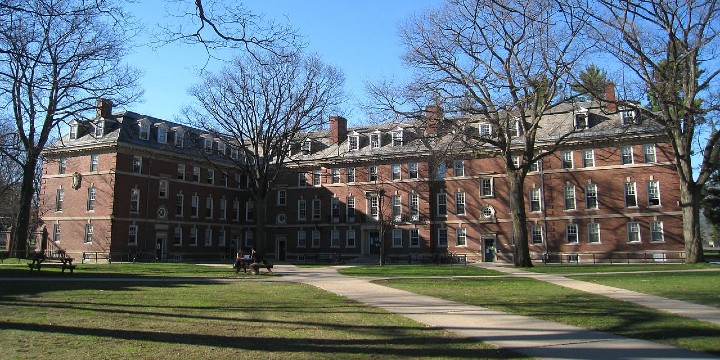
Williams College in Massachusetts. Photo: Wikipedia commons.
A federal complaint filed with the US Department of Housing and Urban Development accuses Williams College in Massachusetts of practicing housing discrimination against an Orthodox Jewish student whom it allegedly denied kosher foods and other religious accommodations that would have promoted his integration into the mainstream campus culture.
Filed on Thursday by the Louis D. Brandeis Center for Human Rights Under Law, the complaint presents a harrowing portrayal of an observant Jewish student forced to eat vegan cuisine which falls far below the culinary standards of meals prepared for other students, to stand in the cold for hours when observance of the Sabbath prevents his using an electronic keycard to enter residence halls, and to “confine” himself to his room on Saturdays to avoid being locked out.
So indifferent is the college to the student’s situation, the Brandeis Center alleges, that it once discouraged him from moving to campus at the same time as it promised other incoming students a “learning community you live in.” The Brandeis Center adds that the school’s alleged violation of its own values is underscored by the fact that it mandates on-campus residency for most students due to its belief that living at the college is an integral part of the undergraduate experience.
“It saddens me as a proud Williams College alumnus to see my alma mater treat a Jewish student as a lesser member of the community because of his religion, turning him away as he was freezing and hungry,” Brandeis Center chairman and chief executive Kenneth Marcus said in a statement announcing the legal action. “Religious discrimination is discrimination. Jews, as well as other students and people of faith, should be able to practice their religion freely, without prejudice or discrimination. That is what religious freedom in America is all about, and we must continue to stand up when this freedom is denied.”
On Wednesday, the college told The Algemeiner that it has “no tolerance for antisemitism or discrimination” and would “welcome” a “dialogue with the student and Brandeis Center to ensure a welcoming and inclusive educational environment.”
“We are devoted to ensuring that all students have success to appropriate living spaces, dining options, and our full range of learning opportunities,” the college’s media relations director said. “The college’s leaders and chaplains are strongly committed to working with students and their families to address student concerns.”
The complaint trails years of reports that American higher education institutions fail to protect the civil rights of Jewish students even as their leaders proclaim a commitment to promoting equity and inclusion. While many institutions have pledged to combat antisemitism in recent months with new initiatives and policies, surveys of Jewish students continue to suggest that those reforms have not yet produced a meaningful reduction in antisemitic bigotry.
A striking 42 percent of Jewish students report having experienced antisemitism at college, according to a survey released by the American Jewish Committee and Hillel International in February. Of that group, 55 percent said they felt that being Jewish at a campus event threatened their safety. The survey also found that 32 percent of Jewish students believe that campus groups promote antisemitism or a learning environment that is hostile to Jews, while 25 percent said that antisemitism was the basis of being “excluded from a group or an event on campus.”
On Thursday, the Brandeis Center said the specifics of the William College case prompted a “first of its kind” approach to representing a campus antisemitism victim. The group has filed scores of federal complaints alleging antisemitic discrimination in higher education, but the agency petitioned in those cases was the Department of Education’s Office for Civil Rights (OCR). Additionally, the suits demanded redress for violations of Title VI of the Civil Rights Act of 1964. Now, the Brandeis Center contends that Williams College ran afoul of the Fair Housing Act (FHA) and is contesting the matter in the Department of Housing and Urban Development.
“The filing reflects the expansion and strengthening of the Brandeis Center’s legal advocacy efforts to push back against discrimination targeting Jewish Americans wherever their civil rights are threatened,” the group said.
Follow Dion J. Pierre @DionJPierre.
Uncategorized
Democratic Nominee for University of Michigan Regent Refuses to Condemn Hezbollah

Attorney Amir Makled accepts the Michigan Democratic Party’s endorsement for the University of Michigan Board of Regents in Detroit, Michigan on April 19, 2026. Photo: Andrew Roth/Sipa USA via Reuters Connect
A political controversy is intensifying in the race for a spot on the University of Michigan’s top governing body, as Democratic nominee Amir Makled faces mounting criticism for failing to explicitly condemn Hezbollah, the Iran-backed Lebanese terrorist group responsible for attacks against not only Israel but also Western targets — including US soldiers.
Makled, an attorney who last Sunday secured the Democratic Party’s nomination for a seat on the university’s Board of Regents, has come under scrutiny following the resurfacing of social media activity in which he appeared to engage with or amplify content viewed as sympathetic to Hezbollah and hostile toward Israel.
When asked last week by MLive, a local news outlet, to clarify his views on Hezbollah, a US-designated terrorist organization, Makled deflected and refused to criticize the Islamist group. However, Makled stated that he would continue condemning the Israel Defense Force (IDF).
“I will continue to talk critically of the policies of the Israeli Defense Forces and of the state of Israel,” Makled said. “But I’m not playing a condemnation game of Hezbollah, because I believe that’s a trap designed to put Arab Americans on the defense simply for existing.”
Makled also dismissed the notion that his Jewish opponent in the Democratic primary, incumbent Jordan Acker, lost his reelection bid due to antisemitism.
“Hatred against Jewish people is wrong, period,” Makled said. “Acker didn’t lose because of antisemitism. People are tired of Islamophobia. They’re tired of being told that standing up for Arab lives is somehow disqualified.”
In the two years following the Hamas-led massacre across southern Israel on Oct. 7, 2023, Acker has been targeted by anti-Israel activists with a relentless barrage of protests. In December 2024, for example, pro-Hamas activists targeted Acker’s home with violent demonstrations, breaking his windows and spray-painting his car with the message “Divest Free Palestine.” The vandals also spray-painted on Acker’s car an inverted red triangle, a symbol used to indicate support for the Hamas terrorist group.
The contest has drawn national attention because of the unusually broad authority held by University of Michigan regents, who are elected statewide and oversee the university’s finances, investments, executive leadership, and major institutional policy decisions. The eight-member board plays a central role in decisions ranging from presidential oversight to responses to campus protest movements and demands for divestment.
Makled, a Dearborn-based civil rights attorney who has been outspoken in support of divestment from Israel, won the party’s nomination for one of two regent seats up for election this year, defeating Acker, who had become a frequent target of pro-Palestinian activists over his opposition to the boycott, divestment, and sanctions (BDS) movement against Israel on campus.
Makled initially came under immense scrutiny after an investigation by The Detroit News revealed that he was found to have deleted social media posts praising leaders of Hezbollah. One of the posts referred to slain Hezbollah leader Hasan Nasrallah as a “martyr.” He also reposted antisemitic messages from far-right commentator Candace Owens which referred to Israelis as “demons” who “lie, cheat, murder, and blackmail.”
While Makled has issued statements broadly disavowing antisemitism, his refusal to emphatically denounce Hezbollah has raised eyebrows among moderate Democrats and Jewish voters in Michigan. Jewish organizations and community leaders have expressed alarm over what they describe as a troubling pattern of ambiguity.
The controversy has already had political consequences. A major labor union withdrew its endorsement of Makled, citing concerns over his past rhetoric and associations. Within the Democratic Party, the episode has exposed widening divisions over how to address extremism linked to anti-Israel activism.
The dispute comes amid heightened sensitivities surrounding the ongoing conflict between Israel and Hamas, as well as increased scrutiny of campus climates across the United States. Further, the controversy remains especially sensitive in Michigan, as a Hezbollah-sympathizing terrorist targeted a major synagogue, Temple Israel, in suburban Detroit last month.
Further, higher education institutions like the University of Michigan have faced criticism over their handling of anti-Israel protests, some of which have drawn accusations of crossing into antisemitic territory. Against this backdrop, Makled’s candidacy has become a flashpoint in a broader debate over whether anti-Israel activism is being sufficiently challenged when it veers into support for extremist groups.
Critics note that as a regent, Makled would help oversee university policy, including responses to campus discrimination and student safety concerns. His reluctance to explicitly condemn Hezbollah could raises serious questions among voters about his judgment and fitness for the role.
Makled’s willingness to frame violent anti-Israel protests as a legitimate expression of grievances and expression further casts doubt over whether he would be willing to dispatch law enforcement to control raucous demonstrations on campus.
The controversy underscores a growing tension within Democratic politics, where progressive activism related to the Palestinian cause has, in some cases, blurred lines that critics say should remain clear—particularly regarding terrorist organizations and incitement against Israel. This issue has become more salient in recent months, as Democrats have increasingly cozied up to individuals that espouse extremist beliefs, such as anti-Israel streamer Hasan Piker.
Supporters of Acker have argued the outcome reflects a broader deterioration in support for Israel and tolerance of antisemitism within Democratic politics, particularly among younger and more progressive voters. Some also noted that Paul Brown, Acker’s non-Jewish running mate who had similarly opposed divestment efforts, was renominated while Acker was not, making the result especially symbolic for many Jewish Democrats.