


Uncategorized
Netanyahu deploys AI videos as political weapon, aimed at voter fears of Arab power
As election season in Israel heats up, Israeli Prime Minister Benjamin Netanyahu and members of his government are deploying a charged weapon against their political opponents aiming to overthrow them: AI-generated viral videos.
In recent weeks, Netanyahu and key allies have taken to social media to post satirical content on their social media accounts, depicting their leading opponents, Yair Lapid and Naftali Bennett, as being controlled by Arab-Israeli puppetmasters.
One viral video posted by the prime minister last week, with over a million views, is captioned “taking off the masks.” It shows a smiling Bennett and Lapid embracing before peeling off their faces to reveal those of prominent Arab-Israeli political leaders Mansour Abbas and Ahmad Tibi.
מורידים את המסכות pic.twitter.com/IgFDWXp96N
— Benjamin Netanyahu – בנימין נתניהו (@netanyahu) April 29, 2026
After Bennett and Lapid announced in April that they would run jointly against Netanyahu in the upcoming fall elections, Israeli political Twitter flooded with AI-generated content on this theme, which goes for the jugular on a political vulnerability for Bennett: his past inclusion of Abbas’ Arab Ra’am party in his governing coalition.
One image posted by Likud, Netanyahu’s party, featured Bennett and Lapid depicted as children sitting obediently in the back seat of a car as Abbas drives. The photo is accompanied by the caption: “In any case, Bennett and Lapid will go again with the Muslim Brotherhood, the terrorism supporters.”
גם ביחד זה ברור – הנהג הוא מנסור.
לא משנה איך השמאל מחלק את הקולות שלו.
בכל מקרה בנט ולפיד ילכו שוב עם ברית האחים המוסלמים תומכי הטרור. pic.twitter.com/iYFIZQ8QhJ
— הליכוד (@Likud_Party) April 26, 2026
These AI videos reflect a growing post–Oct. 7 trend in Israeli politics: accusing one’s political opponents of being aligned with Arab parties as a way to delegitimize them.
Dr. Arik Rudnitzky, a researcher in the Arab Society in Israel program at the Israel Democracy Institute, said the trauma Israelis experienced after Oct. 7 has left a profound mark on the Jewish public. That fear, he said, is now being actively mobilized in political messaging.
“The post–Oct. 7 discourse is so influential in Israeli politics that it dictates everything,” Rudnitzky said. On Tuesday, Finance Minister Betzalel Smootrich went as far as to say that Naftali Bennett’s decision to include the Islamist Ra’am party in the 2021-2022 government was worse than the Netanyahu government’s failures tied to Hamas’s attacks on Oct. 7. This, despite the fact that Mansour Abbas has said that Netanyahu tried to court him into joining his coalition in 2021, though Netanyahu has denied this.
According to Rudnitzky, the implicit message is that Israel’s Arab parties are dangerous. The argument is that they are not Zionist (and some Arab parties are even explicitly anti-Zionist). In the aftermath of Oct. 7, while some Arab-Israeli political leaders condemned violence from both Hamas and the Israel Defense Forces on civilians, they stopped short of referring to Hamas as a terror organization. Some also failed to condemn the murder of Israeli soldiers on that day.
Now, Netanyahu’s government has taken to framing the choice for voters as existential. “Either you are with the most experienced prime minister in Israel’s history, or you are willing to gamble and put Israel at risk by electing Bennett and Lapid,” said Rudnitzky.
The use of AI by Israeli politicians, Rudnitzky added, makes that message more visceral. “It looks real, it goes straight to the back of your mind, and it hits a nerve.”
Bennett, for his part, has tried to distance himself from this narrative, stating after he announced that he would be running against Netanyahu, “The Arab parties are not Zionist, and therefore we will not rely on them.”
But the videos are taking their toll. Earlier this year, Bennett filed a police report after the Likud X account posted a doctored image that depicted Bennett celebrating with Arab leaders, with the men all raising their clasped hands in celebration. Bennett called the image “malicious forgery.”
Other politicians have deployed similar messaging tactics — against Netanyahu. In February, Avigdor Liberman, a right-wing critic of the prime minister, posted an AI-generated image of Netanyahu holding hands with Abbas in front of a bouquet of heart-shaped flowers, captioned: “Happy Valentine’s Day.”
יום אהבה שמח❤ pic.twitter.com/Sel1CkURFn
— אביגדור ליברמן (@AvigdorLiberman) February 14, 2026
In response, Netanyahu posted an actual photo of Lieberman meeting with Abbas with the caption: “Lieberman published a doctored AI photo of the PM holding hands with Mansour Abbas. So, Avigdor, here’s a real, unedited photo of you and Mansour Abbas.”
Lieberman then shared 10 posts of Netanyahu meeting with various Arab leaders since the 1990s, including former PLO Chairman Yasser Arafat and current Palestinian Authority President Mahmoud Abbas.
According to Rudnitzky, such wrestling-ring attacks have become normalized since Oct. 7, aimed at Jewish politicians and voters. “This is not about delegitimizing Arab voters,” he said. “The target is Naftali Bennett — not Mansour Abbas.”
A controversial pragmatist
Arab parties have long represented Israel’s Arab minority in the Knesset but historically remained outside governing coalitions. For decades, this arrangement — Arab parties supporting from the outside or remaining in opposition — was broadly acceptable to both sides. Arab politicians often avoided joining coalitions for ideological reasons, while Jewish parties largely viewed their inclusion as politically untenable.
That changed in 2021, when Abbas made history by joining the winning coalition led by Bennett and Lapid. That decision positioned him as a pragmatist, willing to work with Jewish parties to secure gains for Arab citizens.
In the aftermath of Oct. 7, Abbas issued the most explicit condemnations of Hamas among Arab Israeli political leaders. He has also said that “the state of Israel was born as a Jewish state, and it will remain one,” a rare acknowledgment of Israel’s identity in those terms. Still, no Arab-majority party in Israel defines itself as Zionist.
While it is considered to be the most moderate of the Arab parties in Israel, Abbas’ Ra’am is an Islamist party that emerged from the Islamic Movement in Israel and the Shura Council — organizations tied to the Muslim Brotherhood. Abbas has increasingly sought to distance the party from those groups and has denied any affiliation with the Brotherhood.
Forming a governing coalition in Israel requires at least 61 seats out of 120, and several polls have suggested that any viable opposition to Netanyahu would likely need Arab party support to reach that threshold. But reliance on Arab parties to form a coalition has become more contentious since Oct. 7.
According to the Democracy Index poll, 72% percent of the Jewish public in Israel opposes the inclusion of Arab parties in the governing coalition. Opposition extends beyond the right: 43% of centrist voters and 20% of left-wing voters also oppose such coalitions. Support has declined significantly since before Oct. 7, when roughly 36% of Jewish Israelis backed including Arab parties in government, compared to just 27% today.
Hence the opening for Bibi and his video blitz. “We’ve seen an escalating political discourse over the past several years. There are no more holy cows,” said Rudnitzky. “If you want to mobilize the entire Jewish public and you know that you are in an inferior position in the polls … this is the way to take the demons out of the bottle.”
The post Netanyahu deploys AI videos as political weapon, aimed at voter fears of Arab power appeared first on The Forward.
Uncategorized
Tidbits: New German textbooks about the Jewish religion
Tidbits is a Forverts feature of easy news briefs in Yiddish that you can listen to or read, or both! If you read the article and don’t know a word, just click on it and the translation appears. Listen to the report here:
צום ערשטן מאָל זינט דעם חורבן האָבן די דײַטשישע עפֿנטלעכע שולן באַקומען לערנביכער געווידמעט דער ייִדישער רעליגיע, כּדי די לערערס זאָלן קענען זיי ניצן ווי אַ טייל פֿונעם קוריקולום.
די סעריע פֿון אַכט בענד, „דעת הדורות“ (דאָס וויסן פֿון די דורות), וועט לערנען תּלמידים צווישן 10 און 16 יאָר אַלט אויף דײַטש וועגן דער תּורה, דעם תּנך, די תּפֿילות, ייִדישער עטיק, הלכה, יום־טובֿים, דעם ייִדישן לעבנס־ציקל און דער ייִדישער געשיכטע.
דער ערשטער באַנד, וואָס קאָנצענטרירט זיך אויף דער תּורה, וועט מען אָנהייבן ניצן אינעם נײַעם שוליאָר.
די ביכער, וואָס זענען צונויפֿגעשטעלט געוואָרן דורכן „צענטראַל-ראַט פֿון די ייִדן אין דײַטשלאַנד“ בשותּפֿות מיטן „ערנסט קלעט פֿאַרלאַג“, ווערן געצילעוועט סײַ אויף פּריוואַטע ייִדישע שולן סײַ אויף מלוכישע שולן איבער גאַנץ דײַטשלאַנד.
דער ציל איז צו באַקענען די תּלמידים מיט דער ייִדישער רעליגיע און טראַדיציעס אין אַ צײַט וואָס עס וואַקסט דער אַנטיסעמיטיזם איבערן לאַנד.
ביז איצט האָבן די לערער פֿון רעליגיעזע ייִדישע לימודים נישט געהאַט קיין מאָדערנע לערנביכער וועגן יהדות אין הסכּם מיטן קוריקולום, אַזוי ווי ס׳האָבן געהאַט די לערער פֿון קריסטלעכע רעליגיעזע לימודים. צוליב דעם בלויז האָבן די לערער פֿון דער ייִדישער רעליגיע געמוזט אַליין צונויפֿשטעלן אַרבעט־בויגנס און אַנדערע מאַטעריאַלן, וואָס זיי האָבן איבערגעזעצט פֿון אַנדערע שפּראַכן.
אין אַ מעלדונג האָט שילה ערלבוים, די אָנפֿירערין פֿונעם אָפּטייל פֿון פּאָליטיק און רעליגיע בײַם ייִדישן צענטראַל־ראַט, געזאָגט: „מיר האָבן טאַקע געדאַרפֿט אַ סיסטעמאַטישן לערן־רעסורס, וואָס באַזאָרגט די קינדער נישט בלויז מיט לערן־מאַטעריאַל, אָבער מוטיקט זיי זיך אַקטיוו צו באַטייליקן,“ האָט זי געזאָגט.
„דורך ׳דעת הדורות׳ קענען זיי לייזן בילדער־רעטענישן; זיך דערוויסן וועגן די געשעענישן פֿון משה רבינוס לעבן דורך אַ ווערפֿל־שפּיל, אָדער אויספּרוּוון זייער וויסן פֿון ייִדישע טערמינען דורך דער מאָבילקע אָדער אַ „גיכענטפֿער קאָד“ (QR code),“ האָט ערלבוים געזאָגט.
יאָזעף שוסטער, דער פּרעזידענט פֿונעם ייִדישן צענטראַל־ראַט, האַלט אַז די לערנביכער זענען אַ וויכטיקער אויפֿטו. „אַ דאַנק דעם פּראָיעקט וועט די ייִדישע רעליגיעזע בילדונג איצט זײַן גלײַך מיט די קריסטלעכע רעליגיעזע לימודים,“ האָט ער געזאָגט.
צו לייענען וועגן דעם אויף ענגליש גיט אַ קוועטש דאָ.
To read about this in English click here.
The post Tidbits: New German textbooks about the Jewish religion appeared first on The Forward.
Uncategorized
Far-right win in German regional race sends shockwaves through Europe
(JTA) —
A victory for Germany’s far-right party in an eastern federal state has reverberated across the globe, exposing the widening rifts between alarmed centrist leaders and insurgent nationalist movements in Europe.
The Alternative for Germany (AfD) party won 43.8% of the vote in an election in Saxony-Anhalt on Sunday, crushing the center-right Christian Democratic Union (CDU), German Chancellor Friedrich Merz’s party, which held 17.2% support, according to preliminary figures.
The AfD is now heading toward 39 seats in Saxony-Anhalt’s 83-seat state parliament. It’s expected to fall 3 seats short of an outright majority, leaving open the question of whether it can form Germany’s first far-right state government since World War II. The party has proposed a sweeping nationalist agenda that includes deporting immigrants, defunding “anti-German art” and teaching children less about the country’s Nazi past.
Merz told reporters in Berlin on Monday he was “deeply shocked” and “unsettled” by the results, which he said rippled through the rest of the country and the world. He added that it was impossible for Germany to “go back to business as usual” after so many voters in Saxony-Anhalt chose a party that “questions the democratic institutions in our country.”
The results dealt the CDU its “most severe defeat” in decades, conceded Merz, who leads the party once headed by former German Chancellor Angela Merkel.
Merz said that he was searching for answers to “why far-right populism and far-right extremism was able to rise in such a rapid manner,” suggesting that his party may have underestimated the “fears of our population” amid economic crises and rapid technological change. He said that minorities in Saxony-Anhalt would be particularly vulnerable under an AfD government, but noted that the state would still have obligations to follow federal law, including regarding immigration policy.
Merz also directed his message to the rest of Europe, saying that Germany had a “special responsibility because of its history” to keep its political order “deeply anchored in Europe.”
Despite the scale of the CDU’s defeat in Saxony-Anhalt, Merz ruled out stepping down, saying, “Giving up is not an option.”
Though Saxony-Anhalt is one of Germany’s smallest regions, home to some 1.7 million voters, its election results quickly sent shockwaves through other European countries whose leaders, like Merz, are fighting to fend off far-right, anti-immigrant parties in national elections next year.
French Europe Minister Benjamin Haddad called the AfD’s regional win a “grave moment in Europe” and said that “nationalism and xenophobia will never be a solution.”
“We cannot forget our history,” said Haddad, an ally of centrist President Emmanuel Macron. “That is the meaning of the choices made by France and Germany.”
France’s government faces its own fears of a right-wing populist wave. Marine Le Pen, the head of the far-right National Rally, has dwarfed all other candidates in polls heading into France’s presidential election in 2027, when term limits force Macron to step down.
Across the Channel, British Chief Secretary to the Treasury Emma Reynolds said in an interview on Times Radio that the U.K.’s Labour government “will not be reaching out to a right-wing populist party.” She added that she put the AfD in “the same political bracket” as Reform UK, the far-right party that surged in local elections earlier this year.
Polish Prime Minister Donald Tusk also condemned the AfD’s victory. The far-right party has alarmed Poland, Ukraine’s neighbor, with its pro-Russia stance, as it seeks to halt Germany’s military aid to Ukraine and sanctions against Russia.
“In Poland, only idiots or traitors can rejoice at the triumph of the AfD in Germany,” said Tusk.
Meanwhile, the AfD was cheered by nationalist, anti-immigration party leaders in Spain, Portugal and the Netherlands, all of whom have sought to capitalize on economic and social grievances similar to those that contributed to the AfD’s victory Sunday.
Santiago Abascal, the head of Spain’s far-right Vox party, called the result “a great hope for Germany and for Europe.”
André Ventura, the founder of Portugal’s far-right Chega party, said that “the Germans too are opening their eyes against illegal and uncontrolled immigration, corruption, and the capture of our freedom and identity.”
And in the Netherlands, the AfD received a “Congratulations” from the far-right Party for Freedom’s leader, Geert Wilders.
While President Donald Trump has yet to officially respond to the Saxony-Anhalt election, he posted a screenshot of the results without comment on his Truth Social account Sunday night.
Trump’s post was shared by Kirill Dmitriev, a Russian presidential envoy and businessman, who said the AfD scored a “historic win” that would “put migration under control.”
Elon Musk, the billionaire and former Trump adviser who campaigned for the AfD last year, gave his support to the national party leader Alice Weidel on X, which he owns, writing “Well done” in German.
Ulrich Siegmund, the AfD’s candidate in Saxony-Anhalt who hopes to become the state premier, responded by praising Musk.
“Thank you, @elonmusk, for your support and for your clear and highly important perspective on the political developments of our time — including here in Germany,” he wrote.
The post Far-right win in German regional race sends shockwaves through Europe appeared first on The Forward.
Uncategorized
In new ‘Fauda’ season, the aftershocks of Oct. 7, without a thought for Gaza
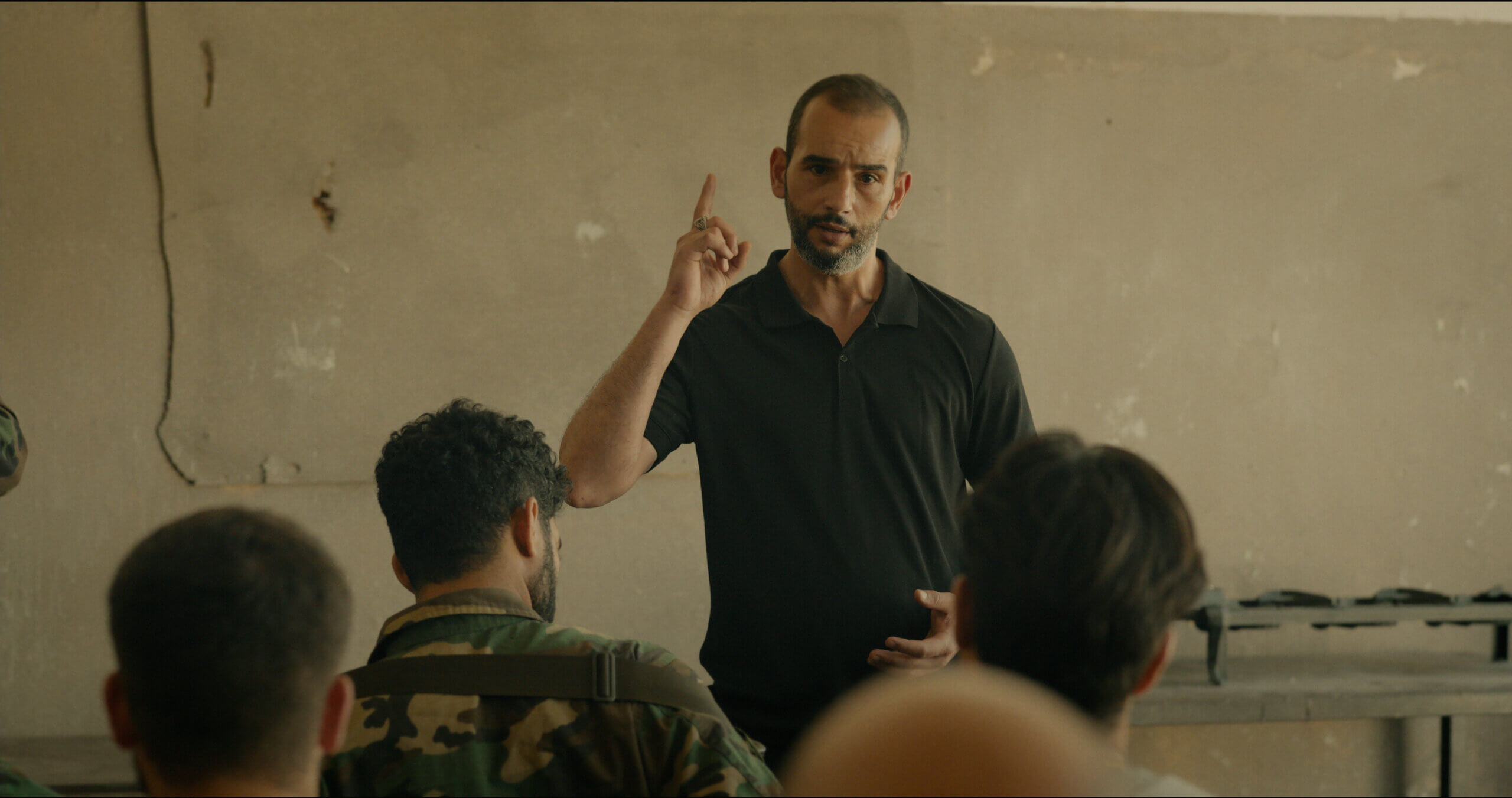
When Fauda Season 4 ended an eternity and a devastating war ago, our hero was at death’s door, reciting both the central prayer of Judaism, the Shema, and the Muslim Fatiha.
It was a cliffhanger with monumental implications for Doron Kavillio (Lior Raz), an Israeli Jew who spent his days undercover as a Muslim Arab — an identity crisis long in coming. Zoom out and you can see the doomed duality of Israel and Palestine, Jew and Muslim, connected in a cycle of death and more alike than they may seem.
Season 5 begins bilingually, with Hebrew and Arab definitions of the Arabic word Tha’r, blood revenge, “restoring violated honor or avenging injustice.” This concept is now the point of commonality — not how men pray, but how they seek revenge.
Welcome to a post-Oct. 7 Israel. Doron is in therapy, struggling to recall eight missing hours of his life on the day of Hamas’ attack on the Gaza envelope.
Comrades have left the country — Steve (Doron Ben-David) is protecting oligarchs in London, Sagi and Nurit are in Australia. Eli (Yaakov Zada-Daniel) is now Orthodox, living in a settlement and reeling from the murder of his wife and stepchildren at his now-torched kibbutz. When a Bedouin friend, Salem (Bian Anteer) who lost his son in the raid on Eli’s home, approaches him with a tip on the Nukhba fighter responsible, they depart for Marseille to answer the call of Tha’r.
It would hardly be Fauda if this act of vengeance didn’t give way to a much larger plot. Marseille is the staging ground for Saeed el Hatib (French-Algerian actor Hakim Djaziri), “the Sinwar of Europe,” who is recruiting sympathetic, white continentals for a fresh massacre in Israel.
Fauda has always made some viewers uncomfortable. Massively entertaining, bingeable to those of us who stream it in the Netflix aftermarket, its existence was premised on ongoing injustices in the West Bank and Gaza and the violence that bursts through their borders. (The BDS movement labelled it a “war-crimes glorifying” series;” Haaretz called it “morally dubious.”)
And yet as late as the last season it contained very real criticism of Israel’s conduct, including its costly campaigns to recover captured soldiers and the torture used to extract information on their whereabouts. The show always alluded to real operations — Cast Lead, Brother’s Keeper — in dialogue. But because it can’t merely mention an attack as raw and monumental as Oct. 7, and because it has no desire to question the response to it, it chooses to recreate its savagery.
Episodes 7 and 8, flashbacks to that day, are front-loaded with a trigger warning and a disclaimer that you can skip them and still be able to follow the main plot.
It’s hard for me to recommend those episodes. If not exactly atrocity porn, their central, race-against-time set piece is too anchored in recent events and constructed too much like an action movie. It feels in a sense exploitative, even if intended as a tribute. (To give them credit, both Lior Raz and his co-creator Avi Issacharoff, who said they “wrote from their trauma,” were on the ground helping the south of the country evacuate in the aftermath.)
The new season starts with the promise of complexity. It opens on a grieving Muslim father and shifts to a milksop accountant who worked for Hamas, seemingly tortured by Eli in a blind rage for a crime he didn’t commit. Could an excessive devotion to Tha’r, a tribal code of retribution, be the diagnosis of the show’s creators of Israeli society at this moment?
If it is, it’s not a critical one. The villains are the villains, and, most revealingly, they now number people with no connection to the conflict.

Hatib’s enlistment of white Europeans for a mass-casualty terror attack services a trite narrative of postcolonial guilt finding an outlet in the pro-Palestinian cause. It works on another level too: This fighting force is squaring off against Doron’s corps of Mizrahi Jews, whose mere presence dismantles the lie that Israelis are themselves all white colonizers, and that Israel and the European empire of yore are in any way analogous.
When, back at mission control, the counterterrorists speak of “suspicious-looking Europeans” who are “in their 30s,” the derision for this type of fellow traveller is palpable. Their standard bearer, Mélanie Laurent, formerly Tarantino’s “face of Jewish vengeance,” plays Anne, a blonde, “high middle-class Catholic French woman” who straps up with C-4, a keffiyeh ever-draped around her neck. Through her, and in a quite literal way, the show suggests the Western love affair with Palestinians — which in this season’s logic means Hamas — is misguided.
All the while, we never see Gaza, where much of Season 3 was set, with some among its population humanized. We never reckon with the destruction there. We hear about it, and a kind of lip service is paid to the crime of collective punishment — the sort that we hear at the end of almost every season — but it’s secondary to storytelling as elegy and justification. One could just have easily placed the Hebrew word Zachor before that first cold open: Remember what they did to us.
At one point, after a shootout with more blood spatter than I ever recall seeing on the show, Doron empties his clip into an enemy with the words “this is for October 7.” Seconds later, in a Shin Bet command room his handler Gabi (Itzik Cohen, whose between-seasons weight gain is a running joke) quips, a la Danny Glover in Lethal Weapon, “I’m too old for this.”
He’s not the only one.
In the past week I’ve chatted with some folks older than me — they don’t know each other and are largely to my right on Israel — who don’t relish the thought of another season. Not just because they don’t want to watch Oct. 7 reenacted, but because following the exploits of Israeli security agents has vastly different optics after the Hamas-Israel war, unprecedented settler violence and National Security Minister Itamar Ben-Gvir’s recently-stated ideal scenario of killing “30 or 40” Palestinians in Gaza each night.
This may well be the privilege of the diaspora, but the fatigue points to a shift in attitude that’s worth paying attention to. If these horrors are out of sight, out of mind this season, they’re top of mind to many who are watching — and many others who might have once tuned in.
The post In new ‘Fauda’ season, the aftershocks of Oct. 7, without a thought for Gaza appeared first on The Forward.
