



Uncategorized
A British spy, a notorious murderer, the Indiana Jones of the insect world, and a very Jewish history

Jews are often thought of as urban, bookish folks who don’t venture out into the wild. But there have been plenty of Jews who break that mold — Abraham Cahan, founder of the Forward, was himself a birder. In To Life: Jews Exploring Nature, author Joel Greenberg, with Judith Winston, a research associate at the Smithsonian Marine Station in Florida, tells the life stories of a group of Jewish researchers, naturalists and environmentalists. I spoke with Greenberg, a research associate of the Field Museum and the Chicago Academy of Sciences Peggy Notebaert Nature Museum, book author and avid birder who lives in Westmont, IL, about the accomplished and often adventurous lives of the scientists he profiled. This conversation has been edited for length and clarity.
Countering the common perception of Jews as indoor cats, you found a group of Jews who spent their careers hunting spiders, skinning mammal specimens and handling snakes. Is the cliché inaccurate?
I cite Fran Lebowitz, who says that the outdoors is what you pass through when you go from your apartment to a cab. For a variety of reasons, Jews are kind of urban people. But when you have a literature that goes back 4000 years, you can find anything in it. You find people loving nature and people hating it.

Did your subjects’ Judaism play a role in drawing them to study the natural world?
There are threads that are well recognized in the Jewish world, though they certainly aren’t unique to it, that had an influence — like education being important, and supporting your children. But I picked people who manifested their Jewishness in different ways. Joan Ehrenfeld, an ecologist and environmentalist, was very Orthodox, and Judaism was very much part of the foundation of what she did. Whereas Philip Hershkovitz, a neotropical mammalogist at the Field Museum, kept it to himself to the point that his kids were shocked to learn that they were Jewish.
Andrew Spielman, who studied insect vectors of infectious disease, was known for arguing with people over individual words when they were writing papers. Longtime assistants said he approached these things almost like a Talmudic scholar.
Some of the people you profile have Hollywood-worthy life stories, starting with Aaron Aaronsohn. Can you tell a little bit about him?
He’s the person whose story goes back the farthest in time. His family left Europe to escape the pogroms, and settled in Palestine. He became totally intrigued by insects and plants, and became a real authority. On a trip to Germany, he met some world-famous botanists. They were interested in an ancient form of wheat called wild emmer, a single specimen of which had been found close to what is now the Syrian–Israeli border. They encouraged Aaronsohn to look for the plant because it might hold qualities that would increase the resilience and nutrition of modern wheat strains. He searched — and found it in a vineyard near the Golan Heights. It made him world-famous.
Just before the start of World War I, in which the Ottoman Empire sided with Germany, there was an infestation of desert locusts — billions of them. The Ottoman army commander said, ‘Who can help me with this?’ Everyone said, ‘Aaronsohn.’ So they brought in Aaronsohn. He and the team he assembled were allowed to go everywhere — to transportation hubs, to military bases. They became a spy ring, feeding the British the most detailed and accurate intelligence that was available.
Britain’s principal military goal was to take Jerusalem. The general there had failed twice. Then they brought in Field Marshal Edmund Allenby. He developed a rapport with Aaronson, followed his suggestions, and took Jerusalem in one try. What Aaronsohn did on behalf of the British was a major factor in Arthur Balfour issuing the British declaration in support of a national home for the Jewish people in Palestine. So it had an incredible impact on the world.
Another remarkable story, in a very different way, is that of Nathan Leopold. He and his friend Richard Loeb murdered a 14-year-old boy in 1924; but he was also a highly respected birder. Talk a little about your decision to include him.
I’ve long had an interest in him. Leopold is beyond understanding. He and Loeb committed a horrific crime. But he was one of the youngest people ever to be published in The Auk (now Ornithology), the country’s premier ornithological journal, when he was just under 14 years old. And he did important work on Kirtland’s warblers, a bird which back then was very poorly known. He was the first to correlate the rarity of the warbler with parasitism by brown-headed cowbirds. That knowledge might well have been a factor in saving the bird from extinction.
While he was in prison, he agreed to be injected with malaria, which during World War II was a big problem for US troops in Asia. When he was paroled to Puerto Rico, he got a master’s degree in public health and wrote Checklist of Birds of Puerto Rico and the Virgin Islands.
He did this terrible thing — but he also had incredibly broad interests and accomplishments.
You write about how antisemitism nearly derailed the career of Libbie Henrietta Hyman when she was at the University of Chicago.
She loved plants and wanted to do botany, so she entered UChicago’s botany program. But she was in a class that was being taught by a graduate student who was an ardent eugenicist who hated Jews, among other groups. He forced her out.
But she found a home in zoology, staying at the University of Chicago from undergraduate to doctorate and staying 15 years as a research assistant to her advisor. She authored two lab textbooks that sold enough copies for her to reach financial independence. She left Chicago and moved to New York, where she worked on her greatest accomplishment — a six-volume compendium called The Invertebrates. She worked out of an office at the American Museum of Natural History, and illustrated the volumes herself. They received world acclaim.
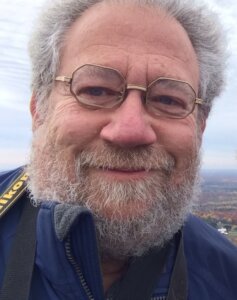
Several of these folks sound like Indiana Jones-level adventurers, spending months in jungles collecting specimens — like Andrew Spielman, a public health entomologist who studied insects that transmit human disease.
His daughter called him “Indiana Papa.” Once he was in Jamaica monitoring water-filled pots for mosquitoes, and he encountered this big guy who said, ‘You know what they call me? “Big Blade.’” He showed him his machete. Spielman had to flee. Another time he was in Ethiopia and he and a colleague went out at night looking for hippopotamuses, and they were surrounded by Ethiopian armed forces who thought they were spies. It got really heated, but fortunately, things calmed down.
Hershkovitz went on his last field trip to Brazil when he was 82 years old. I’m blown away by this. Another time he took his wife and their oldest daughter to Colombia for 18 months. They stayed in cities and he was out there in the hinterlands collecting specimens. His wife would write to him. She was totally supportive of him, but she wrote, “My dream is to move back to Chicago, go to the A&P, and have a good doctor and dentist.”
There were even dangers back home. At the Field Museum, herpetologist Hymen Marx witnessed an awful incident with a venomous snake.
Marlin Perkins at the Lincoln Park Zoo had received a bunch of snakes. He thought one of them was a boomslang, a venomous tree snake, but it didn’t quite match the pictures. So he had somebody drive the snake over to the Field so that Marx, herpetologist Karl Schmidt and the herpetology curator could look at it. They all handled it — but it bit Schmidt in the thumb. He died within two days. He refused medical assistance because he didn’t want to alter the symptoms. He kept a diary of the details; he wanted it to be scientific.
Witnessing that affected Marx greatly. It used to be that you could have live snakes at the Field; Marx used to walk around with a python around his neck and torso. But after that there could be no live snakes.
You yourself are a Jewish naturalist and birder. Is being Jewish connected to your passion for the natural world?
My family was pretty secular; I went to Hebrew school for one year. But when I was at the University of Arizona, a group of us birders went to this remote area in southern Mexico. We actually contributed to scientific knowledge: We obtained the first known chicks of the horned guan, and we discovered that the azure-rumped tanager, which was thought to be rare, in fact just had a very narrow elevational range.
It was Passover, and a friend in Tucson gave us a piece of matzo and some of the other elements. It wasn’t a full-fledged seder, but we did this little seder in a place where I’m sure there’s never been one before or since. It’s a part of me.
The post A British spy, a notorious murderer, the Indiana Jones of the insect world, and a very Jewish history appeared first on The Forward.
Uncategorized
This David Schwimmer sweater ad is playing on ‘Friends’ nostalgia. So why are commenters talking about Israel?
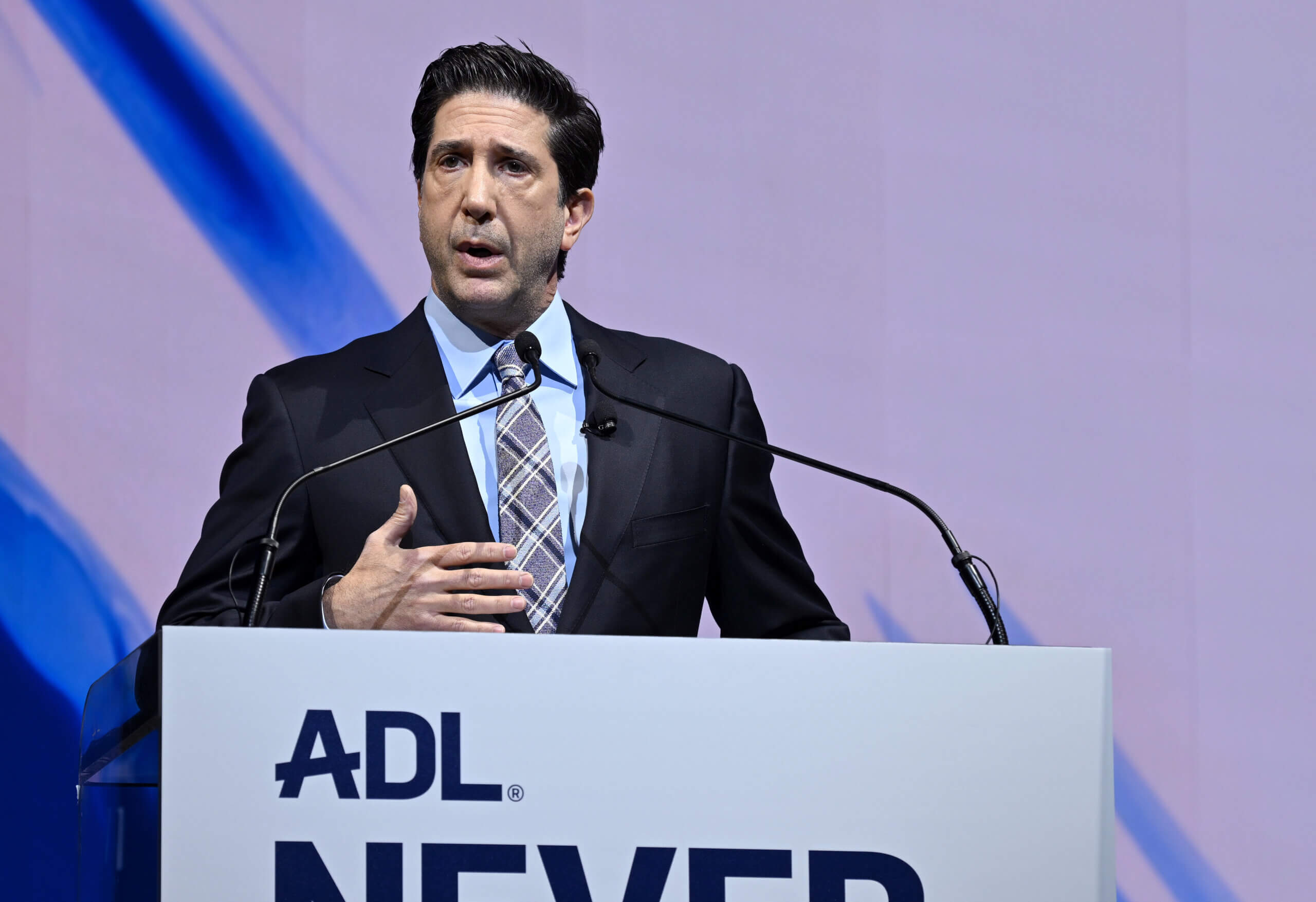
David Schwimmer, who played Ross on Friends, is tapping into some late ’90s and early 2000s nostalgia as the star in an ad this week marketing his “dream sweater” for Quince, a clothing and home goods store.
In the ad, Schwimmer, who is Jewish, sketches the perfect red sweater in a notebook while he sits in Central Park and then begins to see it on everyone: a man riding an electric scooter, an angry taxi driver who almost runs into him, a beautiful woman riding in the back of the taxi, even a dog.
The gag is a reference to the Friends episode “The One with the Red Sweater,” where Ross’ on-again-off-again girlfriend Rachel is pregnant and has not told the father, whose identity is a mystery to the group; Joey, Monica and Phoebe know that the father left a red sweater at the apartment, so when Ross stops by and is relieved to find his sweater, they figure out he’s the dad-to-be.
“I’ve been looking for this for like a month,” he says, just after making a reference to the Yiddish-named snack, Mashuga Nuts.
The episode and the ad are apolitical. So why then are some people planning to cancel their Quince orders and boycott the company?
Schwimmer, many of the commenters on the ad are saying, is a Zionist.
“I don’t approve of you featuring a Zio in your ad,” one Instagram user commented. “Please do better.”
Schwimmer on Israel, antisemitism
Schwimmer has been outspoken about antisemitism since long before the Oct. 7 Hamas attacks on Israel and the ensuing war in Gaza. Over the course of his career, he’s spoken at multiple Anti-Defamation League events and called for other people to stand against hate, routinely saying, “Silence is complicity.”
The actor appears to have never explicitly identified as a Zionist, and his statements have focused more on galvanizing support for Jews and Israelis — rather than on the Jewish state. But this is of little importance to his critics.

His relationship with the ADL, a staunchly pro-Israel organization, is damning enough for some. Schwimmer also starred in an Israeli commercial for Meitav, an investment management company. The move puts him at odds with the growing Boycott, Divestment and Sanctions campaign, which stands against any financial relationship with Israel or Israeli companies.
After Oct. 7, Schwimmer put out a statement calling the Hamas attack an “atrocity” and a “genocide,” adding that any attempt to justify what happened is “indefensible and antisemitic.” In the same statement, he also touched on Palestinian suffering:
“One can condemn Hamas and still object to the Israeli government’s policies regarding the occupation (as many Israelis do), still believe in the Palestinian people’s right to self-determination, and still mourn the loss of Palestinian civilians and the current destruction of their homes, schools, hospitals and places of worship.”
He’s also been vocal about sexual violence that occurred on Oct. 7, sharing the controversial New York Times piece headlined “Screams Without Words,” that investigated allegations of sexual assault committed by Hamas during the attack. Critics of the piece have questioned the validity of the reporting and argued that one of its reporters is biased toward Israel. The Times has stood by the piece.
Additionally, Schwimmer has criticized universities’ responses to pro-Palestinian protests on campuses that he said have veered into antisemitism.
Schwimmer spoke at a 2025 ADL summit about the backlash he’s gotten for his advocacy, noting that while he’s been “attacked” and “abandoned,” he’s found deep meaning in speaking out and has no plans to stop. He concluded his speech calling on fellow celebrities to do the same.
“You don’t have to say anything political,” Schwimmer said. “No one is asking you to solve the conflict in the Middle East. Just say that you stand with your Jewish friends, colleagues and neighbors against hatred and discrimination.”
The controversy isn’t bothering Quince.
“We’ve seen more than 8 million views across our social channels in the first 48 hours, alongside international press coverage and recognition from the marketing community for the creative,” said Dakota Isaacs, head of brand strategy and narrative, in an email to the Forward. “It’s been especially rewarding to see fans connect with the humor and nostalgia while discovering Quince.”
The post This David Schwimmer sweater ad is playing on ‘Friends’ nostalgia. So why are commenters talking about Israel? appeared first on The Forward.
Uncategorized
Why I urged my parents to avoid the counterprotest in Philadelphia
Parents usually tell their children whether they can go out, but last week, on a phone call with my parents, our roles reversed, and I urged them not to join a Philadelphia food crawl with their friends. The event was organized in response to a bicycle rally calling for the boycott of six restaurants, all Jewish-owned, to “show these zionist business owners that we see them for the disgusting humans they are.”
The counterprotest intended to show solidarity with these businesses by patronizing and protecting them on the day of the protest, given the hostile framing of the boycott against the restaurants and their Jewish owners. However, I was concerned that it would be co-opted by pro-Israel partisans, who not only would instrumentalize it for their own agenda — one which, in my view, is actively detrimental to the fight against antisemitism — but would also stoke chaos and violence. It’s a film that’s played out time and again, including when I was an undergraduate at UCLA: A call is put out that Jews are under attack, counterprotesters mobilize in response, and anger quickly morphs into belligerence, hostility, and violence.
Fortunately, it appears that no one was seriously hurt during Sunday’s bike rally and counterprotest. As I had feared, though, some demonstrators became aggressive as verbal confrontations and scuffles broke out across Rittenhouse Square. While it’s likely that some of the pro-Israel demonstrators were there for the sole purpose of displaying that they are not “Jews with trembling knees,” others ostensibly were there because, as the names of two of the organizations behind it would suggest, they want to StopAntisemitism and EndJewHatred.
If those were the goals, the demonstration was an unmitigated disaster. And much of the discourse surrounding the boycott laid the groundwork for failure.
To many Jews, it may seem self-evident that the boycott was illegitimate and antisemitic. For the protesters, though, there seems to be a genuine inability to understand how it could be. They also seem unable or unwilling to condemn antisemitism.
Anger at the protesters is understandable, but if the goal is to stop antisemitism and end Jew hatred, it is important to address the root of the problem, which starts with understanding why the protesters might have such a profound misunderstanding of antisemitism.
For several decades, following the Six-Day War of 1967 and the Cold War period, pro-Israelism has been a core, essential feature of hegemonic anti-antisemitism advocacy. Groups like the ADL have made the phenomenon of so-called “new antisemitism” – a term that explains hostility toward Israel by claiming that the nation is maligned out of bigotry, as the proverbial Jew among the nations – a central focus of their work, especially in times of increased Israeli-Palestinian conflict.
Though this is hardly “new,” the stakes and intensity of attacks against the “new antisemitism” have been raised in a post–Oct. 7, post–destruction of Gaza reality. In effect, this approach has been successful in as much as it has led to a public perception that the fight against antisemitism and the fight in defense of Israel are the same fight, and cannot be separated.
As a result, when anti-Zionist, pro-Palestinian activists are accused of antisemitism or expected to condemn it, they view it as purely cynical — an attempt to delegitimize their movement rather than a true objection to how they have treated or spoken about Jews. This very refusal to condemn antisemitism is often read as itself antisemitic by many Jews. This “acrimonious circle,” as philosopher Brian Klug described it 13 years ago, could go on forever.
As the acrimonious circle spins and spins, there are a few options that groups fighting antisemitism can consider:
- They can continue pushing pro-Palestinian activists to see both condemning antisemitism and supporting Israel as intertwined moral duties.
- They can insist on that interconnection, but tell pro-Palestinian activists to choose combatting antisemitism no matter what their beliefs about Israel are.
- They can accept that pro-Palestinian activists will rarely condemn antisemitism at their own initiative, and deploy tactics of intimidation, bullying, harassment, and/or violence against them.
- They can accept that pro-Palestinian activists will rarely condemn antisemitism at their own initiative, and present condemning antisemitism as a human-rights oriented stance, in line with standing up for all marginalized people, including Palestinians.
The first option is the one that organizations like the ADL have often chosen. In its statement about the bike rally and boycott, the group said that criticism of Israeli government policies are acceptable, but discrimination is not. Criticisms that the ADL considers ipso facto discriminatory, however, include claims that Israel has committed the crimes of genocide and apartheid. As a result, activists lend the ADL and groups like it no credibility and will dismiss any of their condemnations out of hand.
The third option is what the protest on Sunday became. Any Philadelphian can tell you that a brawl in the middle of Rittenhouse Square during an Eagles game is far from unusual. But the fighting in this instance broke out because of the boycott — one side driven by a fervor that they needed to defend Jews facing an existential threat from anti-Zionists, the other driven by a fervor that they needed to bring justice to a city ravaged by what protesters believe are business-owning war criminals.
The second option is a sensible demand from a moral perspective. However, it is not a strategic one. The hard truth is that for many, though certainly not all, pro-Palestinian activists, the cause comes before all else, including standing up against antisemitism.
Therefore, the only way forward for Jews is the fourth option: to frame the fight against antisemitism as a fight for the rights of all people. This is not a perfect solution — no solution could be. There will always be some unwilling to oppose antisemitism no matter what tactic is deployed. However, it will make plain that there is no contradiction between condemning antisemitism and supporting Palestinian rights, that in fact the task is to support human rights universally and to condemn all who violate these rights. That necessarily includes standing against Israeli war crimes and its regime of inequality, and that includes condemning those who hold Jews as Jews complicit for Israel’s actions and condemning those who harass, intimidate, and scrutinize Jewish business owners for their presumed political stances.
My parents, fortunately, decided to remove themselves from the chaos of this day and went to support the targeted businesses as regular patrons on other days throughout the week. I was pleased to see that our rabbi, who leads one of the largest synagogues in Center City, made a point of trying to de-escalate tensions and confrontations from within the Philadelphia Jewish community, as well as highlighting the strength and vibrancy of Philly’s Jewish life on its own terms.
These are important, positive things we can do in the short term. That said, if we want long-term change to come from the pro-Palestinian movement – and I think this moment requires it – anti-antisemitism groups that cannot meet the moment must step aside and make room for those that are capable and prepared to frame the fight against antisemitism as a fight for, not against, fairness, justice, and equality for all.
The post Why I urged my parents to avoid the counterprotest in Philadelphia appeared first on The Forward.
Uncategorized
Israel approves $31.5 million plan to strengthen Jewish education in North America
(JTA) — JERUSALEM – Israel’s government has approved a NIS 100 million ($31.5 million) plan, initiated by Prime Minister Benjamin Netanyahu, to strengthen Jewish education in North America, a statement from his office said Wednesday.
Based on a partnership and joint investment with North American Jewish communities, the goal of the plan is to strengthen Jewish identity and ties to Israel among the next generation of Diaspora Jews in the United States.
The approval of the plan, which was developed with representatives of the Jewish Federations of North America (JFNA), follows a government decision made in June.
It comes a day after Israel’s parliament, the Knesset, was sworn in and two weeks after a national election left Netanyahu facing a battle to stay in power as his rival, Gadi Eisenkot, received the mandate to form the next government.
It also comes amid signs of growing disaffection among Diaspora Jews, particularly younger generations, toward Israel and the Netanyahu-led government. Recent polls suggest that support for Israel among Diaspora Jews, especially in response to its policies in Gaza and on matters of democracy, is slipping.
A February survey of American Jews by the Jewish Federations of North America found that only one-third of American Jews aged 18-34 identify as Zionist, even as nearly nine in 10 say they support Israel’s right to exist as a Jewish and democratic state.
A separate Pew poll in May examining American views of Israel found that Jewish attitudes have shifted since 2024. The survey found that 83% of Jews view the Israeli people favorably, down from 89% in 2024, while 47% view the Israeli government favorably, compared with 54% in 2024.
“The plan we approved today, in partnership with Jewish communities in North America, is an investment in the future generation of Diaspora Jews. Together, we will strengthen Jewish identity, deepen the connection to Israel and ensure that our heritage and values are passed proudly from generation to generation,” Netanyahu said in the statement.
“The future of the Jewish people depends on our ability to ensure that future generations know their heritage, connect to their Jewish identity and maintain their deep ties to the State of Israel,” he said, adding that Israel would not “stand idly by in the face of challenges,” such as antisemitism.
Under the framework of the plan, which will focus on increasing the number of students enrolled in Jewish educational frameworks, the Israeli government allocation will be matched 50% with funding from Jewish Federations and other non-governmental sources.
JFNA said in a statement that it welcomed the Israeli cabinet’s decision to invest in Jewish education across the U.S. and Canada, calling it an “unprecedented partnership between the Government of Israel and North American Jewish communities to strengthen Jewish identity and ensure a vibrant future for the Jewish people.”
“We are proud to launch this historic partnership with the Government of Israel to expand access and grow enrollment in Jewish day schools across North America,” said Gary Torgow, chair of the Board of Jewish Federations of North America.
Eric D. Fingerhut, JFNA’s president and CEO, said the partnership “reflected the shared commitment of Israel and North American Jewry to strengthening Jewish identity and expanding educational opportunities for more families.”
This article originally appeared on JTA.org.
The post Israel approves $31.5 million plan to strengthen Jewish education in North America appeared first on The Forward.
