


Uncategorized
A British spy, a notorious murderer, the Indiana Jones of the insect world, and a very Jewish history

Jews are often thought of as urban, bookish folks who don’t venture out into the wild. But there have been plenty of Jews who break that mold — Abraham Cahan, founder of the Forward, was himself a birder. In To Life: Jews Exploring Nature, author Joel Greenberg, with Judith Winston, a research associate at the Smithsonian Marine Station in Florida, tells the life stories of a group of Jewish researchers, naturalists and environmentalists. I spoke with Greenberg, a research associate of the Field Museum and the Chicago Academy of Sciences Peggy Notebaert Nature Museum, book author and avid birder who lives in Westmont, IL, about the accomplished and often adventurous lives of the scientists he profiled. This conversation has been edited for length and clarity.
Countering the common perception of Jews as indoor cats, you found a group of Jews who spent their careers hunting spiders, skinning mammal specimens and handling snakes. Is the cliché inaccurate?
I cite Fran Lebowitz, who says that the outdoors is what you pass through when you go from your apartment to a cab. For a variety of reasons, Jews are kind of urban people. But when you have a literature that goes back 4000 years, you can find anything in it. You find people loving nature and people hating it.

Did your subjects’ Judaism play a role in drawing them to study the natural world?
There are threads that are well recognized in the Jewish world, though they certainly aren’t unique to it, that had an influence — like education being important, and supporting your children. But I picked people who manifested their Jewishness in different ways. Joan Ehrenfeld, an ecologist and environmentalist, was very Orthodox, and Judaism was very much part of the foundation of what she did. Whereas Philip Hershkovitz, a neotropical mammalogist at the Field Museum, kept it to himself to the point that his kids were shocked to learn that they were Jewish.
Andrew Spielman, who studied insect vectors of infectious disease, was known for arguing with people over individual words when they were writing papers. Longtime assistants said he approached these things almost like a Talmudic scholar.
Some of the people you profile have Hollywood-worthy life stories, starting with Aaron Aaronsohn. Can you tell a little bit about him?
He’s the person whose story goes back the farthest in time. His family left Europe to escape the pogroms, and settled in Palestine. He became totally intrigued by insects and plants, and became a real authority. On a trip to Germany, he met some world-famous botanists. They were interested in an ancient form of wheat called wild emmer, a single specimen of which had been found close to what is now the Syrian–Israeli border. They encouraged Aaronsohn to look for the plant because it might hold qualities that would increase the resilience and nutrition of modern wheat strains. He searched — and found it in a vineyard near the Golan Heights. It made him world-famous.
Just before the start of World War I, in which the Ottoman Empire sided with Germany, there was an infestation of desert locusts — billions of them. The Ottoman army commander said, ‘Who can help me with this?’ Everyone said, ‘Aaronsohn.’ So they brought in Aaronsohn. He and the team he assembled were allowed to go everywhere — to transportation hubs, to military bases. They became a spy ring, feeding the British the most detailed and accurate intelligence that was available.
Britain’s principal military goal was to take Jerusalem. The general there had failed twice. Then they brought in Field Marshal Edmund Allenby. He developed a rapport with Aaronson, followed his suggestions, and took Jerusalem in one try. What Aaronsohn did on behalf of the British was a major factor in Arthur Balfour issuing the British declaration in support of a national home for the Jewish people in Palestine. So it had an incredible impact on the world.
Another remarkable story, in a very different way, is that of Nathan Leopold. He and his friend Richard Loeb murdered a 14-year-old boy in 1924; but he was also a highly respected birder. Talk a little about your decision to include him.
I’ve long had an interest in him. Leopold is beyond understanding. He and Loeb committed a horrific crime. But he was one of the youngest people ever to be published in The Auk (now Ornithology), the country’s premier ornithological journal, when he was just under 14 years old. And he did important work on Kirtland’s warblers, a bird which back then was very poorly known. He was the first to correlate the rarity of the warbler with parasitism by brown-headed cowbirds. That knowledge might well have been a factor in saving the bird from extinction.
While he was in prison, he agreed to be injected with malaria, which during World War II was a big problem for US troops in Asia. When he was paroled to Puerto Rico, he got a master’s degree in public health and wrote Checklist of Birds of Puerto Rico and the Virgin Islands.
He did this terrible thing — but he also had incredibly broad interests and accomplishments.
You write about how antisemitism nearly derailed the career of Libbie Henrietta Hyman when she was at the University of Chicago.
She loved plants and wanted to do botany, so she entered UChicago’s botany program. But she was in a class that was being taught by a graduate student who was an ardent eugenicist who hated Jews, among other groups. He forced her out.
But she found a home in zoology, staying at the University of Chicago from undergraduate to doctorate and staying 15 years as a research assistant to her advisor. She authored two lab textbooks that sold enough copies for her to reach financial independence. She left Chicago and moved to New York, where she worked on her greatest accomplishment — a six-volume compendium called The Invertebrates. She worked out of an office at the American Museum of Natural History, and illustrated the volumes herself. They received world acclaim.
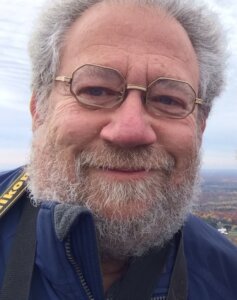
Several of these folks sound like Indiana Jones-level adventurers, spending months in jungles collecting specimens — like Andrew Spielman, a public health entomologist who studied insects that transmit human disease.
His daughter called him “Indiana Papa.” Once he was in Jamaica monitoring water-filled pots for mosquitoes, and he encountered this big guy who said, ‘You know what they call me? “Big Blade.’” He showed him his machete. Spielman had to flee. Another time he was in Ethiopia and he and a colleague went out at night looking for hippopotamuses, and they were surrounded by Ethiopian armed forces who thought they were spies. It got really heated, but fortunately, things calmed down.
Hershkovitz went on his last field trip to Brazil when he was 82 years old. I’m blown away by this. Another time he took his wife and their oldest daughter to Colombia for 18 months. They stayed in cities and he was out there in the hinterlands collecting specimens. His wife would write to him. She was totally supportive of him, but she wrote, “My dream is to move back to Chicago, go to the A&P, and have a good doctor and dentist.”
There were even dangers back home. At the Field Museum, herpetologist Hymen Marx witnessed an awful incident with a venomous snake.
Marlin Perkins at the Lincoln Park Zoo had received a bunch of snakes. He thought one of them was a boomslang, a venomous tree snake, but it didn’t quite match the pictures. So he had somebody drive the snake over to the Field so that Marx, herpetologist Karl Schmidt and the herpetology curator could look at it. They all handled it — but it bit Schmidt in the thumb. He died within two days. He refused medical assistance because he didn’t want to alter the symptoms. He kept a diary of the details; he wanted it to be scientific.
Witnessing that affected Marx greatly. It used to be that you could have live snakes at the Field; Marx used to walk around with a python around his neck and torso. But after that there could be no live snakes.
You yourself are a Jewish naturalist and birder. Is being Jewish connected to your passion for the natural world?
My family was pretty secular; I went to Hebrew school for one year. But when I was at the University of Arizona, a group of us birders went to this remote area in southern Mexico. We actually contributed to scientific knowledge: We obtained the first known chicks of the horned guan, and we discovered that the azure-rumped tanager, which was thought to be rare, in fact just had a very narrow elevational range.
It was Passover, and a friend in Tucson gave us a piece of matzo and some of the other elements. It wasn’t a full-fledged seder, but we did this little seder in a place where I’m sure there’s never been one before or since. It’s a part of me.
The post A British spy, a notorious murderer, the Indiana Jones of the insect world, and a very Jewish history appeared first on The Forward.
Uncategorized
Orthodox Jewish man stabbed in midtown Manhattan
(New York Jewish Week) — An Orthodox Jewish man is in stable condition after being stabbed on Wednesday evening in the Diamond District of midtown Manhattan. Police are investigating the attack as a possible hate crime.
Police told the Jewish Telegraphic Agency that the NYPD’s Hate Crimes Task Force is investigating the incident as a possible antisemitic attack, and Manhattan Shomrim — the Jewish community watch group — has asked people to share footage as police search for the suspect. No arrests have been made.
The victim was identified by police as a 26-year-old man, and Orthodox Jewish outlet COLLive identified him as a resident of Crown Heights, the neighborhood that is home to the Chabad-Lubavitch Hasidic movement’s headquarters.
He was taken to Bellevue Hospital in stable condition. Police said they were called at about 5:50 p.m. on Wednesday after the man was stabbed in the back with “an unknown sharp object” on 47th Street near Fifth Avenue. ABC7 reported that the victim told investigators he believed he was stabbed with a needle or syringe.
According to the Chabad website, which published an interview with the victim, he is a recently ordained Hasidic rabbi named Joseph, who commutes to Midtown each day to wrap tefillin with Jewish merchants. The attacker, Joseph told the website, was a woman who seemed to be following him prior to the stabbing.
The attack comes as Jewish New Yorkers have been targeted in more than half of the hate crimes committed in New York City this year, despite making up about 12% of the city’s population.
In July, an assailant stabbed two men on the Upper West Side, including one who was leaving a synagogue, while yelling “Allahu akbar,” and was charged with committing hate crimes.
Louis Keene contributed reporting.
The post Orthodox Jewish man stabbed in midtown Manhattan appeared first on The Forward.
Uncategorized
VIDEO: A Hasid gives us a tour of Morocco in Yiddish
דער ירושלימער יוטוב־שטערן וועלוול קירשנבוים האָט לעצטנס אַרויסגעשטעלט אַ ווידעאָ אויף ייִדיש פֿון אַ פּרעכטיקן וויזיט, וואָס ער האָט געמאַכט אין מאַראָקאָ. עס באַגלייט אים זײַן חבֿר אַבֿרהם פּרץ.
אינעם ווידעאָ זעט מען ווי קירשנבוים דאַוונט שחרית מיט די אָרטיקע ייִדן און באַזוכט אַ גוט אָפּגעהיטענעם בית־עולם, וווּ עס ליגן באַערדיקט גרויסע צדיקים ווי למשל הרבֿ חיים בן עתר (1696–1743), באַקאַנט ווי דער „אור החיים“. „מענטשן מיינען, אַז נאָר אין אייראָפּע זענען דאָ קבֿרים פֿון צדיקים!“ זאָגט קירשנבוים.
מיר זעען אַ גרויסע, שיינע שיל מיט אַ פֿײַנער אַרכיטעקטור אין קאַזאַבלאַנקאַ; דעם גרויסן אַראַבישן שוק, וווּ קירשנבוים קויפֿט זיך אײַן מלבושים פּונקט ווי די מאַראָקאַנער גייען אָנגעטאָן. ער באַוווּנדערט אויך די שיינע טיי־גלעזער און טשײַניקן, וואָס מע פֿאַרקויפֿט דאָרט, און באַקענט זיך מיט אַ ייִדישן סוחר וואָס האַנדלט מיט זילבער און גאָלד, פּונקט אַזוי ווי זײַן טאַטע און זיידע האָבן געטאָן פֿאַר דור־דורות.
The post VIDEO: A Hasid gives us a tour of Morocco in Yiddish appeared first on The Forward.
Uncategorized
Conservative and Christian movies are coming for Hollywood
A star-studded new movie set in a Soviet prison is coming out in November. James Franco and Rob Lowe anchor the cast of Confession, playing a brutal prison guard and an imprisoned dissident professor, and a disheveled Nick Nolte appears as a fellow prisoner.
These actors were once huge gets, and their names could convey legitimacy to a project. Nolte and Franco both have received Academy Award nominations. Lowe was a member of the Brat Pack, and was a regular on The West Wing.
Confession, written by Ben Shapiro and produced by the rightwing tabloid-esque news site The Daily Wire, is not the expected fare for actors with that kind of name recognition; Shapiro’s screenwriting aspirations have been the target of ridicule for years.
Nevertheless, this isn’t the only Daily Wire production getting big names; Danny Trejo signed onto a pro-ICE movie about Minneapolis in the aftermath of the Renee Good shooting, and Jonathan Majors led Run, Fight, Hide: Infidels earlier this year.
Each one of these actors has been, in some way, canceled or in career doldrums so may have been more open to working with The Daily Wire. And some have claimed that they did not know who Shapiro was, or what his politics were; Trejo’s son, Gilbert, said his 82-year-old father did not endorse ICE and was misled about the movie before he signed his contract.
Movie studios have struggled through the pandemic and the streaming era, both of which have tanked box office receipts, leaving the field open for movies from offbeat production studios. In addition to The Daily Wire, there has been a whole ream of Christian movies attempting to shift the stereotype of bible movies — that they’re preachy, low-budget straight-to-TV affairs with cardboard acting — to something more prestigious, or at least profitable.
The Christian company Angel Studios has been placing screenings of the half philo-semitic, half-antisemitic Jesus TV series The Chosen in movie theaters across the country, produced the right-wing hit The Sound of Freedom and is pumping out faith-based movies like the animated King of Kings Christmas story and David, a kiddie movie about the biblical king. Recently, Pinnacle Peak Pictures, another faith-based production company, premiered Daniel and the Fiery Furnace, another bible movie that was notable enough to merit a review in The New York Times. (Though admittedly it wasn’t a particularly positive one.)
For decades, Hollywood, and the media industry at large, has been associated with liberalism, progressive politics and diversity. (This is part of why conservative conspiracy theorists often insist that Jews control the media.) Even when conservatives are in power, satirical movies have poked fun at the ruling class — Team America: World Police spoofed George W. Bush’s foreign policy, while M*A*S*H critiqued Richard Nixon. During the current Trump administration, we’ve seen One Battle After Another lambasting immigration policies and rising white nationalism, Eddington on misinformation and populism, and The Apprentice depicting Trump directly.
But a rising number of higher-budget, bigger releases from the right wing, whether The Daily Wire’s conservative political parables or the Christian fables, are bringing a new kind of messaging — about the importance of God and country, about gender roles, about about the centrality of Jesus to the U.S. — to the American movie-going public.
This is no accident. A group of powerful conservative Christians, many of whom worked on Project 2025, are proponents of the Seven Mountains Mandate, a blueprint for Christian nationalism that instructs Christians to gain influence and control over the “seven mountains” of society — which include media, entertainment and the arts. The Mandate is part of the New Apostolic Reformation, a decentralized evangelical movement embraced by millions of Americans.
Jeremy Boreing, the director of many Daily Wire movies — though he has since left the company — said on a podcast hosted by businessman Patrick Bet-David that “It had always been part of our strategy to move into making culture, not just criticizing culture” as a way of proving that “there is a future where conservatives aren’t losing. There’s a future where we have political power and cultural power.”
Cultural power, of course, requires more than just a lot of movies; they have to be well-done, or at least appear to be. Previous Daily Wire productions, as well as other right-wing, MAGA movie ventures, have been hacky. Lady Ballers, about an unsuccessful men’s basketball team pretending to be women so they can dominate the league, was an unsubtle, unfunny and ultimately unwatchable spoof of transgender athletes. And even plenty of higher-budget attempts, like Daniel and the Fiery Furnace, can still fall victim to wooden acting and writing.
But now, with the financial success of movies like The Sound of Freedom and biblical parables like The Chosen, bigger stars are being drawn to projects like the Daily Wire’s lineup of pro-ICE, anti-immigration and anti-LGBTQ movies. With those bigger stars may come new audiences who might not have watched a Christian movie or Daily Wire project otherwise. And where there is money and viewers, mainstream Hollywood will go, too, no matter how progressive people expect the industry to be. We’ve already gotten a biblical epic from Amazon Prime, with The House of David, and there are likely to be many more to come.
After all, it wasn’t so long ago, after all, that Cecil DeMille’s The Ten Commandments was the biggest movie in town.
The post Conservative and Christian movies are coming for Hollywood appeared first on The Forward.
