


Uncategorized
Israel is revoking entry permits for U.S. activists involved in West Bank
Hannah was on her way to class on Jan. 8 when she opened her inbox and found an email from Israel’s Population and Immigration Authority. Due to a change of circumstances, it said, her authorization to enter Israel had been revoked.
“I had to read it a few times, honestly, and then I Googled it and just started crying. I was on my way to class. I was bawling,” Hannah told the Forward. Hannah asked that her last name not be published because she fears that speaking to the media could affect her ability to visit Israel in the future.
Hannah, whose boyfriend lives in Israel and who has family there, has spent almost every summer of her life in the country. She was left dumbfounded by the email. There was no explanation of the reason for the revocation, and nothing about how, or whether, she could appeal.
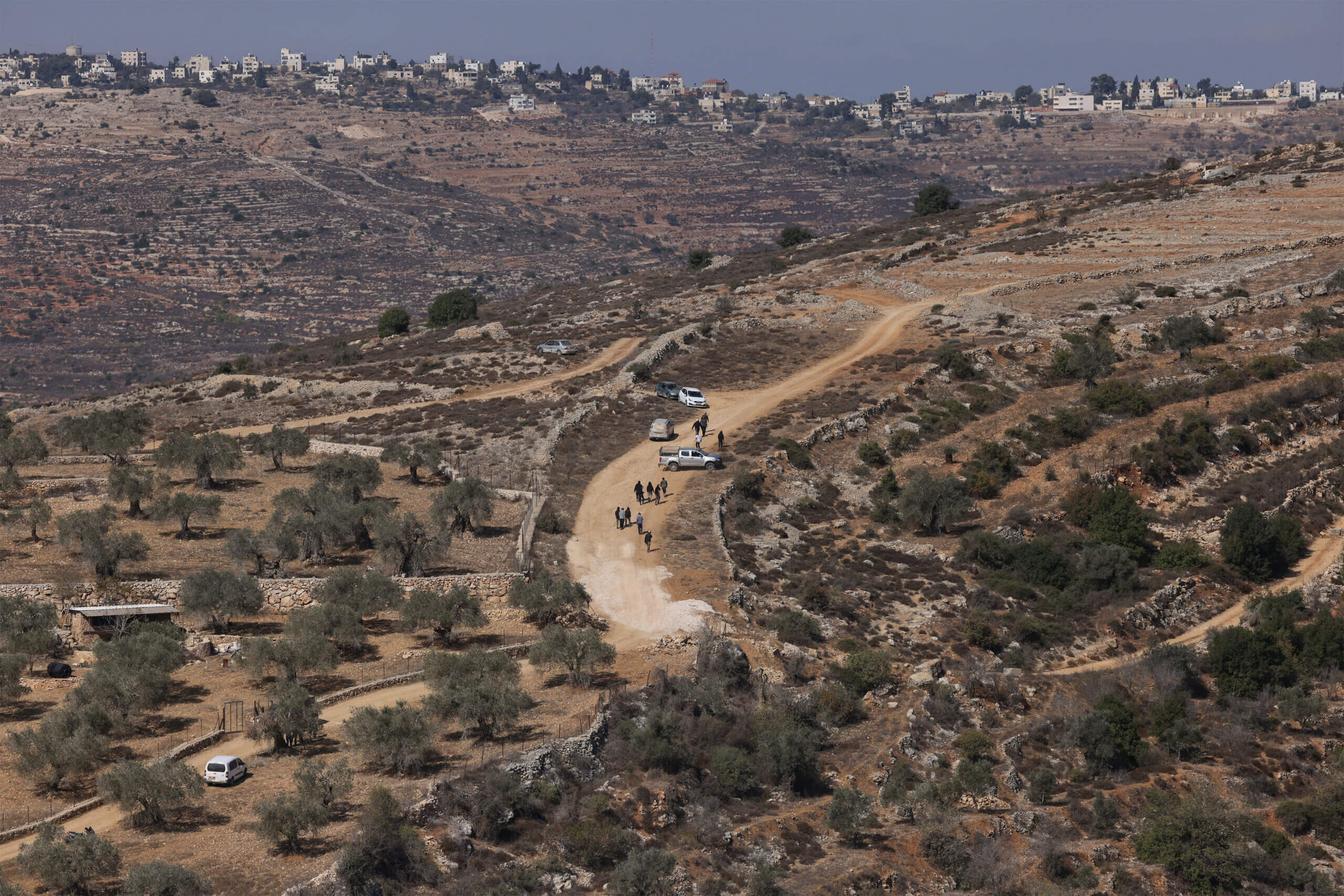
The closest thing to an incident she can point to came the previous July, when she joined her rabbi and a group of volunteers accompanying a Palestinian farmer during the grape harvest — a practice known as protective presence, in which foreign witnesses aim to deter settlers and soldiers from interfering. Israeli soldiers stopped the group and held them for hours. “They asked to see my passport and said they were looking to see if there was any reason to deport me,” she said. They found none, and told her she was free to go.
Hannah came up through the institutions Israel counts on to keep American Jews attached to it. In high school, Hannah was involved with hasbara fellowships, and her mother is active in her local Jewish federation. “It’s so odd that almost the more I become familiar with the place in ways that I wasn’t as a kid, and maybe less naive about it, now I don’t have the ability to be there,” she said. “I’m not welcome there anymore.”
Hannah is one of seven American Jews who told the Forward that Israel had revoked their electronic travel authorization, or ETA-IL, after they participated in protective presence activities in the West Bank.
A loose network of Jewish organizations recruits diaspora Jews for the work and frames it as an expression of Jewish values. Programs range from 10-day delegations to seasonal olive-harvest cohorts to Hineinu, Hebrew for “here we are,” a three-month placement in Palestinian communities in Masafer Yatta that the Center for Jewish Nonviolence launched in 2021.
According to figures from the Center for Jewish Nonviolence, dozens of participants in its Hineinu program and other protective presence initiatives have had their authorizations revoked since the system took effect.
Israel launched ETA-IL as a pilot in June 2024 and made it mandatory for travelers from visa-exempt countries, including the United States, on Jan. 1, 2025. The application is a brief online form, usually approved automatically within minutes, that allows visa-free entry for tourism or business. It functions as Israel’s counterpart to the U.S. ESTA system, and followed Israel’s admission to the American Visa Waiver Program in 2023.
A State Department spokesperson declined to comment on individual cases or on the department’s discussions with Israeli officials, but said the Department of Homeland Security, in consultation with State, regularly reviews whether Visa Waiver Program participants meet program requirements.

Israel was admitted to the program in 2023 only after signing a memorandum of understanding committing it to treat all American citizens equally at its borders, a longstanding program requirement that had kept Israel out for years over its treatment of Palestinian American travelers.
None of those who spoke to the Forward had been arrested or charged with a crime. Some received no notice at all, which Daniel Roth, executive director of the Center for Jewish Nonviolence, said has become increasingly common. Those who did get revocation emails received identical notices citing a change of circumstances, with no explanation of the duration of the ban.
By the letter of the law, all of those whose authorizations were revoked remain eligible to make aliyah — immigrate to Israel — unless they are deemed a security threat under a provision of the Law of Return. Neither of two immigration attorneys who spoke with the Forward could recall any applicant being blocked as a security threat.
The visitors could open a file with the group Nefesh B’Nefesh and, in theory, be Israeli citizens within months. For now, they are barred from entering.
The Forward asked the Population and Immigration Authority how many ETA-IL authorizations have been revoked and on what legal basis, and the Israel Police asking whether it recommends revocations. Neither responded.
The Jewish Agency, which facilitates immigration by Jews to Israel under the Law of Return, said in a statement: “There is no connection between the ETA process and the Aliyah process. Regardless, we cannot comment on ETA refusal because we do not handle any part of that process. The criteria for eligibility for Aliyah remain unchanged.”
Change of circumstances
That Israel’s government sees protective presence workers as an adversary and target for law enforcement is no secret.
In April 2024, National Security Minister Itamar Ben-Gvir ordered the creation of a police task force to handle foreign and Israeli left-wing activists in the West Bank, which he described as a team for dealing with “anarchists.”
The unit sits under the West Bank district police and works in coordination with the Population and Immigration Authority. Ben-Gvir publicly credited the immigration authority for its role in deporting 32 foreign activists in October 2025 following an olive harvest action in the northern West Bank.
Of the Jews the Forward interviewed, one described himself as an anti-Zionist. The others were liberal Zionists who said they are concerned about the rise of settler violence in the West Bank and the preservation of Israel as a liberal democratic state. They were day school and summer camp alumni. Most have family in Israel and visit regularly.
Sam Sherman, an actor and writer who lives in New York City, was in Masafer Yatta, a collection of hamlets in the southern West Bank, when he opened an email telling him that his ETA-IL had been revoked due to a change of circumstances.
He was about seven weeks into his stint with a Hineinu group, and he was not the only one. “It happened to me and a few others in my cohort … within the same hour,” Sherman said. “A few of us got the same email within minutes of each other.”
Sherman was never arrested. He describes one incident that he believes amounts to a detention in place, and otherwise a pattern of identification, soldiers, police and armed settlers photographing his passport during confrontations he says were initiated by settlers.
“We were just there hanging out with people, essentially,” he said. “But we were treated as if it was almost criminal for us to be there.”
His first reaction was confusion. “I was like, what does this mean?” he said. More experienced activists told him what it meant: once he left Israel, he would be unable to return unless he chose to make aliyah. “If I’m the wrong kind of Jew for Israel,” he said, “sure. Great.”

Rabbi Jill Jacobs is the CEO of T’ruah, a rabbinic human rights organization that has been sending American clergy to the West Bank for years. She said the revocations cut against Israel’s founding promise.
“The promise of Israel is that it’s going to be a refuge and a home for Jews everywhere in the world, not just for Jews with certain political opinions,” said Jacobs. “Israel should be the place in the world that is safest for Jews, no matter what your religious practices are, what country you’re coming from and what your political views are.”
Another participant in Hineinu said she never received an email at all.
Nina, who asked to be identified by her first name only, had a valid authorization when she left the country for a weekend in Cyprus to reset her tourist visa. When she tried to re-enter Israel, she said, she was held at the border and denied entry.
“I never got an email that my ETA had been revoked,” she recounted. “I never got any correspondence at all, and I never got anything written, that said that ETA had been canceled or revoked or anything.” Hours later she resubmitted the application from her phone and got an automatic rejection.
‘Nothing’s out of the question’
Critics of the volunteers say it is simply a law enforcement matter.
Naomi Kahn, director of the international division at Regavim, a right-wing Israeli legal advocacy group that campaigns against unauthorized Palestinian construction in the West Bank and lobbies for demolitions, said some of the accompaniment activity takes place in closed military zones and active IDF firing zones.
“It should not be considered unusual when a sovereign state chooses to deny entry to people whose declared intention is to break the law,” Kahn said. “It should come as no surprise when tourists are disinvited when they break the law. I don’t think this raises eyebrows anywhere else in the world.”
Closed military zones have become a point of contention between activists and the Israeli military. In late October 2025, two American Jewish women, Rachel Beth Flamholz and Leila Stillman-Utterback, were deported and banned from Israel for 10 years after entering a closed military zone imposed on the Palestinian village of Burin the same day they had arranged to pick olives there.
“In my experience, closed military zones are used as a tool to clear Palestinians and those supporting Palestinians, including us, from an area,” Roth said, “and by and large, to leave space for Israeli settlers to do whatever it is they want.”
Jacobs draws a distinction between conduct and status. A tourist who commits a crime in Israel is subject to Israeli law, she said, as a tourist would be subject to the law of any place they were visiting. That, she argues, is not what is happening here. None of the volunteers were charged with anything.
“These are the best of the best,” Jacobs said. “These are people who are devoting, in some cases, months or more of their lives, that they could be spending doing anything, to trying to make Israel a more just place for both Jews and Palestinians. And that’s exactly who Israel should want to be standing by and supporting.”
This fall, some will head to the West Bank as part of Protect the Harvest, an initiative run by an international coalition of Palestinian, American, Israeli and Jewish organizations responding to an invitation from Palestinian farmers. The campaign runs in week-long cohorts from mid-October through mid-November.
T’ruah is bringing a clergy delegation from Oct. 18 to 23, ending four days before Israel’s national elections. Jacobs expects many American rabbis on the ground, some bringing their own congregants.
“I don’t know what the Israeli government is going to do,” she said. “But I think if they decide they’re going to start deporting American rabbis, that would basically be picking a very big public fight with the American Jewish community.” Even people who haven’t been paying attention, she said, will be furious.
Asked whether she thought it was actually possible that an American rabbi could be deported during the harvest, she did not rule it out. “Nothing’s out of the question,” she said.
The post Israel is revoking entry permits for U.S. activists involved in West Bank appeared first on The Forward.
Uncategorized
How wrong I was about the young Ukrainian with the Chabad yarmulke
מײַן מאַמע, עליה השלום, פֿלעגט מיר זאָגן, אַז בעסער איז טראַכטן גוטס וועגן אַ שלעכטן מענטשן, איידער שלעכטס — וועגן אַ גוטן.
ניט איין מאָל אין פֿאַרלויף פֿון מײַן לעבן האָב איך זיך אָנגעמאַכט צרות און צומאָל זיך צעקלאַפּט ביז בלוט מײַן אייגענעם פּרצוף, זיך באַמיִענדיק פֿאָלגן די דאָזיקע עצה. עס זײַנען געווען פֿאַלן, ווען איך בין אָפּגעטראָטן פֿון דעם דאָזיקן פּרינציפּ, און איך באַדויער דאָס טאַקע.
הײַנט אַרבעט איך ווי אַ פֿאָרשטייער פֿון דער ייִדישער אַגענץ אין מאָלדאָווע מיט ייִדישע — און צומאָל מיט ניט־ייִדישע — פּליטים פֿון אוקראַיִנע. מײַן אויפֿגאַבע איז פֿאַרשנעלערן דעם פּראָצעס פֿון זייער אַרויספֿאָרן קיין ישׂראל. הונדערטער פּנימער, הונדערטער גורלות. כּמעט אויסשליסלעך — פֿרויען מיט קינדער און זקנים. ניט זעלטן זקנים, וועלכע האָבן איבערגעלעבט אַלס קינדער די צווייטע וועלט־מלחמה. צו מאָל — קינדער, וועלכע שרעקן זיך פֿון דעם, וואָס איך רעד אויף רוסיש מיט אַ מאָסקווער אויסשפּראַך. אַזוי רעדן דאָך רוסישע מערדער.
דאָס גאַנצע באַזיניקטע לעבן מײַנס בין איך געווען אַ ייִדישער נאַציאָנאַליסט און איך בלײַב אַזאַ ביז איצט. איך בין ניט קיין „רוסישער“ ייִד, הגם איך בין געבוירן געוואָרן אין מאָסקווע און רעד רוסיש, ווי אַ מאָסקווער גוי. איך בין ניט קיין „אוקראַיִנישער“ ייִד, הגם מײַן מאַמע איז געבוירן געוואָרן אין פּיריאַטין אין דער פּאָלטאַווער געגנט, און איך רעד גאַנץ נישקשה אוקראַיִניש.
איך בין אַ ייִדישער ייִד. מײַן היימלאַנד אינעם סאַמע טיפֿסטן זין פֿונעם וואָרט „היים“ איז ישׂראל, און קיין שום בירגערשאַפֿט, חוץ דער ישׂראלדיקער, האָב איך ניט און דאַרף איך ניט. אָבער דאָ און איצט זע איך אַן אַבסאָלוט בייז און אַן אַבסאָלוט גוטס, וועלכע מעקן אָפּ גרענעצן פֿון נאַציאָנאַליטעטן און צווינגען זיך צו דערמאָנען, אַז מיר אַלע זײַנען בני־אָדם, אַז מיר זײַנען געבוירן געוואָרן מענטשן און מוזן שטרעבן צו בלײַבן מענטשן. טאַקע יענץ, וואָס אויף ייִדיש רופֿט מען „אַ מענטש“.
זיך אומקערנדיק צום אָנהייב, צו מײַן מאַמעס עצה — שלאָג איך זיך על־חטא: נעכטן אין איינעם פֿון די פּונקטן אין אוקראַיִנע, וווּ עס זײַנען צײַטווײַליק אײַנגעאָרדנט די ייִדישע פּליטים, האָב איך זיך פֿאַרנומען מיט מײַן אַרבעט. צו מיר איז געווען אַ גאַנץ גרויסע ריי. צווישן די, וואָס האָבן געוואַרט אין דער ריי, האָט זיך געוואָרפֿן אין די אויגן אַ יוגנטלעכער מיט אַ חב״דישער יאַרמלקע. „מסתּמא אַ דעזערטיר, וואָס אַנטלויפֿט פֿון מאָביליזאַציע אין דער אוקראַיִנישער אַרמיי,“ האָב איך אַ טראַכט געטאָן און דערפֿילט אַן אַנטיפּאַטיע צו אים.
ניט לאַנג צוריק האָב איך באַזוכט מערבֿ־אוקראַיִנע און געטראָפֿן דאָרט עטלעכע מאַנצבילן — אוקראַיִנישע בירגער, בתוכם ייִדן, וועלכע האָבן זיך באַמיט אויסמײַדן מאָביליזאַציע אין דער אוקראַיִנישער אַרמיי, געגנבֿעט די גרענעץ צווישן אוקראַיִנע און מאָלדאָווע. איך האָב געמיינט, אַז דער דאָזיקער יונגער חב״דניק איז איינער פֿון יענע, וואָס האָבן באַוויזן זיך אַרויסצושמוגלען.
אָבער איך האָב אַ טעות געהאַט. ס׳האָט זיך אַרויסגעוויזן, אַז ער איז בכלל אַ רוסלענדישער בירגער פֿון איינער פֿון די צוויי הויפּטשטעט. צופֿעליק איז ער געווען צוליב זײַנע חב״דישע ענינים אין אוקראַיִנע, אין קיִעוו, ווען עס האָט זיך אָנגעהויבן די מלחמה. דער בחור איז געבליבן אַלס וואָלונטיר אין דער אָרטיקער ייִדישער קהילה. במשך פֿון אַ חודש האָט ער געהאָלפֿן אַרויספֿירן ייִדישע פּליטים פֿון דער שטאָט דער באַשאָסענער מיט ראַקעטן, אין בײַשטעט פֿון וועלכער ס׳איז שוין אַרײַן דאָס רוסישע מיליטער. בלויז איצט, ווען די באַוואָפֿנטע כּוחות פֿון אוקראַיִנע הייבן אָן איבערצוגיין אין דער קיִעווער געגנט צו אַ קאָנטער־אָנגריף, איז ער אַוועקגעפֿאָרן פֿון אוקראַיִנע קיין מאָלדאָווע כּדי עולה זײַן קיין ישׂראל.
הײַנט וועט דער דאָזיקר יונגער חב״דניק מיט גאָטס הילף זײַן אין ישׂראל.
זײַ מיר מוחל, בחור אין דער חב״דישער יאַרמלקע. איך זאָג צו צו האַלטן זיך אין דער צוקונפֿט שטרענגער בײַ דער עצה פֿון מײַן מאַמען: בעסער איז טראַכטן גוטס וועגן אַ שלעכטן מענטשן, איידער שלעכטס — וועגן אַ גוטן.
The post How wrong I was about the young Ukrainian with the Chabad yarmulke appeared first on The Forward.
Uncategorized
Teenager eulogizes slain father who saved his life in West Bank terror attack just before Yom Kippur
(JTA) — Standing at his father’s grave after Yom Kippur 16-year-old Yoav Shukron thanked him for the warning that saved his life a day earlier, when a Palestinian gunman opened fire on the two of them at a West Bank spring.
“Dad, I want to say thank you for 16 years together. Thank you for giving me life,” Yoav said on Monday night as his father, Netanel Shukron, 48, was laid to rest in the West Bank settlement of Alei Zahav.
“Thank you for shouting out to me during the attack, when the terrorist came in. I don’t remember what you said to me, and I ran,” he added, in remarks carried by Channel 12 news.
Yoav had accompanied his father to the Ein Riya spring near the settlement of Neve Tzuf on Sunday to immerse ahead of Yom Kippur when the attack took place.
Yoav escaped unharmed. Shukron, a father of six, was critically wounded and later pronounced dead at Beilinson Hospital in Petah Tikva.
Hundreds of relatives, friends and residents attended the funeral, held after the Yom Kippur fast ended.
“Nati was the most involved father in the world,” his wife, Merav Shukron, said.
Reflecting on their 18-year marriage, she said, “We came from different families, but that didn’t stop us from being soulmates. Nati, our family is perfect, everything was perfect.”
The couple had six children, ages 4 to 16. Shukron worked as an information systems analyst at Hachshara Insurance Company, while Merav Shukron is a lecturer at Ariel University.
Merav said the family had been due to travel abroad the following week and that her husband had carefully planned the trip around spending time together, including packing a sukkah and food for the holiday.
According to the Israeli military’s preliminary investigation, the Palestinian attacker drove to the spring and opened fire. An Israeli military tracker who was nearby in an armored vehicle returned fire and wounded the gunman, preventing him from continuing the attack.
The attacker fled and was located several hours later receiving treatment at a hospital near Ramallah, where soldiers from the elite Duvdevan unit arrested him.
Israeli security officials identified the suspected attacker as Qadri Samara, a resident of the Palestinian town of Biddu who is affiliated with the Hamas terror group and was previously known to Israeli security forces, according to Channel 13. Investigators said he had visited the spring the previous day and determined that large numbers of people would be there to immerse in its waters ahead of Yom Kippur, a practice observed by some Jews before the fast.
In the aftermath of the attack, Israeli troops carried out a large operation in Biddu, mapping Samara’s home ahead of its possible demolition, searching about 100 locations and questioning about 90 suspects. The military also reinforced its forces across the West Bank, including by deploying the elite Egoz unit to the area.
About an hour after the shooting, soldiers thwarted a separate attempted car-ramming attack at the Ganim military post in the northern West Bank. One attacker was killed and a second was arrested, Channel 13 reported, adding that no soldiers were wounded.
Prime Minister Benjamin Netanyahu said in a post on X, “No terrorist is immune, neither are those who assist them; we will settle scores with all of them – in Gaza, in Lebanon, and in Judea and Samaria,” using the biblical term for the West Bank.
President Isaac Herzog noted that the attack came “on the eve of Yom Kippur, as the people of Israel gather for the holy day.”
“Terror will not break us or shake our spirit,” he said. “We will stand against it together, united, determined and full of faith.”
Shukron’s killing has also become the first case in which Israeli officials are considering applying a death penalty law approved by the Knesset in March, according to the KAN public broadcaster.
The law, long championed by National Security Minister Itamar Ben-Gvir and his far-right Otzma Yehudit party, makes death the default sentence for non-Israelis convicted in Israeli military courts of carrying out deadly nationalist attacks, while allowing judges to impose life imprisonment in “special circumstances.” It passed the Knesset 62-48 and immediately drew a High Court challenge.
Ben-Gvir raised the possibility of applying the law to Samara during a security meeting before Yom Kippur, arguing that the case was the first to meet the law’s criteria. Netanyahu did not rule out the proposal and asked IDF representatives for their position on applying the law, which they said they saw no impediment to doing, according to KAN, though the report noted that the military advocate general was not present at the meeting. The issue is expected to be discussed again in a smaller cabinet forum with the IDF’s legal chief present, the report said.
This article originally appeared on JTA.org.
The post Teenager eulogizes slain father who saved his life in West Bank terror attack just before Yom Kippur appeared first on The Forward.
Uncategorized
Herzog’s Yom Kippur pardon of soldier crystallizes choice for Israeli voters
On the eve of Yom Kippur, President Isaac Herzog pardoned Elor Azaria, an Israeli soldier convicted of manslaughter for shooting a wounded Palestinian attacker in the head in Hebron a decade ago.
Azaria served nine months of an 18-month sentence and was released in 2018. His conviction remained on his record, with the ordinary process leaving it in place until 2032, complicating life for the now 30-year-old.
To ease that burden, Defense Minister Yisrael Katz, from Prime Minister Benjamin Netanyahu’s Likud Party, in July asked Israeli President Isaac Herzog, to grant Azaria clemency, expunging the record.
This Herzog did on the eve of Yom Kippur. There is a coherent argument for that decision. Azaria was a young soldier when the shooting occurred, he served his sentence, and a criminal record can continue to impose practical obstacles on civilian life long after a formal prison sentence has ended. Herzog invoked reconciliation and the possibility of a new beginning, as well as the consequences Azaria had already endured.
But the army did not agree. Current military chief Eyal Zamir and other senior officers opposed the request, arguing that Azaria had never expressed genuine remorse.
The pardon has now returned the Azaria affair to the center of Israeli politics at a particularly consequential moment.
Lt. Gen. Gadi Eisenkot, the military chief at the time who publicly pushed for prosecution, is now the main political leader in the opposition and its leading candidate for prime minister. Netanyahu, the prime minister at the time who called for Azaria’s pardon, is still leading the other side of Israel’s great political argument. After the Oct. 27 election, Herzog will consult the elected factions and probably assign the task of forming a government to one of them, based on who he believes has the best chance.
If the numbers leave neither Eisenkot nor Netanyahu with a clear path to a majority of 61, Herzog could face a genuinely consequential exercise of presidential judgment between the two men who stand on opposite sides of the Azaria case – which he himself has turned into an election issue.
The roots of that divide go back to March 24, 2016, when Israeli soldier Azaria aimed his rifle at Abdel Fattah al-Sharif and pulled the trigger. Al-Sharif had attacked Israeli soldiers with a knife and was shot and incapacitated. Minutes later, as he lay on the ground, Azaria nonchalantly raised his rifle and fired, from a few meters away. Al-Sharif was clearly not threatening the numerous soldiers milling around.
The shooting was captured on video, and what might otherwise have remained a disputed incident became one of the defining political arguments in Israel. It was a moment when Israeli politics – notoriously complex and sometimes inscrutable even to insiders – briefly came into focus: the fault line is whether you think this is OK.
The military treated the shooting as a serious criminal matter,. Eisenkot’s position, which earned vilification from the political right, was that a soldier could use lethal force against a genuine threat but could not simply kill a captive. The case became a test of whether the IDF’s rules meant anything when enforcing them was unpopular.
Netanyahu, who then as now was prime minister, is a man of sharp political instincts. During the controversy he called Azaria’s father, Charlie, offering sympathy. The eventual conviction was for manslaughter. After Azaria’s conviction, Netanyahu openly went all the way to politicize the case, calling for Azaria to receive a pardon.
The difference was unmistakable. Eisenkot saw the case through both the institutional obligations of the army and morality; he still believed in the old Zionist notion of the IDF as the world’s most ethical military. Netanyahu saw the political benefit in amplifying and harnessing the emotional identification of many frightened people with the soldier.
Israeli society was changing, the inflection point being the Second Intifada – a campaign of barbaric suicide bombings against civilians that was launched between 2000 and 2004, even as Israel was offering Palestinians statehood on the vast majority of the West Bank and Gaza. In 2005 Israel unilaterally pulled out of Gaza, uprooting thousands of settlers, resulting in Hamas jihadists taking over and years of rocket fire. The 2010s saw more killings.
After so many disappointments and so much bloodshed, many Israelis had just given up on the Palestinians (and to be fair, the feeling was mutual, largely because of the continuing occupation and the constant expansion of West Bank settlements). A significant part of the public had become indifferent at best to the idea that a soldier confronting a terrorist should be constrained by rules that might prevent him from firing. Netanyahu was either riding the tiger or goading it on, and perhaps both at the same time.
A decade later, the institutional divide exposed by the case remains remarkably intact. The current military leadership’s opposition to the pardon places today’s IDF, at least on this issue, in the same institutional tradition that Eisenkot represented in 2016: the conviction that the army’s rules must survive the political passions surrounding a particular soldier.
On the baseline level, this sad affair is about where self-defense ends and vengeance begins, and what to do when many citizens no longer care. But on a higher level, it encapsulates a contradiction from the earliest days of Zionism. The founders wanted two things at once: to turn the Jews, via national sovereignty, into “a people like all others”; and to make of their state “a light unto the nations.” Both sound good, yet one must choose.
The bullet that Azaria fired in Hebron helped crystallize that choice, which maps neatly into the political one between Eisenkot and Netanyahu. In placing his own signature on the final page of the Azaria affair, Herzog ensured it will be a highlight of the campaign, and of the legacy of both Eisenkot and Netanyahu.
It is no coincidence that the same person advocating for a man many consider a murderer is also feverishly machinating to dismantle the foundations of liberal democracy in Israel, while on trial for corruption. For Netanyahu, the ship of old-time Zionist mythology has sailed, and he’s not aiming to cast any light unto the nations. Eisenkot, essentially, still is.
The post Herzog’s Yom Kippur pardon of soldier crystallizes choice for Israeli voters appeared first on The Forward.
