



Features
The Blackjack Bet Behind the Everyday Phrase Double Down

Imagine sending a terrible pun to someone you fancy. They laugh, so you send another. Soon, the two of you have a running joke, and a friend says you have doubled down on the cheesy approach.
The words sound at home in that exchange. They also fit a chief executive’s plans or a politician’s speech. In each case, someone puts more weight behind a choice they have already made. Whether that sounds charming, sensible or stubborn depends on the choice, and on who is describing it.
How the Phrase Left the Card Table
Double down comes from blackjack, where it names a betting option recorded in print by the late 1940s.
Today, it appears in business talk, political speeches and dating conversations, far beyond any online casino. The gambling connection deserves a reminder: gambling involves financial risk, and anyone who participates should set spending and time limits and seek support if it causes harm.
By 1991, Joseph Epstein was using the expression figuratively in his essay collection A Line Out for a Walk. It offered a way to describe taking a further risk outside gambling.
The meaning continued to broaden. Merriam-Webster includes becoming more determined in a position or undertaking. Dictionary.com describes increasing effort or holding to an opinion, especially under pressure.
Those definitions cover actions as well as arguments. Someone might spend more time developing a promising project, or defend a disputed view more firmly. The words leave room for both.
A Business Reason to Keep Going
Jeff Bezos supplied an example in his 2016 shareholder letter, released in April 2017. Writing about patient experimentation and attention to customers, the Amazon founder advised readers to “double down when you see customer delight”.
In the published letter, that advice sits alongside accepting failures, planting seeds and protecting young ideas. The sequence gives the expression a purpose: allow ideas to develop, notice what customers appreciate, then give those ideas more support.
Here, doubling down sounds considered. A positive response supplies the reason for doing more.
The phrase also does useful work without attaching a figure to the decision. It conveys increased effort while leaving the details to the situation. Picture a team finding that customers value a particular service and deciding to develop it further. The expression gives that decision a sense of confidence.
Put the same decision in a political argument, though, and someone may question the direction.
When Determination Becomes a Criticism
In his January 24, 2012 State of the Union address, Barack Obama described other countries as doubling down on education. The official transcript places the phrase in a discussion of teachers, skills and preparation for future employment.
Education was something to back more strongly. Obama’s wording gave added effort an approving tone.
Later that year, Bill Clinton used the expression against an opposing economic approach. His prepared remarks for the Democratic National Convention included “double down on trickle-down”, a line whose repeated sounds helped carry the criticism.
The contrast is revealing. Obama presented greater commitment as desirable; Clinton made it part of his objection. Both used the expression to describe pressing further along an existing path.
That difference helps explain why the phrase works in news and commentary. It can describe what someone is doing while also suggesting how the speaker feels about it. The judgement comes through the surrounding words, something readers can recognise in personal conversations too.
What It Sounds Like in Dating
Bumble brings the expression into familiar dating territory in its guidance for people recovering after ghosting. It encourages readers to double down on self-care, directing their energy towards their own wellbeing.
Psychologist Cheryl Harasymchuk uses it differently in an article published by Carleton University. Discussing positive relationship experiences, she gives the example of a couple following an enjoyable date night with more opportunities to spend time together.
These are gentler uses than Clinton’s political jab. One concerns looking after yourself; the other concerns making room for something you enjoy as a couple. Both give stronger effort an everyday, recognisable purpose.
They also show why the words following double down matter. Self-care, education and a disputed policy lead the reader towards different judgements about persistence.
Back in that imaginary message exchange, another awful pun might be welcome because both people are enjoying the joke. The shared response makes continuing it feel playful and personal.
That brings the expression back to ordinary conversation. Double down tells us that someone is committing more strongly. The rest of the story tells us what to make of it.
Features
When a Partner’s Betting Becomes a Relationship Talking Point

You sit down to work out next month’s bills and realise you have different ideas about what is available to spend. One of you has been counting on a contribution to savings. The other assumed there was room for personal purchases. Suddenly, the conversation is about expectations as much as money.
That is often a useful place to start. Explaining what has worried you, and asking how your partner sees it, gives you something specific to work through together.
When Spending Starts Affecting Shared Plans
A habit becomes worth discussing when it affects plans or responsibilities you share. Perhaps a bill went unpaid, money was moved from savings or an activity has begun taking up time you usually spend together.
Habits such as online betting can come into that conversation through their effect on household finances, time and trust.
Start with one specific example that explains your concern. A missed payment and its consequences give you a clearer starting point than a broad judgment about someone’s spending.
Find Out What Money Means to Each of You
The numbers tell part of the story. Family experiences, financial worries and personal goals also shape how people spend and save.
Someone who grew up around financial uncertainty may feel reassured by having money set aside. Their partner may value being able to make personal purchases independently. Understanding those priorities helps explain why the same expense can produce different reactions.
Utah State University Extension’s guidance on discussing finances recommends talking about money experiences, fears and goals alongside practical plans. It also emphasizes honesty about purchases and debts, so each partner understands the commitments behind shared decisions.
Ask how money was handled in each person’s family, what feels stressful now and what you both want to save toward. From there, you can discuss the expectations affecting today’s decisions: which money is committed, what remains for personal use and which purchases need a conversation first.
Choose Your Moment, Then Be Specific
Once you know what you want to raise, find a private time when you can both pay attention. Keep the first discussion focused on one concern.
Explain what happened and how it affected you. If money moved out of savings, describe the purchase or payment you had expected it to cover. If a bill was missed, explain the worry that caused about the next one.
Then ask what happened. Allow time for an answer, and check that you have understood it before suggesting what to do.
The answer may bring up embarrassment, pressure or difficulty managing a habit. Give those feelings room while keeping the original concern in view. You can care about your partner’s experience and be clear about the effect on you.
Aim to leave with a better understanding of the situation and a practical next step.
Make an Agreement You Can Both Follow
Start with the next bill or other immediate expense. Decide who will pay it, when the money will be available and what each person will contribute.
Then look at spending decisions that affect you both. You might agree to discuss purchases above a chosen amount, or any use of money set aside for a shared goal.
The Financial Consumer Agency of Canada describes several ways couples can handle their finances, including separate accounts, pooled money or a household account alongside personal accounts. Whichever arrangement you choose, you still need to agree on contributions, payment dates and what happens if income changes.
Set a date to see how the agreement is working. Review the payments and discuss anything that proved difficult.
Get Support When the Same Concerns Return
If these patterns keep returning after an agreement is in place, professional support can help. Counselling can work through financial strain, hurt feelings and trust.
The concerned partner can seek help too, including advice about managing shared financial responsibilities and their own distress. Where threats or violence are present, get professional advice before raising financial limits.
In Ontario, ConnexOntario offers free, confidential information and help finding mental health, addiction and gambling services. Partners and family members can contact it for themselves or someone they care about. The service is available 24/7, call 1-866-531-2600, text CONNEX to 247247, or use live chat. Standard message and data rates may apply.
Features
El-Sayed Victory in Michigan is a dangerous moment for American Jews
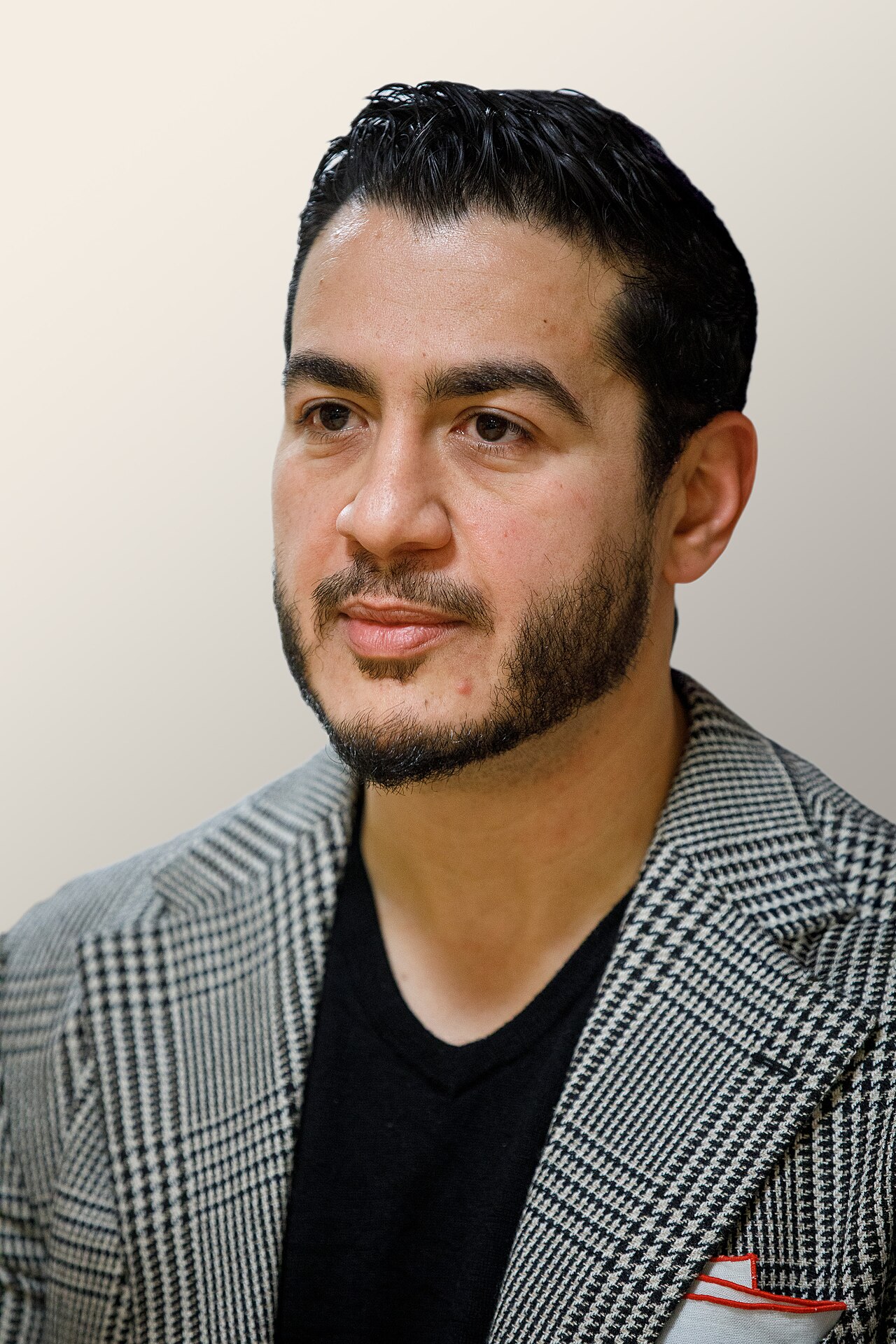
By HENRY SREBRNIK The election on Nov. 3 to the United States Senate of a man whose links with Palestinian and antizionist radicals is a watershed in American politics. For the first time, with the victory of Dr. Abdul El-Sayed on the Democratic ticket in Michigan, the wall has been breached against voting for an openly antisemitic politician running for a major party. He beat Republican Mike Rogers 52 to 46 per cent.
This has followed the equally disturbing win by Zohran Mamdani as mayor of New York last year, even though that city has the largest population of Jews of any municipality outside Israel. Both results signal a dangerous turn in national politics, especially on the left.
El-Sayed has left many “tells” regarding his extremist views. According to audio from a private campaign strategy call made on March 1, obtained by the Washington Free Beacon and published on March 30, El-Sayed told staffers he wanted to avoid making a public statement about the assassination of Ayatollah Ali Khamenei the previous day by Israel during the Iran war because “there are a lot of people in Dearborn,” whose Muslim population is estimated to make up about 41 per cent of the city’s people, “who are sad” about his death.
The paper also, on Oct. 6, reported that Mohammad Ali Elahi, the imam of the Islamic House of Wisdom in Dearborn Heights, hosted El-Sayed at his mosque on June 24, organized an anti-Israel roundtable for El-Sayed on July 21, and attended a Dearborn fundraiser in August that raised $350,000 for his Senate bid.
Elahi, who claimed after 9/11 that Mossad and Israel perpetrated the terrorist attacks, served as head of the Iranian Navy’s political-ideological office, a post to which he was appointed by Ayatollah Ruhollah Khomeini, the late Iranian supreme leader. He helped create a research unit for Khomeini’s Martyrs Foundation, which the U.S. government sanctioned in 2007 over its support for Hezbollah and other terrorist groups. Elahi, who immigrated to Dearborn in 1992, has also maintained ties to high-level Iranian political and religious leaders.
His father sits on the board of an Islamic charity that was previously accused of funneling cash to late Iraqi dictator Saddam Hussein’s regime. Imam Dr. Mohammed El-Sayed is currently a board member of Life for Relief and Development, a charity he’s worked with since at least 2020, according to tax forms. Eman Abdelhadi, El-Sayed’s half-sister, is a University of Chicago associate professor in the Department of Comparative Human Development and prominent anti-Israel activist who frequently and publicly utilizes antisemitic rhetoric that she shares with her 45,000 followers on social media.
Abe Greenwald, the executive editor of Commentary magazine, published by the American Jewish Committee, on Oct. 20, in “The Disavowal Game,” rhetorically posed the following to El-Sayed:
“Your father-in-law, Tayeb Jukaku, the largest individual donor to your campaign, is a member of the Islamic Society of North America and a founder and board director at the Council on American-Islamic Relations. Both groups are unindicted co-conspirators in the USA v. Holy Land Foundation for Relief and Development case, in which Holy Land Foundation leaders were convicted of terrorism-related charges. Federal prosecutors also linked both groups to the Muslim Brotherhood.
“Your half-sister, Eman Abdelhadi, delivered an October 7 ‘blessing’ on Instagram, one year after the Hamas massacre in Israel. ‘I want to say, Allahu Akbar,’ she began. ‘That phrase means God is greater, and it’s an important phrase in the Muslim tradition. It’s one that I’ve been thinking about a lot over the last year, because it’s a phrase that reminds us that no matter how great the brutality, the oppression, the intensity of what we’re going through, the horizon of justice is just around the corner.’ There was not a word about October 7 itself or the slaughter of Jews. But she urged viewers to ‘grieve all the siblings that we’ve lost over the past year.’
“According to social media posts from this same half-sister, your mother, Fatten Fathy Elkomy, had been involved in the Muslim Brotherhood, and many other family members continue to be active in the organization. Additionally, your mother worked for the Islamic American Relief Agency, which was designated by the U.S. Treasury Department in 2004 for financially supporting Osama bin Laden and various terrorist organizations.
“Your sister-in-law, Mariam Jukaku, was reportedly placed on a federal terrorism watchlist during the Obama administration. She joined a lawsuit to get her name taken off the list and, despite your claims, did not win.
“Of course, it’s not fair to pass judgment on someone based solely on the sins of his family. Which is why I’ll now turn to you. I’d imagine that it would be traumatic for a non-extremist Muslim to find himself in a family of committed Islamists and terrorist enablers. I’d think you’d make a point of distancing yourself from their extremism. And yet, you speak and act as if you’re in their camp.
“In 2012, you signed a letter of support for Egyptian President Mohamed Morsi, a Muslim Brotherhood leader, urging him to purge the country’s dissenting media and police. You empathized with the terrorist who tried to blow up the Temple Israel Synagogue and day school in March. ‘Hurt people,’ you explained, ‘hurt people.’ You continually refuse to renounce the theocratic Iranian regime. Nor have you said whether Iran or Israel poses a greater threat to the United States. You’ve defended the existence of shariah law in the U.S. You’ve boasted, to select audiences, that you’re actually an Egyptian immigrant. Why? Your friend Hasan Piker is a supporter of every Brotherhood terrorist offshoot I can think of. And you’ve not denounced him either.”
The charity, the Islamic American Relief Agency, founded in 1985, raised at least $20 million and funded social services for children in Africa and Asia, according to federal records. It closed in 2024 after the terrorism designation. Its executive director, Mubarak Hamed, was sentenced in 2012 to nearly five years in prison.
Greenwald’s reference to Temple Israel, located in heavily-Jewish West Bloomfield, a suburb of Detroit, concerned the terrorist attack on March 12 by Hezbollah supporter Ayman Ghazali, who drove a truck laden with explosives and accelerants into the reinforced doors of Michigan’s largest synagogue, and opened fire on the temple’s security personnel. Ghazali was killed before he could detonate his vehicular IED inside the building in which 140 Jewish preschoolers were in attendance at the time of the attack.
“We can and must condemn the attack on Temple Israel, and we can and must condemn the violence 6,000 miles away,” El-Sayed responded, explaining that just days earlier, the gunman had lost members of his extended family in an Israeli air strike in Lebanon. But he failed to mention that one of those relatives was a Hezbollah commander who managed weapons operations in southern Lebanon.
El-Sayed refused to condemn Iran’s Islamic Revolutionary Guard Corps, saying, “It is the responsibility of the people of Iran to decide what their leadership should look like.” In his debate against Rogers, he declined to say whether Israel or Iran posed a greater threat to America.
Federal Election Commission records show that El-Sayed’s campaign collected over $115,000 from officials and leaders affiliated with the Council on American-Islamic Relations (CAIR). Among the identified donors is CAIR National Executive Director Nihad Awad, who drew widespread condemnation after publicly stating he was “happy” to see Hamas break out of Gaza on October 7, 2023 and arguing Israel “does not have the right to self-defence” as an occupying power.
The Democratic Senate hopeful told the SenseSustainability podcast in a 2011 interview that he draws inspiration from Tariq Ramadan, the grandson of the Muslim Brotherhood founder, the Egyptian imam and educator Hassan Al-Banna. Ramadan is the son of Said Ramadan, who was married to Al-Banna’s daughter and emerged as a top Brotherhood leader in the wake of al-Banna’s death.
El-Sayed also appears to have a personal relationship with Mohamed Soltan, the son of a senior Muslim Brotherhood official. In a since-deleted Substack post, he called Soltan, who was jailed in Egypt for his role in a series of 2013 protests aimed at reinstating Egypt’s Muslim Brotherhood-affiliated president, Mohamed Morsi, his “friend,” the Washington Free Beacon reported Oct. 13.
Over the weekend of Oct. 24-25, an independent left-wing political action committee entered the Michigan Senate race on behalf of El-Sayed. Rebellion PAC released a web ad that featured a couple at the grocery store discussing how they could not afford bananas and eggs because “we have to set that money aside for killing Palestinians.” El-Sayed refused to criticize it. So important is his antisemitic worldview that he was even willing to potentially lose a winnable seat rather than simply admit that, no, the “Zionist lobby” isn’t responsible for the rise in the cost of bananas, or skyrocketing healthcare premiums. Not every domestic problem has a single, sinister foreign architect. It led to a break with centrist members of the Democratic Party, including Congresswoman Haley Stevens, the woman he defeated in the Aug. 4 primary.
He attacked her for being a puppet of the American Israel Public Affairs Committee (AIPAC). In August El-Sayed had taunted AIPAC at a virtual town hall. “I’m happy to burn your money for you,” he remarked. “And then we can get on to the business of governing and asking whether or not our foreign policy ought to be dictated to us by the interests of a foreign government.” Just two days before the election, she announced she was endorsing Rogers, after she was uninvited to a joint event with El-Sayed.
In the primary, Stevens had defeated El-Sayed in Wayne County, which includes Detroit, and neighbouring Oakland County, drawing support from Black and Jewish voters who are important parts of the Democratic coalition.
The Democratic party leaders, for their part, have shamefully struck a bargain with the left and put up with anything to win elections. Senator Chuck Schumer of New York, who is Jewish, called her move a “despicable betrayal.”
One reason El-Sayed didn’t confront the ad might be because Rebellion PAC is run by an ally of the campaign, Cenk Uygur, a podcaster obsessed with the perfidy of Israel and its supporters in America. El-Sayed appeared with Uygur in September at a conference sponsored by the Islamic Society of North America. Uygur’s nephew is the anti-American streamer Hasan Piker, who campaigned with El-Sayed in the final weeks of his primary campaign. Piker has argued that the authors of the October 7 massacre, Hamas, are morally superior to Israel, and stated that his favourite flag was that of Hezbollah, the Lebanese terrorist group. He has also suggested that America “deserved” the attacks on 9/11 in 2001. Tucker Carlson, the influential far-right podcaster, also took to defending El-Sayed. They find common ground in their shared criticism of interventionist foreign policy and the Israeli government.
In office, El-Sayed will obsess over the Jewish state. He will prioritize ending the U.S. relationship with Israel — indeed, he’s already indicated he wants a seat on the Foreign Relations Committee — and anytime someone has a positive thing to say about it, he will “remind” people of its “genocide” in Gaza.
Michigan has nearly twice as many Muslims as Jews. If current trends continue, similar ratios will become increasingly common throughout the country. How will that change America, and the place of Jews in it? As in most of the world, demography is destiny.
Henry Srebrnik is a professor emeritus of political science at the University of Prince Edward Island.
Features
Can Multi-Generational Trips Avoid Transit Burnout
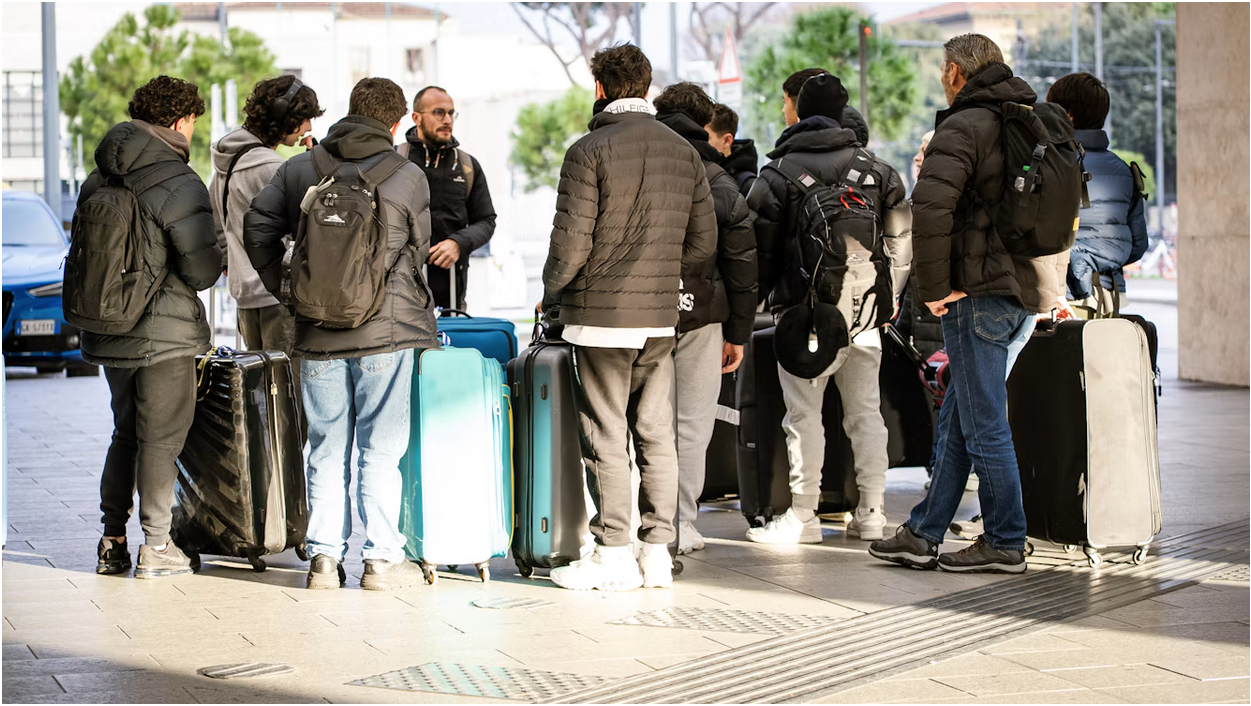
A multi-generational trip can bring children, parents and grandparents together, but frequent transfers can quickly drain the group’s energy. Long station walks, tightly timed connections and heavy bags often create more tension than the attractions themselves.
The best defence against transit burnout is a schedule shaped around the group’s real abilities. Families should discuss mobility, sleep routines and personal priorities before booking. Expectations need to be clear before everyone leaves home. Once those needs are visible, the itinerary can leave room for both shared experiences and individual breaks.
Pacing Itineraries for Varied Energy Levels
Start with one main activity each day, then treat everything else as optional. A museum visit at 10 a.m. followed by lunch and a free afternoon will usually work better than three timed attractions spread across a city. Younger children may need a nap, grandparents might welcome a quiet café and teenagers could want time to explore nearby shops.
Travel days deserve even less structure. If a train arrives at noon, avoid booking a guided tour for 1:30 p.m. Delays, station exits and the trip to the accommodation can easily consume that margin. Choose a flexible afternoon activity such as a public garden, waterfront walk or neighbourhood market. Anyone who feels tired can return early without causing the group to miss a reservation.
Build recovery periods into longer trips as well. After two busy sightseeing days, schedule a slower morning or a full day without tickets. The practical advice in this guide to a multi-generational road trip also supports involving the whole family in the planning process. Ask each traveller to name one priority and one activity they’re comfortable skipping.
A shared digital calendar can keep the plan visible, but a printed one-page schedule helps family members who prefer paper. Mark fixed bookings, walking times and rest periods clearly. When everyone knows which parts are flexible, a change feels like an expected adjustment instead of a disappointment.
Reducing Gear Hassles on Transfer Days
Pack so each adult can manage their own essential items without depending on the strongest person in the group. One wheeled case and one small day bag per traveller is a useful limit for many city trips. Children can carry a light backpack containing a sweater, snack and activity, though an adult should still have space to take it if needed.
Keep medicine, identification, chargers and one change of clothing in personal bags. Checked luggage, hotel rooms or vehicle compartments may not be available when those items are needed. A small packing cube for each family member also makes short stays easier because nobody has to unpack an entire case to find socks.
Temporary storage can solve the awkward gap between accommodation checkout and an evening departure. For example, families passing through central Edinburgh can reserve Edinburgh Waverley luggage storage through an online booking network. This allows travellers to spend their final hours visiting a nearby attraction or having lunch without pulling suitcases over uneven streets.
Assign transfer-day roles before leaving the hotel. One adult can hold tickets and confirm the platform, another can count bags and a third can stay with children or anyone who walks more slowly. Avoid changing those roles halfway through a crowded station unless necessary.
Before each transfer, check the route from the platform to the next transport connection. A ten-minute walk on a map may involve stairs, busy crossings or a large station concourse. That detail determines how much time the family actually needs.
Accessible Stops Near Major Attractions
Choose rest stops before anyone becomes exhausted. Look for cafés, libraries, public gardens and indoor seating within a short distance of the main attraction. A planned 30-minute break can prevent a rushed search for washrooms or chairs when someone is already uncomfortable.
Accessibility information should come directly from the attraction or local transit operator. Check for step-free entrances, elevators, accessible washrooms and seating inside exhibits. If a family member uses a mobility aid, call ahead to ask where taxis or accessible vehicles may drop passengers. Photos on mapping services can also reveal steep approaches and cobblestones that a standard route description may overlook.
Keep the group’s walking radius realistic. A kilometre may feel easy at home, yet it becomes harder after several hours in a gallery or while supervising young children. Consider a simple hub plan: visit one major site, eat within two blocks and select a nearby park or smaller attraction for the afternoon. This reduces repeated boarding, waiting and transfers.
Weather matters too. Heat, cold and rain can change a manageable route into a tiring one. Carry water and sun protection during warm months, then identify an indoor backup before leaving the accommodation. On wet days, pick attractions connected by a direct transit route and avoid schedules that require multiple changes.
Finally, agree on a regrouping point in case the party separates. Choose a specific entrance, ticket desk or café instead of saying “outside.” Give older children and adults a card containing the accommodation address and one family contact number.
Creating Meaningful Shared Memories Together
Shared memories often come from participation, not from covering the longest list of landmarks. Invite family members to take turns selecting a meal, photo stop or short activity. A grandparent might choose a historic neighbourhood, a child could pick an aquarium exhibit and an adult sibling may arrange a family portrait. That balance gives everyone some ownership of the trip.
Families also use shared travel to pass along stories and strengthen connections across generations. RBC Wealth Management’s discussion of multi-generational travel legacies highlights how experiences can support family bonds and shared values. You can bring that idea into an ordinary holiday by asking relatives about previous visits, childhood trips or family traditions connected to a place.
Keep memory-making simple. Ask one person each day to record three details: something funny, something unexpected and something the group learned. Children can collect ticket stubs or draw a favourite sight, while adults add captions to a shared photo album. Guidance on creating lasting travel memories also emphasizes the value of experiences that family members can remember together.
Allow smaller groups to split up without guilt. Two relatives may enjoy a long gallery visit while others rest at the accommodation. Everyone can reunite over dinner and exchange stories, giving the day a shared ending without demanding identical energy levels.
Before heading home, choose one photo together and ask each person to describe what happened around it. Years later, those details will matter more than the number of attractions checked off the schedule. A trip that leaves space for conversation, rest and unplanned discoveries has a much better chance of being remembered for the family time, not the tiring transfers.
