



World Views
Moderate Voices Anchor Democratic Coalition Amid Shifting Views on Israel
Despite a sweeping triumph for the Democratic Party in the recent US midterm elections, which secured control of both congressional chambers, the political landscape regarding US-Israel relations remains far from unified. While vocal anti-Israel sentiment has gained traction within the party, the election results indicate that a significant bloc of moderate Democrats, who advocate for maintaining close ties with the Jewish state, secured crucial victories across the country. This outcome complicates predictions of a complete electoral abandonment of the strategic alliance.
Key Victories Preserve Pro-Israel Wing
The Democratic Majority for Israel PAC (DMFI PAC) celebrated a series of wins by its endorsed candidates, underscoring the continued electoral viability of pro-Israel positions. Notable successes included the victories of North Carolina’s Roy Cooper and New Hampshire’s Chris Pappas, both of whom contributed to the party’s Senate majority. In the House, candidates such as Elaine Luria and Bobby Pulido also secured mandates in competitive districts. These wins demonstrate that support for the bilateral relationship remains an integral part of the party’s broader electoral base, even as political discourse intensifies.
The moderate wing showcased in these races offers a nuanced approach to foreign policy. For instance, Adam Hamilton, a Kansas Senate victor, criticized the military operations in Gaza as ‘unjust’ but firmly rejected the accusation of genocide. He advocated for a conditional relationship, stressing the need to respect international humanitarian law. Similarly, Texas Senate winner James Talarico, while issuing sharp critiques of Israel’s conduct in Gaza, supported defensive military assistance, distinguishing himself from more radical anti-war stances.
The Challenge of Progressive Opposition
The rising tide of opposition is undeniable. Candidates like Abdul El-Sayed, who became the first Muslim senator, openly campaigned on anti-Israel platforms, calling for a comprehensive arms embargo. Other progressive voices, such as Rep. Ro Khanna, have called for the complete elimination of aid to Israel within upcoming defense legislation. These figures represent a significant challenge to traditional bipartisan support, particularly given the intense regional conflicts and the humanitarian crisis unfolding in Gaza.
Future Implications for Policy and Congress
With Democrats now poised to control Congress, the scrutiny of weapons transfers and defense cooperation is set to increase dramatically. The election results present a complex duality: while the growing influence of progressive lawmakers demanding restrictions is a serious challenge for the alliance, the sustained victories of moderate Democrats suggest that the pro-Israel coalition has not vanished. These moderate figures, who successfully won in traditionally conservative states, will be pivotal in shaping how the party balances humanitarian concerns with strategic security interests as they approach the 2027 National Defense Authorization Act.
World Views
Geopolitical Tensions Drive Massive Surge in Israeli Applications for German Citizenship

A striking trend is emerging within Germany’s historical citizenship restitution program, revealing how modern geopolitical instability is intersecting with a legacy of Nazi-era persecution. German authorities have received over 170,000 applications for citizenship from individuals who are heirs of those targeted by the Nazi regime. Notably, Israeli applicants now constitute nearly half of all claims filed, making them the largest group from any single nation—a dramatic increase driven by regional security concerns.
The Restitution Pathway
The program allows descendants of individuals whose nationality was revoked or prevented from being granted during the 1933–1945 period to reclaim their German citizenship. This special provision is designed to correct the historical injustices inflicted upon victims of the Nazi state. While the United States currently ranks second in submissions, the volume of applications from Israel has grown exponentially. Last year alone, the country saw a significant spike in these requests, contributing thousands of submissions to the overall increase in demand.
Drivers of the Modern Surge
Experts suggest that the current wave of interest is not solely historical but is heavily influenced by contemporary global crises. Lukas Fuchs, a sociologist specializing in migration, noted that the growth in popularity is tied to increasing regional instability. He pointed to several previous catalysts, including the fallout from Brexit in 2020 and the war in Ukraine starting in 2022. However, the most pronounced acceleration in Israeli submissions is directly linked to the atrocities and subsequent conflict that began in October 2023.
Fuchs explained that the mounting precariousness across the Middle East has prompted many Israelis to view acquiring an alternative passport as a vital security measure. He emphasized that, for most, this citizenship is intended as a ‘safeguard’ or a contingency plan, rather than an immediate blueprint for relocating to Europe. This mindset reflects a deep-seated historical awareness, noting that in the 1930s, many nations were unwilling to accept Jewish refugees.
Future Outlook and Contingency Planning
The trend highlights a complex interplay between historical justice and modern survival instincts. Many older applicants are seeking this status for younger family members, aiming to grant them greater opportunities and protection abroad against potential future turmoil. The sheer volume of applications underscores a profound shift in how many individuals are approaching personal security in an increasingly volatile world. While the legal framework remains focused on historical redress, the motivation behind the applications is clearly rooted in the urgent need for a ‘plan B’ in the face of ongoing global uncertainty.
World Views
The Free Speech Paradox: How Censorship Undermines Pro-Israel Advocacy

A growing debate is emerging regarding the strategic effectiveness of censorship within the pro-Israel community, with critics arguing that attempts to restrict speech are inadvertently damaging the movement’s credibility and accelerating anti-Zionist sentiment. The recent cancellation of rapper Macklemore from a major concert tour serves as a prominent flashpoint, illustrating the volatile intersection of political commentary, private business decisions, and fundamental liberties.
The Macklemore Incident: An Unintended Consequence
The controversy began when Macklemore voiced support for the Palestinian cause at a concert in September 2026. Shortly thereafter, the stadium owner, Robert Kraft, prohibited the artist from performing at the venue, citing concerns about his history of ‘hate speech’ and anti-Semitic language. While Kraft, as a private entity, possessed the legal right to make this decision, observers suggest the move was strategically flawed. The resulting public outcry, however, provided a significant boost to the artist’s following and galvanized support for the Palestinian cause among a segment of the population already skeptical of Israel.
The Strategic Dilemma of Advocacy
The core criticism suggests a dangerous paradox: if the movement champions Israel as a defender of Western civilization, its proponents should ideally advocate for the most unfettered expression possible. Instead, the author argues that when supporters attempt to silence critical voices—even if those voices are deemed offensive—it gives credence to the criticisms being leveled against them. This selective application of speech rules risks fueling broader conspiratorial narratives about the control of society by powerful Jewish figures.
Internal Conflicts and Global Trends
The issue extends beyond celebrity cancellations. Critics point out a notable inconsistency: while the community focuses heavily on deplatforming anti-Israel speakers, they often overlook extremist rhetoric coming from within their own ranks. For instance, the commentary of certain highly popular Israeli figures who advocate for discriminatory policies against Arab citizens raises questions about who is truly being held accountable for harmful speech. This disparity suggests a double standard in the pursuit of ideological purity.
Furthermore, the trend of speech limitation is not confined to American political activism. Legal scholars within the Jewish state itself have noted a rise in government actions and legislation that place limits on expression, despite existing robust protections. This internal erosion of discourse, coupled with widespread polling indicating that a significant portion of American Jews support banning certain forms of anti-Israel speech, suggests that the challenge to free expression is systemic and deeply rooted.
The Call for Unregulated Discourse
The final assessment is clear: institutional exclusion, even when legally permissible, creates substantial backlash. The report concludes that for the pro-Israel movement to maintain its standing as a champion of Western values on the global stage, it must accept the principle of near-unregulated expression. Until the principle of unfettered discourse is adopted, the movement risks becoming a pariah, suffering reputational damage due to its own censorship efforts.
World Views
Political Firestorm Erupts Over Iran Conflict Following GOP Midterm Defeat
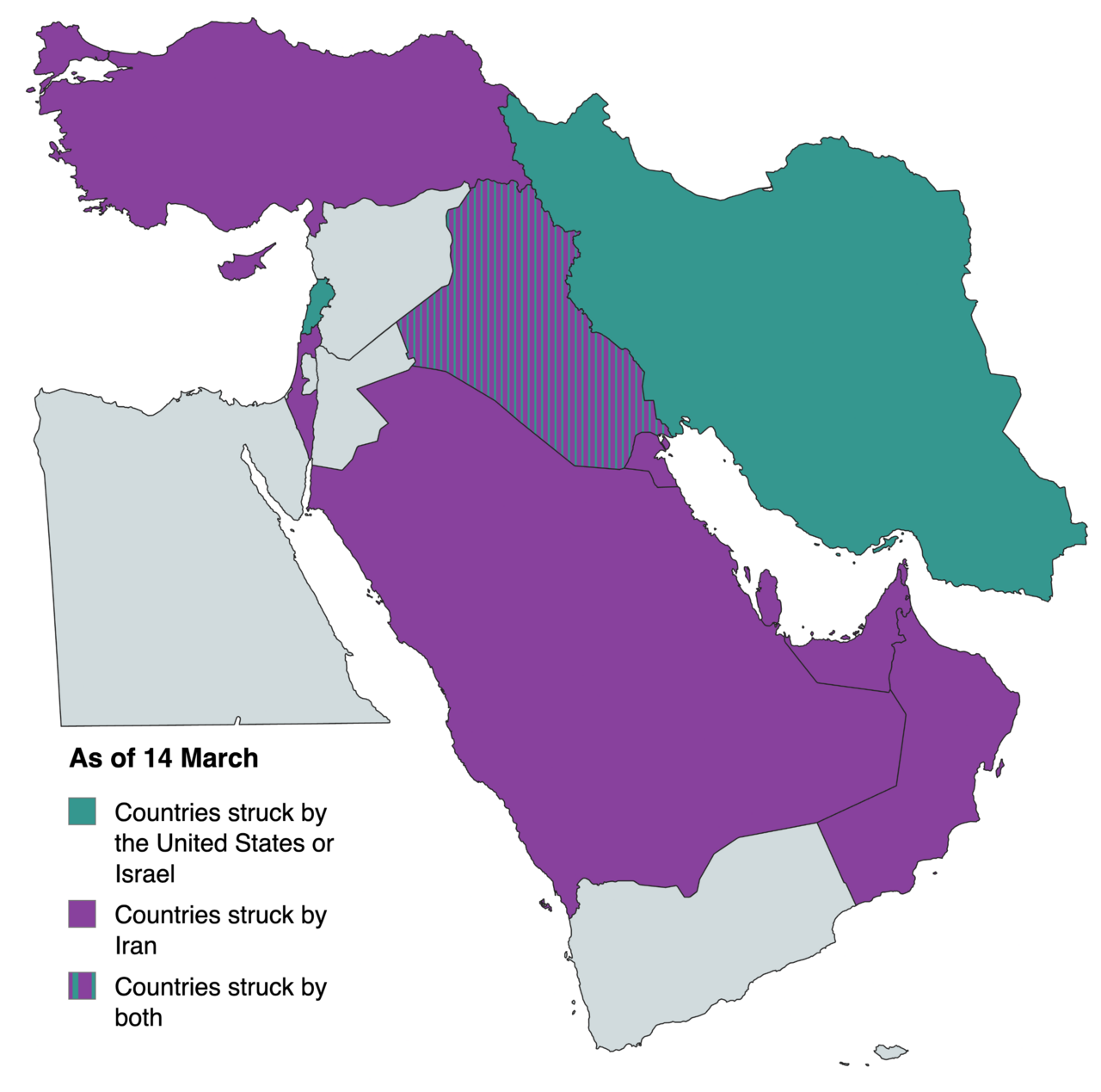
The recent collapse of Republican control over Congress has ignited a major political debate regarding the ongoing conflict with Iran. Following the crushing defeat in the midterm elections, Vice President JD Vance publicly singled out the Middle East engagement and the relationship with Israel as primary drivers of the GOP’s losses. This assertion has placed Donald Trump in a delicate position, forcing him to reconcile his steadfast support for the military action against Tehran with the political reality of voter backlash.
Contrasting Views on the Conflict’s Cost
Vance argued that the war is the fundamental reason for the party’s electoral failure, proposing several strategies to win back disaffected voters. These included terminating the current military operations in Iran, addressing the rising cost of living, and re-evaluating America’s alignment with Israel. While Trump acknowledged that the conflict was ‘a piece’ of the political damage, he strongly defended the necessity of the military intervention. He maintained that the action was justified because it prevents Iran from achieving nuclear capability, stating he would repeat the decision even if it meant electoral loss.
Political Ramifications and Policy Shifts
The divergence between the two senior Republicans adds a layer of complexity to Washington’s policy planning. Vance’s remarks have complicated the deliberation process as US officials consider whether to initiate new major combat operations against Iran. Furthermore, the political heat is intensifying for senior Pentagon figures, including Defense Secretary Pete Hegseth, who is already facing significant unpopularity within Congress and potential impeachment proceedings.
Meanwhile, the Democratic majority, having secured control of both chambers, has indicated its intention to pursue an end to the Iran conflict as part of a wider affordability initiative. This shift reflects deep voter frustration, particularly in conservative areas, where high gasoline prices and the general cost of living were cited as key factors fueling the Democratic surge. Critics, both conservative and liberal, have challenged Vance’s focus, with some commentators dismissing his claims as ‘nonsense’ while others pointed out that his narrative overlooked other economic and governance issues, such as tariffs and corruption.
The ongoing debate underscores a profound national division: whether the strategic imperative of preventing nuclear proliferation outweighs the immediate economic anxieties and political costs borne by the American electorate. As the legislative landscape shifts, the question of the conflict’s future remains one of the most contentious issues facing the nation.
