



World Views
Geopolitical Tensions Drive Massive Surge in Israeli Applications for German Citizenship

A striking trend is emerging within Germany’s historical citizenship restitution program, revealing how modern geopolitical instability is intersecting with a legacy of Nazi-era persecution. German authorities have received over 170,000 applications for citizenship from individuals who are heirs of those targeted by the Nazi regime. Notably, Israeli applicants now constitute nearly half of all claims filed, making them the largest group from any single nation—a dramatic increase driven by regional security concerns.
The Restitution Pathway
The program allows descendants of individuals whose nationality was revoked or prevented from being granted during the 1933–1945 period to reclaim their German citizenship. This special provision is designed to correct the historical injustices inflicted upon victims of the Nazi state. While the United States currently ranks second in submissions, the volume of applications from Israel has grown exponentially. Last year alone, the country saw a significant spike in these requests, contributing thousands of submissions to the overall increase in demand.
Drivers of the Modern Surge
Experts suggest that the current wave of interest is not solely historical but is heavily influenced by contemporary global crises. Lukas Fuchs, a sociologist specializing in migration, noted that the growth in popularity is tied to increasing regional instability. He pointed to several previous catalysts, including the fallout from Brexit in 2020 and the war in Ukraine starting in 2022. However, the most pronounced acceleration in Israeli submissions is directly linked to the atrocities and subsequent conflict that began in October 2023.
Fuchs explained that the mounting precariousness across the Middle East has prompted many Israelis to view acquiring an alternative passport as a vital security measure. He emphasized that, for most, this citizenship is intended as a ‘safeguard’ or a contingency plan, rather than an immediate blueprint for relocating to Europe. This mindset reflects a deep-seated historical awareness, noting that in the 1930s, many nations were unwilling to accept Jewish refugees.
Future Outlook and Contingency Planning
The trend highlights a complex interplay between historical justice and modern survival instincts. Many older applicants are seeking this status for younger family members, aiming to grant them greater opportunities and protection abroad against potential future turmoil. The sheer volume of applications underscores a profound shift in how many individuals are approaching personal security in an increasingly volatile world. While the legal framework remains focused on historical redress, the motivation behind the applications is clearly rooted in the urgent need for a ‘plan B’ in the face of ongoing global uncertainty.
World Views
Decades of Covert Operations: Documenting Iran’s Extensive History of Foreign Sabotage
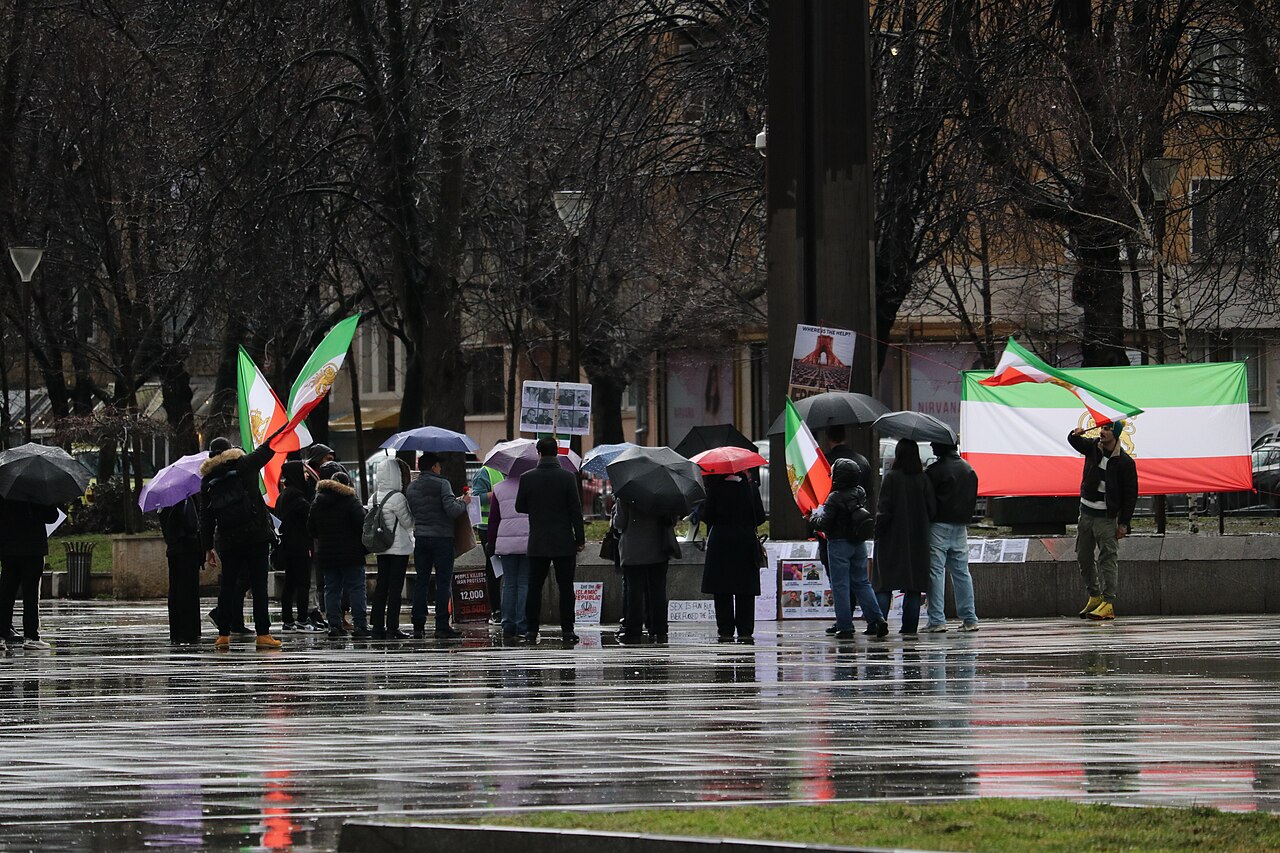
A recent article published by The Economist, which featured a statement from an Iranian academic, has drawn sharp criticism for allegedly presenting a misleading view of Tehran’s foreign policy. The claim that the Islamic Republic has largely avoided acts of assassination and sabotage abroad has been thoroughly refuted by a decades-long record of documented covert operations, demonstrating a sophisticated and enduring commitment to destabilizing regional and international targets.
A Long History of Aggressive Foreign Policy
Far from being a recent development, the regime’s involvement in foreign violence began shortly after the 1979 revolution. Historical records confirm the Islamic Republic carried out its initial foreign assassination in Paris in December 1979. This pattern of aggression intensified in the 1980s, notably when Iran directed its proxy, Hezbollah, to carry out a major bombing in Beirut in 1983, resulting in significant casualties among American and French military personnel. This propensity for violence extended to 1994, when Iranian-linked actors ordered a bombing targeting a Jewish community center in Buenos Aires.
Modern Threats and International Condemnation
In recent years, the scale and sophistication of these plots have significantly increased, with multiple attempts targeting dissidents and Western figures on foreign soil. US prosecutors charged Iranian intelligence officials in 2021 for plotting the kidnapping of a prominent Iranian dissident in New York. Further demonstrating the threat, the Department of Justice later charged IRGC members in connection with attempts to hire killers in the United States targeting former national security advisors, including John Bolton. The danger was highlighted again in 2022 when Iran nearly succeeded in assassinating former Secretary of State Mike Pompeo.
The targeting has not been limited to political figures. In 2024, Australia’s intelligence agency concluded that the IRGC directed arson attacks on Jewish-owned businesses and a synagogue in Australia, leading Canberra to expel the Iranian ambassador. Internationally, the threat has been formally recognized; the UK Parliament labeled the Islamic Republic a major security danger in 2025, citing numerous attempted murders and kidnappings of critics and prominent Jewish individuals on British soil. Major Western governments subsequently issued joint condemnations regarding Iranian intelligence efforts to harass and harm people in Europe and North America.
The Enduring Danger of Iranian Influence
The documented history shows that Iran’s campaign of violence is not isolated; it is a sustained effort targeting political opponents, dissidents, and members of the diaspora Jewish community. The intelligence services’ activities have recently expanded to include plots against international figures, such as the reported attempt to assassinate Israel’s ambassador in Mexico in 2024. This consistent pattern of action, from proxy warfare to direct attempts on Western leaders, confirms that Iran’s military and intelligence doctrine is inherently geared toward destabilization. The widespread evidence strongly contradicts any notion that the regime has avoided foreign acts of violence, positioning it as a critical and growing global security risk.
World Views
Polish Lawmaker Challenges School Displaying Israeli Flag, Sparking Debate Over Holocaust Memory

A contentious political dispute has erupted in Poland over the display of an Israeli flag at a school dedicated to a revered Holocaust rescuer. A lawmaker from the far-right Confederation of the Polish Crown has demanded the immediate removal of the blue-and-white banner, challenging the institution’s right to commemorate its patron, Henryk Sławik, whose life was dedicated to saving thousands of Jewish lives during World War II.
Clash Over Commemoration and National Identity
The conflict centers on a technical school in Rybnik, Silesia, named after Sławik, who was honored by Israel as a Righteous Among the Nations. During the patron’s celebrations, the school displayed the Israeli flag alongside Polish and Hungarian flags. The local representative, Roman Fritz, initiated an intervention in parliament demanding the flag’s removal and requiring a formal response within two weeks. Fritz, who aligns with Grzegorz Braun, a political figure known for revisionist views on historical atrocities, questioned the inclusion of the foreign state’s banner.
The School’s Defense and Historical Context
The school director firmly rejected the lawmaker’s demands, asserting that the educational institution should not be a venue for political demonstrations. She objected to the intrusive nature of the camera crew and the political nature of the visit. Defenders of the flag argue that the inclusion of the banner is a vital part of the historical narrative. Sławik, a socialist who worked in Hungary after the German invasion of 1939, provided aid to Polish refugees, helping save an estimated five thousand people. His actions directly contributed to the survival of the communities that later formed the State of Israel.
A Broader Political Indicator
Critics of the lawmaker’s stance point out that the argument fails on its own historical grounds. While Fritz attempted to frame the issue chronologically—arguing that Sławik worked before Israel’s founding—this ignores the broader context of the Jewish national movement, which existed throughout his life. The school’s position reflects a widely understood tradition in Poland, where the Israeli flag is a familiar symbol of remembrance at Holocaust memorials, representing the survivors’ state, not a political declaration against the government in Jerusalem. Furthermore, this incident is viewed by observers not as a local eccentricity, but as symptomatic of a growing trend among certain populist right-wing groups in Poland. These factions have recently used similar tactics, challenging other national and international symbols, indicating a wider ideological push against established Western alliances and historical memory.
World Views
A Potential National Pivot: Could Netanyahu Step Down for a Strategic Reset?
A highly unconventional political scenario has emerged, suggesting that Benjamin Netanyahu, who has dominated Israeli political life for decades, might voluntarily relinquish the premiership. This hypothetical move, which would see Gadi Eisenkot assume the role of Prime Minister, is being framed not as a political defeat, but as a potential, massive demonstration of national foresight. Proponents of the idea argue that such a transition could be one of the most consequential decisions of Netanyahu’s career, ultimately strengthening his historical standing.
The Case for a Leadership Change
Despite significant military achievements in recent years, the nation faces complex diplomatic headwinds. The political analysis suggests that while Israel’s operational capabilities have been impressive, these gains have come at the expense of its standing globally. International relations have become increasingly strained, particularly with traditional European allies, and the future trajectory of the relationship with the United States remains uncertain. Analysts contend that the country requires a period of consolidation—a ‘breathing room’—to stabilize diplomatic ties and prepare for a volatile geopolitical future.
Structuring the Transition
The proposal outlines a sophisticated arrangement where Netanyahu steps down from the top executive post but retains a crucial, influential national role. Instead of disappearing from the public sphere, he could become a senior diplomatic envoy, continuing the monumental effort to expand the Abraham Accords and build new connections with Arab and Muslim nations. Furthermore, this transition could be coupled with a comprehensive legal resolution, granting him a pardon and clearing all outstanding legal matters. This structure is designed to allow him to contribute to Israel’s future without holding the premiership.
A Strategic Portfolio
Alternatively, or in addition to diplomatic duties, Netanyahu could maintain a senior strategic defense position, focusing specifically on the escalating threats posed by Iran and the wider regional security environment. The core principle of this model is that the leader could surrender the highest office while simultaneously preserving his capacity to serve the nation’s interests. This voluntary act would serve as a powerful refutation to critics who frequently claim that his political longevity is driven purely by self-interest.
The Legacy of Letting Go
The symbolic weight of such a decision cannot be overstated. By prioritizing the national interest over personal ambition, Netanyahu could cement a legacy far beyond that of the longest-serving leader. This move would demonstrate extraordinary internal political maturity during a period of existential challenges. It would provide Israel with the opportunity for a national reset—a chance to repair international relationships and demonstrate political stability. The argument concludes that the greatest display of leadership is not the ability to cling to power, but the wisdom to know when it is time to yield it for the greater good.
