



World Views
Shifting Sands: Former Secretaries Debate Future of US-Israel Ties Amid Political Turmoil
In a high-profile appearance in Washington, former Secretaries of State Antony Blinken and Mike Pompeo offered assessments on the future of American military assistance to Israel, while simultaneously addressing the complex humanitarian and security challenges arising from the recent conflict. Both officials sought to reassure audiences that any potential adjustments to financial support would not fundamentally erode the deep historical bond between the two nations. However, their discussions revealed significant divergences regarding regional strategy, particularly concerning Iran and the path toward a Palestinian resolution.
The Political Climate and Military Aid
The conversation took place against a backdrop of intense domestic political pressure in the United States, where calls to reduce support for Israel have gained traction across the political spectrum. Blinken and Pompeo addressed the uncertainty surrounding annual financial commitments, such as the multi-year memorandum of understanding. Pompeo asserted that while the annual allocation of funds—much of which purchases American defense technology—is substantial, it is secondary to the intrinsic nature of the relationship. He maintained that strong connectivity and partnership would persist regardless of specific budget decisions. Blinken echoed this sentiment, suggesting that the Israeli government itself recognizes the need for self-sufficiency, stating that this internal realization does not diminish the inherent value of the partnership.
Critique of Gaza Conduct and Regional Strategy
Beyond the aid debate, Blinken offered a measured critique of the conflict in Gaza, noting that while the Israeli military actions met a certain minimal standard for those caught in the crossfire, there was evidence of a ‘disregard’ for the well-being of Palestinian civilians. He stressed that this was distinct from an intent to eliminate life, positioning the conflict primarily as a response to Hamas. He also cautioned that the United States is at a pivotal moment regarding its global attitudes toward Israel. Meanwhile, Pompeo and Blinken presented contrasting views on regional adversaries. Pompeo was highly skeptical of any diplomatic solution with the Iranian regime, advocating for continued economic pressure and targeting Iranian assets to mitigate threats to the Gulf region. Blinken, conversely, argued that while the war against Tehran was not a complete victory, sustained economic pressure is necessary to encourage negotiations, drawing parallels to past diplomatic efforts.
Diverging Views on the Palestinian Future
The two former officials also held differing views on achieving a long-term peace. Blinken maintained his long-standing belief that the only viable path forward requires both a secure Israel and a sovereign Palestine. He suggested that Hamas’s initial attack may have been a preemptive move against the expansion of the Abraham Accords. Pompeo challenged this viewpoint, arguing that the success of the regional agreements depended on not allowing the Israeli-Palestinian conflict to impede the necessary economic and diplomatic progress among Gulf nations. These contrasting perspectives highlight the complex, multifaceted nature of the geopolitical challenges facing the Middle East today.
World Views
Israel’s Political Crossroads: Opposition Leader Given Mandate to Form National Government
In a major political development, the President of Israel, Isaac Herzog, formally entrusted opposition politician Gadi Eisenkot with the responsibility of forming the nation’s next governing coalition. This mandate places Eisenkot, the leader of the centrist Yashar party, at the centre of a profound national crisis, with a strict six-week deadline to secure the necessary legislative majority. Eisenkot’s mission is widely viewed as a direct challenge to the current premiership of Benjamin Netanyahu.
The Call for Urgent Leadership
During the official ceremony in Jerusalem, President Herzog expressed his profound hope that the resulting government would foster national unity and healing among all segments of the population, stressing that the country’s survival depends on this cohesion. Eisenkot, accepting the heavy responsibility, characterized the nation’s current state as a ‘challenging and fateful emergency.’ He stressed that the country is experiencing one of its most precarious democratic periods, citing ongoing hostilities and a declining global standing. Eisenkot warned that maintaining the status quo risks leading the society to an irreversible point of decline, demanding immediate leadership that is trustworthy and singularly focused on national security and welfare.
Coalition Hurdles and Political Division
While Eisenkot has successfully garnered the backing of 67 members of the 120-seat Knesset, translating this support into a functional majority—which requires at least 61 seats—presents a significant political challenge. The opposition itself is highly fragmented. It is split between a four-party Jewish-led bloc, which includes Eisenkot’s faction, and a separate 19-seat bloc of Arab-led parties. A major obstacle to forming a broad front is that three of the four Jewish-led groups have explicitly ruled out cooperating with the Arab-led parties, creating substantial uncertainty regarding the potential makeup of his government.
Stalemate Persists with Netanyahu
Meanwhile, Netanyahu has maintained his push for a new administration under his command, indicating a willingness to engage in discussions with any party that does not support terrorism. However, Herzog had previously floated the idea of a unity government involving both Eisenkot and Netanyahu, an idea that has been rejected by all major Jewish opposition factions, who are demanding a change in leadership. Under the country’s political framework, Netanyahu will remain in office until a viable majority is successfully established, potentially leading to a general election in the spring if no coalition can be formed within the prescribed timetable.
World Views
Eisenkot Tapped to Lead Coalition Push Amid Deep Political Divide in Israel
In a pivotal moment for Israeli governance, President Isaac Herzog formally appointed Gadi Eisenkot to spearhead the process of forming the nation’s next administration. This mandate comes nearly two weeks after the country held its recent national election, thrusting Eisenkot into a high-stakes political race to unify a deeply fractured parliament. The former military commander has been given a six-week window to secure a governing coalition, which requires a majority of at least 61 seats in the Knesset. Eisenkot himself warned that the nation’s democratic health is currently facing significant strain, stating that the current trajectory could lead the country to a point of no return.
The Mandate for Unity and Change
During the official ceremony, President Herzog urged Eisenkot to build a government that would serve the entirety of the Israeli populace, regardless of their political leanings, faith, or lifestyle. Eisenkot acknowledged the intense political divisions revealed during the consultations, noting that he intends to bridge these gaps and attempt to establish a national emergency government, even if it requires unconventional political maneuvers. His campaign has positioned him as a figure dedicated to change, contrasting sharply with the incumbent leader, Benjamin Netanyahu, who has called on Eisenkot to join a national unity front.
Ideological Pillars for Coalition Partners
To guide potential partners, Eisenkot has outlined four core principles that any joining party must accept. These demands are designed to define the new administration as one committed to both Jewish national identity and democratic stability. The first principle requires the recognition of Israel as a Jewish and democratic state. Secondly, partners must embrace the foundational values outlined in the Declaration of Independence, emphasizing equality and peace for all residents. The third, and perhaps most contentious, condition mandates universal service—military, national, or civilian—for all citizens, a direct challenge to ultra-Orthodox exemptions. Finally, Eisenkot insists on the official recognition of Hamas as a terrorist organization and a commitment to dismantling its governing power.
Navigating Political Fault Lines
These principles reveal the immense ideological hurdles ahead. The requirement for universal service has met resistance from certain ultra-Orthodox factions, while the demand to label Hamas a terror group faces reluctance from some Arab political groups who seek to maintain dialogue with Palestinian factions. Eisenkot is now set to issue formal invitations to all Knesset factions, requiring them to commit to these four tenets if they wish to become part of his proposed government. The success of this mission will not only determine the immediate political future of Israel but will also define the ideological direction of the country in the years to come.
World Views
Boy George Finds Emotional Release and Defiance on Tel Aviv Stage
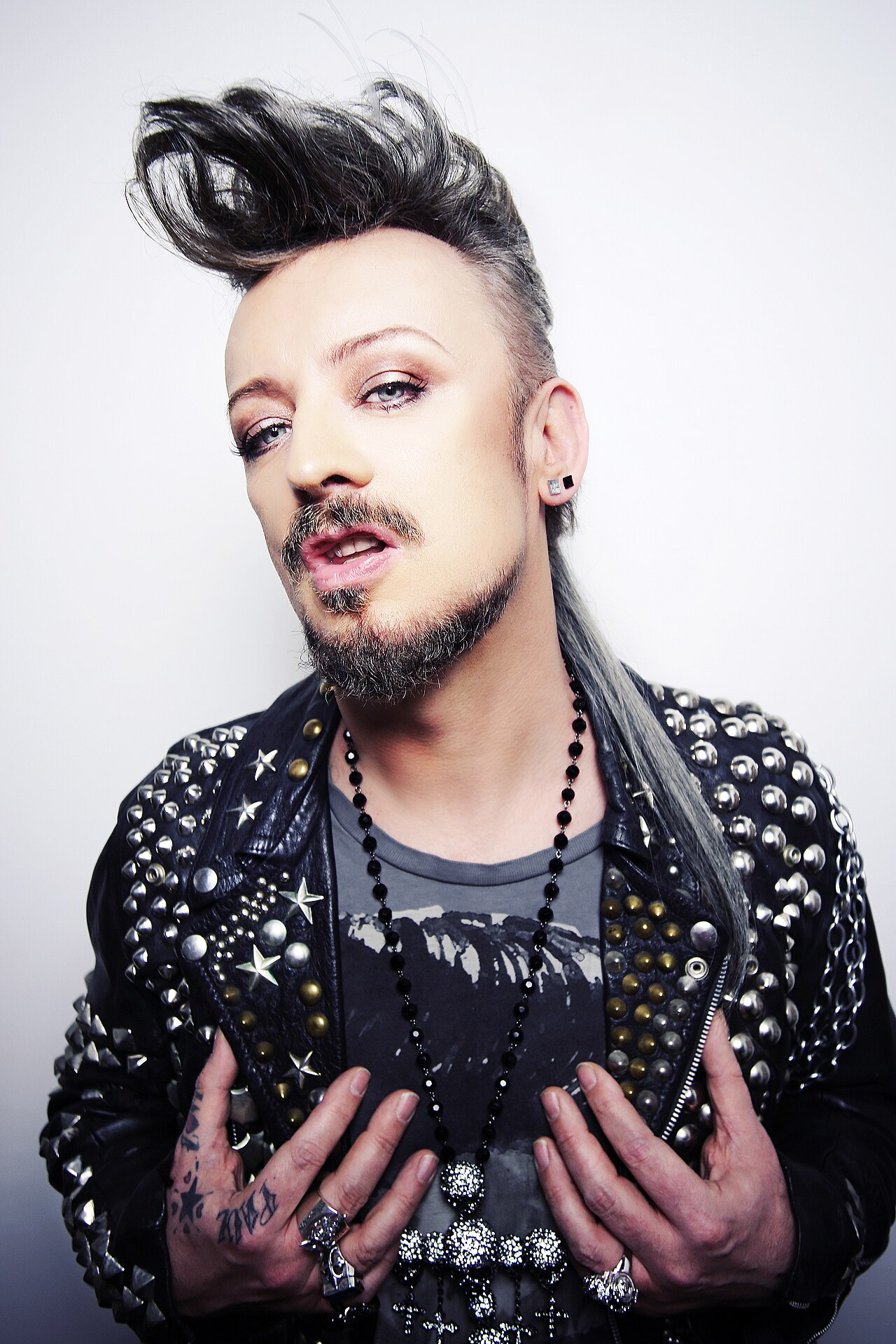
The second performance of British pop icon Boy George in Tel Aviv was a complex blend of theatrical humor, musical nostalgia, and profound political weight. At 65, the former star of Culture Club surprised audiences with a show that was far more than just a nostalgia tour; it served as a powerful declaration of solidarity and a cathartic reckoning with recent national trauma. Despite minor technical hiccups and forgotten lyrics, the singer captivated a near-capacity crowd, weaving his personal resilience into the fabric of the evening’s intense atmosphere.
A Concert of Defiance and Dedication
George’s visit, which included a visit to the Nova massacre site and a meeting with President Isaac Herzog, placed him at the center of Israel’s recovery narrative. He is known for his outspoken support of Israel, a stance that has drawn significant criticism from within the global music community. During the show, he directly addressed his detractors, asserting that his personal opinions were secondary to his unwavering convictions. He emphatically stated that remaining silent on the October 7 Hamas attack was simply not an option, a sentiment met with thunderous applause.
Addressing National Pain and Personal Struggles
The evening was deeply dedicated to the survivors and families of the Nova music festival tragedy, with thousands of tickets donated to community members. The emotional climax arrived with his song, ‘We Will Dance Again,’ which explicitly referenced the atrocities of the recent violence and challenged the silence of other artists. George, who appeared visibly moved, shared the stage with bereaved relatives and survivors, embracing them as the reggae-inflected track played. He noted that being an outsider witnessing this mix of sorrow and recovery felt ‘awkward’ for him.
The Spectrum of Response
While some attendees were deeply moved by the performance’s humanity, others offered sharp critiques. Some audience members praised George for handling the performance’s imperfections with grace and humor, while others criticized the musical execution and the crowd’s perceived need for approval. George maintained his characteristic irreverence, dismissing global disapproval while affirming that his mother would be proud of his stance in support of Israel. He contrasted the relaxed feeling of the Israeli atmosphere with the tension he described in London, concluding the nearly two-and-a-half-hour spectacle with a powerful rendition of ‘Karma Chameleon.’ The concert cemented his role not just as an entertainer, but as a defiant and vocal figure in the ongoing national discourse.
