



World Views
Beyond Left vs. Right: The Deepening Fault Lines Fracturing American Jewish Community

The internal divisions within the American Jewish community are proving to be far more complex than simple political left-versus-right alignments. Driven by nuanced disagreements over Jewish identity, the definition of antisemitism, and the community’s relationship with Israel, the community is experiencing a profound fracture. While the intense shock and grief following the attacks on Israel in late 2023 briefly fostered a sense of unity, that consensus has since dissolved, revealing deep-seated ideological fault lines.
Defining the Crisis of Discourse
According to research by Roberta Rosenthal Kwall, a law professor at DePaul University, the polarization is characterized not merely by differing opinions, but by a tendency toward intense, toxic vilification. This dynamic pits politically and religiously liberal segments—which constitute the vast majority of the population—against a more conservative minority, largely comprised of the Orthodox community. Experts note that while historical disagreement is normal, the current environment involves individuals viewing those who disagree with them as fundamentally immoral or evil.
The Call for a Sensible Middle Ground
Kwall proposes a path forward: the establishment of a broad, confident Jewish center built upon a foundational consensus. This agreement would acknowledge Israel’s right to exist as a Jewish and democratic state, commit to combating antisemitism regardless of its origin, and accept the legitimacy of criticizing Israeli government policies. Furthermore, the proposed framework calls for American Jews to extend sympathy and support to innocent Palestinians.
Navigating Ideological Extremes
The challenge of achieving this consensus is significant. Critics argue that a focus on unity risks marginalizing those who fundamentally challenge the premise of a Jewish state. Kwall, however, maintains that while a broad tent is necessary, it cannot be a structure without core principles. She is clear that individuals who reject the basic right of Israel to exist as a Jewish democratic state cannot be part of this communal enterprise.
The path to reconciliation, she argues, requires a concerted effort to develop this ‘sensible middle ground.’ This initiative must be consciously directed toward younger generations, such as Gen Alpha, who need to be engaged affirmatively rather than through the divisive rhetoric of the past. While acknowledging that some segments of the community have greater difficulty engaging in dialogue, the central argument remains that a majority of American Jews can agree on a core set of principles necessary to prevent the community from collapsing under the weight of its own intense internal conflicts.
World Views
Democratic Leadership Calls for Fundamental Shift in U.S.-Israel Alignment
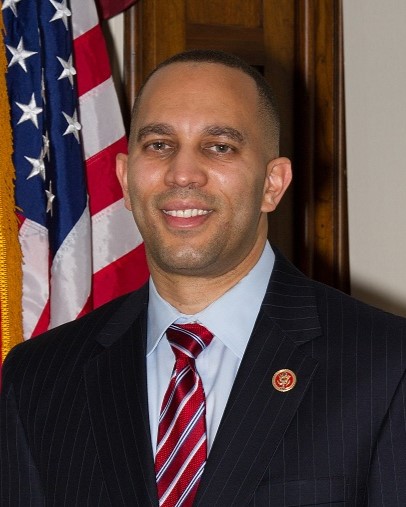
As Democrats prepare to assume control of the U.S. House, Minority Leader Hakeem Jeffries has publicly advocated for a profound transformation in the relationship between the United States and Israel. While clarifying that he does not intend to oppose defense collaborations, Jeffries asserted that the current state of affairs is unacceptable and requires significant, dramatic alteration. His remarks signal a notable evolution in the Democratic party’s approach to the Middle East, moving toward a more critical stance on the established policies governing the region.
Core Policy Demands and Strategic Concerns
Jeffries focused his concerns on several critical areas, including the situation in Gaza and the West Bank. Furthermore, he addressed the military aid agreement with Israel, a memorandum signed by the Obama administration in 2016 that commits $38 billion in assistance until 2028. He stressed the urgent need for a meaningful change in this arrangement as the current pact nears its expiration date. This call for change is occurring against a backdrop of differing views; while some political figures, such as former President Donald Trump, have suggested reducing the aid before its lapse, Israeli Prime Minister Benjamin Netanyahu and his government favor maintaining and strengthening existing military partnerships.
Jeffries laid out a vision for the future, emphasizing the necessity of ensuring a secure and safe Israel that coexists with an independent Palestinian state. He stated that this future arrangement must provide dignity and self-determination for the Palestinian population. This perspective stands in contrast to the views held by Netanyahu and large segments of the Israeli public, who generally oppose the establishment of a Palestinian state.
The Political Context and Evolving Stance
The discussion around defense collaboration also touched upon recent legislative efforts, such as those proposed by Senator Chris Van Hollen to remove certain defense provisions from the National Defense Authorization Act. Though Jeffries did not comment on specific discussions with the senator, his public declaration underscores a growing political movement within the Democratic caucus. His comments reflect a broader shift in the party’s posture, moving away from previous diplomatic positions toward a more interventionist and critical role in the conflict.
Jeffries also highlighted that Israel possesses a strong economy and the capacity to fund its own defense needs. He suggested that any future security arrangements should align with the defense agreements established with other Western allies. While he previously argued that restricting military assistance could limit Israel’s capacity to confront militant groups like Hamas and Hezbollah, he maintained that a lasting peace is achievable. He concluded by assuring colleagues that the caucus would work together to achieve the just and enduring peace that both Israelis and Palestinians merit.
World Views
Mississippi Senator’s Victory Challenges Narrow Definitions of American Identity

The election of Scott Colom as Mississippi’s first Black U.S. senator since the Reconstruction era has been hailed not just as a political milestone, but as a potent reminder of the ideals of American life. In an era defined by extreme political and cultural division, his success in one of the nation’s deepest Southern states offers a powerful counter-narrative to rising ethno-nationalism and bigotry.
A Call for Inclusive Americanism
For many observers, Colom’s win represents a reaffirmation of the foundational American principle: the nation is a multiethnic, multiracial, and multi-religious entity. This perspective stands in stark contrast to the various forms of exclusionary politics currently dominating the political landscape, including white supremacy and various forms of nationalism. Colom’s victory is viewed as a significant repudiation of the historical prejudices that marked the region.
The sentiment surrounding this victory is deeply rooted in the history of diverse immigration and citizenship. Reflecting on his own background as a Jewish American whose family survived the horrors of the Holocaust, the author of the analysis posits that true American identity is defined by the ability to be proudly oneself without disparaging others. This idea is supported by historical examples of liberal Jewish and African American leaders who operated within the political sphere during the early Civil Rights movement.
Navigating Polarization and Prejudice
The current climate is marked by severe societal tensions. Reports indicate that rising antisemitism and discrimination against immigrant communities, including Muslim and Sikh populations, are creating environments of fear. This polarization is often characterized by individuals retreating into insulated political camps, shouting at each other without genuine listening. Colom, alongside other diverse elected officials like Jon Ossoff and Keisha Lance Bottoms, is seen as part of a trend of leaders appealing to populations that are distinct from their own, embodying a commitment to broad representation.
Addressing his constituents in his campaign speech, Colom pledged a commitment to treating the future and families of all Mississippians with the utmost respect. This pledge echoes a broader moral imperative. The analysis suggests that true American character requires empathy, even towards those with opposing viewpoints. This moral courage, the source of strength even in conflict, was highlighted by religious leaders who emphasize the duty to remain humane regardless of circumstance.
The Path Forward
Colom’s election serves as a beacon of hope, reminding citizens that the promise of a truly inclusive America remains attainable. His success in a historically resistant state suggests that a future built on mutual respect and shared citizenship—the kind the author embraced when becoming a naturalized citizen—is not merely an ideal, but a viable goal for the nation.
World Views
Somerville Council Passes Controversial Ban on Business Tied to Middle East Conflicts

The City Council in Somerville, Massachusetts, has officially adopted a measure banning the municipality from engaging in business with any companies found to be involved in humanitarian rights abuses related to Israel and Palestine. The measure passed by a decisive 10-1 vote, cementing its status as final after the Mayor’s office confirmed the veto-proof majority. The ordinance mandates that any vendor seeking city contracts must certify that they are not directly, knowingly, or consistently enabling violations of international humanitarian law.
Scope and Operational Concerns
The new policy is strictly limited to businesses contracted by the city and does not affect private companies or individual sole proprietors operating within the community. The ordinance requires the city to consult international human rights databases, including those maintained by the United Nations and the American Friends Service Committee, if a vendor’s certification is disputed. However, practical concerns were raised during the legislative process. City procurement officials voiced apprehension that the measure might face legal challenges, noting that the city lacks the full legal authority to prohibit bidders and that the criteria implementation could cause confusion and delays.
Political and Community Polarization
The passage of the ban has ignited fierce debate across the community. Proponents, including Councilors who drafted the legislation, emphasized the importance of municipal action on a global scale, particularly in light of recent federal actions restricting pro-Palestinian protests. One councilor stated that collective silence regarding the issue is itself a form of impact. Opponents, led by the sole dissenting councilor, argued that the ordinance carries undertones of an antisemitic boycott, asserting that it makes Jewish residents feel targeted and unwelcome, drawing parallels to historical events like Kristallnacht.
Background and Future Outlook
The ordinance evolved from a broader movement, following a November 2025 ballot approval for Question 3, which called for divestment from businesses supporting ‘Israel’s apartheid, genocide, and illegal occupation of Palestine.’ While Mayor Jake Wilson did not endorse that original ballot measure during his campaign, the final council ordinance was introduced months later by Councilors Ewen-Campen and Wheeler. Supporters of the measure celebrated the vote, viewing it as a strong stance against ‘bad actors.’ Conversely, local community groups opposing the law expressed disappointment, noting that the Mayor had made prior pledges to veto any such country-specific ordinance.
The deep division remains palpable, with supporters of the ban celebrating the legislative victory while opponents voiced concerns about the ordinance’s effect on the local Jewish community, highlighting the tension between advocating for global human dignity and protecting local residents from perceived targeted discrimination.
