



World Views
Somerville Council Passes Controversial Ban on Business Tied to Middle East Conflicts

The City Council in Somerville, Massachusetts, has officially adopted a measure banning the municipality from engaging in business with any companies found to be involved in humanitarian rights abuses related to Israel and Palestine. The measure passed by a decisive 10-1 vote, cementing its status as final after the Mayor’s office confirmed the veto-proof majority. The ordinance mandates that any vendor seeking city contracts must certify that they are not directly, knowingly, or consistently enabling violations of international humanitarian law.
Scope and Operational Concerns
The new policy is strictly limited to businesses contracted by the city and does not affect private companies or individual sole proprietors operating within the community. The ordinance requires the city to consult international human rights databases, including those maintained by the United Nations and the American Friends Service Committee, if a vendor’s certification is disputed. However, practical concerns were raised during the legislative process. City procurement officials voiced apprehension that the measure might face legal challenges, noting that the city lacks the full legal authority to prohibit bidders and that the criteria implementation could cause confusion and delays.
Political and Community Polarization
The passage of the ban has ignited fierce debate across the community. Proponents, including Councilors who drafted the legislation, emphasized the importance of municipal action on a global scale, particularly in light of recent federal actions restricting pro-Palestinian protests. One councilor stated that collective silence regarding the issue is itself a form of impact. Opponents, led by the sole dissenting councilor, argued that the ordinance carries undertones of an antisemitic boycott, asserting that it makes Jewish residents feel targeted and unwelcome, drawing parallels to historical events like Kristallnacht.
Background and Future Outlook
The ordinance evolved from a broader movement, following a November 2025 ballot approval for Question 3, which called for divestment from businesses supporting ‘Israel’s apartheid, genocide, and illegal occupation of Palestine.’ While Mayor Jake Wilson did not endorse that original ballot measure during his campaign, the final council ordinance was introduced months later by Councilors Ewen-Campen and Wheeler. Supporters of the measure celebrated the vote, viewing it as a strong stance against ‘bad actors.’ Conversely, local community groups opposing the law expressed disappointment, noting that the Mayor had made prior pledges to veto any such country-specific ordinance.
The deep division remains palpable, with supporters of the ban celebrating the legislative victory while opponents voiced concerns about the ordinance’s effect on the local Jewish community, highlighting the tension between advocating for global human dignity and protecting local residents from perceived targeted discrimination.
World Views
Mississippi Senator’s Victory Challenges Narrow Definitions of American Identity
The election of Scott Colom as Mississippi’s first Black U.S. senator since the Reconstruction era has been hailed not just as a political milestone, but as a potent reminder of the ideals of American life. In an era defined by extreme political and cultural division, his success in one of the nation’s deepest Southern states offers a powerful counter-narrative to rising ethno-nationalism and bigotry.
A Call for Inclusive Americanism
For many observers, Colom’s win represents a reaffirmation of the foundational American principle: the nation is a multiethnic, multiracial, and multi-religious entity. This perspective stands in stark contrast to the various forms of exclusionary politics currently dominating the political landscape, including white supremacy and various forms of nationalism. Colom’s victory is viewed as a significant repudiation of the historical prejudices that marked the region.
The sentiment surrounding this victory is deeply rooted in the history of diverse immigration and citizenship. Reflecting on his own background as a Jewish American whose family survived the horrors of the Holocaust, the author of the analysis posits that true American identity is defined by the ability to be proudly oneself without disparaging others. This idea is supported by historical examples of liberal Jewish and African American leaders who operated within the political sphere during the early Civil Rights movement.
Navigating Polarization and Prejudice
The current climate is marked by severe societal tensions. Reports indicate that rising antisemitism and discrimination against immigrant communities, including Muslim and Sikh populations, are creating environments of fear. This polarization is often characterized by individuals retreating into insulated political camps, shouting at each other without genuine listening. Colom, alongside other diverse elected officials like Jon Ossoff and Keisha Lance Bottoms, is seen as part of a trend of leaders appealing to populations that are distinct from their own, embodying a commitment to broad representation.
Addressing his constituents in his campaign speech, Colom pledged a commitment to treating the future and families of all Mississippians with the utmost respect. This pledge echoes a broader moral imperative. The analysis suggests that true American character requires empathy, even towards those with opposing viewpoints. This moral courage, the source of strength even in conflict, was highlighted by religious leaders who emphasize the duty to remain humane regardless of circumstance.
The Path Forward
Colom’s election serves as a beacon of hope, reminding citizens that the promise of a truly inclusive America remains attainable. His success in a historically resistant state suggests that a future built on mutual respect and shared citizenship—the kind the author embraced when becoming a naturalized citizen—is not merely an ideal, but a viable goal for the nation.
World Views
Political Fault Lines and Community Strength Define Jewish New York’s Current Landscape

The current climate within Jewish New York is characterized by a stark juxtaposition: intense ideological polarization on global politics coexists with robust, deeply rooted community service and cultural preservation. Recent events highlight a complex internal dialogue, ranging from heated debates about Zionism and international conflict to significant philanthropic movements advocating for educational reform and vital charitable outreach across Long Island.
Ideological Divides in Global Policy
Political discourse is particularly sharp when examining the relationship between Jewish identity and global conflicts. A recent discussion featuring columnist Ezra Klein and commentator Hasan Piker brought to light intense disagreements regarding the definition of ‘liberal Zionism.’ Piker asserted that adopting the label of a ‘liberal Zionist’ is comparable to identifying as a ‘liberal Nazi.’ This viewpoint aligns with the stance of New York’s U.S. Rep.-elect Brad Lander, who shares the designation while publicly stating that Israel has committed genocide in Gaza. Piker, however, challenged Lander’s position, specifically criticizing him for expressing grief over the casualties of two Israeli Defense Forces soldiers at a West Bank checkpoint. This exchange underscores the deep fissures within the community regarding the scope of political allegiance and moral responsibility.
Education Funding Battles and Philanthropic Influence
Beyond the geopolitical sphere, significant financial and policy battles are unfolding in the realm of education. Billionaire Mike Bloomberg recently provided a substantial $1 million donation to Great Public Schools New York, an organization campaigning to increase funding and lift limitations on charter schools across the state. This movement has historically attracted support from major donors, including Daniel Loeb and Paul Singer. Opposing this push is Mayor Zohran Mamdani, who advocates for the preservation of traditional public education models. It is noteworthy that this group of high-profile donors also tends to disagree with Mamdani’s sharp criticisms concerning Israel.
Resilience Through Service and Culture
Amid these high-stakes political and financial debates, the community continues to demonstrate powerful resilience through acts of service. The UJA-Federation of New York hosted its annual ‘Families Helping Families’ initiative, mobilizing over 450 volunteers. These dedicated individuals worked across three Long Island locations, packing essential aid, including nearly 400 Thanksgiving meals, more than 300 snack packages, and approximately 300 packages themed for Hanukkah, ensuring support for local families in need. Furthermore, the cultural commitment to historical memory was observed as the group Holocaust Music Lost & Found celebrated its fifth anniversary, hosting a performance by pianist Jeanne Golan, reinforcing the importance of preserving the memory of the Holocaust.
The dual narrative of Jewish New York—marked by sophisticated political engagement and profound charitable action—demonstrates a community grappling with complex modern pressures while maintaining a powerful commitment to mutual aid and cultural identity.
World Views
Netanyahu’s Son Publishes Memoir Claiming Israeli Institutions Orchestrated Father’s Political Downfall
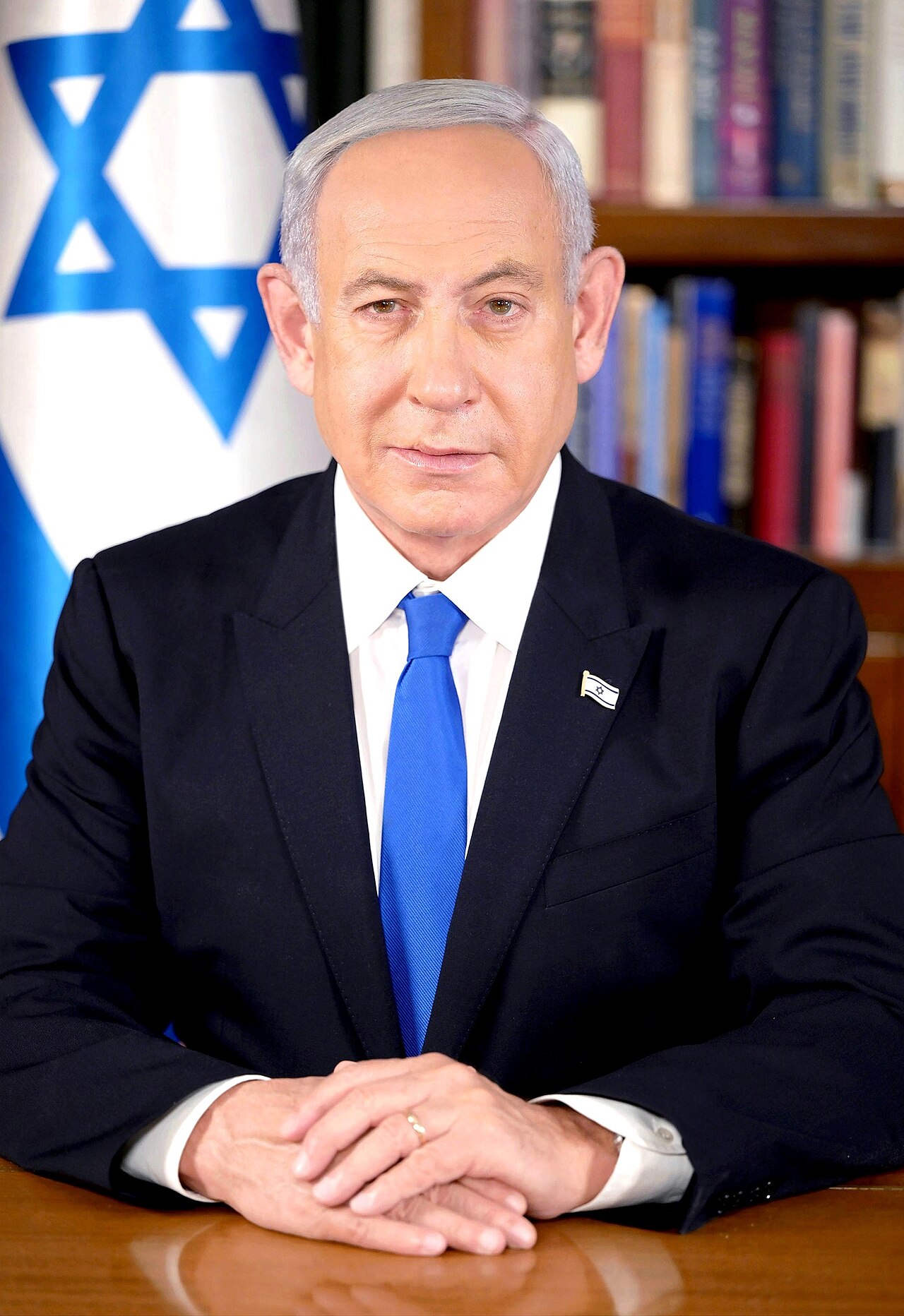
A new memoir published by Yair Netanyahu, the 35-year-old son of Israeli Prime Minister Benjamin Netanyahu, asserts that his father’s removal from power was the result of a coordinated effort by both international and domestic adversaries. The forthcoming book, titled “Two-Front War: Inside Israel’s Fight for Survival — Against Foreign Enemies and Domestic Saboteurs,” is slated for release in March 2027 through Simon & Schuster. The volume outlines a dramatic narrative, alleging that the governance structures of Israel—including its judicial bodies, law enforcement, media outlets, and intelligence services—all conspired against the incumbent leader.
Allegations of a State-Sponsored Coup
According to the book’s promotional material, Yair Netanyahu, who describes himself as a fervent supporter of Zionism, discovered evidence that institutions within Israel were working to displace his father. The narrative suggests that when the governing bodies focused their attention on removing the Prime Minister, he found himself within a complex bureaucratic environment that few citizens ever witness. Netanyahu has been facing legal scrutiny since 2020 across three separate allegations of financial misconduct, including bribery and fraud, all of which he has vehemently denied. His son claims that the prosecutors and police involved in these legal proceedings actively attempted to stage a ‘coup’ and committed acts of ‘treason.’
A History of Controversy and Political Divisiveness
The memoir places the ongoing political turmoil within a broader, more sinister context, claiming that the October 2023 attacks on the nation ‘unmasked’ a network of radical elements. These alleged networks, the book asserts, included neo-Nazis, radical Islamist groups, and far-left political factions, who were collaborating in a larger scheme designed to destabilize Western civilization. However, Yair Netanyahu remains a highly polarizing figure in Israeli society. He is widely known for using social media to promote his father’s political stance while simultaneously advancing far-right conspiracy theories. Previously, he faced international criticism for sharing material that alleged a powerful Jewish philanthropist controlled his father’s political opponents.
The Publishing Nexus and Financial Links
The book’s publisher, RatPac Press, is connected to RatPac Entertainment, a company founded by filmmaker Brett Ratner and Australian billionaire James Packer. Packer has a documented relationship with the Netanyahu family; he was previously named in a corruption indictment related to gifts of cigars and champagne given to the Prime Minister and his wife between 2014 and 2016. Packer had previously stated to authorities that he was ‘happy to give him presents, many times at his request and his wife Sara’s request.’ The inclusion of these financial ties adds a layer of complexity to the high-stakes political saga detailed in the forthcoming publication, which paints a picture of a nation besieged by both internal and external threats.
