



World Views
French School Administrator Targeted by Extreme Antisemitic Threats Amid National Surge in Hate Crimes
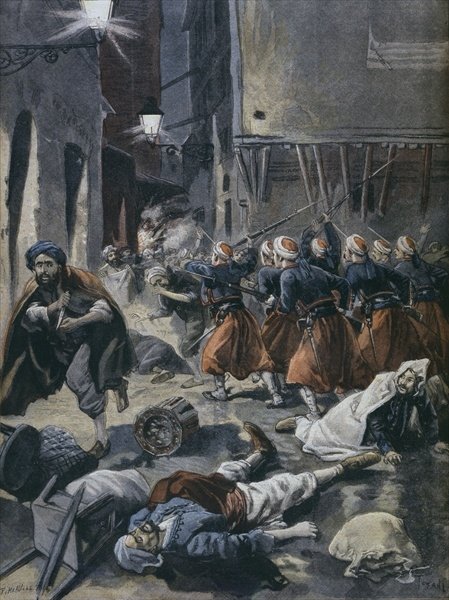
A disturbing incident targeting a Jewish school administrator in the suburbs of Paris has brought the rising tide of anti-Jewish hatred in France into sharp focus. Authorities have launched a major investigation after discovering severely threatening graffiti at the Charles-de-Gaulle High School in Rosny-sous-Bois. The vandalism, found within the school’s facilities, contained explicit slurs, a Star of David, and a direct call for the 60-year-old employee to be ‘burned,’ escalating the situation from simple vandalism to a serious threat of violence.
Legal Action and Institutional Response
The administrative assistant, who has dedicated 26 years to the school, formally filed a police complaint regarding the extreme nature of the death threats. She has since been placed on sick leave and has requested a transfer to a different institution. In response to the threat, the regional education authority provided her with functional protection, an administrative measure designed to safeguard civil servants facing harassment or violence related to their professional duties.
The victim’s legal counsel has strongly advised prosecutors to classify the incident by emphasizing that the attack was rooted in her Jewish identity. The lawyer asserted that the hateful messages clearly demonstrated a deliberate targeting of her faith. He stressed that the victim is not involved in political debates concerning Gaza or Israel; rather, she is known simply for her Jewish heritage and her surname.
Prosecution Focuses on Religious Motive
Investigators are actively working to reclassify the case, moving it toward charges of ‘death threats against a person in charge of a public service mission committed because of religion.’ This serious offense carries potential penalties, including imprisonment for up to seven years and a substantial fine. To date, law enforcement has not made any arrests related to the incident.
A National Crisis of Antisemitism
This local case is symptomatic of a far larger societal crisis. France has experienced a dramatic increase in anti-Jewish incidents over the past three years, a trend accelerated following the October 7, 2023, atrocities in Israel. Data compiled by the French Interior Ministry indicates that while the number of incidents recorded last year was 1,320, this figure still represents a pervasive threat, with more than 3.5 anti-Jewish events occurring every single day.
Statistical analysis shows that antisemitic acts have never been as widespread in the country as they have been in the recent triennium. Although there was a slight decline from the high count of 2023, the figures demonstrate a massive increase compared to pre-crisis years. Critically, despite Jews comprising less than one percent of the French population, they were responsible for a staggering 53 percent of all crimes motivated by religious hatred last year. This trend shows that the Jewish community is facing an unprecedented level of vulnerability, making the investigation into the administrator’s case a critical barometer of the nation’s struggle against rising extremism.
World Views
The Limits of Ambition: When Professional Success Conflicts with Personal Integrity

The pursuit of extraordinary professional achievement often demands relentless dedication, creating a narrative where success appears to justify every sacrifice. Yet, a critical examination of modern corporate leadership and ancient narratives reveals a profound tension: can monumental professional output exist independently of personal integrity and ethical conduct? The question forces a difficult reckoning regarding what we truly prioritize when dedicating vast amounts of time and energy to building something significant.
The Search for Meaningful Effort
Philosophical discussions about the nature of labor often center on the concept of purpose. Some historical accounts illustrate how focused effort, driven by a clear personal objective, can make arduous periods seem brief. The underlying message is that work, even when demanding, remains worthwhile when its ultimate function is clearly understood. However, this ideal is complicated by the reality of human fallibility. Ambition, no matter how noble, does not act as an absolute shield against disappointment or the failures of others.
In the modern context, this pursuit of purpose is often weighed against the demands of a complex life. Individuals are expected to juggle professional responsibilities, family commitments, personal faith, and leisure. Analysts suggest that while clarity of purpose helps in prioritizing demands, it cannot eliminate every competing obligation. The challenge lies in ensuring that professional goals do not overshadow the fundamental duties owed to family or community.
Corporate Accountability in the Spotlight
This philosophical dilemma gained sharp public focus recently concerning a major technology leader. The chief executive of a globally influential tech firm, known for building a massive enterprise, recently resigned following revelations about serious personal misconduct. The company’s board subsequently confirmed that there were no plans for his return. Investigations and public reports highlighted significant concerns regarding his private actions, despite his decades of dedication to the company’s growth.
This high-profile departure prompted a broader discussion among business ethicists. It raises the critical point that even those who devote tremendous energy to creating powerful institutions cannot guarantee that every aspect of their life will align with the highest standards. A powerful mission can certainly structure a life, but it cannot, by itself, dictate moral choices. Personal responsibility must encompass all aspects of existence, not just professional output.
Realigning Priorities and Defining Success
Ultimately, the confluence of ancient wisdom and contemporary corporate scrutiny asks us to redefine what success truly means. Is it measured solely by market capitalization and innovation, or does it require a holistic measure of character? The narrative suggests that the most valuable measure of a life is not merely the intensity of its commitment, but the ethical breadth of that commitment. Every individual must assess if the hours invested in their career genuinely reflect their deepest, most foundational values, and whether their ambition is carrying them toward a life they consciously intend to build.
World Views
Barbra Streisand Secures Top-Tier Spot on Variety’s List of Greatest Movie Stars

Variety magazine recently released its comprehensive ranking of the 100 most influential cinematic figures of all time, placing veteran performer Barbra Streisand within the elite Top 10. The recognition underscores the depth of her career impact, which spans far beyond traditional acting roles. The Brooklyn native, a figure known for her immense talent across multiple disciplines, was highlighted as the highest-ranked Jewish-born artist on the list, alongside cinematic icons such as Paul Newman and Dustin Hoffman.
A Legacy Defined by Performance and Versatility
The publication singled out her 1968 film, ‘Funny Girl,’ as the pinnacle of her cinematic achievements. Streisand’s career is a testament to relentless ambition; she is not only an acclaimed recording artist but also a director, producer, author, and screenwriter. Variety acknowledged her status as a ‘lifelong overachiever,’ noting that her Oscar-winning debut powerfully established her as someone who lives and performs with absolute intensity. The magazine commentary suggested that her natural affinity for the spotlight might have led her to even greater film output.
Commitment to Justice Beyond the Silver Screen
While her artistic prowess is undeniable, the report emphasized Streisand’s significant contributions to social justice. The performer is a vocal advocate against antisemitism and has dedicated substantial effort to philanthropic causes. This commitment was recently honored when she received the 2024 Genesis Prize. Following the award, she directed the entire prize fund toward seven distinct charitable organizations. These groups focus on critical issues including environmental sustainability, women’s health advocacy, combating media misinformation, and providing aid to citizens affected by the ongoing conflict in Ukraine.
Variety’s critics compiled the ranking based on several crucial metrics: a performer’s overall impact, their artistry, influence, and presence on screen. The list also provided context on other legends, featuring Marilyn Monroe at the very top spot, and Sidney Poitier ranked sixth. Poitier, an Academy Award recipient, shared in a past interview how a former coworker taught him how to read English, highlighting the diverse and profound influences that shape cinematic history. Streisand’s placement among these titans confirms her status not just as a star, but as a powerful cultural and moral force.
World Views
Record Van Gogh Sale Closes Chapter on Complex Nazi-Era Ownership Dispute

A celebrated landscape by Vincent van Gogh, titled ‘Châtaigniers en fleurs,’ commanded a staggering $190.4 million at Sotheby’s in New York, setting a new auction benchmark for the Dutch master. The historic sale, which was ultimately secured by New York dealer Bill Acquavella, was shadowed by a dramatic legal confrontation concerning its provenance, specifically allegations that its original transfer during the 1930s occurred under duress during the Nazi regime.
The Weight of History on a Masterpiece
The painting, which depicts blooming chestnut trees, represents one of the most significant works from the artist’s final creative period, having been painted in May 1890 in Auvers-sur-Oise. While the artwork is a centerpiece of the Blaquier-Arrieta Collection, its auction was threatened by the legal descendants of Samuel Fischer, a German Jewish publisher. These heirs insisted that their ancestor had been compelled to sell the valuable piece in Amsterdam in 1936, citing severe financial pressure resulting from persecution during the Nazi era.
Negotiations and Resolution
The controversy reached a critical point just before the auction. The Fischer family’s legal representatives formally requested that Sotheby’s withdraw the piece entirely, demanding concrete evidence that the 1936 transaction had transpired voluntarily, even absent the influence of Nazi rule. Sotheby’s addressed this escalating situation by announcing a comprehensive agreement had been reached between the Blaquier-Arrieta family and all legal descendants of Hedwig and Samuel Fischer. The auction house confirmed that this resolution allowed the work to proceed as planned.
In a detailed statement, Sotheby’s acknowledged the painting’s intricate history connected to the Nazi period and the profound suffering experienced by the Fischer family during the Holocaust. The firm stated that both families had achieved a mutually agreeable outcome, facilitating the sale under their terms. While the resolution was confirmed, the statement did not provide details regarding any financial compensation for the heirs, nor did it explicitly confirm whether the original 1936 sale was indeed forced.
Implications for Cultural Heritage
The swift and negotiated settlement underscores the increasing scrutiny placed on the provenance of high-value artworks. This transaction serves as a powerful example of how the financial valuation of art intersects with complex ethical and historical claims. By facilitating the agreement, Sotheby’s managed to resolve a decades-old dispute, allowing the exceptional artwork to find a new home while symbolically acknowledging the historical injustices that had clouded its ownership for generations.
