


Local News
Rabbi Kliel Rose, Etz Chayim’s spiritual leader, taking a new position in Ottawa
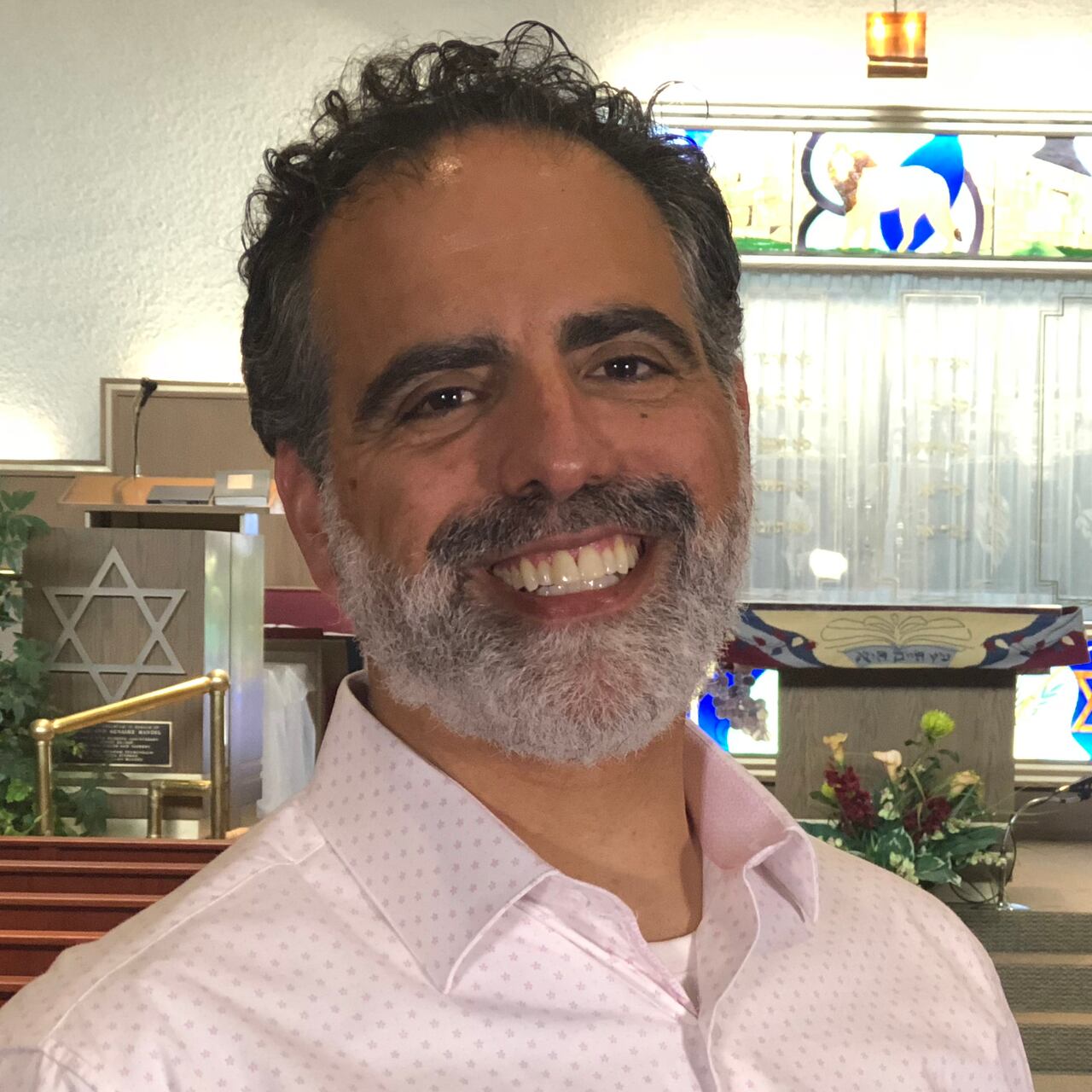
By MYRON LOVE It is with mixed feelings that Rabbi Kliel Rose, the spiritual leader of Congregation Etz Chayim for the past eight years, is once again leaving the community in which he grew up. Immediately after Yom Kippur, he, his wife, Dorit Kosmin, and three of their five children are moving to Ottawa, where Rabbi Rose is to become the spiritual leader of Congregation Kehillat Beth Israel (popularly known as KBI).
“My time in Winnipeg has been wonderful,” Rabbi Rose says. “It has been a privilege to have served as Etz Chayim’s rabbi and be part of the Jewish community here. Our Jewish community has a sense of solidarity that is unlike any other Jewish community in North America.”
He wasn’t actually looking to leave, Rabbi Rose explains. “Last spring, I was just having a cursory look at postings for Conservative rabbis and KBI stood out. What attracted me was not simply the opportunity to serve a larger congregation, but the chance to lead a community with such a rich history and such a strong commitment to egalitarian Conservative Judaism, Jewish learning, inclusion and community engagement. KBI is a relatively young congregation that brings together more than a century of Jewish history in Ottawa, and I was very drawn to the opportunity to help shape its next chapter.”
KBI, Rabbi Rose reports, was created in July 2016 through the amalgamation of two long-standing and storied Ottawa congregations: Agudath Israel and Congregation Beth Shalom. The merger brought together the rich traditions of both communities to create a modern, egalitarian Conservative congregation. Today, KBI is the largest Jewish congregation in Ottawa, serving more than 500 families, with a strong emphasis on Jewish learning, inclusion, community engagement and youth and family programming.
“There is a tremendous amount of energy and possibility at KBI,” Rabbi Rose says. “It is a community with deep roots, but also a very strong desire to think about what Jewish life should look like in the future. That is exciting to me as a rabbi.”
As with many rabbis, Kliel Rose’s career path has been a long and winding road. The son of the revered Carol and Rabbi Neal Rose, he first left Winnipeg after graduating from Grant Park High School.
In an interview with the Jewish Post & News in 2018, shortly after he returned here to serve Congregation Etz Chayim, Rabbi Rose credited his parents with being tremendous role models. “They are a dynamic team,” he commented, “but they never pushed any of us (Kliel Rose is the middle child in a family of four brothers and one sister) in any particular direction. They were really nurturing. They were okay with anything we decided as long as we were passionate about it.”
For the longest time as a young man, he noted, he fought against going into “the family business”. But, he said, working in Jewish summer camps, people in leadership positions in the camps saw something in him and convinced him to pursue rabbinic ordination.
Thus, after graduating with a Judaic Studies degree from Gratz College in Philadelphia, Kliel Rose enrolled in the Jewish Theological Seminary.
He noted that the most important piece of advice his father gave him before he enrolled in a rabbinic studies program was the suggestion that he should work for a time in a large congregation to see what it is like – “both the joy and the underbelly,” as he put it.
“I took his advice,” Rabbi Rose said. “For two years, I worked under the umbrella of a special fellowship at Bnai Jeshurun Congregation in Manhattan. The congregation had 4,000 members at that time. It had been a dying congregation which had been revitalized by Rabbi Marshall Meyer, who had previously helped revive Jewish life in Argentina. Rabbi Meyer, with his vision of social justice, was an inspiration for me.”
Rabbi Rose also spent a year at an Orthodox yeshiva in Israel and a couple of years as a youth director at a large Conservative congregation on Long Island.
Before coming to Winnipeg, Rabbi Rose served congregations in Miami Beach (for three years), Nashville (for five years), and Edmonton (for five years).
The past eight years at Etz Chayim have certainly brought their share of challenges, but Rabbi Rose says they have also been deeply meaningful. Just two years after arriving, the COVID pandemic transformed congregational life. Then there was the congregation’s decision to sell its 70-year-old building on Matheson Avenue and move to a smaller facility in south Winnipeg – a process that was completed just over two years ago.
“It has been really challenging these past few years,” he recounts. “It was difficult leaving behind our old building with so much history. But I think Etz Chayim made the right decision, and I am proud of how our community came together to navigate these challenges and build a new future for the congregation.”
Rabbi Rose says he is particularly grateful for the relationships he has built during his eight years at Etz Chayim and throughout Winnipeg’s Jewish community. “There have been so many meaningful relationships and experiences during my time here. I feel very fortunate to have had the opportunity to serve this community and to have been part of Etz Chayim’s story during such an important period of transition.”
“I’m leaving with an enormous amount of gratitude,” he adds. “Etz Chayim has given me the opportunity to grow as a rabbi and as a leader, and I hope that I have been able to contribute something meaningful to the congregation and to the wider Winnipeg Jewish community in return.”
Another factor that made Rabbi Rose’s decision to leave difficult is that his parents moved back here two years ago and his older brother, Carnie, returned about 18 months ago to become Shaarey Zedek’s senior rabbi.
“It has been wonderful having my parents and brother here,” Kliel says. “This has been the first time that my children have had grandparents and an uncle and aunt in the same city.”
The Rose family will also miss the many friendships and connections they have made in Winnipeg.
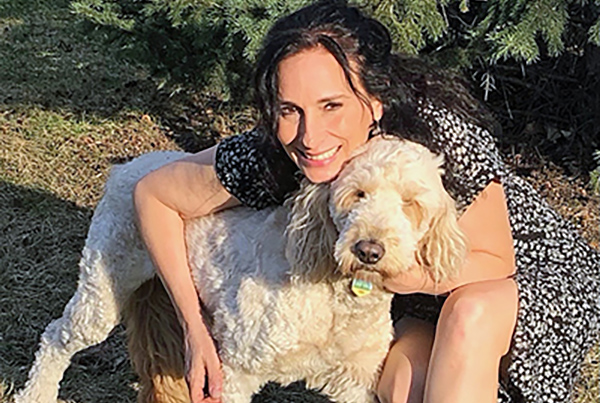
Our community will also miss Kliel’s wife, Dorit. “My wife is a talented and caring individual who has worked in different areas of the community,” he notes. “Most recently, she was working in spiritual care at the Simkin Centre. She has made a tremendous contribution to the community and will certainly be missed.”
For Rabbi Rose, the decision to leave Winnipeg is less about leaving something behind than about embracing a new opportunity. After eight years of helping Etz Chayim navigate a period of profound change, he says he feels ready to take on a new leadership challenge while carrying with him the lessons and relationships he has gained here.
The Rose family will be leaving two days after Yom Kippur. Kliel reports that they have sold their house and have just a few things to wind up.


Local News
Jewish Federation now says Jewish population of Winnipeg in 2021 (according to the census) was 13,940 – not the 16,000 figure that the Federation had been touting for years

By BERNIE BELLAN (Posted Oct. 27, 2026) Longtime readers of The Jewish Post & News (and this website) would probably know that I have long had a very strong interest in establishing as accurate figures as possible when it has come to reporting the size of Winnipeg’s Jewish community.
For years I argued that our Jewish Federation was exaggerating the size of our Jewish population. I heard the figure of 16,000 bandied about by leaders in our community quite often when it came to reporting the size of our Jewish population – without any empirical evidence to back that figure up.
I had long maintained that the only reasonably accurate figures when it came to reporting the size of Winnipeg’s Jewish population were those produced by the late Evelyn Katz, when she was the unofficial demographer for the Jewish Federation – over 30 years ago. What Evelyn would do is keep careful track of births, deaths, numbers of newcomers but, perhaps most important: the number of people who had left our community.
Thus, in August 2022 when I interviewed Faye Rosenberg Cohen who, at the time, was just about to retire as the Jewish Federation’s Chief Planning and Allocations Officer, I was somewhat astonished to hear Faye say, when I asked her what proportion of our Jewish community was made up of immigrants, she answered that “I can honestly say when I look at those numbers it’s somewhere around 1/3 of the community.”
In response, I asked: “So you’d say it’s somewhere between 4-5,000?”
Faye said: “I think it’s more than that.”
I wrote in that article, “I indicated my skepticism at that time, saying ‘You know that I’ve always been skeptical about the numbers that have been used by the Federation for the population of the Jewish community. I think though that it’s always been more of a case of identification – who identifies as Jewish.’ ”
Later, after the results of the 2021 census were released, I wrote that “if you take into account the results of the 2021 census, the Jewish community cannot be larger than 14,270 at a maximum. But that figure would also include anyone who had either said either their ethnic origin was Jewish or their religion was Jewish.”
Since many of the individuals who had said on the 2021 census that their ethnic origin was Jewish, but their religion was something else, I maintained that ascertaining the real size of our Jewish community was highly problematic.
Still, for the sake of argument I was willing to accept that, realistically, it was somewhere between 13,000-14,000 – but nowhere close to the figure of 16,000 that had come to be suggested by our then president of the Jewish Federation or by other leading figures in our community.
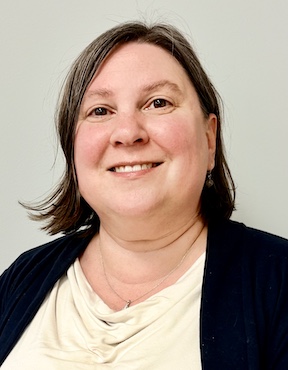
So, it was with a sense of satisfaction that I heard Sharon Graham, who is now the Jewish Federation’s Community Planning and Allocations Lead say to an audience of over 50 people who were at the Gwen Secter Centre on Thursday, October 22, that the Jewish community in 2021 was – at a maximum: 13,940.
Sharon was at the Gwen Secter Centre to speak to Remis Lecture attendees. Her presentation preceded a presentation by Jewish Federation CEO Jeff Lieberman. Sharon used a PowerPoint presentation to provide some very interesting insights into where our Jewish community was at in 2021- and I’m offering some parts of her presentation here for you to read because I thought they were so interesting.
I had actually made many of the same observations about the results of the 2021 census in my own reporting back in 2022, but seeing what I had written confirmed by the Jewish Federation’s point person on planning told me that Sharon has a much more realistic view of our community than did Faye Rosenberg Cohen.
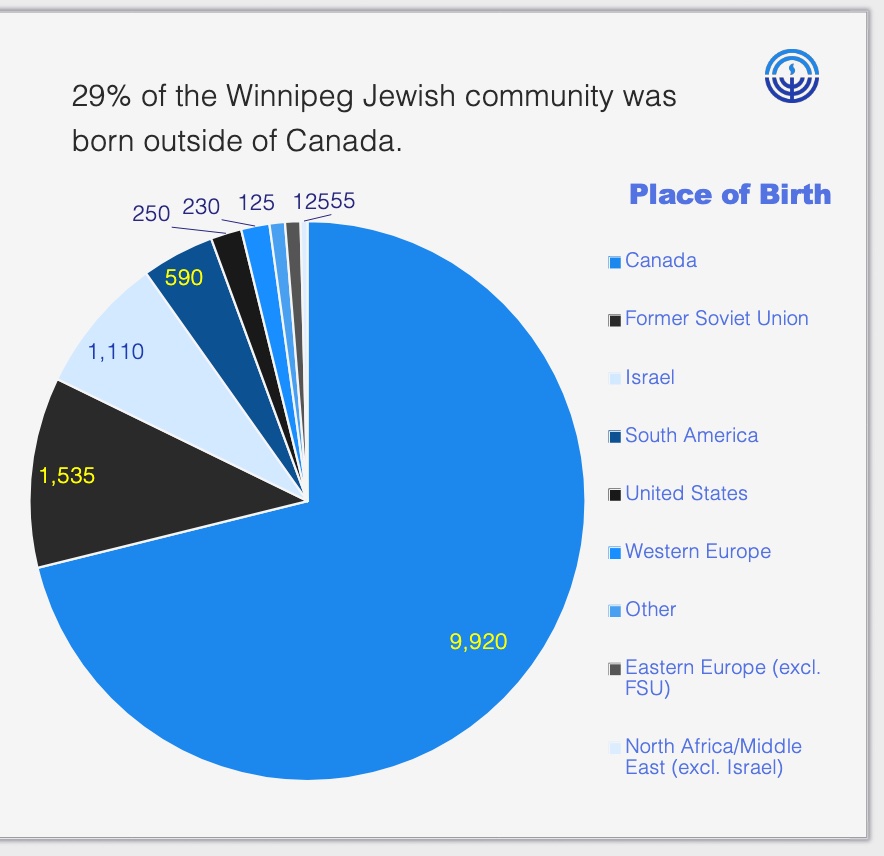
Here, for instance, is a slide that shows the proportion of our Jewish community that is made up of immigrants. It’s slightly under one fifth, not the one third percentage that Faye had suggested.
But, what really set Sharon’s presentation apart from anything else I’ve ever seen presented by someone from the Jewish Federation – other than the aforementioned Evelyn Katz, was the slide she projected which showed that, while there had been a large influx of newcomers to Winnipeg’s Jewish community between 2016-2021 there had also been a significantly high number of people who had left our Jewish community in those same years, as you can see in the following slide:
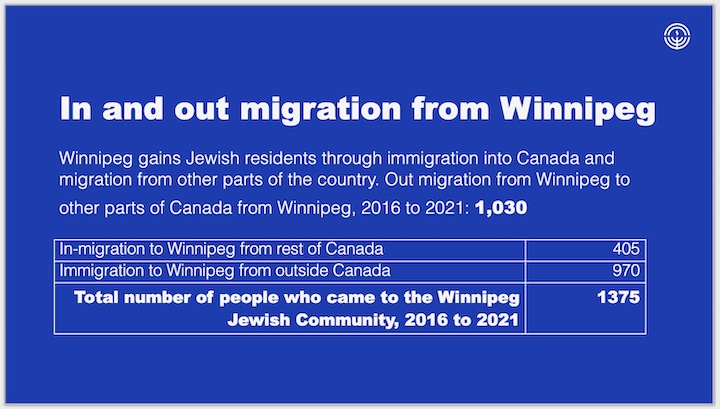
That is something we just don’t hear discussed by leaders of our Jewish organizations, but let’s be realistic: For many newcomers who came to Winnipeg and were counted as new members of our Jewish community, Winnipeg – for a variety of reasons, was a stepping stone to other communities. It may have been for reasons of better job opportunities, moving closer to other family members, or – the reason that we hear so often when it comes to people saying they want to leave Winnipeg: the weather.
But, whatever the reason, Sharon’s figures show that, as much as GrowWinnipeg may have been an abiding success when it’s come to attracting newcomers to our Jewish community here, getting them to stay long term is a different story.
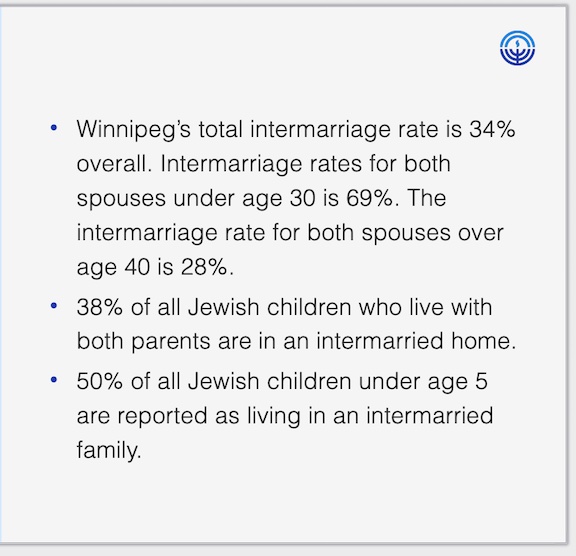
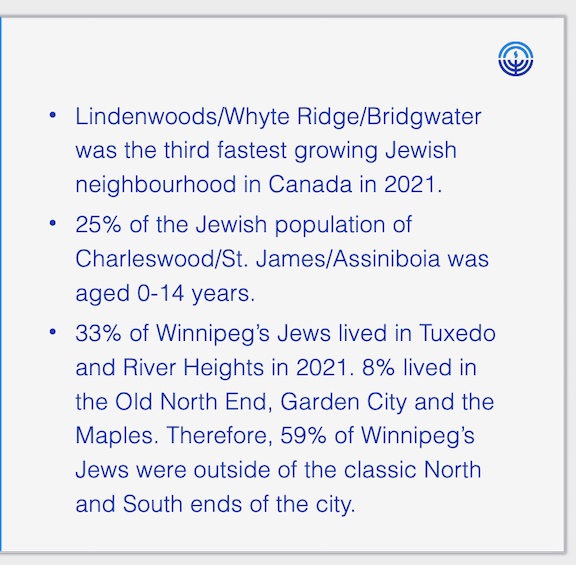
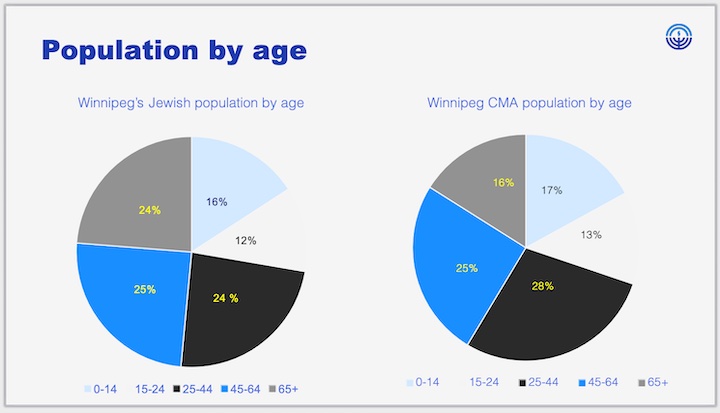
And, while there were other aspects of Sharon’s presentation that certainly merit discussion, especially the figures she produced about intermarriage, rather than delving into them here, I thought it useful simply to insert them for you, the reader, to see – and draw your own conclusions.
Local News
Marty Green expands his protest against extremist Jewish settlers to two more venues – and is arrested twice more
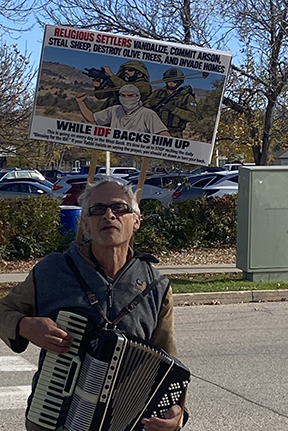
(Tuesday, October 27) We received the following press release about Marty Green being arrested again, both at the University of Manitoba and at Shaarey Zedek Synagogue:
Both sides came to blows on Saturday, October 24, at the Shaarey Zedek Synagogue as security personnel sought to prevent Marty Green from interfering with synagogue traffic as he protested just outside synagogue grounds against the actions of religious settlers in Israel’s occupied West Bank territory. Synagogue Executive Director Rena Secter Elbaze quickly intervened to prevent further escalation. Police arrived shorty thereafter and detained Green for 45 minutes before driving him home and releasing him. It is not clear whether their decision not to lay charges was the result of their own onsite investigation or whether it was at the request of the synagogue executive.
Green has now been arrested four times in the last month and faces multiple charges for disturbing the peace, including two episodes at the Asper Campus and one more this past Friday (Oct. 23) at the University of Manitoba. While Green says initially he was merely handing out leaflets (at the Asper Campus), since his first arrest on September 23, he has returned to the campus with a large placard and an acccordion, accompanying himself while singing songs with lyrics that include such phrases as “The Jews Are Bananas….B-A-N-A-N-A-S”. In addition to listing actions of the religious settlers as including arson, vandalism, and theft, he pointedly alleges that the IDF has been backing up the settlers in their actions.
Green had earlier notified the Shaarey Zedek that he was contemplating bringing his protest to the synagogue. He was told that if he attempted to enter the grounds he would be prevented from doing so. At that time, Secter Elbaze told Green that his intentions were inappropriate, declaring the synagogue to be “a house of worship dedicated to prayer, learning, community, and spiritual engagement.” Green responded that if the synagogue were willing to contact the Crown and inform them that “that there was never any legal basis for their claims that I was conducting myself inappropriately at the Asper Campus” (with regard to his earlier arrests) that he would “voluntarily refrain from carrying his informational campaign to the synagogue(s).”
Green further argues that the recent “psak” (religious ruling) by leading Israeli rabbi Rov Dov Lior, in which Lior declares that it is not merely permissible but praiseworthy for Jews to steal olives from Arab orchards….that this ruling brings his protest within the proper realm of religious discourse. He says further that if the local rabbis were willing to speak out to their congregations against the aforesaid psak, that he might have refrained from taking his campaign to their grounds.
Although Green was released on Saturday without charges, police confiscated his placard. They explained that it was being held as evidence pending an investigation by Major Crimes as to whether it constituted hate literature.
There was no further information given as to what happened at the University of Manitoba.
Local News
Third annual JFest Winnipeg will be offering programs for all ages
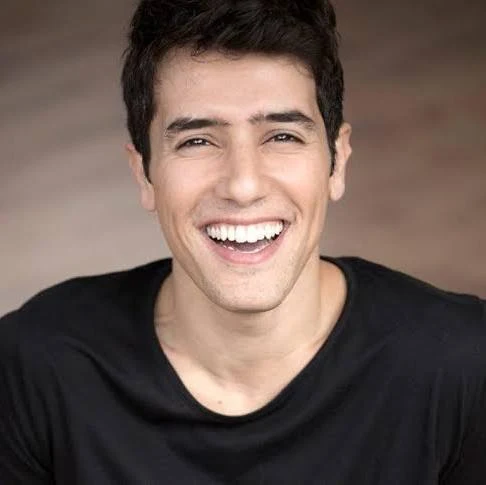
By MYRON LOVE JFest Winnipeg is back with a good variety of musical performances, a book launch, popular Jewish-themed films, children’s activities, and a family-oriented Shabbat dinner.
“JFest,” observes Laura Marjovsky, the Rady JCC Director of Programming, “is an opportunity for our community to experience Jewish art and culture. With our range of JFest events, we are trying to reach out beyond what has been our base audience and appeal to all ages. We have a commitment to bring top notch Israeli performers to share the highest caliber of Israeli entertainment with our audiences.”
The week-long festival (November 14-21) kicks off with a performance by top-ranked Israeli singer-songwriter Harel Skaat. The popular Israeli star began singing as a child. He shot to fame when he finished second in the second season of “Kochav Nolad” – Israel’s version of “American Idol.” His first album was released in 2006 and achieved Platinum status – with one of the songs being ranked as “song of the year.” He followed that up in 2009 with a second album that reached Gold status. In 2010, he represented Israel at the Eurovision competition.
Skaat’s performance is scheduled for the Seven Oaks Performing Arts Centre (which is attached to Garden City Collegiate) beginning at 8:00 P.M. on Saturday, November 14. Patrons will have the opportunity to purchase an enhanced ticket to attend a meet and greet with Harel.
All other JFest programs and activities will be at the Rady JCC.
Music Producer Karla Berbrayer says Ben Caplan’s performance on Saturday, November 21 will also be another highlight. “Ben Caplan redefines what it means to be a modern folk artist,” Berbrayer says. “His music and stories are matched by his larger-than-life stage presence. This concert focuses on how his Jewish upbringing has influenced his entire performance career.”
“Flatland Famous” is returning by popular demand. This quintet, known for its performances at Winnipeg Jets games, will be presenting its concert, “Jewish Soul of Rock and Roll,” on Wednesday, November 18, at 7:30 pm. This year’s show will feature songs by Amy Winehouse, Neil Diamond, Barbra Streisand, Simon and Garfinkel, and other famous Jewish icons.
On Tuesday, November 17, local author Deborah Schnitzer will be taking centre stage with the launch of her new book, “The Woman Who Swallowed West Hawk Lake.” The University of Winnipeg English Professor Emeritus’s new novel explores intergenerational trauma related to Nazi breeding programs. Joining Schnitzer on stage will be a panel of professionals who have experience working with children who have experienced trauma.
And of course, “Best of the Fest” is back. Films to be presented will include“The Floaters” and “We Met at Grossingers,” two wildly popular movies at last spring’s Winnipeg International Jewish Film Festival.
“The Floaters,” to be screened on Monday , November 16 at 7:00 pm is a funny and bang-on depiction of Jewish summer camp culture.
“We Met at Grossingers” is a loving look back at the Borscht Belt in New York’s Catskills, where generations of young Jewish performers earned their dues and developed their acts. The film will be screened on Thursday, November 19 at 7:00 P.M.
On Friday November 20, JFest will host a Family Shabbat dinner featuring Anat Kriger, an Israeli-born, Toronto-based musician, actor, and children’s performer, who has made several appearances in Winnipeg at major communal events.
Kidfest on Sunday, November 15, will be a day-long potpourri of programming that will include live performances, workshops, bouncy castles, games and crafts, and much more.
Readers seeking more information about JFest can contact Laura Marjovsky at 204 477-7539 or lmarjovsky@radyjcc/com
