



Features
Do we treat our Arabs better or worse than the Tsars treated us?
By MARTY GREEN I know many Jews will be outraged at the very notion of comparing the two. “The pogroms!”, I hear you cry. “The Naqba!”, the Arabs might just as well respond. We all have our own simplified narratives regarding the rights and wrongs of the past; but just as the true story of Arab life in Israel is much more complicated than the Naqba, so the story of Jewish life is Russia was, for better and for worse, much more nuanced than the mere fact of the pogroms.
There are some obvious parallels between our respective stories. We came to be the authority over several million Arabs as an unwelcome by-product of our great victory in 1967. Similarly, Russia inherited some half million Jewish subjects over the course of the three partitions of Poland (1772-1795). We were hardly more welcome to the Tsars than the Arabs were to us. We sometimes mock the “genocide” allegations by pointing out how 1.2 million Palestinian Arabs in 1945 now claim to number over 14 million. But we were no pikers by comparison: in the course of the 19th century, our numbers in Russia grew anywhere from ten- to twenty-fold.
We remember how the Russian government quickly instituted the Pale of Settlement, restricting our mobility. Can the Arabs under Israeli rule not complain of similar or worse restrictions? It is true that we have obvious security concerns regarding the mobility of a hostile population. The checkpoint system has almost certainly saved lives. But by the same token, can we be sure that the Russians had no valid reason to worry about the loyalty of their Jewish subjects?
There can be little doubt that in the First World War, many Jews hoped that the German invaders would liberate them from their Russian oppressors. And even before the German invasion, as a large minority group speaking their own language and having close connections with their co-religionists in foreign not-always-friendly countries, surely the Russians had as good reason to be concerned with our loyalty as we have with regard to our Arabs?
(Incidentally, it is said that the Jews of 1812 might have whole-heartedly thrown in their lot with the invading Grand Armee, if not for the unlucky resemblance of the French Emperor’s name with the Yiddish word mapole (meaning “defeat”). But that is a tale for an alternate version of history.)
Finally, we remember well how Jews in Russia were not allowed to own land; the truth is, we mis-remember that “fact” because we did indeed own land, and when challenged our title was upheld in the Russian courts. Similarly, in the Occupied Territories the validity of Arab land titles under Ottoman Law are rigorously protected by the Israeli courts. Nevertheless, some residents of the Jordan Valley may argue that it is less than “rigorously” enforced on the actual ground.
Which brings us to the subject at hand. Because back in Old Russia, in der alter heim, disputes between us and our Gentile neighbors over land ownership and usage were an ongoing feature of life for centuries. For a somewhat poetic description of the nature of these conflicts, I turn to the words of memoirist Falek Zolf (1898-1962), who recalls this about his youth in the shtetl of Zastavia, a village of several hundred on the outskirts of Kamenetz-Litovsk. To preserve a bit of the flavor of the original, I have transcribed Zolf’s narrative here in a mix of English and Yiddish.
“The village led a poor, quiet life. We lived from what God gave us; this one from a manual trade, this one from farming, another from buying and selling, and so forth. A few dozen families pulled in a meager livelihood from working in Asher Guterman’s brewery, which was known throughout the region for its beer. Outside of that, almost everyone had his own garden and his own cow – most likely one which he had raised himself from a calf. You could always rent a small patch from one of the landowners who lived in the Gentile quarter; the vegetables and produce could be sold in the neighboring towns and villages: in Brisk, Kobrin, Orleh, Bialovezh, etc.
“Quiet and peaceful was the flow of life in the stäedtele. It was truly mit’n schwéiss vun sein ponim (by the sweat of his brow) that each one earned his own piece of bread, along with the vegetables which the good Mother Earth provided to everyone in full measure.”
Of course we all know that Jewish life in Russia was not quite so idyllic as Zolf makes it out to be in the preceding passage. Let us see what comes next:
“The stäedtele of Zastavia was at one time, according to the stories of the old men, entirely a Jewish peasant-village. The whole surrounding area with its fields, gardens, and hills had once belonged to Jews, who were originally men of the soil. But little by little, for a number of reasons, the Yiddische erd had passed over into Gentile hands. If a Jewish peasant needed to make a shidukh for his daughter, he might be driven to sell a strip of farmland to a Gentile; and with the money, he could put on a proper khasseneh with all the sheva brokhos. If his son didn’t want to go serve the Russian Tsar and had to run off azh ken Amerikeh, the Jew would once again cut off a piece of land and sell it to a neighboring Goy (to pay the 300-rouble penalty). If his grown children went off to seek happiness somewhere in the far-away, and the elderly parents simply didn’t have the koyakhto go out and push the plow, then the last stückel feld would be sold to the local meshtchan, and with the money they could enjoy the few years remaining to them. And so with time, the Yiddische erdfell largely into Goyische händt.
“In the end, all that remained to us was a large vihon, a communal grazing-field, which according to legend had once belonged to a rich Jewish landowner, who had donated it to the stäedtel. In the end, the Yiddische beheymos had actually been forced to share this pasture with Goyische khazerim. It was painful for us to have to watch those khazerim turning our Jewish vihon into a pigsty, but there was little choice; one was, after all, living in golus.”
Perhaps we should pause here to consider that while the Jews seem to have sold much of their land to the Russians due to economic pressure, there are nowadays, for obvious reasons, only the rarest cases of Arabs selling their lands to Jews. Furthermore, I am not aware of any situations where the Bedouins of the Jordan Valley willingly share their grazing land with the Jews of the hilltop outposts. Whether these differences are to our credit or theirs is not for me to say here.
In any case, we will see further that it was not only economic or social pressures which came into play:
“Unfortunately, the more the Goyischer Gass (the Gentile Quarter) grew at the expense of the Yiddischer Gass, the more brash and the more khutzpah-digker they became. They started to look for any pretext or opportunity to snatch away this last remaining piece of Jewish grazing land, so that not a single Yiddische beheymah should have a place to roam. They would sometimes show up armed with sticks, hoes, and pitchforks, ready to start a milkhomah….”
Sound familiar?
“….but on such occasions, the ZastavierYidden, who were in those days no pushovers, would quickly arm themselves with the implements of ha-yadayim y’dei Eysav and go forth to meet the Gentile foe. Blood would flow from both sides. For the Jews, it was a matter of kidush ha-shem, a case of milkheymes mitzvah, to uphold their Yiddischen koved and also to save and protect the Yiddische beheymah-lach from Goyische händt…”
And of course, in such situations, the Russians would call in local gendarmeria or even the dreaded Cossacks, and the Jews would be quickly dispersed, arrested, or even beaten.
Or were they….?
Perhaps not. Let us see how Zolf describes it:
“Fortunately, these little milkhomos would not last for long. The storm would quickly die down, and the stäedtel would soon go back to its normal, peaceful life, as though nothing had happened.”
And with those words does Zolf conclude his fond reminiscences of his childhood years. But of course that is not the end of the story.
We all know the devastation brought by the Second World War. But in the wake of the Holocaust, we are liable to forget the enormous impact of the First World War on the Jewish world. The collapse of empires was followed by the emergence of new, ideologically-driven regimes which. It is hard to say whether Communist Russia or nationalist Poland was more hostile to the Jews. In any case, Zolf’s village found itself on the Polish side of the border. And the Jewish way of life quickly became economically untenable.
Among the first the measures adopted under the Polish national slogan of “swój do swego“…that the Gentile should only patronize “his own people”….was the establishment of Christian cooperatives, so that the Polish peasants would not see their hard-earned money fall into the hands of Jewish intermediaries. Then there was the nationalization of entire industries like wine, alcohol and tobacco…again, with the purpose not so much of the betterment of the working class as the impoverishment of the Jewish merchant class. Then the strict enforcement of the Sunday laws, so that the observant Jewish shop-keeper would have to close down for two days of the week. Finally, the imposition of a host of new taxes, of which Zolf reels off the names: gruntovi, dokhodovi, handelyovi, obratov… (ed. Note: would be nice to get the correct Polish spellins of these)
The bailiff’s wagon, which quickly made it’s appearance in one Jewish community after another to haul away confiscated goods in lieu of unpaid taxes, was given the nickname “Grabsky’s Aguleh (hearse)”, after the infamous finance minister Grabsky, a notorious anti-semite. And in Warsaw, it was said to have been followed all to often by another kind of aguleh, this one from the khesed shel emes, to collect the bodies of bankrupt Jewish merchants who had thrown themselves from a fifth-story window.
The precarious condition of the Jewish staedtel could hardly go un-noticed by the local peasantry, and before long they had renewed their ambition to take over the last remaining grazing-field, the communal vihon, and make it once and for all Juden-rein. In Old Russia, the Jews had been ready to defend themselves with clubs and pitchforks; and interestingly enough, Zolf records that they had even sought and obtained recourse from the Russian courts:
“Back then the städtel had engaged the services of berühmte advokaten (famous lawyers) who fought the case azh in der gubernieh un in Petersburg. The protzess dragged on for years, until the Jews were able to secure once and for all séier recht zu mägen paschen séiere beheymos auf’n kehill’schen vihon, inéinem mit die Goyische khazerim.
Yes, there was now and then justice available to the Jews from the Russian courts. We sometimes forget that Mendel Beyliss was aquitted by an all-Christian jury. In this regard, it is noteworthy that the Arab villagers in the Jordan Valley have also been able to obtain favorable judgments from the Israeli courts on occasion.
But in post-war Poland, things were not the same. The villagers knew that in the course of the war and the fires that had destroyed Zolf’s shtetl, the Jews had lost the papers which gave them the right to to an equal share of the communal lands. In addition, the shtetl had been seriously weakened by the war, the Spanish Flu, and emigration to America. The end was in sight to one and all.
And so one bright summer morning, the Catholic and Orthodox peasants (who otherwise had little affection for one another) herded their flocks into the communal vihon. Zolf describes what happened next. One doesn’t need to understand word for word to get the general picture. Sadly, the same story seems to be repeating itself today in the Jordan Valley: only the roles have been changed:
“Their field-hands let loose the dogs auf die Yiddische beheymos, and drove them weit in a sumpign winkel. The Jewish cattle had to spend the rest of that day versunken in der tiefer blotte, searching in vain for a green stalk mit wâs zu stillen séier hunger, un nischt gekönnt gefinnen. Late that afternoon, they were led home, tired, hungry, and covered with mud. Locked away in their barns, they gnawed at the walls. Séiere hungerige geschreien hâben sich weit getrâgen über’n stäedtel.
“And in the pitiful cries of their hungry animals, hâben die Yidden gehört a min trauerign shoyphar-blâsen, which announced the end, not only for their teuere, liebe beheymellach, from whom they had derived at least a stückel khayunah…but also the end vun séier alt-eingesessene Yiddischen stäedtel.”
Falik Zolf left Poland in 1926 and became a Yiddish teacher in Winnipeg’s I.L. Peretz Folks-Schule. He published his memoir in 1948 under the title “Auf Fremder Erd” (On Foreign Soil).
Features
The Residences at Linden Pointe – Winnipeg’s newest retirement community for the 55+ crowd

By BERNIE BELLAN Situated in the beautiful neighbourhood of Linden Pointe, The Residences of Linden Pointe, which will soon be opening in 2027, is now accepting reservations for tenancy.

Located just one block south of McGillirvay Boulevard and just a short distance from Kenaston Boulevard), The Residences will provide a host of amenities included with the rent that are sure to appeal to individuals and couples who want to enjoy their retirement years in stylized comfort.


Here are just some of the services that will be included with the rent:
• Restaurant-Style Dining
• Movie Theatre
• Resident Fitness Room
• Game, Art, and Activity Spaces
• Salon and Spa Services
• Housekeeping
• Utilities Included
• Cozy Resident Lounge and Social Areas
• Secure Storage Lockers
• Outdoor Patio and Garden Spaces
• Pet Friendly w/ Dog Wash Station
• Underground Parking
• In Suite Laundry
• Full Kitchens


As the information brochure for The Residences explains, it will be “redefining retirement living in Winnipeg. Our vibrant community aims to offer the perfect balance of modern features and warmth, where active adults can fully embrace the freedom of independent living. At The Residences, you’re free to enjoy the amenities, activities, and community knowing that a helping hand is always nearby if you need it.”
With a choice in suites, from junior suites to 2 bedroom units, The Residences will be attractive for both singles and couples.
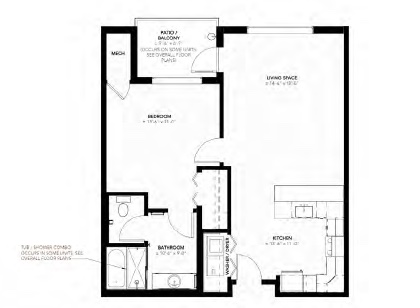
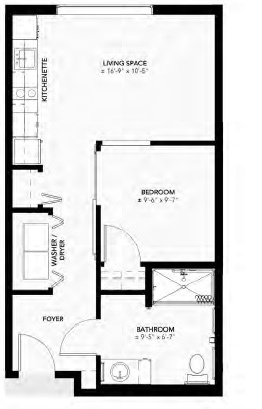
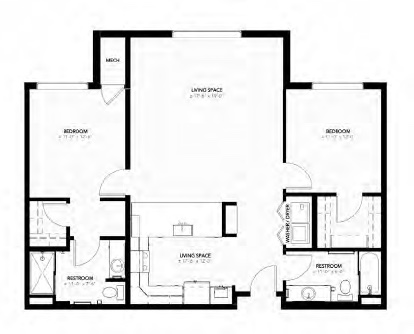
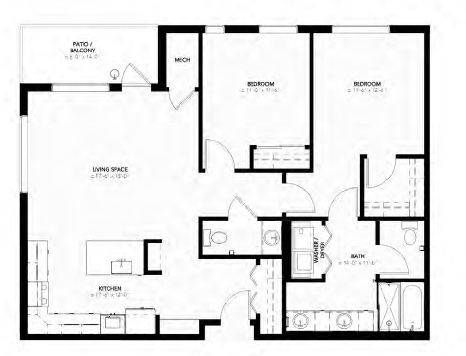
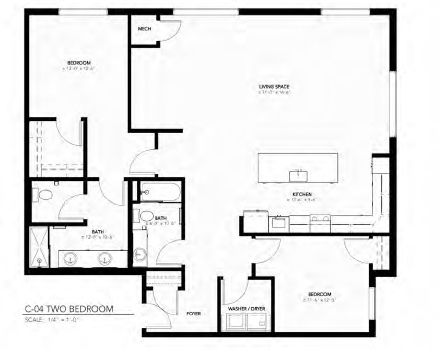
But, in case you thought The Residences would be somewhat akin to a nursing home, the truth is it will be far from that. “Independent Living is designed for active, self-sufficient seniors who want a lifestyle with fewer responsibilities — not medical care. At The Residences, independent living is finding an engaging community and living your best life now with all of the amenities to give you more time and freedom.”
With many built-in social activities, clubs, and shared spaces to help people make friends, The Residences will be a true community.
To read more about what The Residences will have to offer you can call: 431-778-4636.
You can also click on this pdf (or download it to make it full size):
Features
What Happens in Poker When You Tie? Split Pots Explained

Learn what happens when poker players tie, how split pots work, and which rules determine the winner when hands have the same value.
Ties have gone by the wayside in team sports. The NFL and NHL have done their best to make sure they never happen, too. The same cannot be said for poker. On occasion, people with the same hands tie. So, what happens in poker when you tie?
How Does a Split Pot Work in Poker?
Poker tie rules result in players with equal ranked winning hands leading to the pot being split. It can also see three players with the same hand and the result is each player gets a third of the pot. It is that simple. Two people tie and the pot is 50-50. Three and it is a third to each
How Kickers and Hand Rankings Break a Tie
When thinking about a split pot in poker, kickers play a part of each player’s best five-card hand. That means building the best five-card hand you can. So say both players have a pair of 8s. What happens? It isn’t so a poker straight tie breaker because you can then check what the other three cards that comprise the players’ hands are. The player who has the stronger hand of the remaining three cards would win the pot.
An example of how a kicker would not play into a decision is when players have a straight. If they both have the same straight, that would end the hand in a tie. You don’t go any deeper than the top five.
Make sure to check out BetUS poker variants before starting to play for serious cash when you’re going to play online poker for real money.
How Does a Poker Game End When Players Tie?
A tie at the end of a hand differs from what happens should a tournament end in what could or would be considered a deadlock. Should tournaments end in a tie, the players would split the combined pot for the position. So, if players wind up tied for seventh (and eighth), they would share the combined pot for those positions. If two or more players are tied or agree to stop playing at the end of a tournament, they can decide together to split the prize pool. There can be an even split or if the players agree to the terms, it can go to whatever percentage of chips each has left.
There are poker rules, and some consider it standard that if two or more players are eliminated in the same hand, the one that started it with more chips would finish higher. This would be contrary to the splitting of the two positions but it can happen. Another level of ties in tournaments that can be factored in are seat position.
One has to understand all the rules and ramifications before sitting down to play at a poker table whether a game or tournament.
Can the River Card Turn a Winning Hand Into a Tie?
The turn and river in poker can be key cards in the way a hand plays out. The question is: Can the river wind up leading a hand into becoming a tie? The answer is yes. The river is the last community card and it can often be decisive. It can change a winning hand for someone into a losing hand or a tie. The same can be said on the flip side as the river can deliver the winning card for someone who appeared to be in a losing position.
Which Cards Matter When Both Players Have the Same Pair?
When both players have the same pair, the next three cards in their hands would make the difference in who wins the hand. So if someone has a pair of Kings and 7-8-9 and the opponent has kings and 8-9-Jack, the latter’s hand would be considered stronger because the Jack is a higher card than the nine the former has as their top card outside the Kings.
Can this get sticky and thicket-like, sometimes? Yes, but the reality is that the stronger overall five-card hand is the one that is considered the winning hand; unless they are absolutely equal, like having the same cards in a straight or, in a rarer occurrence, a flush, they will not be considered a tie.
FAQs
Can a poker game end in a tie?
Yes, a poker game can end in a tie. If that happens, then the players would either decide how to split the overall pot, or there would be rules that were set before the game or tournament starts.
Who wins a two pair tie?
A two-pair tie would go to the player whose fifth card is higher. If the fifth cards are equal, the hand would be a tie and then the pot split.
How is a split pot divided in poker?
A split pot is divided equally among the players involved in the tie, whether two-way, three-way, etc.
Features
The Enduring Forms of Jew-Hatred
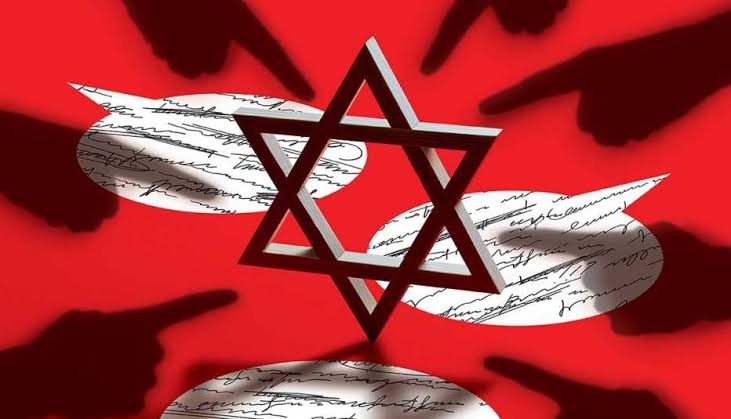
By HENRY SREBRNIK “Antisemitism” and “antizionism” are not, in their essential features, forms of racism. These ideological constructs may include depictions of Jews in disparaging ways – through looks, accents, and other forms of prejudice – but they are political projects, just as anti-Judaism in the past was found (and sometimes still can be) in Christian and Muslim theology.
Both words are also misleading — few Jew-haters are concerned with “Semites” or actual “Zionists” (in the historical sense) as such. The word “Zionist” is for them, not about a political movement, ideology, or history. It is simply a metonym or synonym for “Jew.” Both words posit “the Jew” or “the Zionist” as a member of a malignant world-historical force, the antithesis and enemy of all that is good among human beings.
Neither the “Zionist” nor the “Semite” in these constructions corresponds to a real, discrete group; both are caricature figures onto whom an entire set of libels, suspicions, and eliminationist fantasies are projected. Retaining the hyphen unwittingly affirms the antizionist claim that they are engaged in a normal political dispute with an actual constituency called “Zionists,” rather than waging a hostility organized around the erasure of Jewish collective existence.
Jew-haters in the past condemned Jews as deicides, and they today consider Jews responsible for both the excesses of capitalism and the economic and social evils of Communism. The consequence is that Jews are to be hated and deemed unworthy of sympathy and solidarity. Even the facts of Jewish victimhood, whether the Holocaust or the massacres of October 7, can be portrayed as a scheme for Jews seeking some kind of dominance by “exploiting” their own past historical sufferings.
It’s an old story. In his 1882 pamphlet Auto-Emancipation, Leon Pinsker, a founder and leader of the Hibat Zion movement in tsarist Russia, observed: “To the living the Jew is a corpse, to the native a foreigner, to the homesteader a vagrant, to the proprietary a beggar, to the poor an exploiter and a millionaire, to the patriot a man without a country, for all a hated rival.”
Today’s “antizionism” has nothing to do with the “anti-Zionism” that existed within the political debates in the Jewish world earlier in the 19th and 20th centuries, mainly prior to 1948. These remained internal Jewish arguments about the future of Jewish life. Jewish anti-Zionists still understood Jews as a people with shared history, continuity, and collective identity. What they did not do was portray Jewish self-determination as inherently racist or fundamentally illegitimate, nor frame Zionism as a global conspiracy threatening humanity itself.
There is little direct link between the various actual anti-Zionist programs that existed within the Jewish world before the establishment of the state of Israel in 1948 and contemporary antizionism, like that of the Jewish Voices for Peace or Students for Justice in Palestine. They gain credibility and authenticity if people are led to believe they have inherited the mantle of those who opposed the establishment of a Jewish state seventy-five or a hundred years ago. Efforts to eliminate an actual state with millions of Jewish citizens bear no relationship, especially post-Holocaust, with earlier arguments that assimilation into European societies working classes represented a solution preferable to Jewish statehood.
That confusion even exists among leftist pro-Palestinian Jews, some of whom now have rediscovered the Jewish Labour Bund. They relate to, and are seen by Jew-haters, the way a Jew who converted to Christianity, Islam, or Communism was treated in previous eras.
Yes, many Orthodox Jews traditionally opposed Zionism on theological grounds, but that belief lost its persuasive power with the Holocaust and the establishment of Israel. There remain remnants of Jewish groups opposed to Israel’s existence, notably the Haredi Satmar Jews, who believe only the Messiah can found a Jewish state, but they are not Jews who hate or wish to harm other Jews. Even in Israel, there are genuine, religious ultra-Orthodox rabbis opposed. Rabbi Dov Lando, an influential figure in the United Torah Judaism party, recently contended that Zionism “made Arabs hate us” and Arab rule would have been preferable to the establishment of the state. This is genuine, Jewish anti-Zionism, not “antizionism.”
Modern antizionism did not emerge organically from moral reflection. It is the inheritance of an ideological campaign that replaced the word Jew with Zionist while leaving every underlying accusation intact. The language of conspiracy, domination, blood guilt, and moral corruption was simply updated.
Antizionist ideology treats Jewish peoplehood and sovereignty as an intrinsic injustice. It is today’s evolved form of anti-Jewish hate, less crude than classical antisemitism, but no less potent. Defined by its practice rather than by any claims it makes about “Zionism,” antizionism involves a now-familiar behavioural repertoire: encampments and other occupations of university spaces, boycotts of Israeli scholars and artists, masked harassment of Jewish students, defacement and destruction of Jewish property, disruption of performances by Jewish musicians, and so forth. Like other movements, antizionism at the extreme finds expression in political violence.
In universities, workplaces, and public culture, many Jews now find that their relationship to Israel has become a moral lens through which their broader ethical character is interpreted. Statements are no longer heard merely as judgments about a distant conflict, but as disclosures of one’s deeper moral orientation.
“These are behaviours,” contends Shaul Kelner, a professor of Jewish studies and sociology at Vanderbilt University, in his article on “American Antizionism” published in the Fall/Winter 2025 issue of Sources: A Journal of Jewish Ideas, “by which antizionists construct themselves as a moral community in contradistinction to a polluting Other. (A polluting Other that, we need not add, just happens to be Jewish.)”
Because antizionist politics have taken root mainly among the intelligentsia, such as professors, university students, journalists, and artists, many people assume that antizionism is a reasoned intellectual position, more rational than emotional. This certainly serves the interests of antizionism’s proponents, but “antizionism” is actually a conspiracy theory about Jewish world power corrupting and subduing the nations and peoples of the world. Political “Jew-hatred,” to use the more correct term, is a political project, one needed to defeat a “world Jewry” in power in, among other places, the United States. It is not simple “racism,” as it ascribes to Jews almost demonic powers virtually across the globe, and not just confined to the actions of an Israel that is uniquely evil, precisely because it is Jewish.
Soviet “Zionology” as early as the 1960s was expressed in this way, and if one simply substituted “Zionist” for “Jew,” it was an almost exact replica of similar Nazi terminology. Remember what Israeli historian Saul Friedlander wrote in his 2007 book The Years of Extermination: Nazi Germany and the Jews, 1939–1945: The Nazis regarded Jews “as an active threat, for all of Aryan humanity in the long run, and in the immediate future for a Reich embroiled in a world war. Thus the Jews had to be exterminated before they could harm ‘Fortress Europe’ from within or join forces with the enemy coalition they had themselves set against the Reich.”
Thus, as Naya Lekht, who teaches the history of anti-Jewish movements, explains in “Where the Soviets Won,” Fathom, Sept. 13, 2026, the Jew-hater does not hate Jews in a racist way. “The antisemite is not so much contemptuous of the inferior Jews as he is afraid and resentful of them. In the antisemitic imagination, the Jew is not subhuman but superhuman, possessed of an almost supernatural capacity to infiltrate, manipulate, transform, and corrupt.” Antizionism is a lot more than ideological opposition to a Jewish state. It is the continuation of an ancient project centred on producing Jewish villains. The threat is that the Jew will get inside your institutions, your culture, your bloodline, and make you into something you are not.
When the USSR was rabidly “anti-Zionist” and an enemy of the Jewish state, few people in western countries denied it was antisemitism. In 1975 the Soviet bloc and Arab states passed the notorious “Zionism is Racism” motion in the United Nations General Assembly. It too had little traction in North American political circles. The U.S. Ambassador to the United Nations Senator Daniel Patrick Moynihan, in a stirring speech eloquently defended Israel. What would he make of the direction the Democratic Party is taking now? Today, when university professors and politicians, including a newly elected Michigan senator and a New York mayor, use the same language, it is suddenly “kosher,” and Jew-haters get a pass when they scream about Israeli “apartheid” and “genocide.”
“The anti-Zionist is not genuinely concerned with Zionism or Israel as they exist,” continues Lekht. “Rather, the Jewish state is distorted and mythologized into a 21st-century bogeyman, a repository for society’s fears, grievances, and moral anxieties.”
At its core, asserts filmmaker and podcaster Lucy Tabrizi, in “The Return of the ‘Good Jew,’” Notes from the Ruins, January 24, 2026, “Jewish anti-Zionism demands something extraordinary — that Jews uniquely surrender not merely a state, but their historical memory, their collective identity, and their right to self-defence, all in exchange for the promise of moral approval from cultures that have never protected them.”
Dave Rich, an Associate Research Fellow at the Pears Institute for the Study of Anti-Semitism, who writes extensively about the intersection of anti-Israel activism, far-left politics, and modern antisemitism, puts it plainly, in “From Be’eri to Bondi: Global Antisemitism After October 7,” Fathom, October 2026:
“But what is anti-Zionism for, exactly? If we strip away the political sloganeering and academic ambiguities, it is a plot to kill a nation. That’s it. Anti-Zionism is a campaign, across decades and continents, to kill the nation of Israel, erase its name and its national identity from history, and replace it with something non-Jewish. Whether this campaign is pursued through ballistic missiles and suicide bombers, seminars and journals, or street protests and placards, that is its goal.” In 1939 the Anglo-Jewish writer Simon Blemfeld published the novel They Won’t Let You Live. Are we there again?
Eliyahu Stern, professor of Modern Jewish Intellectual and Cultural History at Yale University, in a September 15, 2026 article in the online journal ARC:Religion, Politics, Et Cetera, reviewed two recently published “antizionist” books. The title of his critique? “Destroy Israel, Repair the World.” That sums their contents up perfectly.
Think about it: Since October 7, 2023 Israel has done what every other country viciously attacked by implacable enemies throughout history has done: It has lashed back in a defensive war. Yet it’s become what some call the “omnicause.” That’s why antisemitism and antizionism are two sides of the same coin: hatred of Jews. Jews aren’t being attacked because of Israel. Israel is being condemned because it is Jewish.
Henry Srebrnik is a professor emeritus of political science at the University of Prince Edward Island.
