


Features
Jews in Strange Places
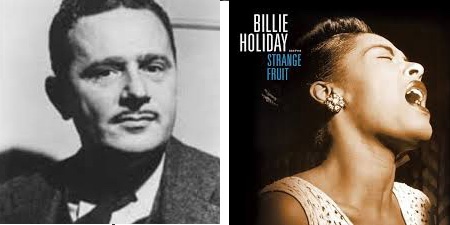
By DAVID TOPPER The Jewish contribution to 20th century popular music is well known. From Jerome Kern through to Stephen Sondheim, Jews played major roles as both composers and lyricists in the so-called Great American Songbook. (An exception is Cole Porter.) It continued in Musical Theatre throughout the rest of the century.
One very small piece of this story involves what Time magazine in the December 1999 issue called “the tune of the century.” First recorded sixty years before that, it is the powerful and haunting tune called “Strange Fruit,” which is about the lynching of black people in the southern USA. First sung by Billie Holiday in 1939, it became her signature tune.
So, why do I bring this up? Because there is a multi-layered Jewish connection to this song that is worth recalling, which may not be known to many readers.
Let’s start with the lyrics to “Strange Fruit,” which are the essence of this powerful piece:
Southern trees bear strange fruit,Blood on the leaves and blood at the root,Black bodies swinging in the southern breeze,Strange fruit hanging from the poplar trees.Pastoral scene of the gallant south,The bulging eyes and the twisted mouth,Scent of magnolias, sweet and fresh,Then the sudden smell of burning flesh.Here is fruit for the crows to pluck,For the rain to gather, for the wind to suck,For the sun to rot, for the trees to drop,Here is a strange and bitter crop.
Before becoming lyrics in a song, this poem stood alone as a potent statement about the lynchings still taking place throughout the American South at the time. The strong metaphorical imagery never explicitly mentions the lynching, which adds to the poetic power of this poem. Standing alone, I believe it’s an important protest verse from the 20th century.
Searching it on the internet, you may find the author listed as Lewis Allan. But that’s not his real name. “Lewis Allen” is the often-used pen name of Abel Meeropol, a Jewish High School teacher from the Bronx in New York. He and his wife, Anne (nee Shaffer), had two stillborn children with those names – a fact that adds a poignant element to this story.
The origin of the poem for Abel was a photograph he had seen of a lynching of black men in the South. I have seen such images, possibly even the one Abel saw: for example, a sepia photograph of two black men hanging from a long tree limb, and a large crowd of white people below (men, women and even children!), most seeming dressed in their Sunday best (some men with straw hats) looking up and gawking at the sight, some with smiles on their faces – as if attending a festive spectacle. Like Abel, I felt repelled by the picture: it turned my stomach. This communal display of horrific cruelty gave me a glimpse into Abel’s mind, and I understood how it compelled him to write about it. He thus wrote the poem, and it was published in a teacher’s magazine in 1937.
Being a songwriter too, in 1938 Abel added a melody and played it in a New York club he often attended. But here’s where this story’s documentation gets contradictory, depending upon who is recalling the events. The club owner knew Billie Holiday, and he showed the song to her. What her initial response was, we cannot know for sure. But we do know that in a relatively short time, she added it to her repertoire. It eventually became her signature tune. She initially sang it in public, but because of its popularity among her fans, there was pressure to record it too.
There were initial rejections from recording companies because of the controversial content. But Commodore Records took a chance and pressed the first recording in April 1939. This was the same year the movie “Gone with the Wind” came out; it was steeped in racial stereotyping. It was also sixteen years before Rosa Parks refused to give up her seat on a bus in Montgomery, Alabama.
As a record, the song obviously reached a large audience. Since the content was about racism, the song was seen as politically radical; not surprisingly, many radio stations banned it from the airwaves.
Furthermore, it’s also not surprising that Abel, a schoolteacher, was called to appear before a committee of New York lawmakers who were looking for communists in the schools. Possibly they were surprised to find that the poem and the song were written by a white man – and a Jew to boot. In particular, they wanted to know if he was paid by the Communist Party to write this song. He was not. And, in the end, they let him go. But shortly thereafter he quit his teaching job.
This took place in 1941 and was a precursor to the continued American obsession with communism into the 1950s, under Senator Joe McCarthy.
Indeed, that episode had an impact on Abel and Anne too. In 1953 Julius and Ethel Rosenberg were convicted of giving information about nuclear science to the Soviet Union, and they were the first married couple to be executed in the electric chair. They left two sons, Michael (age 10) and Robert (age 6). Apparently, immediate family members were reticent to get involved with the boys, possibly afraid of being accused of sympathizing with communism.
Enter Abel and Anne. Without a moment’s hesitation they stepped in, taking and raising the boys. As Michael and Robert Meeropol they eventually went on to become college professors – and naturally were active in social issues. Anne died in 1973. Abel died in 1986 in a Jewish nursing home in Massachusetts, after a slow decline into dementia. Long before that, Billie Holiday died in 1959, ravaged by the drug addition that took her life at forty-four years of age.
See why I called this a multi-layered Jewish story that’s worth telling?
To hear Billie Holiday singing “Strange Fruit” click here: Strange Fruit
Features
Mobile Casino Trends in 2026: Usage Statistics – What Casino Online Westace Says
Mobile technologies simplify everyday life. They are used for payments, regular conversations, photos, and even gambling. Sites like casino online Westace leverage modern trends and do everything possible to maximize engagement. Adapting familiar gambling games to smartphones makes them more convenient. Visitors can launch slot machines or other entertainment with just a few taps on the screen. Quick rounds let you instantly see the results and choose a different game type. Interactivity is the main approach to development in 2026.
Usage Statistics in 2026
Online casinos are using mobile development technologies to adapt gambling games to smartphones and tablets. Now, almost every user has the opportunity to launch games to test their features in a convenient format. Sites like casino online Westace are not far behind and adapt to various screen layouts. The latest industry news also indicates significant developments:
More than 75% of players use online casino services via mobile devices. Statistics show significant steady growth compared to the figure of 65% in 2023.
It is predicted that revenue from mobile casinos in 2026 will exceed the mark of $ 60 billion. The figure is two-thirds of the market. Thus, positive trends can be identified among gambling software developers.
The younger demographic aged 18 to 35 years old is the most active user of mobile devices. They have twice the level of involvement compared to other categories.
80% of new casino accounts were registered through mobile apps or mobile-optimized websites. This indicates their convenience and widespread use.
Mobile development is a priority for online casinos. Operators work closely with developers to adapt all games to the relevant requirements.
Features of Mobile Casino Growth
Mobile versions of sites like casino online Westace are dominating in 2026 for a reason. Players can enjoy games with real dealers even from small screens. At the same time, the broadcast quality remains at a high level without delays.
All games are designed for touch use. Players can easily use portrait mode and adaptive layouts to launch a comfortable gameplay format. Biometric login and two-factor authentication are essential tools that protect transactions and accounts from unauthorized access.
Mobile gaming encourages more frequent play in small sessions. For example, a player can play one or two games of baccarat, and then later return to play slot machines. All progress is saved on any device. Yes, a player can start playing on a smartphone, save the results, and return via a browser on a computer.
All Interesting Facts to Know
Recently, sites like casino online Westace have been paying more attention to mobility. For example, seasonal slots are launched first through mobile versions, and then move to desktop. Regulators have also introduced mandatory responsible elements for smartphone users for greater control. Mobile players spend 20% more time playing with real dealers. This emphasizes the close attention to interactive formats and communication.
Ultimately, mobile casino versions occupy their own niche in the industry. Most players use smartphones to play on the go and enjoy fast games. Developers adapt to these requirements and improve services, adding relevant options to games.
Features
Important Keno Rules: Explained by Casino Online Glorion
Keno is a lottery game that originated in China 2,000 years ago. At that time, it was called baige piao, which translates to “white pigeon ticket” in English. Keno rules on sites like Glorion Casino are similar to those of games like lotto. The game involves choosing numbers in the hopes that they will match randomly selected values. In this article, we will discuss the important rules of online keno.
Understanding Keno Rules at Online Casinos
Keno is a game of chance in which players select 1 to 10 numbers from a table of 1 to 80, similar to bingo. After this, the numbers are drawn. The player’s payout depends on how many figures they match.
In classic keno, the drawing is done using a ball machine. The same equipment is used in bingo and lotteries. The host randomly draws 20 numbered balls. Players win if at least one of their chosen numbers matches the dealer’s draw. The more matching numbers, the larger the payout.
Online keno is played using a random number generator (RNG). Keno payouts on sites like Casino Online Glorionare similar to those in the classic game. The differences are due to the drawing procedure and the properties of different versions.
After users select their 20 numbers, the gambling software publishes its 20 figures, which determine the winner. Payout amounts vary across platforms, so users should check them before playing.
Basic Keno Stages in Online Casinos
Users planning to play keno at sites like Casino Online Glorion should be familiar with the gameplay process. Typically, it includes the following stages.
- Select a keno card. The ticket displays numbers from 1 to 80.
- Choose your numbers. In different versions, users select 10, 15, or 20 numbers before each draw. Each number is called a ‘keno spot.’ You can set the same numbers for multiple draws.
- Check the payout table. In the online version of the game, the table appears after selecting the numbers. It displays information about the payout amount if you guess correctly. The more numbers you match, the larger the payout.
- Calculate your bet. Determine how much you want to bet on each draw. Remember that the bet size affects the final payout.
- Start the game. All the drawn numbers will appear somewhere on the screen. Users can also view the “cold” and “hot” keno numbers. Hot numbers have been drawn recently, while cold ones haven’t won for a long time.
- Match the numbers. Experienced players use the term “catching a spot” when their chosen number is drawn. The number of spots you catch affects your payout.
Keno at websites like Casino Online Glorion offers engaging gameplay. Players can get generous prizes. They should learn the rules, odds, and prize structures to make rational decisions and boost their chances of winning. Chase the thrill, but play it smart.
Features
Common Online Casino Mistakes To Avoid

Online casino games can be a brilliant way to bring excitement to life in your spare time. These games have become hugely popular in recent years, but you will find that people often make the same mistakes. These mistakes can lead to financial losses, cybercrime, and an inferior experience, so it is important to be aware of what these mistakes are so that they can be avoided. This post will outline a few of the most common mistakes people make when playing online casino games and explain how to avoid falling into the same trap. Interested? Keep reading to find out more.
Ignoring Terms & Conditions
One of the biggest mistakes players make with online casino games is ignoring the terms and conditions. You should always take the time to read through these, paying close attention to things like the conditions of bonuses and restrictions in withdrawals. This will help you avoid any nasty surprises when playing games.
Not Researching Casinos
Another common mistake people make is not researching casinos. There are endless options for online casinos, but not all are equal, and there are even many that are unlicensed. Therefore, you need to research casinos and find one that is fully licensed and has positive reviews. The best casinos will have a massive selection of games to choose from, including blackjack online. A wide selection of games means it is hard to get bored, and you can always find something to play.
If you’re a high roller you might want to look at Los Mejores Casinos Online para High Rollers en España 2026 🎰 –
Chasing Losses
One of the most dangerous mistakes people make is chasing losses. This is where players will attempt to win back the money they have lost, which often means betting larger sums. This is a dangerous tactic and a slippery slope, so it is important to be aware of it and take measures to protect against it. The best way to avoid chasing losses is to set a budget before each session – if you spend that amount, you need to be able to walk away.
Not Understanding Games
It is always important to have a strong understanding of the game that you are playing. This will boost your chances of winning and your gaming experience. Therefore, you should always read the instructions when playing a game for the first time. For strategic games like poker, there is a lot of information online that will help you get to grips with the basics and learn strategies to use.
Weak Passwords
Cybersecurity needs to be a top priority when it comes to online casino games. The top casinos will have strong cybersecurity measures in place, but you also have a role to play. It is important to use strong passwords and multi-factor authentication to prevent hackers. It is also smart to avoid having large sums held in your online account in case someone hacks your account.
These are the most common mistakes that you will want to avoid when it comes to online casino games. By avoiding these mistakes, you can improve your experience and enjoy the excitement that these games can bring.