


Features
Marnie Singer’s passion for cats infuses her efforts to keep felines safe

By MYRON LOVE Healthcare worker Marnie Singer loves what she does. The nursing home worker says that she really enjoys working with seniors.
“I work at a smaller nursing home,” she notes. “We have a great team of workers with low turnover and we thankfully have had no Covid cases among our residents.”
While Singer has been working full time as a healthcare worker for the past 17 years, in more recent years, she has take on a second full time task – a labour of love – trying to keeps cats in Winnipeg and the surrounding area safe and cared for. Six years ago, she founded Winnipeg Missing and Found Cat Watch – after one of her own cats went missing for two months – to try to reunite missing cats with their owners. Cat Watch currently has more than 25,000 followers and serves all of Manitoba.
In an interview that was published in the January 6 edition of the Times – a weekly newspaper that serves north Winnipeg – she recalled that when her cat went missing, she swore that if she was fortunate enough to find the cat, she would help other cat owners in similar circumstances.
Surprisingly, Singer herself is still a relatively recent pet owner. Growing up in Garden City, the daughter of Herb and Myrna Singer never had any pets. “While I have always loved animals, my parents weren’t pet people,” she says.
Following graduation from Garden City Collegiate (class of 1990) and training in healthcare at Winnipeg Technical College, she moved to Halifax. After six years in the Maritimes, Singer moved back to Winnipeg to be closer to family.
(She notes that she arrived back in Winnipeg on September 10, 2001.)
“I was living alone in Osborne Village and thought that I would like to adopt a cat,” she recalls. “I adopted my first cat, Freddy, from The Winnipeg Humane Society on Kent Road.”
It was in 2011 that a second cat went missing for a short time and Singer, on recovering her cat, was spurred to take action to help other cat owners with missing cats.
The growth of her Facebook page, Winnipeg Missing and Found Cat Watch, she says, has been largely by word of mouth and Facebook exposure. She notes that she also works closely with the Winnipeg Humane Society.
She adds that she is sad that Javier Schwersensky (who was profiled in The Jewish Post & News in the fall of 2015) has stepped down as CEO (as of the beginning of the year). “Javier was a great CEO,” Singer says. “He helped me a lot – frequently referred people who were missing cats or found stray cats to visit my Facebook page and sharing my neighbourhood pages.”
On her Facebook page, Singer – who currently has two cats and a dog of her own – also tries to educate cat owners. She encourages people to keep their cats indoors as much as possible and, if the cats do go outside frequently, to have them spayed and neutered. She also shares ideas on keeping cats entertained indoors and regularly reminds cat owners to keep cat tattoos and microchip contact information up to date, so that if you move or change your phone number, you have a better chance of being reunited with your pet, should it go missing.
And, if you have a stray cat coming around, especially at this time of year, she encourages you to bring it indoors, try to find the owner by putting up posters and talking to neighbours or take it to a shelter.
Singer reports that she spends up to eight hours a day updating her Facebook page. While she does not seek donations, she does appreciate the help that some Facebook friends have offered.
“This is my baby,” she says. “I love what I am doing. I don’t want any cat to go missing.”
She invites readers who are interested in helping just to join her Facebook page and spread the word. “The more people involved,” she notes, “the better the chances of finding a missing cat.”
Features
What Attachment Styles Can Reveal About Dating Habits

How many evenings with a stranger does it take before anything reliable is known about them? Most people answer with a number and then ignore their own answer. What actually gets measured across those evenings is the pattern each person carries into every new pairing, and that pattern has been studied under one name since 1987.
Attachment research began with infants and moved into adult romance almost by accident. It now supplies the best available vocabulary for a question most people ask eventually, which is why their dating life keeps taking the same shape.
A Newspaper Quiz in 1987
Cindy Hazan and Phillip Shaver tested a hunch in 1987 by publishing a quiz in the Rocky Mountain News asking readers about their romantic history. They received 620 replies. Roughly 56% of respondents described themselves in secure terms, about 25% in avoidant terms and around 19% in anxious terms.
Those proportions were close to what Mary Ainsworth had recorded in infants decades earlier. A distribution found in toddlers separated from a parent for 3 minutes in a laboratory had turned up again in adults describing love affairs, and that correspondence is what made the field take notice.
The method had obvious weaknesses. Newspaper readers who answer a quiz about their love lives are not a random sample, and every answer was self-reported by people describing their own behavior in the most favorable terms available. Later work with better samples moved the numbers around without dislodging the structure, and the structure is what has lasted.
Two Axes and Four Positions
Two questions turned out to organize the whole field. Does a person hold a positive or negative view of themselves, and do they hold a positive or negative view of other people? Kim Bartholomew and Leonard Horowitz built their 1991 model on exactly that pair.
Crossing those axes produces 4 positions. Secure covers positive views of both. Preoccupied means a negative view of self with a positive view of others, which produces someone who wants closeness and doubts they deserve it. Dismissing means the reverse, a positive self-view paired with low expectations of anyone else. Fearful covers negative views on both axes, which produces wanting closeness and distrusting it at the same time.
Two axes beat a list of 3 types, because the axes explain why 2 people who both avoid intimacy can look nothing alike in practice.
Pacing and the First Month
There is no fixed amount of dates that settles the question of compatibility, and attachment position changes how quickly a person believes they have settled it. Secure people tend to form an assessment gradually and revise it when new information arrives.
Preoccupied people often decide fast and commit to the decision before it is warranted. Dismissing people frequently take longer and still leave with less, since their default is to withhold the information that would let anyone assess them back.
Separating the decision from the feeling by a fixed interval helps the first group. Deciding after a set number of meetings rather than after a strong evening will not make the assessment more accurate. It removes the largest single source of error, which is a conclusion reached inside the honeymoon phase while everything still looks promising.
Hyperactivation and Deactivation
The mechanism underneath all of this has 2 modes. Anxious patterns run on hyperactivation, which means turning up the volume on distress to draw a partner closer. Avoidant patterns run on deactivation, which means suppressing the signal entirely to keep distance manageable.
In early dating this shows up in small behaviors. Hyperactivation shows up as checking your phone every few minutes after an unanswered message, and as the escalation of a minor scheduling conflict into something larger. Researchers call the wider category protest behavior, and it covers everything from pointed silence to deliberately provoking a reaction. Deactivation produces the pleasant evening that goes nowhere and the topic changed each time a real question arrives.
Both patterns are attempts to manage the same discomfort, pointed in opposite directions. The deactivating version accounts for most of what people mean when they call someone emotionally unavailable.
The Anxious-Avoidant Loop
The most documented pairing in the literature puts a hyperactivating person with a deactivating one. Fearful-avoidant attachment complicates the picture further, since one person can run both strategies in sequence and produce the same loop without a partner’s help. Each strategy strengthens the other. Pursuit triggers withdrawal, withdrawal triggers more pursuit, and the loop holds steady for years because neither person is doing anything the other did not provoke.
The reason this pairing is so common is easy to miss. To someone whose nervous system learned early to associate intensity with love, a secure partner can feel flat. The anxious-avoidant cycle produces intensity on demand.
Positions Move
Attachment position is a tendency, and tendencies move. Positions change across the lifespan with relationships, therapy and circumstance, and a single difficult partner can push someone temporarily toward a pattern that is not their baseline.
That matters for how any of this gets applied. A person behaving in a preoccupied way with one partner may be entirely secure with the next, so the category describes the current pairing as much as the individual in it.
It also rules out the most common misuse of the framework, which is deciding early that a new person is avoidant and treating every subsequent behavior as confirmation. Two quiet weeks can mean an avoidant pattern, a demanding job, a sick parent or ordinary early caution, and the categories offer no way to tell those apart from the outside.
Reading the Categories Correctly
There is one more thing the framework cannot do, and it is the thing people most want from it. Nothing in attachment theory tells anyone which partner to choose. It describes how a person is likely to behave once the choosing is over and the uncertainty starts, which is a different and much smaller claim than the one made by most of the writing built on top of it.
An attachment style is a description of a habit. It names what someone tends to do when closeness is on offer and they are uncertain about it, and nothing in the framework predicts what any specific person will do on any specific evening.
Used that way the idea is genuinely worth having. A person who knows their own pattern can catch it while it is running, and a pattern caught mid-run is the only kind that can be interrupted. Noticing that you commit early and regret it a month later teaches you more than any number of verdicts about the people you committed to.
Uncategorized
Four Seats or No Seats? Why Israel’s Final Polls Disagree Over Amcha Yisrael

Conflicting projections for Ofer Winter’s party illustrate the uncertainty of measuring public support near an electoral threshold.
A Channel 12 poll gives Ofer Winter’s Amcha Yisrael four parliamentary seats.
An i24NEWS survey reaches the same seat total.
Other final polls find that the party does not qualify for representation.
How can surveys conducted close to the same election produce such different results?
The answer lies partly in the difference between measuring a vote share and converting it into parliamentary seats.
A Statistical Boundary
Israel’s electoral threshold is 3.25 percent.
For a party receiving substantially more than that percentage, modest sampling fluctuations may change its expected number of seats without calling its parliamentary presence into question.
For a party whose support lies near 3.25 percent, the same type of fluctuation may change its projected representation from several seats to zero.
This does not necessarily mean the polls are measuring completely different political realities.
They may be producing estimates close to the same threshold but on opposite sides of it.
Sample Size Is Only One Factor
The i24NEWS survey conducted on October 22 included 5,124 adult respondents and reported a sampling error of plus or minus 1.4 percentage points at the 95 percent confidence level.
That is a substantial sample by conventional political polling standards.
But a larger sample does not eliminate every source of uncertainty.
Different pollsters may employ different recruitment methods, weighting systems and procedures for estimating turnout.
They may also differ in how they handle respondents who are undecided or reluctant to state their preferences.
These choices can matter particularly for smaller parties.
The Problem of Turnout
Opinion polls generally estimate voting preferences before actual voting takes place.
Election results reflect the ballots cast by people who participate.
Differences between intended and actual turnout can affect parties in different ways.
Analysts must therefore consider not only how many respondents express support for a party, but also whether the poll’s turnout model accurately reflects the eventual electorate.
Without transparent, comparable information about the methods used by each polling organization, it is difficult to identify which methodological difference is responsible for a particular disagreement.
Reading the Final Surveys
The appropriate interpretation of Amcha Yisrael’s polling is neither that its parliamentary representation is guaranteed nor that exclusion is certain.
The available surveys demonstrate uncertainty around a legally decisive boundary.
The four-seat projections reported by Channel 12 and i24NEWS are meaningful observations.
So are the below-threshold findings published by Channel 13, Maariv and Zman Yisrael.
Each survey is a measurement of electoral intentions under a particular methodology, not a count of actual votes.
For readers following Israel’s election, this makes Amcha Yisrael an instructive case study in how polling uncertainty interacts with electoral law.
The final result will provide the definitive seat allocation. The polls explain why the outcome was difficult to measure in advance.
Features
What Constitutes Genocide, and is Israel Guilty?
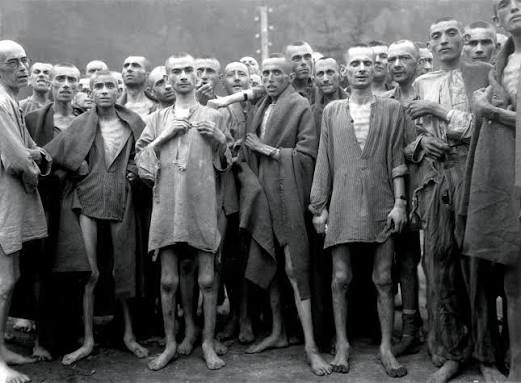
By HENRY SREBRNIK Genocide is a grave and exceptional violation of international law, defined and prohibited by the Genocide Convention of 1948. But maybe Raphael Lemkin did us no favour in coining the word during the Holocaust. It is now used by antisemites against Israel.
Raphael Lemkin was a Polish-Jewish jurist who escaped from Europe when the Nazis occupied Poland. He moved to Washington, DC, in the summer of 1942, and went on to document Nazi atrocities in his 1944 book, Axis Rule in Occupied Europe. In this text, he introduced the word “genocide,” the destruction of a nation or of an ethnic group. This new word is made from the ancient Greek word genos (race, ethnicity or tribe) and the Latin cide (killing).
But it’s not that cut and dried. Even before the antisemites accused Israel of genocide in Gaza, as a way of ridding themselves of any residual guilt about the destruction of European Jewry, the word had become little more than a term used by states and “human rights” groups who for one reason or another want to punish their adversaries.
Most of the time they really are talking about “ethnic cleansing,” pogroms, massacres and war crimes. By such criteria, every participant in World War II committed “genocide.” The mass killings of civilians in Hiroshima and Dresden in 1945 would today qualify. But these were acts against even far worse perpetrators of what we now call genocide, designed to speedily end the war.
What about the American war in Vietnam, and of course the almost numberless conflicts across Africa? The wars that dismembered Yugoslavia involved terrible massacres, particularly in Bosnia-Herzegovina and Kosovo, but did they really meet the criterion for genocide? The numbers killed needn’t be huge. About 8,000 Bosniak Muslims were murdered in Srebrenica by Bosnian Serb militias in 1995 during the Bosnian war. In the Western Hemisphere it would — and lately does — refer to the cultural and also physical extinction of pre-contact peoples from the Arctic down to Patagonia.
Are ideological attempts to kill groups of identifiable people within a state — the Holodomor in Ukraine, but also elsewhere in Stalin’s USSR — genocide? What about the Khmer Rouge in Cambodia? Should we call this an “auto-genocide,” since it was perpetrated by the nation’s own mad Maoist regime? Was China’s Cultural Revolution a genocide? Millions probably died. Rwanda is an interesting case — obviously a mass murder by one class-cum-ethnic group against another, a giant pogrom involving intertwined peoples, but where the victims have now turned the tables.
Actually, there have been very few ideologically intentional attempts to destroy a powerless and helpless people, in whole or in part. Only a few qualify by that definition, the Holocaust being an obvious one, as well as the Turkish mass murders of Armenians in World War I. The allegations that Israel committed this crime do not meet the established definition and standards of genocide, are unsupported by established facts, nor do they stand up to common sense scrutiny.
A finding of genocide requires evidence of acts that are intended to destroy a national, ethnic, racial, or religious group, in whole or in part. Israel has neither intended to, nor destroyed, Palestinians as a group in Gaza. Israel’s accusers allege genocide mostly because of the supposed number of civilians killed in Gaza. Such claims are rife with flaws. Genocide is not a quantitative crime; there is no specific number of civilian casualties that constitutes genocide.
Israel set a high bar for how to conduct urban warfare against an enemy who will stop at nothing, including the death of its own civilians. What kind of genocide is it when the population of Gaza is larger today than it was three years ago? And how could it be that Israel is trying to kill innocents when the ratio of civilian-to-combatant casualties is lower than that of other urban wars fought in even less-difficult conditions?
Dave Rich, an Associate Research Fellow at the Pears Institute for the Study of Anti-Semitism, writes extensively about the intersection of anti-Israel activism, far-left politics, and modern antisemitism. He observes that people respond to the genocide charge through facts and data: Israel’s supporters take the charge of genocide on its face, as an evidence-based allegation of a crime, and try to construct the case for the defence. But there is no defence, because the charge is not made on that basis, or for that purpose, he states.
The term “genocide,” he notes in “From Be’eri to Bondi: Global Antisemitism After October 7, published in Fathom, October 2026, has shed its legal meaning and become a political label, whose antithesis is “resistance.” These two terms represent two states of being: in a colonial setting, either you are engaging in genocide or you are resisting it. There is no middle ground. “Israel is condemned as genocidal, not by observation, but through logical deduction: Israel is colonial, therefore by definition it is genocidal. It cannot be otherwise. And Gaza represents resistance against the entire Western colonial and capitalist power structure.”
Maia Zelkha, editor-in-chief of Yad Mizrah, a Sephardi and Mizrahi cultural magazine, also contends that the left employs the word “genocide” as an ideological weapon. “Before Israel had even launched its ground invasion of Gaza, and before there was any evidentiary record of Israel’s military campaign,” she writes, in her article “Genocide and Its Jurors,” in Quillette, Sept. 24, 2026, many leftist groups “were already describing Israel’s response as genocide.”
On Oct. 8, just a day after Hamas’s massacre and kidnappings, thousands of demonstrators gathered in New York’s Times Square in an “All Out for Palestine” rally to support “Palestinian resistance.” Within days, other organizations were issuing statements describing Israel’s unfolding military response as genocide, situated within a pre-existing theory of Israel as a colonial project that had produced genocidal dehumanisation. Prominent academics, human-rights organisations, activists, journalists, and public intellectuals described Israel’s conduct as genocidal.
Although the conviction that Israel is committing genocide against the Palestinians is not new, it has garnered ever more strength since the beginning of this war. In March 2024, the UN special rapporteur on the Palestinian territories, Francesca Albanese, published a report alleging that the Israeli war in Gaza constituted a genocide. In December of the same year, both Amnesty International and Human Rights Watch did the same. Then in July 2025 came both Physicians for Human Rights and B’Tselem, followed almost immediately by the International Association of Genocide Scholars. A resolution from the latter organization requires a two-thirds vote of its members, academics in the field of genocide studies, to pass. One would be hard-pressed to find a more reputable source for the libel.
On Sept. 16, 2025, a UN Commission of Inquiry concluded that Israel was committing genocide in Gaza; other prominent left-wing organisations and scholars have reached the same conclusion. And finally, on Oct. 9, the Norwegian Nobel Committee announced that it awarded the Nobel Peace Prize for 2026 to South African judge Navanethem “Navi” Pillay, who led the 2025 UN commission that found Israel guilty of genocide against the Palestinians while completely ignoring many of the world’s worst human rights abusers, including, of course, Hamas. Pillay’s commission found that Hamas and other Palestinian armed groups committed war crimes. Yet it accused Israel of genocide. This is a staggering moral inversion. And now the award of the Nobel; this appears to be the greatest possible legitimization of the now-established consensus about Israel’s war in Gaza. The icing on the cake!
But remember this: When a jihadist terrorist organization like Hamas applauds a Nobel Peace Prize, the moral judgment of the Nobel Peace Prize Committee should rightly be called into question.
Henry Srebrnik is a professor emeritus of political science at the University of Prince Edward Island.
