


Features
New autobiography by Holocaust survivor Hedy Bohm – who went on to testify in trials of two Nazi war criminals
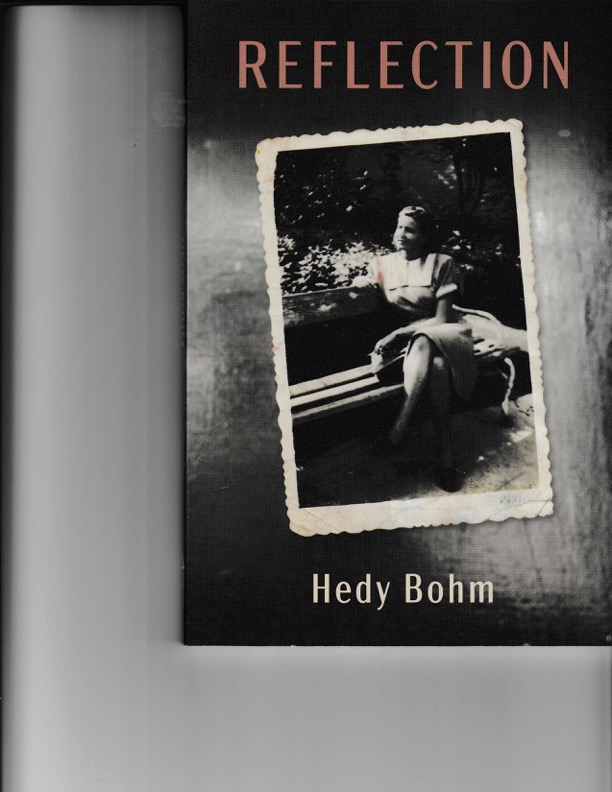
Book Review by Julie Kirsh, Former Sun Media News Research Director
My parents were Hungarian Jewish Holocaust survivors who arrived in Toronto in 1951 without family or friends. In the late 50s my mother met Hedy Bohm outside of our downtown apartment and quickly connected with her. Both women had suffered the loss of all family in the Shoah. Over the years our families’ custom became sharing our dining table with the Bohm family for the Jewish high holidays. The tradition continues today with the second generation.
Hedy was born in 1928 in the city of Oradea in Romania. She was a pampered only child, adored by her father and very much attached to her mother. Although Hedy was an adolescent, she was kept from hearing about the rising anti-semitism around her in her hometown. She was protected and sheltered like any child. Memoirs from other adolescents like Elie Wiesel, aged 15 in Auschwitz, Samuel Pisar, liberated at 16, and Rabbi Israel Meir Lau, who was found in Buchenwald by American soldiers at age 8, made me wonder about the resilience and strength of children who survived like Hedy.
Hedy was only 16 years old when she walked through the gates of hell, Auschwitz-Birkenau. Hedy’s poignant retelling of this pivotal moment in her young life was the sudden separation from her father and moments later from her mother. Somehow Hedy’s mother got ahead of her upon their arrival at Auschwitz. Hedy called out to her. Her mother turned and they looked at each other. A Nazi guard prevented Hedy from joining her mother. Hedy has always been tormented by this moment of separation. Did her mother know that she was walking to her death?
Hedy writes that she was focused on survival in the camps. She concentrated on eating whatever food was given and keeping clean by washing daily in icy, cold water before the roll call. When she contracted diarrhea, she remembered her mother’s homemade remedy of gnawing on charred wood. Her naivete and innocence were overcome with a strong inner determination to stay alive so that she could see her mother again.
Hedy recounts the terrible hunger that everyone endured. One day, spotting some carrots in a warehouse, Hedy was appointed by her aunt to run and grab what she could. Luckily she evaded the armed guard who would have shot her on the spot.
On April 14, 1945, Hedy’s day of liberation, she learned the terrible fate of her mother. The return home for the survivors was a further tragedy when they realized the loss of family and community.
In her memoir, Hedy describes meeting Imre, an older boy from her town whom she eventually married. Their flight from Romania to Budapest to Pier 21 in Halifax to Toronto is documented in harrowing detail.
Hedy recounts how in Toronto no one wanted to know the stories of the survivors. This was a world before Eichmann’s trial in Israel in 1961 and the TV series, The Holocaust, in 1978. The floodgates for information from the survivors opened late in their lives.
In Toronto, after many failed enterprises, Imre and Hedy stumbled onto the shoe selling business. In 1959, they leased a small shoe store close to Honest Ed’s in downtown Toronto. Surprisingly, the business according to Hedy, became very profitable. Many years later, after Imre’s sudden death due to a heart attack, Hedy continued to manage their shoe business while taking care of her daughter, Vicky and son, Ronnie.
In 1996, Hedy was introduced to Rabbi Jordan Pearlson. Their love match made Hedy feel that she had been given a wonderful gift, late in life, which she welcomed.
Jordan died in 2008. Hedy endured and carried on with yoga and tai chi both as a teacher and devoted practitioner.
A new purpose in life opened up for Hedy when she was invited to be a speaker for the Holocaust Education Centre (now the Toronto Holocaust Museum). She spoke to mostly non-Jewish students whom she visited at their schools outside of Toronto.
Visiting Auschwitz with the March of the Living for the first time in 2010, Hedy faced her fears about returning to the place that held the horrors. She was fortunate to meet Jordana Lebowitz, a student from Toronto who developed a multimedia presentation called ShadowLight. Hedy’s contribution to teaching others about the Holocaust by sharing her experience, is immeasurable.
In 2014, Hedy was asked to be a witness at the trial of Oskar Groning , “the accountant of Auschwitz”, in Germany. In 2016, she appeared as a witness for the trial of the Nazi guard, Reinhold Hanning. He was sentenced to a mere five years in prison and Groning died before he could start his jail sentence. In having the courage to participate in these war criminal trials, Hedy spoke for her parents and all the innocents who could not speak for themselves.
Hedy’s talks to students always include an admonishment to be kind, to trust in themselves and work for the greater good. She rose above her own fears of sharing her story by speaking publicly.
Hedy’s story of survival and perseverance will remain a beacon to future generations, ensuring that hope and good will endure even in the worst of times.
Reflection
by Hedy Bohm
Published in 2026 by The Azrieli Foundation
To order a copy of the book go to https://memoirs.azrielifoundation.org/titles/reflection/



Features
Today’s Antizionism is Jew-Hatred
By HENRY SREBRNIK The Jewish world has grown darker. I’m not going to compare the anti-Jewish hate that has spread across this and other countries since October 7, 2023, to the Holocaust, but we know that Jewish life has become far more precarious. And so much of the hatred flies under the rubric of so-called “antizionism,” with people claiming that this isn’t “antisemitism.” But this is a false dichotomy. And we know it when we see it.
“Antizionism” is not about the now arcane historical debates that occurred mainly within Jewish communities from the 19th century through 1948, in which those who became Zionists sought to actualize the Jewish ties to biblical Israel and recreate a modern state. By “Zionists,” today’s enemies are not referring to supporters of the 19th century self-liberation movement of the Jewish people, whose goal was to establish a national home. They known little of this history. They’ve never heard of Theodor Herzl, Ahad Ha’am, Ber Borochov, Ze’ev Jabotinsky, or Chaim Weizmann.
As a derogatory slur, a pejorative, it simply means “Jew,” the way earlier words, now archaic, used to. Some call Jews “Zios.” They mean the Jewish people, who exist in opposition to everything good in the world, and who are figures of emblematic wickedness. In this they simply update what Nazis said a century ago. Hitler, too, was an “antizionist,” along with his racial antisemitism. It attacks Jews, here in Western countries like Canada – in the cities where they live, in the universities they attend, in the publishing houses where they send their manuscripts, and in the entertainment world where they act and sing.
Note that it calls itself antizionism, not anti-Israelism, so that the net can grab virtually every Jew who simply wants to see Israel not destroyed – and that’s the vast, vast majority. We Jews know what it means, regardless of what our enemies claim. Would anyone think that the term antisemitism means hatred of Semites?
Clearly a ludicrous idea; it was invented in the 19th century by a German Jew-hater, Wilhelm Marr, to make it sound more “racially scientific.” No one is fooled by that, of course, nor should they be by so-called “antizionism.” In its effects, it is for Jews a distinction with a negligible difference. It is meant to portray Jews as villains, and while it may fool some gullible people, it will deceive very, very few of us.
After all, as Michel Coren noted in “Roald Dahl’s Antisemitism Feels Painfully Familiar,” in the British magazine the Spectator March 16, “most Jewish people do in fact to varying degrees support Israel, partly because centuries of bigotry, violence, massacre, and attempted genocide have given them little alternative. They may oppose Israeli policy, may condemn the current government, may even want radical compromises, but there’s still support. And in the current climate of leftist and Islamist triumphalism, it’s all Zionism and none of it acceptable.”
Anti-Zionism is marked by three core “libels”: that “Zionists” are colonizers, guilty of apartheid, and committing genocide. (Actually, the only time we were settler-colonialists was when we conquered Canaan, but that was God’s doing!) Anti-Israel activists incorporate historical manifestations of anti-Jewish discrimination under the guise of anti-Zionist political activism, from the blood libel to Nazi-era tropes, mixed with contemporary academic theories. Anti-Zionism acts as a container for these historical tropes, blending them together with progressive talking points.
George Washington University professor Daniel Schwartz, in “Vocabulary Lesson,” Jewish Review of Books, Spring 2026, describes a pro-Palestinian demonstration in 2025 at his campus where a student held a placard with Israel at the center and spokes radiating outward to other evils: imperialism, white supremacy, even reproductive injustice. “This is not garden-variety political criticism of Israel policies or conduct. It invokes a symbolic architecture in which the Jewish state becomes the universal source of global suffering — a structure with deep resonance in antisemitic thought.”
Scholars argue that it is the third major iteration of discrimination against Jews. The first was anti-Judaism, based on religion, the second was antisemitism, focused on race, and the third, anti-Zionism, is a hatred of Jewish peoplehood.
“Anti-Zionism transforms the very meaning of Zionism,” contends Adam Louis-Klein. “The Jew is reconstructed through a new symbolic logic and a new repertoire of stereotypes.” Where antisemites invoked the pseudo-biological figure of “the Semite” to cast Jews as an Oriental race infiltrating the West, anti-Zionists invoke the authority of the social sciences to recode the Jew as the “Zionist,” a European colonizer destined to commit genocide of a non-European population.
“Erasing Jewish indigeneity and severing Jewish belonging to the land of Israel, anti-Zionism transforms the race polluter of antisemitism into the white settler of anti-Zionism,” he asserts in his March 24, 2026 Free Press article “Yes, Anti-Zionism Is Discrimination.”
For this reason, he writes, it’s imperative that organizations and institutions committed to protecting Jews and fighting the scourge of Jew-hatred start condemning—clearly and without apology—antisemitism and antizionism. This goes to the moral core of the matter: the right of Jews to a homeland versus the bigotry of those who deny them that right.
After the Holocaust, explicit Jew-hatred became unfashionable in polite society, but the impulse never disappeared. The workaround was simple: separate Zionism from Judaism in name, then recycle every old anti-Jewish trope and pin it on “the Zionists.”
Henry Srebrnik is a professor of political science at the University of Prince Edward Island.
Features
Artificial Intelligence, Sports Data, and What It Means for Community Values

Artificial intelligence is becoming an increasingly visible part of modern life, shaping how information is analyzed and decisions are made. While often discussed in fields such as healthcare, finance, and education, sports analytics provides a particularly clear example of how these systems function in real time. For many readers, the relevance of this topic goes beyond sports itself and speaks to broader questions about technology and community values.
Within Jewish communities, where education, critical thinking, and ethical responsibility have long been central principles, the rise of AI invites meaningful discussion. Understanding how automated systems operate is not only a technical issue but also a cultural and intellectual one. In global digital environments, references to platforms such as 1xbet Republic of Ireland often appear in discussions about real-time data processing, illustrating how widely these technologies are applied.
From Human Judgment to Algorithmic Thinking
Traditionally, interpreting sports performance required human observation and experience. Analysts would review statistics, assess player form, and make informed judgments based on knowledge built over time. While this method remains valuable, it is now being supplemented by artificial intelligence.
AI systems can process large volumes of data instantly, identifying patterns and trends that might otherwise go unnoticed. This shift reflects a broader movement toward algorithmic thinking—where decisions are increasingly informed by data rather than intuition alone.
For communities that place a strong emphasis on learning and inquiry, this raises important questions. How should data be interpreted? What role should human judgment continue to play? And how do we ensure that reliance on technology does not replace thoughtful analysis?
What AI Systems Analyze
Modern AI models draw on a wide range of data inputs to generate insights. In the context of sports, this includes:
- real-time performance data
- historical comparisons
- individual player metrics
- behavioural patterns
- external conditions
The ability to integrate these variables allows AI to produce highly detailed assessments. However, it also creates a layer of complexity that is not always easy to understand.
This challenge is particularly relevant in educational settings. As younger generations become more familiar with technology, there is a growing need to teach not only how to use these systems, but also how to question and evaluate them.
Ethics, Transparency, and Responsibility
The increasing role of AI naturally leads to ethical considerations. In Jewish thought, concepts such as responsibility, fairness, and accountability are deeply rooted and widely discussed. These ideas are highly relevant when considering how automated systems are designed and used.
One of the key concerns surrounding AI is transparency. When decisions are made by complex algorithms, it can be difficult to understand the reasoning behind them. This raises questions about trust and oversight.
Ensuring that AI systems are used responsibly requires a balance between innovation and ethical awareness. Community dialogue plays an essential role in this process, helping to define how technology should align with shared values.
A Community Conversation About the Future
The use of artificial intelligence in sports analytics may seem like a narrow topic, but it reflects a much larger transformation. Across many areas of life, data-driven systems are becoming the norm, influencing how information is processed and decisions are made.
For Jewish communities, this moment presents an opportunity for reflection and engagement. By approaching technology with curiosity, critical thinking, and a strong ethical framework, it is possible to better understand both its potential and its limitations.
Ultimately, the conversation about AI is not just about technology. It is about how communities adapt, preserve their values, and shape the future in a rapidly changing world.
Features
The moral degradation of Israel’s far-right is even worse than you think

By Dan Perry (Posted March 27, 2026)
This story was originally published in the Forward. Click here to get the Forward’s free email newsletters delivered to your inbox.
This week, an Israeli Knesset member said something that should have been shocking, horrifying and unanimously condemned.
“I stand behind IDF soldiers in every situation,” said Yitzhak Kroizer, a member of the ultranationalist Otzmah Yehudit Party. Even if the “collateral damage is children or women — it does not matter to me.”
“In Jenin, there are no innocent civilians,” he added. “In Jenin, there are no innocent children.”
Kroizer was referring to a genuine tragedy: The killing of almost an entire Palestinian family by Israel undercover forces on March 15, near the village of Tammun. The forces opened fire on the family’s car as they returned from a shopping trip. Waed Bani Ohde, her husband Ali, and two of their young children Othman, 7, and Mohammed, 5, were killed. Two sons survived. The army says the car accelerated toward the forces; Palestinian witnesses say the IDF gave no warning before attacking.
It is tempting to dismiss statements like Kroizer’s as the rhetoric of the extreme. Indeed, I often find myself making that point when talking to people inclined to think the worst of Israel: They do not represent the majority, and not even the immoral government of Prime Minister Benjamin Netanyahu.
But that, while true, is becoming a little too pat.
For it is also true that as time goes, as the wars continue and hearts harden, what Kroizer articulated is a moral framework that is steadily taking hold in the Israeli right.
That’s why the statements were not condemned by anyone associated with the government. And, indeed, Israeli far-right activists responded to the deaths with social media posts rejoicing in the death of the unarmed “terrorists.”
No senior Israeli official apologized for the shooting. No one said publicly that even if the soldiers believed they were acting under threat, the killing of two children demands something more than a routine internal review.
No official has even conceded that this type of event might contribute to agitation and instability in the West Bank, and perhaps spark another uprising. Set empathy aside; even enlightened self-interest is beyond the current Israeli government.
Yes, an investigation has been opened. But military investigations almost never lead to concrete action against the troops. A Guardian report this week revealed that no Israeli citizen has been prosecuted for a killing in the West Bank since 2020, despite a radical uptick in violence; settlers and police have already killed 10 Palestinian civilians this month alone.
The undercover soldiers, especially, are something like the real life version of the international hit Fauda, widely admired for their counter-terrorism activity. There is little appetite for throwing the book at them.
So while it’s tempting to chalk this up as just another tragedy in a long list of tragedies on both sides, it is actually much more: a devastating manifestation of something fundamental — not just a personal tragedy but a national one.
That’s a tragedy I’ve seen unfolding slowly, since even before the Hamas attack of Oct. 7, 2023.
I’ve seen it in the rhetoric of far-right leaders like cabinet ministers Itamar Ben-Gvir and Bezalel Smotrich. But I’ve also seen it firsthand, as when I found myself on wartime television panels where I was besieged by right-wingers enraged at my assertion that innocents have been killed during the war in Gaza. I challenged one of them about whether this idea would include a two-week old baby.
“OK, maybe not the baby!” he conceded, unhappily.
The descent of part of Israeli society into this unforgivable lack of compassion is, some have argued, an inevitable outcome of indefinite control over the Palestinian territories. For years, warnings that rule over millions of disenfranchised Arabs would mutate Israel’s character were treated as excessive, even hysterical.
Israel was not a colonial power in the classic sense, its defenders argued; it was a democracy under siege, navigating impossible dilemmas. The West Bank may be “occupied” but that was justifiable because of the threat its near proximity posed. Israel’s actions might be harsh, but they were necessary, the argument went. It was said that the country’s moral core, despite pressures, would remain intact.
The initial signs after this latest tragedy are not exactly reassuring. Far from condemning Kroizer, as they rightly should have, the cabinet convened this week to offer his party a great gift: the legalization of 30 illegal settlement outposts, including some in “Area A,” which is supposed to be under full Palestinian control.
Israel did not begin this way. Its founding story was deeply bound up with an acute awareness of the need to maintain morality. The early Zionists envisioned a country that would be a “light unto the nations.”
As occupation has become an entrenched reality, most Israelis have wanted to look away; the problem is too complicated. This position may not be possible for much longer. The moral rot is too extreme. But the good news is that it has not infected everything and everyone. Israel’s public broadcaster devoted a segment to the Palestinian family’s tragedy, characterizing Kroizer’s statements as a disgrace.
The humanistic ideas through which Israel once judged itself have eroded. We must now hope that they won’t entirely vanish.
Dan Perry is the former chief editor of The Associated Press in Europe, Africa and the Middle East, the former chairman of the Foreign Press Association in Jerusalem, and the author of two books about Israel. Follow his newsletter “Ask Questions Later” at danperry.substack.com.
The views and opinions expressed in this article are the author’s own and do not necessarily reflect those of the Forward. Discover more perspectives in Opinion. To contact Opinion authors, email opinion@forward.com.
This story was originally published on the Forward.