


Obituaries
SIDNEY FLEISHER July 2, 1928 – November 4, 2023
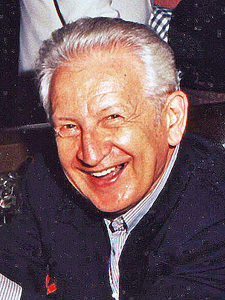
Dr. Sidney Fleisher died peacefully at his home on November 4th. He was a loving and adored husband, father, father-in-law, zaida, and great-zaida. He is missed and will always be remembered by his daughters and sons-in-law, Marcia and Kelly, Rhonda and Bob, Susan and Larry, and Sara and Benjamin. Also mourning Sidney are his sister, Arlene Rusk, brother-in-law and sister-in-law, Larry and Faye Litman, and his grandchildren, Alexander, Georgia, Loren, Ethan, Lily, Mira, Leah, Jeremy, Alexa (Aaron), and Brendan, and great-grandson, Arthur. Sidney Fleisher was predeceased by Beverly, his loving wife of 53 years, his sisters, Bessie Zelickson and Miriam Fleisher, his brothers-in-law, Jerry Litman, Cyril Zelickson, and Michael Rusk, and his nephew, Kenny Zelickson.
Sidney was born in north end Winnipeg to Jewish immigrant parents on the eve of the Great Depression and grew to maturity during the Second World War. He was the eldest of four children and the only son. As a child he worked in the family grocery store early mornings before school and after school. In 1944, while still in grade 11, Sidney dropped out of school and joined the 2nd (R) Battalion of the Winnipeg Light Infantry while continuing to work with his father. He remained in the grocery business until his mid to late 20s. At that point he became a travelling salesman with Success Wax and excelled at this work. When a large international corporation purchased Success Wax, he was one of the few employees who were fired. And when he was subsequently refused employment at a job with another large company he learned (from a friend who worked there) that they simply did not hire Jews. He said that when he heard this he vowed that he would never again allow himself to be in a position where he could be fired – that he needed to be his own boss and he needed to work at something that would comfortably support his family. To fulfill this promise to himself, even though he was married with three children and 33 years old, he returned to high school (there was no Adult Education program at the time) with the intention of going on to dentistry.
In 1968, at age 40, Sidney had one of the proudest moments of his life when he graduated as a dentist. The quality of his work was recognized by his peers. Frequently, patients who had seen another dentist, upon their return to Sidney, would report that the other dentist had commented on the work being ‘beautiful’ and would ask who the dentist had been. He was a caring dentist who was moved and concerned by patients’ pain. He strove to relieve it, doing free dental work if patients could not afford to pay. In the latter part of his career he focussed on temporomandibular joint (TMJ) dysfunction. He became aware that there were large numbers of patients with unrecognized, untreated and/or poorly treated pain from TMJ disorder, many of whom had been suffering for years. With further study and practice in this field, Sidney developed such expertise that he was successful in relieving pain in patients who had been unsuccessfully treated by other health care professionals. Ultimately, he had patients who came from many other countries specifically to be treated for TMJ dysfunction.
The greatest passion of Sidney’s life was his wife Beverly, whom he met at a party in 1947 when he was 18 and she was 15 years old. Within a year they were engaged and were married two years later during the Red River flood of 1950. In spite of this inauspicious beginning, the stress of having a family while they were very young, financial worries, and the pressure of returning to school and studying dentistry and knowing that this was his ‘best last chance’ to give his Beverly and children the lives that he felt they deserved, he and Beverly maintained an unwavering passion for each other. His children cannot recall a single occasion when he was critical of Bev or when they argued. Every day upon his return from work they met at the door and (at times very embarrassingly for his children) would share a passionate kiss and embrace.
As a father he was loving and affectionate. He would involve his daughters and later his grandchildren in all sorts of projects. He took great pleasure in teaching them many practical life skills – how to polish shoes, how to mow a lawn – and, being perfectionistic, he taught them how to perform these skills in his special way. By the time he was a grandfather, he had more time, so the nature and breadth of the skills changed. He taught them the making and bottling of wine, how to polish a Mercedes (his first and most loved luxury car), and the care involved in storing, cutting, and enjoying a Cuban cigar. He was a wonderful grandfather and great-grandfather. His grandchildren, now scattered over the continent, took much comfort and delight in coming together at the time of his passing and sharing many anecdotes involving their time with Zaida Sid.
Sidney was a complex mixture of virtue and foibles and, very often, apparent contradictions. At his core there were two related but distinct forces driving much of what he did and he was at his best when these two forces worked together. The first was a compelling need to ‘make things better, to improve upon’ and the second was profound compassion for those who were disadvantaged in some way. The ‘improvements’ applied to both the trivial and the life-altering. For example, he excitedly added strawberry Jello powder to his rugalach recipe, thinking it would enhance both flavour and texture (hint: it wasn’t an improvement). And the same force was at play when he provided the necessary money for someone to improve their lives and/or the lives of their families by funding a new business, paying for years of university, or providing support for a family which allowed a parent to begin a new venture, etc. Sometimes he did this for family and at other times he did this for patients or even strangers. But they all became his friends. His generosity was untrumpeted; there is no building or faculty bearing his name. There are only people whose lives and whose children’s lives have been positively transformed as a result of knowing Sid.
Sidney had a ‘larger than life’ personality. He was a tall, attractive man with a ‘big’, positive energetic presence. He was extraordinarily extraverted and upbeat and he spoke boisterously and laughed frequently. Sidney had a terrific sense of humour and, most importantly, never took himself too seriously. He easily shared laughs at his own expense and, with his abundance of quirks, there were many such laughs. Sidney had an astounding amount of resilience and tenacity and an iron will, and this carried him through life’s difficult times. He did not have an easy early life and his return to school was very tough. But surely his most painful trials were the loss of his Beverly in 2004 and his lengthy final illness with its painfully slow series of cumulative losses. He faced all of this with ineffable good cheer and expressions of love for those who loved him. What a guy.
The family would like to thank Edna Johnson, Sidney’s dental assistant of 30 years, without whom he could not have practised dentistry well into his 80s. We also thank the marvellous caregivers who have felt like members of our extended family – some for over ten years. These remarkable people treated Sidney lovingly, gently, and with great care and enabled him to remain at home until the end. They are: Eliny Santiago, Theresita Barillos, Gizelle Arevelo, Eduardo Arevelo, Connie Agbayani, Ruth Sunico, and Anita Obfintuyi.
Sidney received superb medical care from his rheumatologist, Dr. Carol Hitchon, and his family physician, Dr. Grant Goldberg. Both of these doctors provided care that reflected that rare combination of medical excellence and genuine compassion, respect, and concern. Even when leaving his home was a struggle, an appointment with Dr. Hitchon brightened Sidney’s day. And we cannot count the number of times Dr. Goldberg called us to check on Sidney’s health during what were supposed to be his ‘off hours’. We also want to thank the nurses at the Rheumatology Clinic, Tom Hartlieb and Laurie Radke. Dr. Goldberg’s physician assistant, Matthew Christian, was knowledgeable and very helpful on countless occasions, as were the wonderful nurses at Fort Garry Access. Finally, thank you to the Palliative Care Team, who were incredibly helpful, a pleasure to deal with, and were always available when we needed them. We just couldn’t have asked for more.
Sidney’s funeral was held at the Chesed Shel Emes. Interment took place at the Bnay Abraham Cemetery on November 7th. Pallbearers were: Alexander MacDonald, Ethan Landy, Loren MacDonald, Jeremy Hecht, Leah Cornblum, and Brendan Hecht. The family wishes to thank Cantor Tracy Kasner, who performed an absolutely beautiful service. A gathering to remember and honour Sidney will take place at a later date.
People who wish to make a donation may donate to The Beverly and Sidney Fleisher Fund at the Jewish Foundation of Manitoba (204) 477 7520, the Wildlife Haven Rehabilitation Centre (204) 878 3740, or a charity of your choice.
Obituaries
Recent funerals – as posted on the Chesed Shel Emes website

| Harry Kaplan | Tzvi ben Gershon Yosef v’Dina | 16/03/1931 | 29/09/2026 | 19 Tishrei 5787 | Bnay Abraham Cemetery | More Info |
| Maurice Azuelos | Moshe ben Yehuda | 15/08/1943 | 29/09/2026 | 18 Tishrei 5787 | Shaarey Zedek Cemetery | More Info |
| Lillian Burke | Leah Dvorah bat Shmuel v’Basia | 31/05/1928 | 28/09/2026 | 17 Tishrei 5787 | Shaarey Zedek Cemetery | More Info |
| Zinaida Pinski | Zinaida bat Michael v’Rachel | 22/12/1946 | 27/09/2026 | 16 Tishrei 5787 | Shaarey Zedek Cemetery | More Info |
| Aarona Perlov | Aharona bat Eliyahu v’Liba Freida | 11/05/1950 | 25/09/2026 | 14 Tishrei 5787 | Rosh Pina Memorial Park | More Info |
| Beth Shore | Bat Sheva bat Susman v’ Craindel | 30/12/1939 | 23/09/2026 | 12 Tishrei 5787 | Shaarey Zedek Cemetery | More Info |
| Sydney Herbert Weidman | Shimshon ben Moshe Leib v’Shoshana | 24/01/1962 | 18/09/2026 | 7 Tishrei 5787 | Shaarey Zedek Cemetery | More Info |
| Danny Rich | Dan ben Sender v’Mindel | 30/04/1938 | 17/09/2026 | 6 Tishrei 5787 | Shaarey Zedek Cemetery | More Info |
| June Marie Black | Zahava bat Avraham v’Sarah | 30/06/1931 | 16/09/2026 | 5 Tishrei 5787 | Shaarey Zedek Cemetery | More Info |
| Ruth Billinkoff | Rachel bat Moshe v’Shaindel | 25/04/1928 | 15/09/2026 | 4 Tishrei 5787 | Shaarey Zedek Cemetery | More Info |
| Adele Heidinger | Odela bat Avraham V’Freida | 14/05/1924 | 11/09/2026 | 29 Elul 5786 | Shaarey Zedek Cemetery | More Info |
| Fred Arnold Rosenblatt | Ephraim ( Freidel Chuna) ben Zvi haKohen v’Gusta | 10/12/1947 | 10/09/2026 | 28 Elul 5786 | Hebrew Sick Benefit Cemetery | More Info |
| Jack Shrom | Yaacov ben Aryeh Leib v’Rachel | 02/03/1931 | 08/09/2026 | 26 Elul 5786 | Shaarey Zedek Cemetery | More Info |
| Raymond Richard Green | Reuben Rafael ben Leib Natan v’Yetta | 04/02/1951 | 31/08/2026 | 18 Elul 5786 | Shaarey Zedek Cemetery | More Info |
| Rhoda Kravetsky | Tziril Tovah bat Mendel v’Doba | 21/05/1948 | 29/08/2026 | 16 Elul 5786 | Shaarey Zedek Cemetery | More Info |
| Brent Drew Cohen | Binyamin ben Zvi ha’Kohen v’Esther | 02/10/1958 | 28/08/2026 | 15 Elul 5786 | Bnay Abraham Cemetery | More Info |
| Liza Lyuber | Laya bat Lazer v’Malka | 05/12/1926 | 28/08/2026 | 15 Elul 5786 | Shaarey Zedek Cemetery | More Info |
| Michael Tennenhouse | Melech Shimon ben Hersh Tzvi v’Gileh | 22/04/1949 | 28/08/2026 | 15 Elul 5786 | Shaarey Zedek Cemetery | More Inf |
| Lillian Neaman | Leah Rivka bat Eliyahu v’Chana | 16/02/1934 | 21/08/2026 | 8 Elul 5786 | Shaarey Zedek Cemetery | More Info |
| Malik Juravsky | Melech ben Levi Yitzchak v’Luba | 24/03/1931 | 19/08/2026 | 6 Elul 5786 | Shaarey Zedek Cemetery | More Info |
| Harvey Appelle | Chaim Tzvi ben Yehoshua v’Bayla | 08/05/1940 | 15/08/2026 | 2 Elul 5786 | Shaarey Zedek Cemetery | More Info |
| Mordy “Buddy” Brownstone | Mordechai Leib ben Yishia v’Machla | 28/07/1926 | 11/08/2026 | 28 Av 5786 | Shaarey Zedek Cemetery | More Info |
| Karen Leslie Gomori | Gayla bat Shlomo haLevi V’Chaya Sarah | 15/02/1950 | 10/08/2026 | 27 Av 5786 | Shaarey Zedek Cemetery | More Info |
| Rhona Shnier | Rachel bat Shaul v’Chana | 04/07/1927 | 09/08/2026 | 26 Av 5786 | Shaarey Zedek Cemetery | More Info |
| Belle Burke | Bluma bat Zalman v’ Sara Elka | 12/05/1926 | 06/08/2026 | 23 Av 5786 | Shaarey Zedek Cemetery | More Info |
| Reesa Gail Langhans | Reesa bat Yishayahu haKohen v’Faigel Tzipora | 17/09/1948 | 06/08/2026 | 23 Av 5786 | Hebrew Sick Benefit Cemetery | More Info |
| Gerald Kalef | Gershon ben Yitzchak v’Chana | 24/06/1928 | 01/08/2026 | 19 Av 5786 | Shaarey Zedek Cemetery | More Info |
| Arthur Joseph Nitikman | Aharon Yosef ben Yisrael v’Devorah | 17/05/1940 | 29/07/2026 | 15 Av 5786 | Shaarey Zedek Cemetery | More Info |
| Sheldon Berney | – | 06/10/1936 | 28/07/2026 | 14 Av 5786 | Shaarey Zedek Cemetery | More Info |
| Arthur Arkin | Avraham ben Yitzchak haLevi v’Sarah | 22/05/1927 | 24/07/2026 | 10 Av 5786 | Shaarey Zedek Cemetery | More Info |
| Dick Bell | Daniel ben David v’Chana | 28/12/1927 | 19/07/2026 | 5 Av 5786 | Shaarey Zedek Cemetery | More Info |
| Reesa Nerman | Rivka bat Shlomo v’ Shaindel Leah | 30/05/1954 | 18/07/2026 | 4 Av 5786 | Rosh Pina Memorial Park | More Info |
| Garry Israel Frankel | Gershon Israel ben Shlomo Moshe v’Miriam | 14/08/1953 | 13/07/2026 | 28 Tamuz 5786 | Rosh Pina Memorial Park | More Info |
| Caroline Shelley Raber | Tzipi bat Yisrael v’Ita | 30/01/1955 | 11/07/2026 | 26 Tamuz 5786 | Bnay Abraham Cemetery | More Info |
| Estelle Meyers | Esther Tzivia | 26/10/1941 | 10/07/2026 | 25 Tamuz 5786 | Shaarey Zedek Cemetery | More Info |
| Alice Grace Lazar | Sarah bat Avraham v’Sarah | 27/12/1926 | 08/07/2026 | 23 Tamuz 5786 | Bnay Abraham Cemetery | More Info |
| Paula Wolfman | Piya bat Mordechai v’Esther | 15/09/1953 | 08/07/2026 | 23 Tamuz 5786 | Hebrew Sick Benefit Cemetery | More Info |
| Sharon Ricki Feuer | Sharona Rivka bat Avraham v’Sarah | 14/05/1940 | 08/07/2026 | 23 Tamuz 5786 | Hebrew Sick Benefit Cemetery | More Info |
| Neil Margolis | Nissan ben Chaim Nechemia v’Deveorah | 29/07/1936 | 01/07/2026 | 16 Tamuz 5786 | Shaarey Zedek Cemetery | More Info |
| Sheldon Paul Nemy | Solomon ben Moshe haKohen v’Rachel | 01/04/1947 | 23/06/2026 | 8 Tamuz 5786 | Hebrew Sick Cemetery | More Info |
| Murray Kadys | Moshe ben Shmuel v’Bayla | 12/01/1945 | 19/06/2026 | 4 Tamuz 5786 | Beit Chayim Mikdash Shalom, Chapel Lawn Cemetery, 4000 Portage Ave | More Info |
| Richard Gordon | Yitzchak ben Yaakov v’Dina | 06/11/1943 | 14/06/2026 | 29 Sivan 5786 | Grays’ Ridge Cemetery, Alonsa MB | More Info |
| David Harold Diamond | David ben Avraham Yehoshua haLevi | 08/04/1929 | 09/06/2026 | 24 Sivan 5786 | Shaarey Zedek Cemetery | More Info |
| Sidney Green | Simcha ben Aharon v’Rosa | 01/08/1929 | 07/06/2026 | 22 Sivan 5786 | Hebrew Sick Benefit Cemetery | More Info |
| Cecile Kowall | Tzivia bat Shlomo David v’ Sluva Mata | 24/05/1935 | 03/06/2026 | 18 Sivan 5786 | Shaarey Zedek Cemetery | More Info |
| Joan Hargrave | Chana Henya bat Binyamin Mayer haLevi v’ Miriam Dina | 14/07/1953 | 01/06/2026 | 16 Sivan 5786 | Shaarey Zedek Cemetery | More Info |
| Irwin Barry Stronger | Yitzchak Dov ben Matityahu v’Baila | 16/09/1941 | 31/05/2026 | 15 Sivan 5786 | Shaarey Zedek Cemetery | More Info |
| David Ivan Cohen | David Yitzchak ben Yaakov Moshe v’Sara Liba | 06/06/1956 | 30/05/2026 | 14 Sivan 5786 | Hebrew Sick Benefit Cemetery | More Info |
| Phyllis Maxine Hochman | Tziporah bat Shmuel v’Esther | 31/12/1940 | 30/05/2026 | 14 Sivan 5786 | Rosh Pina Memorial Park | More Info |
| Alvin Murray Zivot | Avraham Moshe ben Yaakov v’Leah Miriam | 03/08/1931 | 27/05/2026 | 11 Sivan 5786 | Rosh Pina Memorial Park | More Info |
| Tova Vickar | Tova bat Nachum v’Yenta | 24/08/1949 | 22/05/2026 | 6 Sivan 5786 | Shaarey Zedek Cemetery | More Info |
| Karen Leipsic | Chaya Tova bat Kalman v’Raizel | 03/04/1944 | 21/05/2026 | 5 Sivan 5786 | Shaarey Zedek Cemetery | More Info |
| Phyllis Lee Dana | Fayge-Leah bat Moshe BenZion v’Chaya | 05/10/1936 | 17/05/2026 | 1 Sivan 5786 | Shaarey Zedek Cemetery | More Info |
| Betty Brina Simon | Bayla bat Yitzchak v’Miriam | 27/07/1935 | 15/05/2026 | 28 Iyar 5786 | Hebrew Sick Benefit Cemetery | More Info |
| Basia Bayla Fliegel | Bayla bat Leib | 31/05/1930 | 13/05/2026 | 26 Iyar 5786 | Rosh Pina Memorial Park | More Info |
| Harold Diamond | Tzvi ben Yaacov v’Chana | 04/12/1935 | 12/05/2026 | 25 Iyar 5786 | Shaarey Zedek Cemetery | More Info |
| Gary Rayburn | Gershon Aaron ben Hersh Ber v’Masha | 21/09/1965 | 09/05/2026 | 22 Iyar 5786 | Bnay Abraham Cemetery | More Info |
| Ray Schnoor | Raizel bat Ephraim v’Rachel | 13/06/1927 | 05/05/2026 | 19 Iyar 5786 | Shaarey Zedek Cemetery | More Info |
| Gila Ruth Fainstein | Rachel bat Kiva v’Leah | 25/06/1935 | 04/05/2026 | 14 Iyar 5786 | Rosh Pina Memorial Park | More Info |
| Toby Schwartz | Chaya Tovah bat Moshe v’Chana | 16/07/1932 | 01/05/2026 | 14 Iyar 5786 | Shaarey Zedek Cemetery | More Info |
| Rachel Wolman | Rachel Bayla bat Moshe v’Malka | 03/02/1962 | 24/04/2026 | 7 Iyar 5786 | Shaarey Zedek Cemetery | More Info |
| Leah Gitlin | Laya bat Yosef v’Frayda | 04/09/1926 | 08/04/2026 | 21 Nisan 5786 | Shaarey Zedek Cemetery | More Info |
| Lin Joseph Rosenbaum | Yosef Levi ben Hershel Zvi v’Dvorah | 17/10/1952 | 06/04/2026 | 19 Nisan 5786 | Hebrew Sick Benefit Cemetery | More Info |
| Norman Stein | Nachum ben Avraham v’Chaya | 10/06/1932 | 06/04/2026 | 19 Nisan 5786 | Bnay Abraham Cemetery | More Info |
| Marvin Saul Silver | Menachem Shaul ben Avraham v’Chana Gitel | 20/11/1941 | 05/04/2026 | 18 Nisan 5786 | Shaarey Zedek Cemetery | More Info |
| Kimberley Dawn Kirshenbaum | Isabella bat Avraham v’Sarah | 09/12/1969 | 03/04/2026 | 17 Nisan 5786 | Rosh Pina Memorial Park | More Info |
| Walter Ganetsky | Zev ben Yosef haLevi v’Tziporah | 23/09/1940 | 02/04/2026 | 15 Nisan 5786 | Bnay Abraham Cemetery | More Info |
| Lorelei Camille Lavitt | Rachel bat Yaakov v’Raisa | 11/04/1936 | 26/03/2026 | 8 Nisan 5786 | Rosh Pina Memorial Park | More Info |
| Melvin Myers | Moshe ben Chaim v’Rachel | 24/04/1936 | 24/03/2026 | 7 Nisan 5786 | Shaarey Zedek Cemetery | More Info |
To see more funerals go to https://chesedshelemes.org/records-of-the-deceased/
Obituaries
RUTH BILLINKOFF
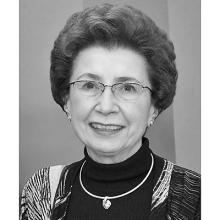
Ruth Billinkoff passed away on September 15, 2026, at the age of 98. Born in Winnipeg to Morris and Jennie Lentz, immigrants from Poland, she was especially close to her sister, Lottie Rosenstock.
Ruth married Lou Billinkoff in 1951. Devoted to each other for 71 years, they loved travelling and raised their sons, Lorne and Errol on Elm Street, their home for 62 years.
Gifted with a remarkable voice, Ruth sang in school productions, music festivals, operettas and the Shaarey Zedek Synagogue Choir. She also taught kindergarten for many years at Hebrew schools. At home, she was an accomplished homemaker, cook and baker who cared deeply for her family.
Predeceased by Lou and her daughter-in-law, Marilyn, Ruth is survived by her sons, Lorne and Errol (Nicole Smith); grandchildren, Alix (Natan Cramer), Mitchell (Micaela Levi), Jordan and Asher; and great-grandchildren, Shalev, Boaz and Nava.
Ruth spent her final years at The Shaftesbury. Her family thanks Liza and her team, Dr. Marlie du Plessis and her assistant, Emily, for their compassionate care.
Ruth was laid to rest beside Lou at Shaarey Zedek Cemetery on September 18. Pallbearers were Jordan, Mitchell and Asher Billinkoff, Daniel Bronstein, Ruben Levi and Max Asper.
Donations may be made to the Louis and Ruth Billinkoff Fund at the Jewish Foundation of Manitoba or to a charity of your choice.
Obituaries
JUNE BLACK (nee KERNAGHAN FAULKNER LEIPSIC)
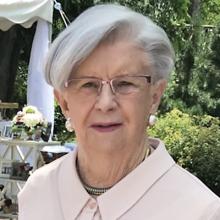
June 30, 1931 – September 16, 2026
Peacefully, Mom passed away with her family by her side.
Mom was raised in St. James, moving to Charleswood where she met and married our father, Ted Faulkner. In the seventies, Mom converted to the Jewish faith, marrying Barry Leipsic. Mom’s Hebrew name is Zahava (golden one). After Barry’s passing, Mom married Dr. Harold Black.
Mom was active throughout her life as a member at Glendale Golf Course and The Rady Centre where lifelong friendships were made.
Predeceased by her parents, William and Isabelle; sister Arlene; brother Bill; and husbands, Barry, Ted, and Harold. Left to cherish her memory are her brother Neill (Joyce); twins, Michael and Patricia; son David (Jenny); grandchildren, Elizabeth, Debbie (Bill), Max (Kaitlyn), and Sam; and great-grandchildren, Jake, Sam, Sophie, Campbell, Desmond, Quinn, and Isabelle.
A private family service has taken place at Shaarey Zedek Cemetery.
Those we love don’t go away,
they walk beside us every day,
unseen, unheard, but always near,
still loved, still missed, and very dear.
