


Uncategorized
American patron of Israeli archaeology becomes focus of New York’s antiquities trafficking unit
(JTA) – The crusading New York prosecutor who has been exposing illicit trafficking in the antiquities market through a succession of high-profile raids has zeroed in on his next big target: the private collection of Shelby White, the widow of a Wall Street legend and philanthropist known for donating to Jewish museums in New York and to the Israeli government agency charged with policing the antiquities trade.
As a result of the ongoing investigation into looted artifacts by Manhattan Assistant District Attorney Matthew Bogdanos, White has already relinquished at least two dozen items worth at least $20 million, according to reporting by New York magazine. Some of those artifacts have been returned to Italy and Turkey in recent months.
A request for comment submitted to a charity headed by White received no reply. Manhattan District Attorney Alvin L. Bragg, Jr. thanked White in a Feb. 3 press release for cooperation with investigators.
The focus on White comes after Bogdanos’ Antiquities Trafficking Unit reached an unprecedented deal in December 2021 with another prominent antiquities collector and donor to Jewish causes. Michael Steinhardt, the former investor who founded Birthright Israel, surrendered 180 artifacts, including some that were stolen from Israel, and committed to never buying antiquities again in an agreement that spared him from possible criminal charges.
White serves as chair of an American charity called the Friends of the Israel Antiquities Authority. The charity funnels tax-exempt donations to an Israeli government office and law enforcement agency that sponsors archeological excavations and regulates the buying and selling of antiquities.
White has donated directly to the Israel Antiquities Authority through her family’s charity, the Leon Levy Foundation, which is named in honor of her late husband, a pioneer of mutual funds. Last June, the authority unveiled the Shelby White & Leon Levy Lod Mosaic Archaeological Center near Israel’s Ben Gurion Airport.
Many Jewish cultural institutions in New York have benefited from White’s donations. She is a director of the Center for Jewish History, which thanked her in 2010 for an $860,000 gift that has helped with the preservation of archival materials. Her foundation’s website also lists as grantees the Jewish Museum, the Tenement Museum on the Lower East Side and a program dedicated to Jewish material culture at the Bard Graduate Center.
Since the Manhattan district attorney’s office put him at the head of a newly created antiquities trafficking unit in 2010, Bogdanos has upended the market for archaeological artifacts. Using a previously obscure New York law, he convinced the courts to regard the possession of stolen antiquities as potentially criminal, even if a collector had legally purchased the looted item in question. Since many of the antiquities that have entered the United States are believed to have been looted at one point in time, this legal precedent has jeopardized the status of many if not all major collections held in museums and by private individuals.
—
The post American patron of Israeli archaeology becomes focus of New York’s antiquities trafficking unit appeared first on Jewish Telegraphic Agency.
Uncategorized
Netanyahu leads in exit polls, but change bloc by Eisenkot has more seats
(JTA) — JERUSALEM – Israel’s parliamentary election has ended with Prime Minister Benjamin Netanyahu’s ruling Likud party remaining the largest faction, according to exit polls published as voting ended at 10pm local time.
However, the results showed that Netanyahu’s bloc of parties falls far short of the 61 seats needed to form a government. No other party or bloc of party has the ability to a government either.
Exit polls, taken through the day and published as polling stations closed, are only an indication of the final results, the official count can take hours or days to become clear. Also, exit polls are not always accurate.
And in an election that analysts have predicted will be tight, it’s too early to tell who will lead the next Israeli government.
It was a dramatic day in Israel, with voter turnout reaching its highest level in decades, according to the Central Elections Committee. An hour prior to polls closing, the committee said some 74.3% of the 7.3 million eligible voters had cast their ballot, compared to just 66.3% in the last election in 2022.
Indeed, lines at polling stations were longer than usual, with some Israelis waiting more than an hour to cast their votes.
Israelis have described this election, the first national election since Hamas’s Oct. 7, 2023 attack, as a battle over the country’s character and how best to address the security concerns that have arisen over the past three years.
Prime Minister Benjamin Netanyahu and his coalition partners, a bloc comprising mostly far-right and ultra-Orthodox parties, have largely campaigned on a platform of protecting Israel from existential threats, including what they describe as security threats posed by the country’s Arab population.
Casting his ballot in a school in Jerusalem, Netanyahu said he was voting “For the future of the State of Israel.”
“We cannot leave this battle in the hands of the left and the Arab parties,” Netanyahu said, accusing them of wanting “to bring an end to the Jewish state.”
Adalah, a legal center for Arab minority rights, filed a complaint with the Central Elections Committee. It said in a statement that “senior government officials have been inciting against Palestinian citizens of Israel exercising their right to vote as turnout in Arab towns rises.”
The group of parties trying to oust Netanyahu – the “change bloc” led by former army chief Gadi Eisenkot – has argued that the election is a vote on Israel’s future as a liberal and democratic nation.
The opposition has framed the election as a referendum on Netanyahu’s handling of the aftermath of Oct. 7 and the subsequent wars in Gaza, Lebanon and against Iran.
After casting his vote at a school in the city of Herzliya, Eisenkot told the crowd: “We are setting Israel on a new path. We will be worthy of your trust. I promise.”
It is traditional for party leaders to cast their votes in front of cameras and to campaign right up until polling stations close. Netanyahu and his coalition partners traveled the country trying to mobilize their supporters, warning they would not be re-elected unless more right-wing voters turned out to vote.
However, under Israel’s system of proportional representation, differences in turnout among communities could drastically change the political map. Larger numbers of Arab voters, who tend to vote for one of the two Arab political factions, can affect the distribution of seats and the balance of power between the blocs, potentially complicating Netanyahu’s efforts to form a government.
This article originally appeared on JTA.org.
The post Netanyahu leads in exit polls, but change bloc by Eisenkot has more seats appeared first on The Forward.
Uncategorized
Why I went to Michigan to talk to Jewish voters about Abdul El-Sayed
I’d just climbed the steps to another home on my canvassing list, a lovely residence in the suburbs of Detroit, and rang the doorbell. I was there last week to talk with Jewish voters about the upcoming Michigan Senate election. The woman who answered asked me to come inside, and I demurred, telling her that my project discourages its volunteers from accepting such invitations, for safety reasons. She was petite and elderly, with a soft, open face. She reminded me of my long deceased mother. We chit-chatted a little, then I got down to brass tacks. “What are your feelings about the race?” I asked. “About Abdul El-Sayed?”
Her face sagged. “You’re too late,” she said. “My husband and I already voted. For Mike Rogers. And I feel terrible!” She looked like she was about to cry. “Please,” she said, “Come inside.” I relented (but didn’t sit down on her sofa).
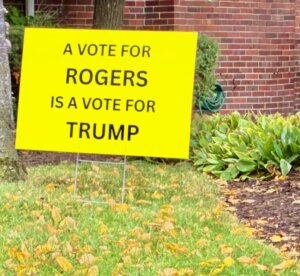
The Michigan race pits El-Sayed, a progressive young Democrat, against Rogers, a Republican former Congress member who is closely allied with Donald Trump. As a New Yorker, I don’t have a vote in the election. But I came to Michigan as a Jew who is increasingly frightened by the threat posed by MAGA and horrified by what Trump-think and Trump power is doing, and not just to immigrants, people of color, sexual and gender minorities, middle-class and working people, students, intellectuals, and those whose jobs and civic activity nurture liberal and progressive causes.
I’m also worried about us Jews.
We are disproportionately members of the communities I just listed. We are also vulnerable to antisemitic acts and policies, which appear to be increasing. (At my shul on Rosh Hashanah I was chilled to find flyers placed by the Siddurs, instructing how to hide or flee if a terrorist were to enter the sanctuary.) And we are vulnerable to the politics of Christian nationalism. I grew up in Texas in the 1950s and 1960s. I vividly recall being made to sing “The Crusaders’ Hymn” in grade school and memorize the words (“Onward Christians soldiers, marching as to war. With the cross of Jesus, going on before!”). Making public school kids do this is now illegal. But for how long?

Mike Rogers’ campaign gets much of its money from a rich Texan named Tim Dunn, a Christian nationalist who wants to abolish public schools. Not long ago, Dunn told a member of the Texas legislature — a Jew — that Jews should not hold major political office.
El-Sayed, on the other hand, is a public health expert with a long history of activism for progressive causes. A native-born American, he went to a suburban Detroit high school where he was on the football team and had many Jewish classmates. He has repeatedly said that the fact that he is Muslim is merely incidental to the fact that he is an American who deeply respects the rights guaranteed to everyone in this country under the U.S. Constitution — including to worship, or not, as one pleases.
Polling shows El-Sayed leading Rogers, but the margin of error puts them very close, and the race is tightening. Pundits say that if El-Sayed loses, the Senate could remain Republican. But if he wins, it would signal to the whole country that the Democratic Party is entering a new phase of progressivism — one prefigured by Zohran Mamdani’s mayoral win in New York City.
Like El-Sayed, Mamdani is a Muslim who sharply criticizes the Israeli government. And though many New York City Jews are wary of him, his main opponent during his campaign, Andrew Cuomo, wasn’t part of MAGA or surrounded by antisemites, as Mike Rogers is. I’d canvassed for Mamdani, and the stakes are much higher in Michigan. So I decided to spend five days in suburban Detroit as part of a joint canvassing effort by Jews in Seed the Vote, Bend the Arc Action, IfNotNow Movement, and Michigan United Action. Our goal was to knock on doors and share our own stories with fellow Jews.
Mine is that my maternal grandparents fled here from the Pale of Settlement, and my mother told me about my grandmother escaping a pogrom after her parents dressed her with a large cross around her neck, and paid a peasant to hide her under hay in a cart. She was fifteen years old when the pogrom happened — prime age for a Jewish girl to be raped.
She and her extended family made it to Pittsburgh. To the United States, the capital of democracy and pluralism. In all of history, Jews have never done so well as we have under democracies like this one. We’ve become so comfortable, as one Detroit-area rabbi remarked in his Kol Nidre sermon this year, that his community’s biggest intramural argument used to be over where to get the best bagels.
Then a Lebanese-American man whose relatives had just been killed by an Israeli air strike on Lebanon drove a truck into Temple Israel, a metro-Detroit synagogue. Dozens of preschoolers were inside. No one was hurt, but the building was damaged. El-Sayed, quickly made a lengthy statement condemning the culprit’s inexcusable antisemitism and vowing to support Jewish safety. But he also tried to explain the man’s terrorism. “Hurt people hurt people,” he said.

He later apologized for introducing political context so soon. But months later, his words still anger some people with whom I spoke. One woman glared, said she had grandchildren at the synagogue preschool, and slammed the door on me. Other canvassers described a man in a car who saw their t-shirts, sporting slogans like “Jews for Shared Safety,” and screamed that if he were to see El-Sayed and his family on fire right now across the street, he would do nothing to help them. He added that he was on the board of a shul.
Rogers’ campaign and its supporters are flooding TV and the social media with material excoriating El-Sayed as a dangerous Islamic fundamentalist and antisemite. AIPAC has also painted him as a threat to Jews, and spent over $30 million attacking him to defeat him in the primary. El-Sayed won anyway, but Michigan’s Jews remain saturated with a miasma of anti-El-Sayed propaganda. The woman who reminded me of my mother said she voted for Rogers because her father was a Holocaust survivor and she had to put Israel first, even though she knew Rogers could “roll back everything, including civil rights and abortion rights, that we Jews have worked so hard for. And even though I’ve never voted Republican in my life!”
I also canvassed Jews who were enthusiastically voting for El-Sayed. Other supporters, though, were terribly conflicted. At one door, a person — I won’t say their gender because they were so anxious about being identified — told me they are high up in local, Jewish-inflected Democratic Party politics. (I looked them up later and verified this.)
They, too, invited me into the sanctum of their home, as though afraid for the neighbors to see them talking with me. “I voted for El-Sayed,” they said. “But it was a horrible decision to have to make!” They strongly agreed with me about the need to vote for him, but they didn’t want their Jewish bigwig colleagues to know. “Half of them would never speak to me again,” they said. “What about your personal friends?” I asked. “Could you talk to them about the need to vote for El-Sayed?” “Yes,” they said. “I can do that.”
“This is what canvassing is about,” I told myself as I left.
Some Jewish bigwigs who openly support El-Sayed have been holding wine-and-cheese house parties for the un-decideds. Michigan Jews for Democracy sponsors these intimate gatherings. I went to one last week, at the house of Elaine Driker, formerly board president of Hillel of Metro Detroit. Former Michigan Congress member and political progressive Andy Levin addressed the group.
The setting was a cozy living room. To ensure that attendees felt comfortable voicing their feelings, journalists were told they could quote the speakers, but questions from the audience were off the record unless the individuals asking them agreed later to be quoted. The attendees were engaged, intent, and split, with some expressing strong support for El-Sayed and others venting reservations.
At the end. Levin summed things up. “We’re here struggling as Jews,” he told the audience. With young progressives entering the Democratic Party, he added, “We are really coming into a new era of politics in the United States, and I’m really hopeful about it.” He talked of the need to elect El-Sayed, then “hold him to be a great senator for the Jewish community.” Yes, he is a Muslim, Levin noted, and that is good. He added that, for Jews as for everyone, pluralism in government “has been great for us.”
This election in Michigan, Levin concluded, is “a time of great wrestling with God. Of wrestling with each other.” Then we all repaired to a room to eat brie and fine bread and wrestle some more.
The post Why I went to Michigan to talk to Jewish voters about Abdul El-Sayed appeared first on The Forward.
Uncategorized
Noah Wyle, TV’s nice Jewish doctor, is People’s Sexiest Man Alive
(JTA) — Noah Wyle, the Jewish actor who both mends and steals hearts as a doctor on the hit HBO Max medical drama “The Pitt,” has been named People magazine’s Sexiest Man Alive.
Tuesday’s announcement described the actor’s “smoldering intensity” and “leading-man looks,” while noting that “he loves to do the dishes.”
Wyle, 55, told People he initially thought the news was “a classic set-up for a prank.” His wife, Sara Wells, helped persuade him to accept the honor, he said, because she believes his qualities as a husband and father are worth celebrating.
The actor, who starred in the ’90s medical drama “ER,” is enjoying a career resurgence as Dr. Michael “Robby” Robinavitch, the brilliant, troubled emergency-room physician at the center of “The Pitt.” The role has earned Wyle two consecutive Emmy Awards for outstanding lead actor in a drama series, along with renewed attention to his own Jewish heritage.
As JTA reported last year, Wyle drew on his father’s Russian-Jewish background in helping create Robby, his first Jewish character. The doctor wears a Star of David necklace and, in a pivotal scene in the show’s first season, clutches it while reciting the Shema, a central Jewish prayer, during an emotional crisis.
Wyle, whose father is Jewish and mother is Episcopalian, did not grow up in a religious household. But in an interview with the Jewish Chronicle this year, he said Judaism had become more relevant to his life through the show and that his daughter, then 10, has expressed the most interest to “pick up the mantle of Judaism.” She helped him with the pronunciation of the Shema, he said, and her bat mitzvah has been scheduled.
Wyle has also brought Jewish history into “The Pitt.” In an episode he wrote for the show’s second season, a patient with ties to the 2018 Tree of Life synagogue shooting in Pittsburgh struggles with post-traumatic stress disorder.
Wyle said portraying a Jewish character offered an opportunity to present a humanist and healer at a time of heightened antisemitism. “I have come to learn that the world’s knowledge of Jews comes through depictions of them in the media,” he told the Jewish Chronicle.
This article originally appeared on JTA.org.
The post Noah Wyle, TV’s nice Jewish doctor, is People’s Sexiest Man Alive appeared first on The Forward.
