



Uncategorized
A 19-Year Name vs. 3,000 Years of History: Judea vs. ‘West Bank’
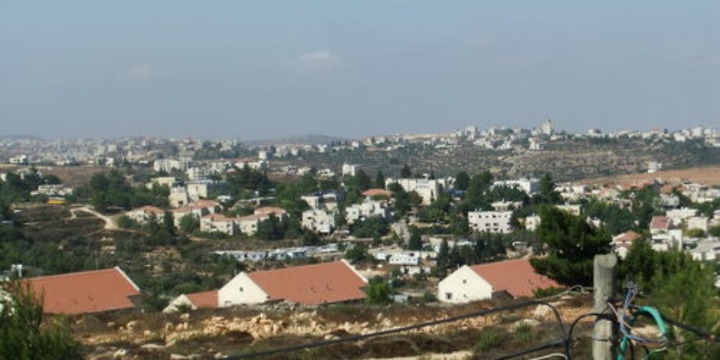
The Jewish community of Beit El in Judea and Samaria. Photo: Yaakov via Wikimedia Commons.
Read a story about Israel from almost any major news outlet and you’ll see the same convention: “West Bank,” stated as fact, and “Judea and Samaria” treated as controversial.
In fact, these outlets all treat “Judea and Samaria” as a label used by Israel, often with a caveat that it is “biblical,” “right wing” or even “far-right.”
One term is presented as neutral. The other arrives with a warning. That is not linguistic housekeeping. It is a political choice, often made in a conscious way that reshapes history.
“West Bank” is a directional term. It describes where the land sits relative to the Jordan River. It was coined in 1949 by the Hashemite Kingdom of Jordan after its army crossed the river in 1948, seized the territory as part of the Arab League’s declared war to annihilate Israel, and later annexed it. East Bank, West Bank. It is a geographic label attached to a military and political act. Jordan’s 1950 annexation was recognized by only a handful of countries and never produced a Palestinian state.
“Judea and Samaria” are not modern inventions, and they are not merely “biblical” in the dismissive sense often implied.
They are the names by which this region was known across centuries of rule, from antiquity through successive empires. They appear in ancient records, persist through administrative usage, and reflect a continuous historical vocabulary.
Even the 1947 UN Partition Plan — the plan that proposed to create the first independent Arab state in the Holy Land — referred to this area as the “hill country of Samaria and Judea” in describing the territory proposed for this new Arab state.
One can debate the modern implications of that 3,000+ years of history. One cannot plausibly claim it is recent, or invented.
Yet for the media, a term born of a 19-year Jordanian occupation following an offensive war becomes the unmarked standard. A name used across millennia is treated as ideological.
That inversion is not limited to vocabulary. It reflects a broader pattern in how the Arab-Israeli conflict has been framed since at least 1947: history is compressed, revised, or ignored, and cause and effect are routinely severed.
Start with 1947. The UN proposed partition into a Jewish state and an Arab state. Jewish leadership accepted the plan despite its limits and the British creation in 1921 of the Arab Kingdom of Transjordan out of almost 80% of the territory originally allotted after 1917 for the British Mandate for Palestine.
The local Arab leadership rejected the 1947 UN Partition Plan and chose war. That decision matters. It explains why the map did not follow the proposal — and why there is no Arab state today.
Yet in much contemporary coverage, that sequence disappears. The rejection of what would have been an independent Arab state –- in close to 80% of the arable land west of the Jordan River — followed by a multi-state war aimed at destroying the nascent Jewish state — is flattened into a vague “conflict” with outcomes detached from their cause.
Move to 1948–1967. Jordan controlled what it called the “West Bank,” while Egypt controlled Gaza. No Palestinian state was created in either territory. There was no serious effort to create one. That absence is rarely emphasized, though it is central to claims about what the conflict has always been “about.”
Then there is June, 1967. Israel took control of Judea and Samaria, and Gaza, because its neighbors tried to wage a war to destroy it and kill or subjugate all its Jewish residents. However one evaluates the legal debates that followed, the sequence is not credibly in dispute. Yet retellings often begin later, presenting outcomes without any reference to the threats and actions that produced them.
None of this resolves the conflict. But it does something more basic. It restores sequence. It places events back in order and returns language to its context.
That context is what is lost when “West Bank” is treated as neutral, while “Judea and Samaria” is treated as suspect or extreme.
In other regions, imposed modern labels — often by conquerors — are distinguished from older ones. Here, that instinct disappears. The origin of the dominant term is rarely mentioned. Its recency is almost never acknowledged. A label from the mid-20th century is presented as if it were timeless. It is not.
The question is not which term must be used. It is whether the current asymmetry can be defended as neutral. A 19-year name replaced 3,000 years. The least we can do is acknowledge that before arguing about what it means.
Micha Danzig is an attorney, former IDF soldier, and former NYPD officer. He writes widely on Israel, Zionism, antisemitism, and Jewish history. He serves on the board of Herut North America.
Uncategorized
After Beirut Strike, Netanyahu Says ‘No Immunity’ for Terrorists

Rescuers work at the site of an Israeli strike that took place yesterday, in the southern suburbs of Beirut, Lebanon, May 7, 2026. Photo: REUTERS/Mohamad Azakir
Prime Minister Benjamin Netanyahu said on Thursday there was no “immunity” for Israel’s enemies, a day after the Israeli military targeted a Hezbollah commander in its first strike on Beirut‘s southern suburbs since a ceasefire declared last month.
Israel said the attack killed the commander of the Iran-backed terrorist group’s elite Radwan force.
Hezbollah, which controls Beirut‘s southern suburbs, has yet to issue any statement on the strike or the commander’s status.
“He likely read in the press that he had immunity in Beirut. Well, he read it and it is no longer the case,” Netanyahu said in a statement.
Hostilities between Israel and Hezbollah reignited on March 2 when the Islamist group opened fire at Israel after Tehran came under US-Israeli attack.
Wednesday’s strike raises pressure on the Lebanon ceasefire that emerged in parallel to a truce in the wider Middle East war, with a halt to Israeli strikes in Lebanon being a key Iranian demand in Tehran’s negotiations with Washington.
Announced on April 16 by US President Donald Trump, the Lebanon ceasefire has led to a reduction in hostilities: the Beirut area was not struck by Israel for weeks before Wednesday’s attack.
But the sides have continued to trade blows in the south, where Israel has carved out a self-declared security zone.
Netanyahu said the Hezbollah commander, identified as Ahmed Ali Balout by the Israeli military, “thought he could continue to direct attacks against our forces and our communities from his secret terrorist headquarters in Beirut.”
“I say to our enemies in the clearest possible way: No terrorist has immunity,” he said.
LEBANESE PM: TOO EARLY FOR ‘HIGH-LEVEL’ MEETING
More than 2,700 people have been killed in the war in Lebanon since March 2, Lebanon’s Health Ministry says. Some 1.2 million people have been driven from their homes in Lebanon, many of them fleeing from southern Lebanon. According to Israeli officials, the majority of those killed have been Hezbollah terrorists.
Israel has announced 17 soldiers have been killed in southern Lebanon, along with two civilians in northern Israel.
At least 11 people were killed in Israeli strikes in three different areas of south Lebanon on Wednesday, according to a tally of Lebanese health ministry announcements.
Hezbollah said it carried out 17 operations against Israeli forces in southern Lebanon on Wednesday, while the Israeli military said it had struck more than 15 militant infrastructure sites in the south the same day.
The Israeli military says Hezbollah has fired hundreds of rockets and drones at Israel since March 2.
Hezbollah says it has the right to resist Israeli forces occupying the south.
Israel’s control zone extends as deep as 10 km (6 miles) into southern Lebanon. Israel says it aims to protect northern Israel from Hezbollah terrorists embedded in civilian areas.
The Lebanon ceasefire was announced for an initial 10 days and then extended for an additional three weeks during a meeting between the Lebanese and Israeli ambassadors to Washington, hosted by Trump at the Oval Office.
Hezbollah strongly objects to the Lebanese government’s contacts with Israel, which reflect deep differences between the group and its critics in Lebanon.
Trump said last month he looked forward to hosting Netanyahu and Lebanese President Joseph Aoun in the near future, and that he saw “a great chance” the countries would reach a peace deal this year.
But on Wednesday, Lebanese Prime Minister Nawaf Salam said that it was premature to talk of any high-level meeting between Lebanon and Israel, and said that shoring up a ceasefire would be the basis for any new negotiations between Lebanese and Israeli government envoys in Washington.
Uncategorized
A View From My Campus: Sacrificing Science and Innovation for Political Symbolism

Illustrative: A BDS demonstration outside the School of Oriental and African Studies in London. Photo: Wikimedia Commons.
In 2021, then-president of Rutgers, Jonathan Holloway, traveled to Tel Aviv to sign a partnership with Tel Aviv University (TAU) for future research at a cutting-edge facility being constructed in New Brunswick, The HELIX, which stands for The Health and Life Science Exchange.
This project includes collaborations with Robert Wood Johnson Hospital, Nokia Bell Labs, the NJ Economic Development Authority (NJEDA), Devco, and the American Technological University, all aimed at advancing innovation across industries.
The $665 million project offers “premier workspaces & laboratories for both startups and established companies operating across the gamut of healthcare, biotech, pharma, and, most broadly, the life sciences.” According to the NJEDA’s calculations, the cross-cultural development will bring an economic benefit of $340.4 million to the state.
But amongst Rutgers’ anti-Israel student groups, and Boycott, Divestment, and Sanctions (BDS) activists, there have been calls to terminate the partnership between Rutgers and Tel Aviv University, one of the leading research universities in the Middle East. This opposition came long before Oct. 7, 2023, and the war that followed.
According to these groups at Rutgers, the partnership with “Israeli universities play[s] a key role in supporting Israel’s system of apartheid rule,” and they call for “nothing less than complete divestment from these egregious investments, which drown our endowment fund and university facilities in blood.”
Note that they don’t actually care if this program or TAU connects in any way to the Israeli military or government; treating any Israeli, regardless of affiliation, like a human is apparently beyond the pale.
Notably, TAU was the first university in Israel to establish a Commission for Equity, Diversity, and Community, and has increased the representation of Arab students on campus to close to their proportion in the general population, a feat that is only possible in a place like Israel. It’s also important to note that, like many other universities in Israel, TAU leadership has gone out of its way to advocate for Palestinians.
Yet, somehow in the distorted truth of the BDS movement, TAU is complicit in “genocide.” Morally focused political movements on campus have historically claimed to fight for justice and against discrimination, exemplifying the higher education ideals of open-mindedness and critical thinking. And yet, these groups want to terminate partnerships for research, for innovation, for healthcare-based initiatives, for job and economic growth, and for expanding the academic frontier.
The Endowment Justice Collective, a Rutgers anti-Israel group, sent a letter to the administration claiming, “[a]ny collaboration which serves to bolster TAU’s reputation, provide it with a public platform, or materially support its operations shores up the legitimacy of an institution which aids and abets Israel’s oppression and genocide of Palestinians.”
But what will ending this huge project achieve, apart from a symbolic show of solidarity to a global movement whose priorities seem to obsessively focus on attacking Jews at Palestinians’ expense?
By taking intellectual pursuits such as the HELIX and dismissing them as politically motivated human endeavors, they become the very thing they seek to speak out against. TAU has the Neubauer Fellowship, an initiative specifically for Palestinian PhD students and faculty in STEM fields to provide high-level lab access and funding to elevate Palestinian representation in advanced research. When calls to cut ties like these set a precedent, they put such fellowships at risk as well. Rather than advancing equity, these efforts can ultimately backfire, restricting opportunities for Palestinian researchers and weakening the academic partnerships that make such programs possible.
Academic research and partnerships remain among higher education’s greatest strengths. They drive medical breakthroughs, technological innovation, and cross-cultural understanding. When groups like SJP demand the severance of ties with institutions like Tel Aviv University, they don’t just protest a government, but wall off the very pathways of discovery that benefit all of humanity. On our part, we must reject the close-mindedness of movements that prioritize ideological purity over global progress.
The author is a CAMERA Fellow at Rutgers University. Opinions expressed are those of the author and do not necessarily reflect those of CAMERA.
Uncategorized
Unreported: Palestinian Youth Leadership Center Named After Munich Olympics Massacre Planner
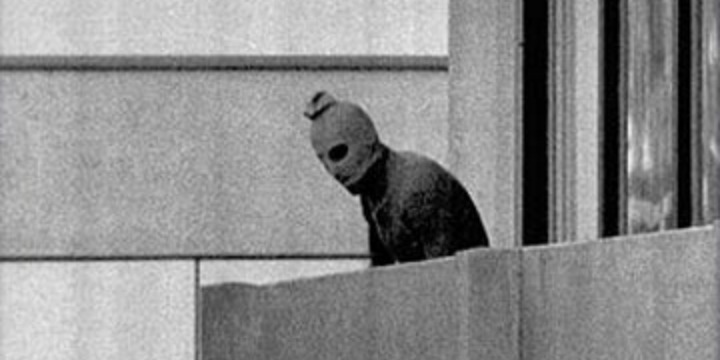
An image of one of the Palestinian terrorists who took part in the 1972 Munich Olympics massacre. Photo: Wikimedia Commons.
A Palestinian center for “training and nurturing young leaders, children, and trainees” sounds amazing, right?
It’s an initiative that Western donors would undoubtedly love to support, and something everyone would consider a step in the right direction to Palestinian Authority (PA) reform.
But what is the name of the center?
“The Martyr Salah Khalaf Center for Training Young Leaders”
Who was Salah Khalaf, you ask?
Maybe he was a famous Palestinian leader who could inspire the youth arriving at the center to participate in “programs and activities,” which are held “in accordance with the vision and goals of the PLO Supreme Council for Youth and Sports”?
In fact, Salah Khalaf headed the terror organization Black September, a secret branch of Fatah. Attacks he planned include the murder of 11 Israeli athletes at the Munich Olympics (Sept. 5, 1972) and the murder of two American diplomats in Sudan (March 1, 1973).
A PA role model par excellence!
Furthermore, the center is not only named after terrorist Salah Khalaf — but is hosting children specifically on Prisoner’s Day to indoctrinate them to honor terrorist prisoners. The pictures below show young children visiting the center:


This is a classic example of how the PA subtly transmits its ideologies and values to young Palestinians. Naming education centers, streets, and schools after terrorist murderers ensures that everyone is reminded of the name and the “role model” daily. This cements the terrorist’s status as a PA “celebrity.”

Palestinian Media Watch (PMW) has reported on the center in the past, documenting that its walls are adorned with images of terrorist Salah Khalat, former PLO Chairman Yasser Arafat, and current Chairman Mahmoud Abbas.

Supervising the Salah Khalaf center is the PLO Supreme Council for Youth and Sports, which is headed by none other than top PA official Jibril Rajoub, who is also Fatah’s Central Committee Secretary.
Palestinian Media Watch has documented that Rajoub is an avid terror supporter. He recently praised a murderer of 12 people as “the most sacred thing”:

Official PA TV reporter: “The Fatah Movement, the Ramallah and El-Bireh District, the [PA-funded] Prisoners’ Club, the [PLO] Commission of Prisoners’ [Affairs]… set up a mourning tent for Martyr and released prisoner deported to Egypt Riyad Al-Amour [i.e., terrorist, responsible for murder of 12], who died as a Martyr…”
Fatah Central Committee Secretary Jibril Rajoub: “The most sacred thing in the eyes of the Palestinians is those who sacrificed their lives and their freedom – our Martyrs.”
[Official PA TV News, April 9, 2026]
In keeping with this view, Rajoub has announced that terror against Israel — which he and other PA leaders refer to as “resistance in all its forms” — is “still on the agenda” for Fatah:

Fatah Central Committee Secretary Jibril Rajoub: “National unity must be based on the adoption of UN resolutions by all of us, which grant us a state and also resistance in all its forms [i.e., including terror].
I tell you as a Fatah member, resistance in all its forms is still on the agenda of this [Fatah] Movement … Let no one think that we are surrendering. I tell you that the first among us who believes this is [PA President] Mahmoud Abbas … We all know the nature and essence of Fatah … Either popular resistance without blood if there will be a state, or else resistance in all its forms.”
Posted text: “During the opening of the first national youth conference.”
[Fatah Central Committee Secretary Jibril Rajoub, Facebook page,
Jan. 19, 2026]
Rajoub has also announced his support for terrorists and the PA’s “Pay-for-Slay” program that rewards them financially, vowing the PA “won’t give up on” them “or their rights or their status”:

Fatah Central Committee Secretary Jibril Rajoub: “I want to see hundreds of young people holding processions to end the [Hamas-Fatah] rift and holding processions for reforms that stem from our reality and our will and align with our aspirations and interests. Not what [US President] Trump wants or John Doe or whoever, I don’t know what their problem is with the prisoners.
This is not a reform, this is a burial, elimination, and denial of our history and heritage. We won’t give up on the Martyrs or the prisoners or their rights or their status, not in our awareness nor in our project, whether the political, militant, or organizational.”
[Fatah Central Committee Secretary Jibril Rajoub, Facebook page, Jan. 19, 2026]
Western donors who are supporting the PLO Supreme Council for Youth and Sports would do well to examine the kind of activities the Council is involved in. Presumably they would hardly appreciate the glorification of one of the planners of the Munich Olympics massacre.
The author is a contributor to Palestinian Media Watch, where a version of this story first appeared.