


Uncategorized
A century before Mamdani, this Jewish socialist mayoral candidate divided NYC Jews
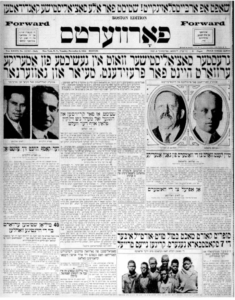
A socialist immigrant running for mayor on an anti-war, pro–working class platform divides New York’s Jews over whether his campaign, and potential victory, might stoke antisemitism.
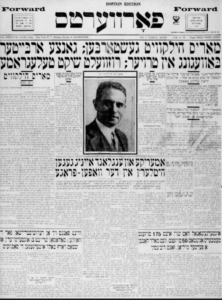
The year isn’t 2025, and the man isn’t Zohran Mamdani. It’s 1917, and Jewish labor lawyer Morris Hillquit is running on the Socialist Party ticket.
While Hillquit fell well short of winning, he received more than 100,000 votes, or about 22% — over four times the Socialist tally four years earlier. He ran again in 1932, receiving about 12 percent of the vote.
Who was Hillquit, and how did his mayoral moment parallel the political currents shaping Mamdani’s rise today?
The economic parallels
Many aspects of Hillquit’s 1917 and 1932 mayoral platforms bear a striking resemblance to Mamdani’s today, according to Shelton Stromquist, emeritus professor of history at the University of Iowa and author of Claiming the City: A Global History of Workers’ Fight for Municipal Socialism.
Hillquit called for public ownership of the city’s transportation, and for the construction of affordable housing to replace substandard living arrangements. He also promised to bring down food prices, pledging to “put the milk profiteers out of business” by buying milk directly from farmers and selling it at cost.
Mamdani’s campaign has echoed many of those ideas, centering on affordability with proposals to make buses “fast and free,” freeze rents for tenants in rent-stabilized apartments, and create city-owned grocery stores.
And just as Mamdani has positioned his campaign as fighting big-money influence, Hillquit’s campaigns took on a populist tone.
“Too long have the people of New York been misruled for the benefit of bankers, franchise magnates, realty speculators, landlords, and other capitalists,” read a pamphlet distributed by the Socialist Party endorsing Morris Hillquit for mayor in 1932.
Both campaigns also drew on immigrant pride, according to Stromquist. Mamdani was born in Uganda; Hillquit in modern-day Latvia, then part of the Russian Empire, in 1869. Hillquit’s family immigrated to the U.S. in 1896, settling in a Lower East Side tenement. He dropped out of school to help support them, working in garment factories and later helping to start the United Hebrew Trades, a garment workers’ union.
Like Mamdani, “Hillquit’s campaign was singular in many ways, but at the same time, it was very much a part of a broader movement that had been growing and spreading,” Stromquist said.
Mamdani, for his part, cites Vermont Senator Bernie Sanders — a fellow democratic socialist — as an inspiration. Sanders endorsed Mamdani and featured him on his “Fighting Oligarchy” tour, events that often draw tens of thousands of people and highlight other rising democratic socialists, including Alexandria Ocasio-Cortez. A recent poll shows socialism is more appealing to college students than capitalism.
Municipal socialism was also gaining traction in the early 20th century. In 1910, Jewish politician and journalist Victor Berger became the first socialist elected to the U.S. House of Representatives, representing a Milwaukee district. In 1913, socialists won a majority on Hamilton, Ohio’s city council and elected the mayor.
And while Hillquit lost the 1917 mayoral race, socialists still made gains in New York City that year: 10 state assemblymen, seven city aldermen, and one municipal judge were elected on the Socialist Party ticket. Of those 18 elected, 16 were Jewish.
A campaign that divided Jews
Mamdani’s positions on Israel have roiled Jews across the country, and he’s often had to defend himself against allegations of antisemitism for: refusing to outright condemn the slogan “globalize the intifada;” reiterating support for Palestinians in his statement on the Gaza ceasefire; vowing to arrest Israeli Prime Minister Benjamin Netanyahu if he visits New York; and saying he doesn’t recognize Israel as a Jewish state. He’s simultaneously built a coalition of Jews who support him.
During the 1917 mayoral election, opposition to U.S. involvement in World War I overshadowed economic concerns for many voters, according to Stromquist.
Hillquit, a pacifist, was a principal co-author of the Socialist Party’s resolution opposing U.S. entry into World War I, and he made peace a central plank of his campaign.
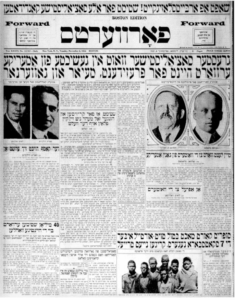
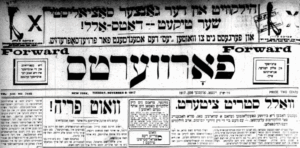
His stance drew fierce backlash. Opponents labeled him “a traitor and an agent of the Kaiser,” and the attacks quickly grew personal. A 1917 editorial in this publication, the Yiddish Forverts, noted that Hillquit’s “bitterest enemies wish to see him drown in the Rutger Street fountain, or hanged off a sloop on the East Side.”
Hillquit’s position split the Jewish community. Some feared antiwar sentiment would make Jews appear unpatriotic and fuel antisemitism, according to Gil Ribak, associate professor of Judaic Studies at the University of Arizona and author of the paper “For Peace, Not Socialism”: The 1917 Mayoralty Campaign in New York City and Immigrant Jews in a Global Perspective.”
One newspaper editor wrote to his readers as “a Jew to Jews,” asking them if they wanted “to give a chance for our neighbors to say that we are not loyal enough to America?”
Even Supreme Court Justice Louis Brandeis weighed in, telling his colleagues at a private meeting of Zionist leadership in 1917, “I cannot help feeling myself that the pacifistic attitude of some Jews is a danger to all Jews, and some form of a pogrom would not be at all unlikely.”
Others dismissed such concerns as fearmongering and rejected the idea that Jews had to vote a certain way to prevent antisemitism. As Forward founding editor Abraham Cahan argued in this publication, “Well, if we are destined, heaven forbid, to have the antisemitic bear come at us, then let’s not give our vote to a corrupt gang.”
Ultimately, the attacks on Hillquit did not deter Jewish voters. Though he fell well short of winning office, according to Ribak, turnout for Hillquit was especially strong in Jewish neighborhoods with the socialist candidate winning more than 60 percent of the Jewish vote in some areas of the Lower East Side.
Chana Pollack contributed research. Jacob Kornbluh contributed writing.
The post A century before Mamdani, this Jewish socialist mayoral candidate divided NYC Jews appeared first on The Forward.
Uncategorized
A Chabad Jew was stabbed in NYC. He returned the next day to continue wrapping tefillin.
(JTA) — Less than 24 hours after he was stabbed in midtown Manhattan, Yosef, a Chabad-Lubavitch man from Crown Heights, was back on the same street where he’d been assaulted, popping into Diamond District businesses as usual to help employees wrap tefillin.
Yosef, 26, who did not share his last name to maintain his privacy, told the Jewish Telegraphic Agency that he was back on 47th Street on Thursday afternoon, the day after the stabbing, without missing a beat in his Monday-through-Thursday rounds even as police investigate the incident as a possible hate crime.
A number of the people he visited pieced together that the widely circulated footage of a man being stabbed the previous night was of him.
“They were in shock. They were obviously scared for me,” said Yosef, who has been wrapping tefillin and distributing Shabbat candles to Jewish Diamond District employees for about three years. He started that routine when his father, a Chabad Jew who works in the jewelry business, realized he needed his son’s help to handle the demand for those acts. Yosef told Chabad.org that he was “still shaken” by the attack a day later.
Still, he told JTA, “We can’t allow some hate to stop us.”
Yosef said he felt it was important to communicate that message because “we need more mitzvahs in the world, we need more light in the world.”
Yosef was taken to Bellevue Hospital on Wednesday evening around 6 p.m., where medical staff assessed that he had no internal bleeding and would not need stitches. No arrests have been made, but the assailant has been described as a woman in her 40s.
The attack has renewed concerns about security that have faced Chabad adherents and institutions, which often host public events and maintain a visible street presence. But the threat didn’t diminish their presence in midtown Manhattan on Friday.
Multiple Chabad men stood under a bright yellow tent on the sidewalk wrapping tefillin for a steady stream of workers in the heavily Jewish Diamond District.
“The Rebbe says that the way to defeat darkness is only through the addition of light,” said Shmuel Cohen, who was handing out small photographs of the movement’s late leader, the Lubavitcher Rebbe Menachem Mendel Schneerson.
Cohen told JTA that he had not heard about the attack that took place just down the block two days earlier, though his partner under the sidewalk tent had. Cohen said that the best way to respond is through “the observance of Torah and mitzvot without being ashamed of our Judaism but presenting it to everyone.”
Also on Friday, Chabad officials met with New York Police Department representatives for their annual meeting about security ahead of Chabad’s international conference in Crown Heights, the Brooklyn neighborhood where the movement is headquartered. The conference begins on Nov. 5.
Chabad has been targeted in multiple high-profile attacks in the past year, including the deadly Bondi Beach shooting in Australia in December. The following month, a man rammed a car into the doors of the Chabad-Lubavitch headquarters in Brooklyn, raising further questions over how the movement should balance its commitment to making its events accessible with security.
Meanwhile, Jews have been targeted in more than half of hate crimes committed in New York City in 2026, despite making up about 12% of the city’s population.
“Security is our top priority. Our goal is to provide an environment where every participant feels safe and can fully experience the purpose and spirit of the gathering,” said Rabbi Mendy Kotlarsky, a top organizer of the upcoming conference.
In the wake of the attack, Yosef said he is not concerned about going out in public as a visibly Jewish person and doesn’t plan to change how he approaches the world.
“I was wearing the same clothes on Tuesday and Wednesday and Thursday,” he said. “I didn’t change my routine.”
This article originally appeared on JTA.org.
The post A Chabad Jew was stabbed in NYC. He returned the next day to continue wrapping tefillin. appeared first on The Forward.
Uncategorized
They met on a Birthright trip then married. Now this American Israeli couple’s internet fame has turned to infamy.
Ethan and Hila Klein first met at Yad Vashem — Israel’s Holocaust museum — in 2007, a meet-cute they recounted, giggling, years later for their millions of YouTube followers.
“I think I went up to her and said something like, ‘They had it coming, don’t you think?’” said Ethan, known for his edgy humor and infamous internet trends, including Vape Nation and Papa Bless. “No I didn’t say that. I wonder if you would have laughed though.”
They were on a Birthright trip, Ethan an American and Hila an Israeli soldier on leave to join the group. Soon after the trip ended, Ethan moved to Israel to be with Hila, and the two began making videos under the name H3H3 Productions (the H for Hila and the 3 standing in as an E for Ethan). They married, moved to America, and started a popular podcast.
A Jewish love story, until Thursday, when Hila, now mother to their three children, accused Ethan publicly of having a months-long affair.
“The betrayal I feel is immeasurable,” Hila said in an Instagram post. “My only family on this side of the world. How do I even begin to make sense of this?”
Ethan reposted her statement.
Their podcast is run by a handful of crew members who often chime in and participate in various skits and bits. The crew also shared a statement saying they stand with Hila and refuse to work with Ethan, though they added they don’t know what this will mean for the future of the show.
A couple roiled by Oct. 7
The left-leaning, secular couple’s videos and podcasts focused primarily on pop culture, internet drama and general politics, not Jewish or Israeli issues.
Both Ethan and Hila would make statements sometimes when tensions in Israel flared, and they would occasionally speak out against IDF actions that upset them.
In 2021, Ethan started a podcast with political commenter Hasan Piker, a controversial left-wing influencer, called Leftovers, a nod to their leftist politics.
Then came Oct. 7.
Ethan, an American Israeli dual citizen like Hila, was horrified by the attacks but quick to call the IDF genocidal in the aftermath. In their first episode together after Oct. 7, Ethan and Piker said the show would continue through their disagreements. The episode was tense, and it was their last.
As Piker’s rhetoric on Israel intensified and became at times antisemitic, the two began a nasty internet feud, culminating in a nearly five-hour livestreamed debate.
Piker posted about the news of the affair on X, sharing a video of Ethan and expressing disgust for men who cheat.
“Now this is a high caliber man [with] good morals,” Piker said sarcastically. He also posted “Judge me by my enemies” after sharing Hila’s statement.
Hila, who owns a makeup and clothing company, increasingly came under scrutiny by Piker and others after Oct. 7 for her service in the IDF. Artists refused to work with her. One model she hired publicly disavowed her after finding out she was Israeli.
The couple was harassed, sometimes online, sometimes in-person, as they attempted to take what they viewed as a nuanced stance in the aftermath of Hamas’ attack on Israel and the ensuing war in Gaza. The united front seemed to fortify their relationship, as Ethan, ever outspoken, routinely came to his wife’s defense.
Their show lost thousands of subscribers, but loyal fans stuck with them — fans who now say they are gutted and confused by the news of the affair. Many in disbelief noted that Ethan had Hila’s face tattooed on his arm less than two years ago as a surprise for her.
“The greatest thing a man can do for his children is to love their mother,” says the quote surrounding the tattoo.
The Forward attempted to contact the Kleins through their work emails and did not immediately hear back.
The post They met on a Birthright trip then married. Now this American Israeli couple’s internet fame has turned to infamy. appeared first on The Forward.
Uncategorized
These Jewish college students have some ‘nonnegotiables’ for El-Sayed
At the University of Michigan, first-year student Robert Kashan, 18, and sophomore Jacob Reich, 19, sat behind a large blue sign. “Some things are nonnegotiable,” it declared in all caps.
The sign laid out their requirements for any candidate seeking their support: a commitment to Jewish safety, “including for Zionist Jews,” and supporting Jewish statehood in Israel, among other positions.
“Zionism is a legitimate part of the Democratic coalition, and a lot of us are feeling less represented by the Democratic Party,” Kashan told the Forward.
The students are part of a broader “Nonnegotiable” movement in Michigan, a coalition of Jewish Democrats who are spelling out their dealbreakers for candidates ahead of the Senate election between Democratic nominee Abdul El-Sayed and Republican nominee Mike Rogers.
The movement has attracted national attention, with hundreds of rabbis across 34 states signing on to the “Nonnegotiable” demands. Meanwhile, about 20 students at the University of Michigan have publicly signed, while hundreds more offered support anonymously, according to Reich.
The “Nonnegotiable” supporters aren’t saying whom they’ll vote for if their concerns aren’t addressed — or whether they’ll vote at all. But they are pushing back against the assumption that Jewish voters will, as the saying goes, “vote blue no matter who,” urging El-Sayed to engage with their demands if he hopes to earn their support.
That’s in contrast with two other Jewish political camps, including a group called Michigan Jews for Democracy that endorsed El-Sayed. Their petition, which has garnered almost 1,000 signatures, notes that some signatories hold reservations about El-Sayed but are voting for him nonetheless as a check on President Trump.
“We understand that a vote is not a valentine; it’s a strategic chess move,” the petition reads.
A competing petition, dubbed “Michigan Jews Against Extremism,” has drawn hundreds of signatures from Michigan Jews who plan to vote for Rogers. That petition similarly emphasizes that Rogers voters may still have reservations about the candidate: “Our vote for Mike Rogers does not require that we agree with him on every issue or that we support President Trump,” it reads.
“Nonnegotiable,” meanwhile, rejects the idea that Jewish voters would have to choose between Zionist and Democratic values. Some have criticized the nonnegotiable movement for ignoring the reality of the electoral choice at hand. Others have called it “a veiled attempt to excuse the actions of Jewish Democrats who want to feel validated about voting for Mike Rogers.”
But Kashan and Reich, who met at Hillel and plan to major in political science, said the “Nonnegotiable” movement was the only way they could see themselves engaging in the election, as they felt increasingly pulled between their identities as Democrats and as Jews.
Some Michigan Jews have expressed alarm at El-Sayed’s questioning of whether Israel should exist as a Jewish state and his decision to campaign alongside controversial Twitch streamer Hasan Piker, who has been accused of antisemitic rhetoric. Rogers, who Trump has endorsed, earlier this week called El-Sayed “anti-Jew.”
In a letter to Michigan Jews, El-Sayed has vowed to “stand up against antisemitism and take the threat of violence against our Jewish community incredibly seriously.” He has also hired a Jewish liaison in the final weeks leading up to the election.
This will be the first election when Kashan, who just turned 18, is eligible to vote, and Reich’s first national election after voting in a local primary in his hometown of Palo Alto, California. For both, voting Democratic in their first major election had once seemed like a given.
“I’m a Jewish Democrat, and I want Democrats to take the Senate,” Reich said. “I want to vote for a Democrat in my own state.”
They’re still holding out hope that will happen — and that, with less than two weeks until the Nov. 3 election, El-Sayed will sign on to their petition.
And if he doesn’t? Neither student is ready to say.
The post These Jewish college students have some ‘nonnegotiables’ for El-Sayed appeared first on The Forward.
