


Uncategorized
A Millennial rabbi built a synagogue where others have closed. Her maverick ideas are becoming a model.
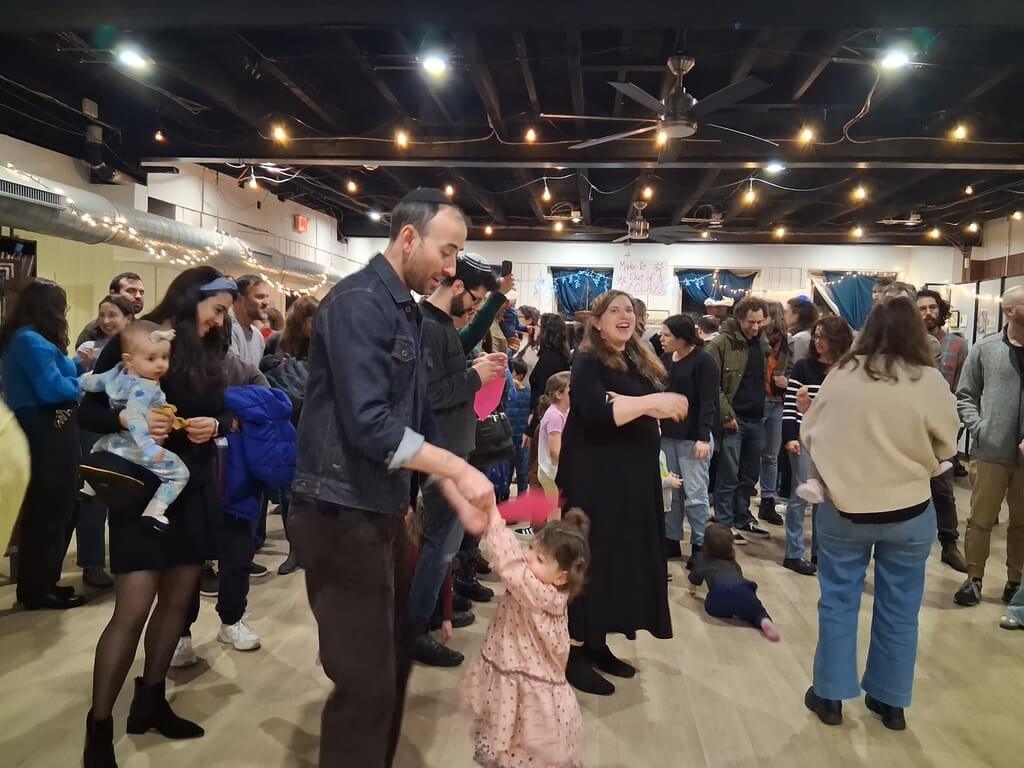
SOUTH PHILADELPHIA — On a cold weeknight, a few dozen people packed into a synagogue that defies every conventional rule of American Jewish life.
It is Orthodox and led by a woman. Its sanctuary is divided not into two sections, but three: men, women, and a small area for nonbinary congregants. It has no mandatory dues. And instead of struggling to survive, it is expanding so quickly that it has already outgrown its building.
Founded in 2019, the South Philadelphia Shtiebel has become a closely watched experiment in American Judaism — an urban congregation built from scratch in a neighborhood where no new synagogue had taken root in decades, and where most religious institutions had long since retreated to the suburbs.
A century ago, the idea of an Orthodox synagogue thriving in South Philadelphia would not have seemed unusual at all. In the early 1900s, the neighborhood was home to an estimated 150,000 Jews — mostly immigrants — packed into row houses within walking distance of work, markets and extended family.
Jewish life revolved not around grand sanctuaries but around dozens of small, informal prayer spaces known in Yiddish as shtiebels. More than a hundred of them dotted South Philadelphia’s blocks, often tucked into storefronts or private homes, intimate rooms where daily life and religious life blurred together.
Most of those shtiebels disappeared long ago, casualties of suburban flight and institutional consolidation. The South Philadelphia Shtiebel takes its name from that vanished landscape not as a reenactment, but as a wager.
The timing could easily have sunk the project. The Shtiebel launched only months before the COVID-19 pandemic upended communal life. Yet even during lockdown, around 40 people were still showing up each Shabbat. When the small Vespa scooter shop where the congregation first gathered became untenable due to the pandemic, the community improvised — meeting in backyards, public spaces and parking lots. Today, the congregation leases a two-story industrial building.
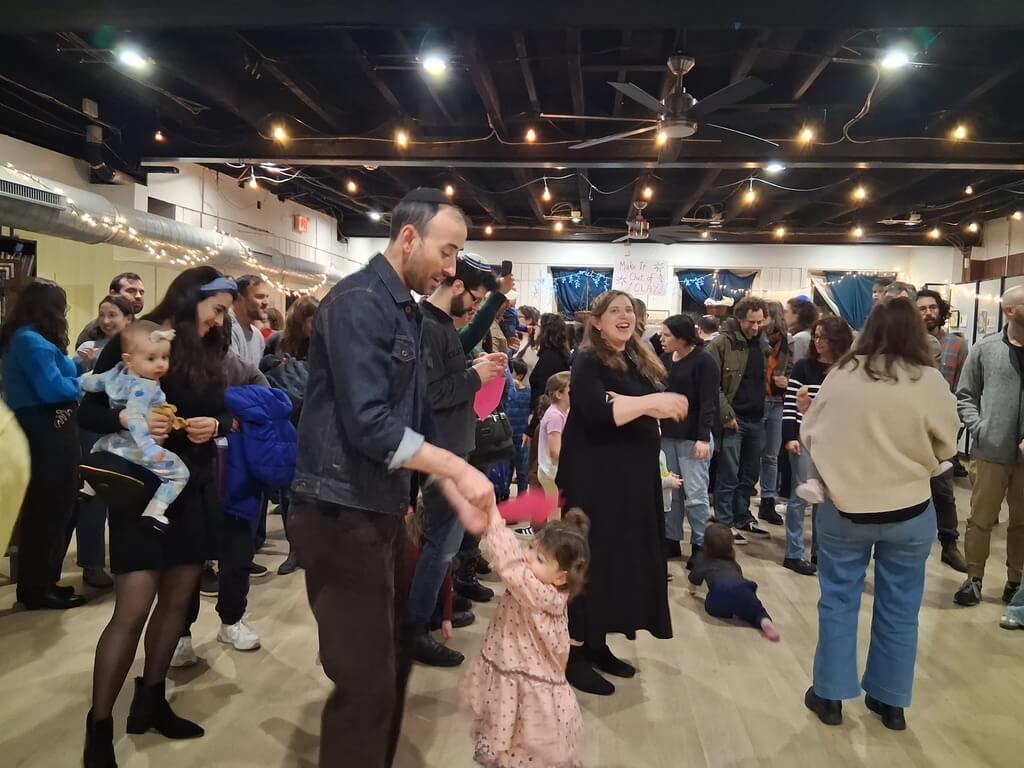
On a typical Shabbat morning, the sanctuary fills with roughly 175 people — a mix of young families, retirees, longtime Orthodox congregants and people still learning the prayers. And as attendance has grown, the question facing the Shtiebel is no longer whether it works, but what happens next, and whether this kind of community can scale without losing what makes it feel human.
What has emerged here is not a nostalgia project, but a congregation aligned with the DIY attitude of how people now choose institutions: voluntarily, relationally, and on their own terms.
Its growth has not been accidental. It reflects a series of choices — about space, ritual, leadership and belonging — made deliberately by its founder.
Welcoming the LGBTQ+ community
Rabbanit Dasi Fruchter grew up in Silver Spring, Maryland, the granddaughter of a rabbi who served pulpits across the country. She arrived in Philadelphia single and actively pursuing solo parenthood, but embraced the nonlinear turns of that journey, which led her to connect with and marry Daniel Krupka, a software engineer who had been serving as the congregation’s gabbai. Together they are raising a growing family.
She was ordained at Yeshivat Maharat, the Modern Orthodox seminary in the Bronx, and also holds a dual master’s degree from New York University in Jewish Studies and nonprofit management. She has been trained in community organizing, with an emphasis on relationships over programs.
She launched the Shtiebel with an acute awareness of how easily people fall through the cracks of Jewish life — not because they lack commitment, but because the systems around them are built for someone else.
“The approach here is that everybody is enough,” said Fruchter, 36. “We value the fact that you’re here and we’re not looking around at who’s not.”
Around 15% of the congregation identifies as LGBTQ+, Fruchter said. It’s a figure she offers not as a marker of ideology, but as a reflection of who has found their way into the room. That ethic is visible before a word is spoken. The sanctuary’s three sections all center around the bimah and are separated by a mechitza, or barrier, that still allows everyone to see, and hear, what is happening.
Fruchter is careful about how she describes the choice. It is not, she insists, an attempt to flatten difference or sidestep halacha, Jewish law, but an effort to acknowledge everyone. “We’re not trying to create a perfect solution,” she said. “We’re trying to create a place where people don’t have to disappear in order to pray.”
For Soren Simcha Barnett, a nonbinary congregant who uses they/them pronouns, that distinction mattered. When Barnett, 28, first arrived in early 2022, the idea of praying behind a mechitza was unfamiliar — and uncomfortable. “That would have been a red line for me,” they said. They had grown up in a Conservative synagogue and had never experienced gender-segregated prayer.
Still, they stayed.
What drew Barnett back was that they were taken seriously. They learned the melodies. On Shabbat mornings, they stand close enough to the action to help when the Torah is lifted off the bimah, hands ready, just in case. “I love being in the thick of it,” Barnett said. “We’re literally not in the margins.”
That sense of belonging, Barnett said, came with limits, though. About six months after they began attending regularly, Barnett asked Fruchter about expanding ritual roles for nonbinary congregants, such as leading services. Fruchter said no, a decision rooted in her reading of halacha.
“That hurt,” Barnett said. “I really wanted to be able to do everything I’m capable of.” But again, the disappointment did not send them away.
What mattered, they said, was not the answer but the process: that the question was taken seriously, and that the boundary was named rather than ignored. Barnett stayed. “I was willing to grapple with the complexity,” they said.
If Barnett’s story is about negotiation, Gary Saft’s is about commitment.
Saft, 35, a gabbai and the head of the Shteibel’s volunteer security team, is broad-shouldered, bearded, and impossible to miss. He grew up Reform and spent years assuming traditional Judaism had no place for him. “I didn’t see where I fit,” Saft said.
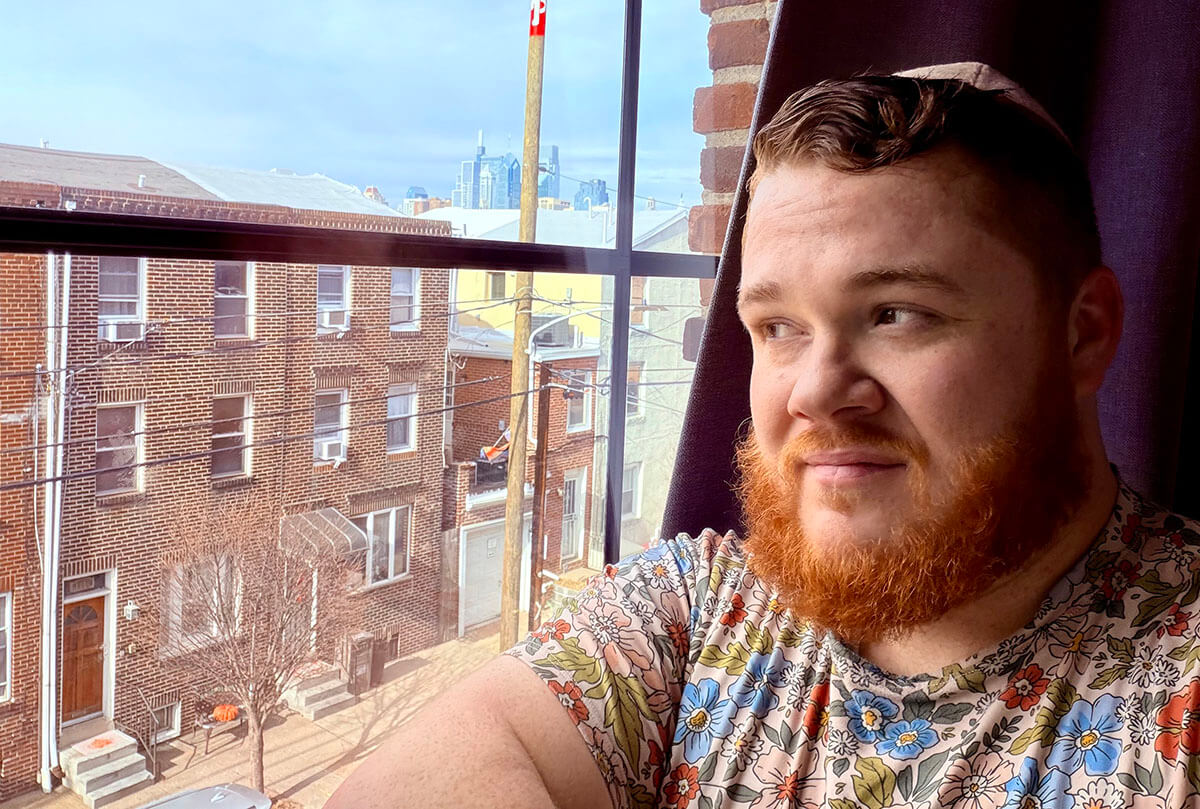
Saft began searching for a community after his father died in 2020, and he found it at the Shtiebel. Today, Saft prays daily, keeps kosher, walks to shul, and helps run services. “This shul is now a huge part of my life,” he said.
A sense of belonging
By all accounts, what holds the community together, more than anything else, is song.
For many congregants, music is the primary way in. Even those still learning Hebrew can participate fully, buoyed by a group that carries them along. Fruchter’s own voice is strong and steady, but it rarely stands alone. She sings with the room, not over it. Over time, congregants say, that has changed who feels comfortable raising their voice. Women sing loudly. So do people who might once have stayed quiet. Authority here is not projected; it circulates.
Lisa Levy, 66, a three-time cancer survivor, moved to Philadelphia after decades in New York City. She arrived newly retired and living alone. She describes herself as “conservadox” — committed to Orthodoxy, but wary of rigid lines.
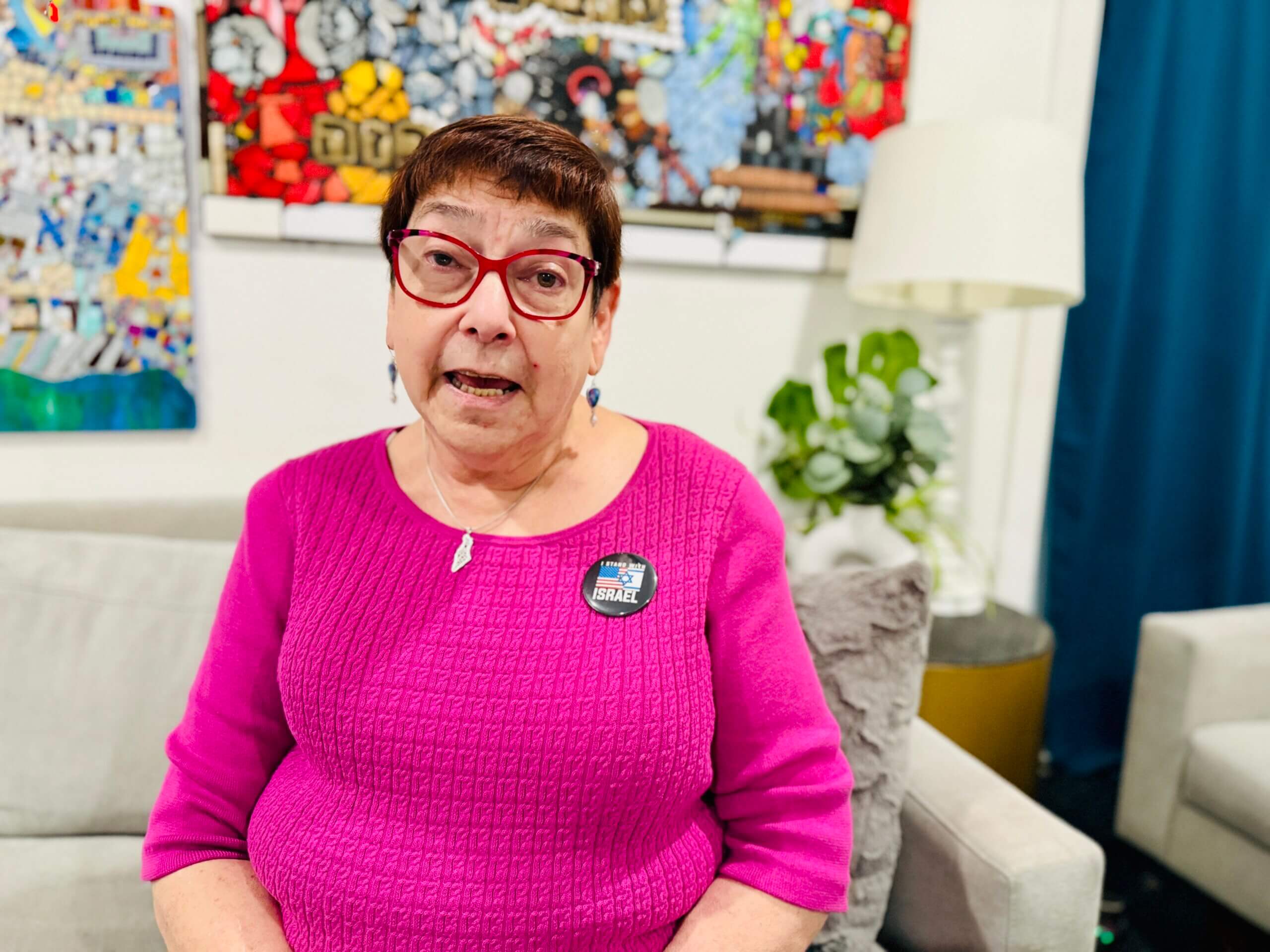
What she did not encounter, she said, was pressure. “There are no dues,” Levy said. “You pay what you can afford. No questions.”
For Levy, that mattered. Many synagogues, she said, quietly assume a level of financial stability that leaves some people on the margins — especially older congregants or those navigating illness. At the Shtiebel, presence itself felt like the baseline contribution. “It’s more like a minyan than a shul,” said Levy, who lives three blocks away.
For Jamie Goldberg, 33, the Shtiebel became real when she started showing up pregnant.
Goldberg began attending in mid-2022, just before the birth of her first daughter. She and her husband, Stuart, had grown up in Reform and Conservative settings and spent years searching for something that felt both serious and accessible. “I learned the traditional prayers in my late 20s,” she said. “I didn’t grow up knowing how to follow along.”
Now she has two young daughters and serves on the Shtiebel’s advisory board. In the past year alone, she said, roughly two dozen babies have been born into the community. On Shabbat afternoons, families spill out to nearby playgrounds after naps, an informal ritual that has become its own gathering. Growth here is not abstract. It is measured in strollers.
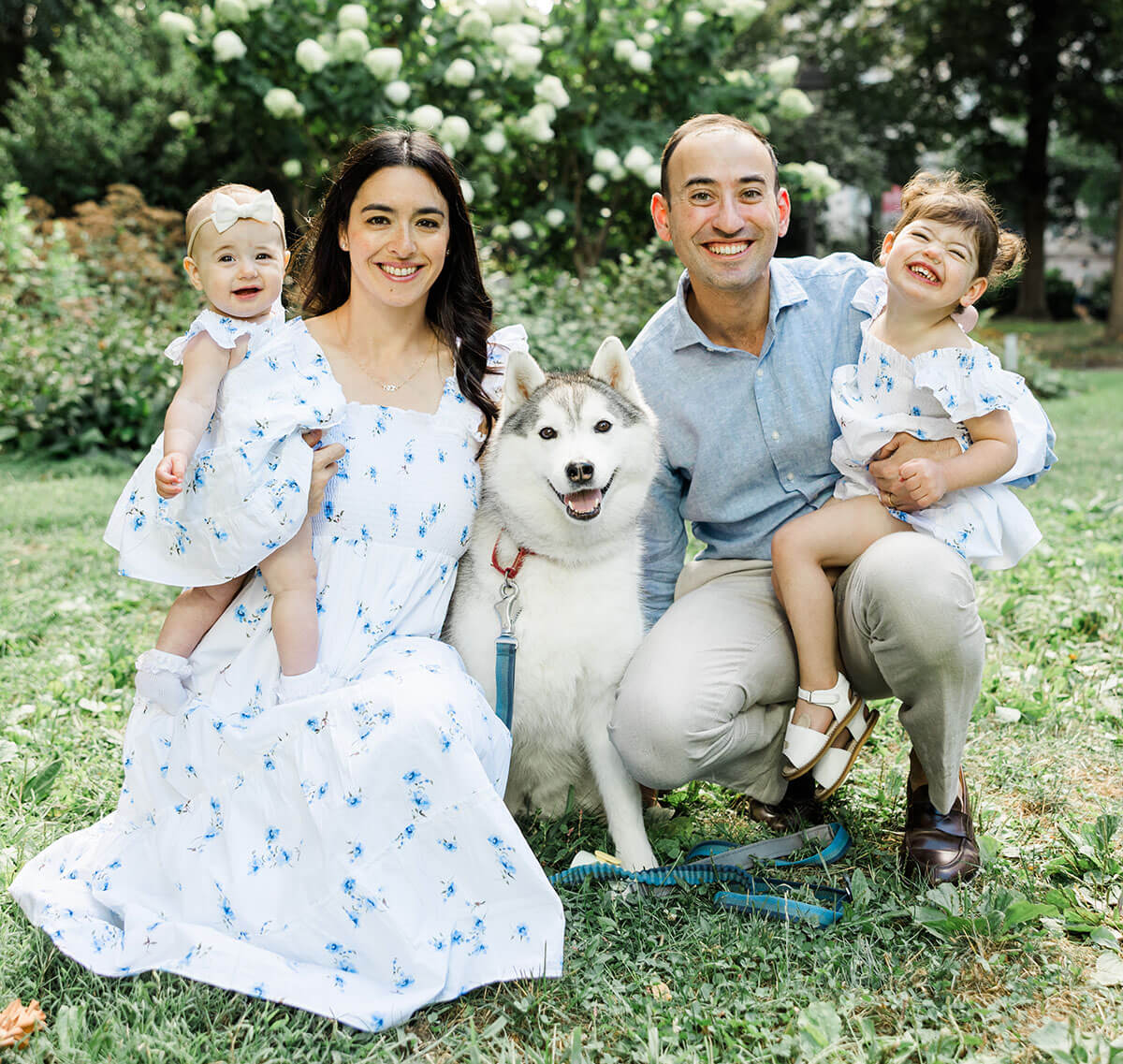
That future comes with questions. There is no Jewish day school in South Philadelphia. Families will eventually have to drive children to the suburbs or help invent something new. After years of the Shtiebel’s children’s programming being volunteer-run, it’s now supported by a mix of people in paid positions and community members.
“It’s a place where people can grow,” she said.
Where the conversation never stops
During the week, the sense of belonging migrates online. The Shtiebel uses Slack, the messaging platform, as its connective tissue: organizing meal trains, coordinating who will read the Torah at services, sharing names of people who are ill and need prayers, checking in on each other, offering extra seats at Shabbat tables. There is no need for a printed directory or a hallway bulletin board.
Steve Schauder noticed that immediately.
Schauder, 61, the executive director of the Jewish Relief Agency, moved to South Philadelphia last spring after what he called a “trial Shabbat.” He had previously been a dues-paying member of synagogues across denominations. What struck him here was not just the warmth, but the infrastructure beneath it. “It never stops,” he said of the Slack messages. “I wander on every day, just to take a look.”
Schauder was also struck by what didn’t happen at the Shtiebel. The synagogue is intentionally apolitical. It’s careful about keeping partisan politics out of communal spaces. Congregants span the ideological spectrum, he said, and that diversity is treated as a given rather than a problem to solve. “You can walk in there whatever your background and politics are,” Schauder said.
On a Shabbat morning, a Donald Trump voter might be sitting next to a Zohran Mamdani supporter. What matters is not agreement, but a choice, Schauder said, to prioritize what he called “joyful Judaism” over the culture wars that have fractured so many other institutions.
The Shtiebel has taken shape amid the quiet collapse of many American institutions — houses of worship, unions, neighborhood associations — leaving fewer places where people are expected to encounter one another across differences.
In that sense, the congregation is not only a Jewish experiment but a civic one: an attempt to rebuild habits of shared life in a society that has grown increasingly siloed, polarized, and private. What happens inside the Shtiebel — negotiating disagreement, making room for difference, choosing presence over purity — mirrors a broader struggle over whether communities can still hold together without demanding sameness.
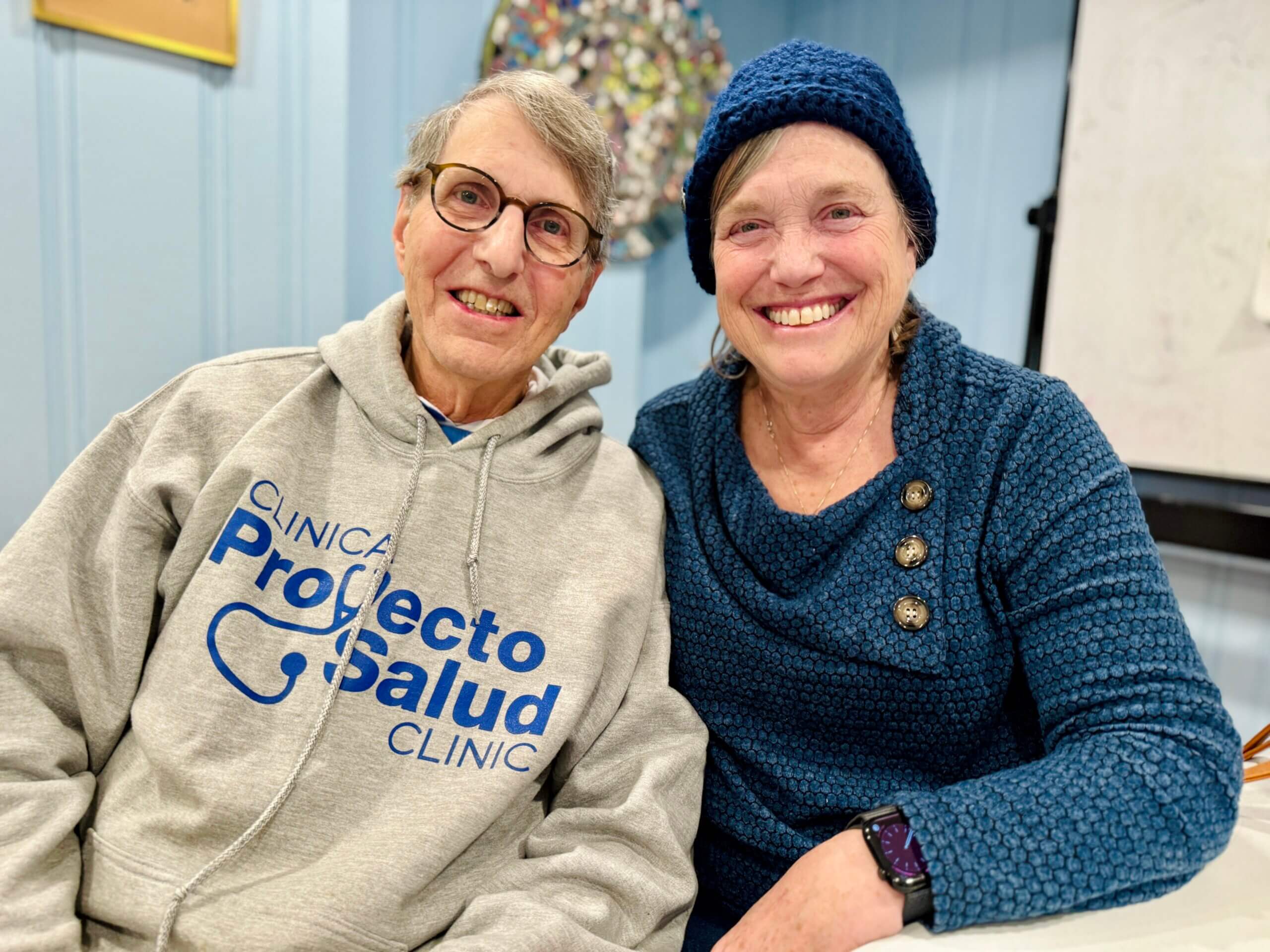
But Fruchter bristles at the idea that the Shteibel’s success can be reduced to a program, platform or politics. What she calls the synagogue’s “secret sauce” is not a tool so much as a discipline: “It’s being intentional about seeing and witnessing everybody with what they need,” she said.
Sometimes that attention registers in small ways. A congregant mentions liking Dr Pepper; it shows up at the kiddush they sponsor. Other times it demands structural work: rethinking seating for those with sensory needs, slowing down ritual explanations, or redesigning space so people who would otherwise drift away can stay. None of it is scalable in the abstract. All of it requires time, memory, and a willingness to keep revising.
“Folks who are stepping up and stepping in not only feel belonging,” Fruchter said, “but that they’re really being seen, cared for and nurtured.”
A model, and its limits
What Fruchter built has also reshaped the landscape beyond South Philadelphia. At a moment when many American synagogues are shrinking, consolidating, or aging in place, the Shtiebel has become an unlikely case study in what Jewish life looks like when it grows outward rather than inward.
But growth, Fruchter is quick to note, does not automatically produce stability.
Instead of mandatory dues, the Shtiebel operates on what she calls an NPR-style model, funded through voluntary monthly support. About 120 households currently donate each month, she said — including some supporters who don’t live in South Philadelphia but believe in the mission. Those recurring contributions cover about a quarter of the annual budget. The rest comes from a mix of larger individual gifts — typically in the $10,000 to $25,000 range — and national grants supporting the Shtiebel’s work, including initiatives around Orthodox feminism and efforts to reimagine synagogue life.
The result is a congregation that looks robust from the outside, but still operates like a lean startup on the inside. In its early years, Fruchter lived in the synagogue to keep costs down. “I think what happens with that kind of growth is that the infrastructure struggles to keep up,” she said.
One constant challenge, she added, is perception. “Sometimes we’re seen as being very flush because of our success.” The reality, she said, is more fragile: building governance, raising money, and maintaining a physical space while attendance climbs — all at once. “That footing takes time,” she said.
That tension, between visibility and vulnerability, is part of what other Jewish leaders have been watching closely.
Rabbanit Leah Sarna, the spiritual leader of Kehillat Sha’arei Orah in the Philadelphia suburbs, credits the Shtiebel with shifting expectations.
“In Philly, Dasi really normalized the idea of a Modern Orthodox shul led by a woman,” Sarna said. When her own congregation went searching for a spiritual leader and hired her in 2024, she said, opening the role to women did not trigger the kind of upheaval it might have elsewhere. Fruchter even spoke at Sarna’s installation. “By then,” Sarna said, “people had spent a Shabbat at Dasi’s shul. It wasn’t theoretical anymore.”
Sarna said that because the Shtiebel has no membership dues, inclusion comes first, and fundraising never really stops. “That model means you’re constantly in a fundraising stance,” Sarna said.
In a neighborhood of young professionals who want to live urban lives, and not decamp to the suburbs, Fruchter’s approach has been especially powerful. The two congregations, Sarna said, have even developed what she called “purposeful handoffs,” directing people to the other as life circumstances change: city to suburbs, suburbs to city. Rather than competing, they function as part of a shared ecosystem.
Much of the Shtiebel’s cohesion still runs through Fruchter herself — a concentration of responsibility that has fueled its growth, and may yet test its limits. Asked whether the Shtiebel model could be replicated elsewhere, Sarna paused. The structure, she said, might travel. The person at the center of it might not. “You need someone who’s as talented and warm and magnetic as she is,” Sarna said. “That part is the least replicable.”
The greater Philadelphia area, where the Jewish population hovers around 350,000 people, may be uniquely suited to such experiments. “America was founded here,” Sarna said. “It’s the birthplace of ideas.”
The experiment has, perhaps, yet another advantage. Chaim Saiman, a law professor at Villanova University in Philadelphia and a thought leader in the Modern Orthodox movement, believes congregations like the Shtiebel should also be seen as competing with Conservative shuls for a slice of the membership who may be looking for something more traditional.
“These sorts of shuls are often born on the decay of mainstream Conservative shuls, which are not growing or are hemorrhaging,” Saiman said. “There’s a market for a community with liberal sensibilities but whose liturgy and Shabbat and kosher practices are more traditional.”
The challenge ahead
For Fruchter, those dynamics are less abstract than personal. Many of the people who find their way to the Shtiebel arrive with long Jewish histories — years in Conservative congregations, half-finished religious journeys, fluency in tradition paired with frustration at the structures around it.
They haven’t rejected Judaism so much as struggled to find a community that fit the way they were living. The work of the Shtiebel, she said, has been to meet those people where they are, and then ask what kind of community they are willing to build together.
“In a shul today,” she said, “we shouldn’t bolt chairs to the floor.”
The post A Millennial rabbi built a synagogue where others have closed. Her maverick ideas are becoming a model. appeared first on The Forward.
Uncategorized
Mamdani to attend Passover Seder as he navigates ties with Jewish groups amid rising antisemitism
New York City Mayor Zohran Mamdani is set to attend a Passover Seder on Monday night at the City Winery in Manhattan, stepping into a decades-old cultural tradition that doubles as a symbolic test of his relationship with the city’s Jewish community.
Mamdani is slated to appear alongside a liberal rabbi, an Israeli musician and an observant comedian at the annual Downtown Seder hosted by nightlife impresario and entrepreneur Michael Dorf. All net proceeds from the event will be donated to Seeds of Peace, a New York-based nonprofit founded in 1993 that helps young people from conflict regions build leadership skills and engage in dialogue.
Founded in 1991 and held at the East Village’s Knitting Factory and later at the Museum of Jewish Heritage, the Downtown Seder brings together artists, activists and public figures for a contemporary retelling of the Exodus story. Dorf, who is Jewish and launched City Winery in 2008, has described the gathering as a “supplement” to traditional seders. Passover begins Wednesday evening at sundown.
“The Seder is about asking urgent questions — about freedom, responsibility, and how we care for one another,” Dorf said in a statement. “Each year, we bring together voices who challenge, inspire, and reflect the world as it is — and as it could be.”
Featured guests this year include former CNN anchor Don Lemon, Israeli musician David Broza, and comedian Modi Rosenfeld. Former Mayor Eric Adams was the featured guest at the Seder in 2023.
A City Hall spokesperson said Mamdani will also host a private Passover dinner with city workers.
Mamdani’s participation at the Seder on Monday comes at a delicate political moment. A vocal critic of Israel who supports the boycott movement and has declined to recognize Israel specifically as a Jewish state, Mamdani has faced backlash from Zionist Jewish organizations, particularly after revoking executive orders tied to antisemitism and campus protests on his first day in office and his recent refusal to back legislation aimed at curbing disruptive protests outside synagogues and schools.
Reflecting his outreach efforts since taking office, his appearance at the Seder signals an ongoing effort to engage Jewish audiences drawn to themes of justice and coexistence and who are willing to be part of the conversation.
The event that Mamdani will speak at will also feature remarks from Rabbi Amichai Lau-Lavie, a rabbi and human rights activist, who will appear via video from Israel, according to the organizers.
Last week, Mamdani helped load cars with Passover food for Orthodox families at the annual Chasdei Lev distribution event in Brooklyn. He also met with Orthodox businessman Dov Bleich at his office, who showed him a Haggadah dating to the Civil War era in New York.
In his interview with the Forward last April, Mamdani framed the Exodus story as a call for collective liberation struggles. He invoked the biblical story of Moses confronting Pharaoh as a metaphor for present political challenges. “This moment with so many Pharaohs around us — whether they be Donald Trump, ICE or this troubling rise of antisemitism — we must take a lesson from those words of the necessity of not only having our lips not tremble or falter, but that the power in doing this comes in a shared belief in the possible,” Mamdani said. As a candidate, Mamdani attended a Seder hosted by Jews for Racial and Economic Justice.
Jewish politicians mark Passover amid rising antisemitism
Other politicians have also sought to mark Passover in ways that resonate with Jews grappling with rising antisemitism.
New York City Council Speaker Julie Menin co-hosted an interfaith Seder with the Jewish Community Relations Council on Thursday at Tsion Cafe, an Ethiopian Jewish restaurant in Harlem that closed earlier this year, after the owner faced ongoing harassment and vandalism since the Oct. 7 Hamas attack on Israel. “The story of Passover is a story of hope, perseverance, grit and determination for the Jewish community,” Menin said in her remarks. She added that it is symbolic that this year all the major religious holidays — Ramadan, Lent, Easter and Passover — have converged around the same time. “This is what our city needs more of — focused on unity and inclusion,” she said.
Some see Menin’s role as the Council’s first Jewish speaker as a counterweight to Mamdani on Jewish communal issues. On Thursday, the Council passed two bills that direct the NYPD to craft a plan within 45 days for managing protests around houses of worship and schools.
Illinois Gov. JB Pritzker hosted a Seder with Jewish leaders last week at his official residence. Last year, Pritzker, among a handful of Jewish politicians in leadership roles offering the Democratic Party a path forward ahead of the midterm elections, invoked his family’s history and his role in building the Illinois Holocaust Museum & Education Center to criticize President Donald Trump’s policies, comparing them to authoritarian tactics.
Pennsylvania Gov. Josh Shapiro is set to hold a family Seder at his official residence and will mark the first anniversary of the arson attack on the first night of Passover last year by an intruder, who said he wanted to beat the governor with a sledgehammer over what he claimed was a lack of empathy toward Palestinians. Shapiro has since leaned into his Jewish identity and has spoken out on bipartisan platforms about rising hate-fueled violence.
The post Mamdani to attend Passover Seder as he navigates ties with Jewish groups amid rising antisemitism appeared first on The Forward.
Uncategorized
IDF Soldier from Connecticut Killed in Southern Lebanon Combat

Sgt. Moshe Yitzhak Hacohen Katz. Photo: courtesy.
i24 News – The Israel Defense Forces announced on Sunday morning the death of Sgt. Moshe Yitzhak Hacohen Katz, 22, originally from New Haven, Connecticut, who was killed during combat operations in southern Lebanon on Saturday.
According to the military, Katz was killed in a rocket attack targeting Israeli forces operating during efforts to expand a security zone in southern Lebanon. The IDF said the strike occurred overnight between Friday and Saturday, during a large-scale barrage aimed at units deployed in the area.
An initial military investigation found that one rocket directly hit an infantry unit from the 890th Battalion of the Paratroopers Brigade, killing Katz instantly. Three additional soldiers were wounded and are listed in moderate condition.
The IDF said the announcement of Katz’s death was delayed to ensure that all family members, including those in the United States, were properly notified.
The army also said that recent attacks have largely focused on the four IDF divisions operating in Lebanon. In the past 24 hours alone, approximately 250 rockets were launched toward Israeli positions, with 23 crossing into Israeli territory, according to military figures.
Uncategorized
AI-Generated Antisemitic Rabbi Racks Up Millions of Followers with Questionable Financial Advice

i24 News – An AI-generated character known as Rabbi Goldman has attracted millions of followers online by combining old antisemitic tropes with digital-age conspiracy theories. The avatar, presented as a caricature of a New York rabbi, plays off stereotypes of Jewish power and wealth while dispensing unsolicited “financial advice” and conspiracy-laden commentary about global elites.
In his videos, Rabbi Goldman claims that Jews have “known every secret for thousands of years,” weaving age-old prejudice into modern misinformation. Among his assertions: that the moon landing was faked, the US government will soon exert total control over its citizens, and billionaires stage yacht sinkings for insurance fraud—all allegedly foreknown by “the Jews.”
Before being removed on Sunday night, his Instagram account had racked up over 1.5 million followers. Yet the same page remains active on Facebook, which shares an owner with Instagram, with roughly 180,000 followers and thousands of interactions per post. The comments reveal an audience that is genuinely engaged with, and emboldened by, his vitriolic rhetoric.
Rabbi Goldman’s videos follow a simple formula designed to thrive in algorithm-driven ecosystems. They begin with a cryptic slogan implying secret knowledge or hidden wealth — invoking Jews as the keepers of these secrets — to draw viewers in and extend watch time, thus being featured on more people’s feeds. What follows is a cascade of AI-generated, factually dubious monologues, all culminating in a pitch: he can show you how to acquire the same “Jewish wisdom.”
That pitch leads to his website, where a manual titled How to Make and Invest Money sells for $9, and he claims it has been purchased by over 4,000 people. The real product, however, carries a fuller title — How to Make and Invest Money Like the Jews. The 62-page PDF amounts to generic, AI-spun financial advice labeled as “the Jewish method,” occasionally interspersed with random references to the Talmud. Just like the videos, it references how Jews have managed to be successful for thousands of years but offers little backup as to how that can translate to a real-world scenario.
Most of it plays off the stereotype of Jews being financially astute. But some lines, such as “Jews do not day trade… We buy the market — the entire market — and we hold it indefinitely,” remove the mask entirely.
Whether we like it or not, antisemitism thrives online—and platforms’ recent loosening of content restrictions under the banner of “free speech” has only amplified it. Social media has become an ideal environment for grifters to blend prejudice with profit. And that is, to their credit, what the creators of Rabbi Goldman have done.
They have clearly borrowed from the “manosphere” playbook—a cluster of influencers promoting hyper-masculine, materialistic lifestyles infused with misogyny and antisemitism. Like Andrew Tate and similar figures, Rabbi Goldman appeals to disaffected young men who feel alienated by the economy and society in which they live, eager to locate a scapegoat.
In Goldman’s case, the scapegoats are the elites and billionaires. But the framing of the Jews alongside the elites has, by proxy, made them the scapegoat too. By merging coded hatred with generic Instagram-style self-help language, the character transforms antisemitism into a marketable aesthetic.
So essentially, the creator of Rabbi Goldman has found a niche in an emerging market, playing off of antisemitism to sell cheaply produced slop to teenagers. Which is both entrepreneurial and morally awful. But the issue is that social media has bred the ground for this by rewarding shock content and letting antisemitism often go untouched. Even when they deleted his Instagram account, dozens of copycats popped up, including an absurdly ironic German-language version that uses the likeness of British politician Jeremy Corbyn.
And this is what happens when social media companies are reactive rather than proactive. They were chasing shadows after the account became so big. Instead, they need to cut it out at its source, be tougher on antisemitism, and be more vigilant with AI content.
And for social media users, it is hard to tell what’s real and what isn’t anymore. Just try not to get financial advice from an AI rabbi who thinks the moon landing was fake.