


Uncategorized
An exhibit at Warsaw’s Polin Museum on the history of Jewish languages

אין אַ נײַער אויסשטעלונג בײַם ייִדישן מוזיי „פּולין“ זעט מען, אַז עספּעראַנטאָ איז אויך אַ ייִדישע שפּראַך.
די סיבה דערפֿאַר איז נישט בלויז ווײַל דער פֿאַרטראַכטער פֿון עספּעראַנטאָ, ד״ר לייזער זאַמענהאָף, איז געווען אַ ייִד, אַ געבוירענער אין ביאַליסטאָק. אין די ערשטע יאָרן זענען אַ סך רעדערס פֿון עספּעראַנטאָ געווען ייִדן, ווײַל זיי האָבן געליטן פֿון אַנטיסעמיטיזם און האָבן געחלומט פֿון אַ וועלט אָן נאַציאָנאַלע און רעליגיעזע גרענעצן. דער ייִדישיסט און עספּעראַנטיסט, ד״ר צבֿי סדן, האָט טאַקע אַ מאָל באַמערקט: „עספּעראַנטאָ איז ייִדיש פֿאַר גויים“.
פֿון דעסט וועגן, איז די צענטראַלע שפּראַך בײַ ייִדן אין משך פֿון דער גאַנצער געשיכטע אַוודאי העברעיִש, און דער פֿאַקט ווערט נישט פֿאַרשוויגן אין דער נײַער אויסשטעלונג. זי הייבט זיך אָן מיטן אַלטן העברעיִש אין די אויפֿשריפֿטן אין „כּתבֿ עבֿרי“, די אַלטע אותיות, וואָס ייִדן האָבן געניצט אין דער צײַט פֿון די מלכים, פֿאַרן גלות בבֿל.
דערנאָך האָבן זיי אָנגעהויבן אַריבערגיין צום „כּתבֿ אַשורית“, די אַסירישע אותיות — דאָס וואָס מיר רופֿן הײַנט „העברעיִשע אותיות“. די אויסשטעלונג לאָזט זיך אויס מיטן מאָדערנעם העברעיִש, עבֿריתּ, וואָס דער ליטוואַק אליעזר יצחק פּערלמאַן האָט געהאָלפֿן צו באַנײַען און אויפֿצולעבן סוף 19טן י״ה. יענער פּערלמאַן איז אונדז באַקאַנט מיטן נאָמען אליעזר בן־יהודה.
אין משך פֿון אַן ערך 2,500 יאָר צווישן דער תּקופֿה פֿונעם „כּתבֿ עבֿרי“ און דעם הײַנטיקן עבֿריתּ האָבן זיך ייִדן באַניצט מיט אַ סך אַנדערע שפּראַכן — אַזוי פֿיל, אַז מע קען זיי אַפֿילו נישט אויפֿציילן. עטלעכע קען מען באַטראַכטן ווי אמתע ייִדישע שפּראַכן, ד״ה אַזעלכע, וואָס ייִדן האָבן זיי פֿאַרהיימישט און פֿאַרייִדישט, אַפֿילו ווען זיי זענען לכתּחילה געווען וואַריאַנטן פֿון גוייִשע שפּראַכן.
די ערשטע שפּראַך אַזאַ איז געווען אַראַמיש, וואָס אויף איר זענען געשריבן גרויסע טיילן פֿון ספֿר דניאל און ספֿר עזרה, ,ווי אויך דער גרעסטער טייל פֿונעם תּלמוד. כאָטש מיר רופֿן די שפּראַך פּשוט „אַראַמיש“, איז זי באמת ייִדיש־אַראַמיש, ווײַל אַ סך אַנדערע פֿעלקער האָבן אויך גערעדט פֿאַרשידענע סאָרטן אַראַמיש — גוייִש־אַראַמיש — ביזן הײַנטיקן טאָג.
דאָס דריטע רינגל אין דער קייט פֿון ייִדישע לשונות איז ייִדיש־גריכיש, וואָס איז אויפֿגעקומען נאָך דעם ווי אַלכּסנדר מוקדון האָט אײַנגענומען די ריזיקע פּערסישע אימפּעריע, אַרײַנגערעכנט ארץ־ישׂראל. אַ סך ייִדן זענען געווען צוגעצויגן צו דער גריכישער שפּראַך און קולטור, ווי מיר ווייסן פֿונעם יום־טובֿ חנוכּה. פֿאַרשידענע סאָרטן ייִדיש־גריכיש האָט מען גערעדט אין משך פֿון איבער צוויי טויזנט יאָר, ביז נישט לאַנג צוריק. ליידער האָבן די נאַציס און זייערע מיטהעלפֿערס אויסגעהרגעט אַ סך פֿון די לעצטע רעדערס פֿון ייִדיש־גריכיש, וואָס מע רופֿט זיי די ראָמאַניאָטעס. די פֿאַרבליבענע ראָמאַניאָטישע ייִשובֿים אין גריכנלאַנד רעדן הײַנט שוין דאָס גוייִשע גריכיש, ווי זייערע שכנים.
ווען די רוימער האָבן אײַנגענומען אַלע לענדער אַרום דעם מיטלענדישן ים, האָבן די ייִדן אויך אָנגעהויבן רעדן לאַטײַן, לכל־הפּחות אין דער מערבֿדיקער העלפֿט פֿון דער אימפּעריע. (אין מיזרח האָט מען ווײַטער גערעדט גריכיש.) לאַטײַן האָט זיך מיט דער צײַט פֿאַרוואַנדלט אין די הײַנטיקע ראָמאַנישע שפּראַכן: איטאַליעניש, שפּאַניש, פֿראַצויזיש אאַז״וו.
יעדע ראָמאַנישע שפּראַך האָט געהאַט אַ ייִדישן וואַריאַנט. נאָכן גירוש ספֿרד למשל האָבן אַ סך שפּאַנישע ייִדן זיך באַזעצט אין דער אָטאָמאַנישער אימפּעריע, האָט זייער ייִדיש־שפּאַניש (וואָס מע רופֿט הײַנט לאַדינאָ) אַרײַנגענומען אַ סך ווערטער פֿון די אָרטיקע לשונות: פֿון טערקיש, אַראַביש, אויך פֿון די באַלקאַנישע שפּראַכן.
די אויסשטעלונג דערציילט נישט צו פֿיל וועגן דער געשיכטע פֿון ייִדיש, אָבער אינעם קאָנטעקסט פֿונעם גאַנצן „פּולין“־מוזיי איז דאָס נישט קיין עוולה. די פּערמאַנענטע אויסשטעלונג האָט זייער אַ סך וועגן ייִדיש און וועגן דער קולטור אויף ייִדיש. עטלעכע אַמעריקאַנער פֿאָרשערס, גוטע ייִדיש־קענערס, אַזוי ווי ברײַנדל קירשנבלאַט־גימבלעט און שמואל קאַסאָוו, האָבן געדינט דעם מוזיי ווי עצה־געבערס, און אפֿשר דערפֿאַר איז דאָ אַ סך מער ייִדיש אין „פּולין“־מוזיי ווי אין אַנדערע ייִדישע מוזייען אויף דער וועלט. (הלוואַי וואָלט געווען אַזאַ מוזיי אין ניו־יאָרק אָדער תּל־אָבֿיבֿ!)

אָבער די קוראַטאָרן פֿון דער אויסשטעלונג האָבן געהאַט אַ פּראָבלעם: דער דורכשניטלעכער פּוילישער באַזוכער קען נישט לייענען די העברעיִשע אותיות. אַפֿילו די ייִדישע באַזוכער און די געסט פֿון אויסלאַנד זענען מסתּמא קנאַפּע קענערס פֿון ייִדיש־גריכיש און ייִדיש־פּערסיש, למשל. איז נישט קיין חידוש, וואָס מע האָט דאָ געלייגט דעם טראָפּ אויף די שיינע עקספּאָנאַטן און נישט אויף די שפּראַכן גופֿא. מע ווײַזט אַ סך אַלטע חפֿצים, ספֿרי־תּורות, כּתבֿ־ידן, קמיות, פּרעכטיקע אילומינאַציעס. אפֿילו קינדערלעך, וואָס קענען נישט קיין צורת־אות, קענען הנאה האָבן פֿון אַזאַ שיינקייט.
דער אינטערעסאַנטסטער טייל פֿון דער אויסשטעלונג איז, לויט מיר, ווען מע קען הערן עטלעכע פֿון די ייִדישע שפּראַכן. מע האָט הײַנט זעלטן אַ געלעגנהייט צו הערן ייִדיש־גריכיש אָדער ייִדיש־איטאַליעניש, אָדער אַפֿילו לאַדינאָ. ס׳איז טשיקאַווע צו הערן, ווי די שפּראַך קלינגט, און צו פּרובירן אַ ביסל צו פֿאַרשטיין. אַ סך פּוילישע סטודענטן פֿון ייִדיש וועלן דערקענען דאָס קול, וואָס רעדט דאָרט ייִדיש, ווײַל עס איז עטל ניבאָרסקי, וואָס איז עטלעכע מאָל געקומען קיין פּוילן, כּדי צו לערנען אין דער וואַרשעווער זומער־פּראָגראַם. נאָך בעסער וואָלט געווען, ווען מע ווײַזט אויפֿן עקראַן דעם טעקסט פֿון די ווערטער וואָס מע רעדט, ווײַל אַזוי וואָלט מען געקענט פֿאַרשטיין אַ ביסל בעסער.
אויך זייער געראָטן זענען די שפּילערײַען אין דער אויסשטעלונג, וואָס זענען נישט בלויז פֿאַר קינדער. עס זענען דאָ שטיקלעך פֿון אַ רעטעניש (פּאָזל) מיט פֿאַרשידענע ווערטער, וואָס מע דאַרף זיי צונויפֿפּאָרן מיט אַנדערע שטיקלעך מיטן נאָמען פֿון דער שפּראַך. מע קען דאָרט אַנטדעקן, למשל, אַז דאָס וואָרט „פּופּיק“ קומט פֿון טשעכיש, און אַז דאָס וואָרט „דברארה“ (dabberare) מיינט „רעדן“ אויף ייִדיש־איטאַליעניש.
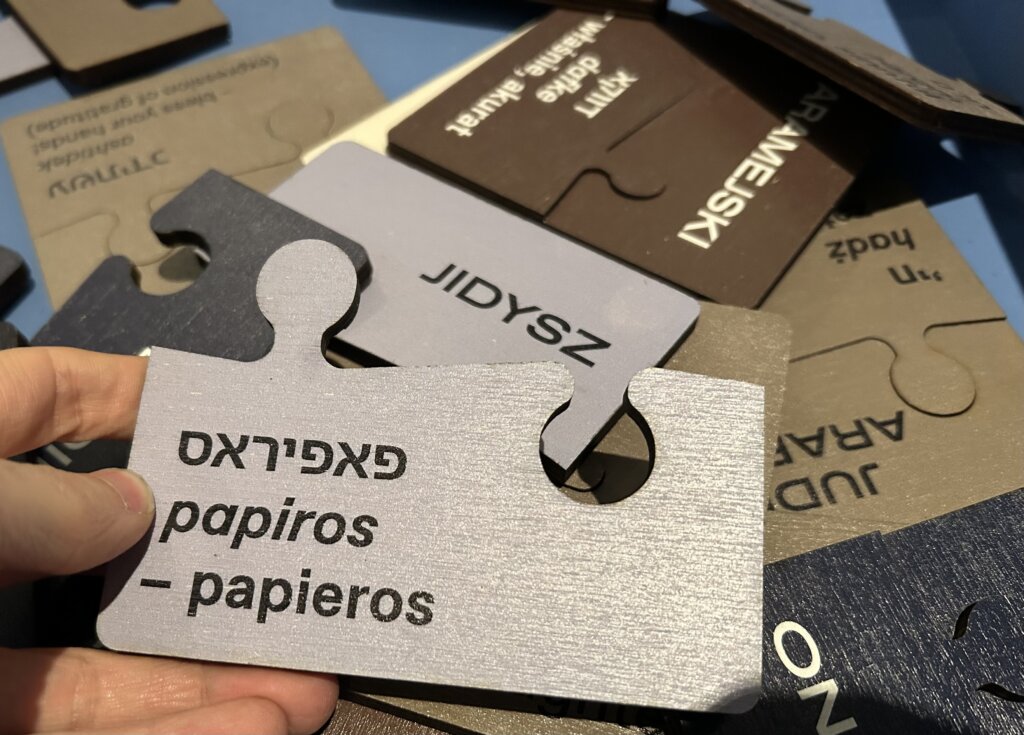
די אויסשטעלונג איז דער עיקר אַ קינסטלערישע און אַ היסטאָרישע, נישט קיין לינגוויסטישע. פֿון דעסט וועגן, פֿעלט דאָרט אַ ביסל דער הײַנטיקער מצבֿ. מיר ווייסן דאָך, אַז הײַנט רעדט מען נישט קיין ייִדיש־איטאַליעניש אָדער ייִדיש־גריכיש און אַ סך פֿון די אַנדערע אַמאָליקע ייִדישע שפּראַכן. אונדזער ייִדיש האָט דווקא גרויס מזל, וואָס די חסידים האָבן זיך אָנגעכאַפּט אין איר און רעדן זי מיט זייערע קינדער. אַנדערש וואָלט דער מצבֿ טאַקע געווען ביטער.
אָבער הײַנט רעדן ייִדן, דער עיקר, עבֿריתּ, אויב זיי וווינען אין מדינת־ישׂראל, אָדער ענגליש, אויב זיי וווינען אין די תּפֿוצות. עטלעכע הונדערט טויזנט רעדן פֿראַנצויזיש, רוסיש און שפּאַניש. דאָס הייסט, דווקא די שפּראַכן, וואָס ייִדן רעדן הײַנט פֿעלן אין דער אויסשטעלונג.
ס’איז אמת, אַז ייִדיש־ענגליש און ייִדיש־שפּאַניש, למשל, זענען באמת נישט קיין שפּראַכן פֿאַר זיך. מיט אַנדערע ווערטער, אַז מע וווינט אין אַ ייִדישער סבֿיבֿה, קען מען אַרײַנוואַרפֿן ווערטער און קאָנסטרוקציעס פֿון העברעיִש אָדער ייִדיש. די פֿאָרשערין פֿון ייִדישע שפּראַכן, שׂרה בענאָר, רופֿט דאָס אַ ייִדישער „רעפּערטואַר“, וואָס ייִדן קענען ניצן, ווען זיי ווילן.
אַז אַ ייִד זאָגט למשל: Good Shabbos! The seudah will be by me. See you in shul קען מען בולט זען די השפּעה פֿון ייִדיש דאָ און מע פֿאַרשטייט דעם באַגריף „ייִדישע שפּראַך“ נישט בלויז טעאָרעטיש, נאָר מע זעט באַשײַמפּערלעך, ווי אַזוי מע מישט אַרײַן די העברעיִשע און ייִדישע ווערטער. דער זעלבער פּרינציפּ איז געווען אין כּמעט אַלע ייִדישע שפּראַכן, אויך אין ייִדיש — בלויז אַ סך מער אַנטוויקלט. דערפֿאַר וואָלט ייִדיש־ענגליש געהאַט אַ גרויסע מעלה פֿאַר אַזאַ אויסשטעלונג, ווײַל די מערסטע באַזוכערס קענען דאָס פֿאַרשטיין.
די אויפֿלעבונג פֿון העברעיִש דורך די ציוניסטן פֿאַרדינט אויך מער פּלאַץ אין אַזאַ אויסשטעלונג. די געשיכטע דערציילט מען יאָ: מע זעט בן־יהודה מיט זײַן ווײַב, חמדה, מיט זײַן ווערטערבוך. פֿון דעסט וועגן, פֿאַרדינט די געשיכטע אַ ביסל מער חשיבֿות. די אויפֿלעבונג פֿון אַ טויטער שפּראַך — אָדער פֿון אַ שפּראַך וואָס מע רעדט שוין נישט — איז גאָר אַ זעלטענער אויפֿטו. דערווײַל האָט מען אויפֿגעלעבט אויך אַנדערע שפּראַכן, וואָס זענען געווען טויט אָדער אין אַ סכּנה פֿון אונטערגיין (למשל, האַוואַיִש און מאַאָרי) — אָבער קיין מאָל נישט מיט דער הצלחה ווי די ציוניסטן האָבן באַוויזן מיט העברעיִש. עבֿריתּ איז באמת אַ מין נס אין דער געשיכטע פֿון דער מענטשהייט, נישט נאָר פֿון די ייִדן. אַוודאי זענען פֿאַראַן גענוג ייִדן, וואָס האַלטן נישט פֿון עבֿריתּ, אַ מאָל צוליב לעגיטימע פּאָליטישע אָדער רעליגיעזע סיבות (אַ טייל חרדישע ייִדן, למשל.) אָבער אין אַן אויסשטעלונג וועגן ייִדישע שפּראַכן פֿאַרדינט זי אַ גרעסער אָרט.
The post An exhibit at Warsaw’s Polin Museum on the history of Jewish languages appeared first on The Forward.
Uncategorized
Trump endorsement of Netanyahu blasted by liberal policy advocates, Democrats
(JTA) — A day after President Donald Trump endorsed Prime Minister Benjamin Netanyahu in the Israeli election eight days from now, U.S. policy analysts, Democratic lawmakers and liberal advocacy groups slammed the decision.
Trump announced his support for Netanyahu, who is running for reelection, in a Sunday Truth Social post that described the Israeli leader as “a Great Warrior Prime Minister” and a critical partner in eliminating the Iranian threat. Netanyahu has been trailing former IDF chief-of-staff Gadi Eisenkot in recent surveys.
Tali deGroot, vice president of political and digital strategy for the liberal Zionist group J Street, described Trump’s declaration as “an endorsement of endless war for Israelis,” in a statement sent to the Jewish Telegraphic Agency. She warned of “endless occupation and control of Palestinian life and land, and Israel’s growing isolation on the world stage.”
“The president is once again acting against the wishes of American taxpayers and choosing to uphold a failed, unpopular foreign policy that has brought devastation to Israelis, Palestinians and countless civilians,” deGroot added.
A spokesperson for the American Israel Public Affairs Committee, meanwhile, said that the lobby had no comment about the endorsement.
David Makovsky, director of the Program on Arab-Israel Relations at the Washington Institute for Near East Policy, criticized Trump’s decision, writing on X that “in one fell swoop, Trump has broken with the longstanding U.S. practice of avoiding explicit endorsements in Israeli elections.” The president, Makovsky added, went a step further by threatening to sever a partnership against Iran if Israelis choose a different leader.
“It is up to the Israeli people to choose their own leader and threatening that the U.S. will walk away from the conflict with Iran is beyond stunning,” Makovksy said.
Makovsky also pointed out that “a Trump endorsement is no electoral guarantee,” noting that Trump and Vice President JD Vance’s support for Viktor Orbán in Hungary did not end in a victory.
“The ultimate test is assembling a 61-seat Knesset majority,” Makovsky added. “Yet Netanyahu appears more focused on preventing an Eisenkot-led coalition from reaching that threshold than on demonstrating a viable path to 61 seats himself.”
Sen. Chris Van Hollen, a Democrat from Maryland, offered another scathing perspective, observing that “authoritarians of a feather flock together.”
“They started a war together,” Van Hollen stated. “They crack down on press freedom together. They lie about everything together.”
Rep. Analilia Mejia, a New Jersey Democrat running for reelection, said that the endorsement “tells us everything we need to know about both of these men.” She then went on to list Netanyahu, North Korea leader Kim Jong Un, Orbán and Russian President Vladimir Putin, adding that “this guy has a ‘type.’”
On the other side of the aisle, Rep. Carlos Gimenez, a Republican from Florida, reposted a video in which Netanyahu thanked Trump for his support. The congressman then added that “America will always stand with the Jewish State of Israel and our dear friend Prime Minister Netanyahu, who has championed our alliance for decades.”
Matt Brooks, CEO of the Republican Jewish Coalition, said he believes that “President Trump is incredibly popular with the people of Israel,” in a written statement to JTA.
“His support will carry considerable weight as Israelis make their choice for Prime Minister in a pivotal election this month,” Brooks added.
American Orthodox Rabbi Shmuley Boteach likewise celebrated the endorsement “by our great President Trump,” writing on X that he has “known and loved BIBI Netanyahu for some 35 years.”
Conservative radio personality Mark Levin described Trump’s Truth Social post as “an extraordinarily strong statement,” while accusing the opposition of “barking about election interference.”
“Trump makes clear it’s also in our national security interest for Netanyahu to remain PM,” Levin stated, calling complaints “unserious and a partisan political whine.”
Conservative influencer Evan Kilgore, on the other hand, fumed at Trump’s decision. Kilgore, whose X profile says “Christ is King,” announced that he is “so done with the GOP,” following Trump’s endorsement of Netanyahu. Kilgore described Trump as “TOTALLY fu*king subverted by Jewish and Zionist interests.”
Political analysts are divided as to whether Trump’s official support would have any sway on the results of an election 6,000 miles away.
Joyce Karam, editor-in-chief of the Washington-based site Al-Monitor, described the endorsement as a signal to both Israel and Iran that renewed escalation and a push for regime collapse could occur after the U.S. midterm elections. She also predicted that Trump’s backing could tip the balance in a tight race where neither side holds a majority.
However, Dov Waxman, director of the Israel Studies program at the University of California, Los Angeles, expressed doubt that support from Trump, who has become less popular in Israel, could significantly influence Netanyahu’s election chances.
“For a long time, most polls have shown his bloc falling well short of a parliamentary majority,” Waxman added.
This article originally appeared on JTA.org.
The post Trump endorsement of Netanyahu blasted by liberal policy advocates, Democrats appeared first on The Forward.
Uncategorized
Macklemore’s ‘Free Palestine’ tour will benefit group that called Oct. 7 a ‘prison break’
(JTA) — Macklemore, the rapper of hits such as “Thrift Shop” and “Can’t Hold Us,” is facing backlash from Jewish organizations over plans to donate proceeds from his forthcoming concert tour to the Palestinian Youth Movement, which described the Hamas-led Oct. 7 attacks on Israel as a “prison break.”
The rapper was dropped on Sept. 14 from an opening slot on Ed Sheeran’s U.S. stadium tour after making pro-Palestinian remarks onstage. He announced his “Free Palestine” tour on Sept. 24, pledging that all proceeds would benefit organizations supporting Palestinians. PYM is among 12 organizations named as beneficiaries.
The tour includes concerts in Dublin on Oct. 26, Paris on Oct. 29 and London on Oct. 30.
Macklemore received a surge of support after being dropped from Sheeran’s tour, with all of Sheeran’s remaining opening acts quitting in solidarity. He said on Instagram that the “Free Palestine” tour “sold out immediately.”
PYM is a grassroots movement of Palestinian and Arab youth in the United States, Canada and Britain. On Oct. 7, 2024, the first anniversary of the Hamas attacks, the group described the assault as a “prison break” and called the fighters “the men who broke through” in an essay published in The New Inquiry.
“Those fighters had trained for months, and now found themselves stepping foot onto the same hills and plains that their grandfathers and grandmothers had lived upon,” said PYM, without mentioning the killing and abduction of Israeli civilians.
PYM also said a week after the attacks, “Understand Palestinian resistance as fundamentally just and as a means of survival for our people; it will not stop in the weeks and months to come, and you must be prepared not to waver again.”
Jewish and pro-Israel groups have slammed Macklemore for supporting PYM. The Jewish Leadership Council, which represents British Jewish and pro-Israel groups, told The Jewish Chronicle, “When the PYM describes the 7 October massacre as a ‘prison break’, it risks legitimizing violence against Jews.”
The Israeli-American Council, which petitioned Sheeran to drop Macklemore, told Fox News Digital that “Live Nation and the concert organizers must now publicly explain their vetting process and ensure that concert proceeds do not benefit organizations that justify violence against innocent civilians.”
Macklemore, Live Nation and the Palestinian Youth Movement did not immediately respond to requests for comment.
This article originally appeared on JTA.org.
The post Macklemore’s ‘Free Palestine’ tour will benefit group that called Oct. 7 a ‘prison break’ appeared first on The Forward.
Uncategorized
Why is the biggest soccer team in the world talking about Joseph Goebbels?
The biggest rivalry in international soccer — between Real Madrid and FC Barcelona — has erupted in recent months, as Madrid pushes the Spanish soccer federation to punish Barca for alleged referee bribery.
But the ugly sparring between the clubs took an unexpected turn last week when Spanish league president Javier Tebas entered the fray with a shocking comparison.
“Real Madrid’s management directs an orchestra of mouthpieces and Real Madrid TV leads the singing,” Tebas wrote Oct. 15 on X. “Their score is always the same: select the plays that suit them, repeat the grievance, feed the suspicion, and point fingers at the enemies.
“That method recalls propaganda mechanisms exploited by Goebbels, Nazi Germany’s minister of propaganda: systematic repetition, construction of an enemy, and subordination of facts to the narrative.”
Real Madrid, which has employed such stars as Cristiano Ronaldo and David Beckham, condemned the remark with a statement calling for Tebas’ resignation both from the Spanish league, La Liga, and the Royal Spanish Football Federation, where Tebas serves as vice president.
“Real Madrid C. F. considers it absolutely intolerable and extraordinarily serious that someone holding two positions of utmost responsibility in Spanish football resorts to a comparison with the propaganda methods of the Nazi regime to discredit our club, its management, and its television,” the club wrote Oct. 16.Tebas has thus far refused to resign or even take down the post, and has defended his critique by pointing to other Spanish leaders who have made similar comparisons in the past.
The Goebbels controversy comes amid growing concerns about antisemitism in Spain, including in sports, where thousands of protesters blocked an Israeli-branded cycling team from competing in the Vuelta race last year.
The bribery accusations against Barcelona first surfaced in 2023, when it was revealed the club had paid millions of dollars to companies linked to the former vice president of the Spanish refereeing body, José María Enríquez Negreira. A Spanish court dismissed the bribery charges in 2024, but the investigation continued, and earlier this month Madrid submitted a tranche of documents it said proved the bribery claims.
The conflict between the club and Tebas dates back at least to 2021, when Madrid club president Florentino Perez spearheaded a breakaway international league that would have threatened Spanish competition. Barcelona had also agreed to join the so-called Super League, but the plan was scuttled after enormous backlash from fans across the continent.
Joseph Goebbels, one of Hitler’s most devoted followers, led the German Propaganda Ministry after the Nazi party came to power in 1933. He and his wife died by suicide in 1945 after killing their six children with cyanide.
The post Why is the biggest soccer team in the world talking about Joseph Goebbels? appeared first on The Forward.
