


Uncategorized
An Israeli dissident filmmaker finds tainted love amid the Gaza rubble
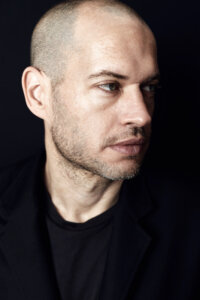
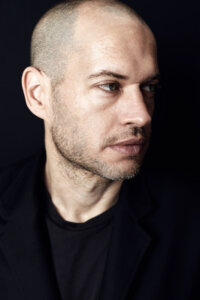
Nadav Lapid started writing his Oct. 7 movie in summer 2021 — before the events that shaped it took place. He says it hasn’t changed much, and that it’s not really about Oct. 7.
“It’s the same bitter reflection about the place of the artist,” Lapid told me on a Zoom call, a day after arriving in New York for the American debut of Yes, his withering satire of Israeli complacency.
“In a way, in the first version, you could notice the shadow of a catastrophe, the shadow of a disaster and a society on the edge of the abyss,” he said. “With the second version, this society made another few steps and went and fell down from the hill to the valley of hell”
As the title might suggest, Yes — which is sometimes styled with an exclamation mark — is about a kind of maximalist version of affirmative consent that ends in complicity. It follows Y (Ariel Bronz), a jazz pianist, who with his wife, Yasmin (Efrat Dor), serves as a willing entertainer and sex slave for the Israeli elite. The couple submit to almost anything, no questions asked. But when a Russian oligarch commissions Y to write an “anthem for the victory generation,” with bloodthirsty lyrics about annihilating Gaza, it’s (almost) too big of an ask.
What follows is a kind of Israeli Mephisto, alternating from orgiastic spectacle (fellated baguettes, geysers of cherry tomatoes, drugs) to biblical indictment (Y is pelted with stones from heaven for cravenly taking his hasbara assignment).
The film is well within Lapid’s oeuvre, which has skewered Israeli masculinity (Synonyms) and Israeli restrictions on free expression (Ahed’s Knee, which also featured a protagonist named Y, who contra our present hero is characterized by defiance). But the film has ratcheted up its critique along with its experimentation, seeming to say yes to its every outlandish idea.
Lapid was living in Paris on Oct. 7, 2023. He returned to Tel Aviv a couple of weeks later to see the aftermath with his own eyes, and later to begin filming.
“Almost immediately, when the airplane landed, I was taken by two, I think, contradictory feelings,” Lapid said the first was an “unfamiliar empathy” (he is famously conflicted about his home country) and a sense that the nation was partaking in a “collective shiva.”
At first there was a rare tenderness.
“It didn’t last long,” he said. “It was quickly replaced by what you see in the movie, by the kind of morbid vivacity, this ecstatic, dark party by a nation which, in a way, deeply knows that it’s giving up all its limits.”
Lapid saw his fellow artists throwing their weight behind the war and lending their talents to the government. He started production on Yes while drones were still bombarding Gaza. He filmed the smoke plumes from the border, guerilla style. It was an active military zone and he was only allowed to stay on thanks to the intercession of an interested officer, who peppered them with questions about the cameras. (When crew members learned the film was critical of the war, some walked off set — a career first for Lapid.)
In a film with extravagant, overstimulating set pieces, the sequence that takes place at the border stands out for its stillness.
During a road trip to find inspiration for his chest-thumping anthem, Y’s ex-girlfriend Leah (Naama Preis) explains to him the Hamas crimes she translates for the government on social media. It’s a gutting list of real-life murders and maimings. She interrupts the litany with the dismissive comments she sees daily, a signal of the world’s limited empathy.
Lapid chose to film this sequence simply in a static shot, emphasizing what he calls the “destabilizing power of the accumulation of facts.” Facts, he says, that many who he agrees with politically have difficulty acknowledging over a “childish lack of complexity, in the incapacity of looking at reality as it is.”
He sees the scene as a complement to the film’s main subject: the Israeli blindness to the humanitarian crisis in Gaza.
The director lets the weight of Leah’s words sink in, but doesn’t offer them as an excuse. Even these horrors are commoditized by our opportunistic hero. The next shot shows Y trudging up a hill overlooking Gaza, muttering the Hamas atrocities Leah recited. He’s using them to find the melody for a song that lauds how Israel will “exterminate our enemies.” (The camera then pans to Gaza, and we hear Leah and Y, unbothered, making out.)
The lyrics Y is tasked with working off are from an actual altered version of Haim Gouri’s poem “The Brotherhood” that emerged during the Gaza war. Asked if the song, in its original form from 1949, represented a purer vision of Israel, Lapid offered a kind of yes and.
“On one hand, of course, there’s a huge gap between a genocidal anthem and the song talking about, you know, brotherhood in battlefield,” Lapid said. At the same time, both versions refer in their chorus to a “love sanctified by blood,” what he thinks may be the “most important collective myth in Israel.”
“In the heart of Yes there is also this question whether it’s possible in such a society, in such a place, to love,” Lapid said of Israel, which he deems a failed experiment. “And the answer is ‘no.’ The answer is that at the very end, everything will be stained, will be polluted, will be contaminated.”
With a new war in Iran only a month old, Lapid thinks the film is only growing more relevant, reflecting a society mixing vulgarity and nationalism, communicating only in slogans.
But he’s a more even-handed critic of slogans than some seem to think. He was surprised that most reviews of the film overlook a moment critiquing performative activism in the west. The film isn’t just taking aim at the Israeli institutions and hardliners that have ended up condemning it.
“I haven’t done this movie in order to flatter or to polish the ego, or to give a kind of audiovisual demonstration of the theory of anyone,” he said. “I think the artist, filmmaker shouldn’t and doesn’t belong to any camp. His only real place and true place is in the contradiction.”
The post An Israeli dissident filmmaker finds tainted love amid the Gaza rubble appeared first on The Forward.
Uncategorized
British Gov’t Replaces Hatzalah Ambulances Destroyed in Arson Attack as Millions in Donations Pour In

Charred remains of ambulances belonging to Hatzola, a Jewish community organization, which were set on fire in an incident that the police say is being treated as an antisemitic hate crime, in northwest London, Britain, March 23, 2026. Photo: REUTERS/Hannah McKay
The British government has loaned four ambulances to the Jewish volunteer emergency service Hatzalah to replace its four vehicles that were destroyed in an arson attack in the north London area of Golders Green early Monday morning.
The Department of Health and Social Care said on Tuesday it supplied Hatzalah with four substitute ambulances from the London Ambulance Service following the incident, which is being investigated as an antisemitic hate crime. The department will also cover the cost of permanent replacements for the vehicles destroyed in the attack because “the Jewish community should not bear the cost of this hatred,” Health and Social Care Secretary Wes Streeting said in a released statement. He further called the attack a “shocking, cowardly, and despicable act of evil,” and said he has “no doubt” that the fire was carried out to “strike fear” in the Jewish community in Golders Green and across the UK.
“The aim of these attackers is clear – they want Jewish people in this country to live smaller lives, to live less Jewish lives, to be less visible as Jewish people, and to fear going about Jewish life – whether that’s attending school or providing the services and support that makes the Jewish community one of the most resilient, strong, and proud communities in the country,” he added. “Hatzola’s volunteers represent the very best of public service, providing rapid, life-saving care to anyone in need, and it is appalling that such a service has been targeted in this way.”
Streeting continued, “The Jewish community will not stand alone – the government and this entire country stand with them … The answer cannot simply be higher walls, thicker doors, more CCTV. We also have to deal with this hatred at its source. We have to confront and beat the evil ideas that are permeating in our society.”
Hatzalah provides free medical transportation and emergency response to all, not just the Jewish community. As of Thursday morning, £1.8 million ($2.4 million) has been donated to the Jewish charity through a Charity Extra fundraising page, while a separate GoFundMe campaign has raised a little over £134,000 (close to $179,000) to help Hatzalah replace destroyed vehicles and life-saving medical equipment.
The four Hatzalah ambulances were parked in a lot belonging to the Machzikei Hadath synagogue when they were set on fire. Two British nationals, ages 47 and 45, were arrested on Wednesday in connection to the attack but have since been released on bail, according to the Metropolitan Police.
Uncategorized
UC Berkeley Students for Justice in Palestine Shares Reel Calling for Terrorism Against Israel, Allies

University of California, Berkeley students on March 11, 2025. Photo: Reuters via Reuters Connect
The Students for Justice in Palestine (SJP) chapter at the University of California, Berkeley promoted Islamist terrorism on Tuesday, sharing a social media reel in which deceased Palestinian Islamic Jihad senior fighter Farouk Salameh argued for “the armed option” against the “Zionist enemy.”
Terrorism “is the only way,” Salameh said in video shared by the Berkeley SJP group, adding, “What was taken by force should be returned by force. This land was taken by force, and it will be taken back by force. This is a Zionist enemy. It builds settlements and expands. There is no place for negotiations.”
The Jewish advocacy group SAFE Campus first publicized SJP’s sharing the reel.
Salameh was the commander of the Jenin branch of the al-Quds Brigade, the armed wing of Palestinian Islamic Jihad, an internationally designated terrorist group backed by Iran and allied with Hamas. In May 2022, he was involved in the killing of Sgt. Maj. Noam Raz, a veteran of Israel’s elite Yamam counterterrorism police unit, in Jenin in the northern West Bank. The terrorist operative was also suspected of orchestrating other killings of Israeli soldiers, working with the “Lion’s Den” terrorist group, based in the West Bank city of Nablus.
Salameh was planning more attacks when he was shot dead by the Israel Defense Forces (IDF) in Jenin in November 2022. Palestinian health officials said he arrived at a nearby medical facility with gunshot wounds to the chest, head, and abdomen.
UC Berkeley SJP’s commemoration of Salameh continues a pattern of extreme anti-Zionist at the campus. Just this month, the Washington Free Beacon reported that the group has incorporated the inverted red triangle symbol, Hamas’s indicator of Israeli military targets, into its logo.
In February 2024, the group led a mob of hundreds of pro-Palestinian students and non-students in shutting down an event featuring an Israeli soldier, forcing Jewish students to flee to a secret safe room as the protesters overwhelmed campus police. Footage of the incident showed a frenzied mass of anti-Zionist agitators banging on the doors of Zellerbach Hall while an event featuring Israeli reservist Ran Bar-Yoshafat — who visited the university to discuss his military service during Hamas’s massacre across southern Israel on Oct. 7, 2023 — took place inside. The mob then deluged the building, shattering windows and destroying other property.
During the incident, one member of the mob spit on a Jewish student and called him a “Jew,” pejoratively.
In 2021, 23 Berkeley Law groups adopted a bylaw banning Zionists speakers. Supported by campus groups such as Women of Berkeley Law and the Queer Caucus, it called for observing the tenets of the boycott, divestment, and sanctions (BDS) movement against Israel while requiring the Berkeley Journal of Gender, Law, and Justice to ban Zionists from submitting articles and speaking at its events.
As for SJP, its campus chapters, spread across the US, have a history of amplifying the voices of Islamic jihadists.
In 2024, an SJP spinoff group, which calls itself “Columbia University Apartheid Divest” (CUAD) despite not being formally recognized by Columbia University, distributed literature calling on students to join Hamas.
“This booklet is part of a coordinated and intentional effort to uphold the principles of the thawabit and the Palestinian resistance movement overall by transmitting the words of the resistance directly,” it said. “This material aims to build popular support for the Palestinian war of national liberation, a war which is waged through armed struggle.”
Other sections of it were explicitly Islamist, invoking the name of “Allah, the most gracious” and referring to Hamas as the “Islamic Resistance Movement.” Proclaiming, “Glory to Gaza that gave hope to the oppressed, that humiliated the ‘invincible’ Zionist army,” it said its purpose was to build an army of Muslims worldwide.
“We call upon the masses of our Arab and Islamic nations, its scholars, men, institutions, and active forces to come out in roaring crowds tomorrow,” it added, referring to an event which took place in December 2023. “We also renew our invitation to the free people and those with living consciences around the world to continue and escalate their global public movement, rejecting the occupation’s crimes, in solidarity with our people and their just cause and legitimate struggle.”
In the same week, Wesleyan University’s SJP chapter also endorsed Hamas and its Oct. 7 massacre across southern Israel as its first act of the 2024-2025 academic year.
“On that day, fighters broke through the occupation walls, initiating a new chapter in the struggle against the US-Israeli war machine, and demanding the release of thousands of Palestinians unfairly imprisoned across their historic homeland,” the group said in a manifesto outlining its views.
Earlier this month, SJP groups and its affiliates proclaimed solidarity with the Islamic Republic of Iran following the US-Israeli killing of Iranian Supreme Leader Ayatollah Ali Khamenei and dozens of other high-level regime officials in military operations..
“Death to America,” CUAD said. “We yearn for the end of the US settler colonial project.”
CUAD was not the only group which denounced what the US has named “Operation Epic Fury.” New York University’s SJP chapter announced an anti-US demonstration to “demand an end to this criminal war that benefits no one other than US corporate interests” while the University of Chicago’s SJP chapter cheered Iran’s retaliatory strikes against US assets in Bahrain.
Follow Dion J. Pierre @DionJPierre.
Uncategorized
Reese’s Pieces are now kosher pareve. Carnivores rejoice.

Antisemitism is on the rise. There’s a war raging in the Middle East. Passover is bearing down on us and gas prices are higher than ever.
And yet one morsel of good news came to Jewish faithful this month: Reese’s Pieces are now certified kosher pareve.
OU Kosher, the largest kosher certifier in the U.S., announced March 12 that the candy-coated peanut butter candies are no longer considered dairy despite packaging that labels them as such.
The implications for kosher consumers are as momentous as they are simple: Reese’s Pieces can be eaten immediately after meat — or for the deeply adventurous stomach, alongside it — without the hourslong period Orthodox Jews wait before eating dairy again.
The status change unfolded over the last year, when Reese’s parent corporation, the Hershey Company, informed OU Kosher that it was changing the candy’s ingredients.
“Reese’s decided on their own that there are a lot of consumers that don’t like the fact that it’s dairy,” explained Rabbi Moshe Elefant, OU Kosher’s chief operating officer. “Once they decided that they’re removing the dairy from Reese’s, it became a great possibility for them to be OU-Pareve.”
Reese’s Peanut Butter Cups and other Reese’s brands remain dairy, and Elefant said the Reese’s Pieces packaging, which currently shows OU-D, will be updated later in 2026. For those concerned about any old bags lying around, the OU said to check the ingredient list or allergen statement — if it doesn’t include milk, you’re good.

The change occurs amid wider changes in Hershey, Pennsylvania, where the company that makes Reese’s is headquartered. Some Reese’s products, like the Reese’s Mini Hearts and Peanut Butter Eggs, are no longer being made with milk chocolate due to the rising cost of cocoa, inciting controversy and drawing criticism from the Reese’s family. (Those candies remain certified dairy because they contain other milk ingredients, the OU said.)
Reese’s Pieces, on the other hand, never had chocolate in them to begin with.
Meanwhile, the OU Kosher hotline had fielded countless phone calls in recent weeks from home chefs about the change — some to verify the update, and some just to say thanks. The last time there was this much excitement over a status change, Elefant said, was when Oreos became kosher. (The cookies contained animal fat until the late 1990s.)
The Forward reached out to the Hershey Company for comment.
Elefant said there had been some debate within OU Kosher — which is a branch of the Orthodox Union, a leading umbrella organization for Orthodox Judaism — about whether to announce the candy’s pareve kosher status before the candy’s packaging itself could be updated. The organization’s advisory essentially instructs consumers to temporarily ignore the “D” on the packaging.
His team considered whether it would undermine the OU’s authority or confuse people to practice disregarding the certification printed on the product. But on some level, the decision was made for them.
“This is one of the situations where we had to think about the welfare of the Jewish people,” Elefant said. “And the welfare of the Jewish people was that they need Reese’s to be pareve.”
Kosher consumers typically wait between three and six hours after eating meat to have dairy; now one could get a hamburger on the way to the movies and then house fistfuls of the classic peanut-butter candy in the theater. Watching E.T.: The Extraterrestrial, perhaps. (I’m not saying this is healthy. Just that it’s kosher.)
But the impact will likely be received most gratefully on Shabbat, when meat-based meals force dessert makers to get creative. And while the bite-sized brown, orange and yellow rounds have always been kosher, Reese’s Pieces becoming pareve means Jews who observe cholov yisroel restrictions — only consuming milk that was milked by a Jewish person — can enjoy them now, too.
Time will tell whether the update truly transforms kosher baking — or turns Reese’s Pieces into a de facto pareve chocolate chip — but a new, easy-to-find garnish for any confection was sweet on the ears of OU Kosher’s Instagram followers.
“YESSSSS! This is a win for the non-dairy queens like me!!!” wrote one.
Said another, using a Jewish name for God: “This is how I know Hashem loves me.”
The post Reese’s Pieces are now kosher pareve. Carnivores rejoice. appeared first on The Forward.