


Uncategorized
An Israeli genocide scholar looks to Israel’s history to understand ‘what went wrong’
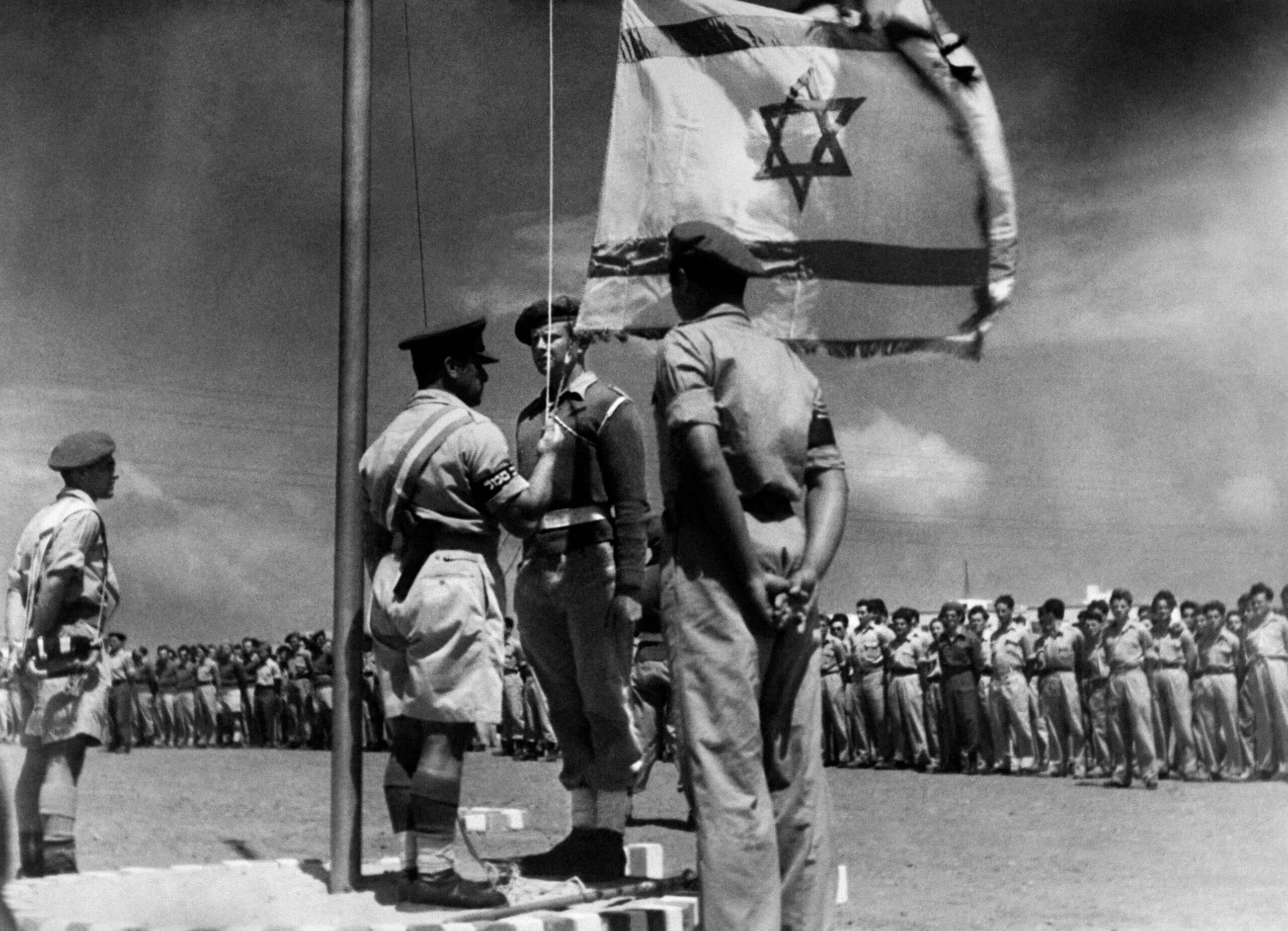
On Nov. 10, 2023, the Israeli-American historian Omer Bartov published a guest essay in the New York Times. Though scarcely a month had passed since the Hamas massacre of hundreds of Israeli men, women and children, Bartov expressed fears over Israel’s military response to this horrifying act of barbarity. But, he concluded, while “it is very likely that war crimes, and crimes against humanity, are happening,” he concluded, there is “no proof that genocide is taking place in Gaza.”
By mid-2025, however, Bartov revised his stance in a second Times essay. As a scholar of genocide who has taught classes on the subject — including at Brown University, where he is currently based — for a quarter of a century, he announced, “I can recognize one when I see one.”
In his new book Israel: What Went Wrong?, Bartov offers a searing analysis, both personal and professional, of the tragically entwined history of Israelis and Palestinians that climaxed with the disaster of October 7, 2023, when Hamas attacked Israel, followed by the even more disastrous response of Israel. Bartov’s account resembles an earlier book on an earlier war: Marc Bloch’s Strange Defeat, in which the veteran of two world wars examines the causes to France’s collapse in 1940. Both internationally known historians, and patriots who served their nation in arms, each man wrote their book when the debacles were still fresh.
For France, the collapse was as much moral and political as it was military. “Whatever the complexion of its government,” Bloch observed, “a country is bound to suffer, democracy becomes hopelessly weak, and the general good suffers accordingly if its higher officials are bred up to despise it.”
As Bartov’s book reminds us, this diagnosis applies not just to the decay that undermined the French Third Republic, but also to the moral rot that has been sapping the foundations of the Israeli republic. In his account, Bartov weaves the parallel histories of Israelis and Palestinians — a history composed of two catastrophes, the Shoah and the Nakba, that have ever since shaped events.
Inevitably, the very mention of these events in the same breath often sparks a violent response from many Israeli and diasporic Jews, but Bartov rightly insists upon their pairing. One of the many reasons why Bartov’s book is so important is his insistence that the two events are “inextricably linked historically, personally and as part of a politics of memory” and that they each have “become constitutive of Israeli and Palestinian national identities.”
William Faulkner’s old chestnut — the past is neither dead nor even past — is the through-line to Bartov’s sharply, at times brutally, etched history of Israeli-Palestinian relations. Crucially, Bartov argues that what has gone so terribly wrong since 1948 was inevitable only in retrospect. An alternative history, one shaped by a Zionism faithful to the ideals of the Enlightenment, was, if unlikely, certainly not impossible. At the very least the history of the past eight decades could have gone in a liberal and democratic direction.
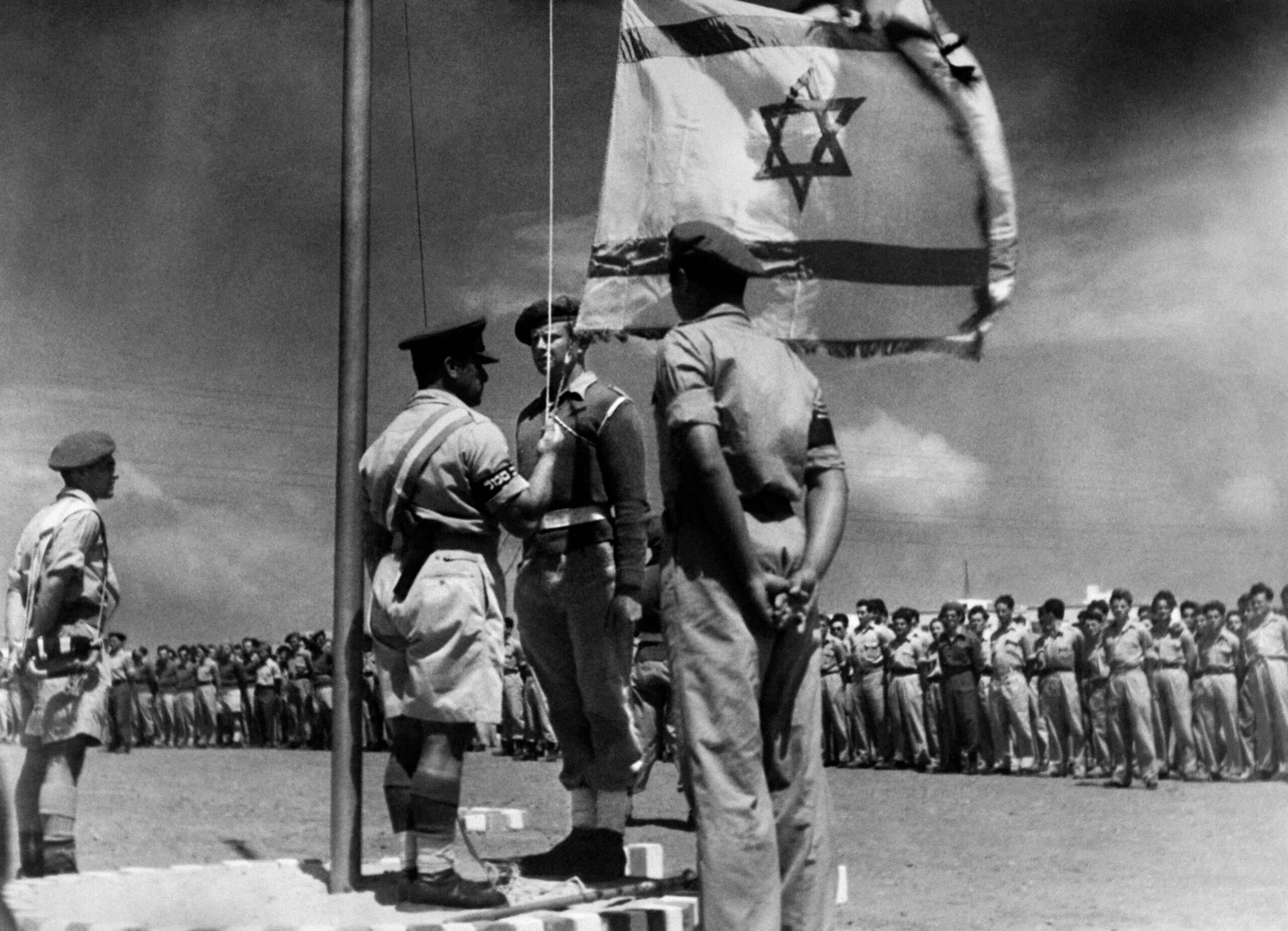
What, then, went wrong? First, there is the simple and tragic fact that the resurrection of one people meant the destruction of another people. Bartov underscores that early Zionist pioneers like his own father and grandfather, the offspring of “mutilated families” that were decimated by the Holocaust, were taught they represented the future of this reborn people. They only slowly grasped that this rebirth required the removal of the Palestinian people. For many Israelis, he observes, this “generated contradictory responses — guilt and regret, or negation and denial; a hope for redress and reconciliation, or a conscious and, just as important, unconscious will to eradicate and erase.”
The will to eradicate has been enabled by the occupations of the West Bank and Gaza, and their management. Since 1967, the metastasizing of walls and fences have transformed these territories into mazes, leading to a different kind of erasure. Israeli civilians, who once regularly encountered the Arab occupants of the land, no longer had occasion to see their Palestinian neighbors, hidden behind these walls, while Israeli soldiers serving in occupied territories were influenced by the burgeoning of ethno-nationalistic sentiment, making them increasingly incapable of seeing Palestinians as fellow human beings.
This form of “social death” — when a group or entire people are shunned and shut into confined spaces — has led with increasing frequency to all-too-real deaths. According to a recent United Nations report, more than 1,000 Palestinians living in the West Bank have been killed by Israeli soldiers, while settler violence has displaced nearly 2,000 Palestinians from their villages since the start of 2026, often with the complicity of the IDF.
For those who have been following events since Oct. 7, 2023, much of what Bartov recounts will not be a surprise. (As Bartov notes, however, the Israeli media have, with a few exceptions including Haaretz and +972, largely shielded the reality of what the IDF has done in Gaza and the West Bank from Israel’s inhabitants.)
Yet as a native-born Israeli who served as an officer during the Yom Kippur War, Bartov brings intimacy and intensity to his account. He confesses to a sense of estrangement from Israel, which now seems to be “a different, strange, and threatening place, whose people, including some of my friends, have been transformed, perhaps irretrievably.”
No less important, as a historian who has written several books on war and genocide, Barton delves into harsher and darker corners of Israeli actions, the entwined histories of Israelis and Palestinians mostly ignored by the media. To better understand the acts and words of brutality and, at times, inhumanity committed and expressed by Israeli politicians and soldiers, Bartov compares the results of his early research on German soldiers — crucially, those serving not in the Nazi SS, but in the Wehrmacht, the broader German army which, after the war, sought to distance itself from the machinery of the Shoah.
The comparison is provocative, but it is also painfully instructive. Just as latter employed animalistic images and apocalyptic claims to justify the systematic destruction of European Jewry, Israeli political and military leaders have used similar rhetoric towards Palestinians. This was true of then-defense minister Yoav Gallant, who declared Israel was fighting against “human animals,” as well as retired Major General Giora Eiland, who promised that “Gaza will become a place where no human being can exist.” No wonder, as Bartov notes, that there have been countless social posts by IDF troops calling to “kill the Arabs” and “burn their mothers.”

Given the postwar imperative of “Never again,” how has it come to this? As Bartov observes, the phrase has always carried two meanings, one applied exclusively to a repeat of a Jewish genocide, the other to the eruption of genocide, plain and simple, against any people at any time and in any place. The first definition, Bartov suggests, has bleak consequences. If the Shoah is seen, as it is by many Israelis, as an event that made the case for a Jewish state, it also turns that state “into a unique entity that operates according to its own rules and logic,” he writes. It unshackles, in short, Israel from the “constraints imposed on all other nations, not least because ‘they,’ as the saying goes, stood by while the Jews were slaughtered.”
Israel thus finds itself overseeing what Raphael Lemkin, the Jewish lawyer who coined the term “genocide,” called the “crime of crimes.” Bartov finds that Israel’s government checks the boxes for the 1948 genocide convention, which defines the crime, in part, as the commission of “acts with the intent to destroy, in whole or part, a national, ethnical, racial or religious group as such.”
When it comes to “intent,” Bartov lists a partial list of vows made by Israeli political and military leaders in the immediate aftermath of the Hamas massacre. These threats of complete destruction were not empty: from the targeting of hospitals and schools and razing of entire cities to causing tens of thousands of civilian deaths, the IDF has repeatedly violated the genocide convention. From the very beginning, the war’s goal, Bartov writes, has always been “to make the entire Gaza Strip uninhabitable, and to debilitate its population to such a degree that it would either die out or seek all possible options to flee the territory.”
In leveling these charges, Bartov does not ignore Hamas’ practice of using civilians and civilian infrastructure as shields against Israeli reprisals. Obviously, these tactics constitute a war crime, as does the unspeakable massacre committed by Hamas on Oct. 7th. Nevertheless, Bartov insists, Israel’s response has been no less criminal, ranging from its consistent failure to apply the principle of proportionality to its policy of blocking all humanitarian assistance in the early 2025.
It is tempting to conclude that apologists for the IDF’s excesses reflexively — though not reflectively — blame Hamas for the deaths of the tens of thousands of innocents. But even this conclusion is problematic given the many blanket accusations made by Israeli leaders against the people of Gaza. For example, President Isaac Herzog declared, a few days after the war, that it is “an entire nation out there that is responsible.”
And yet, the most tragic passages in the book are devoted to the Israeli constitution that never was. With a nod to counterfactual history, Bartov suggests that the unfolding of events over the last seven decades was not inevitable. Though Israel’s Declaration of Independence, inspired by its American counterpart, anticipated a similar constitution, the document never saw the light of day. On the one hand, the Declaration affirms “complete equality of social and political rights to all its citizens irrespective of religion, race, or sex.” As for the other hand, it is empty. The constituent assembly, though required by the UN’s 1948 partition plan, failed to write a constitution. Instead, there has been a series of basic laws, two of which address human rights — an ideal that for Arab citizens of Israel, not to mention Palestinians living in the occupied territories, is mostly a mirage.
What might Israel look like today if its founders had, in fact, endowed the nation with a constitution that resembled our own? For Bartov, it might well be a nation of laws where the Supreme Court, rather than being the frequent enabler of the ethno-nationalist goals of the current government, would instead serve as a powerful check to both the executive and legislative branches. With a constitution, it is conceivable, as Bartov suggests, the now-embattled court might oppose the nature of the occupation of the West Bank, perhaps even the actions of the IDF in Gaza. Israel would be a light onto other nations not because it resolved the inherent tension in being both a Jewish and democratic nation, but because it was committed to managing it.
Of course, this possible Israel never came to pass. The original purpose of Zionism, which Bartov poignantly describes as a “Jewish rebellion against fate and oppression, religious resignation and prejudice,” has given way, he says, to the God of the zealots.
“As Israel is led singing and praying and dancing into the abyss,” Bartov concludes, “it is finally shaking itself free of Zionism and heading down the path of theocracy and apocalypse following a pillar of fire and smoke.”
The post An Israeli genocide scholar looks to Israel’s history to understand ‘what went wrong’ appeared first on The Forward.
Uncategorized
Let my people grow: Jewish online cannabis retailer braces for new federal law to take effect
For the past several years, Jewish cannabis company Tokin’ Jew has offered a little something to take the edge off just about every Jewish occasion.
High Holidays have you feeling stressed? Try “High, Honey,” the company’s THC-infused honey stick. Passover Seder dragging on a little too long? An edible called “4 Cups,” the first officially certified kosher-for-Passover THC gummy, will help get you through it.
Now the company that brought the world cannabis-infused chocolate Hanukkah gelt and THC-laced hamantaschen is facing a decidedly less festive future. In a couple months, the products responsible for the majority of its business will no longer be legal due to a change in federal law.
And it’s not just Tokin’ Jew. The new restrictions, set to take effect in December, threaten to upend a multibillion dollar e-commerce industry that has flourished for nearly a decade.
For co-founders Ben Kraim and Will Cohen, who have spent years building a business around the unlikely intersection of Judaism and cannabis, the change threatens to undo much of their lives’ work.
“It’s not easy being a Jewish weed brand, Kraim told the Forward. “Our brand is incredibly niche, so the prospect of losing access to the customer base we worked hard to build up is especially upsetting.”
What began as a humble meme account has grown into a thriving online operation, selling everything from novelty Judaica gifts and smoking accessories to kosher-certified edibles with clever names like “Apple of My Chai” and “Guava Nagila.”
The company has also cultivated a devoted community, bringing together observant and secular Jews, along with cannabis enthusiasts of all backgrounds, through a shared appreciation for Jewish humor and high-quality kush.
Now, Tokin’ Jew Flower, the division of their company, which Kraim said accounts for approximately 60 to 70 percent of sales, faces an uncertain future.
The legal foundations for Tokin’ Jew dates back to the 2018 Farm Bill, which legalized products containing no more than 0.3 percent delta-9 THC by dry weight. That provision created an opening for companies to manufacture and ship hemp and hemp-derived products, including THC gummies, across certain state lines without needing to abide by the state-by-state licensing systems governing recreational marijuana use.
A booming industry followed. But Kraim acknowledges that the relatively lax federal regulations created opportunities for “bad actors” to sell questionable products.
“I think everybody in this industry knew things were a little too good to be true,” he said.
What he and many others expected, however, was tighter rules, not the effective elimination of their business model.
“We all thought eventually the federal government was going to create more regulation in this space,” he said, adding that he would have welcomed stronger oversight.
“We like to joke that it’s our Jewish guilt that keeps us from selling a subquality product. But we absolutely support stricter regulation – something that would have been entirely feasible.”
Instead, another provision tucked into the federal spending bill signed by President Trump in November 2025 dramatically narrowed the definition of legal hemp. Under the new rules, finished products containing more than 0.4 milligrams per container of total THC and similarly intoxicating cannabinoids will no longer qualify as federally legal hemp.
The restrictions were originally scheduled to go into effect November 2026, but Congress granted a brief extension that pushed the deadline back to December 11.
According to Kraim, it is not only companies like theirs that will be affected. Growers, manufacturers, packaging businesses and warehouses may have to shut down altogether.
“These are people’s entire livelihoods that they now have to just set ablaze,” Kraim said.
“At least we have this brand that can take many shapes and can live on in so many other ways,” he said. “But if you’re a hemp farmer, you are in big trouble.”
The news comes just as Tokin’ Jew has been experiencing explosive growth. According to Kraim, the company now has approximately 250,000 followers across social media platforms, with its Instagram content reaching between 18 million and 22 million people monthly. Orders have roughly tripled over the past year.
But the founders’ relationship with their customers goes beyond sales.
From the beginning, Kraim, who was raised modern Orthodox, and Cohen, who was raised in a Reform community, viewed their company as a way to connect Jews to their identity through humor, particularly those who may feel alienated from more traditional expressions of Judaism.
That same sense of community was on full display when they announced the impending restrictions.
“We were flooded with comments and DMs and emails,” Kraim said, describing messages of sympathy, appreciation and personal testimonials about the company’s products.
What struck him most were the offers of assistance.
“We got tons of messages from people willing to offer a hand,” he said. “‘How can I help? My uncle owns a dispensary. Let’s protest.’ People just coming in hot, trying to help in any way that they can, which is just so beautiful and so Jewish.”
Others began stocking up, taking advantage of the products’ long shelf lives. The company is even considering producing its popular kosher-for-Passover gummies early so customers can buy them before the ban takes effect.
For customers who rely on the products for more than recreation, but relief, Kraim worries about what will happen when home delivery is no longer an option.
He described phoning one of their biggest customers only to discover an elderly Jewish woman on the other end of the line. She told the team how much she relied on their products and how convenient home delivery was, particularly because multiple ailments and limited mobility made it difficult for her to get to a dispensary.
“We were tearing up by the end of the call,” Kraim recalled.
Gabrielle G, a Tokin’ Jew customer since 2024, who declined to give her last name, called the news “truly devastating for the Jewish stoner community.”
“Their Advent calendars were a highlight of my Jewish holidays,” she told the Forward. “I hope they find a solution because TJ feels like family.”
Regardless, TokinJew.com will continue selling accessories, apparel, home goods and Judaica, with plans to expand its offerings.
They’re also planning a gradual move into licensed dispensaries, beginning in New York and eventually New Jersey. But that involves developing separate production, distribution and regulatory requirements for each state, a daunting prospect for a company that spent years developing its national online operation.
“But us Jews are the masters of the pivot,” he pointed out. “We historically have troubles thrown our way, and we always have to figure out our next step.”
For a company whose product line is largely inspired by the Jewish calendar, the date of the new bill feels particularly poignant: The new restrictions are scheduled to take effect on December 11, the evening Jews around the world light the eighth and final Hanukkah candle, commemorating the miracle of a single day’s supply of oil burning for eight.
“We have our plan A, B and C,” Kraim said. “One of which is praying for a Hanukkah miracle.”
The post Let my people grow: Jewish online cannabis retailer braces for new federal law to take effect appeared first on The Forward.
Uncategorized
Trump antisemitism official to visit Michigan synagogue weeks before midterms, backed by ZOA
(JTA) — DETROIT – The Trump administration’s antisemitism czar will speak to a Michigan synagogue on Wednesday for a Justice Department event that also doubles as a fundraiser for the state’s chapter of the Zionist Organization of America.
Leo Terrell, who chairs the administration’s Task Force to Combat Antisemitism, is attending on behalf of the department. The Justice Department touted the event on its website with a link to a ZOA registration page that solicits donations to become an event co-sponsor.
Federal ethics regulations restrict fundraising by government employees and prohibit the use of government property for unauthorized purposes, though they allow authorized official fundraising and certain official speeches at fundraising events.
Terrell is visiting Congregation Shaarey Zedek in Southfield, a Detroit suburb; the synagogue is also listed as a co-sponsor. Other co-sponsors include a local Jewish high school, Mothers Against College Antisemitism and pro-Israel advocacy groups.
It comes weeks before the midterm elections, in which rhetoric on Israel and Jewish safety from the state’s Democratic Senate candidate Abdul El-Sayed has put local Jews on edge.
The Justice Department is billing the event as the first stop on Terrell’s “American Tour Against Hate,” adding, “All faiths and backgrounds welcome.” Terrell will be in conversation with Mort Klein, national head of ZOA, a usual stalwart Trump supporter who has broken with the president at times on Iran policy.
On its registration page for the event, ZOA Michigan notes that it “brings the Department of Justice directly into dialogue with Michigan’s Jewish community.”
ZOA Michigan also alluded to current tensions between the state’s Jewish community and El-Sayed.
“Antisemitism is reaching across Michigan — in schools, in public spaces, and among political candidates,” the event page reads. “Confronting it requires our community to stand together.”
The ZOA is a hawkish pro-Israel organization that backs the West Bank settlement movement and Israeli right wing government policies. In the U.S., it has also endorsed some of Trump’s restrictive immigration policies.
Federal tax law prohibits tax-exempt houses of worship from supporting or opposing political candidates, but Trump has sought to loosen the restrictions.
Rabbi Aaron Starr, of Shaarey Zedek, told the Jewish Telegraphic Agency that the Conservative congregation’s co-sponsoring of the event should not imply that it was endorsing one candidate over another.
“We are looking forward to working with anybody and everybody who wants to combat hate, whether that hate is antisemitism, Islamophobia, homophobia, racism or any other form of hate,” Starr said. He added that the congregation would soon welcome Jewish Democratic Sen. Elissa Slotkin for a veteran’s Shabbat.
Starr said the synagogue became a sponsor because it had been approached by ZOA to serve as an event host. “We’re mostly just serving as a venue for the event,” he said, adding that he personally would not be there.
Terrell did not return a JTA request for comment on the event. But he has promoted it extensively on social media and had hinted at the talk, and the ZOA partnership, in a previous email he sent to JTA reporters.
“We hope to see everyone there making it clear hate has no place in America a.k.a the greatest country on Earth,” he wrote at the time. He also thanked ZOA Michigan “for their tireless work on bringing our powerful message into reality.”
ZOA Michigan’s executive director, Kobi Erez, told JTA the event was nonpartisan, but added that he was aware of voters planning to switch parties — an allusion to Democrats who are considering voting for Rogers.
“We are not planning to discuss particular candidates or tell anyone how to vote,” Erez said in an email.
“We do encourage people to examine candidates’ records and statements concerning the safety of the Jewish community and consider whether they will take antisemitism seriously,” he said. “We feel that Jewish safety is at stake now more than ever. We know people who, because of these concerns, plan to vote for a party they have never supported before, and we understand their position.”
Erez said that the point of the event was not fundraising. “We are accepting voluntary sponsorships and donations to help cover expenses and support our work, but the purpose of this evening is to confront antisemitism and connect the community with the Department of Justice,” he said.
Frankel Jewish Academy, a private Jewish high school in the Detroit suburb of West Bloomfield Township, is also listed as a co-sponsor of the Terrell event. Frankel leaders did not return a JTA request for comment.
Terrell, an attorney, former O.J. Simpson supporter and ex-Fox News contributor, is a senior counsel in the Justice Department’s civil rights division. In that role, he oversees antisemitism taskforces that include staffers from the departments of Justice, Education and Health and Human Services.
Terrell’s visit comes as Trump, and Republicans more broadly, see an opening for Michigan in the midterms, in part via the Jewish vote. Both Trump and Vice President JD Vance will be campaigning in Michigan in the coming days. During Vance’s previous stop in Michigan, he went after El-Sayed for his reaction to the Temple Israel attack earlier this year.
Hundreds of local Jews have signed a petition pledging to vote for El-Sayed’s GOP opponent, former U.S. Rep. Mike Rogers, over their fears of the Democrat’s “extremism” on Jews and Israel, including El-Sayed’s remarks earlier this year about the attack on Temple Israel in the state. He has since apologized for those comments.
A separate petition — spearheaded by Starr and other rabbis — outlines “non-negotiables” that some Jewish leaders have pushed El-Sayed and other candidates to agree to.
This article originally appeared on JTA.org.
The post Trump antisemitism official to visit Michigan synagogue weeks before midterms, backed by ZOA appeared first on The Forward.
Uncategorized
Latin Jews seek belonging and identity in a country where they feel excluded
(JTA) — Ziggy Valdez, a nonbinary Mexican Jew studying to become a rabbi, was born in Illinois and grew up moving around the country as the child of a Navy father, always attached to a Reform synagogue. Valdez, who uses they/them pronouns, has Mexican roots on both sides of the family and has been “physically brown since birth,” but latinidad and Chicano identity weren’t an active part of family life. Their father worked in the Navy, which according to Valdez’ was the biggest barrier between them and the Jewish world. They grew up with Ashkenazi traditions, even when it meant driving an hour from the base where they were stationed at the time to the synagogue.
Valdez went to 10 different schools between preschool and senior year of high school.In many, they often felt excluded. “The kids at school who were also from Mexican families were not Jewish, and at some points in my adolescence, told me I wasn’t actually Mexican because I was Jewish and not Catholic,” Valdez told the Jewish Telegraphic Agency. “At times, my identity as Mexican felt like a source of shame for my family, Valdez said.”
The family would occasionally spend Christmas Day in Bakersfield, California with Valdez’s abuelo, or grandfather, where he would “cook the best mole ever made, including fresh tortillas.” But other than that they did not participate in Mexican culture.
Valdez heard about Jewtina & Co. (pronounced Jewtina y Co.), a national community of Latin Jews. After moving to Los Angeles two years ago, they joined the educators’ cohort of Jewtina’s Puentes national leadership fellowship, which has alumni across six cohorts, according to Violeta Stolpen, Jewtina & Co.’s Director of Operations.
“We were given the time and space to sit with that miracle of an experience, to be in a room with each other talking about the loneliness of growing up a Latin Jew, and being grateful that, thanks to the Jewtina, we weren’t alone anymore,” Valdez told JTA.
Jewtina & Co. was founded during Latin Heritage month in 2019 by Analucía Lopezrevoredo, a Peruvian Jew who moved to California with her family when she was five years old. A sociologist by training, she grew up surrounded by vibrant Latin and Jewish communities and began calling herself a Jewtina early on.
The idea of Jewtina crystallized in 2018, when she applied for a fellowship focused on global Jewry. “It started with a question I had carried on since childhood: Where do people like me get to be whole?” she told JTA. It is a way for Jewish immigrants from Latin America in the U.S. to express their conflicting and overlapping Jewish and Latinos identities publicly. Its members are mixed-couple children of Latin American descent, Latin immigrants who converted to Judaism, Latin Americans who were adopted into an American family and many more shades of Jewish Latinhood.
Lopezrevoredo calls Jewtina part of a Jewish and Latin diaspora, which comes with its own identity challenges. Latino communities in the U.S. are heavily Catholic, so there is little space in these immigrant enclaves for members of other faiths. Latino Jews feel excluded from Mexican, Peruvian and other communities. But there is also discrimination of Jewtina members from Latin American Jewish communities. U.S.-based demographic categories, such as Latinos and Jews, can create exclusionary identities that do not fit neatly with complex migration paths.
“There is no single Latin Jewish experience” Loperevoredo said, “just as there is no single Jewish one. But one experience we hear again and again is the feeling of having to explain oneself.”
No national study has measured the size or demographic makeup of the Latin Jewish community in the U.S., according to Jewtina & Co.’s Director of Research and Evaluation David McCarty-Caplan, who holds a Ph.D. in social work. The closest estimate comes from “American Jewish Population Estimates 2020: Summary & Highlights,” a 2021 report by Brandeis University’s American Jewish Population Project. It found that about 6% of Jewish adults in the U.S. identify as Hispanic out of 7.6 million.
To make Latin Jews more visible and better understood, McCarty-Caplan is developing a national study of Latin Jewish community and identity in the U.S. The partners are Brandeis University’s Initiative on the Jews of the Americas and its Cohen Center for Modern Jewish Studies, along with Universidad Hebraica in Mexico. He said it will be the first study of its kind.
McCarty-Caplan says he has felt deeply disconnected from his Latino origins and out of place in predominantly white Jewish spaces. He was born in Bogotá, Colombia, and adopted at 3 months old by a white American Jewish family. In 2019, he met founder Lopezrevoredo in a Jews of Color cohort of Bend the Arc’s Selah Leadership Fellowship. That’s where he learned about her work with Jewtina & Co.
“It felt like meeting her, and finding Jewtina was the first time I felt fully seen and valued as a Latino, a Jew, and an adoptee all at once,” he said.
Members of Jewtina & Co. are often a mixture of identities. Founding member and Director of Education Kimberly Dueñas’ mother is an Ashkenazi Jew born and raised in Los Angeles, with family roots in Ukraine and Poland. Her father was born and raised in El Salvador, in a rural farming community. Through his side, she has converso Sephardic Jewish — a convert to Christianity or a descendant thereof — and Indigenous Mesoamerican ancestry. He met Dueñas’ mother at a Passover seder in Orange County, California where Dueñas grew up.
“I know personally what it’s like to feel like I have to choose which identity to lead with,” said Dueñas who facilitates Puentes.
According to director of operations Stolpen, the organization ran 58 programs in 2025, 43 in person and 15 virtual, with 2367 participants. So far in 2026, it has held 47 programs and events with more than 1,200 participants, according to McCarty-Caplan.
The organization faces a harder climate than the one it was born into. When Jewtina & Co. emerged in 2019 and 2020, director of research McCarty-Caplan said there was a surge of support for groups working with multiracial Jewish communities. That support has since receded since the beginning of President Donald Trump’s second term. Since “the events in Israel-Palestine on Oct. 7th, significant attention and resources have moved away from supporting organizations like Jewtina,” he added, referring to the war launched in 2023 after Hamas raided communities inside Israel.
Oct. 7 also changed things for Jewtina & Co.’s members. “Many Latin Jews have encountered antisemitism in spaces where they once felt cultural or political kinship,” Lopezrevoredo said, “while also entering Jewish spaces where conversations about race, immigration, Latin America or the diversity of Jewish experience can feel constrained.”
Dueñas said one of the organization’s biggest challenges is responding in real time to what its community needs. “We are navigating fear around immigration, ICE raids and deportation within our Latino communities, while also experiencing the rise of antisemitism and the ripple effects of the war in Israel and Palestine within our Jewish communities,” she told JTA.
Jewtina & Co. has responded with spaces for processing, healing and spiritual support, along with mental health resources, rabbinic wisdom and Know Your Rights programming.
“A Jewish family can carry memories of Poland, Syria, Turkey, or Morocco, become deeply Argentine, Mexican, Brazilian, or Cuban over generations, and later become Latino in the United States.” Lopezrevoredo said ”None of those layers cancels the others.”
This article originally appeared on JTA.org.
The post Latin Jews seek belonging and identity in a country where they feel excluded appeared first on The Forward.
