


Uncategorized
Australia welcomed my family’s Holocaust survivors — and Bondi Beach soon became a symbol of renewal for me

Like so many Jewish Americans whose families immigrated prior to World War II, I grew up believing that none of my family had survived the Holocaust. When I would ask my older relatives, they would shrug. Only my grandfather shared anything about our relatives: He remembered how his parents would receive letters from Lithuania in the late 1930s and early 1940s, until one day they stopped coming.
As far as I knew, we were the only ones left. That is, until my uncle got a strange phone call from an elderly man who spoke with a hybrid German/Australian accent.
My uncle was skeptical; the person on the other end of the line claimed to be a cousin from the Australian branch of the Carvin family, despite the fact that my great-grandfather Max had invented the surname only after reaching the United States in the early 1900s.
The mysterious Australian said he was visiting Boston and asked if he wanted to meet. My uncle declined and ended the call, assuming it was a hoax or a scam.
My cousins, though, were curious. One of them began calling hotels across Boston asking for a Mr. Carvin until she tracked down the Australian. His name was Leo, and he graciously renewed his offer to meet for lunch.
When she arrived at the restaurant, she saw a man who looked much like her father, but older. And he was holding an envelope of letters written on my great-grandfather’s stationery from his home outside of Boston.
Over the course of an afternoon, my cousin learned more about my family history than any of us had uncovered in decades. Leo explained that his mother was one of my great-grandfather Max’s sisters, making Max his uncle. She and Max had continued to correspond during the interwar period; when the Nazis annexed Austria, her young adult children, including Leo, fled to Italy. Coming to the U.S. was no longer as straightforward as it had been for so many European Jews a few decades earlier, but Max tried to arrange visas for them. He suggested they begin using the surname Carvin rather than his sister’s married name, hoping it might increase the chances of obtaining visas.
It made no difference. Despite all of Europe being on the precipice of another world war, the United States would not take them in. But Australia would.
Leo and one of his brothers arrived in Freemantle, Western Australia in October 1938. To honor Max’s efforts to help them escape from Europe, they legally adopted the surname Carvin soon after their arrival. Eventually they found their way to Sydney, where they and their descendants would thrive.
In the years since Leo Carvin made that phone call to my uncle, we’ve gotten to know our Australian branch. They’ve traveled the east coast of the U.S. visiting my family multiple times; two of them crashed my wedding in Baltimore.
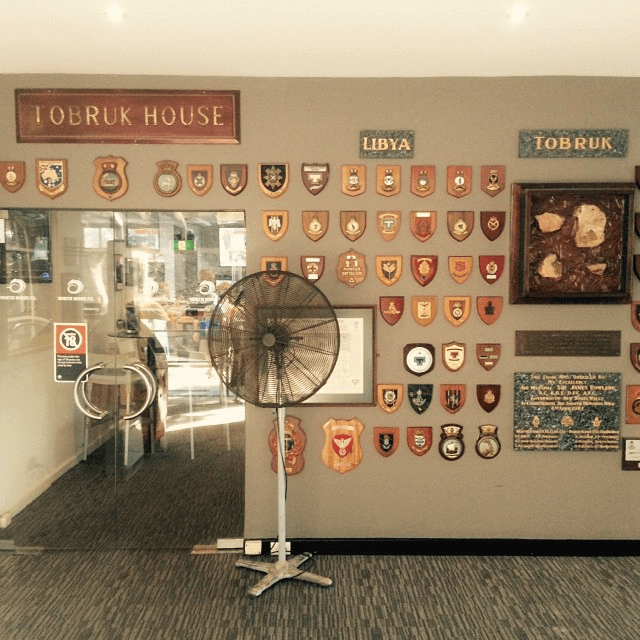
I’ve also visited them in Sydney on three occasions, and on each trip, we’ve repeated the same ritual: having drinks overlooking Bondi Beach at a clubhouse founded by Australian veterans of World War II’s North Africa campaign.
It would be wrong to say Bondi is unlike any other beach I’ve been to; in fact, it’s one of several beaches nestled in coves along the southeastern shore of Sydney, all equally inviting and picturesque. But Bondi is the one I will always think of as our family beach in Australia, and the veterans’ clubhouse as our local pub. It’s a place where I got to rediscover my family in a way that all too many Jewish Americans will never get to do, reuniting with the descendants of relatives who escaped the horrors of the Holocaust and found refuge in a new home.
My great-grandfather, an old-school Bundist, probably would have described our family’s immigration to Boston as doikayt, the Yiddish word for “hereness” that celebrates the diversity of the Jewish diaspora and our ability to thrive wherever we end up, often against difficult odds. I can’t help but think of doikayt whenever I think of Bondi Beach and the country that welcomed my extended family when other countries would not. It symbolizes more than just survival – it symbolizes renewal, prosperity, and resilience.
Bondi Beach may be 9,800 miles away from my current home — effectively on the opposite side of the world — but it will also be here for me. It’s become my home away from home, and a place for joyful reunions that defy all odds. And it would never have been possible if Australia had not opened its arms to my extended family.
The post Australia welcomed my family’s Holocaust survivors — and Bondi Beach soon became a symbol of renewal for me appeared first on The Forward.
Uncategorized
Mamdani to attend Passover Seder as he navigates ties with Jewish groups amid rising antisemitism
New York City Mayor Zohran Mamdani is set to attend a Passover Seder on Monday night at the City Winery in Manhattan, stepping into a decades-old cultural tradition that doubles as a symbolic test of his relationship with the city’s Jewish community.
Mamdani is slated to appear alongside a liberal rabbi, an Israeli musician and an observant comedian at the annual Downtown Seder hosted by nightlife impresario and entrepreneur Michael Dorf. All net proceeds from the event will be donated to Seeds of Peace, a New York-based nonprofit founded in 1993 that helps young people from conflict regions build leadership skills and engage in dialogue.
Founded in 1991 and held at the East Village’s Knitting Factory and later at the Museum of Jewish Heritage, the Downtown Seder brings together artists, activists and public figures for a contemporary retelling of the Exodus story. Dorf, who is Jewish and launched City Winery in 2008, has described the gathering as a “supplement” to traditional seders. Passover begins Wednesday evening at sundown.
“The Seder is about asking urgent questions — about freedom, responsibility, and how we care for one another,” Dorf said in a statement. “Each year, we bring together voices who challenge, inspire, and reflect the world as it is — and as it could be.”
Featured guests this year include former CNN anchor Don Lemon, Israeli musician David Broza, and comedian Modi Rosenfeld. Former Mayor Eric Adams was the featured guest at the Seder in 2023.
A City Hall spokesperson said Mamdani will also host a private Passover dinner with city workers.
Mamdani’s participation at the Seder on Monday comes at a delicate political moment. A vocal critic of Israel who supports the boycott movement and has declined to recognize Israel specifically as a Jewish state, Mamdani has faced backlash from Zionist Jewish organizations, particularly after revoking executive orders tied to antisemitism and campus protests on his first day in office and his recent refusal to back legislation aimed at curbing disruptive protests outside synagogues and schools.
Reflecting his outreach efforts since taking office, his appearance at the Seder signals an ongoing effort to engage Jewish audiences drawn to themes of justice and coexistence and who are willing to be part of the conversation.
The event that Mamdani will speak at will also feature remarks from Rabbi Amichai Lau-Lavie, a rabbi and human rights activist, who will appear via video from Israel, according to the organizers.
Last week, Mamdani helped load cars with Passover food for Orthodox families at the annual Chasdei Lev distribution event in Brooklyn. He also met with Orthodox businessman Dov Bleich at his office, who showed him a Haggadah dating to the Civil War era in New York.
In his interview with the Forward last April, Mamdani framed the Exodus story as a call for collective liberation struggles. He invoked the biblical story of Moses confronting Pharaoh as a metaphor for present political challenges. “This moment with so many Pharaohs around us — whether they be Donald Trump, ICE or this troubling rise of antisemitism — we must take a lesson from those words of the necessity of not only having our lips not tremble or falter, but that the power in doing this comes in a shared belief in the possible,” Mamdani said. As a candidate, Mamdani attended a Seder hosted by Jews for Racial and Economic Justice.
Jewish politicians mark Passover amid rising antisemitism
Other politicians have also sought to mark Passover in ways that resonate with Jews grappling with rising antisemitism.
New York City Council Speaker Julie Menin co-hosted an interfaith Seder with the Jewish Community Relations Council on Thursday at Tsion Cafe, an Ethiopian Jewish restaurant in Harlem that closed earlier this year, after the owner faced ongoing harassment and vandalism since the Oct. 7 Hamas attack on Israel. “The story of Passover is a story of hope, perseverance, grit and determination for the Jewish community,” Menin said in her remarks. She added that it is symbolic that this year all the major religious holidays — Ramadan, Lent, Easter and Passover — have converged around the same time. “This is what our city needs more of — focused on unity and inclusion,” she said.
Some see Menin’s role as the Council’s first Jewish speaker as a counterweight to Mamdani on Jewish communal issues. On Thursday, the Council passed two bills that direct the NYPD to craft a plan within 45 days for managing protests around houses of worship and schools.
Illinois Gov. JB Pritzker hosted a Seder with Jewish leaders last week at his official residence. Last year, Pritzker, among a handful of Jewish politicians in leadership roles offering the Democratic Party a path forward ahead of the midterm elections, invoked his family’s history and his role in building the Illinois Holocaust Museum & Education Center to criticize President Donald Trump’s policies, comparing them to authoritarian tactics.
Pennsylvania Gov. Josh Shapiro is set to hold a family Seder at his official residence and will mark the first anniversary of the arson attack on the first night of Passover last year by an intruder, who said he wanted to beat the governor with a sledgehammer over what he claimed was a lack of empathy toward Palestinians. Shapiro has since leaned into his Jewish identity and has spoken out on bipartisan platforms about rising hate-fueled violence.
The post Mamdani to attend Passover Seder as he navigates ties with Jewish groups amid rising antisemitism appeared first on The Forward.
Uncategorized
IDF Soldier from Connecticut Killed in Southern Lebanon Combat

Sgt. Moshe Yitzhak Hacohen Katz. Photo: courtesy.
i24 News – The Israel Defense Forces announced on Sunday morning the death of Sgt. Moshe Yitzhak Hacohen Katz, 22, originally from New Haven, Connecticut, who was killed during combat operations in southern Lebanon on Saturday.
According to the military, Katz was killed in a rocket attack targeting Israeli forces operating during efforts to expand a security zone in southern Lebanon. The IDF said the strike occurred overnight between Friday and Saturday, during a large-scale barrage aimed at units deployed in the area.
An initial military investigation found that one rocket directly hit an infantry unit from the 890th Battalion of the Paratroopers Brigade, killing Katz instantly. Three additional soldiers were wounded and are listed in moderate condition.
The IDF said the announcement of Katz’s death was delayed to ensure that all family members, including those in the United States, were properly notified.
The army also said that recent attacks have largely focused on the four IDF divisions operating in Lebanon. In the past 24 hours alone, approximately 250 rockets were launched toward Israeli positions, with 23 crossing into Israeli territory, according to military figures.
Uncategorized
AI-Generated Antisemitic Rabbi Racks Up Millions of Followers with Questionable Financial Advice

i24 News – An AI-generated character known as Rabbi Goldman has attracted millions of followers online by combining old antisemitic tropes with digital-age conspiracy theories. The avatar, presented as a caricature of a New York rabbi, plays off stereotypes of Jewish power and wealth while dispensing unsolicited “financial advice” and conspiracy-laden commentary about global elites.
In his videos, Rabbi Goldman claims that Jews have “known every secret for thousands of years,” weaving age-old prejudice into modern misinformation. Among his assertions: that the moon landing was faked, the US government will soon exert total control over its citizens, and billionaires stage yacht sinkings for insurance fraud—all allegedly foreknown by “the Jews.”
Before being removed on Sunday night, his Instagram account had racked up over 1.5 million followers. Yet the same page remains active on Facebook, which shares an owner with Instagram, with roughly 180,000 followers and thousands of interactions per post. The comments reveal an audience that is genuinely engaged with, and emboldened by, his vitriolic rhetoric.
Rabbi Goldman’s videos follow a simple formula designed to thrive in algorithm-driven ecosystems. They begin with a cryptic slogan implying secret knowledge or hidden wealth — invoking Jews as the keepers of these secrets — to draw viewers in and extend watch time, thus being featured on more people’s feeds. What follows is a cascade of AI-generated, factually dubious monologues, all culminating in a pitch: he can show you how to acquire the same “Jewish wisdom.”
That pitch leads to his website, where a manual titled How to Make and Invest Money sells for $9, and he claims it has been purchased by over 4,000 people. The real product, however, carries a fuller title — How to Make and Invest Money Like the Jews. The 62-page PDF amounts to generic, AI-spun financial advice labeled as “the Jewish method,” occasionally interspersed with random references to the Talmud. Just like the videos, it references how Jews have managed to be successful for thousands of years but offers little backup as to how that can translate to a real-world scenario.
Most of it plays off the stereotype of Jews being financially astute. But some lines, such as “Jews do not day trade… We buy the market — the entire market — and we hold it indefinitely,” remove the mask entirely.
Whether we like it or not, antisemitism thrives online—and platforms’ recent loosening of content restrictions under the banner of “free speech” has only amplified it. Social media has become an ideal environment for grifters to blend prejudice with profit. And that is, to their credit, what the creators of Rabbi Goldman have done.
They have clearly borrowed from the “manosphere” playbook—a cluster of influencers promoting hyper-masculine, materialistic lifestyles infused with misogyny and antisemitism. Like Andrew Tate and similar figures, Rabbi Goldman appeals to disaffected young men who feel alienated by the economy and society in which they live, eager to locate a scapegoat.
In Goldman’s case, the scapegoats are the elites and billionaires. But the framing of the Jews alongside the elites has, by proxy, made them the scapegoat too. By merging coded hatred with generic Instagram-style self-help language, the character transforms antisemitism into a marketable aesthetic.
So essentially, the creator of Rabbi Goldman has found a niche in an emerging market, playing off of antisemitism to sell cheaply produced slop to teenagers. Which is both entrepreneurial and morally awful. But the issue is that social media has bred the ground for this by rewarding shock content and letting antisemitism often go untouched. Even when they deleted his Instagram account, dozens of copycats popped up, including an absurdly ironic German-language version that uses the likeness of British politician Jeremy Corbyn.
And this is what happens when social media companies are reactive rather than proactive. They were chasing shadows after the account became so big. Instead, they need to cut it out at its source, be tougher on antisemitism, and be more vigilant with AI content.
And for social media users, it is hard to tell what’s real and what isn’t anymore. Just try not to get financial advice from an AI rabbi who thinks the moon landing was fake.