



Uncategorized
Belgium Indicts Jewish Mohels, Sparking Diplomatic Firestorm With US and Israel

Belgian army personnel patrol a street as part of a deployment of soldiers outside Jewish institutions in Antwerp and Brussels following attacks at Jewish sites in Belgium and other European countries, in Antwerp, Belgium, March 23, 2026. Photo: REUTERS/Yves Herman
Belgian authorities have indicted two mohels for allegedly performing illegal circumcisions, amid a government probe into the Jewish ritual — with Jewish and political leaders warning the case is a direct threat to religious freedom.
A mohel is a trained practitioner who performs the ritual circumcision in Jewish tradition known as a bris.
On Wednesday, the Antwerp Public Prosecutor’s Office formally indicted two local mohels for “intentional assault or bodily harm with premeditation against minors, as well as the illegal practice of medicine.”
Prosecutors in the northern Belgian city announced they have concluded their investigation into suspected illegal circumcisions and found sufficient evidence to refer the case to criminal court.
The two men are now set to appear before a closed-door pre-trial chamber on June 18, which will decide whether the case proceeds to trial.
The prosecution comes as the Belgium Jewish community is sounding the alarm over a surge in hostility and targeted violence against Jews across the country. In March, following an explosion at a synagogue in Liege that authorities called an antisemitic act, soldiers were deployed on the streets of leading Belgian cities to bolster security for the Jewish community.
With Jewish leaders warning their way of life is being threatened, the legal proceedings against the mohels have sparked fierce backlash, escalating into a public row involving Belgian authorities and Israeli and US officials.
Israeli Foreign Minister Gideon Saar condemned the case as an attack on Jewish religious practices, calling on the Belgian government to intervene immediately and seek a swift resolution.
“With this act Belgium joins a short and shameful list, together with Ireland, of countries that use criminal law to prosecute Jews for practicing Judaism,” the top Israeli diplomat wrote in a post on X.
“This is a scarlet letter on Belgian society,” Saar continued.
Belgium have just announced the indictment of the three Mohels who were investigated last year in Antwerp.
With this act Belgium joins a short and shameful list, together with Ireland, of countries that use criminal law to prosecute Jews for practicing Judaism.
This is a…
— Gideon Sa’ar | גדעון סער (@gidonsaar) May 6, 2026
US Ambassador to Belgium Bill White also condemned the legal action, calling it a “shameful stain” on the European country.
“The prosecution of these religious figures (mohels), one of whom is American, is wrong and won’t be tolerated,” White wrote in a post on X.
“The Trump Administration condemns this judicial action and also condemns the political inaction by the Belgian Government to find a solution with the beautiful Jewish communities here in Belgium,” he added.
The US diplomat had previously slammed the Belgian government’s probe against the mohels as a “ridiculous and antisemitic prosecution.”
In response, Belgian Foreign Minister Maxime Prévot urged White to “exercise greater restraint” and to view his role in “its proper context.”
“It is inappropriate to publicly criticize a country and tarnish its image simply because you disagree with judicial proceedings,” the top Belgian diplomat said in a post on X.
“To portray this as a country’s effort to undermine the religious freedom of Jews is defamatory. This freedom has never been called into question and never will be in our country. Our Constitution protects it,” he continued.
Prévot also noted he would be willing to travel to Israel to discuss the issue, adding that he remained open to dialogue.
“Enough with these caricatures,” he further said. “In Belgium, the judiciary is independent and makes its decisions — whether one agrees with them or not — free from any political influence.”
Saar responded by saying that Prévot’s comments “completely miss the point,” insisting that the core issue was being misrepresented and must be addressed directly.
“There should never have been such an investigation, had the issue of Brit Milah been regulated like in other European countries that respect Jewish religious freedom,” the Israeli diplomat posted.
“Especially so in a country with one of the oldest Jewish communities in Europe,” he said. “Had Belgium had a strategic plan to fight antisemitism and foster Jewish life, you might have known this. Alas, it doesn’t.”
Belgian Prime Minister Bart De Wever said on Wednesday evening that his country “is not an antisemitic state,” dismissing such accusations as “nonsense” and arguing that Belgium has always been able to reconcile its laws with Jewish traditions.
“Circumcision is essential to the Jewish faith and Islam, but so are the quality standards of our legislation. You have to reconcile the two,” he said.
The highly controversial case began a year ago when Belgian police raided the homes of several mohels in Antwerp, seizing their circumcision tools after a local anti-Zionist Jewish rabbi filed a complaint.
Last May, Belgian authorities specifically raided three locations in the Jewish Quarter, searching for knives and other equipment allegedly used in unauthorized or illegal circumcisions.
Among the homes raided by the Belgian police was that of Rabbi Aharon Eckstein, a highly experienced mohel and a prominent leader within the Antwerp Jewish community.
According to a police report, the searches were ordered by a judge following a complaint filed in 2023 by Rabbi Moshe Aryeh Friedman, an anti-Zionist activist previously accused of Holocaust denial, against Eckstein and other mohels within the Jewish community.
Since 2024, prosecutors have been investigating illegal circumcisions in the country amid concerns from local authorities that some Jewish circumcisions were being performed by individuals without proper medical training.
In his complaint, Friedman accused six mohels, whom he identified to the police, of endangering infants by performing the metzitzah b’peh ritual, in which the mohel uses his mouth to suction blood from the circumcision area.
However, Eckstein and other rabbis, along with parents of children circumcised by them, have denied such accusations, insisting that they do not perform this practice.
At the time, Jewish and political leaders accused local authorities of using the raids as part of a broader effort to intimidate religious figures in Belgium.
In Antwerp, Friedman is known for publicly criticizing several customs that are important to ultra-Orthodox Jews, who represent the majority of the city’s 18,000 Jewish residents.
Despite several attempts to ban it across Europe, ritual circumcision remains legal in all European countries – though many, including Belgium, limit the practice to licensed surgeons and often perform it in a synagogue.
Last July, dozens of European Jewish leaders called on the European Union to take action against Belgium, arguing that the Belgian police’s actions “represent a breach of an EU fundamental right, that of freedom of religion” and warning that this “echoes one of the darkest chapters in European history.”
Uncategorized
The great antisemitism rug pull
The declining fortunes of Ben Shapiro’s Daily Wire media empire, which announced layoffs last week amid falling viewership across its network of shows on Youtube, is the latest evidence of a sudden erosion in the alliance between Jews and conservatives.
The partnership emerged around Donald Trump’s first election as Jews concerned about ascendant anti-Zionism were desperately casting about for allies. Conservatives realized they could lean into ironclad support for Israel while bashing their political opponents for being antisemitic. Among them: former Rep. Liz Cheney, who famously sought to brand Democrats as the party of antisemitism, infanticide and socialism during her stint in charge of campaign strategy for House Republicans.
It was an appealing line of attack because it seized on something liberals claimed to care about — minority rights — and offered evidence that the left was morally bankrupt. “Is it a mere accident that the loudest proponents of intersectionality also tend to be obsessed with ‘Jewish privilege’ and the alleged depredations of the Jewish state?” Sohrab Ahmari, a right-wing journalist, wrote in 2018.
Cheney, Ahmari and others making similar arguments were extending an olive branch to Jews from a conservative movement that had been plagued by antisemitism coming from its own “alt-right,” offering to welcome Jews into the patchwork of constituencies who they felt had been unfairly targeted by a progressive compulsion to split the world into “oppressors” and the “oppressed.”
This offer came with a bonus: Where progressives were pressuring Jews to move left on Israel, and sometimes applying offensive litmus tests around Zionism, these new partnerships with conservatives would require no such sacrifices or discomfort.
Many influential Jewish leaders were receptive.
David Bernstein, chief of the Jewish Council for Public Affairs during the first Trump administration, authored a book called “Woke Antisemitism,” while both the American Jewish Committee and Anti-Defamation League began raising the alarm about ethnic studies curricula in public schools and diversity initiatives at colleges and universities.
“End DEI,” Bari Weiss wrote in a Tablet essay shortly after Oct. 7.
And by the time that Deborah Lipstadt, the Holocaust scholar and longtime liberal, left her post as President Joe Biden’s ambassador for countering antisemitism, she had become convinced that conservatives were important allies for Jews concerned about antisemitism.
The second Trump administration carried this partnership to its logical conclusion. Official actions now focus on Jews — at least those who support Israel in traditional ways — alongside Christians, white people and men as groups that need government protection, in the form of executive orders, investigations and federal lawsuits.
Now the obvious risk in embracing a political framework that places “antisemitism” into the same category as “reverse racism” is that liberals who think discrimination against white people is fake may start to believe the same about discrimination toward Jews.
And, over the past three years, Democrats have become far more likely to say that claims of antisemitism are used to delegitimize political opponents and critics of Israel rather than to describe actual discrimination.
Now one could argue that this was something of a fair trade. If Democrats were always going to turn against Israel and abandon concern for antisemitism as a result, it might make sense to throw your lot in with the one political party that still supports Israel and is willing to defend Jews, even if it means losing credibility with old allies.
Yet, to return to The Daily Wire’s struggles, the Republican Party seems to be in the midst of an antisemitism rug pull: Just as major Jewish leaders decided to start working in earnest with the conservative movement and burn bridges with liberals, the MAGA vanguard has decided that Jews may not belong in their coalition after all.
Shapiro, an Orthodox Jewish lawyer who rose to prominence first as a columnist and later as a campus speaker and podcaster before starting The Daily Wire in 2015, has found himself on the losing end of a battle with Tucker Carlson for the future of the conservative movement.
Shapiro has denounced the conspiracism and gutter antisemitism animating figures like Nick Fuentes and Candace Owens, whose career he helped launch at The Daily Wire before she departed amid a bitter feud.
Carlson has countered by arguing against “cancel culture” and courting the far-right audience Fuentes has built, while articulating a political vision based on Christian nationalism that blames Israel for many of the Trump administration’s failures. “Tucker is obviously setting himself up to be the redeemer figure in the ‘the Jews puppeted/betrayed Trump’ MAGA narrative that is emerging on the right,” David Austin Walsh, a scholar of the far right, argued on social media over the weekend.
He seems to be winning.
The country’s two largest prediction markets place Carlson just behind JD Vance and Marco Rubio as the most likely to become the next Republican presidential nominee. Shapiro has lost 10,000 YouTube subscribers over the past month, according to the analytics platform VidIQ, while Carlson and Owens have gained a combined 110,000.
It’s not clear how large The Daily Wire layoffs were. Owens, a notoriously unreliable source with an axe to grind, claimed they fired 60% of the staff, which a company official called “insane” without offering an alternate figure. But the layoffs are not the first portent of hard times there; they follow the firing of CEO Jeremy Boering last spring, which was accompanied by a previous round of layoffs.
Younger Republicans who power much of the online conservative universe seem to be looking for something more crass than what Shapiro has to offer, at least when it comes to Jews: Nearly 40% of Republican voters believe the Holocaust was “greatly exaggerated,” a figure that grows among those under 50 — 25% of whom personally describe themselves as prejudiced against Jews, according to a Manhattan Institute study.
***
The Trump administration is continuing to use legal measures to crack down on what it describes as antisemitism, yet it’s hard to see how its efforts persist much longer in a movement that is not only skeptical of special protections for minorities but that also harbors a growing distrust of Jews. The MAGA movement has seen faltering support for Israel amid the Iran war that Trump launched with Israeli Prime Minister Benjamin Netanyahu, with a recent poll finding that 57% of Republicans under 50 had an unfavorable view of Israel.
Meanwhile, a growing segment of the populist left seems to have decided that they don’t need to worry about Jews. Ben Lorber, who has long been an astute observer of antisemitism from within the left, recently described his frustration with the willingness of leftists to work with anti-Zionists on the far right even when those conservatives seem to be driven by antisemitism rather than concern for Palestinian rights.
“Many of the louder voices on the left argue, in so many words, that we shouldn’t worry so much about the antisemitic kernel of America First anti-Zionism because we shouldn’t capitulate to ‘Jewish feelings,’” Lorber wrote on Substack. “It’s all extremely cursed.”
It’s tempting to throw one’s hands up at the increasingly lonely position of Jews in American politics and chalk it up to our eternal fate. Some have even cautiously celebrated this newfound political homelessness. “Choosing a side has never worked for Jews because when you get out of the hall to power, you will be identified as the exemplar of that political attitude that can now be destroyed,” Yehuda Kurtzer, president of the Shalom Hartman Institute, said at a recent event.
But it may be too late for Jews to stay neutral.
Jewish leaders had a choice to make as they faced growing animosity toward Zionism among their longtime partners on the left. They could have engaged in the excruciating work of reconciling their otherwise liberal values with their support for an increasingly illiberal Israel, while simultaneously trying to get their progressive allies to develop a more nuanced understanding of antisemitism and do a better job of including Jews in their coalition. Or, they could follow Shapiro’s path: leave their views on Israel untouched and try to convince conservatives, who normally believe that protections for minorities inherently disadvantage the majority, that they should make a special and singular exception for Jews.
There may have been a third option, closer to what Kurtzer suggests, of simply trying to remain above the fray. But Jews — or at least the mainline organizations intended to represent us — did choose a side by trying to build a fragile alliance with conservatives in the mold of Shapiro. Now it seems more and more likely that the result is that no political movement will be interested in standing up to antisemitism just as domestic political instability and violence reach a fever pitch.
The post The great antisemitism rug pull appeared first on The Forward.
Uncategorized
ADL Reports Overall Drop in US Antisemitic Incidents, Rise in Assaults

A man with an Israeli flag looks on next to police officers working at the site where two Israeli embassy staff were shot dead near the Capital Jewish Museum in Washington, DC, US, May 21, 2025. Photo: REUTERS/Jonathan Ernst
Antisemitic incidents in the US decreased overall in 2025, but violent attacks targeting American Jews remained at alarmingly high levels, according to the Anti-Defamation League (ADL), whose new report pointed to several lingering areas of concern.
The ADL on Wednesday released its annual “Audit of Antisemitic Incidents” for the last calendar year, tallying 6,274 incidents of antisemitic assault, harassment, and vandalism in 2025, an average of 17 such outrages per day.
While antisemitic assaults increased by just 4 percent, from 196 in 2024 to 203 in 2025, perpetrators increased their use of “deadly” weapons by nearly 40 percent, the ADL said. Incidents of assault involving a deadly weapon increased to 32 in 2025 from 23 in 2024.
The advocacy group noted that the upward shift was reflected in the shocking murders of Jews in antisemitic attacks in the US for the first time since 2019. Two Israeli embassy staffers — a young couple set be engaged — were shot dead in Washington, DC last May, and weeks later a firebombing in Colorado claimed the life of an octogenarian. In both crimes, the alleged killers cited anti-Zionism as their motivating ideology.
Other statistics dropped by digit double digits, according to the ADL. Antisemitic vandalism was down 21 percent in 2025. So too was antisemitic harassment, which decreased 39 percent. However, both categories still combined for a total 6,071 incidents, a figure which eclipses the number of hate crimes the FBI said was committed against African Americans in 2024. For context, the Black community is roughly 7 times larger than the Jewish community.
“Behind every one of these incidents is a real person: a family threatened at their synagogue, a rabbi attacked on the street, a student harassed on campus,” ADL senior vice president Oren Segal said in a statement released with the report. “[The year] 2025 brought some of the most violent antisemitic attacks in recent memory. Even as overall incidents declined, the surge in physical assaults is a stark reminder that a historically high level of antisemitism puts Jewish lives at risk.”
“The safety of Jewish communities depends on our collective willingness to meet this moment with urgency, which is what we’re doing every day at ADL,” he added.
The ADL recorded its steepest decline on campuses, where Jewish university students have reported alarming levels of anti-Jewish bias often disguised as or justified by anti-Israel animus. Such antisemitic incidents fell 66 percent to 583 incidents in 2025, down from 1,694 the previous year. The plunge coincided with the second term of US President Donald Trump, whose administration has launched dozens of federal investigations into campus antisemitism and impounded taxpayer funding from schools found to have failed to address the issue.
Last year saw a wide range of antisemitic incidents covered by The Algemeiner. These included, among many others, a public-school principal inveighing against “Jew money,” an attempted arson at the Hillel International chapter in San Francisco, California, and the movement of some conservative students into the far-right ecosystem of antisemitism — a path cleared by Nicholas Fuentes, Candace Owens, Kanye West, and troops of social media influencers. In New York City, home to the world’s largest Jewish population outside of Israel, Jews were targeted in the majority of all hate crimes despite comprising a small fraction of the total population.
The wave of hatred has changed how American Jews perceive their status in the US. According to the results of a previous survey commissioned by the ADL and the Jewish Federations of North America, a striking 57 percent of American Jews believe “that antisemitism is now a normal Jewish experience.”
The survey results revealed other disturbing trends: Jewish victims are internalizing their experiences, as 74 percent did not report what happened to them to “any institution or organization”; Jewish youth are bearing the brunt of antisemitism, having faced communications which aim to exclude Jews or delegitimize their concerns about rising hate; and the cultural climate has instilled a pervasive fear that the non-Jewish community will not act as a moral guardrail against continued violence and threats.
On Wednesday ADL chief executive officer Jonathan Greenblatt committed his organization to reversing this trend.
“Our 2025 audit, which shows that it was one of the most violent years for American Jews on record, is a reminder of how dramatically the threat landscape has shifted. Numbers that would have shocked us five years ago are now our floor,” Greenblatt said. “People are being murdered because of antisemitism on American soil, and thousands more are threatened. ADL will not stop until that baseline changes.”
Follow Dion J. Pierre @DionJPierre.
Uncategorized
An Israeli genocide scholar looks to Israel’s history to understand ‘what went wrong’
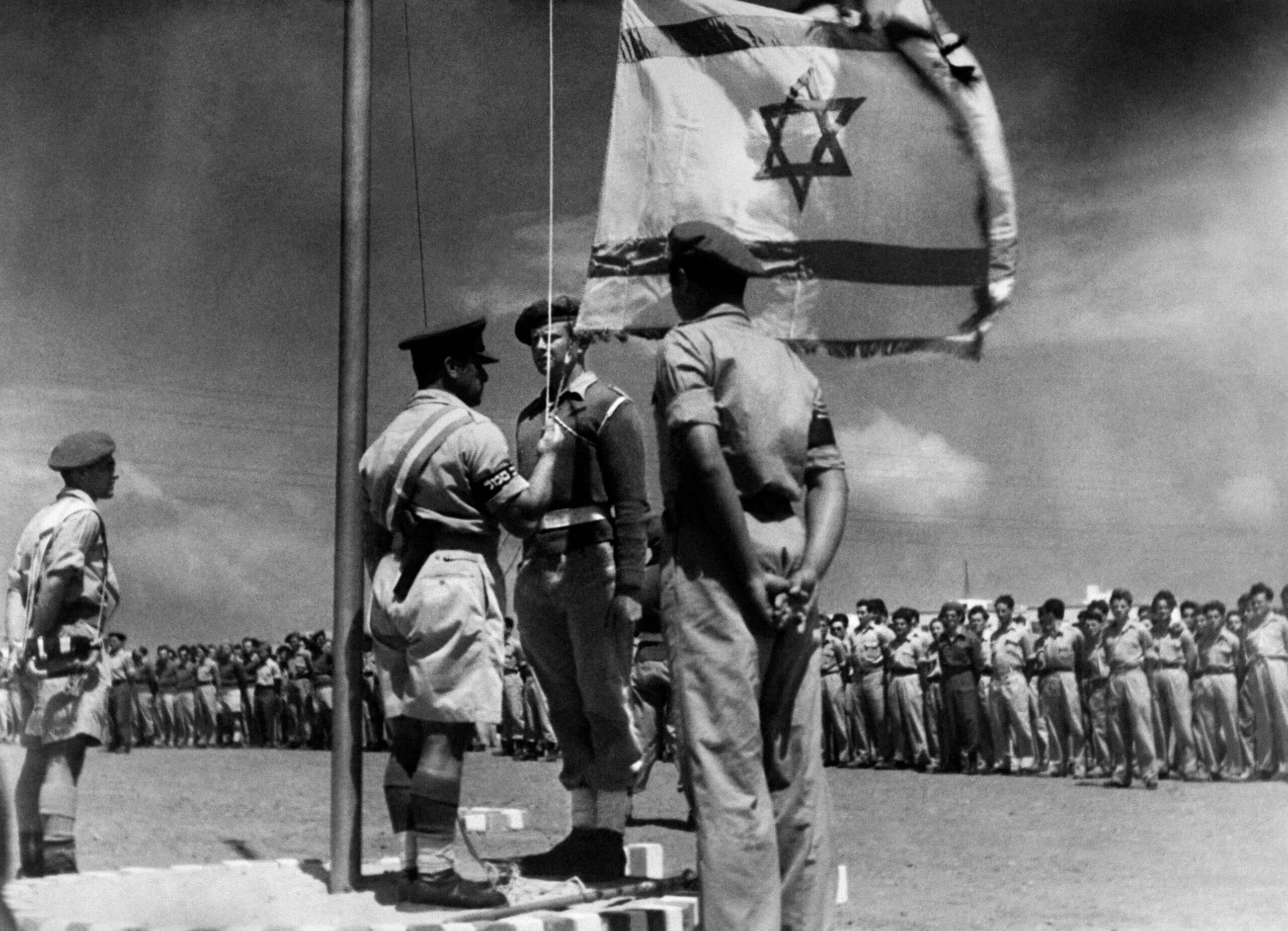
On Nov. 10, 2023, the Israeli-American historian Omer Bartov published a guest essay in the New York Times. Though scarcely a month had passed since the Hamas massacre of hundreds of Israeli men, women and children, Bartov expressed fears over Israel’s military response to this horrifying act of barbarity. But, he concluded, while “it is very likely that war crimes, and crimes against humanity, are happening,” he concluded, there is “no proof that genocide is taking place in Gaza.”
By mid-2025, however, Bartov revised his stance in a second Times essay. As a scholar of genocide who has taught classes on the subject — including at Brown University, where he is currently based — for a quarter of a century, he announced, “I can recognize one when I see one.”
In his new book Israel: What Went Wrong?, Bartov offers a searing analysis, both personal and professional, of the tragically entwined history of Israelis and Palestinians that climaxed with the disaster of October 7, 2023, when Hamas attacked Israel, followed by the even more disastrous response of Israel. Bartov’s account resembles an earlier book on an earlier war: Marc Bloch’s Strange Defeat, in which the veteran of two world wars examines the causes to France’s collapse in 1940. Both internationally known historians, and patriots who served their nation in arms, each man wrote their book when the debacles were still fresh.
For France, the collapse was as much moral and political as it was military. “Whatever the complexion of its government,” Bloch observed, “a country is bound to suffer, democracy becomes hopelessly weak, and the general good suffers accordingly if its higher officials are bred up to despise it.”
As Bartov’s book reminds us, this diagnosis applies not just to the decay that undermined the French Third Republic, but also to the moral rot that has been sapping the foundations of the Israeli republic. In his account, Bartov weaves the parallel histories of Israelis and Palestinians — a history composed of two catastrophes, the Shoah and the Nakba, that have ever since shaped events.
Inevitably, the very mention of these events in the same breath often sparks a violent response from many Israeli and diasporic Jews, but Bartov rightly insists upon their pairing. One of the many reasons why Bartov’s book is so important is his insistence that the two events are “inextricably linked historically, personally and as part of a politics of memory” and that they each have “become constitutive of Israeli and Palestinian national identities.”
William Faulkner’s old chestnut — the past is neither dead nor even past — is the through-line to Bartov’s sharply, at times brutally, etched history of Israeli-Palestinian relations. Crucially, Bartov argues that what has gone so terribly wrong since 1948 was inevitable only in retrospect. An alternative history, one shaped by a Zionism faithful to the ideals of the Enlightenment, was, if unlikely, certainly not impossible. At the very least the history of the past eight decades could have gone in a liberal and democratic direction.
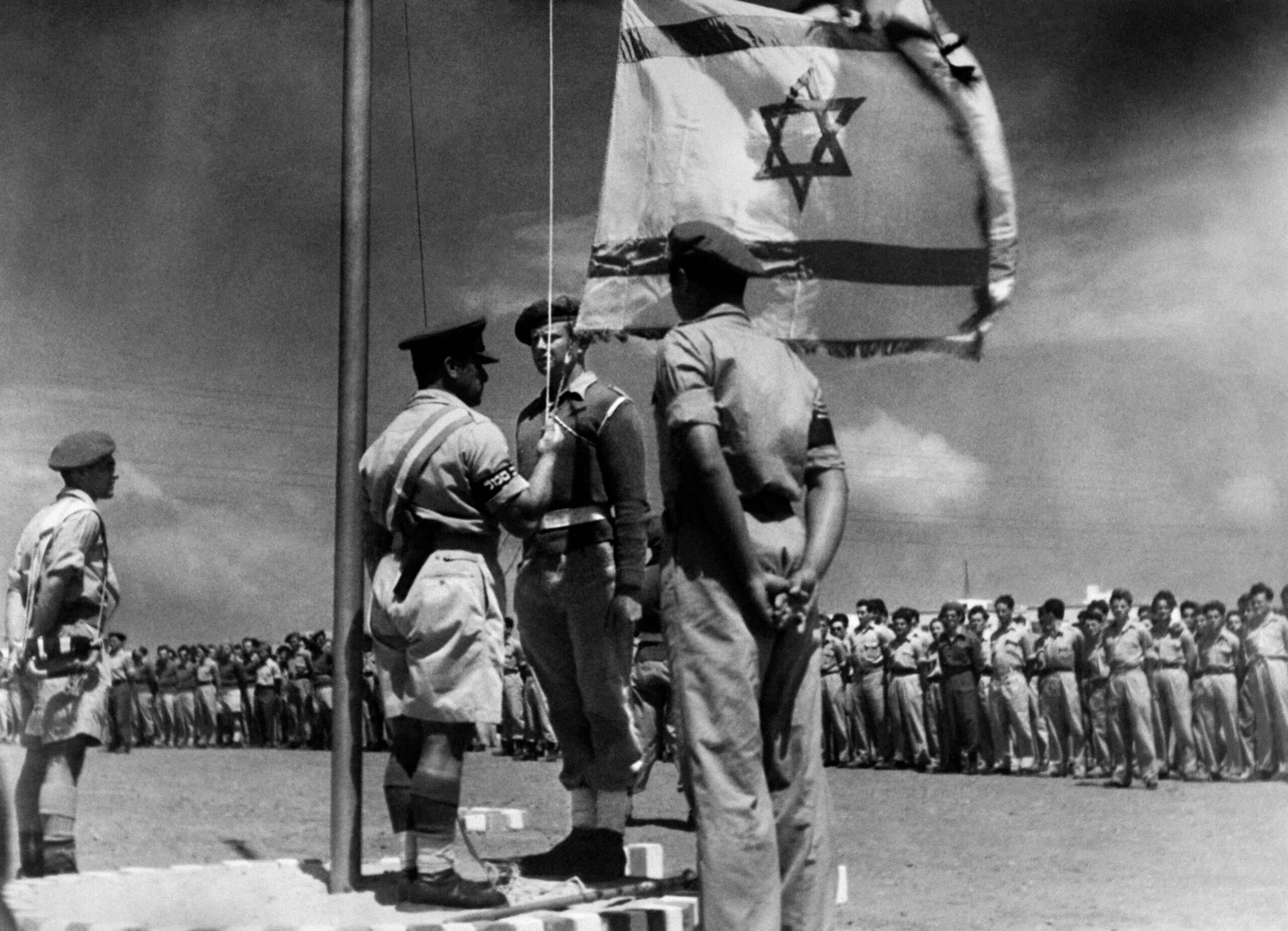
What, then, went wrong? First, there is the simple and tragic fact that the resurrection of one people meant the destruction of another people. Bartov underscores that early Zionist pioneers like his own father and grandfather, the offspring of “mutilated families” that were decimated by the Holocaust, were taught they represented the future of this reborn people. They only slowly grasped that this rebirth required the removal of the Palestinian people. For many Israelis, he observes, this “generated contradictory responses — guilt and regret, or negation and denial; a hope for redress and reconciliation, or a conscious and, just as important, unconscious will to eradicate and erase.”
The will to eradicate has been enabled by the occupations of the West Bank and Gaza, and their management. Since 1967, the metastasizing of walls and fences have transformed these territories into mazes, leading to a different kind of erasure. Israeli civilians, who once regularly encountered the Arab occupants of the land, no longer had occasion to see their Palestinian neighbors, hidden behind these walls, while Israeli soldiers serving in occupied territories were influenced by the burgeoning of ethno-nationalistic sentiment, making them increasingly incapable of seeing Palestinians as fellow human beings.
This form of “social death” — when a group or entire people are shunned and shut into confined spaces — has led with increasing frequency to all-too-real deaths. According to a recent United Nations report, more than 1,000 Palestinians living in the West Bank have been killed by Israeli soldiers, while settler violence has displaced nearly 2,000 Palestinians from their villages since the start of 2026, often with the complicity of the IDF.
For those who have been following events since Oct. 7, 2023, much of what Bartov recounts will not be a surprise. (As Bartov notes, however, the Israeli media have, with a few exceptions including Haaretz and +972, largely shielded the reality of what the IDF has done in Gaza and the West Bank from Israel’s inhabitants.)
Yet as a native-born Israeli who served as an officer during the Yom Kippur War, Bartov brings intimacy and intensity to his account. He confesses to a sense of estrangement from Israel, which now seems to be “a different, strange, and threatening place, whose people, including some of my friends, have been transformed, perhaps irretrievably.”
No less important, as a historian who has written several books on war and genocide, Barton delves into harsher and darker corners of Israeli actions, the entwined histories of Israelis and Palestinians mostly ignored by the media. To better understand the acts and words of brutality and, at times, inhumanity committed and expressed by Israeli politicians and soldiers, Bartov compares the results of his early research on German soldiers — crucially, those serving not in the Nazi SS, but in the Wehrmacht, the broader German army which, after the war, sought to distance itself from the machinery of the Shoah.
The comparison is provocative, but it is also painfully instructive. Just as latter employed animalistic images and apocalyptic claims to justify the systematic destruction of European Jewry, Israeli political and military leaders have used similar rhetoric towards Palestinians. This was true of then-defense minister Yoav Gallant, who declared Israel was fighting against “human animals,” as well as retired Major General Giora Eiland, who promised that “Gaza will become a place where no human being can exist.” No wonder, as Bartov notes, that there have been countless social posts by IDF troops calling to “kill the Arabs” and “burn their mothers.”
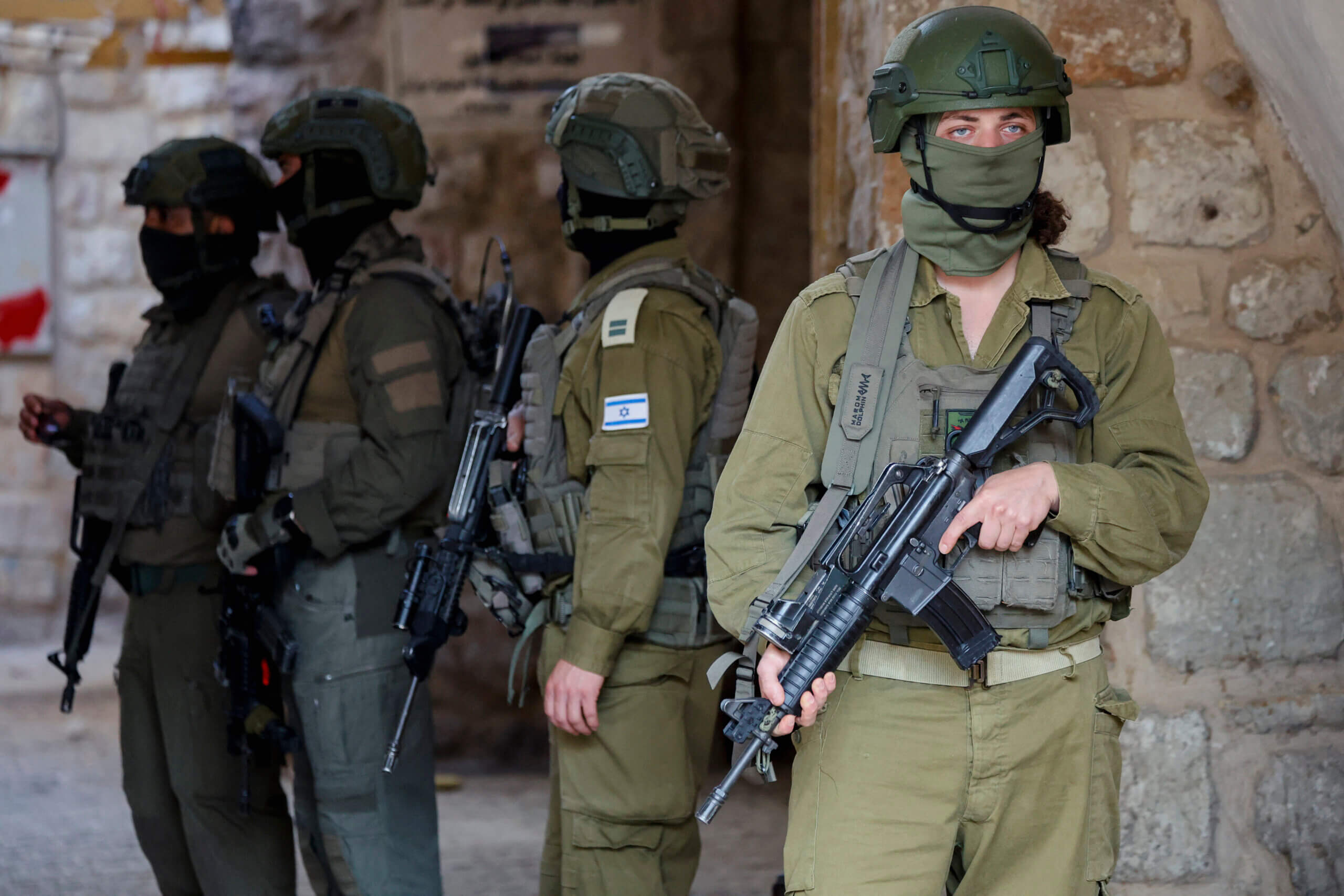
Given the postwar imperative of “Never again,” how has it come to this? As Bartov observes, the phrase has always carried two meanings, one applied exclusively to a repeat of a Jewish genocide, the other to the eruption of genocide, plain and simple, against any people at any time and in any place. The first definition, Bartov suggests, has bleak consequences. If the Shoah is seen, as it is by many Israelis, as an event that made the case for a Jewish state, it also turns that state “into a unique entity that operates according to its own rules and logic,” he writes. It unshackles, in short, Israel from the “constraints imposed on all other nations, not least because ‘they,’ as the saying goes, stood by while the Jews were slaughtered.”
Israel thus finds itself overseeing what Raphael Lemkin, the Jewish lawyer who coined the term “genocide,” called the “crime of crimes.” Bartov finds that Israel’s government checks the boxes for the 1948 genocide convention, which defines the crime, in part, as the commission of “acts with the intent to destroy, in whole or part, a national, ethnical, racial or religious group as such.”
When it comes to “intent,” Bartov lists a partial list of vows made by Israeli political and military leaders in the immediate aftermath of the Hamas massacre. These threats of complete destruction were not empty: from the targeting of hospitals and schools and razing of entire cities to causing tens of thousands of civilian deaths, the IDF has repeatedly violated the genocide convention. From the very beginning, the war’s goal, Bartov writes, has always been “to make the entire Gaza Strip uninhabitable, and to debilitate its population to such a degree that it would either die out or seek all possible options to flee the territory.”
In leveling these charges, Bartov does not ignore Hamas’ practice of using civilians and civilian infrastructure as shields against Israeli reprisals. Obviously, these tactics constitute a war crime, as does the unspeakable massacre committed by Hamas on Oct. 7th. Nevertheless, Bartov insists, Israel’s response has been no less criminal, ranging from its consistent failure to apply the principle of proportionality to its policy of blocking all humanitarian assistance in the early 2025.
It is tempting to conclude that apologists for the IDF’s excesses reflexively — though not reflectively — blame Hamas for the deaths of the tens of thousands of innocents. But even this conclusion is problematic given the many blanket accusations made by Israeli leaders against the people of Gaza. For example, President Isaac Herzog declared, a few days after the war, that it is “an entire nation out there that is responsible.”
And yet, the most tragic passages in the book are devoted to the Israeli constitution that never was. With a nod to counterfactual history, Bartov suggests that the unfolding of events over the last seven decades was not inevitable. Though Israel’s Declaration of Independence, inspired by its American counterpart, anticipated a similar constitution, the document never saw the light of day. On the one hand, the Declaration affirms “complete equality of social and political rights to all its citizens irrespective of religion, race, or sex.” As for the other hand, it is empty. The constituent assembly, though required by the UN’s 1948 partition plan, failed to write a constitution. Instead, there has been a series of basic laws, two of which address human rights — an ideal that for Arab citizens of Israel, not to mention Palestinians living in the occupied territories, is mostly a mirage.
What might Israel look like today if its founders had, in fact, endowed the nation with a constitution that resembled our own? For Bartov, it might well be a nation of laws where the Supreme Court, rather than being the frequent enabler of the ethno-nationalist goals of the current government, would instead serve as a powerful check to both the executive and legislative branches. With a constitution, it is conceivable, as Bartov suggests, the now-embattled court might oppose the nature of the occupation of the West Bank, perhaps even the actions of the IDF in Gaza. Israel would be a light onto other nations not because it resolved the inherent tension in being both a Jewish and democratic nation, but because it was committed to managing it.
Of course, this possible Israel never came to pass. The original purpose of Zionism, which Bartov poignantly describes as a “Jewish rebellion against fate and oppression, religious resignation and prejudice,” has given way, he says, to the God of the zealots.
“As Israel is led singing and praying and dancing into the abyss,” Bartov concludes, “it is finally shaking itself free of Zionism and heading down the path of theocracy and apocalypse following a pillar of fire and smoke.”
The post An Israeli genocide scholar looks to Israel’s history to understand ‘what went wrong’ appeared first on The Forward.