


Uncategorized
Canadian Universities Risk Silencing Debate Over Israel
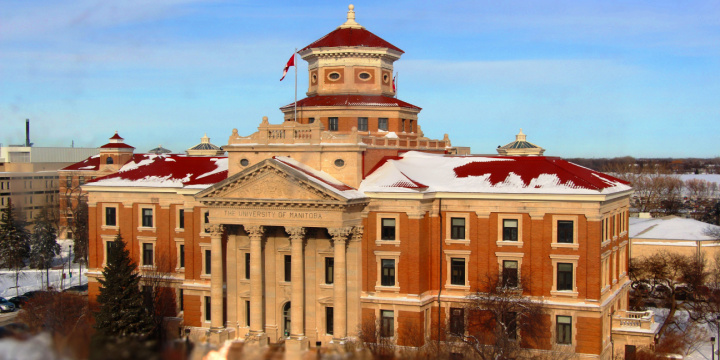
The University of Manitoba in Winnipeg, Canada.
When I sat before the governance committee of my student union last month, I came with one clear recommendation: do not adopt the proposed Anti-Palestinian Racism (APR) definition that was being considered at the school.
My objection was not to the idea that every Palestinian student deserves protection from harassment or discrimination. Everybody does. The problem was how the definition blurs politics with discrimination, punishes ordinary criticism, and weakens academic freedom. I urged the committee to reject a definition that, as drafted, risks codifying political narratives into policing tools. Hopefully, they will take my position seriously when they issue their ruling.
Unlike the internationally recognized International Holocaust Remembrance Alliance (IHRA) working definition of antisemitism, which was created to clarify and address antisemitism without restricting legitimate debate about Israel, APR is fundamentally different.
While IHRA identifies antisemitism and provides examples to guide interpretation, APR functions as a prescriptive framework that risks ending debate by labeling broad narratives as inherently bigoted. IHRA, by contrast, identifies specific antisemitic tropes, such as Holocaust inversion, without restricting legitimate discussion of Israeli policies.
This dynamic is visible on campuses across Canada.
Activists have advanced APR-style motions into governance bodies, claiming they address a gap in how campuses handle incidents related to the Israeli–Palestinian conflict. In practice, however, these definitions transform legitimate discussion into potential infractions and shield political entities from scrutiny. They also present a single, politicized framing of the “Nakba” as an unquestionable truth — and treat any attempt to acknowledge the role of surrounding Arab states or the choices of Palestinian leadership to seek Israel’s elimination in 1948 as an act of racism.
This approach effectively labels Israel as solely responsible for the 1948 war, which is inaccurate, because it was five surrounding Arab states and the Palestinian population that launched the war. Israel was prepared to accept a Palestinian state, as ordered by the UN.
The APR definition makes balanced historical debate impossible.
A central conceptual problem here is the treatment of “narratives” as if they were objective facts. The motion’s language reads: “dehumanize Palestinians or their narratives.”
Narratives are how communities make sense of history and identity; they are powerful and meaningful, but they are also contested, partial, and shaped by memory and ideology. Freezing a narrative into policy shuts off debate when universities should encourage questioning, not punish it.
The consequences of accepting the definition are grave. The APR definition conflates collective identity with collective responsibility, making it risky to criticize political groups or organizations for fear of being labelled racist. The motion would make discussion of terrorist organizations effectively off-limits. That shuts down honest debate about security, human rights, and political accountability, and the wording appears deliberately crafted to misrepresent what the IHRA working definition actually does.
In fact, Students for Justice in Palestine, the group largely responsible for pushing this movement on campus, has been responsible for harassing and attacking Jewish individuals and events at universities. Letting this group dictate codified political narratives is dangerous and irresponsible.
So what should campus communities do instead?
First, institutions must protect students from harassment while also safeguarding free inquiry. Existing anti-discrimination procedures already regulate speech in ways that maintain responsible discourse: they address harassment or conduct that creates a hostile environment, without broadly policing disagreement with collective narratives.
Secondly, defend academic freedom. Universities are laboratories of thought; they must tolerate uncomfortable, even offensive, ideas when they are part of honest inquiry. A definition that protects students by preventing harassment must do so without impeding academic freedom. The IHRA working definition is a non-binding tool to apply antisemitism policies without restricting debate; APR, by contrast, acts as a prescriptive framework that risks silencing discourse.
At a deeper level, this debate reflects a wider trend in Canada, where freedom of expression is increasingly being seen as under threat. The idea that speech can be restricted whenever it disrupts a preferred political narrative is dangerous. As free expression comes under threat, we must do more to protect it and keep open dialogue central to Canadian society.
The APR debate is not a trivial matter. It is a test of whether campuses can protect and preserve the necessary work of democratic debate and freedom of expression. If we get that balance right, universities can remain places where identities are respected and ideas are fearlessly examined. If we get it wrong, we risk turning our campuses into echo chambers where the very thing we claim to defend, free thought, is the first casualty.
Adam Katz is a 2025-2026 CAMERA on Campus fellow and a second-year political science and history student at the University of Manitoba.
Uncategorized
Israel’s Ben-Gvir Visits Flashpoint Al-Aqsa Mosque Compound

Israeli politician Itamar Ben-Gvir walks inside the Knesset, in Jerusalem, Oct. 13, 2025. Photo: Chip Somodevilla/Pool via REUTERS
Israel’s far-right police minister Itamar Ben-Gvir visited the flashpoint Al-Aqsa Mosque compound in Jerusalem on Sunday, saying he was seeking greater access for Jewish worshipers and drawing condemnation from Jordan and the Palestinians.
The compound in Jerusalem’s walled Old City is one of the most sensitive sites in the Middle East. Known to Jews as Temple Mount, it is the most sacred site in Judaism and is Islam’s third-holiest site.
Under a delicate, decades-old arrangement with Muslim authorities, it is administered by a Jordanian religious foundation and Jews can visit but may not pray there.
Suggestions that Israel would alter the rules have sparked outrage among Muslims and ignited violence in the past.
“Today, I feel like the owner here,” National Security Minister Ben-Gvir said in a video filmed at the site and distributed by his office. “There is still more to do, more to improve. I keep pushing the Prime Minister (Benjamin Netanyahu) to do more and more — we must keep rising higher and higher.”
A statement from the Jordanian foreign ministry said it considered Ben-Gvir’s visit to be a violation of the status quo agreement at the site and “a desecration of its sanctity, a condemnable escalation and an unacceptable provocation.”
The office of Palestinian president, Mahmoud Abbas, said such actions could further destabilize the region.
Ben-Gvir’s spokesman said the minister was seeking greater access and prayer permits for Jewish visitors. He also said that Ben-Gvir had prayed at the site.
There was no immediate comment from Netanyahu’s office. Previous such visits and statements by Ben-Gvir have prompted Netanyahu announcements saying that there is no change in Israel’s policy of keeping the status quo.
Muslim, Christian and Jewish sites, including Al-Aqsa had been largely closed to the public during the Iran war. There was no immediate sign of unrest on Sunday after Ben-Gvir’s visit.
Uncategorized
Netanyahu Visits Troops Fighting Hezbollah in Southern Lebanon

Israeli Prime Minister Benjamin Netanyahu speaks during a press conference at the Prime Minister’s office in Jerusalem, Aug. 10, 2025. Photo: ABIR SULTAN/Pool via REUTERS
i24 News – Israeli Prime Minister Benjamin Netanyahu visited Israeli forces operating in southern Lebanon on Sunday as military operations against Hezbollah-linked targets continue.
Netanyahu toured forward positions alongside Defense Minister Yisrael Katz, Eyal Zamir, and Northern Command Commander Rafi Milo, meeting troops and receiving operational briefings from commanders on the ground.
Speaking to soldiers, Netanyahu praised their performance and said operations in the Lebanese security zone were ongoing.
“The war continues, including within the security zone in Lebanon,” he said, adding that Israeli forces were working to prevent infiltration attempts and neutralize threats such as anti-tank fire and missiles.
He described the northern campaign as part of a broader regional struggle involving Iran and its allies, saying Israel’s adversaries were now “fighting for their survival” following sustained Israeli military pressure.
Uncategorized
Saudi Arabia Restores Full Capacity on East-West Oil Pipeline to 7 Million BPD After Attacks

FILE PHOTO: General view of Khurais NGL recovery plant in the eastern province of Saudi Arabia, June 28, 2021. Picture taken June 28, 2021. REUTERS/Mohammed Benmansour./File Photo
Saudi Arabia has restored full oil pumping capacity through the East-West pipeline to about seven million barrels per day, it said on Sunday, days after providing an assessment of damage on its energy sector from attacks during the Iran conflict.
The ministry said energy facilities and the pipeline affected by attacks during the conflict have recovered and restored operational capacity.
Saudi did not specify who launched the attacks, but the kingdom has intercepted many Iranian missiles and drones in recent weeks.
The strikes also disrupted operations at key oil, gas, refining, petrochemical and electricity sites in Riyadh, the Eastern Province and Yanbu Industrial City.
OUTPUT RECOVERY TO HELP SUPPLY CONTINUITY
Saudi said on Thursday the attacks had cut its oil production capacity by around 600,000 barrels per day and throughput on its East-West Pipeline by about 700,000 bpd.
The East-West Pipeline has been Saudi Arabia’s only crude export route amid the closure of the Strait of Hormuz. Reuters reported on Wednesday that Iran attacked the pipeline just hours after the ceasefire was agreed.
The ministry said it recovered affected volumes from the Manifa oilfield, where output had previously been reduced by around 300,000 bpd.
Work was ongoing to restore full output at the Khurais facility, after strikes on it reduced Saudi capacity by a further 300,000 bpd, the ministry said.
It said the quick recovery would enhance the “reliability and continuity of supplies to local and global markets.”