



Uncategorized
Columbia University Reaches Confidential Settlement in Antisemitism Lawsuit

Students walk on campus at Columbia University during the first day of the fall semester in New York City, US, Sept. 2, 2025. Photo: REUTERS/Ryan Murphy
Columbia University has settled a lawsuit in which Jewish students accused the institution of ignoring campus antisemitism even as incidents of anti-Jewish bigotry escalated in severity and anti-Israel students acted with impunity.
Announced last week by the StandWithUs Center for Legal Justice, the Jewish advocacy group which filed the complaint in partnership with Kasowitz LLP, the terms of the resolution remain strictly confidential, with the parties involved declining to disclose whether the university paid an exorbitant cash amount to avoid a trial to prevent further public embarrassment. What has been shared with the public disclosed Columbia’s agreeing to appoint an official who specializes in matters relevant to federal civil rights laws, offer educational programs on antisemitism, create new scholarships related to Israel, and “consider” adopting the International Holocaust Remembrance Alliance (IHRA) definition of antisemitism.
According to the definition, antisemitism “is a certain perception of Jews, which may be expressed as hatred toward Jews. Rhetorical and physical manifestations of antisemitism are directed toward Jewish or non-Jewish individuals and/or their property, toward Jewish community institutions and religious facilities.” It provides 11 specific, contemporary examples of antisemitism in public life, the media, schools, the workplace, and in the religious sphere. Beyond classic antisemitic behavior associated with the likes of the medieval period and Nazi Germany, the examples include denial of the Holocaust and newer forms of antisemitism targeting Israel such as demonizing the Jewish state, denying its right to exist, and holding it to standards not expected of any other democratic state.
The definition is widely accepted by Jewish groups and lawmakers across the political spectrum, and it is used by hundreds of governing institutions, including the US State Department, European Union, and United Nations.
“This settlement represents an important step toward ensuring that Jewish and Israeli students at Columbia can learn in an environment free from discrimination and hostility,” Oleg Ivanov, executive director of the Center for Legal Justice, said in a press release. “We thank our attorneys for their dedication, and we are hopeful that the commitments made in this agreement will lead to meaningful and systemic change for Jewish students on campus.”
Marc Kasowitz of Kasowitz LLP commended the university’s “commitment and approach to implementing effective long-term changes and meaningful actions to combat antisemitism” while calling on “other colleges and universities to do the right thing” and “follow Columbia’s lead.”
As previously reported by The Algemeiner, the plaintiffs in the case accused Columbia University of violating their contract, to which it is bound upon receiving payment for their tuition, and contravening Title VI of the Civil Rights Act. They sought monetary damages as well as injunctive relief.
The complaint says that students chanted “F— the Jews,” “Death to Jews, “Jews will not defeat us,” and “From water to water, Palestine will be Arab” on campus grounds after Hamas’s Oct. 7, 2023, massacre across southern Israel, allegedly violating the school’s code of conduct and never facing consequences.
Faculty engaged in similar behavior. On Oct. 8, 2023, professor Joseph Massad published in Electronic Intifada an essay cheering Hamas’s atrocities, which included slaughtering children and raping women, as “awesome” and describing men who paraglided into a music festival to kill young people as “the air force of the Palestinian resistance.”
Three hundred faculty signed a letter proclaiming “unwavering solidarity” with Massad, and in the following days, Students for Justice in Palestine defended Hamas’s actions as “rooted in international law.” In response, former Columbia University president Minouche Shafik, opting not to address their rhetoric directly, issued a statement mentioning “violence that is affecting so many people” but not, the complaint noted, explicitly condemning Hamas, terrorism, and antisemitism. Nine days later, Shafik rejected an invitation to participate in a viewing of footage of the Oct. 7 attacks captured by CCTV cameras.
The complaint goes on to allege that after bullying Jewish students and rubbing their noses in the carnage Hamas wrought on their people, pro-Hamas students were still unsatisfied and resorted to violence. They beat up five Jewish students in Columbia’s Butler Library. Another attacked a Jewish students with a stick, lacerating his head and breaking his finger, after being asked to return missing persons posters she had stolen.
Following the incidents, pleas for help allegedly went unanswered and administrators told Jewish students they could not guarantee their safety while Students for Justice in Palestine held its demonstrations. The school’s powerlessness to prevent anti-Jewish violence was cited as the reason why Students Supporting Israel (SSI), a recognized school club, was denied permission to hold an event on self-defense. Events with “buzzwords” such as “Israel” and “Palestine” were forbidden, administrators allegedly said, but SJP continued to host events while no one explained the inconsistency.
Columbia University, which recently paid $200 million to terminate a federal investigation of antisemitism at the institution, settled another campus antisemitism lawsuit in June that was brought by a Jewish student at the School of Social Work who accused faculty of unrelenting antisemitic bullying and harassment.
According to court documents, Mackenzie “Macky” Forrest was abused by the faculty, one of whom callously denied her accommodations for sabbath observance and then held out the possibility of her attending class virtually during pro-Hamas protests which made the campus unsafe for Jewish students. Her Jewishness and requests for arrangements which would allow her to complete her assignments created what the Lawfare Project described as a “pretext” for targeting Forrest and conspiring to expel her from the program, a plan that involved fabricating stories with the aim of smearing her as insubordinate.
Spurious accusations were allegedly made by one professor, Andre Ivanoff, who, according to the suit, was the first to tell Forrest that her sabbath observance was a “problem.” Ivanoff implied that she had failed to meet standards of “behavioral performance” while administrators spread rumors that she had declined to take on key assignments, according to court documents. This snowballed into a threat: Forrest was allegedly told that she could either take an “F” in the field placement or drop out, the only action that would prevent sullying her transcript with her failing grade.
The terms of that settlement are also buried under a confidentiality agreement.
“We brought this lawsuit to hold Columbia accountable for what we alleged was a deeply troubling failure to protect a Jewish student from antisemitic discrimination and retaliation,” Lawfare Project litigation director Ziporah Reich, whose organization represented Forrest, said after the case was resolved. “When Jewish students report harassment and seek accommodations, their concerns must be taken seriously. The civil rights of Jewish students are simply not negotiable.”
Uncategorized
A British spy, a notorious murderer, the Indiana Jones of the insect world, and a very Jewish history
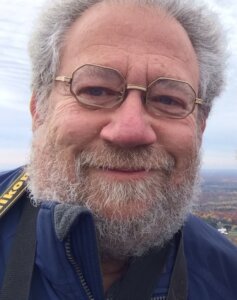
Jews are often thought of as urban, bookish folks who don’t venture out into the wild. But there have been plenty of Jews who break that mold — Abraham Cahan, founder of the Forward, was himself a birder. In To Life: Jews Exploring Nature, author Joel Greenberg, with Judith Winston, a research associate at the Smithsonian Marine Station in Florida, tells the life stories of a group of Jewish researchers, naturalists and environmentalists. I spoke with Greenberg, a research associate of the Field Museum and the Chicago Academy of Sciences Peggy Notebaert Nature Museum, book author and avid birder who lives in Westmont, IL, about the accomplished and often adventurous lives of the scientists he profiled. This conversation has been edited for length and clarity.
Countering the common perception of Jews as indoor cats, you found a group of Jews who spent their careers hunting spiders, skinning mammal specimens and handling snakes. Is the cliché inaccurate?
I cite Fran Lebowitz, who says that the outdoors is what you pass through when you go from your apartment to a cab. For a variety of reasons, Jews are kind of urban people. But when you have a literature that goes back 4000 years, you can find anything in it. You find people loving nature and people hating it.
Did your subjects’ Judaism play a role in drawing them to study the natural world?
There are threads that are well recognized in the Jewish world, though they certainly aren’t unique to it, that had an influence — like education being important, and supporting your children. But I picked people who manifested their Jewishness in different ways. Joan Ehrenfeld, an ecologist and environmentalist, was very Orthodox, and Judaism was very much part of the foundation of what she did. Whereas Philip Hershkovitz, a neotropical mammalogist at the Field Museum, kept it to himself to the point that his kids were shocked to learn that they were Jewish.
Andrew Spielman, who studied insect vectors of infectious disease, was known for arguing with people over individual words when they were writing papers. Longtime assistants said he approached these things almost like a Talmudic scholar.
Some of the people you profile have Hollywood-worthy life stories, starting with Aaron Aaronsohn. Can you tell a little bit about him?
He’s the person whose story goes back the farthest in time. His family left Europe to escape the pogroms, and settled in Palestine. He became totally intrigued by insects and plants, and became a real authority. On a trip to Germany, he met some world-famous botanists. They were interested in an ancient form of wheat called wild emmer, a single specimen of which had been found close to what is now the Syrian–Israeli border. They encouraged Aaronsohn to look for the plant because it might hold qualities that would increase the resilience and nutrition of modern wheat strains. He searched — and found it in a vineyard near the Golan Heights. It made him world-famous.
Just before the start of World War I, in which the Ottoman Empire sided with Germany, there was an infestation of desert locusts — billions of them. The Ottoman army commander said, ‘Who can help me with this?’ Everyone said, ‘Aaronsohn.’ So they brought in Aaronsohn. He and the team he assembled were allowed to go everywhere — to transportation hubs, to military bases. They became a spy ring, feeding the British the most detailed and accurate intelligence that was available.
Britain’s principal military goal was to take Jerusalem. The general there had failed twice. Then they brought in Field Marshal Edmund Allenby. He developed a rapport with Aaronson, followed his suggestions, and took Jerusalem in one try. What Aaronsohn did on behalf of the British was a major factor in Arthur Balfour issuing the British declaration in support of a national home for the Jewish people in Palestine. So it had an incredible impact on the world.
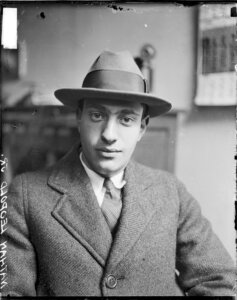
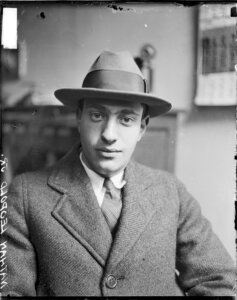
Another remarkable story, in a very different way, is that of Nathan Leopold. He and his friend Richard Loeb murdered a 14-year-old boy in 1924; but he was also a highly respected birder. Talk a little about your decision to include him.
I’ve long had an interest in him. Leopold is beyond understanding. He and Loeb committed a horrific crime. But he was one of the youngest people ever to be published in The Auk (now Ornithology), the country’s premier ornithological journal, when he was just under 14 years old. And he did important work on Kirtland’s warblers, a bird which back then was very poorly known. He was the first to correlate the rarity of the warbler with parasitism by brown-headed cowbirds. That knowledge might well have been a factor in saving the bird from extinction.
While he was in prison, he agreed to be injected with malaria, which during World War II was a big problem for US troops in Asia. When he was paroled to Puerto Rico, he got a master’s degree in public health and wrote Checklist of Birds of Puerto Rico and the Virgin Islands.
He did this terrible thing — but he also had incredibly broad interests and accomplishments.
You write about how antisemitism nearly derailed the career of Libbie Henrietta Hyman when she was at the University of Chicago.
She loved plants and wanted to do botany, so she entered UChicago’s botany program. But she was in a class that was being taught by a graduate student who was an ardent eugenicist who hated Jews, among other groups. He forced her out.
But she found a home in zoology, staying at the University of Chicago from undergraduate to doctorate and staying 15 years as a research assistant to her advisor. She authored two lab textbooks that sold enough copies for her to reach financial independence. She left Chicago and moved to New York, where she worked on her greatest accomplishment — a six-volume compendium called The Invertebrates. She worked out of an office at the American Museum of Natural History, and illustrated the volumes herself. They received world acclaim.
Several of these folks sound like Indiana Jones-level adventurers, spending months in jungles collecting specimens — like Andrew Spielman, a public health entomologist who studied insects that transmit human disease.
His daughter called him “Indiana Papa.” Once he was in Jamaica monitoring water-filled pots for mosquitoes, and he encountered this big guy who said, ‘You know what they call me? “Big Blade.’” He showed him his machete. Spielman had to flee. Another time he was in Ethiopia and he and a colleague went out at night looking for hippopotamuses, and they were surrounded by Ethiopian armed forces who thought they were spies. It got really heated, but fortunately, things calmed down.
Hershkovitz went on his last field trip to Brazil when he was 82 years old. I’m blown away by this. Another time he took his wife and their oldest daughter to Colombia for 18 months. They stayed in cities and he was out there in the hinterlands collecting specimens. His wife would write to him. She was totally supportive of him, but she wrote, “My dream is to move back to Chicago, go to the A&P, and have a good doctor and dentist.”
There were even dangers back home. At the Field Museum, herpetologist Hymen Marx witnessed an awful incident with a venomous snake.
Marlin Perkins at the Lincoln Park Zoo had received a bunch of snakes. He thought one of them was a boomslang, a venomous tree snake, but it didn’t quite match the pictures. So he had somebody drive the snake over to the Field so that Marx, herpetologist Karl Schmidt and the herpetology curator could look at it. They all handled it — but it bit Schmidt in the thumb. He died within two days. He refused medical assistance because he didn’t want to alter the symptoms. He kept a diary of the details; he wanted it to be scientific.
Witnessing that affected Marx greatly. It used to be that you could have live snakes at the Field; Marx used to walk around with a python around his neck and torso. But after that there could be no live snakes.
You yourself are a Jewish naturalist and birder. Is being Jewish connected to your passion for the natural world?
My family was pretty secular; I went to Hebrew school for one year. But when I was at the University of Arizona, a group of us birders went to this remote area in southern Mexico. We actually contributed to scientific knowledge: We obtained the first known chicks of the horned guan, and we discovered that the azure-rumped tanager, which was thought to be rare, in fact just had a very narrow elevational range.
It was Passover, and a friend in Tucson gave us a piece of matzo and some of the other elements. It wasn’t a full-fledged seder, but we did this little seder in a place where I’m sure there’s never been one before or since. It’s a part of me.
The post A British spy, a notorious murderer, the Indiana Jones of the insect world, and a very Jewish history appeared first on The Forward.
Uncategorized
Three simple rules for navigating a new season of protest against Israel
Spring. The season of graduations and protests.
A tenured professor and faculty chair at my alma mater, the University of Michigan, recently used the commencement stage to denounce Israel’s war in Gaza — remarks that drew applause from some as others experienced them as alienating and unwelcome. At New York’s Park East Synagogue, a group of masked, hate- spewing demonstrators waving Hezbollah flags while protesting the “Great Israeli Real Estate Event.”
If the settings of these incidents differ, one underlying question they raise remains the same: What are the ethics of protest? At what point does dissent deepen democratic life and moral accountability, and when does it begin to fray the trust, dignity and shared sense of belonging upon which a society depends?
While these tensions may be hard to resolve, I’d like to put forward three guiding principles for how best to engage on the subject of free expression in such a hot-zone climate.
Protest is essential
Protest is foundational to what it means to be both a Jew and an American.
Look to Abraham standing before God at Sodom and Gomorrah; Moses standing before Pharaoh; the prophets calling kings and nations to conscience; and Esther risking all for her people. All of their examples show that to be a Jew is to take note of the gap between the world as it is and as it ought to be, and then to summon the moral courage, communal will, and spiritual audacity to help close that gap.
Jews understand that to protest is a religious act. That’s why rabbis so often quote Abraham Joshua Heschel’s famous reflection after marching alongside Martin Luther King Jr. in Selma in 1965: “I felt my legs were praying.”
And as the United States turns 250 years old, it’s worth remembering that our country began with a protest movement. Since then, many of our country’s finest moments have emerged from moral protest — including the labor movement, the fight for women’s suffrage, and the Civil Rights Movement.
As Jews and as Americans, we are heirs to two traditions of protest.
So is self-interrogation
Where we draw the lines around acceptable protest says as much about us as it does about the protest itself.
A prime example of this: During my 25-plus years as a rabbi, no congregant has ever told me that the pulpit is no place for politics — so long as they agree with my politics.
I had little difficulty admiring the activist Greta Thunberg when she sailed across the Atlantic to raise awareness about climate change. I found it much more challenging to view her kindly when she joined a flotilla protesting Israel’s war in Gaza.
Similarly, the faculty speaker at Michigan’s commencement sounded pretty good when championing the university’s first Jewish faculty member and a curriculum more attentive to Black American history. It was only when he condemned Israel that many listeners, myself included, recoiled at his remarks.
None of us are the neutral arbiters of protest ethics we may imagine ourselves to be. Progressives who passionately defend buffer zones around abortion clinics but not around houses of worship should ask why one form of vulnerability warrants protection and another does not. Student activists who champion on-campus encampments protesting Israel’s actions in Gaza, but would never tolerate a white nationalist rally on campus, should ask where principle ends and preference begins. Conservatives who invoke the First Amendment to defend provocative speech they favor, yet denounce positions they dislike as treasonous or un-American, should examine where principle gives way to ideology. And activists who mobilize when civilians die in Gaza but remain deafeningly silent when tens of thousands of Iranians are murdered by their own regime must interrogate what moral framework governs that selective outrage.
Where we draw the lines — whom we applaud, what we excuse and what we denounce — reveals not only our principles, but also our loyalties, fears and tribal attachments. Moral seriousness requires the humility to examine ourselves before we protest — to check ourselves before we express ourselves.
Just because you can, doesn’t mean you should
As Jews, we believe in buffer zones — not just the kind debated at City Hall. The rabbis believed in moral buffer zones, a principle they referred to as living “lifnim mishurat hadin” — “beyond the strict line of the law.”
Rabbinic tradition in part explains the semi-somber period between Passover and Shavuot, in which we currently find ourselves, using precisely this idea. When 24,000 of Rabbi Akiva’s students died in one day, the Talmud teaches, they perished because they followed the letter of the law but failed to go beyond it and treat one another with respect — “kavod zeh lazeh.” They failed to embody the deeper demand of leadership: to live not merely according to what one is allowed to do, but by what one ought to do.
What might that mean for us today?
The answer: just because you have the legal right to express yourself doesn’t mean you should.
The Michigan commencement speaker may have been within his rights to voice his objections to Israel. But his decision to do so in that setting reflected a breathtaking failure of leadership, reminding us there is no direct correlation between tenure and wisdom, expertise and judgment. Like a teacher who hijacks a classroom to air political grievances under the guise of education, the speaker demonstrated an astonishing lack of discernment by alienating a sizable portion of the very students and families he was there to honor and congratulate.
Regarding the protests outside Park East Synagogue, the letter of the law may protect those who wave the flags of a terrorist organization, chant antisemitic slogans, or proclaim that the Jewish state itself should cease to exist. That such speech is protected does not mean it is right. It is, instead, intimidation masquerading as activism.
I was also deeply troubled by the response of New York Mayor Zohran Mamdani, who prefaced his condemnation of the protests by first denouncing the event itself. The mayor should have simply said: no house of worship should be targeted or intimidated, full stop.
To imply that the nature of the event somehow mitigated the harassment outside was not only irresponsible, offering moral cover for behavior that crossed the line from protest into menace, but also a troubling form of moral equivocation that shifted responsibility onto those being targeted — if not outright victim blaming. A peaceful protest calling for Palestinian self-determination alongside Jewish self-determination? As a liberal Zionist, that sounds like my kind of protest! But in an age in which there is a direct line between anti-Israel rhetoric and antisemitic violence, our mayor must do more than merely follow the letter of the law. True leadership begins where the letter of the law ends.
The issue is not whether dissent is permitted, but whether we are not losing the capacity for kavod zeh lazeh.
As the secular prophet of our time, Bruce Springsteen, has been reminding audiences across the country on his current tour: “America, from the beginning, was born out of disagreement. It was built on argument, on disagreement. We can argue about what course we thought the country should take while recognizing our common humanity, our dignity and, yes, our unity.”
Whatever our differences, the challenge before us is whether we can disagree without severing the ties that bind us — as Americans, Jews and human beings.
The post Three simple rules for navigating a new season of protest against Israel appeared first on The Forward.
Uncategorized
Alleging conflicts, California judge boots Jewish DA from trying Stanford pro-Palestinian protesters
(JTA) — This story originally appeared in J. The Jewish News of Northern California.
Jewish groups in the Bay Area are protesting a judge’s removal of a local Jewish district attorney from a case involving pro-Palestinian protesters accused of vandalizing Stanford University’s president’s office.
The district attorney, Jeff Rosen, was disqualified from retrying a felony case against five protesters after the judge ruled that Rosen had crossed a legal line when suggesting in a campaign message that the protest was antisemitic.
“Rosen is allowed to take a strong stance against crime in the community, against antisemitism. But caution and care need to be taken when utilizing active litigation in campaign communication,” Judge Kelley Paul said from the bench.
The judge said Rosen had erred when publicly labeling the incident antisemitic when it was not charged as a hate crime.
“This case is not a hate crime,” Paul said. “The characterization of the prosecution as a fight against antisemitism runs afoul of case law.”
In an email to J. The Jewish News of Northern California, Rosen’s office wrote that while it “disagrees with the judge’s ruling, we respect it.”
In a joint statement, the Jewish Community Relations Council Bay Area and Jewish Silicon Valley wrote that they are “deeply troubled” by Paul’s decision and that the case “must proceed.”
“This decision uniquely targets minority prosecutors, suggesting they are incapable of pursuing justice in cases perceived to be impacting their own communities,” the statement says, adding that it “risks reinforcing longstanding antisemitic prejudices and invites future defendants to weaponize a prosecutor’s identity against them.”
The five protesters face felony vandalism and conspiracy counts stemming from a June 2024 protest in which 13 people broke into Stanford’s executive offices and caused an estimated $300,000 in damages. A jury deadlocked in February, splitting 9-3 on the vandalism count and 8-4 on conspiracy. Rosen quickly announced his plan to retry them.
The disqualification motion was filed by deputy public defender Avi Singh, who argued that Rosen had compromised his office’s neutrality by featuring the prosecution on a campaign fundraising page titled “DA Rosen Fighting Anti-Semitism,” alongside a donation button.
Singh argued that the fundraising campaign falsely implied that the defendants were antisemitic. None was charged with a hate crime.
Rosen, who has spoken publicly about his commitment to fighting antisemitism and supporting Israel, has denied any conflict of interest.
In her decision, Paul pointed to Rosen’s remarks in a March 2025 speech he gave for the San Jose Hillel, about a month before his office filed charges against the protesters. A video of the speech is linked on the “Fighting Anti-Semitism” page on his campaign website.
In the speech, Rosen equated antisemitism and “anti-Americanism,” a phrase that Deputy District Attorney Robert Baker also used to describe the conduct of the protesters during the trial’s closing arguments. Paul ruled that the similarities in the language disqualified the entire DA’s office from the case, not just Rosen.
In their own statement, the local Jewish groups suggested Rosen was being disqualified because he is Jewish.
“Generations of American Jews in positions of public trust have all too often been treated as suspect or inherently conflicted,” JCRC Bay Area and Jewish Silicon Valley said. “This decision risks reinforcing longstanding antisemitic prejudices and invites future defendants to weaponize a prosecutor’s identity against them, casting any public opposition to hate as grounds for disqualification.”
Rosen’s challenger in his June primary election, former prosecutor Daniel Chung, has turned the ruling into a campaign video. Chung called Rosen’s pursuit of the Stanford case “overzealous” and “a waste of time and money.”
“This is a humiliating loss for DA Rosen and his entire office,” Chung said in an Instagram video. “For years, millions of dollars have been spent trying to prosecute Stanford student protesters with felony charges.” Rosen’s actions, Chung said, “jeopardized the due process of the defendants” and “exemplifies the undermining of integrity, competence and compassion under DA Rosen for the last 16 years.”
The ruling hands the case to California’s attorney general, which will decide whether to retry the defendants — German Gonzalez, Maya Burke, Taylor McCann, Hunter Taylor-Black and Amy Zhai — or drop the charges.
The post Alleging conflicts, California judge boots Jewish DA from trying Stanford pro-Palestinian protesters appeared first on The Forward.