


Uncategorized
Cyber Threats Spike 150% Since Oct. 2023, Israeli Healthcare Most Vulnerable
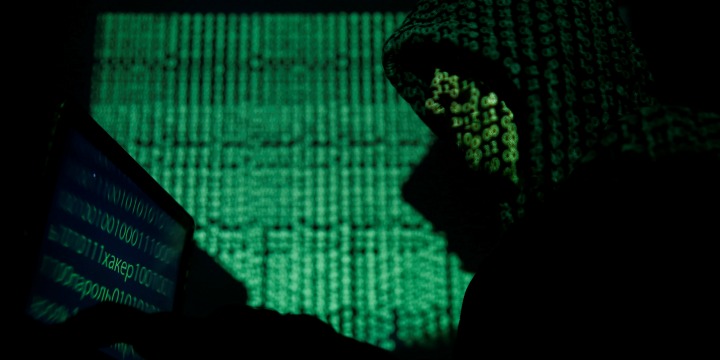
A hooded man holds a laptop computer as cyber code is projected on him in this illustration picture taken on May 13, 2017. Photo: Reuters / Kacper Pempel / Illustration.
i24 News – Four years after the cyberattack that crippled Hillel Yaffe Hospital, the vulnerabilities of Israel’s healthcare system remain glaring. Since the outbreak of the war in October 2023, Israel’s digital domain has turned into a front line: by year’s end, authorities recorded 3,380 cyberattacks, a 150% surge compared to previous years.
More than 800 of them carried “significant damage potential,” according to ynet.
Microsoft’s 2025 Digital Defense Report places Israel as the world’s third-most targeted country after the United States and the United Kingdom. It is also the leading target in the Middle East and Africa, absorbing more than 20% of attacks in the region.
Iran remains the most aggressive adversary, directing roughly 64% of its cyber activity at Israel in attempts to gather intelligence, disrupt services, and spread propaganda.
The techniques used are familiar but highly effective: exploiting unpatched vulnerabilities, using leaked or stolen credentials, and launching basic phishing schemes that grant direct access to internal networks. Despite the prominent role of state-linked actors, financial gain still drives most activity: data theft accounts for 80% of attacks, and more than half involve ransomware.
For Amir Preminger, CTO of the Israeli critical-infrastructure security firm Claroty, the scale of the threat can no longer be ignored. His team has tracked 136 claimed attacks over the past three years, including 34 aimed at essential infrastructure and eight targeting healthcare systems. “Hospitals face the same risks as any organization, but their rapid digitalization leaves them uniquely exposed,” he warns.
The exploited weaknesses are often depressingly basic: weak or reused passwords, overdue software updates, and outdated systems. Preminger identifies two main types of state-sponsored operations: high-impact attacks designed to cause maximum shock, potentially endangering patients, and long-term infiltration efforts intended to quietly siphon off sensitive medical data.
Artificial intelligence is amplifying the threat. “AI tools are enabling inexperienced attackers to scale up quickly,” Preminger says. Some autonomous agents can already execute complex sequences of cyber operations, while healthcare institutions adopt AI faster than they can secure it.
Despite the escalating danger, Preminger argues that regulation has fallen behind. The state possesses advanced cyber capabilities but has limited authority to enforce standards or assist private-sector organizations.
The path forward, he says, must include education, awareness programs, financial support, and mandatory baseline security requirements, before the next major attack hits the core of Israel’s healthcare system.
Uncategorized
Why many Israelis are silent on West Bank violence even as it escalates
In the last month, Jewish terrorists in the occupied West Bank boasted on Telegram and in Whatsapp groups that they burned 56 Palestinian vehicles, torched 13 buildings, injured 146 Palestinians, smashed numerous windshields, cut down thousands of olive trees and burned hundreds of dunams of fields and orchards. The tally was accompanied by a video with upbeat music showcasing the violence and injured Palestinians.
This escalation of Jewish terrorism in the West Bank is hardly invisible in Israel. Israeli security data show a sharp rise: Serious incidents of “nationalistic crime” increased 63% in the first half of 2026 compared with the same period a year earlier. Israeli newspapers report attacks, arson and assaults with depressing regularity. Prime Minister Benjamin Netanyahu himself reportedly described the phenomenon in a closed cabinet discussion as a “metastasizing cancer.”
And yet, as Israel heads toward elections, the scale and severity of this violence have not been matched by serious political attention. Why?
The easiest explanation would be that Israelis approve of it. Some do. There is an ideological minority for whom the answer is straightforward: the land belongs exclusively to the Jewish people, Palestinian claims to it have no legitimacy, and violence that drives Palestinians from contested areas can be understood as serving a national and religious purpose.
But that does not explain the broader silence or caution among the majority of Israelis who don’t share this ideology, including most mainstream political leaders and a growing number of rabbis and settlement figures who have explicitly condemned violence against and theft from Palestinians.
There are three primary reasons why mainstream Israelis who oppose the violence have nevertheless been cautious about making it a central political issue.
The first and perhaps most important reason is distrust. In mainstream Israeli discourse, there is widespread skepticism about the way settler violence is described by international organizations and parts of the media. That skepticism does not amount to denial of the phenomenon itself: a 2026 INSS poll found that 65% of Israelis viewed nationalist violence by Jews as either Jewish terrorism that must be stopped or serious violence requiring prevention. Still, many Israelis believe its scale is vastly inflated, stripped of context and folded into a larger campaign to portray Israel as uniquely monstrous. Palestinians, in this view, are perceived not as isolated civilians but as part of a hostile population, and the international institutions, NGOs and media documenting their victimization are themselves viewed with profound suspicion.
That reaction is not without cause. Israelis have spent three years hearing accusations they experience as grotesquely false, from sweeping charges of genocide to rhetoric questioning whether a Jewish state should exist at all, alongside repeated minimization or erasure of what Israelis endured on October 7. When many accusations really are distorted, it becomes instinctive for Israelis to dismiss all accusations. Suspicion of the accusers thus replaces the need to examine their claims, tragically removing any responsibility for self-reflection or the need to acknowledge wrong-doing.
The second reason is trauma and security. Palestinian terrorism in the West Bank has declined dramatically in recent years. According to IDF figures reported in the Israeli press, attacks fell from roughly 850 in 2023 to 260 in 2024 and about 60 in 2025. The security establishment attributes much of that decline to aggressive Israeli counterterrorism operations and unprecedented freedom of military action in Palestinian cities. But many Israelis draw a broader, less provable conclusion: Palestinian terror has declined because Jewish settlers became more aggressive and Palestinian communities more intimidated.
The implied logic is uncomfortable but powerful — lawlessness is ugly, but perhaps it is also keeping us alive. There is no good evidence that settler violence caused the decline. In fact, senior Israeli officials have argued the opposite: that Jewish rioters divert troops and damage counterterrorism efforts. But elections are shaped by perceptions, not causal studies. For a society still traumatized by Oct. 7, the possibility that confronting Jewish extremists might somehow weaken Jewish security is enough to make many voters reluctant to look too closely.
The third explanation is electoral politics. The Israeli left talks about Jewish terrorism frequently. The Democrats have sent lawmakers and activists to provide “protective presence” for Palestinians under threat. Different Israeli groups, including Rabbis for Human Rights, Bnei Avraham, Reservists Against Terrorism, and others, regularly accompany Palestinian farmers and shepherds; some of their activists have themselves been beaten by settlers. There are also, increasingly, leaders inside the settlement movement who have condemned the violence, issued halachic rulings against it, and demanded enforcement by the state.
But for much of the opposition bloc, making Palestinian victimization a central campaign issue carries a political risk. The opposition is trying to reach beyond its existing base, especially toward softer right-wing voters, while avoiding being cast as “the left.” In that political environment, condemning Jewish terrorism is one thing; centering Palestinian suffering is another. That does not mean opposition leaders are unaware of the problem of settler violence or unwilling to confront it. It means they are reluctant to make wrongdoing against Palestinians a defining campaign issue.
None of this should excuse the silence. Explaining why Israelis look away is not the same as justifying it. Violence against innocent Palestinians is a moral corruption before it is a diplomatic problem.
The attacks – and the lack of consequences that follow – corrode Israeli democracy and the rule of law, and undermine the conviction that Jewish power must remain bound by morality and the sanctity of human life. But the growing number of settlers, rabbis, reservists and activists who refuse to look away is also part of the Israeli story. After the election, those voices need to move from the margins toward the center.
The post Why many Israelis are silent on West Bank violence even as it escalates appeared first on The Forward.
Uncategorized
The ‘Seinfeld’ cast reunites (but not really) to address Israel’s elections
Jerry Seinfeld, Elaine Benes, George Costanza and Cosmo Kramer are weighing in on next week’s Israeli elections.
AI deepfakes of them, that is, who appear in a new, three-minute clip, looking and sounding almost exactly like they did on the classic TV show.
But unlike the torrent of noxious fakes from Prime Minister Benjamin Netanyahu and his allies, this one is a force for good: smart satire that captures the urgency of this moment for Israeli democracy, and the hope and anxiety bubbling up among all those who fear for it, including me.
Researchers at the Open University of Israel’s “Ze Be AI” project have identified thousands of AI-generated posts by Israeli parties and politicians, with Netanyahu’s Likud responsible for more than any other.
For example, Netanyahu posted an AI ad showing Gadi Eisenkot, his chief political rival, shunning a young man resembling Eisenkot’s son Gal, killed in Gaza, to instead embrace Arab leader Mansour Abbas. National Security Minister Itamar Ben-Gvir shared an AI video depicting emaciated Palestinians in what looks like a concentration camp. Finance Minister Bezalel Smotrich’s party circulated AI scenes of Israel’s Supreme Court president and attorney general being dragged through burning streets.
These videos put real people in scenes that never happened. They depict violence and turbocharge hatred against Arab citizens of Israel and Palestinians in the West Bank and Gaza. They are designed to mislead and incite, many times with no disclosure to viewers that what they are watching is fake.
The Seinfeld clip is different.
In it, Jerry, Elaine, George and Kramer sit around their diner booth discussing Elaine’s latest boyfriend — who happens to be a big fan of Bibi.
“Elaine, you can’t rule a guy out just because he’s pro-corruption, the establishment of a messianic dictatorship, and dismantling the only Jewish state in the world,” says Kramer.
When Elaine balks at voting, Jerry tries reverse psychology: “Don’t vote, Elaine. Fine by me. But later, when the dictatorship starts, don’t come crying to us.”
The group rattles off the complaints they predict are imminent. Some are absurd: “Why can I only ride on a kosher bike?” Others describe what Israel is already becoming: “Why can’t I say what I think?” “Why is everyone relocating? Why are there no doctors?”
Elaine relents — “I’ll vote, you nudniks” — but when Jerry mentions the date of the elections, it turns out Elaine won’t be in the country. She’ll be in Berlin, at a conference.
The topic? The collapse of Western democracies.
All of this is classic Seinfeld: Kramer’s grandiose pronouncements, the petty grievances, the ironic twist with the Berlin conference.
Yes, it’s a deepfake of beloved characters. The lack of an AI label for the entire duration of the clip may violate Israeli election rules. A caption toward the end implores Israelis, “You Have a Country to Save. Move Your Tuches. Go Vote,” but omits the creator. More transparency would have been better.
But no one watching is meant to think Kramer has views on Israeli coalition politics. These are characters from a decades-old show talking about Israeli elections today. It includes an explicit note that it’s satire. And whereas the Israeli right’s videos depict things that didn’t happen, the references in the clip to crackdowns on speech and mass emigration are all verifiable.
Though no creator for the Seinfeld video is formally listed, it resembles the work of Hagai Lapid, a Tel Aviv–based director and comedy writer who previously spent 14 years at Keshet 12, Israel’s most-watched TV channel, and co-created a string of mockumentaries and wrote for the satirical puppet show Chartzufim. At least one Facebook post credits Lapid as the Seinfeld clip’s creator. Lapid recently posted a viral AI deepfake of British actor Gary Oldman, in character as Jackson Lamb from Apple TV’s Slow Horses, urging Israelis to vote.
Both the Slow Horses video and the Seinfeld clip feel different from AI slop flooding the web because the scripts are well-written and use levity as a lead-in to more serious claims and demands. They can flit across WhatsApp groups and social media in a way that no stern warning about authoritarianism can.
The entire election may hinge on a few votes. Tens of thousands of Israeli expats are planning to fly back to head to the polls. As they prepare to travel to Israel, friends who live there are planning moves abroad should the election leave the far right in power. The Seinfeld clip is aimed at all of these voters.
Seinfeld has been famously described as a “show about nothing,” less a verdict on its quality and more a nod to the way the show finds depth in the mundane. Larry David, Seinfeld’s co-creator, had a core rule : “No hugging, no learning.” Seinfeld’s characters were written to be self-interested, oblivious to the impact they have on the world around them.
This clip violates that rule. It is a call to action, delivered with the best of Jewish gallows humor, the kind that laughs as it sees the axe that may fall, but contains a seed of hope that things may just yet go the other way. Towards the end, a fictional Jerry breaks the fourth wall to plead with the audience:
“What you just saw was satire. Obviously, we don’t vote in Israeli elections. But you Israelis, if you don’t want to turn into a Jewish version of Iran, or collapse and vanish like Nokia or Crocs, all you have to do is move your tuches off your couch and go vote.”
The post The ‘Seinfeld’ cast reunites (but not really) to address Israel’s elections appeared first on The Forward.
Uncategorized
The latest issue of the Hasidic magazine ‘Chvalyes’ discusses psychedelic drugs
ערגעץ װוּ אױף דער ייִדישער װעלט, אָדער דער ייִדיש־װעלט, דאַרף זיך געפֿינען אַ פֿאָרשער װאָס זאָל זיך אָפּגעבן מיט דער נײַער געשיכטע פֿון דער חסידישער ליטעראַטור, בפֿרט מיט אירע עליות און ירידות, די פּערזענלעכקײטן און אַנשטאַלטן.
אַ נײַע און פֿאַרכאַפּנדיקע חסידישע אױסגאַבע איז תּמיד אַ סיבה זיך צו אַנגזאַזשירן מיט דער דאָזיקער געשיכטע, צו פֿאַרשטײן פֿאַר װאָס ס׳איז כּדאַי דאָס צו לײענען מיט קאָפּ.
טאַקע דערפֿאַר וועל איך הײַנט שרײַבן וועגן „כוואַליעס“ — אַ נײַעם זשורנאַל, וואָס איך האָב הײַיאָר מיטגענומען אין שיל אַרײַן װי לײענװאַרג בעת די לאַנגע יום־טובֿ־דרשות.
ס׳איז פֿאַראַן אַזאַ סטערעאָטיפּ בײַ ייִדישיסטן (און מיט דעם בין איך אױסן נישט־חסידישע ייִדיש־רעדערס און ליבהאָבערס פֿון ייִדיש), אַז חסידיש ייִדיש האָט נאָר צו טאָן מיט גאָר פֿרומע זאַכן, נאָר טעמעס װאָס גוטע פֿרומע לײַט װאָלטן אָנגענומען.
ס׳איז אָבער נישט אַזױ. דורך די אַלע גילגולים פֿון דער אַמעריקאַנער חסידישער ליטעראַטור — זאָל זײַן בלאָגס, װעבזײַטלעך (צום בײַשפּיל „אײַװעלט“ אָדער דער שױן אונטערגעגאַנגענער „קאַװע־שטיבעל“), אָדער אין אַ רײ קורציאָריקע אָבער דאָך לעבעדיקע זשורנאַלן — איז דער אינטערעסאַנטסטער אינהאַלט, לױט מײַן מיינונג, נישט די עסײען װעגן דער חסידישער געשיכטע, אָדער מעשׂיות פֿון צדיקים און רביים, נאָר דװקא די גבֿית־עדותן פֿון טאָגטעגלעכע קאָנפֿליקטן.
געװען אַ מאָל „װעקער“ (דאָרט האָב איך אָפּגעדרוקט אַ פּאָר שטיקלעך, װאָס דאָס איז אַלײן אַ סימן פֿון אָפֿנקײט — װי אָפֿט לײענען די ייִדישיסטן און די חסידים אײנער דעם צװײטן?), און דערנאָך איז מען אַריבער אױף אַ נײַער פּובליקאַציע, „כװאַליעס“.
סײַ „װעקער“ סײַ „קאַװע שטיבעל“ זײַנען צום באַדויערן מער נישטאָ — דאַכט זיך, מער צוליב פֿינאַנציעלע װי אידעאָלאָגישע סיבות. אַ דאַנק דער מי, און מסתּמא דעם כּוח־הגעלטשאַפֿונג פֿון דער רעדאַקציע, האָט מען אָבער שױן אַרױסגעגעבן העכער אַ טוץ נומערן פֿון „כװאַליעס,“ װאָס איך דערלױב זיך צו זאָגן איז פּראָסט־פּשוט אַ גילגול פֿון „דער װעקער.“
דער נײַער נומער איז אָבער באַזונדערש רײַך און כּדאַי אָנצוקוקן צוליב דעם פֿענצטערל, װאָס ער עפֿנט אױף אין דער חסידישער װעלט אַרײַן. און דװקא אַ פֿענצטערל װאָס װײַזט די טײלן פֿון דער געזעלשאַפֿט װאָס אַ סך װילן, זײ זאָלן בלײַבן באַהאַלטן. װי די רעדאַקציע „כװאַליעס“ באַשרײַבט זײער צײַטשריפֿט, דינט זי ווי אַ פּלאַטפֿאָרמע פֿאַר מאַטעריאַלן „װאָס האָבן נישט קײן געהעריגן פּלאַץ אין די אַלגעמײנע אױסגאַבעס אױף די פּאָליצעס פֿון די הײמישע געשעפֿטן.“
ספּעציעל טשיקאַװע איז די טעמע װאָס פֿאַרנעמט דעם אױבן־אָן פֿון דער איצטיקער פֿילפֿאַרביקער הילע: „סײַקעדעליקס,“ דאָס הײסט, דער באַנוץ פֿון פּסיכעדעלישע סובסאַנצן אין די היימישע קרײַזן און זײער װירקונג אױפֿן יחיד און כּלל.
זיכער, װי אַ דאָקטער און אַ מענטש װאָס איז מער װײניקער באַקאַנט מיט דער הױפּטשטראָמיקער גױיִשער אַמעריקאַנער קולטור, האָב איך געװוּסט אַז די דאָזיקע בשׂמים, צום בײַשפּיל אײַאַהואַסקאַ, קעטאַמין, פּסילאָסײַבין, און אַזױ װײַטער, זײַנען געשטיגן אין פּאָפּולעריטעט. נאָר אַז זײ האָבן אױך אַרײַנגעדרונגען אין בתּי־מדרשים, בײַ רבישע משפּחות און גבֿירישע בעלי־בתּים, װי אױך פּאָרפֿעלקער און סתּם חסידים מיט כּלערלײ פֿאַרלאַנגען און פּראָבלעמען – דאָס האָב איך נישט געװוּסט.
אין דעם עפֿענונג־אַרטיקל װאָס דינט װי אַן אַרײַנפֿיר אין דער טעמע, װערט קלאָר װי פֿאַרשפּרייט ס׳איז שױן געװאָרן די דאָזיקע „סחורה.“ „װער האָט מעדיצין?“ פֿרעגט אײנעם בײַ א שבת־טיש. אַ צװײטער זאָגט אַז ער האָט קעטאַמין, נאָר דער װאָס האָט געבעטן די „מעדיצין,“ באַשרײַבט װײַטער דער מחבר פֿון אַרטיקל, „שטעלט קלאָר אַז ער זוכט דװקא שװעמלעך. עס נעמט נאָך אַ סעקונדע ביז אַ צװײטע ברענגט אַפֿיר די געװוּנטשענע ׳מעדיצין׳, װאָס װערט געגעסן בײַם שבת טיש װי דער אַפֿיקומן בײַם סדר.“
װי אַזױ איז מען געקומען צו דעם? מע פּרוּװט באַקענען דעם לײענער אױף אײן פֿוס מיט דער געשיכטע פֿון פּסיכעדעלקס. עס װערט ברײט באַהאַנדלט די אַמעריקאַנער געשיכטע פֿון דער יוגנט-קולטור בשעת די 1960ער יאָרן און אירע פֿאַרבינדונגען מיט פֿאַרשײדענע סובסטאַנצן װאָס „ענדערן“ דעם מוח, װי אױך מעגלעכע פּאַראַלעלן צװישן יענער היפּי־װעלט פֿון געזעלשאַפֿטלעכן אױפֿברױז און דער הײַנטיקער װעלט פֿון כעמיש־נײַגעריקע חסידים.
נישט דאָס װערט דערזאָגט, נאָר די דאָזיקע װעלט איז אױך אין מיטן פֿון אַ רײ לאַנג־טערמיניקע און טיף־גרײכיקע בײַטענישן, און דער דאָזיקער סובסטאַנצן־באַנוץ איז זיכער טײלװײַז געװירקט דערפֿון. אײן קעפּל אין דעם אַרטיקל פֿון דער געשיכטע פֿון פּסיכעדעליקס שטעלט אַפֿילו די פֿראַגע, „צי זעכציג־ט זיך יעצט אין דער הײמישער װעלט?“ דאָס הײסט, צי זײַנען הײַנטיקע הסידים געװירקט פֿון יענע פֿאַרטשאַדעטע יאָרן פֿון דער אַמעריקאַנער יוגנט אין די 1960ער?
שטעקט אפֿשר דער גרעסטער חידוש אין דעם, װי אַזױ די שרײַבערס פֿון די אַרטיקלען אױף דער דאָזיקער טעמע טרעטן אַרױס צו זאָגן אַז דעם נושׂא באַהאַנדלט מען אין דעם נומער װײַל די אָנפֿירערס פֿון זײער קהילה גיבן זיך נישט אָפּ דערמיט. מוטיק, נאָר אױך אונטער פּסעװדאָנימען….און אַרױסברענגען די דאָזיקע פֿראַגעס װיל מען אױף אַ געמאָסטענעם, נישט קאָנטראָװערסיעלן אופֿן. װי עס זאָגן די רעדאַקטאָרן, „מיר זענען נישט דאָ צו טױשן קײנעם אָדער צו שטופּן אַגענדעס.“
דער רעשט פֿון דעם פֿעטן נומער איז אָבער אױך װיכטיק. עס נעמט אַרײַן אַן אַרטיקל פֿון אַ חסידיתטע מיטן פּסעוודאָנים „אשת חבֿר“, אונטערן טיטל „אַ פֿעמיניסטקע װאַקסט אין ברוקלין“. די פֿרוי גײט אַדורך אַ קריזיס פֿון אמונה װאָס װערט באַאײַנפֿלוסט אָבער נישט געלײזט פֿון די װערק פֿון מאָדערן־פֿרומע ייִדישע פֿרױען, װאָס האָבן קריטיקרט אױף אַן ענלעכן אופֿן די ייִדישע פּאַטריאַרכיע.
„איך האָב טועם געװען דעם סאָרט אָפֿענעם דזשודאַיִזם,“ שרײַבט „אשת חבֿר“, „און נישט געטראָפֿן דאָרט אידישקײט. מײַן באַשעפֿער האָט אַ חסידישן אַקצענט.“ לסוף באַשליסט זי, אז אפֿשר מוז זי אַלײן אָנשרײַבן אַ בוך װעגן אירע קאָנפֿליקטן. „אױב איז דאָ אַ בוך װאָס דו װילסט לײענען אָבער עס איז נאָכנישט געשריבן געװאָרן, דאַן מוזטו עס אַלײן שרײַבן.“
אַ לענגערע עסײ, ממש אַ מאַמר, פֿון באַװוּסטן שרײַבער קטלא קניא גיט זיך אָפּ מיט דער טעמע פֿון ייִדישן חינוך — נאָך אַ בײַשפּיל פֿון אַ טיפֿזיניקער און שאַרפֿער קריטיק װאָס צילט דװקא אױף די סאַמע יסודות פֿון חסידישן לעבן־שטייגער. דער מחבר פּרוּװט האַלטן דעם באַלאַנס צװישן מוטיקן דעם בחור צו װעמען ער שרײַבט, און אים „טראָסטן“ (װי עס זאָגן די חסידים) אַלײן צו געפֿינען זײַן װעג אין לעבן. „דאָרט איז דיר איצט באַשערט צו זײַן און װען די צײַט װעט קומען װעסטו דאַרפֿן מוזן אַלײן אַרױסקריכן און אױסװאַקסן.“
(אין 2018 האָט קטלא קניא אַרױסגעגעבן אַ גאַנץ בוך וועגן דער דאָזיקער טעמע.דער עסײ אין „כװאַליעס“ איז אַנדערש, געוואָנדן צו אַ יונגן בחור אין ערשטן פּערזאָן, און פֿאָרט איז דאָס אַ באַװײַז, אַז די פֿאַרמאַכטקײט פֿון חינוך איז פֿאַרבליבן אַן אַקטועלע טעמע, װאָס שטערט דעם שרײַבער.)
אַרױסהײבן דאַרף מען אױך אַ ליד װאָס באַשרײַבט אַ פּרטימדיק, און זײער מענטשיש, בילד פֿון דעם רבונו של עולם אַלײן. דער דאָזיקער כּבֿיכול איז „אינספּײַערד“ (אינספּירירט), זאָגט דער פּאָעט, „בײַ משה רבני, אָבאַמאַ, און דשאַן נאַש.“ ער „שמײכלט מיסטעריעז, מאָנאַ ליזאַ.“ כאָטש ער איז אוניװערסאַל, האָט ער דאָך אַ „סאָפֿט ספּאָט פֿאַר זײַן אידיש פֿאָלק.“ פֿירט אױס דער דיכטער, „שמע ישׂראל – דער װאָן ענד אָנלי, ה׳ אחד!“
צװײ באַמערקונגען פּאַסן דאָ װי אַן אױספֿיר. ראשית-כּל, אַז מע האָט געשאַפֿן די נײיטיקע געלטגעבערס פֿאַר אַזאַ נומער איז אַלײן אַ סימן אַז אַן אױסגאַבע פֿאַר אמתער ליטעראַטור, װאָס מע פֿלעגט רופֿן אין אונדזער קרײַזן אַ „ליטעראַרישע געזעלשאַפֿטלעכע צײַטשריפֿט“ איז יאָ פֿאַראַן, זײַט בײַ זײַט מיט די גאָר פֿרומע אָפֿיצעלע אָרגאַנען, שבת־בלעטער, און הײמזשורנאַלן. (מסתּמא נעמען יענע אַרײַן אױך גוטע ליטעראַטור; איך בין פּשוט װײניק באַקאַנט מיט זײ.)
און לסוף, דאַרף איך מודה זײַן אַז ס׳איז אַ מחיה צו לײענען אַ זשורנאַל פֿון ייִדן, װאָס איז נישט 100% אָפּגעגעבן ישׂראל אָדער פּאַלעסטינע. זײַט װיסן אַז יענע טעמע איז מיר לעבנס־װיכטיק, און פֿאָרט, װערט אָפֿט מאָל אױסגעשעפּט יעדן ביסל שאַפֿערישער כּוח פֿון דער דאָזיקער הײסער טעמע.
דעם דאָזיקן זשורנאַל און זײַנע שרײַבערס פֿעלט נישט קײן כּוח, דאַכט זיך. איך קוק אַרױס צו לײענען די קומעדיקע נומערן.
The post The latest issue of the Hasidic magazine ‘Chvalyes’ discusses psychedelic drugs appeared first on The Forward.
