


Uncategorized
Has the Jewish joke become an endangered species — Òu sont les blagues d’antan?
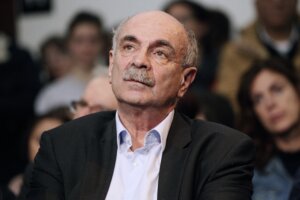
Is the Jewish joke on the verge of becoming extinct? The Last Jewish Joke, written by the veteran Parisian sociologist Michel Wieviorka, and newly translated into English by Cory Stockwell, argues that in recent years, Jews began to seem less heimish for at least three reasons: The Holocaust receded from memory; Israel’s government became guilty of actions decried internationally as war crimes; and right-wing antisemites who were always present became more boldly vocal.
Reminiscing about when he heard certain jokes, the author compiles his own consoling self-portrait in an autumnal mood. Wieviorka will be 80 next year, and his prose has a tendency to poignantly deem things as the “last” or at their “end.”
English language readers may need to be reminded that, when Wieviorka alludes to family situations in which he first heard Jewish jokes, it is in the context of his distinguished family of overachievers. His sister Annette is an eminent historian of the Holocaust. Another sister, Sylvie, is a psychiatrist and academic, and a brother, Olivier, is a historian specializing in World War II and the French Resistance. The entire mishpocheh is inspired and motivated by the memory of their paternal grandparents, Polish Jews who were murdered at Auschwitz. Indeed, Annette Wieviorka recently published a “family autobiography,” which asked subtle, eloquent, and nuanced questions about her antecedents.
In a comparable emotional aura of reverence, Wieviorka characterizes Jewish comedy of the past as “never malicious” (though apparently insult comics like Jack E. Leonard, Don Rickles, and Joan Rivers never got the memo).
The notion that joking Jews had to be sympathetic victims to elicit empathy from non-Jewish audiences may be true of some raconteurs, but is also belied by historical examples of potty-mouthed rapscallions like Belle Barth, B. S. Pully (born Murray Lerman) and Joe E. Ross (born Joseph Roszawikz), who startled nightclub audiences of their day with profanity.
Later Jewish shock jocks of the Howard Stern variety likewise chose to surprise, rather than charm, the public as a way to win notoriety. And Larry David’s Curb Your Enthusiasm, far from relying on vulnerable Jews as victims, presented characters screaming putdowns to elicit hilarity.
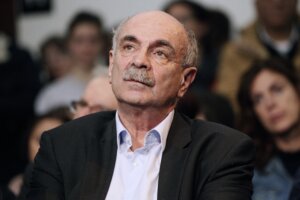
To bolster his arguments, Wieviorka refers to the counterexample of Popeck (born Judka Herpstu), a demure, wry entertainer of Polish and Romanian Jewish origin, who at 90 still appears at French theaters with gentle monologues akin to those of the Danish Jewish wit Victor Borge. Popeck presents himself onstage as a grumpy Eastern-European immigrant speaking Yiddish-accented French.
Wieviorka values such exemplars of rapidly vanishing tradition; as a social scientist, he is convinced that because communal settings such as the Borscht Belt no longer exist, the comics who once flourished on hotel stages in the Catskills have disappeared from memory.
To be sure, American standups like Myron Cohen, Jan Murray, and Carl Ballantine, once familiar from TV variety shows, are rarely mentioned now, though others like Eddie Cantor are periodically rediscovered by a new public, as Cantor was when he showed up as a character in HBO’s Boardwalk Empire. But in his autobiographical deep dive, Wieviorka, who writes here more as a memoirist than a history of comedy, is naturally more concerned with things that he personally saw or heard, rather than any objective history of Jewish comedians through the ages.
Wieviorka also somewhat curiously refers to the “Yiddish-inflected” comedy of Groucho Marx. Apart from the word “schnorrer” which appears in “Hooray for Captain Spaulding,” a song written by Harry Ruby and Bert Kalmar, it is difficult to think of many other explicit Yiddishisms in Groucho’s verbal elan.
Wieviorka’s anecdotes tend to be hefty and hearty, like a family repast of kreplach that remains in the visceral memory for days after being consumed. Some of the quaintly old fashioned tales he refers to recall the precedent of Sigmund Freud’s The Joke and Its Relation to the Unconscious, a dissection of pleasantries that reflects a sturdy Yekke approach to light-heartedness. Of course, in this optic of Jewish humor, there is no room for concise one-liners from the likes of Henny Youngman or Rodney Dangerfield (born Jacob Cohen). For Wieviorka, as with Freud, brevity was so far from being the soul of wit that it might almost seem non-Jewish.
Another of Wieviorka’s claims appears to conflict with Jewish tradition itself, such as when he states that funny Jews laugh at themselves, never at others, negating the othering of mocked and disdained people in Chelm, a legendary village in Yiddish folklore inhabited by fools who believe themselves to be wise.
To support some of his claims, the author discusses the 1970s French film The Mad Adventures of Rabbi Jacob, a box office success, now somewhat frantic and dated-looking, starring the popular Gallic comedian, Louis de Funès disguised as a rabbi. More to the point, Wieviorka justly reveres the French Jewish comedian Pierre Dac for his still-fascinating wartime broadcasts from London for the Free French forces. Dac’s sense of humor simultaneously expressing Yiddishkeit and also undermining the enemy’s Fascist ideology is a subject that might have intrigued Freud himself.
To bolster the essentially serious messages of his book, Wieviorka mentions the writers Elie Wiesel and André Schwarz-Bart as well as the painter Marc Chagall, names rarely seen in books about humor.
Wieviorka’s elegiac, end-of-an-era tone might be cheered up by a glance at the Netflix streaming schedule or a visit to a comedy club. Of course Jewish humor is thriving, as Wieviorka himself admits; Le Monde headlined a relevant story about the aftermath of the Oct. 7 attacks, “Israeli comedians are boosting morale in wartime.”
So, for all its methodical, highly intellectual analysis, The Last Jewish Joke might be best appreciated as a moving Kaddish for the demise of anecdotes that were once considered the height of drollery. It is very much a product of brainy French Jewish creativity, which itself deserves to be cherished and celebrated.
The post Has the Jewish joke become an endangered species — Òu sont les blagues d’antan? appeared first on The Forward.
Uncategorized
California College Employee Calling Jewish Professor ‘Colonizer’ Was Antisemitic, Investigation Finds

Sign reading “Welcome to City College of San Francisco” above glass entry doors with building number 88, San Francisco, California, Aug. 29, 2025. Photo: Smith Collection/Gado/Sipa USA via Reuters Connect
A City College of San Francisco (CCSF) staff member who called a Jewish professor a “colonizer” among other verbal attacks engaged in unlawful harassment and discrimination based on the academic’s Jewish identity, according to an independent investigation into the incident.
The Louis D. Brandeis Center for Human Rights Under Law and the StandWithUs Saidoff Legal Center, two Jewish advocacy groups, on Tuesday celebrated the upholding of a disciplinary investigation’s finding as a “significant victory” for Jewish faculty and students.
“The outcome establishes a critical precedent for how universities must evaluate conduct often mischaracterized as political speech but that, in context, targets Jewish identity,” the groups said in a statement.
The investigation stemmed from a series of incidents which escalated to an explosive May 2025 confrontation in which CCSF employee Maria Salazar-Colon, president of the local Service Employees International Union (SEIU) union, allegedly launched a volley of anti-Jewish invective at computer science professor Abigail Bornstein. Calling Bornstein a “colonizer” and telling her to “shut the f—k up,” Salazar-Colon converted the professor’s name into a sobriquet by denouncing her as “Dumb-stein” during the public comment portion in a meeting of the community college’s board of trustees, according to the Brandeis Center and StandWithUs.
That utterance, combined with other comments related to Israel, indicated Salazar-Colon’s awareness of Bornstein’s Jewishness and her willingness to degrade her over it, the Brandeis Center and StandWithUs said — noting that a trivial discussion on college “governance,” not politics or the Middle East conflict, set the staff member off.
Salazar-Colon allegedly continued targeting Bornstein through email, denouncing her again as a “colonizer” and making other crude statements. The conduct drove the professor off campus. She reported the alleged harassment to the CCSF administration and filed a criminal complaint with the local police.
However, Salazar-Colon hit back, filing her own grievance in response to allege that she was the victim. Meanwhile, the college hired a law firm as a third-party investigator to look into the matter. Its findings were conclusive, determining not only that Salazar-Colon was fully culpable but that her conduct, rising to “workplace violence,” was intentionally discriminatory against a Jewish colleague.
CCSF ultimately dismissed Salazar-Colon’s “retaliatory” complaint, but the finality of its decision hung on the opinion of the college trustees. Salazar-Colon filed an appeal with the body. It took no action, crystallizing, the Brandeis Center and StandWithUs said, a consensus on the “seriousness of the underlying conduct and the strength of support for the [third-party investigator’s] findings.”
On Monday, Brandeis Center staff litigation attorney Deena Margolies told The Algemeiner that, in this case, justice prevailed but that many other Jewish members of academia suffer similar indignities.
“The college did the right thing here. They brought in an independent investigator. They made clear that this was about discrimination based on Bornstein’s protected identity, that being Jewish — not union advocacy — and that’s important and a necessary distinction that we don’t often see being recognized,” Margolies said. “I’m seeing many more of these disciplinary matters in the employee context, and I notice that what often happens is that when a Jewish professor or staff member is targeted or files a complaint, there is often a cross complaint, a baseless complaint which is retaliatory. And yet, they always end up coming through.”
CCSF will be taking disciplinary action. against Salazar-Colon.
As previously reported by The Algemeiner, antisemitism promoted by university employees often disguises itself as politics, complicating higher education institutions’ response to it.
In September, a survey conducted by the Anti-Defamation League (ADL) and the Academic Engagement Network (AEN) found that staff and faculty accelerated the “antisemitism” crisis on US college campuses by politicizing the classroom, promoting anti-Israel bias, and even discriminating against Jewish colleagues. It found that 73 percent of Jewish faculty witnessed their colleagues engaging in antisemitic activity, and a significant percentage named the Faculty and Staff for Justice in Palestine (FSJP) group as the force driving it.
Of those aware of an FSJP chapter on their campus, the vast majority of respondents reported that the chapter engaged in anti-Israel programming (77.2 percent), organized anti-Israel protests and demonstrations (79.4 percent), and endorsed anti-Israel divestment campaigns (84.8 percent). Additionally, 50 percent of respondents said that anti-Zionist faculty have established de facto, or “shadow,” boycotts of Israel on campus even in the absence of formal declaration or recognition of one by the administration. Among those who reported the presence of such a boycott, 55 percent noted that departments avoid co-sponsoring events with Jewish or pro-Israel groups and 29.5 percent said this policy is also subtly enacted by sabotaging negotiations for partnerships with Israeli institutions. All the while, such faculty fostered an environment in which Jewish professors were “maligned, professionally isolated, and in severe cases, doxxed or harassed” as they assumed the right to determine for their Jewish colleagues what constitutes antisemitism.
Administrative officials responded inconsistently to antisemitic hatred, affording additional rationale to the downstream of hatred. More than half (53.1 percent) of respondents described their university’s response to incidents involving antisemitism or anti-Israel bias as “very” or “somewhat” unhelpful, and a striking 77.3 percent thought the same of their professional academic associations. In totality, alleged faculty misconduct and administrative dereliction combined to degrade the professional experiences of Jewish professors, as many reported “worsening mental and physical health, increased self-censorship, fear for personal safety,” and a sense that the destruction of their careers and reputations was imminent.
“Antisemitism cannot and should not be downplayed as political, academic, or workplace disagreement. Antisemitism is, clearly and concretely, insidious discrimination,” Brandeis Center chairman Kenneth Marcus, a former US assistant secretary of education for civil rights, said in a statement released with the news of the outcome of the CCSF incident. “Institutions have both the authority and the obligation to intervene, and we are hopeful that these outcomes encourage those who wish to report incidents of antisemitism to come forward without fear of retaliation.”
Follow Dion J. Pierre @DionJPierre.
Uncategorized
Turkish Intel Chief Hosts Hamas Leaders as New Report Warns of Turkey’s Ties to Muslim Brotherhood

Turkish President Tayyip Erdogan speaks during a ceremony for the handover of new vehicles to the gendarmerie and police forces in Istanbul, Turkey, Nov. 28, 2025. Photo: REUTERS/Murad Sezer
Turkey’s extensive ties with Hamas and other terrorist groups and Islamist movements are raising alarm bells among analysts, highlighting Ankara’s controversial pivot away from its traditional Western alliances amid ongoing regional conflicts.
This week, Turkish intelligence chief Ibrahim Kalın met in Ankara with Khalil Al-Khaya, a senior Hamas negotiator, and the terrorist group’s political bureau delegation to discuss prospects for advancing the second phase of the Gaza ceasefire — marking the second such meeting in under two weeks.
Last week, Kalın also met with senior Hamas leaders in Istanbul, underscoring Turkey’s ongoing diplomatic engagement with the Islamist group.
Notably absent from both meetings’ public summaries was any mention of Hamas’s disarmament — a key condition of the US-backed peace plan, which the terrorist group continues to reject, further complicating ceasefire efforts.
Earlier this year, the US-backed plan to end the war in Gaza hit major roadblocks after proposals surfaced that would allow Hamas to retain some small arms — an idea strongly denounced by Israeli officials who insist the Islamist group must fully disarm.
Israel has previously warned that Hamas must give up its weapons for the second phase of the ceasefire to move forward, pointing to tens of thousands of rifles and an active network of underground tunnels still under the terrorist group’s control.
Last week, US President Donald Trump’s “Board of Peace” reportedly presented a disarmament plan to Hamas that would require the terrorist group to allow the destruction of its vast Gaza tunnel network as it lays down its arms in stages over eight months. Palestinian officials indicated Hamas would not accept the proposal without “amendments and improvements.”
Under Trump’s 20-point Gaza peace plan, phase two would involve deploying an international stabilization force (ISF), beginning large-scale reconstruction, and establishing a Palestinian technocratic committee to oversee the territory’s administration.
Conditioned on Hamas’s disarmament, the Israel Defense Forces (IDF) would also withdraw from the approximately 53 percent of the enclave they currently occupy.
Since the start of the war in Gaza, Turkey has repeatedly tried to position itself as a regional mediator, maintaining direct intelligence channels with Hamas to advance ceasefire talks and solidifying its role in US-backed diplomatic efforts.
However, Turkey has also been a long-time backer of Hamas, hosting senior officials multiple times over the years and refusing to designate the group as a terrorist organization. Ankara has also provided Hamas with both political and financial support by allowing its leadership to operate networks from Turkish soil.
Israeli officials have repeatedly accused Hamas operatives of using Turkey as a base for recruitment, financing, and operational coordination.
On Monday, Israeli intelligence services uncovered a Hamas terror network in the West Bank, directed by an operative based in Turkey, revealing ongoing coordination between the group’s cells abroad and on the ground.
According to Sinan Ciddi, senior fellow at the Foundation for Defense of Democracies (FDD), a Washington, DC-based think tank, Turkey’s high-level meetings with Hamas and growing engagement in Gaza reflect a stark gap between its public diplomacy and private dealings, revealing a calculated effort to maintain influence in the region.
“Publicly, Turkey has presented itself as a diplomatic broker seeking a ceasefire. Privately, its continued high-level engagement with Hamas, particularly through intelligence channels, signals an enduring political alignment and a willingness to preserve the group as a relevant actor in postwar Gaza,” Ciddi wrote in a newly released report.
“Ankara’s maintenance of access to Hamas leadership is likely intended to help ensure Turkey retains influence over any future political settlement,” he continued.
Israel has consistently opposed any role for Turkish security forces in postwar Gaza, with Ankara seeking to expand its regional influence — a move experts warn could strengthen Hamas’s terrorist infrastructure.
Amid growing concerns over Turkey’s regional influence, a newly released FDD report underscored the country’s pivot under President Recep Tayyip Erdogan from its traditional Western alignment toward closer ties with Islamist movements, including the Muslim Brotherhood.
The report identified Turkey as a key refuge for Muslim Brotherhood leaders from across the region, including Egypt and Yemen, a role that has intensified after many fled their home countries amid government crackdowns.
For years, the Muslim Brotherhood has faced bans or restrictions across the Middle East, with some European countries and the United States recently designating the group or specific branches as terrorist organization.
“There is an established track record … where Turkey significantly undermines the transatlantic alliance’s core security concerns,” Ciddi said.
Uncategorized
US Appeals Court Reinstates $655M Ruling Against Palestinian Authorities Over Terrorism

Palestinian Authority President Mahmoud Abbas looks on as he visits the Istishari Cancer Center in Ramallah, in the West Bank, May 14, 2025. Photo: REUTERS/Mohammed Torokman
A US federal appeals court on Monday reinstated a whopping $655.5 million judgment against the Palestine Liberation Organization (PLO) and the Palestinian Authority (PA), delivering a major legal victory for American victims seeking to hold the groups responsible for the notorious “pay-for-slay” terrorism program.
The ruling by the US Court of Appeals for the Second Circuit restored a jury’s earlier finding that the PLO and PA bore civil liability under the Anti-Terrorism Act for a series of attacks in Israel that killed and injured US citizens.
In its opinion, the court recalled its previous mandate vacating the initial decision, writing that doing so was warranted by “intervening changes in underlying law” and the need to prevent an unjust outcome after years of litigation. The panel emphasized that appellate courts retained the authority to revisit earlier decisions in “extraordinary circumstances,” a standard it found satisfied in this case.
The judges also addressed the issue of jurisdiction, which had previously served as an obstacle in the case.
In 2023, a federal appeals court ruled that US courts did not have the authority to hear certain lawsuits against the PLO and the PA stemming from terrorist attacks abroad that killed or injured American citizens. In a decision issued by Second Circuit court, the panel concluded that Congress could not compel foreign defendants to face litigation in US courts without sufficient ties to the country, dealing a significant setback to victims seeking damages through American legal channels.
But the court signaled that subsequent legal developments from the Supreme Court and evolving interpretations of the Anti-Terrorism Act altered the analysis enough to justify reinstating the judgment.
At the center of the case was the Anti-Terrorism Act’s provision allowing US nationals to seek civil damages for acts of international terrorism. A jury had originally awarded damages to victims and their families, finding a link between the alleged terrorists and attacks targeting civilians. Those damages resulted in the mandated enforcement of the more than $650 million judgment.
For victims’ families and advocates, the decision marked a significant step toward enforcing consequences against groups accused of supporting or incentivizing violence.
Supporters have argued that lawsuits play a critical role in deterring terrorism, particularly when criminal prosecution is not possible. By reinstating the judgment, the court appeared to endorse the broader principle that US law can serve as a tool of accountability, even in cases involving foreign actors and overseas attacks.
The court cautioned that enforcement presents a distinct set of legal and practical challenges. It pointed to potential obstacles including asset location, sovereign protections, and the complexities of executing judgments against foreign entities.
The Palestinian Authority, which exercises limited self-governance in the West Bank and has long been riddled with accusations of corruption, has for years carried out a so-called “pay-for-slay” program, which rewards terrorists and their families for carrying out attacks against Israelis.
Under this policy, official payments are made to Palestinian prisoners held in Israeli jails, the families of “martyrs” killed in attacks on Israelis, and Palestinians injured in terrorist attacks.
Reports estimate that approximately 8 percent of the PA’s budget has been allocated to paying stipends to convicted terrorists and their families.
Skeptics suggest the hurdles in seeking financial retribution from the PLO and PA could prove substantial. The PLO and PA maintain limited assets within the US, and some may be protected from seizure. Efforts to enforce the judgment could also raise sensitive diplomatic concerns, particularly given the entities’ role in international negotiations and governance.
The case is likely to have far-reaching implications for future terrorism litigation, particularly as Congress continues to explore ways to expand the reach of US courts in holding foreign actors accountable.