


Uncategorized
How Germany’s Holocaust remembrance culture kicked off a democratic crisis
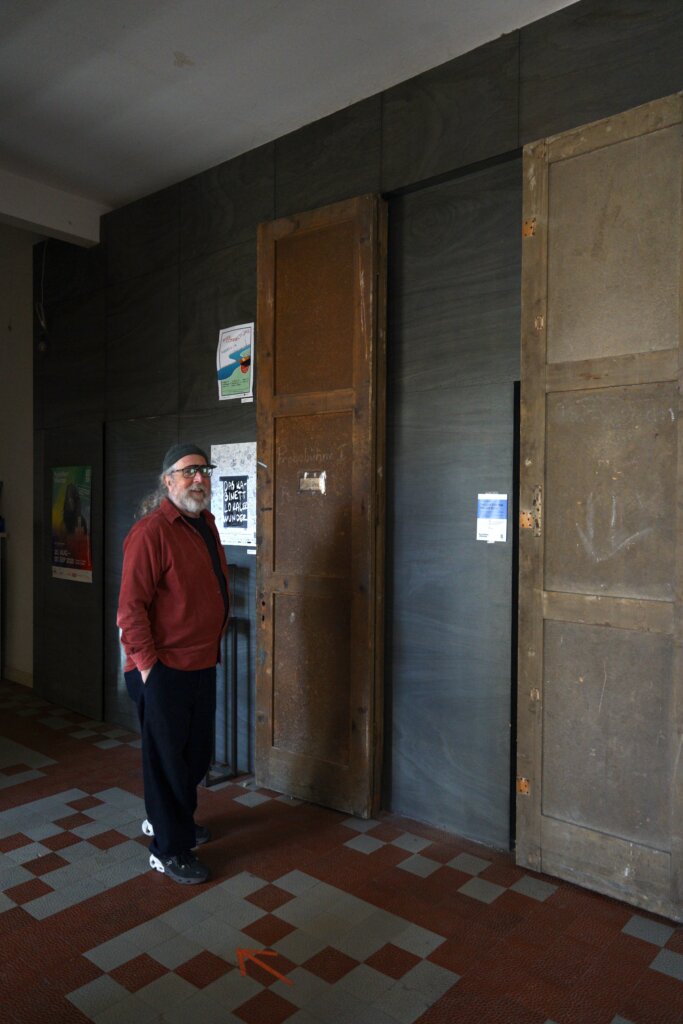
WEIMAR, Thuringia, Germany — Walking through Weimar, Germany, the legacy of the Holocaust seems inescapable. Stolpersteine — German for “stumbling blocks” — are placed outside the homes of people killed during the Shoah, essential evidence of Erinnerungskultur, or memory culture, a national commitment to memorializing, and learning from, the Nazis’ atrocities.
But this commitment is being challenged. Alan Bern, a Yiddish musician described to me as “the man who solved the Shoah,” had just returned from a press conference when I met him, where he spoke alongside local law enforcement officials about a 51-year-old man charged with the 33rd case of vandalism of the memorial stones in the Eastern German city this year.
Bern, 70, an American who came to Germany nearly 40 years ago and holds the nation’s highest civilian honor, said, “Attacks on Stolpersteine are not primarily attacks against Jews, but rather against society and, not least, against human dignity.”
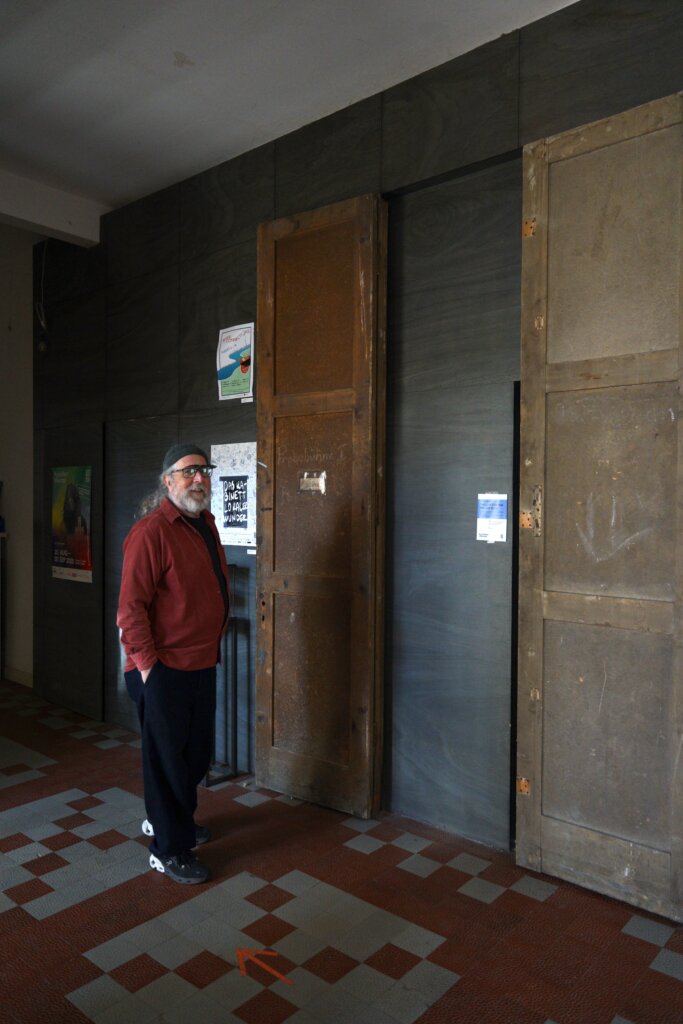
Bern, a composer, founded a school called the Other Music Academy, where he and his colleagues are creating encounters critical to the fight against Jew-hatred in Germany.
They bring together Jews and the descendants of Nazis, Israelis and Palestinians, and Germans and Syrian migrants in an attempt to apply the lessons of the Holocaust forward to the issues facing Germany today. Democracy is in the center’s DNA both in ethos and architecture — the entrance to their dance hall is a 100 year-old door from the Deutsches Nationaltheater in Weimar, where Germany’s first constitution was written and ratified.
“I believe that the encounter with otherness,” Bern said, “is essential to transforming yourself and transforming society.”
Bern’s work helps extend Germany’s memory culture, applying its lessons beyond the Holocaust to address threats against democracy posed by the far-right, which is gaining popularity around the country.
Although not all incidents of antisemitism in Germany are coming from the right, the rise of the far-right Alternative für Deutschland (AfD) party has forced a new debate over Germany’s commitment to remembering the Holocaust and other Nazi atrocities. AfD holds a plurality in Thuringia’s state parliament, and, after this year’s February elections, became the main opposition party in Germany’s federal parliament. The party’s most radical wing says that memory culture is a “guilt cult” and calls for a “180 degree turnaround” in the nation’s approach to remembering its history.
And while many Jews are deeply concerned about the right’s desire to abandon memory culture, some Jews in Germany, particularly those on the left, feel that the societal commitment to preventing another Holocaust has caused the state to police their ability to act and think freely, particularly when critiquing Israel. Since Oct. 7, 2023, Jewish activists have lost awards and speaking engagements, and have even been labeled extremists and put under surveillance by Germany’s state intelligence service.
Memory culture is not just essential to Germans, however; it’s a key for Jews around the world, who take heritage trips to concentration camps and ancestral homes there as part of memorializing the Holocaust. And worldwide, memory culture is essential to remembering global atrocities — yet its tenets are under attack. The Trump administration has criticized the Smithsonian’s approach to slavery, while Turkey refuses to acknowledge the existence of the Armenian genocide.
I went to Germany to speak with both Jews and non-Jewish Germans who are doing the work of bringing memory culture to life, to see how their work is being impacted by these political shifts, and to find out: What is lost if Germany loses its memory?
A brief history of memory culture
After the Berlin Wall fell, in 1989, the newly reunited and democratic Germany defined its national identity as a state committed to learning from the atrocities it committed in the past, thus preventing them from ever happening again.
But this devotion to the Holocaust wasn’t always the case. At the end of World War II, fewer than 15,000 Jews remained in Germany, the majority of whom went to West Germany when the country was partitioned after World War II. West Germany largely avoided accepting responsibility for the Holocaust until 1970, when Chancellor Willy Brandt visited the Warsaw Ghetto, in Poland, and laid a wreath at its memorial.
Meanwhile, under East Germany’s Soviet-style system, Nazi crimes were stripped of their antisemitic motivations and recast as offenses to communism; the small Jewish community of less than 1,000 people who remained there continued to be persecuted by the Stasi for perceived opposition to socialist values.
After the Berlin Wall came down and Germany reunified the following year, Chancellor Helmut Kohl oversaw the immigration of some 200,000 Jews from the former Soviet Union. The majority of Germany’s new Jews moved to Berlin, but others repopulated Jewish communities in the former East.
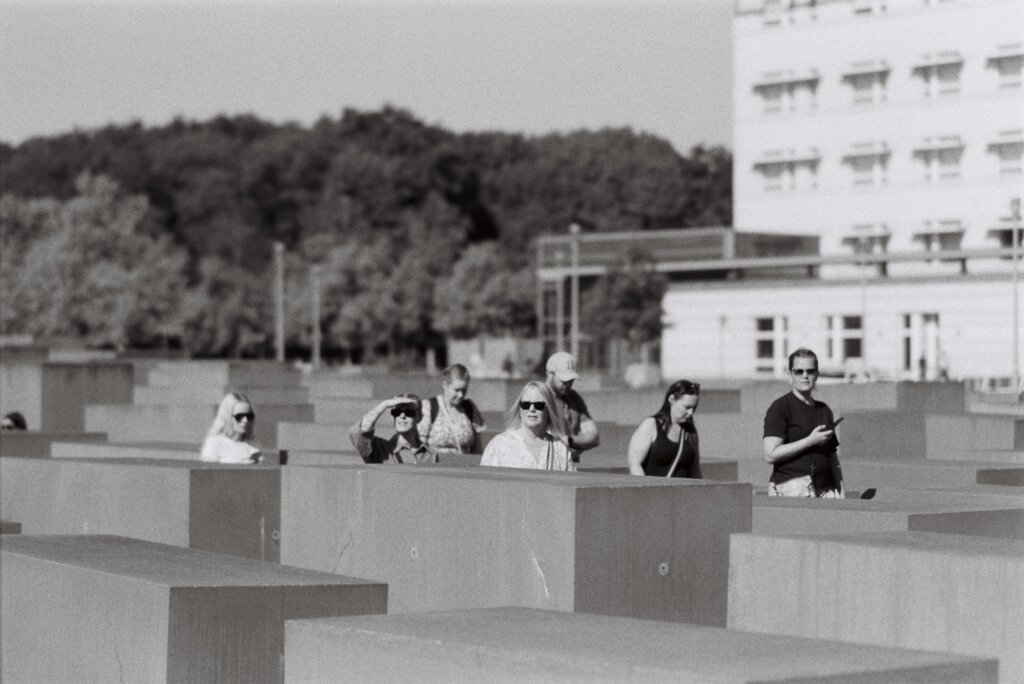
With the formation of the new German republic, the government moved back to Berlin, and in 1999, voted to construct the Memorial to the Murdered Jews of Europe in the heart of the city — next to Berlin’s famous Brandenburg Gate. They expanded concentration camp memorials to include details about the Holocaust and built a world-renowned Jewish museum designed by Daniel Libeskind. Visits to these sites became a regular part of German school curricula. A centralized national Jewish council — The Zentralrat der Juden in Deutschland, or the Central Council of Jews in Germany — today receives €22 million in government funding to serve as the official voice of Jewish people and to advocate against antisemitism across society.
Memory culture is palpable everywhere in Germany, whether in large memorials and historical sites like concentration camps, or the small plaques and reminders, like the stumbling blocks, about the Jews who once lived there.
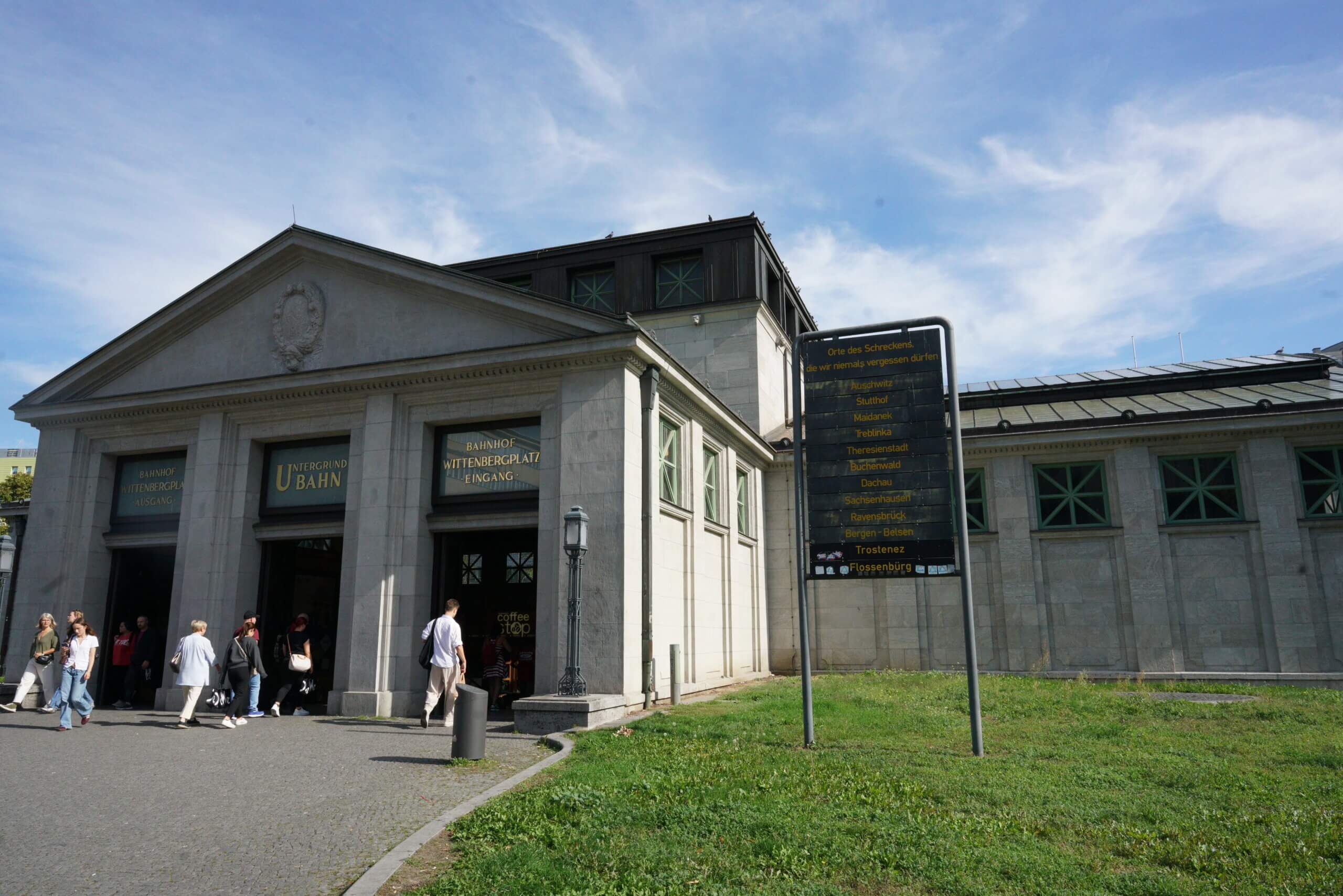
For years, however, shame over the Holocaust has muted national pride. Many Germans avoided flying their flag for fear of invoking the kind of nationalism that led to the rise of the Nazi party. (Though in the past two decades, flags have become more common at German sporting matches and events.)
That has led some, such as the far-right AfD party, to claim that memory culture has harmed Germany. Former party leader Alexander Gauland referred in 2018 to the Nazi era as a speck of “bird shit” in an otherwise grand national history, a speck that was given outsize importance.
And more recently, memory culture has become complicated by modern political concerns. In 2008, Chancellor Angela Merkel declared that supporting Israel was Germany’s “reason of state,” and the government has consistently operated with an iron-clad support for Israel as a form of reparations for the Holocaust.
But as Israel’s actions have come under increasing international condemnation since Oct. 7, Germany’s memory culture too has come under broader criticism by Jews and non-Jews alike. Some Jews in Germany are concerned over what they see as Germany abandoning Israel after Chancellor Friedrich Merz halted weapons exports to the Jewish state in August to curb the supply that could be used in Gaza. Other Jews, meanwhile, feel unable to speak out against the war given the national devotion to Israel.
And the Central Council, the state Jewish voice, believes that AfD is taking advantage of the war to inflame tensions between a new wave of Muslim immigrants and Germany’s Jews — and, in turn, win Jewish support for their party, including their belief in dismantling memory culture. Before this year’s elections, the Council circulated a letter signed by the leaders of every Jewish state organization warning that the AfD “uses Jews as an excuse to spread its racist and anti-Muslim slogans.”
The right-wing critique of memory culture in Germany
The AfD was officially designated a ‘rightwing extremist’ force by Germany’s intelligence agency, a status the far-right party is contesting in court. Still, it is the largest party in Thuringia and is poised to take over at least one state in next year’s elections. This would give it control over the educational and cultural agencies that fund memory culture in Germany, agencies it hopes to defund. Clearly, the AfD is not a fringe group.
And it is gaining increasing influence nationally and visibility internationally. Prior to their strong showing in February’s elections, both vice president JD Vance and President Trump’s ally Elon Musk encouraged German voters to vote for AfD.
The official voice of the Jewish community in Germany unambiguously says that the AfD is a growing threat to German Jews, and Jews around the world. In their 2024 annual report, the Council called the AfD a “legitimizing bridge” between the political mainstream and extremist actors — like the man who livestreamed himself ranting about the Great Replacement Theory before trying and failing to break into the synagogue in Halle with a gun in 2019, killing two people outside its doors.
“There is a will in this party to change the remembrance and the memory of National Socialism in focusing on the positive parts of German history,” said Shila Erlbaum, the Council’s director of policy. “This is an attack on Jewish history and Jewish memory.”
But not all Jews agree the AfD is such a threat. In 2018, a group of Jewish party members founded the Federal Association of Jews in the AfD (JAfD), a small caucus within the party’s 70,000 members. Today, JAfD has only 25 members, along with another 80 supporters who are not full members.
Artur Abramovych, the JAfD’s 29-year-old chairman, told me that they established the caucus after anti-immigrant demonstrations broke out in the eastern city of Chemnitz, when two Kurdish immigrants stabbed and killed a man.
Like the party’s leaders, the JAfD believes, according to its website, that “the greatest threat to Europe in the 21st century is the growth of the Muslim population” and adds that “the rise of political Islam is also primarily a threat to Jews.” While party leaders’ statements contradict AfD’s official support for Israel, the JAfD is strongly and unequivocally pro-Israel.
In January 2024, the German investigative newsroom Correctiv reported that AfD members secretly met with neo-Nazis and wealthy businessmen to plan the mass deportation of immigrants from Germany in a plot called “remigration.” The news brought hundreds of thousands of Germans into the streets in protest.
AfD initially disputed what was discussed at the meeting, though eventually party leader Alice Weidel embraced remigration as the official party platform. Though the party is once again trying to distance itself from the controversial remigration concept to create a broader appeal among the mainstream electorate, JAfD still believes that the plan is essential. Abramovych himself is an immigrant — from Ukraine — but claimed that immigration is threatening German society due to Muslim fertility rates.
Like the party’s hardliners, JAfD is also critical of Germany’s memory culture. Abramovych said that it didn’t originally hurt Jewish people, but now does “because people are forcing German politics to keep the borders open and let millions of Jew haters into the country” due to the state’s Holocaust guilt.
Germany’s immigration politics have moved to the right since Oct. 7, 2023. In an interview with Der Spiegel after the Hamas attack, former Chancellor Olaf Scholz told the magazine, “We have to deport people more often and faster.” Earlier this year, Merz’s government tightened border controls, and in October the Bundestag, analogous to the U.S. House of Representatives, voted to revoke a fast-track to citizenship law passed by Scholz.
While he smoked handrolled cigarettes and drank a cup of black coffee outside of a Ukrainian cafe in Berlin’s Friedrichshain-Kreuzberg neighborhood, I asked Abramovych if he was concerned that Jewish immigrants like himself could be deported from Germany in the future if the AfD gained power and remigration became government policy.
“What? Who would deport the Jews? That’s ridiculous,” Abramovych said.
An alternative critique of memory culture from the left
AfD had its first electoral win in the Bundestag, Germany’s lower parliamentary house, in 2017, becoming the third-largest party in the parliament. Shortly after, poet and political scientist Max Czollek published the best-selling De-Integrate!: A Jewish Survival Guide for the 21st Century, a polemic about Jewish assimilation into German culture. As a result of his edgy take on memory culture in Germany, Czollek has become something of a celebrity, and a bit of a pariah.
For Czollek, AfD is the symptom of a greater problem in Germany where the nation’s guilt over the Holocaust creates a “theater of memory” — a term borrowed from the late sociologist Y. Michal Bodemann — in which Jews play out their dutiful role on the national stage, held up by the state as model minorities, but are subject to losing its protection if they deviate from accepted norms.
Thuringian AfD leader Bjorn Höcke gained infamy when he called Berlin’s Holocaust memorial a “monument of shame,” but Czollek wrote that the idea was not new; in 1998, famed German left-wing intellectual Martin Walser called Germany’s Holocaust remembrance culture “monumentalization of shame” in his acceptance speech for the Peace Prize of the German Publishers’ Association.
To Czollek, AfD is just the latest step in a proud German tradition of tacitly accepting Nazism, albeit by a different name, in the East.
Behind Balenciaga sunglasses outside of a Kreuzberg cafe, Czollek described his family’s life in the former East Germany, part of a very small community of Jews who stayed after the war instead of departing for West Germany, America or Israel.
“The Jewish rituals I grew up with when my father started to reconnect to this tradition is more like the old, dark, empty synagogue singing of 20 people,” he explained. “And it’s like, ‘Why are there no people?’”
Czollek was born just before the Berlin wall came down, but for his family in East Germany, the Shoah was ever present in the absence of Jews. And it was magnified by what he described as a betrayal by the communist government that took over, which declared itself, its state and all of its citizens to be anti-Nazi — even if they had previously been active members of the Nazi party.
A report by the CIA in 1959 identified over 150 former high-ranking Nazi officials then working in positions of power within the communist East German government, and called it “doubtful” that they were sincere in the “change of political thinking.”
“You have this first generation of Jewish communists who came to Germany to build a better Germany and build up on this idea of anti-fascism as a proper fighting position,” he explained. “Suddenly, a lot of former Nazis were declared anti-fascist. So this is where the memory work fails.”
After the wall came down, Czollek argues that memory culture became a branding tool for Germany to prove itself as a democracy on the international stage — a tool that never offered anything meaningful to the few East German Jews like him, and that has proved ineffective at preventing the revival of a new ethno-nationalist right.
“Memory culture has become a tool in legitimizing and justifying the pride in Germany,” he said. But, he noted, memory culture is a relatively young part of German life; its widespread adoption came, ironically, during the “Years of the Baseball Bat” in the ‘90s, when neo-Nazi violence against migrants escalated severely.
After Oct. 7, Czollek believes that memory culture warped into something else entirely; today, anyone who speaks out against Israel’s response to the attacks in Gaza faces cancellation, disinvitation or even arrest.
“Memory culture used to be a pretty self-centered process of German self-improvement and reinvention,” Czollek said. “By now, it has become a tool of dominance and hegemony.”
“It’s almost like we have done the worst, and we have remembered the best,” he continued, opining that Holocaust and concentration camp memorials boost Germany’s national self-esteem and identity as a moral actor. Then, “you can start accusing migrants of not being as good as you are.”
And Jews who criticize the government’s version of memory culture risk losing state protection.
“There’s a tempting quality to playing along with the theater of memory, because being Jewish is rewarded if you do it in a specific way,” he continued. “Being a non-aligned Jew comes with a price.”
Although solidarity between Germany’s minorities — particularly Jews and Muslims — has become strained post-Oct. 7, exacerbated by the AfD, Czollek believes it’s the only way through the crisis brought about by memory culture and the rise of the far-right.
That’s why Czollek’s new book is called Alles auf Anfang — or, Everything Back to the Beginning. It’s a search for a new culture of remembrance in German life that includes not just Jews, but recognition of other migrant victims in German society.
Currently, much of Germany’s memory culture, exemplified in memorials like the Buchenwald concentration camp, keep their focus firmly in the past. But Czollek believes that, to address the current era, Germany needs to also find ways to commemorate violence perpetrated against its other minority groups.
“If you want to have memory culture as a living, active and productive thing today, it has to be updated every generation,” he said. “Sadness or grief is not a limited resource. We can all grieve together.”
The weaponization of memory culture against Jews
Immediately after Oct. 7, Wieland Hoban, a Jewish German living in Frankfurt am Main, began demonstrating against Germany’s support for Israel, and was arrested multiple times — the first time for wearing a shirt displaying a revolutionary fist logo, which is associated with the pro-Palestinian and anti-Israel organization Samidoun that was banned in Germany a few days following the attack.
The next month, Hoban gave a speech where he said, “Germany can’t wash away its Holocaust guilt with the blood of Palestinians.” Afterwards, he was taken aside by police and charged on suspicion of Volksverhetzung — “incitement to hatred” — a charge that has been used by the German government to prosecute neo-Nazis and far-right extremists, and carries a sentence of up to five years in prison.
In Hoban’s view, memory culture had extended past its logical limits to charge him, a Jew, with a violation of the German criminal code for invoking his own history.
“They explained to me that I had mentioned the Holocaust and that in Germany, they take the Holocaust very seriously,” Hoban said. “This was a bit surreal.”
Hoban, a composer and translator, has been chairman of Jüdische Stimme für gerechten Frieden in Nahost (Jewish Voice for Just Peace in the Middle East) since 2021. He told me that, like many artists in Germany, the cause of Palestinian self-determination has been important to him.
“This occupation of Judaism, through Zionism, had just pushed me away from any identification with Jewishness,” Hoban said. But joining Jüdische Stimme helped him resolve “an inner contradiction” he felt in being Jewish and also supporting Palestinians.
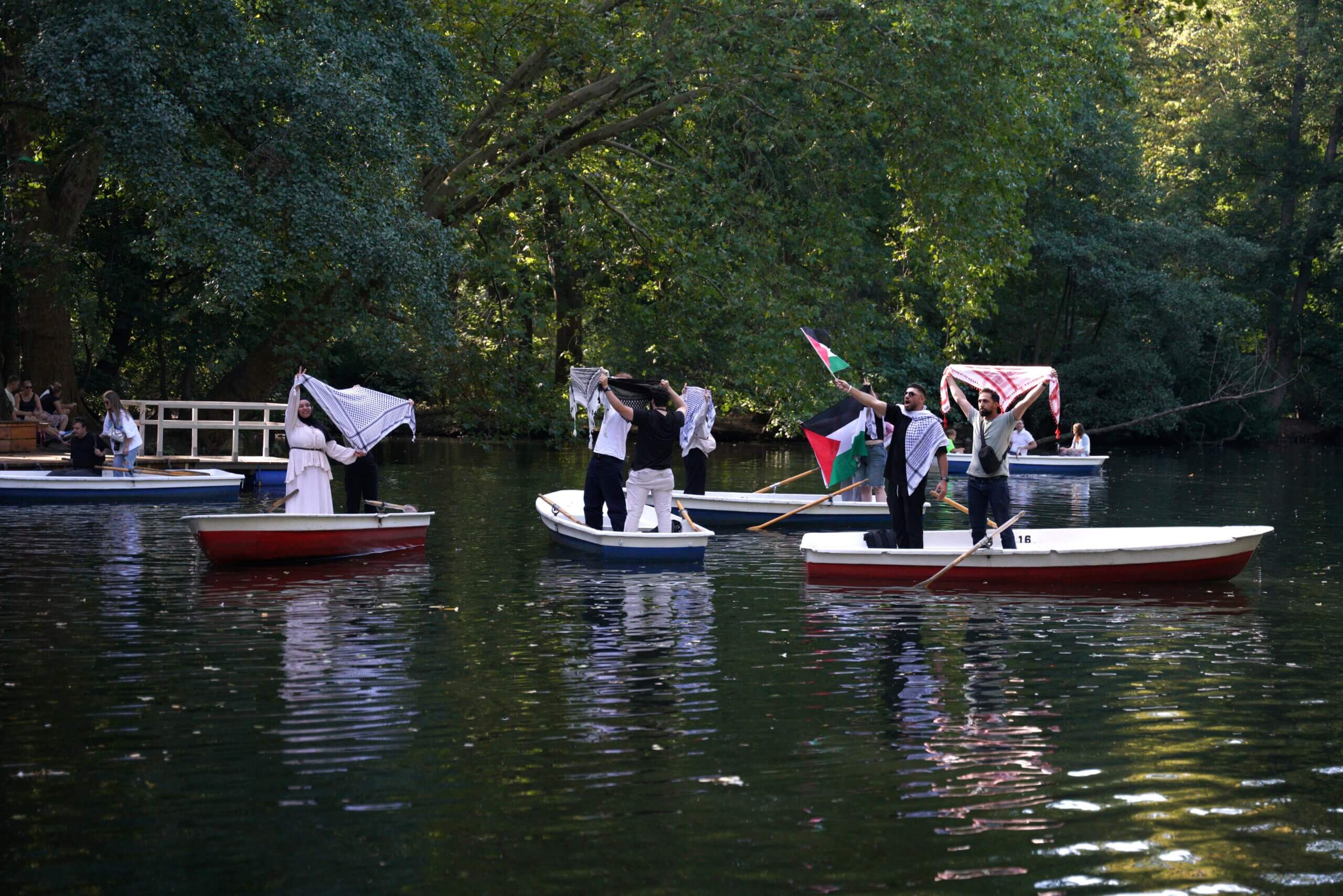
This June, Hoban received a text from a journalist asking him if he’d seen the latest report from the BfV, Germany’s domestic intelligence agency, on extremist groups in Germany. He hadn’t, but when he looked it up, Hoban learned that his organization had been labeled as a “foreign-related extremist” group.
While AfD is using the courts in an attempt to clear their domestic extremist label, Jüdische Stimme is not pushing back. Hoban doesn’t dispute the reasons for the label — he does criticize Israel and Germany’s memory culture — so his group sees no way to clear its name.
“I wish more people would just have the balls to say, ‘I don’t care if you call me antisemitic, I’m sticking to my guns here,’” Hoban said.
With the BfV’s extremist designation, Jüdische Stimme is now vulnerable to surveillance by the intelligence agency, as well as infiltration by informants.
But while the state is adamantly opposed to their cause, Hoban believes that public opinion is changing. The week that we spoke in September, a poll showed that 62% of all German voters believe Israel is committing genocide in Gaza, including a majority of both Christian Democratic Union and AfD voters. A report by the International Federation for Human Rights also found in October that Germany, among other nations, has weaponized the fight against antisemitism to suppress dissent.
And, over a year after Hoban was charged with incitement to hatred, he received a letter from the public prosecutor’s office informing him that the charge against him had been dropped.
A concentration camp gets political
The Buchenwald Memorial was established in 1958 on the site of the former concentration camp by the government of East Germany to commemorate communist resistance fighters; it did not memorialize the dead Jews. But after reunification, the Memorial’s focus expanded to include the more than 56,000 people killed and 280,000 who were imprisoned at the site, becoming a centerpiece in Germany’s tapestry of memory.
Today, Buchenwald — one of the centerpieces of Germany’s memory culture — finds itself caught in the middle of the debate over how to remember the Holocaust. It’s using its mission to confront its dark history in a new way: fighting back against politicians who distort the Holocaust.
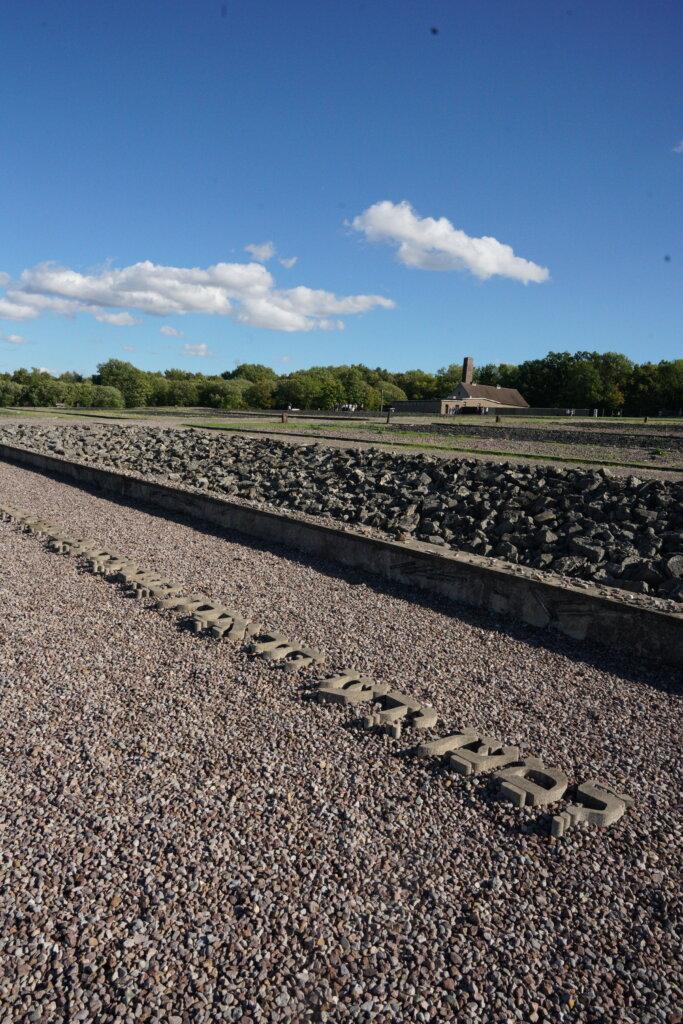
When an AfD member ran for mayor of Nordhausen, a city in Thuringia, in 2023, the Memorial’s official social media pages called him out online for dog whistling to right-wing extremists, invoking a false Holocaust-distorting conspiracy theory. The post changed the course of the election; in the first round of elections, the candidate had more than 45% of the vote, but after the Memorial’s statement, he failed to win in the second round.
“Many older inhabitants of Nordhausen who had not voted for many years said, ‘No, we don’t want to have a Holocaust denier as a mayor,’” the memorial’s director, Jens-Christian Wagner, said in an interview.
Last year, Wagner pursued a more extensive outreach with 300,000 letters mailed to seniors in Thuringia ahead of the state’s elections. The letters warned of the ways in which AfD party leaders have used Nazi language and distorted history.
The AfD fought back, taking the Memorial to court and accusing the Memorial of interfering in “political decision-making.” They lost.
“The court says explicitly that we can’t be neutral against any kind of Holocaust distortion,” Wagner explained to me.
With that mandate, Wagner now considers it his duty and the mission of the Memorial to combat Holocaust distortion, especially when it might affect elections. The Memorial has a particular interest; it’s located in Thuringia, where the AfD is gaining power, and it could lose its funding if the party wins control.
“With our interventions, we don’t think that we can change the positions of the AfD,” Wagner said. “We want to reach all these people who are not specifically voting for the AfD, who are in the gray zone, who can be rescued for democracy.”
Looking towards Germany’s future generations
The AfD has lately focused on reaching youth voters, spending heavily on digital outreach. As a result, young people in Germany are becoming increasingly anti-migrant, embracing far-right political ideas that were once verboten in Germany for being too close to Nazism.
Despite the Memorial’s successful interventions to deter adults from voting for AfD, Wagner is concerned about the rightward shift of younger generations, who are less likely to treat information from a Holocaust memorial with reverence — or even respect its history.
The director described young people who visit the Memorial on school trips displaying the Hitler salute, shouting “Sieg Heil” and photographing each other in front of crematory ovens.
“There were some right-wing young people in every school class for years, but these were only one or two, and the majority was against them, and this has completely changed,” Wagner said. “Now, spreading Holocaust distortion, being right-wing, is common sense in these school classes, and it’s very, very difficult for our educators to have a discourse with them.”
The Memorial has been attempting to revise their educational programming to make visits longer and more in-depth, and even built a youth hostel on the site so that school groups can stay and have extended experiences that they hope will make a lasting impact.
Alan Bern, of the Other Music Academy, also is also worried about the younger generations; he sees resonating with Germany’s youth as one of his most urgent and important challenges.
“Young people in Weimar have almost no real relationship to what it is that we’re doing,” Bern said. “So when they’re told ‘You shouldn’t be antisemitic,’ it’s just some adult telling them ‘Don’t do this.’”
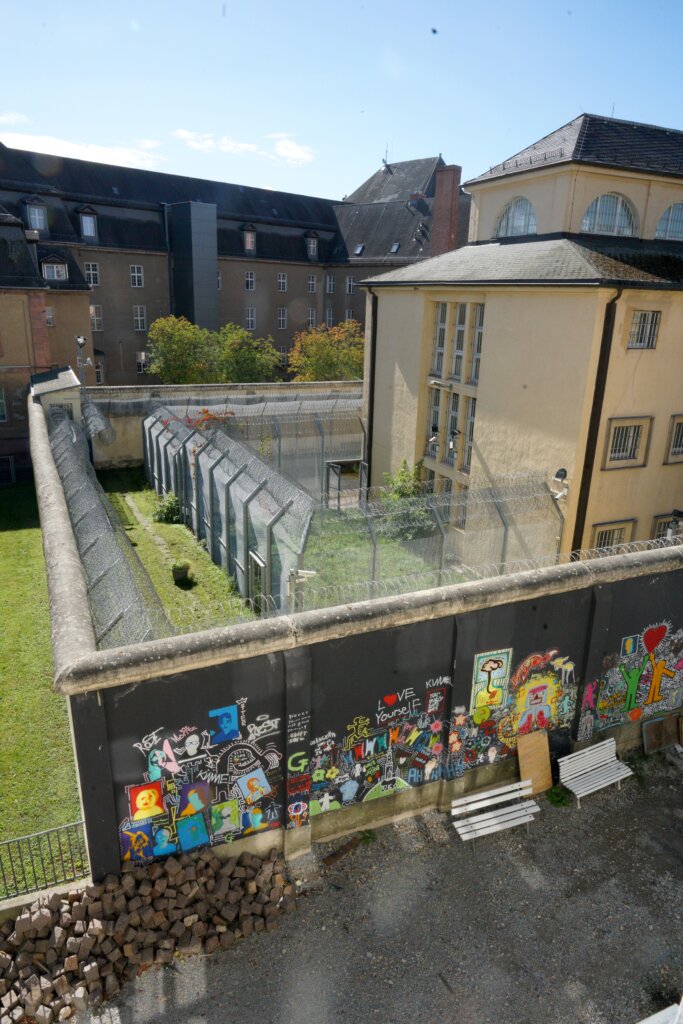
Like at Buchenwald, where the education department has placed its hopes for the future into its youth hostel, Bern wants to transform the former youth prison next to Other Music Academy into a dormitory of sorts where young people can stay for several days. The dichotomy of the prison’s barbed wire courtyard and its painted exterior wall, which artists have covered with colorful Keith Haring murals, pose a striking question about the direction of Germany’s future: Which way?
Pointing towards the floor and then to the prison across the driveway, Bern said, jokingly: “It’s either this or that.”
Challenged from both the left and the right, it’s unclear what is next for Germany’s memory culture. For now, the younger generations are caught in the middle.
While waiting at the bus stop to head back from Buchenwald, I found myself unexpectedly sandwiched in the middle of a high school tour group as they posed for a class photo. After we all boarded the bus, about half of them sat quietly — maybe contemplating the horrors they’d just seen, maybe dozing off. But as we drove down the hill toward Weimar, the bus also filled with the sound of laughter.
The future of memory culture, ultimately, will be up to them.
The post How Germany’s Holocaust remembrance culture kicked off a democratic crisis appeared first on The Forward.
Uncategorized
Why is the biggest soccer team in the world talking about Joseph Goebbels?
The biggest rivalry in international soccer — between Real Madrid and FC Barcelona — has erupted in recent months, as Madrid pushes the Spanish soccer federation to punish Barca for alleged referee bribery.
But the ugly sparring between the clubs took an unexpected turn last week when Spanish league president Javier Tebas entered the fray with a shocking comparison.
“Real Madrid’s management directs an orchestra of mouthpieces and Real Madrid TV leads the singing,” Tebas wrote Oct. 15 on X. “Their score is always the same: select the plays that suit them, repeat the grievance, feed the suspicion, and point fingers at the enemies.
“That method recalls propaganda mechanisms exploited by Goebbels, Nazi Germany’s minister of propaganda: systematic repetition, construction of an enemy, and subordination of facts to the narrative.”
Real Madrid, which has employed such stars as Cristiano Ronaldo and David Beckham, condemned the remark with a statement calling for Tebas’ resignation both from the Spanish league, La Liga, and the Royal Spanish Football Federation, where Tebas serves as vice president.
“Real Madrid C. F. considers it absolutely intolerable and extraordinarily serious that someone holding two positions of utmost responsibility in Spanish football resorts to a comparison with the propaganda methods of the Nazi regime to discredit our club, its management, and its television,” the club wrote Oct. 16.Tebas has thus far refused to resign or even take down the post, and has defended his critique by pointing to other Spanish leaders who have made similar comparisons in the past.
The Goebbels controversy comes amid growing concerns about antisemitism in Spain, including in sports, where thousands of protesters blocked an Israeli-branded cycling team from competing in the Vuelta race last year.
The bribery accusations against Barcelona first surfaced in 2023, when it was revealed the club had paid millions of dollars to companies linked to the former vice president of the Spanish refereeing body, José María Enríquez Negreira. A Spanish court dismissed the bribery charges in 2024, but the investigation continued, and earlier this month Madrid submitted a tranche of documents it said proved the bribery claims.
The conflict between the club and Tebas dates back at least to 2021, when Madrid club president Florentino Perez spearheaded a breakaway international league that would have threatened Spanish competition. Barcelona had also agreed to join the so-called Super League, but the plan was scuttled after enormous backlash from fans across the continent.
Joseph Goebbels, one of Hitler’s most devoted followers, led the German Propaganda Ministry after the Nazi party came to power in 1933. He and his wife died by suicide in 1945 after killing their six children with cyanide.
The post Why is the biggest soccer team in the world talking about Joseph Goebbels? appeared first on The Forward.
Uncategorized
Israel’s election may hinge on whether Netanyahu’s opposition will accept Arab support
Israel’s approaching election is developing into an extraordinary paradox: Prime Minister Benjamin Netanyahu, whose government presided over the catastrophe of Oct. 7 and whose record since has been a succession of security failures, assaults on democracy, capitulations to Haredi interests and international embarrassments, may yet survive politically because his opponents cannot bring themselves to accept the parliamentary support of Israel’s Arab citizens.
The polls have tightened, the opposition has conducted a strangely timid campaign, and U.S. President Donald Trump’s endorsement of Netanyahu over the weekend introduces an unpredictable element into a contest that should by any reasonable accounting be a referendum on utter failure. Yet given the picture emerging in the polls, the decisive question is whether the opposition’s leaders possess the courage to reach out to the one-fifth of Israelis who are Arabs – who are expected to vote in very high numbers on Oct. 27.
Since 1973, Israel’s classic center-left has never secured an election-day parliamentary majority without the seats of Arab parties. Yitzhak Rabin’s victory in 1992, for example, depended on a parliamentary balance that included Arab representatives, whose support later became essential to his government’s survival. By most credible polls, that is the picture that emerges now, and with that support, the opposition could become a comfortable majority of close to 70 of the 120 Knesset seats.
But things are not so simple. In 2020, most of the Joint Arab List – an alliance of Arab parties in Israel – recommended opposition leader Benny Gantz for prime minister, producing a numerical majority that collapsed because several opposition lawmakers simply could not stomach the prospect. But the Naftali Bennett-Yair Lapid government that removed Netanyahu in 2021 included the Arab party Ra’am, demonstrating that cooperation across this divide was possible even among politicians with profound disagreements about national identity and the question of a Palestinian state.
Throughout these episodes, the challenge was the elementary democratic principle that the votes of Arab citizens should carry precisely the same weight as those of Jewish citizens. And yet there are complications with these political alliances: the Arab parties are not “Zionist” – and more relevantly, they have real difficulty in a situation that involves conflict with the Palestinians, who are their non-citizen brothers and sisters.
Netanyahu has spent years exploiting the discomfort of his opponents with this reality, transforming the prospect of Arab political influence into a weapon against anyone seeking to replace him. During this election, his campaign has placed particular pressure on Gadi Eisenkot, the former IDF chief of staff, portraying any government of his, if it’s dependent on Arab parties, as compromised from the outset.
Eisenkot, Naftali Bennett and other opposition leaders are trying to win over former right wing voters who may have tired of Netanyahu’s endless scandals and failures – but those voters also have serious reservations about the Arab parties. So their prevarications are not hard to understand.
There is, of course, a double standard: Netanyahu routinely counts on the ultra-Orthodox parties, whose demands for military exemptions, public subsidies and educational autonomy have profound consequences for Israel’s security, economic resilience and civic solidarity. Their representatives are treated as legitimate negotiating partners whose seats belong automatically in the right-wing bloc, even when, indeed, they call themselves non-Zionist.
Arab political leaders are now offering the opposition passive support in parliament for free, meaning they do not even demand a seat at the government table. According to all credible polls, the opposition plus the Arab parties should have a comfortable majority after the Oct. 27 vote.
Mostly Muslim, with Christian communities and the distinct Druze population, these citizens share aspects of the language, culture and historical grievances of the surrounding Arab world while participating in the institutions, economy and daily life of the Jewish state. Two stories convey this complexity.
The first: A wounded Jewish reservist, a new immigrant and Technion engineer, was driving toward a hospital for treatment of a hand injured during service in Lebanon when police stopped him for speeding last year. As the Maariv newspaper’s columnist Ben Caspit reported, the reservist presented documentation of his medical circumstances, yet the officers, who were Jewish, issued a fine and delayed him despite the potential danger to his injured finger, behaving at times with an astonishing lack of consideration.
The case eventually reached a court, where the fine was canceled in a ruling that criticized the enforcement as falling short of reasonable, proportionate and fair administrative discretion. The judge was Rasha Saadi Atamna, an Arab woman whose decision recognized the wounded soldier’s service and circumstances while holding an institution of the Israeli state accountable to its own standards. It was a recognition denied by fellow Jews.
The second: On the morning of Oct. 7, 2023, Youssef Ziadna, a Bedouin minibus driver from Rahat who had dropped off a group of young people at the Nova music festival, showed extraordinary courage.
When Hamas launched its massacre, one of his passengers called desperately for help, and Ziadna drove toward the festival, entering an area where gunmen were murdering civilians and vehicles were fleeing in panic. Near the Gaza border communities, a man running from the slaughter warned him to proceed no further, and moments later gunfire sent Ziadna and others diving into a roadside ditch.
The danger was clear, the route home was available, and every ordinary instinct of self-preservation pointed toward escape. Ziadna instead continued toward the festival, found the people who had summoned him, collected other terrified and wounded Israelis and eventually squeezed roughly 30 passengers into a minibus designed for 14. Drawing on his knowledge of the terrain, he drove across fields and away from the gunmen, with other fleeing Israelis following behind him.
The people Ziadna carried to safety were Jewish Israelis, while his own Bedouin community was suffering murder and abduction in the same assault. Speaking to Israel Radio during Oct. 7 commemorations, he explained his decision in words that deserve to resonate far beyond the immediate story of his heroism: “I could have turned around and did a U-turn, but my conscience wouldn’t let me. I am a human being first. We have to live together in this very fine country of ours.”
The election, of course, will be decided by parliamentary arithmetic rather than inspiring anecdotes, and the stakes extend well beyond the composition of the next coalition.
Consider the government’s continuing failure to confront Jewish terrorism in the West Bank, where extremist settlers have now assaulted an American journalist and European diplomats in successive days. Heidi Levine, a Washington Post photographer whom I have known for decades, was brutally beaten while covering the Palestinian olive harvest, suffering injuries requiring surgery.
The following day, settlers attacked European diplomats and a French mayor near the Christian village of Taybeh. Netanyahu’s response was to question the evidence, emphasize the diplomats’ failure to coordinate with the army and suggest a campaign to smear settlers. Such indulgence of violent extremists disgraces Israel and accelerates its international isolation.
Trump’s endorsement this weekend of Netanyahu may influence some voters, but the fundamental choices belong to Israelis.
Let’s hope they are more thoughtful than to listen to the U.S. president and reelect a leader who would endanger lives by continuing to block an Oct. 7 inquiry, redouble efforts to instill an elected dictatorship, continue to absolve the Haredim of military duty, do nothing to stem the disgrace of Jewish terrorism, and hasten the onset of global economic sanctions upon the Jewish state.
The post Israel’s election may hinge on whether Netanyahu’s opposition will accept Arab support appeared first on The Forward.
Uncategorized
Bob Dylan is changing his lyrics and his set list; what is he trying to tell us?
Nobel Prize-winning rock poet Bob Dylan once famously wrote, “You don’t need a weatherman to know which way the wind blows” (in his 1965 song “Subterranean Homesick Blues”). That may have formerly been the case, but it didn’t stop Dylan from kicking off his “Lights of Autumn Tour” in Oslo on Saturday, Oct. 17, with a setlist chock full of warnings about floods and extreme weather — a veritable apocalypse of natural disasters. He even rewrote some lines in one of his most famous and beloved songs, “Tangled Up in Blue,” to make the weather a new character in the song.
Playing “Tangled Up in Blue” in concert for the first time since 2018, Dylan revised a few verses. Where he originally sang “I had a job in the great north woods working as a cook for a spell” to kick off the third verse, Dylan instead sang “Way up in the frozen woods, teardrops touch the sky / The leaves are falling one by one, and the moments passing by,” in keeping with the “Lights of Autumn” theme. (It should be noted that Dylan has been rewriting and changing the lyrics to “Tangled” at least since 1984, when he also included the song on his opening concert of a European tour.) “Way up in the frozen woods” may also refer to Dylan’s hometown of Hibbing, Minnesota, which is so far north that you can practically see Canada from there.
On Saturday, Dylan continued to rewrite that third verse with the line “Sometimes I get so tired, sometimes I’m getting away / Lucky you found another, tomorrow’s another day.” In a clever twist, Dylan inserts the new word “lucky” into the number, which recalls the phrase “I can’t help it if I’m lucky” from the song “Idiot Wind,” also found on the 1975 album Blood on the Tracks where “Tangled Up in Blue” originated. “Lucky” also resurfaced as a cryptic moniker for Dylan himself when, in the superstar group the Traveling Wilburys that included George Harrison, Tom Petty, and Roy Orbison — all of whom took new names ending in “Wilbury” — Dylan opted for “Lucky Wilbury.” He can’t help it, indeed!
Dylan kicked off another rewritten verse with the phrase, “Things were gettin’ to cost too much,” leaving one to wonder if this was a pre-midterm election reference to the state of the U.S. economy and therefore an implicit criticism of the MAGA leader and his acolytes. Dylan also revised the music somewhat, slowing the tempo of what was once a mid-tempo rocker to a rubato ballad; he also inserted a minor chord that doesn’t exist in the original.
As noted, Dylan’s 19-song setlist included copious references to weather disasters. “The Man in the Long Black Coast” opens with the line “Crickets are chirpin’, the water is high,” and refers to trees that are “bent over backwards from a hurricane breeze.” The aptly titled “Crash on the Levee (Down in the Flood),” which he performed for the first time in over two decades, includes the lines:
Crash on the levee, mama
Water’s gonna overflow
Swamp’s gonna rise
No boat’s gonna row….
If you go down in the flood
It’s gonna be your own fault…”
Even Dylan’s choice of cover tunes seemed oriented toward the apocalyptic theme. For the first time ever, Dylan sang a Randy Newman song in concert. Keeping with the flood theme, he chose Newman’s “Louisiana 1927,” which recounts one of the worst floods ever to strike the U.S.
What’s happened down here is that the wind have changed
Clouds roll in from the north, and it starts to rain
Rained real hard, it rained for a real long time
Six feet of water in the streets of Evangeline
River rose all day, the river rose all night
Some people got lost in the flood, some people got away all right
Dylan also covered “Share Your Love” — originally recorded by Bobby “Blue” Bland in 1963 but also recorded and performed by Dylan’s former backup group, The Band — which kicks off with the line “Well, it’s an ill wind that blows no good.”
But Dylan didn’t have to go far from his own catalog to rack up mentions of climate insanity. He performed “Tryin’ to Get to Heaven,” which includes the lines “The air is getting hotter, there’s a rumbling in the skies / I’ve been wading through the high muddy water, with the heat rising in my eyes.” In “You Ain’t Goin’ Nowhere,” Dylan sang, “Clouds so swift, rain won’t lift / Gate won’t close, railings froze / Get your mind off wintertime, you ain’t goin’ nowhere.” And on “I’ve Made Up My Mind to Give Myself to You,” the seasonally appropriate narrator says, “I saw the first fall of snow, I saw the flowers come and go.”
Dylan’s tour continues tonight (Oct. 19) in Gothenburg, Sweden, before making its way through Denmark, Germany, Belgium, Switzerland, Italy, Slovenia, and Austria, and concluding in the UK in November and early December. The forecast for Sweden tonight is clear, but later in the week, the weather report says there’s a chance of a hard rain.
The post Bob Dylan is changing his lyrics and his set list; what is he trying to tell us? appeared first on The Forward.
