



Uncategorized
How YIVO and Max Weinreich Americanized the Yiddish project
װי אַזױ האָט ייִװאָ געפֿונען אַ נײַע הײם אין אַמעריקע נאָכן חורבן? קלמן װײַזער (יאָרק־אוניװערסיטעט אין טאָראָנטאָ) דערצײלט די דאָזיקע דראַמאַטישע געשיכטע אינעם נײַעם בוך „ייִדיש־װיסנשאַפֿט קומט קײן אַמעריקע“.
לכתּחילה איז דער דערפֿאָלג פֿון ייִװאָ ניט געװען קיין זיכערער. װײַזער דערקלערט: „עס איז װײַט ניט געװען קלאָר פֿאַר די שטיצער און מיטאַרבעטער פֿון ייִװאָ אין די 1940ער יאָרן, צי אַן אָרגאַניזאַציע װאָסער ציל איז געװען צו באַדינען די אינטעלעקטועלע און קולטורעלע באַדערפֿענישן פֿונעם אַלװעלטלעכן ייִדיש־רעדנדיקן פֿאָלק קען זיך אײַנװאָרצלען אין די ביז גאָר פֿאַרשײדענע באַדינגונגען פֿון אַמעריקע נאָך דער מלחמה.“
פֿאַר דער מלחמה האָט ייִװאָ געהאַט אַן „אַמעריקאַנער אָפּטײל“ אין ניו־יאָרק. זײַן ציל איז געװען צו זאַמלען געלט פֿאַרן װילנער אינסטיטוט, כאָטש אײניקע זײַנע מיטגלידער האָבן זיך אָפּגעגעבן אױך מיט פֿאָרשונגען פֿון ייִדישער קולטור און געשיכטע — דער עיקר, אין מיזרח-אײראָפּע.
אָבער דאָס רובֿ אַמעריקאַנער ייִדן האָבן געהאַט אַ קנאַפּן אינטערעס צו ייִדיש און בכלל ניט געהאַלטן פֿון ייִדיש־פֿאָרשונג.
נאָכן חורבן איז ייִװאָ געשטאַנען אױפֿן שײדװעג: צו װערן אַ מין אַרכיװ געװידמעט דעם אַמאָליקן חרובֿ־געמאַכטן ייִדישן לעבן אין מזרח־אײראָפּע אָדער װײַטער צו אַנטװיקלען ייִדיש־װיסנשאַפֿט לטובֿת אַ ייִדישן המשך אין אַמעריקע.
װײַזער ברענגט דעם לײענער אַרײַן אין די הײסע װיכּוחים צװישן די מיטאַרבעטער פֿון ייִװאָ װעגן דער ריכטונג פֿון דער אַרבעט. יודל מאַרק האָט געהאַלטן אַז ייִװאָ דאַרף זיך אָפּגעבן דער עיקר מיטן חורבן־פֿאָרשונג, בעת אַמאָליקע בונדיסטן האָבן געטענהט אַז ייִװאָ דאַרף שטודירן דעם מצבֿ פֿון די ייִדישע מאַסן אין אַמעריקע.
מאַקס װײַנרײַך, דער אינטעלעקטועלער מדריך פֿון ייִװאָ, האָט געהאַט אַן אַנדערע װיזיע. ער האָט געגלייבט, אַז דאָס אַמעריקאַנער ייִדנטום איז מסוגל צו שפּילן די פֿירנדיקע ראָלע אין דער ייִדישער װעלט נאָכן חורבן. אָבער לױט זײַן מײנונג זײַנען די אַמעריקאַנער ייִדן ניט געװען גרײט אויף אַזאַ שליחות. און צוגרײטן זײ דערצו האָבן געדאַרפֿט די פּליטים פֿון מזרח־אײראָפּע.
לױט זײַן װיזיע, האָט זיך ייִװאָ געדאַרפֿט אָפּגעבן ניט סתּם מיט װיסנשאַפֿט, נאָר מיט „װיסן װאָס שאַפֿט“, דאָס הײסט, ייִדיש־װיסנשאַפֿט מוז דערמעגלעכן אַמעריקאַנער ייִדן אָפּצוהיטן זײער ייִדישן מהות און פֿאַרזיכערן ייִדישע המשכדיקײט.
דער שליסל צום דערפֿאָלג פֿונעם ריזיקן פּראָיעקט איז געװען די ייִדישע שפּראַך. ייִדיש האָט געדאַרפֿט דינען װי אַ בריק צװישן דורות ייִדן, אַ גײַסטיקע פֿאַרבינדונג צװישן דער אַלטער און דער נײַער הײם.
צוליב דעם, האָט װײַנרײַך געהאַלטן, דאַרף מען „אױסגױיִשן“ די אַמעריקאַנער ייִדישע אינטעליגענציע און העכערן דעם פּרעסטיזש פֿון ייִדיש אין דער אַמעריקאַנער אַקאַדעמישער װעלט.
אָבער ניט געקוקט אױף װײַנרײַכס באַמיִונגען איז ייִװאָ לכתּחילה פֿאַרבליבן אױף די ראַנדן פֿונעם אַמעריקאַנער ייִדישן הױפּטשטראָם און האָט באַקומען אַ קנאַפּע שטיצע מצד די גרױסע ייִדישע פֿילאַנטראָפּישע אָרגאַניזאַציעס. די באַציִונגען צװישן ייִװאָ און דער אַמעריקאַנער ייִדיש־סבֿיבֿה זײַנען אױך ניט געװען קײן גלאַטיקע.
די נאָרמאַטיװע ייִדישע כּלל־שפּראַך, װאָס ייִװאָ האָט געװאָלט פֿאַרשפּרײטן, האָט אַרױסגערופֿן קריטיק מצד אײניקע ייִדישיסטן. זײ האָבן געטענהט, אַז דער „ייִװאָ־ייִדיש“ איז װײַט פֿונעם עכטן נאַטירלעכן מאַמע־לשון.
אין זײַנע אַרטיקלען אין פֿאָרװערטס האָט יצחק באַשעװיס אױסגעלאַכט אַזעלכע נעאָלאָגיזמען װי „קדמן־ייִדיש“ און „בראשית־ייִדיש“, װאָס װײַנרײַך האָט צוגעטראַכט װי לינגװיסטישע באַגריפֿן פֿאַר פֿאַרשײדענע היסטאָרישע תּקופֿות אין דער אַנטװיקלונג פֿון דער ייִדישער שפּראַך.
אין תּוך איז דער קאָנפֿליקט צװישן ייִװאָ און די ייִדישע ליטעראַטן געװען אַרום דער פֿראַגע, „צו װעמען געהערט ייִדיש?“, דערקלערט װײַזער. דער ציל פֿון ייִװאָ איז געװען צו שאַפֿן אַ נאָרמאַטיװע שפּראַך, װאָס מען קען אױסלערנען װי מען לערנט אַנדערע פֿרעמדע שפּראַכן. אַזױ קען מען פֿאַרזיכערן דעם המשך פֿון ייִדיש אַפֿילו װען קײן לעבעדיקע ייִדיש־רעדנדיקער סבֿיבֿה איז מער ניטאָ.
די סאַמע געשפּאַנטע קאַפּיטלען אין דער געשיכטע פֿון ייִװאָ אין אַמעריקע דערצײלן װעגן דעם קאַמף פֿאַר צוריקבאַקומען די מאַטעריאַלן, װאָס האָבן אַ מאָל געהערט צום װילנער ייִװאָ.
טײלװײַז האָבן די נאַציסטן זײ געבראַכט קײן דײַטשלאַנד פֿאַרן אַרכיװ פֿונעם אַנטיסעמיטישן „אינסטיטוט פֿאַר פֿאָרשונגען פֿון דער ייִדן־פֿראַגע“”. נאָך דער מלחמה זײַנען די דאָזיקע מאַטעריאַלן אַרײַנגעפֿאַלן אינעם רשות פֿון דער אַמעריקאַנער מיליטערישער אַדמיניסטראַציע אין דײַטשלאַנד.
כּדי צוריקצוקריגן די דאָזיקע מאַטעריאַלן איז געװען אַ גװאַלדיקער אױפֿטו פֿון װײַנרײַך און זײַנע מיטאַרבעטער, צװישן זיי — לוסי שילדקרעט (דאַװידאָװיטש), װאָס האָט שפּעטער זיך קונה־שם געװען װי אַ חורבן־פֿאָרשערין. לױטן געזעץ האָט די אַמעריקאַנער מיליטערישע אַדמינסטראַציע געדאַרפֿט צוריקגעבן די געראַבעװעטע מאַטעריאַלן צו פּױלן אָדער סאָװעטן־פֿאַרבאַנד. אַן אַנדער פּרעטענדענט איז געװען דער העברעיִשער אוניװערסיטעט אין ירושלים.
װײַנרײַך האָט אױסגענוצט זײַנע קאָנטאַקטן אין די אַמעריקאַנער הױכע פֿענצטער און אין 1947 האָט ייִװאָ צוריקבאַקומען זײַנע מאַטעריאַלן. עס האָט זיך אים אױך אײַנגעגעבן פֿאָרצושטעלן ייִװאָ װי אַ יורש פֿון אַנדערע קולטורעלע אַנשטאַלטן אין װילנע, און ייִװאָ האָט אױך באַקומען די אוצרות פֿון דער סטראַשון־ביבליאָטעק און דער „ווילנער יידישער היסטאריש-עטנאגראפישער געזעלשאפט אויף דעם נאמען פון ש. אַנ־סקי.
דאָס צװײטע קאַפּיטל פֿון דער דאָזיקער געשיכטע איז פֿאָרגעקומען נאָכן פֿאַנאַנדערפֿאַל פֿונעם סאָװעטן־פֿאַרבאַנד אין די 1990ער יאָרן. דעמאָלט האָט מען אַנטדעקט אַ היפּשע זאַמלונג פֿון פֿאָנדן פֿון ייִװאָ אין ליטע, װאָס אַ ליטװישער ביבליאָגראַף האָט פֿאַרבאַהאַלטן אין אַ מאַגאַזין פֿון דער מלוכישער ביכער־קאַמער.
דאָס מאָל האָט ייִװאָ געדאַרפֿט פֿאַרהאַנדלען מיט דער רעגירונג פֿון דער ליטװישער רעפּובליק, װאָס איז אָקערשט געװאָרן אומאָפּהענגיק. סוף־כּל־סוף איז מען געקומען צו אַ פּשרה, און איצט קען מען נוצן די דאָזיקע מאַטעריאַלן אינעם דיגיטאַלישן פֿאָרמאַט.
װײַזערס געשיכטע פֿון ייִװאָ איז אַ געשפּאַנטע און באַלערעװדיקע לעקטור. מאַקס װײַנרײַך איז ניט געװען דער אײנציקער צװישן די אײראָפּעיִשע ייִדישע פּליטים װאָס האָט געפֿונען אַ נײַע הײם אין אַמעריקע און אױפֿגעבױט דאָ אַ הצלחהדיקעע קאַריערע. אָבער ער איז אפֿשר געװען דער אײנציקער, װעמען עס האָט זיך אײַנגעגעבן ניט נאָר ממשיך צו זײַן זײַנע אײגענע פֿאָרשונגען, נאָר אױך װידער אױפֿצובױען אַ גאַנצע װיסנשאַפֿטלעכע אינסטיטוציע אױפֿן נײַעם אַמעריקאַנער באָדן, װאָס פֿאַרבלײַבט אַקטיװ ביזן הײַנטיקן טאָג.
The post How YIVO and Max Weinreich Americanized the Yiddish project appeared first on The Forward.
Uncategorized
Boston suburb votes to divest from Israel
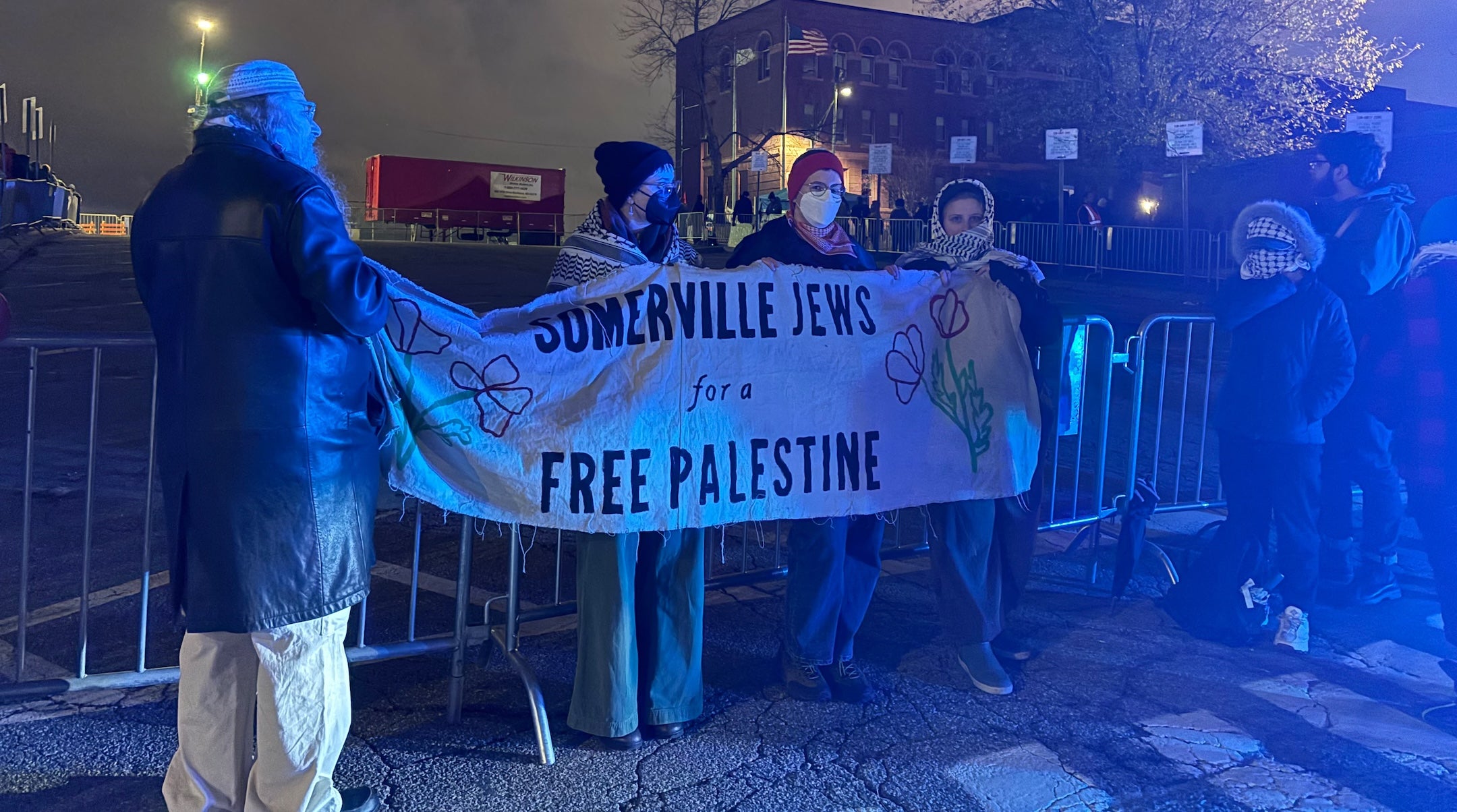
(JTA) — SOMERVILLE, Mass. — The City Council in this city north of Boston voted 10-1 Thursday night to ban the municipality from doing business with companies complicit in humanitarian violations, specifically naming those operating in “Israel and Palestine.”
Councilor Kristen Strezo cast the only opposing vote on the 11-member board.
Opponents of the ordinance fear that in execution it would be akin to a boycott of Israel, and as such would create a negative environment for the city’s Jewish and Israeli residents. The ban only involves companies that work with the municipality and does not impact companies that operate privately in Somerville. It also excludes sole proprietors (individuals operating as companies).
Somerville Mayor Jake Wilson’s office said given that the ordinance passed with a veto-proof majority, the measure is now considered final.
The ordinance was originally introduced in June by Councilors Ben Ewen-Campen and Ben Wheeler, after the City Council voted in November 2025 to implement ballot Question 3 on Israel divestment, which had been approved by 55.7% of voters earlier that month. Question 3 spoke of banning businesses that sustain “Israel’s apartheid, genocide, and illegal occupation of Palestine.”
During his campaign in 2025, Wilson did not endorse Question 3.
Nine councilors on Thursday night offered comments in advance of the vote.
Ewen-Campen, who wrote and revised the ordinance along with Wheeler, spoke about the importance of a Massachusetts city passing an ordinance about a country across the world, especially at a time when the federal government has clamped down on pro-Palestinian student protesters, noting two incidents of protesters being detained by ICE allegedly for speaking against Israel.
“I think the reason that people want us to be quiet about it is because when you do talk about it, there is just no way to justify it,” Ewen-Campen said.
“I am not under any illusion that Somerville is going to have some enormous impact on the world [by passing this ordinance], but I do think that all of us collectively deciding to be silent about this does have an impact on the world,” he said. “That is why I think it is worth it to have taken this action, and that is why I have asked for all of your support tonight.”
Strezo invoked the Holocaust to explain why she considered the ban antisemitic, referring to Kristallnacht, the Nov. 9-10, 1938, pogrom against Jews in Germany and Austria.
“A few years before Kristallnacht, the Nazis worked to deter the public from shopping at Jewish businesses,” she said. “Their efforts started in moments like tonight.” On behalf of her Jewish community, Strezo emphasized that the ordinance “makes us feel targeted. It makes us feel unsafe. It makes us feel unwelcome.”
As she spoke, members of the group Somerville for Palestine (S4P), who had gathered outside City Hall for a rally in advance of and throughout the meeting, could be heard through the window, the chanting getting increasingly louder until the words were clearly audible over Strezo’s speech: “Disclose, divest, we will not stop, we will not rest.”
“This ordinance will do nothing to solve the real conflict in the Middle East,” Strezo said. “What it will do and has been doing is make Jewish people and Israelis feel less welcome in our city spaces.”
One councilor pointed out that the ordinance, while worth passing, was not what she’d hoped. Councilor Emily Hardt said, “Supporting Palestinian human rights and standing firmly against antisemitism are not contradictory positions. I believe that both are essential to our commitment to human dignity.” She went on to say that she would have preferred an ordinance that was focused on the actions of the U.S. government, “our government,” but given that this was the ordinance up for the vote, she would support it. “I appreciate the attempts to align use of our resources with our commitments to the rights and dignity of all people, in Israel and Palestine and around the world,” she said.
When the vote was finalized, members of the group Somerville for Palestine and other supporters of the ordinance, many wearing keffiyehs, stood up and cheered as they left the chamber. Shalom Somerville members and others opposing the ordinance, many of whom wore white shirts with blue square pins and had stickers with “I’m not welcome here” on their chests, stood silently as most of the room emptied.
“It’s disappointing seeing councilors knowingly abdicating their responsibility,” said Sam Gechter, president of Shalom Somerville, the local community group that has been active in opposing both the 2025 ballot question and the ordinance. “[Mayor Wilson] made several promises that he would veto it during the campaign. He said he would veto anything that named a country, so we would love to see him do that.”

“It feels so clear that this is what the majority want given that ten of our councilors voted yes,” said Mo Katz-Christy, a member of S4P’s leadership and Jewish Caucus. S4P was a major advocate for the original ballot Question 3 and worked with Councilor Ewen-Campen on the ordinance.
“They passed a strong ordinance that named Israel and Palestine, that named the genocide,” Katz-Christy said, as the S4P group played music in celebration behind them. “It’s targeting companies that are really bad actors.”
Under the ordinance, any vendor who is submitting a bid for the city’s business would have to certify it meets the criteria outlined in the ordinance. If their certification is contested, the city will consult the findings of a number of international organizations and lists, including the database of business enterprises maintained by the United Nations Office of the High Commissioner for Human Rights, and the divestment short-list database maintained by the American Friends Service Committee’s Investigate Project. The ordinance specifies that a company could be excluded from this prohibition should the director of finance deem that their services “are essential to the operation of the city, including by avoiding a significant financial burden.”
In the final Legislative Matters Committee meeting discussing the ordinance on Oct. 27, chief procurement officer Angela Allen, echoing the earlier sentiments of City Solicitor Cindy Amara, expressed concerns that the ordinance “would likely not sustain a legal challenge.” She noted that the city does not have the legal authority to debar bidders (prospective vendors) and that she was unsure who would be responsible for making the final call on whether or not a company met the criteria in the ordinance.
“This adds another layer of complexity that I am concerned, from a practical standpoint, could cause confusion and delay that would not be in the best interest of the city,” she said.
The vote came after several rounds of negotiations in the city’s Legislative Matters Committee, during which councilors debated the ethical and financial merits of the ordinance. The final ordinance that was voted on included updates in language that specified the companies that would be included in the ban must be “directly, knowingly and consistently” enabling or facilitating violations of humanitarian law, including in “Israel and Palestine.”
Longtime Somerville resident and Shalom Somerville member Kate Auspitz, who was present at the meeting, said, “I will never vote for any of them [city councilors] again except for Kristen Strezo… I do think it’s antisemitic, whatever they say. I think it’s denying Jews self-determination.”
Outside, in line to enter the City Council chambers, Willie Burnley Jr., a member of Boston Democratic Socialists of America who ran for mayor against Wilson last year and supported ballot Question 3, said: “I’m here to support my neighbors who are fighting for a better world, who are trying to get their city councilors to fight for the will of the people.”
This article originally appeared on JTA.org.
The post Boston suburb votes to divest from Israel appeared first on The Forward.
Uncategorized
House Democratic leader Hakeem Jeffries calls for ‘dramatic change’ in Israel policy
(JTA) — U.S. House of Representatives Minority Leader Hakeem Jeffries, a New York Democrat poised to become the chamber’s speaker in January, called for a significant shift in the U.S.-Israel relationship but stopped short of opposing defense partnerships.
“The status quo is unacceptable, and we need dramatic change,” Jeffries told reporters at a Thursday press conference.
Jeffries expressed a need for such change with respect to the West Bank, to Gaza and to a memorandum of understanding with Israel over military aid set to expire in 2028. That agreement, signed by the Obama administration in 2016, pledged $38 billion in military aid for Israel from fiscal years 2019 through 2028.
President Donald Trump has said he will wind the aid down before it is set to lapse, citing Israel’s unpopularity, and Israeli Prime Minister Benjamin Netanyahu also backs ending military aid and replacing it by strengthening U.S.-Israel military cooperation.
But when asked about recent demands from Sen. Chris Van Hollen to remove provisions on defense collaborations with Israel from the National Defense Authorization Act – the model of what Netanyahu hopes to sustain – Jeffries responded that he hadn’t spoken with the senator. Van Hollen, a Democrat from Maryland, plans to challenge Senate Minority Leader Chuck Schumer leadership of the Senate Democratic caucus when Democrats take over the chamber in January.
Instead, Jeffries said that “things have to dramatically change over in the Middle East,” without elaborating on the details of such changes. He stressed the importance of ensuring “a safe and secure Israel living side by side as a Jewish and democratic state with an independent Palestinian state that provides dignity and self-determination for the Palestinian people.” Netanyahu and much of the Israeli public oppose the establishment of a Palestinian state.
While Jeffries noted that he wasn’t saying anything he hasn’t “previously said publicly,” his decision to reiterate this need for change following the election as Democrats are set to seize control of Congress demonstrates how the party is adopting a more critical posture on Israel.
This past summer, Jeffries wrote to colleagues urging them to reject an amendment proposed by Rep. Thomas Massie, a Republican from Kentucky, that would have cut military aid to Israel. While a slight majority of Democrats voted in favor of the measure, it was defeated after getting no Republican support aside from its sponsor.
Jeffries had argued at the time that “there are more decisive ways to achieve the urgent change necessary when it comes to the far-right Netanyahu government,” warning that Massie’s amendment would have restricted Israel’s ability to confront Hamas, Hezbollah and other terror groups.
Nonetheless, Jeffries also noted in the letter that the Obama-era memorandum of understanding “expires imminently,” and that “a meaningful change in direction is needed.” Writing that Israel has a robust economy and is capable of paying for its own weapons, he said that future security arrangements “should be structured consistently with defense agreements that exist with our other Western allies.”
Since writing that letter in July in the lead-up to the midterm elections, Jeffries focused primarily on domestic issues and didn’t often address the Israeli-Palestinian conflict. On Thursday, however, the topic was back on the table.
“We’ll work as a caucus to make sure that we can bring about the just and lasting peace that Israelis and Palestinians deserve,” Jeffries said.
This article originally appeared on JTA.org.
The post House Democratic leader Hakeem Jeffries calls for ‘dramatic change’ in Israel policy appeared first on The Forward.
Uncategorized
Ahmed Moor, John Fetterman’s first challenger, envisions ‘Palestine-Israel, from the river to the sea’
(JTA) — When Ahmed Moor started his freshman year at the University of Pennsylvania in 2002, he remembers navigating an atmosphere of Islamophobia around the one-year anniversary of Sept. 11.
He recounted how as he was exiting a derelict math building known for what Moor described as its “dungeon-like” interior, he overheard a kippa-clad student commenting on the grossness of the neighborhood, noting that “it’s not like Ramallah or anything.”
“It was a tough environment,” Moor said, recalling that during a campus protest in 2003 against the Iraq war, he was met with “Go home, terrorist” and other such slogans. “You kind of build a muscle around that early on.”
More than two decades later, the 42-year-old Palestinian American writer is now Pennsylvania’s first candidate to announce a 2028 bid for Democrat John Fetterman’s U.S. Senate seat – running on a platform of dignity, equal rights and affordability.
Though still two years away, this high-stakes race could change how much support Israel gets from the Democratic Party. Fetterman, who hasn’t declared if he will run again, has irked many fellow Democrats by joining Republicans on certain issues, particularly in defending Israel, but has also maintained a powerful voice in a caucus that has held just 47 seats for the past two years. But that influence may soon dissipate, with the Democratic caucus poised to have at least 55 out of 100 seats when Congress convenes in January.
Regardless of whether Fetterman chooses to run, for Moor – a Democratic Socialists of America member from Philadelphia – to secure the seat would require a dramatic shift in voter trends across purplish Pennsylvania.
Moor enters the playing field with radically different stances on Israel and foreign policy from those that Fetterman has espoused. Moor’s priorities include stopping the funding of wars and trimming the military’s budget in general, as well as many domestic issues that Fetterman has historically supported, such as universal healthcare and childcare and affordable housing.
“The DSA presents a really good opportunity for the Democratic Party to re-energize, reinvent itself,” Moor said, describing the DSA as “a blood transfusion.”
An avowed anti-Zionist, Moor wants economic sanctions against Israel and to hold the country’s leaders accountable for what he alleges are war crimes. Ultimately, he said he hopes to see the development of one “Palestine-Israel” state that has equal rights for all — a dream that he said is rooted in American principles of emancipation.
Born in Gaza, Moor moved to Philadelphia as a child and went on to earn degrees from both Penn and Harvard, and started a career in finance. He then switched to journalism, reporting in Beirut and Egypt for The Guardian and other outlets, and co-editing the book “After Zionism: One State for Israel and Palestine.” He also spent many years in Jordan, where he launched a peer-to-peer lending organization, before returning to Philadelphia in 2021.
Looking back at his years as a college student, Moor recalled experiencing some “ambivalence about being an American, the promise of life, liberty, pursuit of happiness, the equality before the law,” particularly while he felt like people viewed him as an outsider.
But he said that things began to look up when he joined the Free Palestine Action Network, a fledgling campus group that existed before Students for Justice in Palestine.
Turning to the situation in the Middle East today, Moor said he still has family members in Gaza, as well as some in the West Bank. Many of his relatives in Gaza, he added, were killed during the war.
He noted that his aunt “was diagnosed with cancer and died a very painful death shortly after that because the hospital itself was destroyed.”
In the future, Moor said he would envision “all of Palestine-Israel, from the river to the sea” as one state with equal rights for “Jews, Palestinians, Druze” and everyone else, including “all of the East Asians who work there, who built lives there.” Lebanese areas currently under Israeli military occupation would go back to Lebanon, while the Golan Heights, captured by Israel in 1967, would go back to Syria, he added.
The leaders of this hypothetical state, according to Moor, would need “to represent everyone who lives under its authority,” with the Knesset legislating laws, the military serving all the people and Palestinians earning a right of return.
Moor compared the current phase of this conflict to mile 15 of a marathon: “Every footfall from here to the finish, 11 more miles, is painful.” Crossing the finish line, he argued, will require “the emancipation of the Palestinians, the right-sizing of our understanding of equal rights, where Jews don’t have superior rights in that country.”
Whether Moor’s Middle East positions will resonate with Pennsylvania voters when they choose their next senator in 2028 remains uncertain.
“If we look at the surveys leading up to the election, that issue didn’t come up a great deal,” Berwood Yost, a public policy expert at Franklin & Marshall College, told JTA. “It was the concerns about personal finances and economics and affordability that were largely driving voters.”
Daniel Hopkins, a political science professor at the University of Pennsylvania, told JTA that although the conflict is “highly evocative and emotive,” his polls have shown that “relatively few voters rank it as an important issue,” except in deep blue Philadelphia.
Yet even if the conflict doesn’t have a direct influence on most voters, Hopkins said that its divisiveness helps candidates distinguish themselves from rivals. For example, he continued, a stance on this subject can often serve as a shortcut to other views.
“The issue partly functions as a within-party issue that helps certain Democrats differentiate themselves from other Democrats,” he added.
For Moor, the idea of maintaining the status quo, which he described as preserving alliances just “to shore Israeli apartheid” would be inconsistent with American ideals.
He rejected the notion of a possible path forward with Gadi Eisenkot, the leader of Israel’s opposition bloc, who recently received a mandate to form a government to replace Prime Minister Benjamin Netanyahu’s ruling coalition.
“Jewish Israelis are confronted with a difficult frame now,” Moor said. “They don’t have any credible leaders who aren’t also implicated in genocide or massive war crimes.”
Asked if he considered Hamas militants to be war criminals, he responded that “everybody who’s committed a war crime is a war criminal.” But he argued that naming Hamas as such would be irrelevant, as the Israeli military had already killed most Hamas combatants, including former leader Yahya Sinwar.
Fetterman was still posting on X this week about “disarming Hamas,” noting that “this vote and voice will always follow our special ally.” Fetterman’s office did not respond to a request for comment.
Moor characterized the senator as “in the rearview mirror for Democrats,” adding that “Fetterman’s story is finished.”
Hopkins, from Penn, disagreed with that conclusion, pointing out that “no one knows whether Fetterman will seek reelection,” and that if he does so, it’s also unclear “whether he will do that as a Democrat.” Hopkins acknowledged, however, that the senator’s vote would be less powerful when it comes to legislating because of the decisive Democratic majority.
As for other possible candidates, Hopkins is looking at potential contenders such as U.S. Rep. Chris Deluzio, who represents southwestern Pennsylvania residents in Beaver and Allegheny counties, including some Pittsburgh suburbs. He also named Conor Lamb, an attorney who served in Congress from 2018 to 2023.
Yost, from Franklin & Marshall, cited these names as well, while noting that “Fetterman has alienated a number of people in his party.”
“There’s been increasing dissatisfaction among his base, including people who voted for him,” added Yost, who directs the college’s Center for Opinion Research and its Floyd Institute for Public Policy.
But Yost also stressed that “running in a state like Pennsylvania for an office like the U.S. Senate is a significant undertaking” that requires large amounts of travel, networking and fundraising.
“Starting now is not a bad idea,” he said. “Two years will be here before you know it.”
Although voters might not be “dialed in” to the 2028 elections for a while, Penn’s Hopkins added that “now is the period of time when candidates are beginning to jockey.”
“One strategy by declaring early might be to try to tell other contenders who would be in your lane, ‘Hey, I’m in this lane,’” Hopkins said.
As for the chances of a Democratic socialist in a swing state like Pennsylvania, Hopkins didn’t rule Moor out but said that “any such individual would have an uphill climb.”
Another Democratic socialist who Moor said he finds inspiring, Chris Rabb, recently won a U.S. House seat in Pennsylvania, but he did so in a heavily Democratic district of Philadelphia, Hopkins noted.
“Pennsylvania has not often nominated candidates who are on the extremes of their party,” he said.
But Yost also acknowledged that “these days, people want to see non-politicians running,” so Moor’s novice status would not necessarily create a barrier to his success.
Despite his relative inexperience, Moor said he is reaching for the Senate seat due to his passion for foreign policy. He said he has concrete ideas for optimizing the military, by deflating a “bloated weapons program,” focusing more on drones and then reinvesting in both jobs programs and climate resilience initiatives.
Recognizing the mammoth expense that running in a state like Pennsylvania involves, Moor said that his fundraising efforts have started out strong, with a lot of “small-dollar” contributions, including from many Jewish donors.
Asked if he had a message for Jewish voters, Moor said that he would convey that “we’re Americans first” and that he believes “in the dignity agenda for all Americans.”
“Poverty is indifferent about whether you’re Jewish or Palestinian, Black, white, whatever,” he said.
This article originally appeared on JTA.org.
The post Ahmed Moor, John Fetterman’s first challenger, envisions ‘Palestine-Israel, from the river to the sea’ appeared first on The Forward.
