


Uncategorized
In Chicago, politicians are comparing ICE to the Gestapo — are they right?
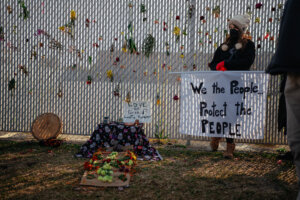
On Halloween afternoon in Evanston, Illinois— just a couple miles north of my home — masked, armed men went on a rampage: They deliberately caused a fender-bender accident, shoved women to the ground, repeatedly punched a young man in the head and dragged him across the pavement, and pointed pistols at and pepper-sprayed passersby. These masked men were agents of the United States Customs and Border Protection.
“As soon as I walked up,” local resident Jennifer Moriarty recalled in an online interview, “an agent grabbed me by my neck and threw me back and threw me to the ground and was on top of me.”
As horrifying as the assault was, it had sadly become the norm for our community: For the previous two months, the greater Chicago area was the target of a Department of Homeland Security (DHS) crackdown on immigrants and, increasingly, those who came forward to protect their immigrant neighbors.
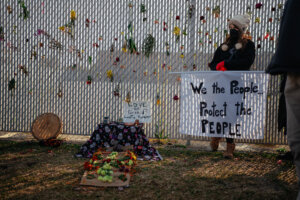
The following day, Daniel Biss, Evanston’s mayor, spoke to hundreds who gathered to protest the federal government’s campaign. “We in Evanston are on fire,” Biss said. “We know what is being done to our people… We know the violence and the emergency and the authoritarian nightmare that is coming at us.”
He then evoked the memory of his grandmother, who as a young woman in Europe in 1940 had not comprehended the dangers she faced. “By the time she knew the truth,” said Biss, “it was too late to protect herself, and she and her siblings and her parents were put on a cattle car, and the day they got off that cattle car was the last day her parents lived.”
The analogy is an extraordinary one, but Biss is not alone in evoking the specter of the Holocaust to describe the daily reality here — a reality that was subsequently visited upon Charlotte, North Carolina and is planned for New Orleans next. Several members of Chicago’s city council called out “the Gestapo tactics” of the twin DHS agencies, Customs and Border Protection (CBP) and Immigration and Customs Enforcement (ICE). And as far back as February, JB Pritzker — the first Jewish governor of Illinois — publicly decried the Trump administration’s “authoritarian playbook,” warning “It took the Nazis one month, three weeks, two days, eight hours and 40 minutes to dismantle a constitutional republic. All I’m saying is when the five-alarm fire starts to burn, every good person better be ready to man a post with a bucket of water if you want to stop it from raging out of control.”
The very name of the DHS campaign — “Operation Midway Blitz” — served to conjure up the WWII bombing of London. And the daily itinerary of its agents called to mind aspects of 1930s Germany. Every morning, federal agents departed their local headquarters in the near-west suburb of Broadview in unmarked SUVs, wearing gator-style face-coverings and carrying semi-automatic weapons.
They cruised the streets of a rotating group of targeted neighborhoods or suburbs, looking for dark-skinned workers whom they deemed would be easy pickings: tamale vendors, landscape workers, day laborers at Home Depot, drivers in the ride-share lot at O’Hare. They made only cursory efforts to determine whether their targets were citizens, legal residents, or undocumented individuals. The DHS talking point that agents are only seizing the “worst of the worst” criminals is easily refuted by the data: When the Trump administration finally released names of people they arrested in the Chicago operation, 598 of the 614 had no criminal record at all.
The DHS arrestees were manhandled and taken to Broadview, where they were held in gruesome conditions and pressured to sign self-deportation agreements. Many detainees are so fearful of indefinitely staying at Broadview — or a similarly cruel detention facility — that they sign. They often leave behind families and shattered lives.
The federal agents made a point of flouting the law, as if celebrating their indifference to anything other than their own cruel mission. If an immigrant refused to leave their car, agents routinely smashed the window, dragged the person from the vehicle, and sped off, leaving their victim’s car unattended and unsecured. When agents found themselves surrounded by residents calling attention to their presence, they brandished guns, hurled epithets, fired pepper bombs, and lobbed teargas canisters.
An investigation by Block Club Chicago found that federal agents employed tear gas and other chemical weapons 49 times in the Chicago area from Oct. 3 through Nov. 8. Even an admonishment from U.S. Circuit Court Judge Sara Ellis did not stop them; after her temporary restraining order, federal agents used chemical weapons at least four more times.
Ellis’s 233-page opinion in the use-of-force case, released on Thursday, is a compendium of immigration enforcement run amok. With access to aerial, bodycam, and cell phone footage, along with extensive testimony, the court found a consistent pattern of violence from government operatives, and an equally consistent pattern of lying about that violence from their superiors. In determining whether the government had violated the plaintiffs’ Fourth Amendment rights, Judge Ellis noted that “repeatedly shooting pepper balls or pepper spray at clergy members shocks the conscience… Tear gassing expectant mothers, children, and babies shocks the conscience… Tackling someone dressed in a duck costume to the ground and leaving him with a traumatic brain injury, and then refusing to provide any explanation for the action, shocks the conscience.”
When assessing the government’s truthfulness, Ellis wrote that “[CBP Commander Gregory] Bovino appeared evasive over the three days of his deposition, either providing ‘cute’ responses to Plaintiffs’ counsel’s questions or outright lying.”
The use of force, along with the targeting of individuals based on their ethnic identity and the government mandate to deport one million immigrants per year, brings to mind for me the Polenaktion, the mass arrest and deportation of 17,000 Polish Jews from Germany in 1938. At the same time, I ask myself, are such equivalences accurate and helpful? Holocaust scholar Daniel H. Magilow, in an astute discussion of ICE/Gestapo comparisons, reminds us that while “analogies can be useful for clarifying complex ideas… they risk oversimplifying and trivializing history.”
For my parents, who came of age as Brooklyn Jews as the Nazis were coming to power in Europe, the question had hovered over their lives: “Could it happen here?” After two months of brutal and lawless behavior, I was asking, “Is it happening here? Now?”
So I called my nonagenarian parents to ask them what they thought. My dad said Operation Midway Blitz did remind him of “Gestapo tactics, a Gestapo presence, the Gestapo’s impact on society.” My mom added a note of caution: “We should be careful talking about them like all individuals in ICE are the same. It takes a while to answer the question ‘who are they,” how Gestapo-ish all the people in ICE are.”
Who are the officers of ICE and CBP? It is a question that Illinois Senator Dick Durbin addressed in a letter to DHS Secretary Kristi Noem. Durbin pointed to loosened standards for ICE hiring and training, and to recruiting advertisements — targeted to white applicants — urging them to join up to “defend your culture.” (A recent article in Haaretz also raised alarms that imagery on DHS’s social media used antisemitic dog whistles and was intended to appeal to neo-Nazis.) Durbin asked Noem whether there was any vetting to check if applicants were January 6 rioters or members of white nationalist groups and, if so, whether those extremists were getting hired.
Such concerns go back many years. A ProPublica investigation in 2019 uncovered a secret Facebook group for current and former CBP personnel that revealed “a pervasive culture of cruelty aimed at immigrants.” In 2022, twenty-seven civil rights organizations wrote the Justice Department to warn that CBP was collaborating with white supremacist paramilitary groups on the U.S. southern border.
Whether one accepts the “Gestapo” analogy or not, it is clear that Chicago residents are heeding the dire warnings coming from politicians and activists alike. When the “five-alarm fire” commenced, the response of thousands of residents was rapid and well-organized. Secure chat groups were launched; ICE-watch trainings were at capacity. In my neighborhood and beyond, during the worst days of the crackdown, one could see on every street-corner people on patrol with orange whistles around their necks, ready to document and peacefully confront the armed federal incursion.
During the Halloween incident in Evanston, CBP agents stuffed three people — including Jennifer Moriarty — in an SUV. They then drove erratically around Evanston and Chicago’s Rogers Park neighborhood, attempting to goad other drivers into more traffic accidents. But wherever they went, the orange whistles were sounding. “When I was on the ground and when I was in the car,” Moriarty recalled, “looking out at all the people, all the faces of the community members… I never felt I was doing anything wrong. And all those people were also there, doing all the right things, as well.”
My experience when I joined a local patrol was the same as Moriarty’s. I had a sense of pride and wonder that so many neighbors were united in non-violent opposition to racist attacks. Whether DHS agents were akin to the Gestapo, in the end, did not matter to me. What mattered was that there was definitely a Resistance.
The post In Chicago, politicians are comparing ICE to the Gestapo — are they right? appeared first on The Forward.
Uncategorized
Trump endorsement of Netanyahu blasted by liberal policy advocates, Democrats
(JTA) — A day after President Donald Trump endorsed Prime Minister Benjamin Netanyahu in the Israeli election eight days from now, U.S. policy analysts, Democratic lawmakers and liberal advocacy groups slammed the decision.
Trump announced his support for Netanyahu, who is running for reelection, in a Sunday Truth Social post that described the Israeli leader as “a Great Warrior Prime Minister” and a critical partner in eliminating the Iranian threat. Netanyahu has been trailing former IDF chief-of-staff Gadi Eisenkot in recent surveys.
Tali deGroot, vice president of political and digital strategy for the liberal Zionist group J Street, described Trump’s declaration as “an endorsement of endless war for Israelis,” in a statement sent to the Jewish Telegraphic Agency. She warned of “endless occupation and control of Palestinian life and land, and Israel’s growing isolation on the world stage.”
“The president is once again acting against the wishes of American taxpayers and choosing to uphold a failed, unpopular foreign policy that has brought devastation to Israelis, Palestinians and countless civilians,” deGroot added.
A spokesperson for the American Israel Public Affairs Committee, meanwhile, said that the lobby had no comment about the endorsement.
David Makovsky, director of the Program on Arab-Israel Relations at the Washington Institute for Near East Policy, criticized Trump’s decision, writing on X that “in one fell swoop, Trump has broken with the longstanding U.S. practice of avoiding explicit endorsements in Israeli elections.” The president, Makovsky added, went a step further by threatening to sever a partnership against Iran if Israelis choose a different leader.
“It is up to the Israeli people to choose their own leader and threatening that the U.S. will walk away from the conflict with Iran is beyond stunning,” Makovksy said.
Makovsky also pointed out that “a Trump endorsement is no electoral guarantee,” noting that Trump and Vice President JD Vance’s support for Viktor Orbán in Hungary did not end in a victory.
“The ultimate test is assembling a 61-seat Knesset majority,” Makovsky added. “Yet Netanyahu appears more focused on preventing an Eisenkot-led coalition from reaching that threshold than on demonstrating a viable path to 61 seats himself.”
Sen. Chris Van Hollen, a Democrat from Maryland, offered another scathing perspective, observing that “authoritarians of a feather flock together.”
“They started a war together,” Van Hollen stated. “They crack down on press freedom together. They lie about everything together.”
Rep. Analilia Mejia, a New Jersey Democrat running for reelection, said that the endorsement “tells us everything we need to know about both of these men.” She then went on to list Netanyahu, North Korea leader Kim Jong Un, Orbán and Russian President Vladimir Putin, adding that “this guy has a ‘type.’”
On the other side of the aisle, Rep. Carlos Gimenez, a Republican from Florida, reposted a video in which Netanyahu thanked Trump for his support. The congressman then added that “America will always stand with the Jewish State of Israel and our dear friend Prime Minister Netanyahu, who has championed our alliance for decades.”
Matt Brooks, CEO of the Republican Jewish Coalition, said he believes that “President Trump is incredibly popular with the people of Israel,” in a written statement to JTA.
“His support will carry considerable weight as Israelis make their choice for Prime Minister in a pivotal election this month,” Brooks added.
American Orthodox Rabbi Shmuley Boteach likewise celebrated the endorsement “by our great President Trump,” writing on X that he has “known and loved BIBI Netanyahu for some 35 years.”
Conservative radio personality Mark Levin described Trump’s Truth Social post as “an extraordinarily strong statement,” while accusing the opposition of “barking about election interference.”
“Trump makes clear it’s also in our national security interest for Netanyahu to remain PM,” Levin stated, calling complaints “unserious and a partisan political whine.”
Conservative influencer Evan Kilgore, on the other hand, fumed at Trump’s decision. Kilgore, whose X profile says “Christ is King,” announced that he is “so done with the GOP,” following Trump’s endorsement of Netanyahu. Kilgore described Trump as “TOTALLY fu*king subverted by Jewish and Zionist interests.”
Political analysts are divided as to whether Trump’s official support would have any sway on the results of an election 6,000 miles away.
Joyce Karam, editor-in-chief of the Washington-based site Al-Monitor, described the endorsement as a signal to both Israel and Iran that renewed escalation and a push for regime collapse could occur after the U.S. midterm elections. She also predicted that Trump’s backing could tip the balance in a tight race where neither side holds a majority.
However, Dov Waxman, director of the Israel Studies program at the University of California, Los Angeles, expressed doubt that support from Trump, who has become less popular in Israel, could significantly influence Netanyahu’s election chances.
“For a long time, most polls have shown his bloc falling well short of a parliamentary majority,” Waxman added.
This article originally appeared on JTA.org.
The post Trump endorsement of Netanyahu blasted by liberal policy advocates, Democrats appeared first on The Forward.
Uncategorized
Macklemore’s ‘Free Palestine’ tour will benefit group that called Oct. 7 a ‘prison break’
(JTA) — Macklemore, the rapper of hits such as “Thrift Shop” and “Can’t Hold Us,” is facing backlash from Jewish organizations over plans to donate proceeds from his forthcoming concert tour to the Palestinian Youth Movement, which described the Hamas-led Oct. 7 attacks on Israel as a “prison break.”
The rapper was dropped on Sept. 14 from an opening slot on Ed Sheeran’s U.S. stadium tour after making pro-Palestinian remarks onstage. He announced his “Free Palestine” tour on Sept. 24, pledging that all proceeds would benefit organizations supporting Palestinians. PYM is among 12 organizations named as beneficiaries.
The tour includes concerts in Dublin on Oct. 26, Paris on Oct. 29 and London on Oct. 30.
Macklemore received a surge of support after being dropped from Sheeran’s tour, with all of Sheeran’s remaining opening acts quitting in solidarity. He said on Instagram that the “Free Palestine” tour “sold out immediately.”
PYM is a grassroots movement of Palestinian and Arab youth in the United States, Canada and Britain. On Oct. 7, 2024, the first anniversary of the Hamas attacks, the group described the assault as a “prison break” and called the fighters “the men who broke through” in an essay published in The New Inquiry.
“Those fighters had trained for months, and now found themselves stepping foot onto the same hills and plains that their grandfathers and grandmothers had lived upon,” said PYM, without mentioning the killing and abduction of Israeli civilians.
PYM also said a week after the attacks, “Understand Palestinian resistance as fundamentally just and as a means of survival for our people; it will not stop in the weeks and months to come, and you must be prepared not to waver again.”
Jewish and pro-Israel groups have slammed Macklemore for supporting PYM. The Jewish Leadership Council, which represents British Jewish and pro-Israel groups, told The Jewish Chronicle, “When the PYM describes the 7 October massacre as a ‘prison break’, it risks legitimizing violence against Jews.”
The Israeli-American Council, which petitioned Sheeran to drop Macklemore, told Fox News Digital that “Live Nation and the concert organizers must now publicly explain their vetting process and ensure that concert proceeds do not benefit organizations that justify violence against innocent civilians.”
Macklemore, Live Nation and the Palestinian Youth Movement did not immediately respond to requests for comment.
This article originally appeared on JTA.org.
The post Macklemore’s ‘Free Palestine’ tour will benefit group that called Oct. 7 a ‘prison break’ appeared first on The Forward.
Uncategorized
Why is the biggest soccer team in the world talking about Joseph Goebbels?
The biggest rivalry in international soccer — between Real Madrid and FC Barcelona — has erupted in recent months, as Madrid pushes the Spanish soccer federation to punish Barca for alleged referee bribery.
But the ugly sparring between the clubs took an unexpected turn last week when Spanish league president Javier Tebas entered the fray with a shocking comparison.
“Real Madrid’s management directs an orchestra of mouthpieces and Real Madrid TV leads the singing,” Tebas wrote Oct. 15 on X. “Their score is always the same: select the plays that suit them, repeat the grievance, feed the suspicion, and point fingers at the enemies.
“That method recalls propaganda mechanisms exploited by Goebbels, Nazi Germany’s minister of propaganda: systematic repetition, construction of an enemy, and subordination of facts to the narrative.”
Real Madrid, which has employed such stars as Cristiano Ronaldo and David Beckham, condemned the remark with a statement calling for Tebas’ resignation both from the Spanish league, La Liga, and the Royal Spanish Football Federation, where Tebas serves as vice president.
“Real Madrid C. F. considers it absolutely intolerable and extraordinarily serious that someone holding two positions of utmost responsibility in Spanish football resorts to a comparison with the propaganda methods of the Nazi regime to discredit our club, its management, and its television,” the club wrote Oct. 16.Tebas has thus far refused to resign or even take down the post, and has defended his critique by pointing to other Spanish leaders who have made similar comparisons in the past.
The Goebbels controversy comes amid growing concerns about antisemitism in Spain, including in sports, where thousands of protesters blocked an Israeli-branded cycling team from competing in the Vuelta race last year.
The bribery accusations against Barcelona first surfaced in 2023, when it was revealed the club had paid millions of dollars to companies linked to the former vice president of the Spanish refereeing body, José María Enríquez Negreira. A Spanish court dismissed the bribery charges in 2024, but the investigation continued, and earlier this month Madrid submitted a tranche of documents it said proved the bribery claims.
The conflict between the club and Tebas dates back at least to 2021, when Madrid club president Florentino Perez spearheaded a breakaway international league that would have threatened Spanish competition. Barcelona had also agreed to join the so-called Super League, but the plan was scuttled after enormous backlash from fans across the continent.
Joseph Goebbels, one of Hitler’s most devoted followers, led the German Propaganda Ministry after the Nazi party came to power in 1933. He and his wife died by suicide in 1945 after killing their six children with cyanide.
The post Why is the biggest soccer team in the world talking about Joseph Goebbels? appeared first on The Forward.
