


Uncategorized
Indiana University removed its Jewish studies director. His replacement has ignited a firestorm over Israel.
You won’t find professor Mark Roseman on the frontlines of any campus protests or posting his unfiltered political thoughts on social media. His current project, a four-volume history of the Holocaust published by Cambridge University, is unlikely to generate controversy.
Which is why many of his colleagues were baffled when Indiana University’s chancellor broke precedent this summer to remove Roseman as director of the school’s prestigious Jewish studies program and replace him with a junior colleague known as one of Israel’s fiercest defenders on campus.
“If I could have designed a person to be in charge of Jewish studies in a moment like this — it’s fraught, Jews are divided on Israel and antisemitism, everyone has a lot of deeply held feelings — I could barely imagine a better person than Mark,” said Sarah Imhoff, chair of Indiana’s religious studies department.
Roseman’s removal has taken on special significance at a time when universities are under intense pressure to appease both conservative politicians worried about liberal bias and Jewish groups enraged over mounting hostility toward Israel on campus with academics who study Jews and Judaism often caught in the crosshairs.
“Jewish studies is at the precipice of a cliff in America,” said Shaul Magid, a professor of Jewish studies at Harvard. “It’s being hijacked by a particular political agenda and somebody has to get ahold of the wheel.”
Indiana replaced Roseman with Günther Jikeli, associate director of the school’s small but influential Institute for the Study of Contemporary Antisemitism, and a voice in the growing field of antisemitism studies. That new field has become a magnet for donors concerned that existing Jewish and Israel studies programs have not done enough to counter campus antisemitism.
New York University announced a “seven-figure donation” to create a center to study and combat antisemitism shortly after the Oct. 7 terrorist attacks two years ago, and other schools including the University of Michigan and Brandeis University have since launched similar programs.
“The goal is to keep institutions and departments like his free of harmful ideology.”
Allon FriedmanPresident of the Jewish American Affairs Committee of Indiana
At Indiana, both supporters and detractors of Jikeli, a German academic whose work has focused on Muslim antisemitism in Europe, believe he is acting as an enforcer of what should legitimately be considered as “Jewish studies.”
After becoming interim director of the Jewish studies program in August, he stripped travel funding from an anti-Zionist graduate student in the program and barred her from using a Zoom avatar that said “Free Palestine,” prompting outcry from some student leaders. That concern only intensified after Jikeli, who is not Jewish, declined to say whether he would allow the department to support any research that was critical of Zionism.
“It’s not a question of academic freedom,” Jikeli told student leaders in a meeting with the humanities dean, according to an audio recording obtained by the Forward. “The question is about what is Jewish studies sponsoring?”
The university itself has remained silent on both Roseman’s removal and Jikeli’s installation as departmental head, and did not respond to multiple questions about why the change was made or to requests for interviews with the officials responsible.
Faculty input is usually weighted heavily when selecting department chairs and program directors. Rick Van Kooten, the humanities dean, acknowledged during a faculty meeting that Imhoff, the chair of the religious studies department, had received more nominations to replace Roseman than Jikeli. Imhoff said Van Kooten claimed that she could not serve as interim director because she was already chair of the religious studies department. Van Kooten did not respond to a request for comment but Imhoff said this is not a university policy.
(Jewish studies is a “program” at IU, meaning its faculty report to home departments like religious studies or English.)
The leadership transition rankled many faculty members, who speculated that it had been sparked by donors who believed that the program was too tolerant of research hostile toward Israel, or was the result of pressure from political leaders — both federal and state — to address campus antisemitism related to protests against Israel.
If outside pressure did cause Jikeli’s installation, that isn’t necessarily a bad thing, argued Allon Friedman, a professor of medicine at Indiana University’s Indianapolis campus and the leader of a Jewish advocacy group in the state.
“The goal is to keep institutions and departments like his free of harmful ideology,” Friedman said, speaking in his capacity as president of the Jewish American Affairs Committee of Indiana. “He’s trying to make his department serious again.”
The contested rise of antisemitism studies
Jikeli’s emergence from the small field of antisemitism studies to lead one of the country’s most prominent Jewish studies programs tracks a larger trend in higher education. In the aftermath of the Second Intifada, amid concerns over the climate around Israel on college campuses, Jewish donors turned from a focus on Jewish studies — which has historically had an extremely broad mandate — to create the discipline of Israel studies. But funding for that field has been imperiled by the gap between what many of these philanthropists hoped to create — faculty who could serve as a bulwark against anti-Zionism — and the critical analysis of the Israeli-Palestinian conflict that they often delivered.
Centers devoted to antisemitism studies, a relatively new discipline often focused on contemporary issues related to anti-Zionism, began to fill that gap with a more concrete mandate to thwart Israel’s critics, who many Jews, though certainly not all, believe are fostering an antisemitic environment on campus and beyond.
Alvin Rosenfeld (no relation), who founded the Jewish studies program at Indiana in 1972, helped pioneer this new response to Israel’s critics. He created the Institute for the Study of Contemporary Antisemitism in 2009 with a focus on radical Islam and left-wing hostility toward Israel; Jikeli came to the school in 2019 to serve as associate director of the institute.
“The hostility that calls itself anti-Zionism is not a dispassionate affair at all, and since Oct. 7 it has become really very fiercely, fiercely antisemitic,” Rosenfeld said in an interview. “We’re doing our best to root out its manifestations.”
Other schools have adopted similar approaches since Oct. 7, some of which appear more focused on advocacy than traditional academic study. At Emory University, Deborah Lipstadt, the Holocaust scholar and former State Department antisemitism envoy, is preparing to launch an institute that she said “will be focused on policy.” It will continue her efforts to promote the International Holocaust Remembrance Alliance’s definition of antisemitism, which classifies most anti-Zionism as a form of discrimination.
At the University of Washington, a new “faculty initiative” called Bridges for Change is meant to fight antisemitism. It is being run by Janet Baseman, a public health professor at the school who previously chaired its antisemitism task force. The only Jewish studies professor on that committee had stepped down before it issued its final report out of frustration that its conclusions seemed preordained.
Brandeis University, which was the first college to arrest student protesters following Oct. 7 after its then-president labeled them Hamas supporters, launched a President’s Initiative on Antisemitism, while New York University and the University of Michigan have both created more traditional academic centers to study antisemitism.
Rosenfeld has been a fundraising powerhouse at Indiana, first for the Jewish studies program and then for his antisemitism institute. Some faculty members said they believed that donors including Betsy Borns, whose father endowed the Borns Jewish Studies Program at IU, had expressed displeasure with research in the program that was critical of Israel in the months before Roseman was replaced. Borns did not respond to a request for comment.
Roseman, who ran the Jewish studies program at Indiana for eight of the last 12 years before he was forced to step down, said he could not discuss specific conversations with donors but had observed that overall pressure on what professors researched and taught had increased.
“Donors are becoming more demanding of advocacy,” he said. “There used to be a kind of trust in academic freedom and the integrity of academic work, and that’s disappearing.”
Should Jewish studies defend Jews?
After Jikeli’s early actions as interim director — removing Sabina Ali, the graduate student, from a Zoom meeting and revoking her grant funding — sparked questions from faculty and student leaders, two of Jikeli’s European colleagues responded by sending letters of support to Indiana’s administration arguing that anti-Zionist research had no place in Jewish studies.
Olaf Glöckner, a professor at the University of Potsdam, argued that Jewish studies was not “a neutral platform for any and all political positions about Jews.”
Lars Rensmann, who teaches at the University of Passau, wrote that the paper Ali had received the grant to present, which referred to Israel as a “settler-colonial nation-state,” was itself antisemitic because it denied “the citizenship rights of Israeli Jews by defaming them, without any historical foundation, as ‘settler colonialists.’”
“No university can be obliged to fund such propaganda,” wrote Rensmann.
“There are Jews and Jews.”
Alvin RosenfeldDirector of the Institute for the Study of Contemporary Antisemitism at Indiana University
Notably, even Jikeli’s strongest defenders at Indiana have shied away from making similar arguments. Rosenfeld signed a petition defending Jikeli’s leadership as interim director. But he rejected the notion that anti-Zionist scholarship, which has a long tradition among Jewish thinkers, was inherently outside the bounds of Jewish studies.
“Anything and everything that touches on the Jewish experience in a serious way is deserving of study,” Rosenfeld said in an interview. “There’s nothing that is off bounds, nothing that we shouldn’t study.” Instead, he argued, the quality of Ali’s research was flawed and therefore undeserving of funding.
Rosenfeld wasn’t concerned that Jikeli, Glöcker and Rensmann — none of whom are Jewish — were seeking to limit what Ali should be allowed to research. Though Ali’s family is both Jewish and Muslim, and she identifies as part of both communities, Rosenfeld doesn’t believe that gives her any more authority than Jikeli to ascertain what belongs in a Jewish studies department.
“I don’t know what ‘identifies as Jewish,’ means,” said Rosenfeld. “You’re a Jew, we’re Jews — we share even the same last name — but there are Jews and Jews.”
On one side of this dividing line are Jews like Rosenfeld himself, he explained, who are, like him, “absolutely convinced” that there was no “Jewish future worthy of the name without the State of Israel.”
And on the other side, Rosenfeld said, are the sizable share of Jews that had supported New York City Mayor-elect Zohran Mamdani and all that he seemed to represent — anti-Zionism, or at a minimum the belief that nonsectarian concerns should be prioritized over Jewish solidarity.
Questions over who counts as Jewish
As the government has sought to crack down on antisemitism since Oct. 7, the question of which Jews represent the community — and which deserve protection — has intensified. Well before the tempest began within Jewish studies, this was a live debate at Indiana University, which has the sixth-highest number of undergraduate Jewish students in the country.
Doug Carter, superintendent of the state police, said his officers broke up a tent encampment on campus last year because of speech that was “encouraging the death of the Jewish people globally.”
He dismissed a public radio reporter who told him that Jewish students had been active in the protests, including holding a Passover Seder at the encampment, and that they had not heard antisemitic comments. “That’s not correct,” Carter said. “Go on to the next question because I saw it with my own two eyes.”
And after a student accused him of bias against Israel, Ben Robinson, a history professor who is Jewish, became one of the first faculty members disciplined under a new Indiana law that mandates “intellectual diversity” at state universities. Robinson said the university has opened a new investigation into him based on allegations that he engaged in antisemitism during a lecture about genocide claims against Israel.
“If you’re an anti-Zionist Jew,” Robinson said, “you’re not sufficiently Jewish for the people who are making these decisions.”
None of the 20 people I spoke with for this story understood why Roseman had been removed as director, and I did not hear any criticism of his leadership. But these disciplinary incidents and crackdowns had created a simmering tension by the time Roseman said Jikeli called him to announce that he’d lost the confidence of Indiana’s top leadership and that Jikeli himself had been offered Roseman’s job.
Jikeli said in an email that did not say he would be replacing Roseman. “To be absolutely clear: there was no pre-arrangement, and I was appointed following faculty consultation,” he said.
In addition to his scholarship on antisemitism, Jikeli has made a name as a prominent academic defender of Israel and its supporters on campus. He organized a “Rally Against Hamas Propaganda” at IU last year during the pro-Palestinian encampment, and in an interview a few weeks before he took over the Jewish studies program Jikeli lamented that, “Jewish students are often outnumbered and lack the institutional or financial backing their adversaries enjoy.”
(While Jewish services like Hillel and pro-Israel advocacy organizations have significantly more funding than pro-Palestinian groups, some of Israel’s supporters believe that universities themselves are systematically biased against Jews, and that Iran or Qatar are secretly funding campus demonstrations agaisnt Israel.)
“Many administrators are reluctant to confront faculty or radical groups for fear of backlash,” Jikeli said in the interview. The solution could come “in the form of public scrutiny, funding consequences, or legal obligations.”
Jikeli’s power to address campus antisemitism along these lines is limited as interim director of the Jewish studies program, but he was quick to assert it.
A Zoom expulsion and a grant revoked
Sabina Ali, a fifth-year doctoral student doing a minor in Jewish studies, said in an interview with the Forward that she first crossed paths with Jikeli while participating in the encampment. Ali said she was standing in a protective circle around a group of Muslim students while they prayed when Jikeli approached the group and started photographing them.
“I just asked him, ‘What are you doing?’ and he just started rambling about how Islam is such a sexist religion and why are these men praying without women,” Ali recalled.
Jikeli said in an interview that he often passed the encampment on his way home but did not recall the incident Ali described. “I recall that there were some prayers,” he said. “I don’t think I said that Islam is a sexist religion.”
In a follow-up email, he said: “I did not, and would not, describe Islam as a sexist religion. Islamism, as an ideological movement advocating the application of sharia law, does contain misogynistic elements — but that is a distinct discussion.”
Jikeli first raised concerns last fall that Ali’s profile picture on Zoom — the image that is displayed when a user turns off their camera — was creating a hostile learning environment. The image is a mashup of three distinct items: the Palestinian flag, a drawing of a woman wearing a keffiyeh around her head and the words “free Palestine.”

Roseman, who was director at the time, said he brought Jikeli’s complaint to the university’s student conduct office, which determined it qualified as free speech. “I was simply following guidance from the college,” Roseman said. “Whether some people didn’t like it or not, I didn’t feel like I had much choice.”
Jikeli disagreed. When Ali showed up virtually to a hybrid September workshop this fall to celebrate the release of a new book by Imhoff, the religious studies chair, Jikeli announced to the room that her profile image was creating an unsafe environment.
“A Jewish studies graduate student sitting next to me pointed out that Jikeli might be the only one who was bothered,” Constance Furey, a religious studies professor, wrote in an email to university administrators. “Without further comment or explanation, JIkeli then announced that he had removed the student.”
Twenty of the 24 people present for the workshop then left and reconvened in a new room, where Ali was allowed to participate. But Jikeli defended himself to everyone in the program later that day in an email describing the avatar as “an image of a Palestinian terrorist.”
“Political slogans or provocative images of any kind have no place in our academic settings,” Jikeli wrote.
He followed up directly with Ali, proposing that they meet with a mediator to “clear the air.” She instead asked for a public apology and Jikeli’s resignation as interim director.
A few days later, Jikeli wrote to Ali again, this time to say that he was unilaterally rejecting a travel grant approved by the Jewish studies funding committee for her to present at a national religious studies conference.
Jikeli’s email to Ali did not provide a reason for the unusual move but he told the Forward that it “did not meet our academic standards and falls outside the scope of Jewish Studies.” Those who rushed to his defense focused on the subject of Ali’s research: “Weaponizing Indigeneity: Zionist Public Discourses on Possessing Palestine.”
Blending politics and scholarship
Though Jikeli said in an email that he does not engage in advocacy, he blended political stances with his academic work before becoming interim program director, writing op-eds and giving interviews about opposition to Israel on college campuses.
Bryce Greene, a PhD student at Indiana who was a leader of the protests against the war in Gaza, tried to sign up last year for an undergraduate course Jikeli taught on Israel and social media. But, he said, the professor suggested that the two instead meet for weekly independent study sessions.
Jikeli proposed that Greene would receive credit for the meetings, but they disagreed on how much the independent study would be worth and eventually decided to proceed on an informal basis.
Greene described cordial meetings where they would debate the Israeli-Palestinian conflict and send each other readings. But the relationship eventually broke down when Greene accused Jikeli of “Holocaust denial” for rejecting the claim that Israel was committing genocide in Gaza.
Still, Greene was taken aback a few months later when a friend sent him a flyer for a lecture Jikeli was delivering to the Virginia Psychoanalytic Society called “In the Mind of a Pro-Hamas Student,” which the description said was based on “a semester-long dialogue with a pro-Hamas campus activist.”
“It was pretty obvious that he was trying to talk about me,” Greene said. After complaining to the chairs of Jewish studies and German studies, where Jikeli is based, Greene said he believed the talk switched to focus on public social media posts from other college students.
Jikeli told Greene in an email following the event that it was based on discussions with “some other people” during the encampments and shared his presentation slides from the event with the Forward. They do not focus on individual students.
What many people don’t understand is that the use of #Hamas slogans, such as #FromTheRiverToTheSea, #Palestine will be free” is an endorsement of the ongoing #terrorism against all #Israelis and #Jews – as demonstrated by the horrific #massacre of #civilians on #10/7.
— Gunther Jikeli (@GJikeli) October 27, 2023
Jikeli’s willingness to mix his political beliefs about Israel and antisemitism with his academic responsibilities came up again during an October meeting with Rick Van Kooten, the humanities dean, and a group of Jewish studies graduate students concerned about Jikeli’s actions as interim director.
As part of his defense for removing Ali from the Zoom meeting, Jikeli told the group that he had printed out a copy of her Zoom avatar and used it for an assignment in one of his undergraduate courses. He had asked students to respond to a series of questions about the image, including: “Imagine this image displayed constantly on Zoom during hybrid workshops with students and professors. How would its persistent presence affect your focus, comfort, and sense of belonging in that educational space?”
The responses demonstrated that “students feel very uncomfortable in that scenario,” Jikeli said during the meeting, and so he was justified in banning such imagery. He said in an emailed statement that “this was a pedagogical exercise about classroom environment” and “not a personal attack on any individual student.”
When Van Kooten said that he was required to uphold an Indiana state law that mandated freedom of expression for college students, Jikeli warned that individuals he had spoken with around the country might file a federal civil rights complaint against the university if Ali was allowed to display the image.
“I want you to hear this now,” Jikeli told Van Kooten, according to an audio recording of the meeting. “People will consider it a Title VI violation if this is going on — I will not tolerate this.”
Lamentations over a divided program
Van Kooten ultimately ruled that if Jikeli wanted to create a policy about Zoom images for the program he should get it approved by the faculty, and that he would need to provide a specific justification for revoking grants that had been approved by the funding committee.
(Ali’s travel to the religious conference is now being paid for with other university grants.)
But despite the modest stabilizing effect of Van Kooten’s intervention, Daniel Reischer, a leader of the Jewish Studies Graduate Student Association, said that the rapid series of controversies had taken a toll on the program. Some students who had been considering studying at Indiana are reconsidering, he said. After Jikeli declined to say whether he would allow funding for any scholarship that was critical of Zionism, graduate students from around the country are wondering whether their research will be welcome at the annual Jewish studies conference that the association sponsors.
“There’s just a lot of uncertainty and a lot of fear,” Reischer said in an interview.
Jikeli said in an email that he was “firmly committed to free, open, and respectful dialogue.”
“Criticism — including of Zionism — is part of legitimate academic inquiry,” Jikeli wrote. “Defamation and unsubstantiated claims are not.”
“We could have embraced a program that says, ‘You can do your best scholarship here no matter what your politics are’ — but we haven’t been able to do that.”
Sarah ImhoffChair of the Religious Studies Department at Indiana University
Not everyone is critical of Jikeli’s leadership. Joanna Martin, another officer of the graduate student group, said she’s had positive interactions with Jikeli and that he supported bringing a prominent scholar of Nigerian Jewry — the subject of Martin’s doctoral thesis — to campus after becoming program director.
“He’s definitely making some waves,” Martin said. “But I don’t think he’s going to start overruling anything and everything.”
Another graduate student, who did not want to be named mounting a more forceful defense of Jikeli, said that the Jewish studies program has been divided over Israel for years, and many people were determined to oppose Jikeli’s leadership before he had done anything as interim director.
“Gunther came in believing that people were already against him,” the student said, noting that several members of the program had boycotted his welcome dinner.
Jikeli, who told me the school had asked him not to discuss his leadership of the program, has seemed ready to consolidate power and aggressively defend his leadership. In addition to the letters from Nelson, the former AAUP president, and his European colleagues, Jikeli shared a petition with the Forward signed by several dozen Jewish studies professors from the U.S., Europe and Israel defending how he handled the situation with Ali.
Imhoff, the religious studies chair, said that shortly after becoming interim director Jikeli removed her without explanation from serving on the Jewish studies program’s graduate affairs committee and from another committee helping to revise the undergraduate curriculum.
“We did not need to do this to ourselves,” Imhoff said. “We could have embraced a program that says, ‘You can do your best scholarship here no matter what your politics are’ — but we haven’t been able to do that.”
Jikeli said he had not removed Imhoff from any committees but rather that committee membership expires at the end semester.
Rosenfeld, the program’s 87-year-old founder, seemed conflicted when we spoke. He had helped build Indiana into a powerhouse of Jewish studies, helping to launch the careers of scholars across the political spectrum.
He rejected the claim by Friedman, the medical school professor and Jewish activist, that the Jewish studies program had fallen into crisis under previous leadership. He also doesn’t believe that Jikeli was brought in to serve as the “hatchet man” for school officials interested in more overt support for Israel.
But he also understands that the program he created as a junior professor 53 years ago is under duress.
“I would like to see us recover from the bad spell that we’re in right now and reassert ourselves as a leading Jewish studies program with a lot of integrity,” Rosenfeld said.
Jikeli’s term as interim head of Jewish studies is expected to last about a year, at which point the administration will either make him the program’s permanent leader or name a new director.
But regardless of what happens in Bloomington, the growing divide between funders and Jewish scholars — and between scholars and some of their students — is intersecting with unprecedented political pressure on universities in a manner that seems certain to permanently transform the academy.
The post Indiana University removed its Jewish studies director. His replacement has ignited a firestorm over Israel. appeared first on The Forward.
Uncategorized
Two women race to save Persian Jewish music before it fades
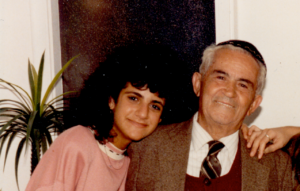
In the 1950s, Younes Dardashti, a Jewish man from Tehran’s Jewish ghetto, became one of Iran’s most celebrated singers. As the country underwent rapid secularization under the Shah, Jewish communities that had long been pushed to the margins found new opportunities. Dardashti’s piercing, unmistakable voice filled Iranian airwaves, exclusive concert halls and the Shah’s palace, earning him the title “Nightingale of Iran.”
Years after Younes Dardashti’s death, his granddaughter Galeet is still singing with him in New York.
Using archival recordings of her grandfather’s voice, Galeet Dardashti created her album Monajat — meaning an intimate conversation with God — layering her vocals over decades-old tapes of him singing Selihot, religious poetry chanted nightly before the Jewish New Year.
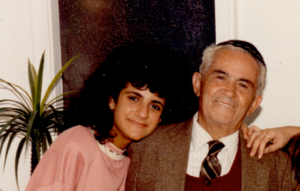
Across the country in Los Angeles, Cantor Jacqueline Rafii is also trying to preserve her Iranian grandfather’s traditional Jewish Persian music.
While in cantorial school, Rafii rediscovered cassette tapes made of her grandfather leading a Passover seder in Tehran. When her family was forced to flee the country following the Islamic Revolution in 1979, they brought that cassette tape with them.
“It was like a time capsule,” said Rafii.
She realized that those grainy and distorted recordings captured a Persian Jewish musical tradition that had only ever been passed down orally from generation to generation. In the diaspora, Rafii worried, they might disappear.
So Rafii sat at the piano with her father to turn what she heard on those old cassette tapes into sheet music so that others might replicate the music Iranian Jews have been singing for centuries.
“We were trying to take this distorted tape from the ’70s and plunk out the notes,” she said. “To write something that had never been written before.”
What began with a single tape became a larger project. Rafii set out to collect and notate as many Persian Jewish melodies as she could. She put out a call on social media to try to find people who remembered Jewish prayers from Iran. Eventually, she found Dardashti, who taught Rafii her grandfather’s Yom Kippur melody for “El Nora Alila.”
A transcription challenge
According to Dardashti, who holds a Ph.D. in anthropology and specializes in Mizrahi culture and music, Jews have played an important role in Persian musical life for centuries.
After the 7th century, when Muslim forces conquered Persia, there were periods during which non-religious music was restricted under Islamic law. Because Jews were classified as najis, or “impure,” they faced limitations on the types of occupations they could legally pursue. Music, being a marginalized and often stigmatized profession, was typically avoided by Muslims. This made it a particularly viable livelihood for Jews who often performed the jobs that were restricted to Muslims.
Because of this, religious minorities, namely Jews, Zoroastrians, and Christians, were responsible for sustaining Persian musical traditions when Muslims could not.
Classical Persian music often features singers interpreting the poetry of figures like Hafez or Rumi. One of its defining features is tahrir, a rapid oscillation in the voice that can sound like a controlled break or yodel, used to convey emotional intensity.
The music relies on modal systems and tonal structures distinct from Western scales. It also includes microtones — notes that fall between the pitches used in Western scales and cannot be easily represented on a standard musical staff. To make the melodies accessible, Rafii notates them “in a format that would be compatible with Western music,” eliminating some (but not all) of those microtones, adding chords to mimic their sound, and establishing a regular meter.
Persian Jewish music draws directly from this tradition, applying its musical forms to Jewish liturgy — Torah chanting, High Holiday prayers, and religious poetry — as well as to songs about daily life written in Judeo-Persian.
“It’s really about interpreting a text,” Dardashti said. “Just as a Persian classical singer would interpret a poem, in Persian Jewish music you’re interpreting Hebrew liturgy in a very similar way.”
For centuries, this music was transmitted entirely orally, passed down from generation to generation, with each singer adding their own interpretation and stylistic flair. During the reign of Shah Mohammad Reza Pahlavi from the 1940s through 1979, Jews enjoyed a golden age in Iran. Jewish musicians, who often came from lineages of family members who had been making music for centuries, moved to the fore and became nationally recognized stars. Dardashti’s grandfather was perhaps the most prominent. Because Israel and Iran had good relations at the time, he frequently traveled between the two countries to share his talents.
Younes Dardashti became a cantor at synagogues across Tehran. Because his chanting was done in a musical style Iranians of all faiths were used to hearing on the radio, Galeet Dardashti says, non-Jews would press their ears to the doors of the synagogue to hear her grandfather’s voice.
A tradition passed down by men
Traditionally, Persian Jewish liturgical music was preserved and performed almost exclusively by men because of Jewish religious norms that limited women’s public singing. Now in the diaspora, that chain of transmission has begun to break down, with fewer and fewer Iranian Jews learning the songs their parents and grandparents once sang.
Rafii says she has faced obstacles in “expressing her cantorial pursuits” to more traditional members of the Persian community in the U.S., where women’s singing is still not embraced. And while she is unsure whether she will “ever in her lifetime … share these melodies personally in such communities,” she remains “hopeful that her work may be useful” to those seeking to transmit Persian Jewish music to the next generation.
For Dardashti, singing Persian Jewish music as a woman is just another layer of the reinvention that has been a feature of Persian Jewish music for generations. Though she too does not perform her music in Orthodox Iranian Jewish settings, she embraces the unique role she can play in leading services for Reform and Conservative Iranian Jews, for whom Ashkenazi-style music is often the default.
“I feel like right now this community needs me; there aren’t many people who can do this work and are willing to do it in an egalitarian setting,” said Dardashti. For the last few years, she has led high holiday services in the traditional Persian style at Kanisse, an egalitarian Jewish community for Sephardic and Mizrahi Jews in New York City.
Though both Rafii and Dardashti are Iranian, neither grew up immersed in Persian Jewish musical traditions.
Like many Iranian Jews who came to the United States after the revolution, their families entered a Jewish landscape dominated by Ashkenazi practice. Dardashti’s father, himself a cantor, trained at the Jewish Theological Seminary, where the focus was almost entirely Ashkenazi. “I grew up the daughter of a Persian cantor who was singing Ashkenazi music,” Dardashti said.
“In order to learn Persian Jewish music, I had to start from scratch,” she added. “I knew nothing.”
She turned to her father, asking him to teach her the melodies he had grown up with in Iran but had not performed formally since coming to the U.S.
Her work, while rooted in a desire to preserve Persian Jewish music, is not without experimentation. Dardashti adds her own flair to her grandfather’s music, laying his vocals over her band and arrangement. “I’m also reinventing, because music isn’t static. Cultural transmission is messy — everyone changes things. So I lean into that messiness.”
Connecting cantors across cultures
Rafii is also continuing to transmit Persian Jewish music in an unconventional way by bringing it to Ashkenazi audiences.
When she entered cantorial school, she said, there were no formal pathways to train in non-European musical traditions. Now, she says cantors from across the country — “in particular, Ashkenazic cantors” — have reached out to her for Persian Jewish sheet music and guidance on incorporating these melodies into their services.
“They want to share how diverse the Jewish family is,” she said. “Now that there’s sheet music for Persian Jewish music, it’s accessible, and they can offer it to their community.”
Dozens of non-Persian cantors have already begun including these melodies in their services.
At Valley Beth Shalom, a largely Ashkenazi congregation in Los Angeles, Rafii regularly weaves her grandfather’s Persian tunes into worship and teaches them to the synagogue’s youth choir.
“I like to include them as part of an everyday service,” she said. “Why don’t we just combine the melodies and make this part of the American Jewish experience?”
The post Two women race to save Persian Jewish music before it fades appeared first on The Forward.
Uncategorized
Passover liberation and US liberty both summon us to remember and renew
At our campus Seder this week, I found myself talking to a student about Passover as a holiday of memory. She seemed puzzled and asked me to explain. The Seder plate, the ritual of reclining, and the talk of freedom, I told her, were all meant as reminders of enslavement in Egypt. Of course, she knew that. But I told her that even before the Jews cross the Red Sea to escape bondage, the Torah says something like “you better remember this!” Just after the final plagues — the killing of the first born — are visited upon the Egyptians, but before the Israelites escape from slavery, God tells Moses how the Passover holiday will be a commemoration of the events about to take place!
This day shall be to you one of remembrance: you shall celebrate it as a festival to GOD throughout the ages; you shall celebrate it as an institution for all time. Ex 12:14
You shall observe the [Feast of] Unleavened Bread, for on this very day I brought your ranks out of the land of Egypt; you shall observe this day throughout the ages as an institution for all time. Ex 12:17
The commemoration of liberation, and the memory of bondage, are given sacred status — and even prior to the liberation itself. The festive meal, the Passover Seder, is a communal insistence on memory. And this insistence is not restricted to what happened to other people in the distant past. The Torah’s word for remembering here is zakhor, which means something closer to “reliving” than to what we usually think of historical recollection. We are slaves in Egypt, just as we are at the foot of Mount Sinai to receive the Commandments.
As it so happens, during Pesach this year I am also working at Wesleyan University on a national program to encourage college students to protect our democracy by participating in it. Inspired by the students who went to Mississippi in 1964 to register Black voters in the face of violent suppression, we launched Democracy Summer 2026, a nonpartisan call to young people to strengthen their democratic muscles by using them. We are mindful of the 250th anniversary of the Declaration of Independence as we build programs along with colleges and universities across the country that aim to remind our fellow citizens of the importance of exercising our powers as constituents of this constitutional republic. The mission statements of educational institutions — from small private religious schools to large public universities — express an obligation to contribute to the public sphere. When we do contribute, we are participating in history, learning about ourselves and the world around us; we contribute to our institutions and to the country whose freedoms allow them to fulfill their purposes.
As part of this work, I’ve been rereading Danielle Allen’s wonderful Our Declaration (2015), a book that helps us through a slow reading of a core founding document. Allen describes teaching the Declaration of Independence to a group of working adults in a night class in Chicago and how by doing so she came to appreciate its famous words more profoundly than ever: “We hold these truths to be self-evident, that all men are created equal, that they are endowed by the Creator with certain unalienable rights, and among these are Life Liberty and the pursuit of Happiness.” She came to see these words (and the Declaration as a whole) as aimed at her and her students — that they were part of that “WE,” members of the political community that recognized the power of these truths. This realization didn’t happen right away. At first her students thought that the Declaration represented “institutions and power, everything that solidified a world that had, as life turned out, delivered them so much grief, so much to overcome.” They had to make the document their own to see themselves as participants in its legacy.
These students “regifted” the Declaration to Allen by helping her see its argument for political equality as her own political patrimony. The founding fathers would not have seen it this way: Allen is a Black woman whom they would not have recognized as a citizen. But by reading the text slowly and carefully with her students, she and they claimed it as their rightful inheritance: “an understanding of freedom and equality, and of the value of finding the right words.”
In Torah study, I strive for something similar to this claiming of an inheritance. Such a claim, I find, is also what we are meant to feel when we read the Haggadah at our Seders. I study not to acquire expertise about holy texts but to participate in an ongoing conversation about enduring questions. Through the teaching that we were slaves in Egypt, we are meant to feel how it is to be oppressed and to consider our obligation to claim our freedoms, an essential step in developing a people. And we are also meant to help other groups escape oppression, make good on claims for liberation that resonate with our story. This is not only for the week of Passover. Rashi teaches that we must make mention of the exodus from Egypt every day. Every day we must claim our freedom and, we might add, find the right words for others to do so.
This is also the message of our summer call to action this year. As we commemorate the 250th anniversary of the Declaration, let us claim our political patrimony, our rightful inheritance. To paraphrase Benjamin Franklin: it is our republic so let us keep it!
The post Passover liberation and US liberty both summon us to remember and renew appeared first on The Forward.
Uncategorized
Downed Planes Raise New Perils for Trump as Tehran Hunts for Missing US Pilot

Traces of an Iranian missile attack in Tehran’s sky, amid the U.S.-Israeli conflict with Iran, in Tehran, Iran, April 3, 2026. Photo: Majid Asgaripour/WANA (West Asia News Agency) via REUTERS
Two US warplanes were downed over Iran and the Gulf, Iranian and US officials said on Friday, with two pilots rescued and a third still missing and being hunted by Tehran’s forces.
The incidents show the risks still faced by US and Israeli aircraft over Iran despite assertions from US President Donald Trump and his Defense Secretary Pete Hegseth that their forces had total control of the skies.
The first plane, a two-seat US F-15E jet, was shot down by Iranian fire, officials in both countries said.
The second plane, an A-10 Warthog fighter aircraft, was hit by Iranian fire and crashed over Kuwait, with the pilot ejecting, two US officials said.
Two Blackhawk helicopters involved in the search effort for the missing pilot were hit by Iranian fire but made it out of Iranian airspace, the two US officials told Reuters.
The degree of injuries among the crew of the aircraft remained unclear. The status and whereabouts of the missing F-15E crew member was not publicly known.
Iran’s Revolutionary Guard Corps said it was combing an area near where the pilot’s plane came down in southwestern Iran and the regional governor promised a commendation for anyone who captured or killed “forces of the hostile enemy.”
Iranians, who have been pummeled by American air power for weeks, posted gleeful messages celebrating the plane downings. Iran’s Parliament Speaker Mohammad Baqer Qalibaf said on X that the U.S. and Israel’s war had been “downgraded from regime change” to a hunt for their pilots.
Trump has been in the White House receiving updates on the search-and-rescue operation, a senior administration official told Reuters. The Pentagon and US Central Command did not immediately respond to requests for comment.
NO SIGN OF END TO WAR
The prospect of a US service person being alive and on the run inside Iran raises the stakes for Washington in a conflict with low public support and no sign of an imminent end.
Iran has officially told mediators it is not prepared to meet with US officials in Islamabad in coming days and that efforts to produce a ceasefire, led by Pakistan, have reached a dead end, the Wall Street Journal reported on Friday.
The US and Israel opened the campaign with a wave of strikes that killed Iran’s Supreme Leader Ayatollah Ali Khamenei on February 28. The war has killed thousands and threatened lasting damage to the global economy.
So far, 13 US military service members have been killed in the conflict and more than 300 have been wounded, according to the US Central Command.
Iran has rained down drones and missiles on Israel. It has also taken aim at Gulf countries allied to the US, which have so far held back from joining the war directly for fear of further escalation.
In a security alert on Friday, the US embassy in Beirut said Iran and its aligned armed groups may target universities in Lebanon and urged US citizens in the country to leave while commercial flights are still available.
Israel has been waging a parallel campaign against Iran-backed Hezbollah in Lebanon after the militant group fired at Israel in support of Iran.
TRUMP THREAT TO STRIKE BRIDGES, POWER PLANTS
On Friday, as Trump threatened to hit its bridges and power plants, Iran struck a power and water plant in Kuwait, underlining the vulnerability of Gulf states that rely heavily on desalination plants for drinking water.
On Thursday, Trump posted footage on social media showing dust and smoke billowing up as US strikes hit the newly constructed B1 bridge between Tehran and nearby Karaj, which was due to open this year, and said more attacks would follow.
“Our Military, the greatest and most powerful (by far!) anywhere in the World, hasn’t even started destroying what’s left in Iran. Bridges next, then Electric Power Plants!” he wrote in a subsequent post.
On Friday, a drone hit a Red Crescent relief warehouse in the Choghadak area of Iran’s southern Bushehr province.
Kuwait Petroleum Corporation said its Mina al-Ahmadi refinery had been hit by drones. Other attacks were also reported to have been intercepted in Saudi Arabia and Abu Dhabi. Missile debris landed near the Israeli port of Haifa, site of a major oil refinery.
Oil markets were closed after benchmark U.S. crude prices gained 11% on Thursday following a speech by Trump that offered no clear sign of an imminent end to the war.