


Uncategorized
Indiana University removed its Jewish studies director. His replacement has ignited a firestorm over Israel.
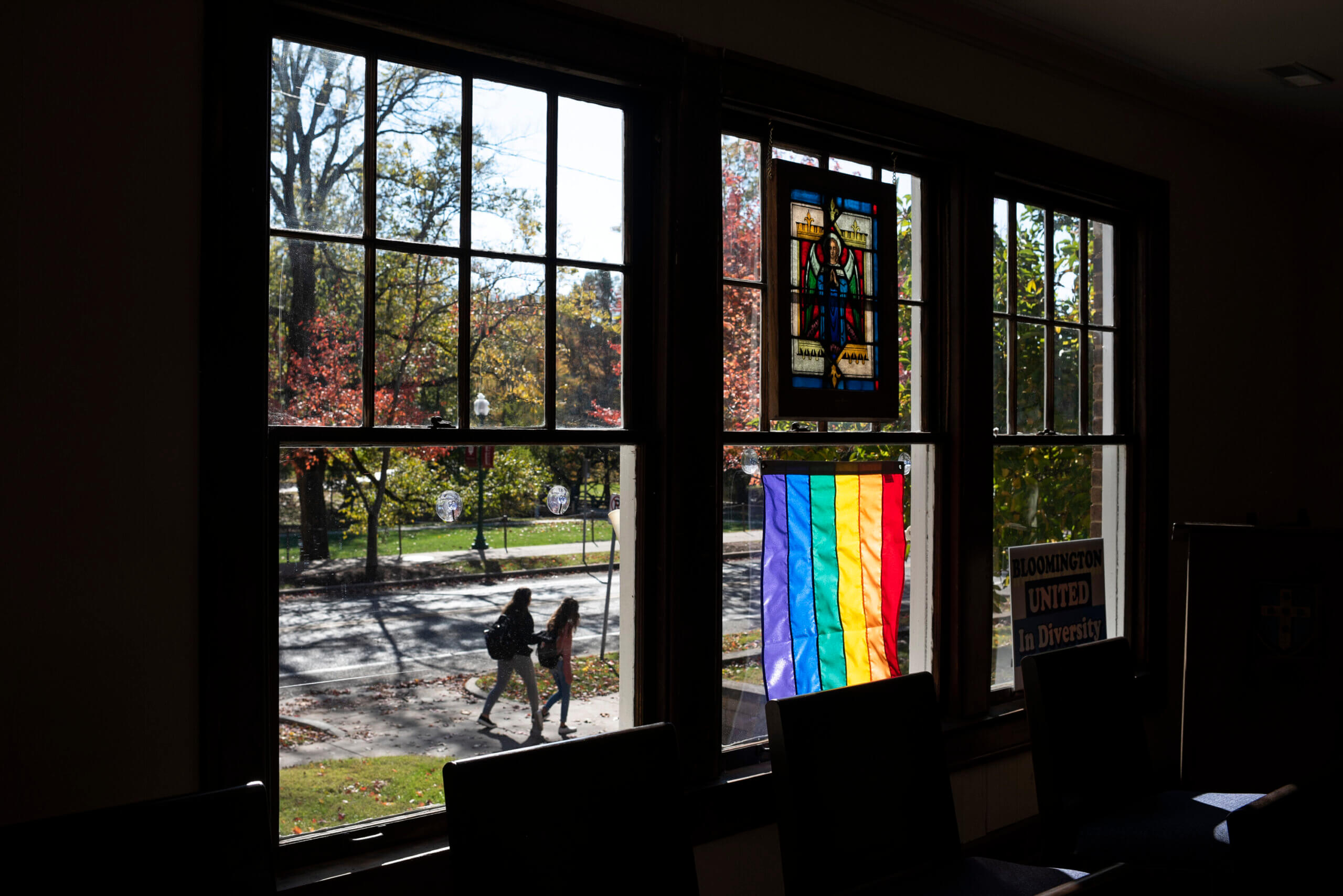
You won’t find professor Mark Roseman on the frontlines of any campus protests or posting his unfiltered political thoughts on social media. His current project, a four-volume history of the Holocaust published by Cambridge University, is unlikely to generate controversy.
Which is why many of his colleagues were baffled when Indiana University’s chancellor broke precedent this summer to remove Roseman as director of the school’s prestigious Jewish studies program and replace him with a junior colleague known as one of Israel’s fiercest defenders on campus.
“If I could have designed a person to be in charge of Jewish studies in a moment like this — it’s fraught, Jews are divided on Israel and antisemitism, everyone has a lot of deeply held feelings — I could barely imagine a better person than Mark,” said Sarah Imhoff, chair of Indiana’s religious studies department.
Roseman’s removal has taken on special significance at a time when universities are under intense pressure to appease both conservative politicians worried about liberal bias and Jewish groups enraged over mounting hostility toward Israel on campus with academics who study Jews and Judaism often caught in the crosshairs.
“Jewish studies is at the precipice of a cliff in America,” said Shaul Magid, a professor of Jewish studies at Harvard. “It’s being hijacked by a particular political agenda and somebody has to get ahold of the wheel.”
Indiana replaced Roseman with Günther Jikeli, associate director of the school’s small but influential Institute for the Study of Contemporary Antisemitism, and a voice in the growing field of antisemitism studies. That new field has become a magnet for donors concerned that existing Jewish and Israel studies programs have not done enough to counter campus antisemitism.
New York University announced a “seven-figure donation” to create a center to study and combat antisemitism shortly after the Oct. 7 terrorist attacks two years ago, and other schools including the University of Michigan and Brandeis University have since launched similar programs.
“The goal is to keep institutions and departments like his free of harmful ideology.”
Allon FriedmanPresident of the Jewish American Affairs Committee of Indiana
At Indiana, both supporters and detractors of Jikeli, a German academic whose work has focused on Muslim antisemitism in Europe, believe he is acting as an enforcer of what should legitimately be considered as “Jewish studies.”
After becoming interim director of the Jewish studies program in August, he stripped travel funding from an anti-Zionist graduate student in the program and barred her from using a Zoom avatar that said “Free Palestine,” prompting outcry from some student leaders. That concern only intensified after Jikeli, who is not Jewish, declined to say whether he would allow the department to support any research that was critical of Zionism.
“It’s not a question of academic freedom,” Jikeli told student leaders in a meeting with the humanities dean, according to an audio recording obtained by the Forward. “The question is about what is Jewish studies sponsoring?”
The university itself has remained silent on both Roseman’s removal and Jikeli’s installation as departmental head, and did not respond to multiple questions about why the change was made or to requests for interviews with the officials responsible.
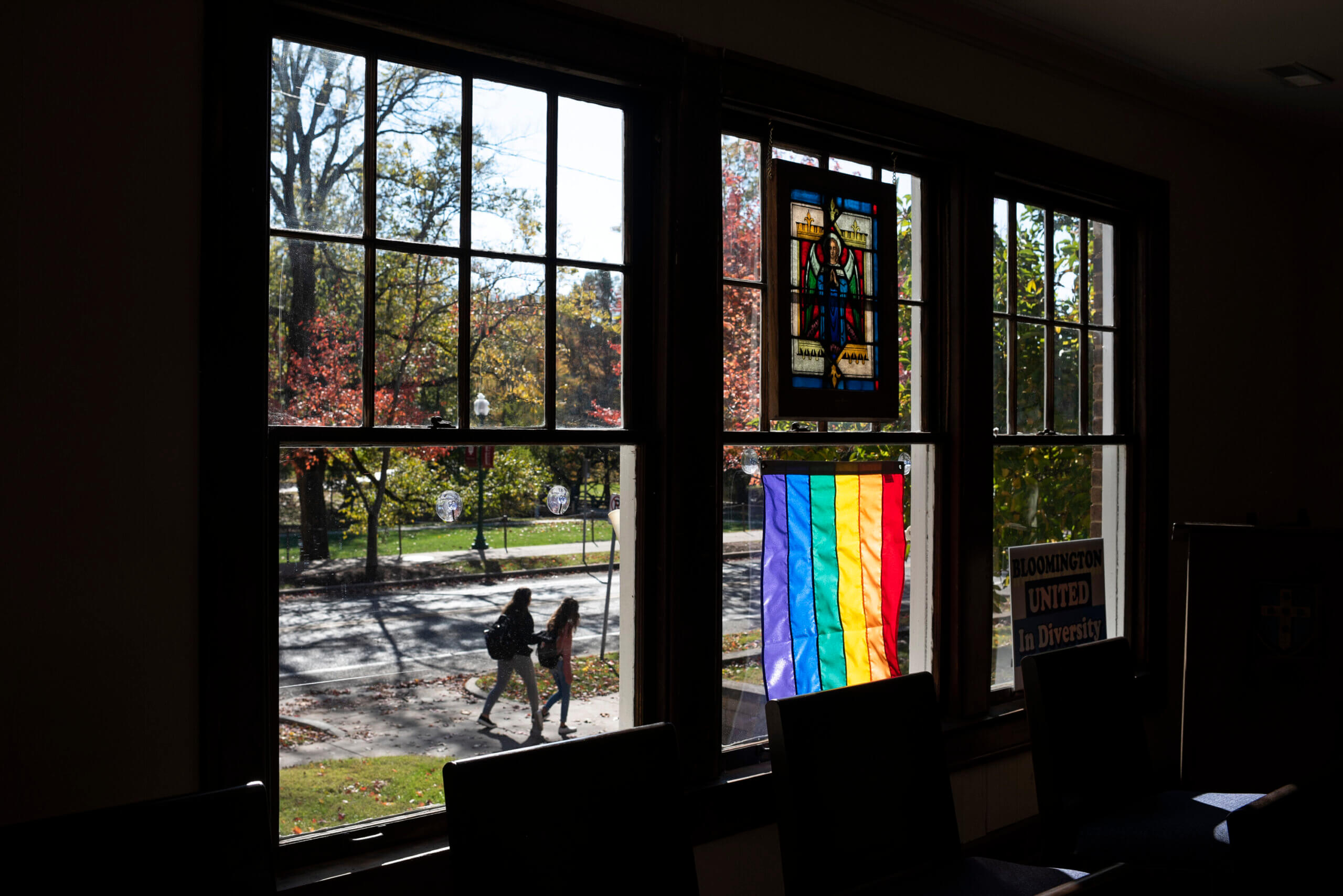
Faculty input is usually weighted heavily when selecting department chairs and program directors. Rick Van Kooten, the humanities dean, acknowledged during a faculty meeting that Imhoff, the chair of the religious studies department, had received more nominations to replace Roseman than Jikeli. Imhoff said Van Kooten claimed that she could not serve as interim director because she was already chair of the religious studies department. Van Kooten did not respond to a request for comment but Imhoff said this is not a university policy.
(Jewish studies is a “program” at IU, meaning its faculty report to home departments like religious studies or English.)
The leadership transition rankled many faculty members, who speculated that it had been sparked by donors who believed that the program was too tolerant of research hostile toward Israel, or was the result of pressure from political leaders — both federal and state — to address campus antisemitism related to protests against Israel.
If outside pressure did cause Jikeli’s installation, that isn’t necessarily a bad thing, argued Allon Friedman, a professor of medicine at Indiana University’s Indianapolis campus and the leader of a Jewish advocacy group in the state.
“The goal is to keep institutions and departments like his free of harmful ideology,” Friedman said, speaking in his capacity as president of the Jewish American Affairs Committee of Indiana. “He’s trying to make his department serious again.”
The contested rise of antisemitism studies
Jikeli’s emergence from the small field of antisemitism studies to lead one of the country’s most prominent Jewish studies programs tracks a larger trend in higher education. In the aftermath of the Second Intifada, amid concerns over the climate around Israel on college campuses, Jewish donors turned from a focus on Jewish studies — which has historically had an extremely broad mandate — to create the discipline of Israel studies. But funding for that field has been imperiled by the gap between what many of these philanthropists hoped to create — faculty who could serve as a bulwark against anti-Zionism — and the critical analysis of the Israeli-Palestinian conflict that they often delivered.
Centers devoted to antisemitism studies, a relatively new discipline often focused on contemporary issues related to anti-Zionism, began to fill that gap with a more concrete mandate to thwart Israel’s critics, who many Jews, though certainly not all, believe are fostering an antisemitic environment on campus and beyond.
Alvin Rosenfeld (no relation), who founded the Jewish studies program at Indiana in 1972, helped pioneer this new response to Israel’s critics. He created the Institute for the Study of Contemporary Antisemitism in 2009 with a focus on radical Islam and left-wing hostility toward Israel; Jikeli came to the school in 2019 to serve as associate director of the institute.
“The hostility that calls itself anti-Zionism is not a dispassionate affair at all, and since Oct. 7 it has become really very fiercely, fiercely antisemitic,” Rosenfeld said in an interview. “We’re doing our best to root out its manifestations.”
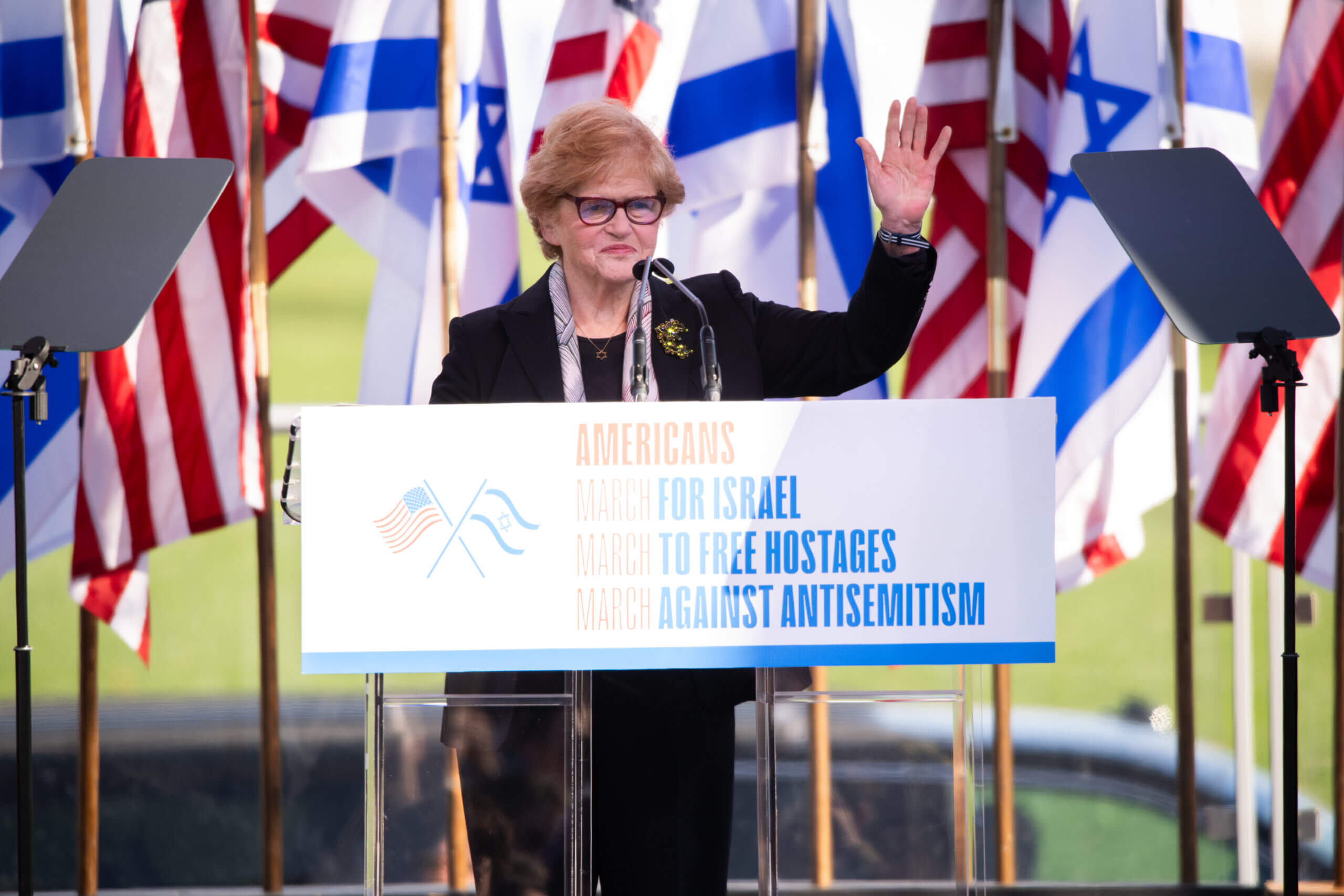
Other schools have adopted similar approaches since Oct. 7, some of which appear more focused on advocacy than traditional academic study. At Emory University, Deborah Lipstadt, the Holocaust scholar and former State Department antisemitism envoy, is preparing to launch an institute that she said “will be focused on policy.” It will continue her efforts to promote the International Holocaust Remembrance Alliance’s definition of antisemitism, which classifies most anti-Zionism as a form of discrimination.
At the University of Washington, a new “faculty initiative” called Bridges for Change is meant to fight antisemitism. It is being run by Janet Baseman, a public health professor at the school who previously chaired its antisemitism task force. The only Jewish studies professor on that committee had stepped down before it issued its final report out of frustration that its conclusions seemed preordained.
Brandeis University, which was the first college to arrest student protesters following Oct. 7 after its then-president labeled them Hamas supporters, launched a President’s Initiative on Antisemitism, while New York University and the University of Michigan have both created more traditional academic centers to study antisemitism.
Rosenfeld has been a fundraising powerhouse at Indiana, first for the Jewish studies program and then for his antisemitism institute. Some faculty members said they believed that donors including Betsy Borns, whose father endowed the Borns Jewish Studies Program at IU, had expressed displeasure with research in the program that was critical of Israel in the months before Roseman was replaced. Borns did not respond to a request for comment.
Roseman, who ran the Jewish studies program at Indiana for eight of the last 12 years before he was forced to step down, said he could not discuss specific conversations with donors but had observed that overall pressure on what professors researched and taught had increased.
“Donors are becoming more demanding of advocacy,” he said. “There used to be a kind of trust in academic freedom and the integrity of academic work, and that’s disappearing.”
Should Jewish studies defend Jews?
After Jikeli’s early actions as interim director — removing Sabina Ali, the graduate student, from a Zoom meeting and revoking her grant funding — sparked questions from faculty and student leaders, two of Jikeli’s European colleagues responded by sending letters of support to Indiana’s administration arguing that anti-Zionist research had no place in Jewish studies.
Olaf Glöckner, a professor at the University of Potsdam, argued that Jewish studies was not “a neutral platform for any and all political positions about Jews.”
Lars Rensmann, who teaches at the University of Passau, wrote that the paper Ali had received the grant to present, which referred to Israel as a “settler-colonial nation-state,” was itself antisemitic because it denied “the citizenship rights of Israeli Jews by defaming them, without any historical foundation, as ‘settler colonialists.’”
“No university can be obliged to fund such propaganda,” wrote Rensmann.
“There are Jews and Jews.”
Alvin RosenfeldDirector of the Institute for the Study of Contemporary Antisemitism at Indiana University
Notably, even Jikeli’s strongest defenders at Indiana have shied away from making similar arguments. Rosenfeld signed a petition defending Jikeli’s leadership as interim director. But he rejected the notion that anti-Zionist scholarship, which has a long tradition among Jewish thinkers, was inherently outside the bounds of Jewish studies.
“Anything and everything that touches on the Jewish experience in a serious way is deserving of study,” Rosenfeld said in an interview. “There’s nothing that is off bounds, nothing that we shouldn’t study.” Instead, he argued, the quality of Ali’s research was flawed and therefore undeserving of funding.
Rosenfeld wasn’t concerned that Jikeli, Glöcker and Rensmann — none of whom are Jewish — were seeking to limit what Ali should be allowed to research. Though Ali’s family is both Jewish and Muslim, and she identifies as part of both communities, Rosenfeld doesn’t believe that gives her any more authority than Jikeli to ascertain what belongs in a Jewish studies department.
“I don’t know what ‘identifies as Jewish,’ means,” said Rosenfeld. “You’re a Jew, we’re Jews — we share even the same last name — but there are Jews and Jews.”
On one side of this dividing line are Jews like Rosenfeld himself, he explained, who are, like him, “absolutely convinced” that there was no “Jewish future worthy of the name without the State of Israel.”
And on the other side, Rosenfeld said, are the sizable share of Jews that had supported New York City Mayor-elect Zohran Mamdani and all that he seemed to represent — anti-Zionism, or at a minimum the belief that nonsectarian concerns should be prioritized over Jewish solidarity.
Questions over who counts as Jewish
As the government has sought to crack down on antisemitism since Oct. 7, the question of which Jews represent the community — and which deserve protection — has intensified. Well before the tempest began within Jewish studies, this was a live debate at Indiana University, which has the sixth-highest number of undergraduate Jewish students in the country.
Doug Carter, superintendent of the state police, said his officers broke up a tent encampment on campus last year because of speech that was “encouraging the death of the Jewish people globally.”
He dismissed a public radio reporter who told him that Jewish students had been active in the protests, including holding a Passover Seder at the encampment, and that they had not heard antisemitic comments. “That’s not correct,” Carter said. “Go on to the next question because I saw it with my own two eyes.”
And after a student accused him of bias against Israel, Ben Robinson, a history professor who is Jewish, became one of the first faculty members disciplined under a new Indiana law that mandates “intellectual diversity” at state universities. Robinson said the university has opened a new investigation into him based on allegations that he engaged in antisemitism during a lecture about genocide claims against Israel.
“If you’re an anti-Zionist Jew,” Robinson said, “you’re not sufficiently Jewish for the people who are making these decisions.”
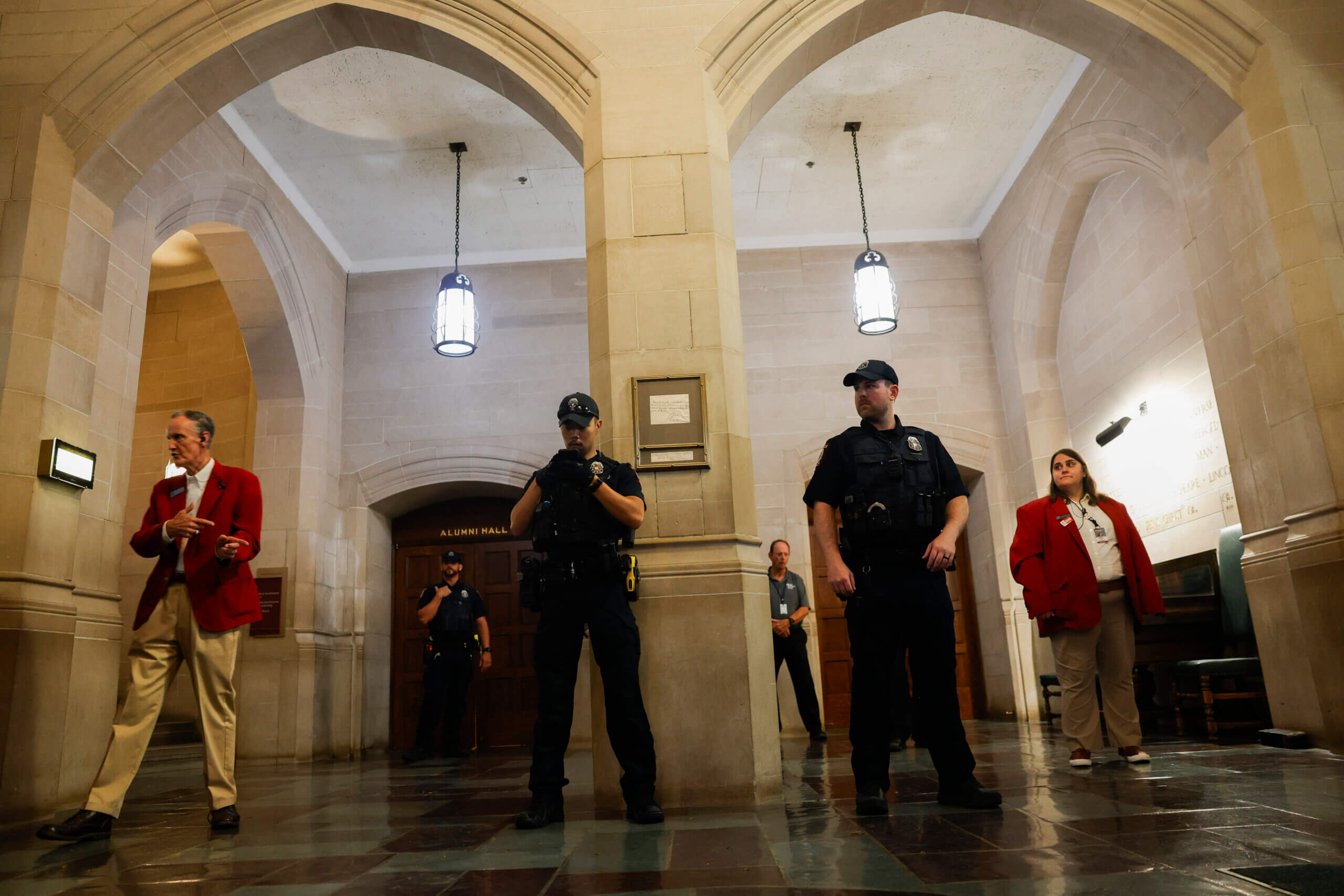
None of the 20 people I spoke with for this story understood why Roseman had been removed as director, and I did not hear any criticism of his leadership. But these disciplinary incidents and crackdowns had created a simmering tension by the time Roseman said Jikeli called him to announce that he’d lost the confidence of Indiana’s top leadership and that Jikeli himself had been offered Roseman’s job.
Jikeli said in an email that did not say he would be replacing Roseman. “To be absolutely clear: there was no pre-arrangement, and I was appointed following faculty consultation,” he said.
In addition to his scholarship on antisemitism, Jikeli has made a name as a prominent academic defender of Israel and its supporters on campus. He organized a “Rally Against Hamas Propaganda” at IU last year during the pro-Palestinian encampment, and in an interview a few weeks before he took over the Jewish studies program Jikeli lamented that, “Jewish students are often outnumbered and lack the institutional or financial backing their adversaries enjoy.”
(While Jewish services like Hillel and pro-Israel advocacy organizations have significantly more funding than pro-Palestinian groups, some of Israel’s supporters believe that universities themselves are systematically biased against Jews, and that Iran or Qatar are secretly funding campus demonstrations agaisnt Israel.)
“Many administrators are reluctant to confront faculty or radical groups for fear of backlash,” Jikeli said in the interview. The solution could come “in the form of public scrutiny, funding consequences, or legal obligations.”
Jikeli’s power to address campus antisemitism along these lines is limited as interim director of the Jewish studies program, but he was quick to assert it.
A Zoom expulsion and a grant revoked
Sabina Ali, a fifth-year doctoral student doing a minor in Jewish studies, said in an interview with the Forward that she first crossed paths with Jikeli while participating in the encampment. Ali said she was standing in a protective circle around a group of Muslim students while they prayed when Jikeli approached the group and started photographing them.
“I just asked him, ‘What are you doing?’ and he just started rambling about how Islam is such a sexist religion and why are these men praying without women,” Ali recalled.
Jikeli said in an interview that he often passed the encampment on his way home but did not recall the incident Ali described. “I recall that there were some prayers,” he said. “I don’t think I said that Islam is a sexist religion.”
In a follow-up email, he said: “I did not, and would not, describe Islam as a sexist religion. Islamism, as an ideological movement advocating the application of sharia law, does contain misogynistic elements — but that is a distinct discussion.”
Jikeli first raised concerns last fall that Ali’s profile picture on Zoom — the image that is displayed when a user turns off their camera — was creating a hostile learning environment. The image is a mashup of three distinct items: the Palestinian flag, a drawing of a woman wearing a keffiyeh around her head and the words “free Palestine.”

Roseman, who was director at the time, said he brought Jikeli’s complaint to the university’s student conduct office, which determined it qualified as free speech. “I was simply following guidance from the college,” Roseman said. “Whether some people didn’t like it or not, I didn’t feel like I had much choice.”
Jikeli disagreed. When Ali showed up virtually to a hybrid September workshop this fall to celebrate the release of a new book by Imhoff, the religious studies chair, Jikeli announced to the room that her profile image was creating an unsafe environment.
“A Jewish studies graduate student sitting next to me pointed out that Jikeli might be the only one who was bothered,” Constance Furey, a religious studies professor, wrote in an email to university administrators. “Without further comment or explanation, JIkeli then announced that he had removed the student.”
Twenty of the 24 people present for the workshop then left and reconvened in a new room, where Ali was allowed to participate. But Jikeli defended himself to everyone in the program later that day in an email describing the avatar as “an image of a Palestinian terrorist.”
“Political slogans or provocative images of any kind have no place in our academic settings,” Jikeli wrote.
He followed up directly with Ali, proposing that they meet with a mediator to “clear the air.” She instead asked for a public apology and Jikeli’s resignation as interim director.
A few days later, Jikeli wrote to Ali again, this time to say that he was unilaterally rejecting a travel grant approved by the Jewish studies funding committee for her to present at a national religious studies conference.
Jikeli’s email to Ali did not provide a reason for the unusual move but he told the Forward that it “did not meet our academic standards and falls outside the scope of Jewish Studies.” Those who rushed to his defense focused on the subject of Ali’s research: “Weaponizing Indigeneity: Zionist Public Discourses on Possessing Palestine.”
Blending politics and scholarship
Though Jikeli said in an email that he does not engage in advocacy, he blended political stances with his academic work before becoming interim program director, writing op-eds and giving interviews about opposition to Israel on college campuses.
Bryce Greene, a PhD student at Indiana who was a leader of the protests against the war in Gaza, tried to sign up last year for an undergraduate course Jikeli taught on Israel and social media. But, he said, the professor suggested that the two instead meet for weekly independent study sessions.
Jikeli proposed that Greene would receive credit for the meetings, but they disagreed on how much the independent study would be worth and eventually decided to proceed on an informal basis.
Greene described cordial meetings where they would debate the Israeli-Palestinian conflict and send each other readings. But the relationship eventually broke down when Greene accused Jikeli of “Holocaust denial” for rejecting the claim that Israel was committing genocide in Gaza.
Still, Greene was taken aback a few months later when a friend sent him a flyer for a lecture Jikeli was delivering to the Virginia Psychoanalytic Society called “In the Mind of a Pro-Hamas Student,” which the description said was based on “a semester-long dialogue with a pro-Hamas campus activist.”
“It was pretty obvious that he was trying to talk about me,” Greene said. After complaining to the chairs of Jewish studies and German studies, where Jikeli is based, Greene said he believed the talk switched to focus on public social media posts from other college students.
Jikeli told Greene in an email following the event that it was based on discussions with “some other people” during the encampments and shared his presentation slides from the event with the Forward. They do not focus on individual students.
What many people don’t understand is that the use of #Hamas slogans, such as #FromTheRiverToTheSea, #Palestine will be free” is an endorsement of the ongoing #terrorism against all #Israelis and #Jews – as demonstrated by the horrific #massacre of #civilians on #10/7.
— Gunther Jikeli (@GJikeli) October 27, 2023
Jikeli’s willingness to mix his political beliefs about Israel and antisemitism with his academic responsibilities came up again during an October meeting with Rick Van Kooten, the humanities dean, and a group of Jewish studies graduate students concerned about Jikeli’s actions as interim director.
As part of his defense for removing Ali from the Zoom meeting, Jikeli told the group that he had printed out a copy of her Zoom avatar and used it for an assignment in one of his undergraduate courses. He had asked students to respond to a series of questions about the image, including: “Imagine this image displayed constantly on Zoom during hybrid workshops with students and professors. How would its persistent presence affect your focus, comfort, and sense of belonging in that educational space?”
The responses demonstrated that “students feel very uncomfortable in that scenario,” Jikeli said during the meeting, and so he was justified in banning such imagery. He said in an emailed statement that “this was a pedagogical exercise about classroom environment” and “not a personal attack on any individual student.”
When Van Kooten said that he was required to uphold an Indiana state law that mandated freedom of expression for college students, Jikeli warned that individuals he had spoken with around the country might file a federal civil rights complaint against the university if Ali was allowed to display the image.
“I want you to hear this now,” Jikeli told Van Kooten, according to an audio recording of the meeting. “People will consider it a Title VI violation if this is going on — I will not tolerate this.”
Lamentations over a divided program
Van Kooten ultimately ruled that if Jikeli wanted to create a policy about Zoom images for the program he should get it approved by the faculty, and that he would need to provide a specific justification for revoking grants that had been approved by the funding committee.
(Ali’s travel to the religious conference is now being paid for with other university grants.)
But despite the modest stabilizing effect of Van Kooten’s intervention, Daniel Reischer, a leader of the Jewish Studies Graduate Student Association, said that the rapid series of controversies had taken a toll on the program. Some students who had been considering studying at Indiana are reconsidering, he said. After Jikeli declined to say whether he would allow funding for any scholarship that was critical of Zionism, graduate students from around the country are wondering whether their research will be welcome at the annual Jewish studies conference that the association sponsors.
“There’s just a lot of uncertainty and a lot of fear,” Reischer said in an interview.
Jikeli said in an email that he was “firmly committed to free, open, and respectful dialogue.”
“Criticism — including of Zionism — is part of legitimate academic inquiry,” Jikeli wrote. “Defamation and unsubstantiated claims are not.”
“We could have embraced a program that says, ‘You can do your best scholarship here no matter what your politics are’ — but we haven’t been able to do that.”
Sarah ImhoffChair of the Religious Studies Department at Indiana University
Not everyone is critical of Jikeli’s leadership. Joanna Martin, another officer of the graduate student group, said she’s had positive interactions with Jikeli and that he supported bringing a prominent scholar of Nigerian Jewry — the subject of Martin’s doctoral thesis — to campus after becoming program director.
“He’s definitely making some waves,” Martin said. “But I don’t think he’s going to start overruling anything and everything.”
Another graduate student, who did not want to be named mounting a more forceful defense of Jikeli, said that the Jewish studies program has been divided over Israel for years, and many people were determined to oppose Jikeli’s leadership before he had done anything as interim director.
“Gunther came in believing that people were already against him,” the student said, noting that several members of the program had boycotted his welcome dinner.
Jikeli, who told me the school had asked him not to discuss his leadership of the program, has seemed ready to consolidate power and aggressively defend his leadership. In addition to the letters from Nelson, the former AAUP president, and his European colleagues, Jikeli shared a petition with the Forward signed by several dozen Jewish studies professors from the U.S., Europe and Israel defending how he handled the situation with Ali.
Imhoff, the religious studies chair, said that shortly after becoming interim director Jikeli removed her without explanation from serving on the Jewish studies program’s graduate affairs committee and from another committee helping to revise the undergraduate curriculum.
“We did not need to do this to ourselves,” Imhoff said. “We could have embraced a program that says, ‘You can do your best scholarship here no matter what your politics are’ — but we haven’t been able to do that.”
Jikeli said he had not removed Imhoff from any committees but rather that committee membership expires at the end semester.
Rosenfeld, the program’s 87-year-old founder, seemed conflicted when we spoke. He had helped build Indiana into a powerhouse of Jewish studies, helping to launch the careers of scholars across the political spectrum.
He rejected the claim by Friedman, the medical school professor and Jewish activist, that the Jewish studies program had fallen into crisis under previous leadership. He also doesn’t believe that Jikeli was brought in to serve as the “hatchet man” for school officials interested in more overt support for Israel.
But he also understands that the program he created as a junior professor 53 years ago is under duress.
“I would like to see us recover from the bad spell that we’re in right now and reassert ourselves as a leading Jewish studies program with a lot of integrity,” Rosenfeld said.
Jikeli’s term as interim head of Jewish studies is expected to last about a year, at which point the administration will either make him the program’s permanent leader or name a new director.
But regardless of what happens in Bloomington, the growing divide between funders and Jewish scholars — and between scholars and some of their students — is intersecting with unprecedented political pressure on universities in a manner that seems certain to permanently transform the academy.
The post Indiana University removed its Jewish studies director. His replacement has ignited a firestorm over Israel. appeared first on The Forward.
Uncategorized
Israeli-Arab influencer behind ‘Nas Daily’: Anti-Zionism is antisemitism
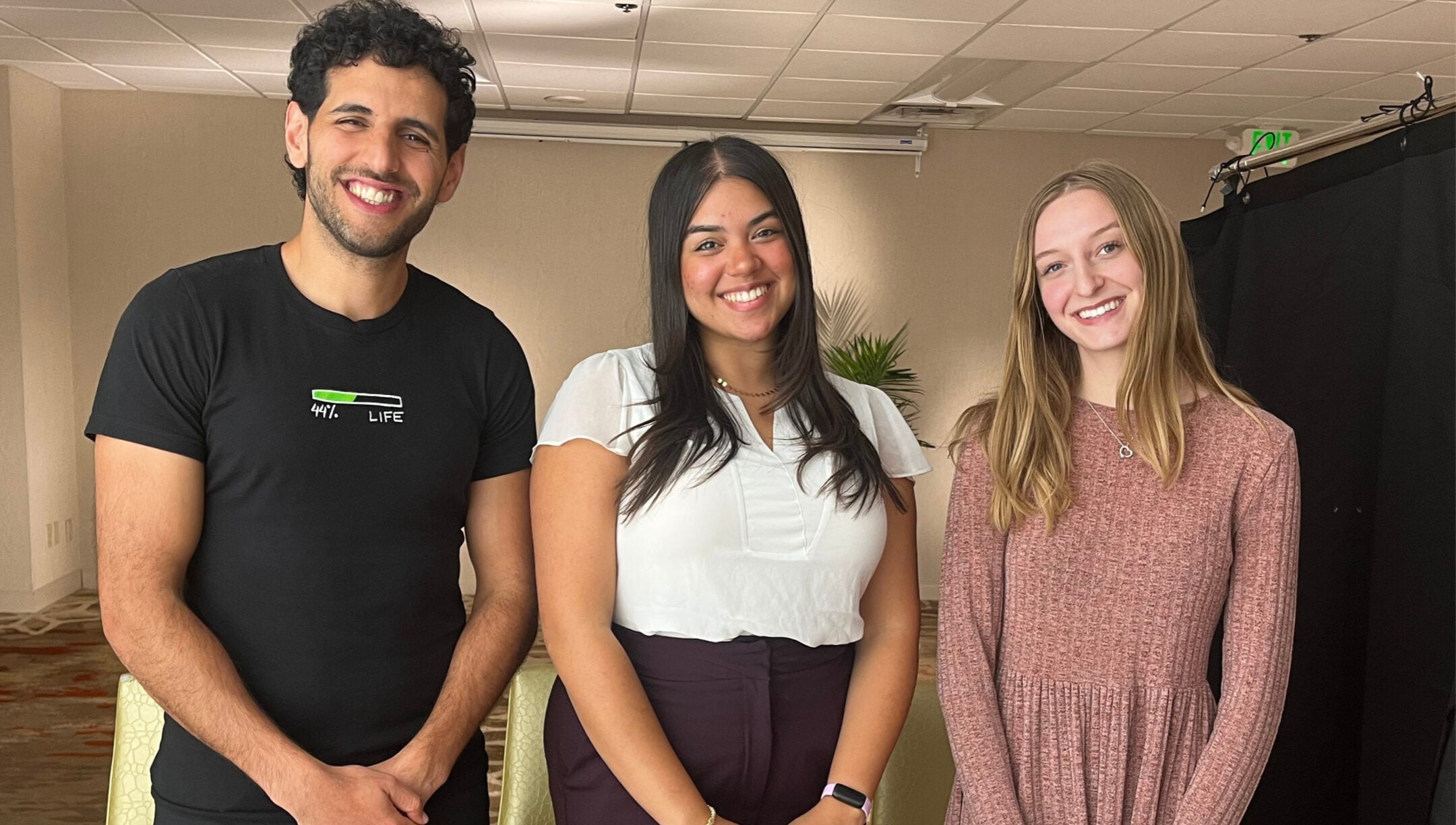
(JTA) — DENVER – Israeli-Arab social media entrepreneur Nuseir Yassin, of the viral vlog “Nas Daily,” said he believes “anti-Zionism is a form of antisemitism” and stressed his commitment to overturning “misguided hate” against Jews, at a conference devoted to the subject this week.
Yassin, 34, was speaking with the Jewish Telegraphic Agency on the sidelines of the conference, hosted by the David Merage Foundation for Confronting Antisemitism. A self-described “village boy” from the Lower Galilee town of Arraba in Israel, he achieved massive success through viral short-form videos that attracted viewers from all over the world. Today he boasts more than 68 million followers across numerous social networks.
Yassin is a Muslim of Palestinian origin, although he said he is not religious. Asked why it was important for a non-Jewish person to participate in a conference about combatting antisemitism, Yassin equated this battle to fighting for his family, noting that “the success of Israel and the Jewish people is also my success as an Israeli citizen.”
“I’m not a fan of the Israeli government, and I’m not here to defend it, just like I’m not a fan of many governments,” Yassin noted, but he asserted that the reaction to the government “is absolutely fueled by antisemitism.”
“I do believe anti-Zionism is a form of antisemitism,” he added.
He said he views Zionism as “the most vanilla thing in the world – a group of people wanting a place to live,” and has therefore concluded that Israel’s detractors “just really don’t like Jews.”
Yassin, who first broke through in 2016, has become increasingly outspoken in recent years about his combined Israeli and Palestinian identity. During the conference, he recalled that he grew up labeling himself Arab-Israeli. After the Hamas attacks of Oct. 7, 2023, he started listing Israeli first and Palestinian second.
“I could not relate to the extremism that I saw, and I wanted to distance myself from it without erasing my identity connected to it,” Yassin said. “I’m not just Israeli because I think it removes a little bit of spice, but I’m also not just Palestinian anymore.”
“A lot of Israeli culture is inside me,” he continued. “I never agree with people. I’m always disagreeable. That’s Israeli. I speak up.”
Yassin noted that he was “the first guy to go study in the United States out of my entire lineage,” graduating from Harvard University in 2014 with a degree in economics and a minor in computer science. Despite having grown up in Israel, Yassin said that Harvard was the place where he made his first Jewish friend.
After working as a software developer for Venmo in New York, Yassin left his job in 2016 to travel and document his journeys. Ultimately, he launched a Facebook page called Nas Daily – using the word for “people” in Arabic – where he posted one-minute videos for 1,000 days, telling the stories of communities around the world.
What was once a personal brand has since expanded into the parent Nas Company, which offers platforms for solo entrepreneurs to build and monetize their online businesses.
Yassin earned an honorary degree from Ben-Gurion University of the Negev in 2025 in recognition of his advocacy work for Israeli and Palestinian coexistence. This past August, he also joined the advisory board for the Genesis Prize Foundation, which each year celebrates inspiring Jewish individuals for their achievements.
“I do not relate to hundreds of men on the street shouting ‘Allahu Akbar,’” Yassin told JTA, adding that there needed to be more women and fewer religious fanatics participating in the Israeli-Palestinian conversation.
Yassin argued that he’s “not a weird Arab for saying this” and that “the entire country of the UAE says the same thing,” referring to one of the Gulf countries that signed onto the Abraham Accords normalizing relations with Israel. He also challenged “Free Palestine” activists to envision a concrete future for Palestinians rather than fixating on Israel’s transgressions.
“We should all be ‘Free Palestine’ – but from what?” Yassin asked. “We disagree on the solution, not on the problem. We don’t want suffering. Nobody wants suffering.”
“I’m a free-Palestine-from-Hamas guy,” he continued. “Just free Palestine,” he said, ”is not an answer. I’m free-Palestine-from-extremism.”
Yassin affirmed that there is room for criticism of Israel’s government, noting, for example, that he would like to see an Israeli-Arab presence in the government.
But he marveled at the notion that an alien visiting Earth would likely guess that the most hated country in the United Nations is North Korea, when in fact “It’s not – It’s Israel.”
That struck him as absurd because “the Israel-Palestine conflict is not a big deal when you compare it to everything else that’s happening on planet Earth. The only thing that makes it a big deal is that we, as Palestinians, have the perfect enemy.”
That enemy, he continued, is “the most hated type of enemy, which is the Jews.”

As part of his appearance at the conference, Yassin presented a recap of a fellowship he launched this past spring in partnership with the David Merage Foundation to help 50 content creators – 25 Jewish and 25 Muslim – produce meaningful material.
Participants received $1,000 and spent a month learning from the Nas Daily team about viral and impactful storytelling during the fellowship, named for Yassin’s first Jewish friend, Zaki Djemal, who recently died of a sudden heart attack.
To Laura Merage, the Iranian-born Jewish co-founder of the foundation, Yassin was a natural partner for this bridge-building effort. Given his social media following and “infectious personality,” Merage said she felt “that’s what we need more of in the world.”
At the conference on Tuesday, Yassin announced two winners of the fellowship’s influencer competition: recent McGill University graduate Raihaana Adira, a Canadian Muslim, and Grace, a Jewish-American digital content creator who preferred to use only her first name for privacy reasons. Grace tells stories about unique public figures, such as the first Arab “Miss Israel.” Adira, meanwhile, began posting about antisemitism and Muslim-Jewish relations after witnessing anti-Zionist protests at McGill.
“When I see a Jewish person being attacked on campus or online, it feels like I’m watching someone from my own community hurt,” Adira told JTA, noting that she started posting because no one believed her when she talked about incidents on campus.
“I wanted the protests and the graffiti on the walls that said ‘Death to the IDF’ to be seen,” she continued. “I am a Canadian, I am a Muslim, and when people at school on the streets say, ‘Death to Canada, We are Hamas, Hamas is heroic’ – that is not me.”
Adira said she received many death threats when she first started posting. While acknowledging how difficult that was, she also emphasized an influx of support that has helped “drown out the hate.”
Yassin offered a similar perspective, noting that at the beginning of his career, he “used to amplify the blowback and talk a lot about it,” referring to the criticisms he’d receive for promoting coexistence and calling out antisemitism. But after realizing that this deterred others from speaking out, he deemed the threats insignificant, calling them “the smallest price to pay for the largest outcome you can possibly imagine.”
During his travels around the world, Yassin said he has witnessed how flawed people’s perceptions of Jews can be and that he feels “a responsibility to set the record straight.” He also noted that he is dating a Jewish woman, author and influencer Aija Mayrock, whom he is marrying next year and with whom he expects to have children.
“They’re going to be Jewish, so that’s my family – literally, my family,” Yassin said.
This article originally appeared on JTA.org.
The post Israeli-Arab influencer behind ‘Nas Daily’: Anti-Zionism is antisemitism appeared first on The Forward.
Uncategorized
Four Seats or No Seats? Why Israel’s Final Polls Disagree Over Amcha Yisrael

Conflicting projections for Ofer Winter’s party illustrate the uncertainty of measuring public support near an electoral threshold.
A Channel 12 poll gives Ofer Winter’s Amcha Yisrael four parliamentary seats.
An i24NEWS survey reaches the same seat total.
Other final polls find that the party does not qualify for representation.
How can surveys conducted close to the same election produce such different results?
The answer lies partly in the difference between measuring a vote share and converting it into parliamentary seats.
A Statistical Boundary
Israel’s electoral threshold is 3.25 percent.
For a party receiving substantially more than that percentage, modest sampling fluctuations may change its expected number of seats without calling its parliamentary presence into question.
For a party whose support lies near 3.25 percent, the same type of fluctuation may change its projected representation from several seats to zero.
This does not necessarily mean the polls are measuring completely different political realities.
They may be producing estimates close to the same threshold but on opposite sides of it.
Sample Size Is Only One Factor
The i24NEWS survey conducted on October 22 included 5,124 adult respondents and reported a sampling error of plus or minus 1.4 percentage points at the 95 percent confidence level.
That is a substantial sample by conventional political polling standards.
But a larger sample does not eliminate every source of uncertainty.
Different pollsters may employ different recruitment methods, weighting systems and procedures for estimating turnout.
They may also differ in how they handle respondents who are undecided or reluctant to state their preferences.
These choices can matter particularly for smaller parties.
The Problem of Turnout
Opinion polls generally estimate voting preferences before actual voting takes place.
Election results reflect the ballots cast by people who participate.
Differences between intended and actual turnout can affect parties in different ways.
Analysts must therefore consider not only how many respondents express support for a party, but also whether the poll’s turnout model accurately reflects the eventual electorate.
Without transparent, comparable information about the methods used by each polling organization, it is difficult to identify which methodological difference is responsible for a particular disagreement.
Reading the Final Surveys
The appropriate interpretation of Amcha Yisrael’s polling is neither that its parliamentary representation is guaranteed nor that exclusion is certain.
The available surveys demonstrate uncertainty around a legally decisive boundary.
The four-seat projections reported by Channel 12 and i24NEWS are meaningful observations.
So are the below-threshold findings published by Channel 13, Maariv and Zman Yisrael.
Each survey is a measurement of electoral intentions under a particular methodology, not a count of actual votes.
For readers following Israel’s election, this makes Amcha Yisrael an instructive case study in how polling uncertainty interacts with electoral law.
The final result will provide the definitive seat allocation. The polls explain why the outcome was difficult to measure in advance.
Uncategorized
As Trump betrays Ukraine, it’s beginning to feel a lot like Munich
In Munich on Sept. 30, 1938, the leaders of Britain and France signed an agreement with Adolf Hitler that caved to the Nazi leader’s demand that Germany be given a chunk of Czechoslovakia. Five months later, Hitler ordered the German military to forcibly take the remainder of the neighboring country.
On Oct. 9, 2026, Donald Trump and Vladimir Putin struck a deal allowing Russia to sell diesel fuel to global markets, most importantly to the US. Then Trump waived a package of sanctions on Russia that had been passed by Congress. By replenishing Russia’s war coffers, it is likely more Ukrainians will die because of these twin gifts from America’s president to the warmongering Russian autocrat.
Why is Trump doing this? He seems to be hoping the diesel deal will help him avert disaster in the upcoming midterms. Or maybe there’s more to it than that. Perhaps Trump seriously thinks that this will get him the Nobel Peace Prize by ending the war in Ukraine through helping Putin win it. Perhaps it’s one more scheme to further enrich himself and his family. Or maybe Putin really does have something on Trump.
In any event, it feels like Munich all over again.
There are some remarkable parallels between Czechoslovakia’s predicament in 1938 and Ukraine’s nine decades later: separatists in two vulnerable Central European democracies were encouraged and supported by a neighboring authoritarian regime that sought to seize adjacent territory under the pretext of protecting a minority from oppression.
And at the center of both narratives is betrayal: of Czechoslovakia by Britain and France, and Ukraine by Trump.

In the spring and summer of 1938, Konrad Henlein, leader of the Nazi-allied Sudeten German Party in Czechoslovakia, held secret meetings with Hitler and other Nazi officials. They concocted a plan: Cause so much disorder in the Sudetenland that the Czech government would declare martial law, thus creating an excuse for German troops to march in to protect the ethnic German minority.
Tensions that had long existed along the Czech frontier erupted into gunfire and death in the Sudeten town of Habersbirk on the morning of Sept. 13, 1938. A mob of German separatists hung a swastika banner from a church tower, stormed the police station, kidnapped the wife of a cop, and engaged in gunfights with police officers that lasted hours. Four Czech police officers and four insurgents died. Outbreaks of violence, terror and torture raged along the border for days, backed by Freikorps paramilitary troops who crossed from Germany and by SA and SS men who took part in cross-border sabotage and armed attacks.
The uprising had the desired impact. Just 17 days later — on Sept. 30, 1938 — Britain, France, Italy and Nazi Germany signed the Munich Agreement, yielding to Hitler’s demand that the Sudetenland be ceded to him. After landing at an airport outside London, Prime Minister Neville Chamberlain waved a document in his hand and jubilantly proclaimed:
“The settlement of the Czechoslovak problem which has now been achieved is, in my view, only the prelude to a larger settlement in which all Europe may find peace.”
“I believe it is peace for our time,” Chamberlain said later that day.
But it didn’t take long for Hitler to show he could not be trusted. Hitler’s army marched into Czechoslovakia on March 15, 1939. Germany’s invasion of Poland followed less than six months later, and by 1942 German forces controlled territory spanning from the Atlantic Ocean to deep inside the Soviet Union.
Ethnic Germans’ uprising in Czechoslovakia in 1938 found an echo nine decades later in Ukraine’s Donbas region, where unrest that began with pro-Russia protests in 2014 evolved into the war Russia has been waging on its neighbor for nearly five years.
In the spring of 2014, paramilitary units led by Russian intelligence officers stormed government office buildings in several towns and cities in Donbas, seizing weapons and clashing with police. In a scene reminiscent of the Habersbirk siege of 1938, on April 14, 2014, pro-Russian militants seized the police station in Horlivka, beat up the police chief, and murdered a member of the city council, whose body was found in a river. Similar clashes occurred throughout Donbas.
Two Kremlin-backed pseudo-states soon emerged: the Donetsk People’s Republic and the Luhansk People’s Republic. Russia funneled tanks, artillery, air defense systems and fighters into Donbas, fueling a war between separatists and Ukrainian forces that dragged on for years.
Like Hitler in the Sudetenland, Russia’s de facto occupation of Donbas was not enough for Vladimir Putin. His eyes were on all of Ukraine, and he spent years manufacturing pretexts for the full-scale invasion that began on Feb. 24, 2022.
Trump has been buttering up Putin for more than a decade, starting with his 2015 campaign for president, when he effusively praised the ruthless Russian autocrat’s leadership style. Putin is a “strong leader,” is “far more respected than our president,” meaning the immensely popular Barack Obama, and was someone he “would get along with very well,” Trump said back then.
Trump’s admiration for Putin took on ominous tones after becoming president. During a press conference after the two leaders’ 2018 Helsinki summit, Trump questioned intelligence findings on Russian election interference and said he believed Putin’s denial. “I don’t see any reason it would be Russia,” Trump told reporters, with the Russian strongman standing at his side.
After Russia’s invasion of Ukraine in 2022, during Biden’s presidency, Trump called it “a pretty smart move,” praised Putin as a “genius,” and also said it wouldn’t have happened if Trump was still president, remarks that were amplified by Russian state media.
During Trump’s second term, his buddy-buddy relationship with Putin has turned into a virtual strategic alliance, as the American president repeatedly makes moves and statements that seem designed to please the Russian autocrat. There are Trump’s threats to abandon NATO, his humiliation of Ukraine President Volodymyr Zelensky during a February 2025 meeting inside the Oval Office, and most recently Trump’s demand that Ukraine cease its drone attacks on Russian oil refineries, his call for Zelensky’s ouster, and envoy Steve Witkoff thanking Putin for being a “humanitarian.”
Putin has proposed a summit between himself, Trump, and Chinese leader Xi Jinping to discuss ending the war in Ukraine. It’s notable that Ukraine has not been invited. This is also what happened in Munich nine decades ago, when Czech delegates were excluded from the room, and others decided Czechoslovakia’s fate.
Last October, aboard Air Force One, Trump told reporters the Donbas region should be “cut up,” leaving most of it in Russian hands.
“Let it be cut the way it is,” he said. “They can negotiate something later on down the line.”
It seems the fate Trump envisions for Ukraine is similar to the one Hitler envisioned for Czechoslovakia. It would be naïve to think that Putin’s expansionist ambitions would stop there.
The post As Trump betrays Ukraine, it’s beginning to feel a lot like Munich appeared first on The Forward.
