


Uncategorized
Iran’s Rising Death Toll Ramps Up Pressure on Trump to Respond

Protesters gathered on Jan. 24, 2026, at Joachimsthaler Platz in western Berlin, Germany, to rally in support of anti-regime demonstrations in Iran, calling for US military intervention. Photo: Michael Kuenne/PRESSCOV via ZUMA Press Wire via Reuters Connect
More than 30,000 people may have been killed by Iranian security forces during a brutal crackdown on widespread anti-government protests earlier this month, according to new estimates that far exceed earlier death tolls.
The new figures have intensified pressure on the international community to respond to the Iranian regime’s shocking scale of violence, especially amid a US military buildup in the region following President Donald Trump’s repeated warnings to Iran and calls to help the protesters.
Two senior Iranian Ministry of Health officials told TIME that the scale of the killings and executions has overwhelmed the state’s capacity to dispose of the dead, as anti-regime protests erupted across more than 400 cities and towns, with over 4,000 clashes reported nationwide. According to the officials, as many as 30,000 people could have been killed in the streets of Iran on Jan. 8 and 9 alone.
The Iranian regime has reported an official death toll of 3,117. But new evidence suggests the true number is far higher, raising fears among activists and world leaders of crimes against humanity.
The US-based Human Rights Activists News Agency (HRANA), which tracks deaths by name and location, has confirmed 5,937 deaths, including 214 security personnel. Nearly 20,000 potential deaths are still under investigation, and tens of thousands of additional Iranians have been arrested amid the crackdown.
According to Dr. Amir Parasta, a German-Iranian physician, the latest figures do not include protest-related deaths recorded at military hospitals or in regions the investigation never reached, suggesting the toll is likely to keep rising.
More than 30,000 fatalities have been registered so far. With the support of my dedicated colleagues in Iran, we have been able to submit verified figures on deaths, injuries, and executions to the United Nations and to governments, and we will continue to update these data.
— Prof. Dr. Amir-Mobarez Parasta (@ProfParasta) January 25, 2026
Aligned with the Ministry of Health’s new figures, Iran International reported that security forces killed over 36,500 Iranians during the Jan. 8–9 nationwide crackdown, marking the deadliest two-day protest massacre in modern history. Thew news outlet cited newly obtained classified documents, field reports, and accounts from medical staff, witnesses, and victims’ families.
Iran International also noted the prevalence of extrajudicial execution of a number of detainees.
“Images released from morgues leave little doubt that some wounded citizens were shot in the head while hospitalized and undergoing medical treatment. It is evident that, had these individuals sustained fatal head wounds on the streets, there would have been no reason to admit them to hospital or begin treatment in the first place,” the outlet reported. “The images also show that in some cases, medical tubes and patient-monitoring equipment remained attached to the bodies. In other cases, cardiac monitoring electrodes are visible on the chest, suggesting these individuals were under medical care before being shot in the head. A number of doctors and nurses have also told Iran International that so-called ‘finishing shots’ were fired at wounded patients.”
Some families of protesters who were killed have reportedly been told they must pay up to $20,000 to bury their loved ones, while others were forced to sign papers falsely claiming their relatives had served in the security forces instead of participating in the protests.
According to Mahmood Amiry-Moghaddam, director of Norway-based Iran Human Rights, the Islamist regime is using this technique to conflate the number of security forces killed and downplay the death toll among protesters.
“One reason for this practice is that the regime seeks to avoid international pressure for killing protesters,” Amiry-Moghaddam said. “Another motive is to prepare the ground for future executions of protesters.”
Iranian judicial officials have previously dismissed US President Donald Trump’s claims about halting execution sentences for protesters as “useless and baseless nonsense,” warning that the government’s response to the unrest will be “decisive, deterrent, and swift.”
With Iranian authorities now maintaining an internet blackout for nearly three weeks, the actual number of casualties remains difficult to verify. Activists fear the internet shutdown is being used to conceal the full extent of the crackdown on anti-regime protests.
Iranian officials told The New York Times that Supreme Leader Ayatollah Ali Khamenei ordered security forces to suppress protesters “by any means necessary,” with explicit instructions to “shoot to kill and show no mercy.”
The latest figures, double previous estimates, come as the United States and the broader international community face growing pressure to act against the regime’s ongoing violence. For its part, the Iranian government has warned that any attack will be treated “as an all-out war.”
As regional tensions mount over the regime’s brutal crackdown on anti-government protests, Washington has increased its military presence in the region, moving a range of assets into the area — including the USS Abraham Lincoln and its strike group.
On Sunday, the US Air Force said it was set to begin a multi-day readiness exercise across the Middle East “to demonstrate the ability to deploy, disperse, and sustain combat airpower” in the region.
The UK Ministry of Defense announced last week it had also deployed Typhoon fighter jets to Qatar “in a defensive capacity.”
In the last few weeks, Trump has repeatedly warned that he may take “decisive” military action against Iran if the regime continues killing protesters.
“We’re watching Iran,” Trump said on his way back from the World Economic Forum in Davos. “I’d rather not see anything happen but we’re watching them very closely.”
With pressure mounting for Iran at home and abroad, experts say it remains unclear how Tehran will respond — whether by escalating militarily beyond its borders or by offering limited concessions to ease sanctions and mend ties with the West.
The nationwide protests, which began with a shopkeepers’ strike in Tehran on Dec. 28, initially reflected public anger over the soaring cost of living, a deepening economic crisis, and the rial — Iran’s currency — plummeting to record lows amid renewed economic sanctions, with annual inflation near 40 percent.
However, the demonstrations quickly swelled into a broader anti-government movement calling for the fall of Khamenei and Iranian President Masoud Pezeshkian and even a broader collapse of the country’s Islamist, authoritarian system.
Uncategorized
Inside the ancient Christian theology driving modern antisemitism
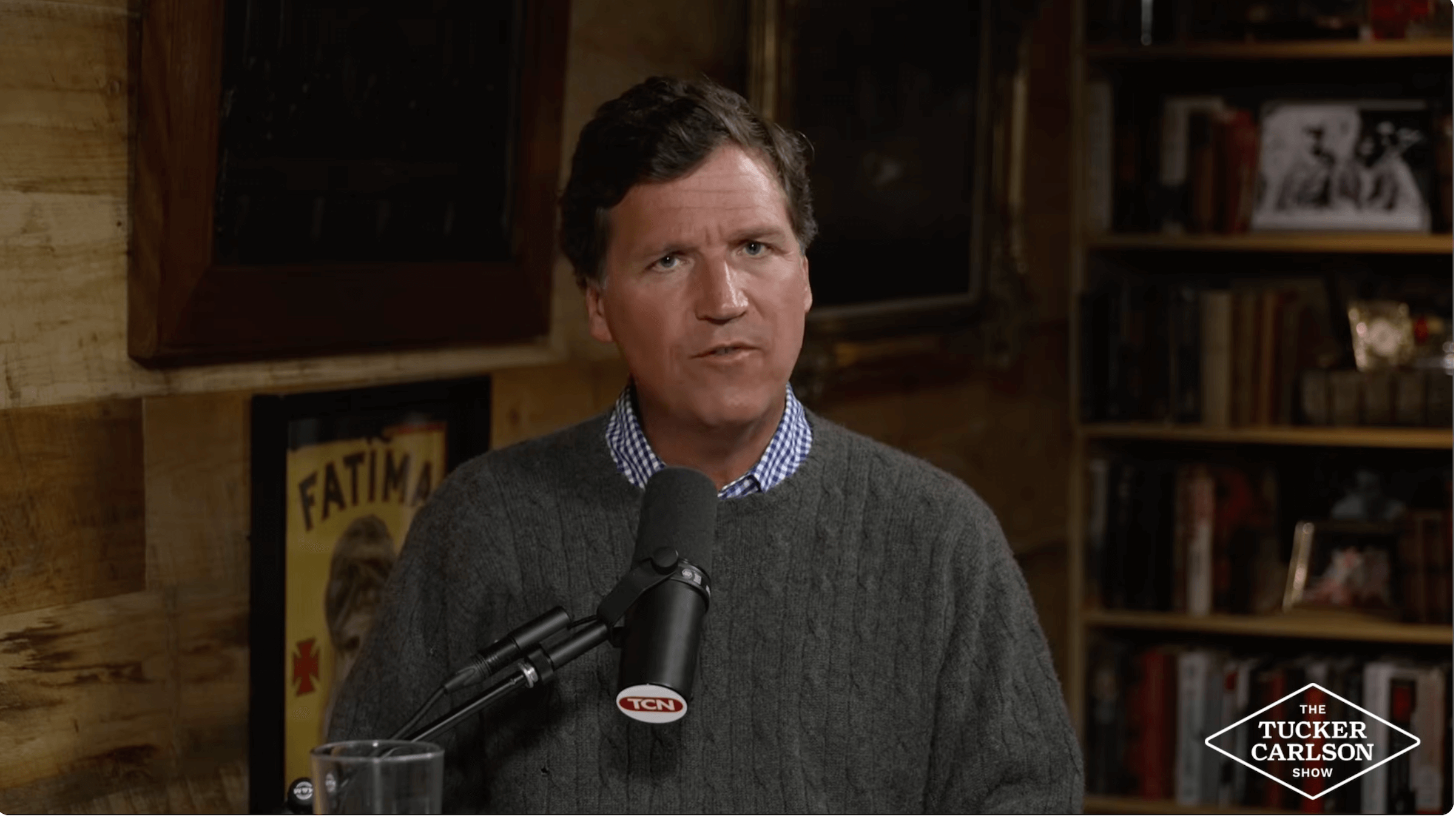
Christian influencers like Candace Owens and Tucker Carlson are rallying their followers against Israel — and Jews. And to do so, they’re also weaponizing a centuries-old concept that underlies many strains of Christianity.
It’s called supersessionism, and it’s the idea that Jesus’ existence supersedes all commands, laws and beliefs that came before it. Christians often say that Jesus’ death “fulfilled” God’s commandments, meaning that everything God said to Jews in the Hebrew Bible, all of the covenantal promises and laws, are obsolete.
These views on Israel, and their theological interpretation, collide with a Christian Zionist movement that deeply supports Israel for its own scriptural reasons, believing that Jews must return to Israel to fulfill a prophecy and herald Jesus’ own return.
Yet supersessionism has become a theme in Christian opposition to Israel. We hear it in the words of Carrie Prejean Boller, a recent Catholic convert and a now-former member of the Religious Liberty Commission, a Trump administration council on religious protections. After she used a panel on fighting antisemitism as a platform to declare that her religious convictions prevented her from supporting Israel — and was removed from the commission as a consequence — she doubled down. “The Catholic Church is the True Israel,” Prejean Boller declared in a post on X. “Christians are the spiritual Semites. We are the new people of God.”
Candace Owens, a Christian podcaster who often refers to Judaism as Satanist; avowed white supremacist Nick Fuentes; and right-wing commentator Tucker Carlson have all similarly said that their Christianity prevents them from supporting Israel because Jesus has obviated the need for a holy land. “As Jesus says plainly in the Gospels, I am the Temple. I am the Temple now,” said Carlson in a recent video, explaining his religious opposition to Israel.
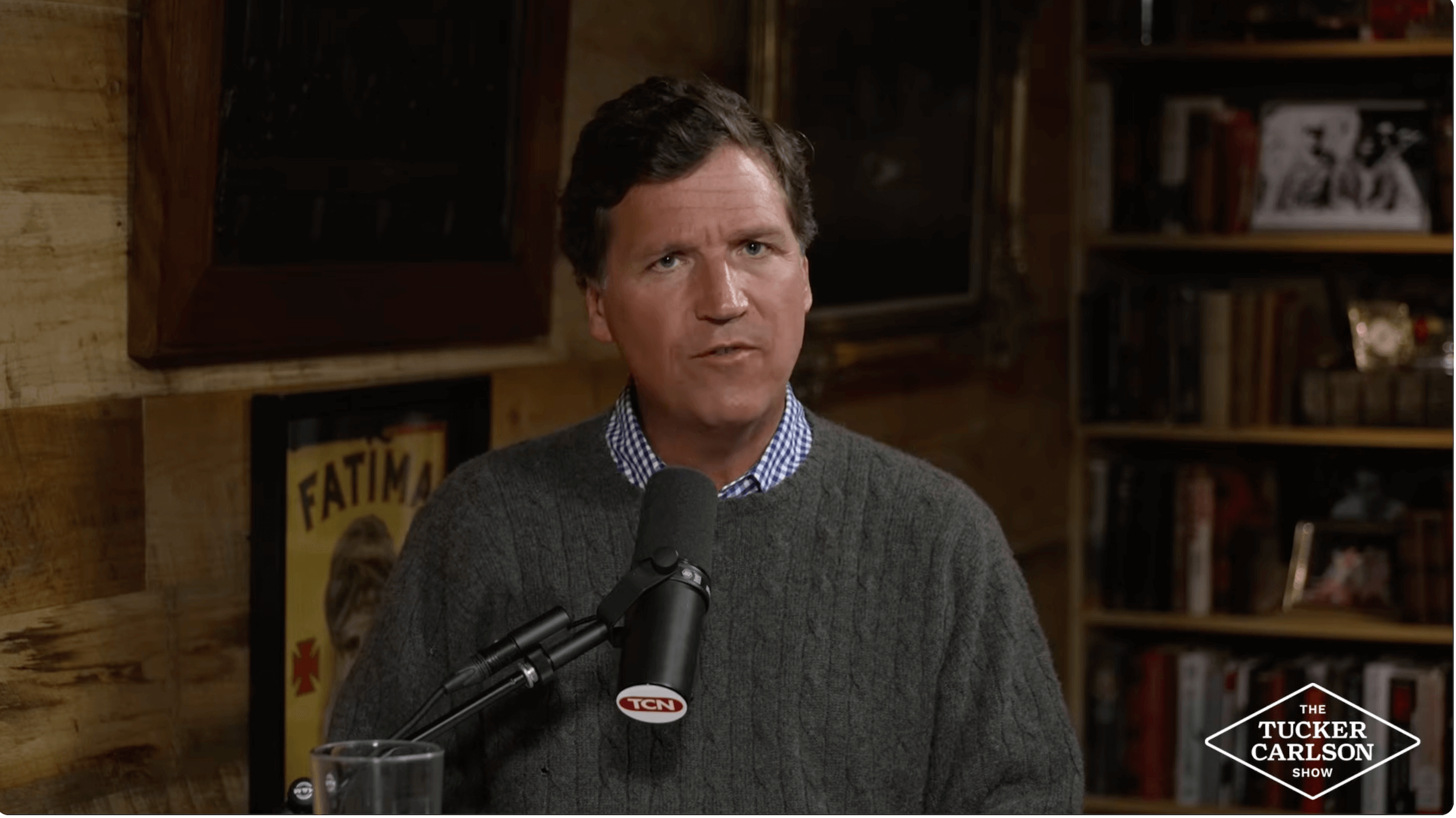
These supersessionist Christian influencers have expressed support for Gaza and criticized Israel on political and moral grounds; that part is not religious. But they have also insisted that they must oppose Israel from a religious perspective, because its very existence goes against their belief that Jesus has taken the biblical place of Israel.
In their hands, supersessionism fuels not only opposition to Israel, but explicit antisemitism — Prejean Boller has said that she is incapable of being antisemitic because, she argued, since Catholics are the true Semites, she would have to be discriminating against herself. Owens repeatedly refers to Judaism as the “synagogue of Satan,” an age-old accusation that in rejecting Jesus, Jews have rejected God and become evil.
This ancient and controversial piece of theological history is increasingly becoming a bludgeon against Israel, and Jews more broadly.
The roots of supersessionism
In the supersessionist understanding of Christianity, now, Jesus’ followers — Christians — are the chosen people of God, overriding and replacing the Jews in covenant with God.
Scholar Susanna Heschel has referred to supersessionism as a form of colonization. “Christianity colonized Judaism theologically,” she writes in an essay on supersessionism in Mel Gibson’s The Passion of the Christ, arguing that the newer religion usurped its central theological concepts while “denying the continued validity of those ideas for Judaism.”
The reasons supersessionism emerged as a dominant belief in Christianity are rooted in a complicated history. Christianity arose from Judaism, and Jesus was a Jew. So early Christians put a lot of work into differentiating themselves and their new religion from Jews and Judaism.
“Paul, you know, he did not want Christians to adopt Judaism,” Marcia Kupfer, an independent scholar who researches and writes about supersessionism, particularly in medieval art, told me over the phone. “It would mean that they are turning to the law when they should be just putting their faith in Jesus.”
Much of that differentiation involved rejecting the continued validity of Judaism. While Christians do consider the Hebrew Bible to be part of their holy texts, there’s a reason they refer to it as the “Old Testament” — because, now, it is obsolete, making anyone who continues to follow its teachings in some way backward and no longer in active relationship with God.
“It is this problem of having, in a way, consumed Judaism,” Kupfer said. “It’s part of their Bible. But it has to be preparatory, prophetic, some anticipatory stage to something more complete and true. More spiritual. So it’s at the same time taken over and rejected.”
Who believes in supersessionism?
Today, it can be tough to definitively say what movement thinks what, due, in large part, to the stratospheric rise of Christians who consider themselves non-denominational — and to the linguistics around supersessionism, which some consider to be a negative term, even as others embrace it.
“It often doesn’t get talked about as supersessionism,” said Matthew D. Taylor, a theologian and visiting scholar at the Center on Faith and Justice at Georgetown University. “I don’t know too many Christians who will come out and say: ‘I’m a supersessionist.’”
But, in general, the more doctrinally focused the church — Catholicism, Orthodox, Calvinism — the more likely it is to have historically preached supersessionism; the more experiential churches, such as the non-denominational charismatic movement, are less attached to the ideology and often lean toward endorsing Israel.
Among the sects that have historically preached supersessionism, however, the ideology has been a topic of hot debate since the Holocaust. In recent years, these churches — especially the Catholic church — have made moves to reject the ideology, due to supersessionism’s antisemitic undertones.
Rev. Russell McDougall, director of ecumenical and interreligious affairs at the United States Council of Catholic Bishops, told the Forward that “the church has repudiated” supersessionism “quite clearly,” and admonished Catholic influencers like Owens, Prejean Boller and Fuentes in a letter from the USCCB. He pointed to a 2015 Church document titled “The Gifts and Calling of God Are Irrevocable,” released on the 50th anniversary of another groundbreaking document about Jews, Nostra Aetate.
Nostra Aetate, a portion of the revolutionizing Catholic council known as Vatican II, is lauded for improving church views on Jews. It rejects the belief that the Jewish people bear responsibility for Jesus’ death, and also affirms Christianity’s roots in Judaism. But, while Nostra Aetate sought to improve Catholic respect for Judaism, it still affirms some supersessionist ideas. “Although the Church is the new people of God,” it says, “the Jews should not be presented as rejected or accursed by God.” Jews, in other words, are not hated by God — still, Christians have replaced them as God’s favored children.
The 2015 treatise grapples with this issue at far greater length. It admits that rejecting supersessionism undermines the central beliefs of the Church. “The theory that there may be two different paths to salvation, the Jewish path without Christ and the path with the Christ,” the document says, “would in fact endanger the foundations of Christian faith.” How to excise supersessionism without undermining the church, it concludes, “remains an unfathomable divine mystery.”
The idea that salvation is given by God exclusively through Jesus is so central to church teachings that rejecting supersessionism poses clear contradictions — which is perhaps why modern Christian influencers are returning to it.
The Christian movements that do not preach supersessionism — the charismatic non-denominational movements, Pentecostal Christians, and fundamentalist evangelicals such as Mike Huckabee, the current U.S. ambassador to Israel — don’t resolve the contradictions either.
Many Christian Zionists focus, in part, on a line in Genesis, 12:3, in which God says that those who love Israel will be blessed and those who oppose it will be cursed; Ted Cruz cited this verse to Tucker Carlson in explaining his support for Israel. Others reference prophetic books in the Bible that point to God’s promises around Israel. But they do not necessarily engage with other lines in the New Testament that imply support for supersessionism.
“They’re reading the Bible in a very helter-skelter way,” said Taylor of the charismatics.
Why does any of this matter?
While supersessionism is core to Christian theology, it might seem like a niche debate best left to pastors and rabbis. But, looking at statements from Carlson, Prejean Boller and others, it’s clear that it informs and justifies their politics regarding Israel and Jews at large — even though it has officially been rejected by many churches.
“They’re in many ways rebelling against the past 60 years of Catholic theology, and trying to hearken back to something that they view as more authentic,” said Taylor of the influencers. “So I think that the supersessionist piece is signaling something significant because it’s part of the broader distaste for some of the modernizing shifts within Roman Catholicism.”

Supersessionist beliefs have, for years, driven antisemitism. It is woven into centuries of artistic and cultural portrayals of Jews as backwards, lesser or even Satanic, based on the idea that Jewish practice is defunct and has rejected God. Synagoga, a symbolic representation of Judaism throughout medieval art, is often depicted as blind. The theological precept has also driven attempts to evangelize and convert Jews for centuries, something Christians might not understand as antisemitism but which many Jews see as an attempt to erase Judaism.
Many, many church leaders — Catholic and otherwise — support Israel. Christian Zionists like Huckabee or John Hagee, a preacher who runs the Christian Zionist advocacy group Christians United For Israel, are a major force in the U.S. Some of these groups lean even philosemitic, appropriating Jewish rituals such as blowing the shofar or wearing a tallit into their Christianity. (This is also seen by many Jews as a form of supersessionism and cultural appropriation.)
Still, a growing number of Christians are embracing antisemitism in the name of supersessionism. This theology undergirds the increasingly common argument that some antisemitic beliefs are a fundamental part of Christianity — and therefore that asking Christians to fight antisemitism infringes on their freedom of religion.
Former congresswoman Marjorie Taylor Greene refused to vote for the Antisemitism Awareness Act, saying it would restrict Christian beliefs. Prejean Boller, in the Religious Liberty Commission hearing on antisemitism that resulted in her removal, accused the Jews on the panel of calling all Catholics antisemites. Since then, she has repeatedly rejected accusations of antisemitism and said that they are infringing on her own religious liberty.
This debate — whether or not Christianity embraces or rejects Jews, and how either choice operates theologically — has become a core conflict in American Christianity, and among the right wing in the U.S.
“I think Israel has become a kind of battleground between these folks with the more interventionist kind of Christian Zionist,” said Taylor, “versus this more kind of isolationist, Catholic and Calvinist, supersessionist and antisemitic coalition.”
But even the more philosemitic side isn’t really embracing Jews for their own sake or on their own terms. Though politicians like Mike Huckabee and Ted Cruz cite scripture to justify their support for Israel, it’s an uneasy alliance rooted in Christianity, not Judaism.
For these Christian Zionists, Jews operate as a way to access and experience a form of Christianity that feels ancient and authentic — think Paula White-Cain, Trump’s former spiritual advisor, being wrapped in a Torah by a messianic Jewish “rabbi,” an act of supposed Judaism that no Jew would ever do. For many of them, support for Israel springs out of a scriptural hope for the end times, and the need to gather Jews in Israel to trigger the apocalypse.
“On the American far right, this bifurcation into philosemitism and antisemitism are not opposites,” said Taylor. Instead, he said, they’re “two sides of the same coin — they’re often instrumentalizing Jews for Christian purposes.”
The post Inside the ancient Christian theology driving modern antisemitism appeared first on The Forward.
Uncategorized
We were instant friends. Then came the Israel question.
There’s one thing these days Jewish publications of all stripes seem to agree about: The Jewish future — geographically, politically, spiritually — is Florida. An article last month in the conservative magazine Tablet pondered whether Miami was “the new Jerusalem,” and left-wing quarterly Jewish Currents made the Sunshine State the theme of an entire 2024 issue.
As a Jewish journalist, inveterate spring breaker and friend of a Florida man with a couch for me to crash on, I wanted to see for myself. So last week, with paid time off burning a hole in my swim trunks, I took my talents to South Beach … and spent essentially no time in the Jewish community at all. (Though I did DoorDash banana bread from Zak The Baker.) But just as Jonah could not outrun his destiny, the Jewish future inevitably found me anyway. This happens when you like talking to random people at bars.
I had spent much of the night getting to know an ebullient pair of strangers, Will and Deanna. (Names changed here.) They are best friends and roommates, two Dallas-born transplants chasing careers in fashion design. Both are gay, and neither is Jewish. But we found common ground when Will told me he is religious. As I told Will, I’ve reported extensively on the experiences of queer Orthodox Jews for the Forward (“a really cool Jewish newspaper”). I spoke of the challenges they face, their resilience and their breakthroughs, and Will spoke about bringing his queerness to his faith.
There was something he needed to ask me, though: Had I been reporting on Jewish people where I’m from, or — he ventured nervously — “Israeli Jews”? I told Will I mostly write about American Jews, but that this Jewish issue transcended borders.
Then the real purpose of the question came out. He volunteered his sense of horror about Gaza and related his shock about the circumstances of Israel’s establishment. What he believed about the history was unclear — it was loud in there, and I couldn’t quite make out his claims — but I could tell: I was being tested.
Yes, this did feel like the Jewish future: one in which any conversation about Judaism will become one about Israel or — and this is how I read the question — your Israeli politics. A future in which Jews everywhere, upon identifying themselves as Jews, are asked (or held) to account for Israel’s actions. And, frankly, a future where it is harder for Jews to make friends with non-Jews.
In another context, or a different mood, I might have been put off by the turn our conversation had taken and quit the interaction. But I liked these two old souls. I said to Will that what has happened in Gaza was terrible; as a journalist, I keep my politics close, but this was sticking to facts. And I saved the looming debate over Israeli history for another time. The three of us went back to enjoying the music and yapping about our dreams and nightmares, and when the lights finally came on at the bar, they invited me to meet them for brunch the next day. I said yes.
Part of me wanted to bring Israel up the next day, but at brunch I couldn’t find a place for it. Yet I found there were lots of opportunities to discuss Judaism. I told them about my grandmother’s recent passing, the dignity of Jewish burial rites and the intensity of shiva. We told stories, laughed, got closer: I learned that Deanna had lived in her car when she first moved to Miami, and Will showed pictures of himself in drag. When the food arrived, this fledgling trio held hands and said something like grace.
A couple hours later, we laid down towels on South Beach. Deanna stayed on the shore as Will and I waded waist-deep into the water. Here was my chance to say something about “Israeli Jews,” or invite him to ask me anything he wanted to know about Israel. But what crossed my mind in the ocean was a mitzvah I often contemplate at the beach. “In Judaism,” I explained, “there’s this practice of ritual immersion…” We never did circle back to Israel.
Florida (particularly South Florida) has come to represent the Jewish future because its Jewish community is ethnically diverse and teeming with young people. (It’s also deeply pro-Israel.) Other features seem predictive of everywhere else: Chabad reigns supreme and religious schools are heavily subsidized. The state is also a kind of extremist incubator — see gubernatorial candidate James Fishback; Florida International University’s antisemitic conservative group chat; or the Miami nightclub that played Kanye West’s “Heil Hitler” for conservative influencers — with Jews a prime subject of obsession.
Meanwhile, American Jews should expect to field uncomfortable questions from strangers about Israel and Gaza for the foreseeable future. It might not be fair, but reality rarely is. All we control — besides the weather, media and global financial system, of course — is our reaction.
The post We were instant friends. Then came the Israel question. appeared first on The Forward.
Uncategorized
Iran Urges Citizens to Spy on One Another as US-Israeli Strikes Cripple Regime

Smoke rises following an explosion, after Israel and the US launched strikes on Iran, in Tehran, Iran, March 3, 2026. Photo: Majid Asgaripour/WANA (West Asia News Agency) via REUTERS
Amid relentless US and Israeli airstrikes that have decimated Iran’s military capabilities and key energy facilities, Iran has called on citizens to report on each other in a new push to crush domestic dissent, as talks of a possible ceasefire remain uncertain.
On Thursday, the semi-official Fars News Agency, which is affiliated with Iran’s Islamic Revolutionary Guard Corps (IRGC), called on all Iranian citizens to help “identify those who have turned their backs on the homeland and threaten national security,” warning that “the country is facing external threats and internal betrayals.”
“Iranians will not allow this betrayal to be forgotten,” Fars wrote in a post on X, linking to a website called “Our Memory” to offer a platform for citizens to snoop and inform on each other.
“The efforts of ‘Our Memory’ also carry a clear message to those who might be contemplating betrayal or collaboration with the country’s enemies: The society is vigilant and awake, and actions that pose a threat to national security will be identified and exposed,” Fars posted.
The regime’s latest propaganda campaign of intimidation comes as Israel’s offensive increasingly focuses on dismantling Iran’s internal repression systems, aiming to create a leadership vacuum and logistical breakdown that could hinder Tehran’s ability to respond if mass protests erupt again.
Even amid Israel’s major battlefield advances, however, a senior Israeli security official said Wednesday that Iran still retains the ability to launch missiles at its current rate for the next several weeks, according to Israel’s N12 media outlet.
“Iran can maintain its current rate of missile fire for weeks,” the Israeli official reportedly said in a closed-door briefing. “It has sufficient launchers and reinforced squads to sustain and stagger the attacks over time.”
On Thursday, US President Donald Trump announced he was extending, “at the request of the Iranian government,” the deadline to strike the country’s energy grid by 10 days, as Washington works to bring a possible ceasefire deal to the table.
Should diplomatic efforts falter, the Pentagon and US Central Command are reportedly preparing military plans for a “finishing blow” on Iran, potentially involving some level of ground forces and massive airstrikes.
According to multiple media reports, Washington is considering several options against Iran, including invading or blockading Kharg Island, the country’s main oil export hub, or even seizing Arak Island to secure control over the Strait of Hormuz, a critical passage through which roughly a fifth of the world’s oil supply flows.
Other potential measures include taking Abu Musa and two close islands near the western entrance of the strait or blockading or seizing ships exporting Iranian oil on the eastern side, threatening a vital route for global energy shipments.
Since the start of the war last month, combined US and Israeli strikes have dropped more than 25,000 munitions on targets in Iran, with nearly 15,000 of those carried out by the Israeli Air Force alone, according to updated Israeli intelligence data.
“These numbers are large and significant by any measure,” a senior Israeli military officer told the Hebrew-language news site Walla.
“We are concentrating strikes on the regime’s centers of gravity in Tehran, Isfahan, and other key sites. Iran may be a large country, but hitting the very heart of its infrastructure has a profound strategic impact,” he continued.
He also said the operation, which began with “leadership decapitation” and quickly shifted to paralyzing surface-to-surface and surface-to-air missile arrays, has effectively reduced Iran’s missile firing to low single- or double-digit daily levels, far below its plan of over 100 launches per day.
So far, Israel has destroyed more than 200 launchers, even as mobile units hidden in deep tunnels continue to pose serious obstacles, which are being bombed and blocked since missiles cannot always reach their depths.
Israeli forces have also systematically targeted Iran’s weapons manufacturing, attacking over 1,000 sites to degrade production, development, and research capabilities.
According to a Reuters report, US intelligence can only confirm the destruction of about a third of Iran’s missile arsenal, while another third has likely been damaged, destroyed, or buried in underground bunkers, with a similar situation affecting the regime’s drone capabilities.
While most of Iran’s missiles have been destroyed or rendered inaccessible, Tehran still may retain a significant stockpile and, as of now, could potentially recover some buried or damaged missiles after the current fighting ends.
As the war continues to escalate, Israel has shifted its strategy, with its Air Force last week striking a major natural gas processing facility in southwestern Iran — a move that damaged roughly 40 percent of the country’s gas production capacity.
Facing a gas shortage, the Iranian government was reportedly forced to prioritize fuel for electricity production, sharply cutting civilian fuel allocations and causing major disruptions to transportation and deliveries to Turkey.
“This is just a sample of our ability to crush Iran’s energy backbone,” an Israeli security official told N12.
With the US also threatening strikes on key Iranian energy infrastructure, the Islamist regime is now facing pressure to consider a ceasefire agreement to bring the war to a close.
“The Iranians are in panic,” the Israeli official said. “They understand that further damage [to its energy facilities] will make governing the country impossible.”
In one of the latest blows to the regime, the Israeli Air Force on Friday attacked the heavy water reactor in Arak, central Iran, after Israeli intelligence detected repeated attempts to restore the site — a facility considered key for producing plutonium for nuclear weapons.
Israeli officials also confirmed an attack on Iran’s only facility in Yazd that processes raw materials into starting components for uranium enrichment, as well as multiple steel plants in a major blow to an already devastated Iranain economy.
After these attacks, the IRGC threatened to target six steel plants in retaliation, including sites in Israel, Saudi Arabia, the UAE, Bahrain, Qatar, and Kuwait.