


Uncategorized
Iraqis Vote in Election They Expect to Bring Little Reform

Election workers at a polling station, after the polls are closed for the parliamentary election, in Sulaimaniya, Iraq, Nov. 11, 2025. Photo: REUTERS/Ari Jalal
Iraqis voted in parliamentary elections on Tuesday in which Prime Minister Mohammed Shia al-Sudani was seeking a second term but many disillusioned young voters saw it as a vehicle for established parties to divide up Iraq’s oil wealth.
Turnout in Iraq’s sixth parliamentary election since the US-led invasion of 2003 reached just over 23 percent as of midday, the state election commission said, and polling closed at 6 pm (1500 GMT).
Preliminary results were due to be announced during the next 48 hours, with the final outcome expected next week, commission officials said.
Sudani’s bloc was forecast to win the most seats but fall short of a majority, potentially meaning months of post-election talks among Shi’ite and Sunni Muslim as well as Kurdish parties to divvy up government posts and pick a prime minister.
“These elections [re]affirm the principle of peaceful transfer of power under Iraq’s new political system,” said Sudani as he arrived at a Baghdad polling station, pushing his mother in a wheelchair as he cast his vote.
Elections in Iraq are increasingly marked by low turnout. Many voters have lost faith in a system that has failed to break a pattern of state capture by powerful parties with armed loyalists, while ordinary Iraqis complain of endemic corruption, poor services, and unemployment.
Turnout is projected by analysts and pollsters to slip below the record low of 41 percent recorded in 2021, due partly to general disaffection and a boycott by populist Shi’ite cleric Moqtada al-Sadr, who counts hundreds of thousands of voters among his core support base.
DISILLUSIONMENT WITH THE POLITICAL SYSTEM
The vote this year featured a raft of young candidates hoping to break into politics, but their chances against old patronage networks were uncertain.
“This election will not depend on popularity. It will depend on spending money,” former prime minister Haider al-Abadi said during a televised interview last month.
“I will not vote for corrupt politicians or militia leaders because I don’t want to be complicit in their crimes over the next four years,” said Salih Abdul Hassan, a 64-year-old lawyer from the southern oil city of Basra.
Analysts warn that low turnout could further erode confidence in a system critics say benefits the few while neglecting the many.
“For Iraq’s 21 million registered voters, Tuesday’s ballot may do little more than endorse a familiar political order,” said Baghdad-based political analyst Ahmed Younis.
“The results are not expected to make dramatic changes in the Iraqi political map.”
Still, the vote comes at a sensitive time for the country.
The next government will need to navigate the delicate balance between US and Iranian influence, and manage dozens of armed groups that are closer to Iran and answerable more to their own leaders than to the state, all while facing growing pressure from Washington to dismantle those militias.
PRESSURE TO DELIVER
Iraq has so far avoided the worst of the regional upheaval caused by the Gaza war, but will face US and Israeli wrath if it fails to contain militants aligned with Iran.
Those elected will also face domestic pressure to deliver tangible improvements in everyday life and prevent public discontent over corruption from escalating into unrest, as it did during mass demonstrations in 2019 and 2020.
Iraq began voting for its political leaders in 2005, after the 2003 US invasion which toppled autocrat Saddam Hussein.
Early elections were marred by sectarian violence and boycotted by Sunni Muslims as Saddam’s ouster allowed for the political dominance of the majority Shi’ites, whom he had suppressed during his long rule.
Sectarianism has largely subsided, especially among younger Iraqis, but remains embedded in a political system that shares out government posts among Shi’ites, Sunnis, Kurds, Christians, and other ethnic and religious groups.
Under Iraq’s sectarian power-sharing system, the prime minister will be Shi’ite, the speaker of parliament Sunni, and the president a Kurd.
Nonetheless, some Iraqis were keen to vote and are hopeful of change. In the capital Baghdad, retired teacher Majid Ibrahim said he arrived to vote an hour before polling stations opened.
“I came to vote for change toward a better future for Iraq. I am optimistic that what is coming will be better.”
Uncategorized
Anne Carson — a poet of spirituality and ‘small things’ — has won the Nobel Prize
Anne Carson, today awarded the Nobel Prize in Literature, can be a difficult poet. Much of her work is erudite, complex and genre-defying; it is poetry and prose and criticism and translation and, occasionally, a kind of theology. But Carson’s work is also profoundly spiritual and richly rewarding, especially for those of us prone to introspection, intellection, melancholy, and, as Carson once described the task of a writer, “noticing small things.”
There are many facets of Carson’s work, and many lenses through which one might relate to it. Born in 1950, Carson was trained as a classicist, and spent much of her career teaching Ancient Greek; in addition to her translations of Sophocles, Sappho, and others, her own poems are often saturated with classical references. Her essays on a wide variety of subjects are similarly erudite and rich. Many have written on these aspects of her work.
Personally, though, as a contemplatively-inclined Jewish reader, I have found her to be a literary as well as spiritual role model. I use the word ‘spiritual’ with hesitation. I doubt Carson would like it much, and what I mean by it is not the cultivation of certain warm feelings but the choice to pay attention, in a certain way, to both the surfaces and the depths of things; to refuse the pat dichotomy between the head and the heart; to dwell in the interiority of experience that, paradoxically, arises from “noticing small things.”
When Carson does turn explicitly to religious and spiritual subjects (she was raised Catholic), she excels, perhaps more than any other writer I have read, in avoiding the clichés that make writing about ‘spirituality’ so challenging. Her long poem from 1992, “The Truth About God” begins:
My religion makes no sense
and does not help me
therefore I pursue it.When we see
how simple it would have been
we will thrash ourselves
Carson isn’t speaking conventionally here, I don’t think — this isn’t quite the Israelites saying, in Sinai, Na’aseh v’Nishmah, we will do and [then] we will understand. But it is a contemplative version of it; a devotional attitude toward the particular. In another section of the poem, entitled “God’s Justice,” she writes:
In the beginning there were days set aside for various tasks.
On the day He was to create justice
God got involved in making a dragonflyand lost track of time.
It was about two inches long
with turquoise dots all down its back like Lauren Bacall.
So this is why there is no justice in the world, or why we must always pursue it anyway: because God was so busy with beauty. The poet, too, gets distracted; the rest of the poem is about the dragonfly. (Like Mary Oliver, Carson is a sublime poet of nature.) As indeed is true in our world — alongside all the evils and injustices of the last few years, the shimmering of tree branches in the breeze, the light refracting into my study, remain as resonant as ever.
When I heard the news about Carson’s Nobel, I came across a post by Florida State University Professor Martin Kavka, whom I’ve known for many years and who, it turns out, is also a Carson fan. Like me, Kavka was elated to hear the news, and we chatted for a while. “Sometimes we think of poetry as something that expresses the way the world is, that pierces the mystery of the world and gives us True Knowledge,” Kavka told me. “But for me, Carson’s poetry, in its odd recombination of words, expresses how we so often feel askew when relating to the world, as if it will always be mysterious, as if its mystery were just there to taunt us.”
“We all know that when we feel askew,” Kavka continued, “authority figures make us feel that it’s our fault. This is true of religious authority figures — and Jewish texts, given that Deuteronomy suggests that we are at fault when we are not thriving — but also of political and educational authorities. Carson gives us all armor for those moments… And for so many of us who are (over)educated, we value assembly too much and beauty not enough. I feel recalibrated whenever I read her, as if I’ve just visited some sort of emotional chiropractor. “
I love that insight. Carson is definitely, in some ways, a nerdy writer. Her work is intellectual, dense, and sometimes opaque. (I find myself reaching again for the word ‘erudite.’) But that is not at the expense of emotional depth. A recent essay, for example, describes Carson’s heartbreaking loss, due to Parkinson’s Disease, of her ability to write legibly — but along the way discusses the Roman poet Catullus, the painter Cy Twombly, composer David Lang, psychiatrist Norman Doidge, as well as Roland Barthes, John Keats, John Cage, Gertrude Stein, and attending a boxing class for people with Parkinson’s. In it, she writes:
Let’s start with life, your life. There it is before you — possibly a road, a ribbon, a dotted line, a map — let’s say you’re 25, then you make some decisions, do things, have setbacks, have triumphs, become someone, a bus driver, a professor, a pirate, years pass, maybe in a family maybe not, maybe happy maybe not, then one day you wake up and you’re seventy. Looking ahead you see a black doorway. You begin to notice the black doorway is always there, at the edge, whether you look at it or not. Most moments contain it, most moments have a sort of sediment of black doorway at the bottom of the glass. You wonder if other people are seeing it too. You ask them. They say no. You ask why. No one can tell you.
A minute ago you were 25. Then you went ahead getting the life you want. One day you glanced over from 25 to now and there it is, the doorway, black, waiting.
Similarly, Kavka’s favorite Carson poem, “Merry Christmas from Hegel,” begins with the poet “wretchedly lonely with all my family dead”:
It was the year my brother died, I lived up north and had few friends or they all went away. Christmas Day I was sitting in my armchair, reading something about Hegel.
Yet she doesn’t stay in the armchair. She is “overjoyed” at Hegel’s language, at “this notion of a philosophic space where words drift in gentle mutual redefinition of one another,” and she goes outside to stand in the snow:
I went to the middle of a woods. Fir trees, the teachers of this, all around. Minus twenty degrees in the wind but inside the trees is no wind. The world subtracts itself in layers. Outer sounds like traffic and shoveling vanish. Inner sounds become audible, cracks, sighs, caresses, twigs, bird breath, toenails of squirrel. The fir trees move hugely. The white is perfectly curved, stunned with itself. Puffs of ice fog and some gold things float up. Shadows rake their motionlessness across the snow with a vibration of other shadows moving crosswise on them, shadow on shadow, in precise velocities. It is very cold; then that, too, begins to subtract itself, the body chills on its surface but the core is hot and it is possible to disconnect the surface, to withdraw to the core, where a ravishing peace flows in, so ravishing that I am unembarrassed to use the word *ravishing*, and it is not a peace of separation from the senses, but the washing-through peace of looking, listening, feeling, at the very core of snow, at the very core of the care of snow.
This is the consolation of the intellectual life, in the best sense: the abstruse philosophical language of Hegel liberates the poet from her melancholy, sends her out into the woods where she has an encounter with the numinous, rendered in perfect, concrete prose without a single platitude of religious or spiritual writing.
Said Kavka of this work, “I learned how to be a widower — how to relate to the world so that death does not govern my existence — from her.”
I am delighted that Carson has won the Nobel, not only for the recognition (and money!) that she deserves, but because it might win her some new readers, including those of us in the Jewish spirituality world for whom Carson’s “noticing” is at the center of our religious lives. I’ll give her the last words, once again taken from the poem “The Truth About God”:
God’s Work
Moonlight in the kitchen is a sign of God.
The kind of sadness that is a black suction pipe extracting you
from your own navel and which the Buddhists call“no mindcover” is a sign of God.
The blind alleys that run alongside human conversation
like lashes are a sign of God.God’s own calmness is a sign of God.
The surprisingly cold smell of potatoes or money.
Solid pieces of silence.From these diverse signs you can see
how much work remains to do.
Put away your sadness, it is a mantle of work.
The post Anne Carson — a poet of spirituality and ‘small things’ — has won the Nobel Prize appeared first on The Forward.
Uncategorized
Ford was the most pro-Israel president in US history, and we need his playbook now
If you ask historians to name the most pro-Israel president in U.S. history, you’ll generally hear variations of the same responses. Harry Truman recognized the Jewish state; Ronald Reagan and Joe Biden defended Zionism; George W. Bush, Barack Obama, and Donald Trump have all, at various points, been dubbed “the first Jewish president.”
Gerald Ford almost never makes the list. He is usually lumped in with Dwight D. Eisenhower and George H.W. Bush as a president who was hostile to Israel. I would argue, contrary to the popular perception, he belongs at the very top. In Israel’s hour of need, Ford provided what only a true friend can offer: tough love.
After the 1973 Yom Kippur War shattered Israel’s self-confidence, Ford perceived what many in Israel could not: Militarism as a substitute for diplomacy is self-destructive.
Much like today, the wars of 1967 and 1973 involved remarkable technical feats on the part of Israel; they also nearly triggered global nuclear conflict. Secretary of Defense Robert McNamara described the U.S. and Soviet Union as being a “hair’s breadth” away from war in 1967. In 1973, with Richard Nixon and Leonid Brezhnev drinking heavily, the CIA reported that the Soviets had moved nuclear weapons to Alexandria, Egypt; the U.S. subsequently went to DEFCON III. What made 1973 so deeply troubling was that Egypt’s Anwar Sadat had secretly attempted to avert war and pursue peace. Still more troubling is the fact that King Hussein of Jordan had personally flown to Israel to warn of the imminence of an Arab attack.
Even after Ford took office, Israel’s government did not take Sadat seriously. But Ford and his secretary of state, Henry Kissinger, a Holocaust refugee and a friend of Israeli Prime Minister Yitzhak Rabin, did. If Nixon and Kissinger brought out the worst in each other — from supporting the coup in Chile to prolonging the Vietnam war — Ford and Kissinger brought out the best in each other, at least when it came to Middle East diplomacy.
In March 1975, after Israel continued to resist compromises with Egypt, Kissinger advised Ford to take a tougher line with Rabin. On March 21, Ford wrote one of the harshest letters in the history of the U.S.-Israel relationship, indicating that he had ordered “an immediate reassessment of U.S. policy in the area, including our relations with Israel.” Ford subsequently suspended or deferred new arms deliveries, including F-15 fighter jets. These were extremely risky political moves with very little domestic upside. But Ford was not simply another politician looking to the next election; he was a statesman looking to the next generation.
More importantly, Ford was acting as a true ally. Friends do not let friends squander a fleeting chance for peace with a mortal enemy. The Sinai II agreement was signed in 1975, committing Israel and Egypt to resolve their differences through diplomacy rather than warfare, laying the groundwork for the 1979 Camp David Accords. Jimmy Carter rightly gets credit for finishing the job with the former Irgun leader Menachem Begin as Israeli prime minister; but it was Ford who enabled the breakthrough. Six years after Sinai II, Sadat became a martyr for peace; two decades after the agreement (and two years after the first Oslo Accord), Rabin met the same fate.
For nearly half a century, that peace has served as the cornerstone of American and Israeli security in the region. It has survived wars, revolution, and terrorism. Peace with Egypt broke the taboo on Arab-Israeli pacts, demonstrating that coexistence was indeed possible; it paved the way for a treaty with Jordan and, ultimately, the Abraham Accords. To this day, Egypt remains one of Israel’s most vital intelligence partners.
What Ford can teach today’s leaders
Israel’s current leaders appear oblivious to this history. Highly credible reports have indicated that Israel was warned of war by Egyptian and other officials prior to the Oct. 7 attacks, which were themselves strikingly reminiscent of 1973. Remarkably, Egyptian intelligence chief Abbas Kamel is even said to have flown to Israel days before the slaughter to warn Israeli Prime Minister Benjamin Netanyahu’s government. Former Defense Minister Yoav Gallant’s claim that he only learned of these warnings from the media raises profound questions.
Oct. 7 and what followed have demonstrated the absolute bankruptcy of the “escalate to deescalate” doctrine and also the centrality of the Middle East conflict to regional and global security. So, in this world-historic moment, what can we learn from Gerald Ford?
First, like Ford, we must be realistic about the severity and trajectory of the crisis. It is clear that one or more players are inching closer toward the deployment of an unconventional weapon, ground forces, and/or a major conventional attack that would destroy critical infrastructure. Any such action would certainly be reciprocated, taking the global economy off a cliff.
Second, we must insist on known solutions. Former Israeli Prime Minister Ehud Olmert confirmed to me that Palestinian Authority President Mahmoud Abbas never said no to the map he proposed in 2008. This is because the two men were essentially in agreement. Instead of sending Israel 40,000 one-ton bombs, Trump should do what Ford did. Freeze weapons shipments until Netanyahu negotiates with Abbas in good faith to conclude an agreement along the lines of the Olmert parameters. As its name suggests, the “Axis of Resistance” would be severely undermined by peace with the Palestinians.
Third, we are faced with a simple truth: military escalation in the Persian Gulf cannot achieve what global diplomacy can. We must ask ourselves why China and Russia both supported the first Iran deal. While both countries would love to see the U.S. weakened in the region, does anyone really believe either power desires Iranian nuclear weapons in the Strait of Hormuz any more than the U.S. would desire them in Venezuela’s oil fields or the Panama Canal? History and economics suggest otherwise: Russia, once dubbed the “lesser Satan” by Iran, attempted to dismember the country after World War II, and China currently purchases roughly 90% of Iran’s exported oil. Ford, who used diplomacy with Egypt to weaken the USSR in the Middle East, would recognize these underlying frictions and use them to turn China and Russia against Iran. Today, we have accomplished the exact opposite.
Ford paid a profound political price for his courage, but he did the right thing anyway. When he took the oath of office, his hand rested on the wisdom of Solomon: “Lean not unto thine own understanding.” Many of our leaders today lean on little else.
The most pro-Israel thing an American president can do today is exactly what Ford did: Get some good advice and then administer tough love.
The post Ford was the most pro-Israel president in US history, and we need his playbook now appeared first on The Forward.
Uncategorized
She left Russia as a Jewish refugee — she returned to tell the stories of a new group of undesirables
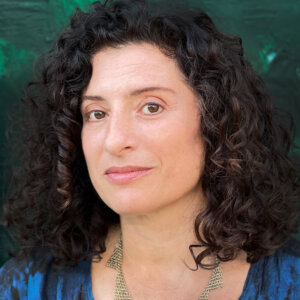
Julia Loktev left the Soviet Union with her family in 1979, when she was 9, during a brief window when Jews were allowed to emigrate.
The pretext, in this time of refuseniks, was to go to Israel and practice their religion: only her family had no intention of going to Israel, and the last person in her family who went to temple was her great-grandmother.
“My mom sort of did it on a whim,” Loktev, 56, the film director, recalled in a Zoom interview from her home in New York. “She said ‘We have friends who applied for many, many years and were being rejected,’ and they said, ‘Oh, why don’t you try applying?’” When she did, the answer came back almost immediately: “Get out.”
“We left not knowing what country we were going to,” Loktev said. They were, effectively, refugees.
They spent time in Vienna, then a suburb of Rome before ultimately arriving, with sponsorship from HIAS, in Loveland, Colorado. Loktev’s experience of immigration, and of her own Jewishness, was bound up with state-sanctioned antisemitism.
“It was in my passport, it was in my school papers, it was on my face,” she said. “My parents couldn’t go to certain universities. They couldn’t get certain jobs, like literally, it was a state policy.”
Decades later, in 2021, she flew to Moscow to document a new policy for undesirables. The Russian government declared a number of journalists “foreign agents,” and they were forced by law to disclose themselves as such. She filmed the fallout, not knowing it was just the start of a larger story of displacement.
“When you were named a foreign agent, you had to put a paragraph-long disclaimer that had to be in a type larger than anything else, like larger than the headline, saying in very legalistic terms, ‘This was brought to you by a foreign agent,’” Loktev said. “This had to go on everything: on all your articles, on your podcast, your TV shows. It had to go on your Instagram puppy pictures. It had to go on your comments on a friend’s baby on Facebook — anywhere you were in public, even if you walked into a court of law, if you were in a parents’ chat, you had to present yourself as a foreign agent.”

The plight of these foreign agents, documented in her 2024 film My Undesirable Friends: Part I — Last Air in Moscow, had glaring historical parallels of past regimes that made citizens identify themselves as “other.” In early 2022, the situation of her characters began to mirror her own journey as a refugee.
One week into Russia’s war in Ukraine, the young reporters at TV Rain, one of the last bastions of the free press under Russian president Vladimir Putin, were tipped off that their studio was about to be raided. Loktev filmed the moment. From there they left the country within a few hours, booking tickets on whichever plane had seats to whichever countries didn’t require visas.
My Undesirable Friends: Part II — Exile starts with this mass exodus and ends a few months before the film debuted at Venice in September. To follow her characters, Loktev travelled light and racked up passport stamps, filming on her iPhone in Istanbul, Amsterdam, Tel Aviv, Riga and New York. Situated in new countries, the journalists regrouped in ad hoc offices to continue reporting on the motherland from a distance. Their work became even more vital, providing their fellow Russians an alternative to state media that only ever referred to a war of aggression as a “special military operation.”
The film grew even more personal for Loktev in part two, but she’s quick to distinguish her subjects’ experience of exile from her immigration.
“When I was 9, I was told ‘Say goodbye to your grandparents, say goodbye to your aunts,’” said Loktev. “But that was part of the deal. I grew up in a closed world of the Iron Curtain where going to America was going to Mars. There was no return flight.”
Loktev’s characters, the youngest of whom are in their early 20s at the start of the film, had grown up with the internet and Zara and H&M down the street. They were unaccustomed to the scale of repression with the outbreak of Putin’s war: tellingly, they liken their predicaments not to life under Stalin or his successors, but to the totalitarian campaigns of villains from Harry Potter.
“None of these people chose to leave,” Loktev said. “They literally had to be put in a situation where they were like, ‘I can go to jail, where I won’t be very useful. I can shut up, or I have to leave the country.’ And at that moment, they chose leaving the country.”
Many — a number have prison sentences waiting for them — don’t anticipate returning anytime soon. If there’s a part three, she and her subjects have pledged, it will likely arrive only after the death of Putin.
My Undesirable Friends is a sprawling portrait of reporters weathering the whims of foreign governments and the aggression of their own abroad. (One writer, Elena Kostyuchenko, known for her longform work, was poisoned over the course of filming.)
Loktev’s film had its U.S. premiere at New York Film Festival last month. Among her festivalmates were Yuval Abraham and Rachel Szor, whose documentary NAZA, alleging war crimes by the Israeli Defense Force, has led Israeli Prime Minister Benjamin Netanyahu to threaten to revoke Abraham and Szor’s citizenships.
“I’ve been thinking a lot about Rachel and Yuval, whom I don’t know personally, but who are now very much in a similar position as my characters, where they have been targeted by the government, targeted by hateful, angry mobs and are now facing the possibility of being in exile,” said Loktev, who recalled an interview where Abraham said he had “nothing to do abroad.”
She thinks Abraham, himself a journalist, must find it difficult to be “cut off” from his home, in no small part due to his desire to report on the ground. But she still distinguishes between the “flavors of the threats” in Israel and Russia.
“With Russia most of the threats are somehow government-related,” Loktev said. “You are able to print some things in Israel without going directly to jail. Haaretz still operates. Like in Russia that would be shut down in a hot second.
“What Russia doesn’t have, I suppose, which is what I fear most, I think, in the case of Rachel and Yuval, is the messianic mobs.”
Loktev sees events in Russia, Israel and America all trending toward a reality where those in power won’t countenance any story critical of their country. While Trump tries to ban news outlets from the White House briefing room and Putin cracks down on demonstrations, the war in Ukraine no longer makes headlines.
Within Russia, she describes a climate of fear and paranoia. She mentions a friend who used to go back to film events like Navalny’s funeral on the street but says it’s no longer possible. “She said ‘everyone is so suspicious. People are just terrified.’” At the same time, the war in Ukraine shows no sign of stopping. Much of the media has its eyes elsewhere, though she believes Russia will intensify its offensive this winter.
Apathy and numbness are not feelings Loktev’s characters can afford, though they naturally have their share of fear.
Dispersed among countries with no extradition agreement with Russia — a surprisingly limited club — they continue to try and speak the truth to their viewers in Russia relying on workarounds like VPNs. The fatigue of an unchanging story is real, but Loktev says the reality must not be normalized.
Lately, Loktev’s heard that potential audiences are tired of stories about freedom of the press and authoritarianism. To this, she has a ready response: “It’s not tired of you.”
The post She left Russia as a Jewish refugee — she returned to tell the stories of a new group of undesirables appeared first on The Forward.
