


Uncategorized
Israel’s government just took a terrifying new step toward authoritarianism
For the first time since Israel’s founding, the government has rejected a binding ruling of the Supreme Court.
At first glance, the effects of the latest outrage from Prime Minister Benjamin Netanyahu’s government may appear narrow in scope. The immediate dispute concerned the Second Authority for Television and Radio, an independent broadcasting regulator, and a technical disagreement over whether it may continue operating after resignations left it without the quorum ordinarily required by law.
But don’t be deceived: The Netanyahu cabinet’s Sunday choice to adopt a resolution declaring it would not recognize a court order that would allow the regulator to continue functioning has serious implications. Whatever one thinks of the legal merits of the underlying case, that declaration establishes a constitutional precedent unlike any that has existed in Israel until now. And it underlines a longstanding theme of Netanyahu’s campaigning in advance of the October elections: His claim that the Supreme Court is the unelected enemy of the people.
The dispute itself arose after the Supreme Court froze controversial appointments to the Second Authority, including for a new chairperson, while it considered petitions challenging the appointments.
Following the court’s intervention, several members of the council resigned in what the justices suggested appeared to be a coordinated effort to prevent the regulator from functioning. Their departure left the council without the statutory quorum needed to conduct business, including deciding on the proposed acquisition of the TV station Channel 13 by a liberal group led by tech mogul Asaf Rappaport.
The Supreme Court responded in June by ruling that those resignations could not be used as an excuse to avoid implementing its earlier orders, and allowed the regulator to continue operating pending a final decision. Communications Minister Shlomo Karhi and Justice Minister Yariv Levin argued that the court had effectively rewritten the governing statute.
Now, rather than seeking reconsideration or pursuing legislative change, the cabinet has adopted a resolution declaring that it will not recognize decisions made by the Second Authority in the wake of the court’s order.
Reasonable lawyers can and should disagree about whether the Supreme Court reached the correct legal conclusion. Courts issue controversial rulings, and governments are entirely entitled to criticize them, seek legislative remedies, campaign to change the law or argue that judges exceeded their authority. That process is an essential part of how a healthy democracy works.
But until this past weekend, such disagreements in Israel always took place within a constitutional framework in which the government’s obligation to obey binding judicial decisions remained unquestioned.
For several years, the current coalition has waged an increasingly aggressive campaign against institutions that constrain executive power.
The judicial overhaul proposed in 2023 sought to weaken the courts’ ability to review government action, sparking months of massive protests against what Israelis rightly viewed as a sharp turn toward authoritarianism. Since then, ministers have repeatedly attacked the attorney general, legal advisers, prosecutors and senior civil servants as unelected officials frustrating the will of the majority. And the government quietly revived some parts of the proposed overhaul last year.
The latest confrontation carries that argument one decisive step further.
Levin, the justice minister, argued that the court’s ruling “contradicts the clear language of the law.”
The subtext to his statement is clear: it’s an anti-democratic assertion that only the governing coalition can determine what laws actually mean. And the timing is no coincidence. Israel is approaching what many regard as the most consequential election in its history, and public discussion has increasingly been shaped by fears that Netanyahu — who is still on trial for bribery, fraud and breach of trust — will attempt to sabotage the election, launching the country into an unprecedented constitutional confrontation over the electoral process.
If those fears materialize, the Supreme Court will be the institution called upon to determine what the law requires. A government that has already established the principle that it may refuse to recognize judicial rulings has inevitably altered the context in which that dispute would unfold.
Thus, the implications of Levin’s words are grim. If the Supreme Court attempts to counteract Netanyahu in the fall, it’s easy to imagine the cabinet making a version of this exact argument as an excuse to ignore those rulings, too.
With that context in mind, the cabinet’s decision prompted sharp outcry, including from President Isaac Herzog, who said it struck “at the heart of the nation’s unity.”
And it called to mind a famous — if possibly apocryphal — declaration attributed to former Prime Minister Menachem Begin, who founded Netanyahu’s Likud Party, that “there are judges in Jerusalem.” Those words became foundational in Israel because they reflected a foundational democratic principle: that elected leaders, no less than ordinary citizens, are themselves subject to the law as interpreted by the courts.
The post Israel’s government just took a terrifying new step toward authoritarianism appeared first on The Forward.
Uncategorized
The stepchildren in the upcoming Israeli elections
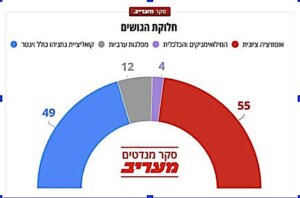
דעם 27סטן אָקטאָבער וועלן פֿאָרקומען די וואַלן אין ישׂראל. 38 פּאָליטישע פּאַרטייען האָבן זיך פֿאַרשריבן צו פּרובירן געווינען וואָס מער פֿון די 120 מעגלעכע ערטער אין דער כּנסת. אין די פֿריערדיקע וואַלן, האָבן קאַנדידירט 40 פּאַרטייען. לויט דעם געזעץ, מוז מען געווינען גענוג וואַלן אויף כאָטש פֿיר (4) דעפּוטאַטן — דאָס הייסט 3.25% פֿון דעם סך־הכּל פֿון אַלע מענטשן וואָס האָבן אָנגעגעבן „כּשרע“ שטימעס.
אין די פֿריערדיקע וואַלן האָבן 70.83% פֿון אַלע בירגער אין לאַנד מיט שטימרעכט (4,764,742 פֿון 6,788,804) דערמעגלעכט 10 פֿון 40 פּאַרטייען אַרײַנצוטרעטן אין דער כּנסת. דעמאָלט האָט מען געדאַרפֿט האָבן בערך 153,000 שטימען כּדי אַ פּאַרטיי זאָל קענען אַרײַנפֿירן זייערע ערשטע פֿיר דעפּוטאַטן אין דער כּנסת. הײַנט, מיט 4 יאָר שפּעטער, וועט מען מסתּמא דאַרפֿן באַקומען נעענטער צו 200,000 שטימען.
ווי עס זאָל ניט זײַן, קעמפֿן די גרויסע פּאַרטייען פֿאַר יעדער שטימע, און באַמיען זיך פּטור צו ווערן און דערשטיקן די מעגלעכקייטן פֿון יענע קלענערע פּאַרטייען וואָס וועלן אפֿשר ניט דערגיין צו דעם מינימום פֿון 3.75% — און דערבײַ ׳אַוועקפּטרן׳ שטימען פֿון זייערע טראַדיציאָנעלע, סעקטאָריאַלע שטיצערס (למשל פֿרומע-פֿרײַע, רעכטע-לינקע, ייִדן-ניט-ייִדן).
הײַ-יאָר איז בכלל אַ גרויסער מיש-מאַש פֿון פּאַרטייען. פֿאַראַן נײַע שפּילערס וואָס ענדערן דאָס דעמאָגראַפֿישע און סעקטאָריאַלע פּנים פֿון געוויסע טראַדיציאָנאַלע פּאַרטייען, אָדער פֿון נײַע פּאַרטייען וואָס זײַנען ערשט אויפֿגעקומען. למשל, צו דער אַראַבישער/איסלאַמישער פּאַרטיי „רע׳ם“ האָט זיך צוגעשטעלט אַ ייִד — יואבֿ סגלוביץ (סעגאַלאָוויטש) — וואָס איז אַ געוועזענער הויפּט פֿון דער ישׂראל־פּאָליציי, אַ פֿיגור מיט וויכטיקע דערגרייכונגען.
„עמך ישראל“ – שטיפֿקינד פֿון די רעכטע
אויף דער רעכטער זײַט פֿון דער פּאָליטישער מאַפּע איז אַנטשטאַנען אַ נײַע פּאַרטיי, „עמך ישראל“, פֿון עופֿר ווינטער, אַ געוועזענער גענעראַל־בריגאַדיר. זײַן שותּף, דער צווייטער אין זײַן רשימה, איז יוסוף חדד (כאַדאַד), אַ קריסטלעכער אַראַבער וואָס איז אין דער צײַט פֿון דער צווייטער לבֿנון־מלחמה פֿון 2006, געווען אַן אָפֿיציר אין דער גולני דיוויזיע פֿון צה״ל. קעמפֿנדיק פֿאַר ישׂראל, איז ער שטאַרק פֿאַרוווּנדיקט געוואָרן. ער איז אויך באַקאַנט אויף דער סאָציאַלער מעדיאַ בײַם העלדיש פֿאַרטיידיקן מדינת־ישׂראל קעגן אַנטי-ציוניסטן און אַנטיסעמיטן. ווינטערס ציל איז, אַרײַנברענגען פֿרישע בלוט אין די רייען פֿון די רעכט-געשטימטע פּאַרטייען.
די פּאַרטיי ווערט פּראָיעקטירט צוצונעמען שטימען פֿון דער גרעסערער „ליכּוד“־פּאַרטיי, געפֿירט פֿון בנימין נתּניהו. לויט די מערסטע שטים־אַנטקעטעס ביז הײַנט, וועט „עמך ישראל“ ניט דערגרייכן די געהעריקע 3.75% און אַלע שטימען וועלן דערפֿאַר פֿאַרלוירן גיין. עס ווערט דעריבער איצט געפֿירט אַ גאָר שטאַרקע אַקציע פֿון דער ליכּוד פּאַרטיי אַז „עמך ישראל“ (און אויך נאָך עטלעכע קליינע רעכט-געשטימטע פּאַרטייען) זאָל זיך אָפּזאָגן פֿון אָנטיילנעמען אין די וואַלן. עופר ווינטערס קעגנערס האָבן שוין מצליח געווען אָפּצושרעקן איינעם פֿון די 4 וויכטיקסטע קאַנדידאַטן פֿון „עמך ישראל“, וואָס האָט זיך די טעג אָפּגעזאָגט פֿון קאַנדידירן.
„מילואימניקים„ (רעזערוויסטן) מיט „כּלכּלית„ (עקאָנאָמיע) – „וואָס“, ניט „ווער“
ווען מע קוקט אויף אַ גראַפֿיש בילד פֿון ווי די 120 כּנסת־ערטער ווערן אײַנגעטיילט צווישן די פֿאַרשיידענע פּאַרטייען — לויט די טעגלעכע שטים־אַנטקעטעס — זעט מען דאָס אײַנגעטיילט אויף דרײַ חלקים. פֿון איין זײַט, זעט מען די מעגלעכע צאָל קאַנדידאַטן פֿון דער איצטיקער קאָאַליציע (וואָס נעמט אַרײַן „ליכּוד„ צוזאַמען מיט די חרדישע און אַנדערע רעכט־געשטימטע פּאַרטייען). פֿון דער אַנדערער זײַט, זעט מען די צאָל מעגלעכע קעגנער (סײַ צענטריסטישע, סײַ לינקע, סײַ רעכטע פּאַרטייען) וואָס ווילן פֿאַרבײַטן די איצטיקע רעגירונג פֿון נתּניהון. דער דריטער בלאָק באַשטייט פֿון די אַראַבישע פּאַרטייען. פֿאַראַן אָבער — אין געוויסע פֿון די דיאַגראַמעס — אַ פֿערטע גרופּע, וואָס געהערט צו אַ ספּעציפֿישער פּאַרטיי וואָס פֿירט גאָר אַן אַנדערע פּאָליטיק פֿון די אַנדערע.

צוויי נײַע פּאַרטייען לייגן אָבער פֿאָר עפּעס גאָר אַנדערש פֿון די טראַדיציאָנאַלע רעכטע און לינקע פּאַרטייען: יועז הנדל (יאָאַז הענדל) פֿון דער „המילואימניקים“ (רעזערוויסטן) פּאַרטיי בשותפֿות מיט ירון זליכה (זאַליכאַ) פֿון דער „הכּלכּלית„ (עקאָנאָמיע) פּאַרטיי. זיי וואַרפֿן אָפּ די פּאָלאַריזירטע געדאַנקען און האָבן אֶ פּלאַטפֿאָרמע וועלכע שטעלט דעם טראָפּ אויף „וואָס“ מע דאַרף טאָן. דעם „ווער“ עס דאַרף דאָס אַדורכפֿירן איז ווייניקער וויכטיק – ספּעציעל וואָס אין דער הײַנטיקער פּאָליטיק איז שוין ניט קלאָר ווער עס איז אויף וועלכער זײַט פֿונעם פּאָליטישן ספּעקטרום.
די פּאַרטיי האָט זיך פֿון אָנהייב געוואַקלט בײַ 3.75%, אָבער אין די לעצטע וואַל-אַנקעטעס זעט אויס אַז זיי וועלן ניט נאָר דערגרייכן די געוווּנטשענע פֿיר דעפּוטאַטן, נאָר זיי שטרעבן אויף אַפֿילו נאָך מער. דאָס קען גוט זײַן דערפֿאַר, וואָס צו דער רעזערוויסטן־פּאַרטיי איז צוגעשטאַנען עינת ווילף — אַ באַגאַבטע פֿיגור וואָס איז זייער אָפֿן־האַרציק מיט אירע געדאַנקען. (מע קען זי אָפֿט טרעפֿן אויף דער סאָציאַלער מעדיאַ פאַרטיידיקנדיק מדינת־ישׂראל קעגן אונדזערע שׂונאים).
ווילף האָט אַליין געשאַפֿן אַ פּאָליטישע פּאַרטיי „עוֹז“ וואָס איז זייער ציוניסטיש געשטימט, און וועמענס אידעאָלאָגיע פּאַסט זיך גוט צו צו די פֿון אירע שותּפים הענדל און זליכה. יעדער ישׂראלדיקער בירגער דאַרף דורכמאַכן אַ מדינה־דינסט (ניט דווקא אַ מיליטערישע): מענער און פֿרויען, ייִדן, און ניט-ייִדן. זי דריקט אויך אויס אַנדערע געדאַנקען ווי אַזוי צו פֿאַרבעסערן דעם מצב סײַ וואָס שײַך דער זיכערקייט, סײַ דערציִונג, סײַ דער ישׂראלדיקער עקאָנאָמיע. איר פּאַרטייס נאָמען, „עוֹז“, איז אינספּירירט פֿון די ווערטער „יהוה עוז לעמו יתן יהוה יברך את עמו בשלום“ (ספֿר תּהילים) …
און נאָך אַ זאַך: יועז הענדלס פּאַרטיי, „די פֿאַראייניקטע ליסטע“, איז די איינציקע, אויף וויפֿל מיר ווייסן, וואָס האָט אַ לאָזונג אויף ייִדיש. אין אַ געוויסן זינען קלינגט עס ווי עפּעס, וואָס דער אַמעריקאַנער פּרעזידענט דזשאָן עף. קענעדי וואָלט געזאָגט: „פֿרעגט ניט ׳ווער׳, נאָר ׳וואָס׳ מע מוז טאָן פאַר דער מדינה.“
The post The stepchildren in the upcoming Israeli elections appeared first on The Forward.
Uncategorized
In Oct. 7 blame game, former Shin Bet chief sues Netanyahu ahead of elections
(JTA) — The bitter battle that has raged between Israel’s security and political establishments over who bears responsibility for the failures ahead of the Oct. 7 attacks is kicking into high gear as Israel prepares to hold its first election since the Hamas invasion in 2023.
This week, former Shin Bet chief Ronen Bar upped the stakes by filing a defamation lawsuit against Israeli Prime Minister Benjamin Netanyahu. The premier has blamed the intelligence head for the failures leading up to the attack even as many in the security establishment have pointed the finger at Netanyahu. Bar in his lawsuit lists a litany of occasions Netanyahu allegedly ignored or rejected advice that might have prevented the attacks.
In the run-up to the national vote on Oct. 27, Israeli media have been preoccupied with reports of intelligence that was purportedly shared with top government officials ahead of the attacks. What Netanyahu knew about the Hamas threat before the invasion — and when he knew it — has become a central issue in the campaign and a line of attack for his political rivals.
Gadi Eisenkot, leader of the Yashar party and Netanyahu’s leading challenger, said in response to the lawsuit that “Netanyahu was warned and did not act,” and that he would not allow Netanyahu to “evade the truth.” Opposition leader Yair Lapid said that “Netanyahu can no longer claim that he didn’t know,” while Yair Golan, leader of the left-wing “The Democrats” party, said Netanyahu’s responsibility for “the worst massacre in Israel’s history is direct and clear.”
A range of political and security leaders who were in charge at the time have assumed responsibility and left their posts: Among them are Bar, IDF Chief of Staff Herzi Halevi, Defense Minister Yoav Gallant and military intelligence chief Aharon Haliva.
Not Netanyahu. He has rejected accusations that he is responsible for the failures even as he has prevented the establishment of a state commission of inquiry to investigate those responsible. He has argued that such a commission, whose members would be appointed by the president of the Supreme Court, as is traditionally the case in Israel, would be biased and would not enjoy public trust.
Beyond blaming the security establishment, Netanyahu has also sought to shift responsibility onto political rivals and previous governments. He has pointed to the actions, or failure to act, of political opponents, including Eisenkot, Naftali Bennett and Benny Gantz, when they held senior positions, as well as Israel’s 2005 withdrawal from the Gaza Strip, as factors that contributed to the Oct. 7 massacre.
In the lawsuit itself, Bar accuses Netanyahu of “trying to rewrite history and completely evade his responsibility for the events of Oct. 7.” The filing sets out a series of alleged warnings Bar gave Netanyahu before the attack, as well as Netanyahu’s alleged refusal to adopt Bar’s recommendations for offensive action in the months leading up to the massacre.
The lawsuit details more than a dozen instances in which Bar allegedly warned of Hamas’ growing strength and its intentions to attack Israel, alongside repeated recommendations that Netanyahu take more aggressive action against the group.
Among the warnings cited in the lawsuit, Bar said he presented Netanyahu in January of 2023 with his assessment that Hamas leader Yahya Sinwar wanted a multifront campaign against Israel.
In February, Bar allegedly sent Netanyahu a personal letter warning that terrorist organizations saw an opportunity to act and that the combination of Israel’s internal divisions and instability in the Palestinian arena could bring the country closer to a “perfect storm.”
In July, Bar said he told Netanyahu directly that he was conveying a strategic warning of war.
In September, he allegedly warned that Hamas wanted to escalate the conflict during October.
Netanyahu responded to the lawsuit in a post on X, addressing one specific claim in the filing: that he had never given Bar his personal phone number.
“Ronen, are you serious? You had my red phone number and could have called me immediately, as all heads of the security establishment do,” Netanyahu wrote. “How many lives could we have saved if only you had called in time.” Netanyahu has claimed recently that had security officials awoken him earlier on Oct. 7, he would have somehow stemmed the attack.
Bar’s suit also alleges that he consistently recommended initiating offensive operations against Hamas, including a “preemptive strike” and targeted killings. According to the lawsuit, Netanyahu strongly opposed those recommendations because he wanted to keep Hamas as a secondary concern. Bar also said Netanyahu reprimanded him for dealing with “strategy.”
“The defendant had been in a state of slumber for many long months beforehand and refused to wake up despite the alarm bells the plaintiff sounded in his ears incessantly,” the lawsuit alleges, alluding to Netanyahu’s plaints that he was not awoken early on Oct. 7. “The gap between the professional warnings and recommendations the plaintiff presented to the defendant and the response the defendant gave them is beyond comprehension.”
The defamation claim focuses in particular on a post Netanyahu published on X late last month, in which he claimed that Bar “knew about the real danger” in the early hours of Oct. 7 but chose not to wake him or take other preventive measures. Netanyahu accused Bar of trying to shift responsibility for “all of Ronen Bar’s failures and crimes” onto him.
In a press statement after filing the suit Wednesday, Bar called Netanyahu’s post a “blood libel” and announced that he was suing for 3 million shekels ($968,500) in damages and seeking a correction of Netanyahu’s statements.
Bar repeatedly emphasized in the lawsuit that he was not seeking to absolve himself or the Shin Bet of responsibility for the failures that led to the Oct. 7 massacre. Rather, he said, the suit was a response to Netanyahu’s attempt to “shift the responsibility exclusively onto Bar.”
“I waited quietly for three years for the establishment of a commission of inquiry that would finally expose the Shin Bet’s work, alongside its failures, in the face of an ongoing blood libel,” Bar said.
This article originally appeared on JTA.org.
The post In Oct. 7 blame game, former Shin Bet chief sues Netanyahu ahead of elections appeared first on The Forward.
Uncategorized
When ‘Nuke Jews, Save Lives’ note was left at the Center for Jewish History, its message was a window into antisemitic thinking
As hate manifestoes go, this one was terse: “Nuke Jews, Save Lives.”
Our security team at the Center for Jewish History, where I serve as president, recently discovered a notecard bearing this hateful message by our front entrance, just blocks from Union Square in Manhattan.
The Center for Jewish History was created a quarter century ago to help scholars research the Jewish past and disseminate that knowledge to the public. An institution that is sometimes likened to the national archives of Diaspora Jewry, the Center houses more than 65 million documents and artifacts painstakingly collected by its distinguished partner organizations. Countless books and articles on Jewish history have been published using this archival source material, all pursuing the goal of historical understanding.
This hateful note was a direct rebuke to our mission and a window into antisemitic thinking. The declaration confirmed antisemites’ tendency to see their hatred as virtuous. By claiming that “saving lives” was their ultimate goal, the author sought to avoid any suspicion of ulterior motives. Hitler did something similar in Mein Kampf, writing that by combating the Jews he was “fighting for the work of the Lord.”
The historical record also teaches that while the charges brought by antisemites against Jews vary considerably, they serve a consistent function. Whatever threat Jews are accused of posing – whatever the reason why “lives” need to be “saved” – the accusation channels society’s deeper fears. These fears often differ between the left and right political positions, but they converge in the antisemite’s belief that a solution rests with solving the Jewish “problem.”
Jews have traditionally believed that understanding history can solve the problem of antisemitism. From antiquity to modernity, Jews have penned eloquent, historically informed rebuttals to antisemitic accusations, believing that public opinion can be swayed by truth. Whether Flavius Josephus’s reply to the hostile claims of the Egyptian scholar, Apion, in the first century C. E. or the Central Association of German Citizens of the Jewish Faith’s response to the Nazis in the 1930s, history shows that Jews have consistently sought to defend themselves through rational argument.
The Center for Jewish History is no different. We regularly organize public programs on a range of topics in the interest of fostering knowledge and dialogue. Of late, out of necessity, we have been sponsoring events that address the history of antisemitism.
Shortly before the hateful note was left on our doorstep, the Silicon Valley investor, Michael Moritz, was in conversation with The New York Times Company CEO, Meredith Kopit Levien, about his new book, Ausländer, which movingly chronicles the tragic story of his German Jewish family in the Nazi era. The book also raises discomforting comparisons about Jew hatred yesterday and today.
The event was a bittersweet affair. While we were gratified that our fully packed auditorium validated our institutional mission, the conversation’s main takeaway – that what was old is new again – was sobering.
That feeling was further compounded when we encountered the words, “Nuke Jews, Save Lives,” one week later. We could easily have thrown up our hands in despair at the futility of our mission. That, of course, would have served the antisemite’s goal.
Antisemitism’s impact is akin to that of the heckler’s veto. By wielding crude, simplistic slogans in the spirit of Der Stürmer’s tagline, “The Jews Are Our Misfortune,” antisemites use hate asymmetrically to undermine cultural and intellectual traditions assembled over centuries.
Antisemitism validates the core idea of Brandolini’s Law – that the work needed to refute calumnies dramatically exceeds the work needed to disseminate them. It calls to mind Edmund Burke’s remark in Reflections on the Revolution in France that “rage and phrensy will pull down more in half an hour, than prudence, deliberation, and foresight can build up in a hundred years.”
But my money is on archives.
The 65 million documents housed at the Center do not just numerically exceed the four hateful words left on our doorstep many times over. They testify to the authority of archives. Ever since they were invented in antiquity, archives have wielded tremendous power. Not for nothing does its Greek root, “arch,” denote “ruler” (as in “monarch”).
When belief in truth is challenged by a flood of lies, the archive offers a redoubt. It guards the facticity of history so that people of good faith can defend themselves against their enemies.
The campaign against antisemitism is complex and requires arguments and allies, resources and resolve. It cannot be won easily and may never be won decisively. But one thing is for sure: it cannot be won without facts. In this latest war, the archive can serve as an arsenal.
The post When ‘Nuke Jews, Save Lives’ note was left at the Center for Jewish History, its message was a window into antisemitic thinking appeared first on The Forward.
