


Uncategorized
It’s getting more dangerous to be a comedian — but was it ever safe?
Can We Laugh at That?: Comedy in a Conflicted Age
Jacques Berlinerblau
University of California Press, 256 pages, $24.95
Even in these polarized, politically turbulent times, Jacques Berlinerblau argues that the United States still agrees — mostly — on the importance of free speech, in all its complexity and messiness. He calls this the Pre-Digital Free Speech Consensus, and it’s the organizing principle of his attempt at sketching a sociology of comedy in Can We Laugh at That?: Comedy in a Conflicted Age.
Berlinerblau, a chaired professor of Jewish Civilization at Georgetown University, describes this agreement as normative rather than legal, overlapping but not strictly identical with legal and constitutional imperatives. He short-hands the concept this way: “The suppression of human political, intellectual, and artistic expression, either by the government or by citizens, should be avoided to the greatest extent possible.”
But this view, never universally held, may be eroding — including in the United States, traditionally its greatest bastion. Berlinerblau, perhaps because of his deadlines, doesn’t cover the Trump administration’s recent assault on late-night comedy. Even so, he worries that the so-called consensus, “noble and highly imperfect, is coming undone.”
Written in clear prose, without much academic pretentiousness, Berlinerblau’s slim volume falls short of a definitive global account of comedic controversies and their aftermath. It offers instead a rudimentary framework for assessing changing norms in an era of ideological contention and internet virality.
It is not easy being a comedian, and now less so than ever. “The disturbing truth,” Berlinerblau writes, “is that humorists the world over are being assailed in all sorts of ways. They are called out and harassed online. They are boycotted and subjected to ‘cancellation.’ They are hounded in the courts through civil suits and federal investigations. They are menaced by vigilantes, religious fundamentalists, paramilitaries, and terrorist cells.” And in extreme cases, he says, they are “forced into exile, kidnapped, imprisoned, or even murdered.”
The danger varies by location and regime. Berlinerblau divides the book into three main sections. The first, on the United States, suggests that while “cancellation” is an ongoing threat (if often less total or permanent than it initially appears), the free expression consensus is holding. Part II, on other liberal democracies, finds that consensus “under siege.” The final section, on “non-democratic spaces,” depicts humorists operating with few, if any, safeguards and subject to persecution, prison or worse. Why they still risk challenging authority is a question for another, more psychologically focused book.
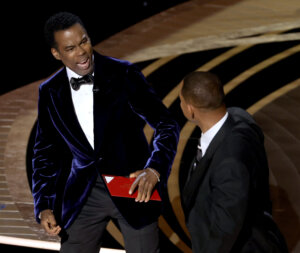
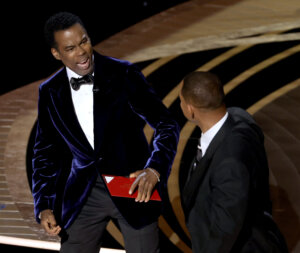
Berlinerblau begins with the slap heard round the world: the 2022 Oscars assault of Chris Rock by the actor Will Smith after the comedian insulted Smith’s wife, Jada Pinkett Smith. He also mentions the shaming and (attempted) cancellation of Louis C.K., consequences not of C.K.’s transgressive comedy, but of his self-confessed sexual misconduct. “C.K.’s reputation took a hit,” Berlinerblau writes, but he “remains a profitable artist” — an example of the limits of cancel culture.
In the U.S. section, Berlinerblau focuses on four stand-up comics who have faced what he calls “the coalition of the outraged:” Dave Chappelle, who has mocked gay and trans people; Sarah Silverman, who has offended targets across the political spectrum and apologized repeatedly; Kathy Griffin, who was criticized for tweeting a fake image of President Trump’s severed head; and Shane Gillis, whose career revived after fallout from his anti-Asian American slurs.
Berlinerblau distinguishes between “punching up” and “punching down,” based on the power position of comedic targets, while admitting that those distinctions can blur. He also discusses comic personae (whose views may not align with the actual comedian’s) and meta-comedy. Lenny Bruce famously talked about his arrests; nowadays comedians riff on their social media travails. The results can be comedic gold, or a dead-end, with comedy devolving into complaint.
Another issue is just how gender plays into audience reactions. Did Griffin suffer more career damage than Gillis because she is a woman? Berlinerblau’s sample size, as he admits, hardly warrants firm conclusions, but his supposition seems reasonable. Self-deprecation traditionally has been more familiar territory for female stand-ups than insult comedy.
In other democracies, Berlinerblau shows, comedians face more difficult terrain. He seems to admire the satirist Vir Das, who implicates his audiences in attacks on the (arguably illiberal Hindu nationalist) Indian government and Indian society more broadly. The comedian was “frequently threatened with, but never tried on, charges of sedition,” Berlinerblau writes.
Berlinerblau also explores the incitements of the French right-wing shock comic Dieudonné M’bala M’bala, whose antisemitic jibes are a particularly tough test for free speech purists. From France, too, comes the most devastating fallout from untrammeled comedic license. In 2015, the satirical magazine Charlie Hebdo’s caricatures of the Prophet Muhammad triggered an Islamist attack on its Paris headquarters that left 12 dead. Soon afterwards a gunman killed a police officer and four shoppers at a Jewish supermarket. More violence followed, including French intervention in the Middle East and deadly terrorist attacks in Paris and Nice. For Berlinerblau, the tragedies raise the question of whether comedy should ever be silenced for the sake of public safety.
Outside of democracies, he notes, comedians are often endangered. Bassem Youssef, Egypt’s answer to The Daily Show’s Jon Stewart, was ultimately exiled from his native country. Samantha Kureya (known as Gonyeti), whose “subversive comedy was virtually guaranteed to infuriate Zimbabwe’s leaders,” was kidnapped and beaten. The brazen attack, Berlinerblau speculates, was an attempt to chill other critical voices.
He concludes closer to home, with the controversial 2014 film, The Interview, about the fictional assassination of North Korean dictator Kim Jong-un. Before its release, the Seth Rogen-Evan Goldberg project precipitated a massive hack of Sony Pictures Entertainment by alleged North Korean operatives. Here the free speech imperatives of the United States collided with North Korea’s paranoid authoritarianism — and the security vulnerabilities of the internet.
Berlinerblau wonders what would have happened if North Korea had issued a credible nuclear threat. More broadly, he frets that the provocations of comedians “imperil the free speech protections they claim to revere.” That’s a paradox that Berlinerblau admits he can’t resolve.
The post It’s getting more dangerous to be a comedian — but was it ever safe? appeared first on The Forward.
Uncategorized
In Israel’s election, Netanyahu faces a reckoning over Oct. 7 failure
With barely two weeks remaining before Israel’s Oct. 27 election, the country has been consumed by an extraordinary confrontation between Prime Minister Benjamin Netanyahu and senior former aides over what he knew before the Hamas massacre of Oct. 7, 2023, what he did with that knowledge and whether his office subsequently sought to rewrite the historical record.
The immediate catalyst was a bombshell television interview in recent days with Maj. Gen. (res.) Avi Gil, Netanyahu’s former military secretary, who served alongside him before and during the attack that killed approximately 1,200 people and saw 251 taken hostage. Gil had remained largely silent for three years, expecting to present his evidence to a state commission of inquiry. But with Netanyahu blocking such an inquiry, amid transparent scheming to deflect blame, Gil decided to speak publicly.
What he described went considerably beyond the failures of intelligence and military preparedness that have already been extensively documented. Gil accused Netanyahu’s office of attempting to falsify an official record from the morning of the attack. He challenged the prime minister’s account of early warnings he received. He confirmed that Netanyahu rejected recommendations for preventive military operations against Hamas. And he described how political considerations influenced decisions over hostage negotiations, potentially prolonging the captivity of people who could have been brought home earlier – and alive.
His testimony is particularly consequential because it directly challenges a 55-page document Netanyahu released in February, presenting his version of the events preceding Oct. 7. Submitted to Israel’s state comptroller, the document portrayed Netanyahu as having repeatedly advocated tougher action against Hamas while security officials underestimated the threat. It has become central to his defense against accusations that his longstanding policy of containing Hamas helped create the conditions for the catastrophe.
Gil, who attended the relevant meetings and recorded his experiences in 16 notebooks, described the published document as a profoundly incomplete and misleading account, containing lies and half-truths. It failed to reflect even half of what he witnessed.
A separate investigation published Friday by Yedioth Ahronoth, comparing Netanyahu’s account with original records of security deliberations, reported significant omissions and distortions, including instances in which Netanyahu allegedly rejected proposals to target Hamas leaders that his February document presented as initiatives of his own.
Most explosive was Gil’s account of an alleged attempt by Netanyahu’s then-chief of staff, Tzachi Braverman, to change the official time of a telephone conversation on Oct. 7 from 6:40 a.m. to 6:29 a.m. Moving the time backward could create the impression that Netanyahu had been issuing instructions from the first moments of the assault. Gil said a stenographer told him she had been instructed to alter the record, prompting him to notify the attorney general.
Nitzan Alon, another retired general who headed the government’s hostage release operation, and took part in negotiations throughout much of the war, also told reporters that “it was possible to end the war a year earlier” and save the lives of numerous hostages who eventually died in captivity.
Another remarkable confrontation involves Ronen Bar, the former head of the Shin Bet domestic security agency, whom Netanyahu has repeatedly blamed for the failures of Oct. 7. In late September, Bar announced plans to sue Netanyahu for defamation, accusing him of conducting a campaign of false allegations about his conduct before the massacre. Bar said he had warned Netanyahu about a looming security disaster and demanded disclosure of the original records of security meetings, communications and warnings, including the prime minister’s contacts with foreign officials.
Those demands have acquired additional significance amid reports that senior officials from Egypt and the United Arab Emirates warned Netanyahu about Hamas preparations shortly before the attack. Netanyahu categorically denies receiving such warnings and has threatened legal action over the reporting.
Gil’s revelations arrived alongside another striking intervention from a former Netanyahu confidant. Yoav Horowitz, , once Netanyahu’s chief of staff and director-general of the Prime Minister’s Office, told Kan’s Reshet Bet radio last week that he had gradually come to understand that Netanyahu’s decisions were driven primarily by considerations of personal political survival rather than the national interest.
Now a senior aide to leading opposition figure Gadi Eisenkot, Horowitz attributed that transformation to the corrosive effects of prolonged power, observing that “too much time in power corrupts,” and framed the approaching election as being about saving the country.
Horowitz now heads the team preparing its first 100 days in government. His criticism therefore comes from a former trusted aide who has become an active political opponent, adding another dimension to the dispute over Netanyahu’s leadership.
The question of political survival also figured prominently in Gil’s account of the hostage negotiations. Asked whether coalition pressures had influenced decisions that delayed agreements to free hostages, Gil said some hostages could have returned earlier and that political calculations had played a role in the decisions that kept them in captivity.
Netanyahu has rejected Gil’s allegations, and his Likud party has characterized the latest revelations as politically motivated propaganda. Netanyahu and his supporters maintain that senior security officials failed to recognize the imminent danger.
The country is still struggling to establish a common factual account of its most traumatic day in decades, while the officials who participated in the crucial decisions offer sharply conflicting versions of what happened. Meanwhile, the families of those killed on Oct. 7, survivors of the massacre and former hostages continue demanding answers about the decisions that shaped their lives.
The public appetite for an inquiry into the disaster is overwhelming. A September 2025 survey by the Israel Democracy Institute found that 74 percent of Israelis supported establishing a state commission of inquiry, including 68 percent of Jewish respondents identifying with the political right. A subsequent survey conducted in February 2026 found that 92 percent of Israelis considered it important to investigate the events.
The absence of such an inquiry has left journalists, former officials, politicians and bereaved families conducting an increasingly contentious public investigation of their own. Documents appear selectively, witnesses offer competing recollections, and allegations that might otherwise be tested through sworn testimony and access to classified evidence become weapons in an election campaign. With spiraling suspicions being leveled at Netanyahu, the election will take place amid unresolved questions – and a rage that grows more toxic by the day.
The post In Israel’s election, Netanyahu faces a reckoning over Oct. 7 failure appeared first on The Forward.
Uncategorized
Archaeologists uncover a 300-meter section of ancient aqueduct in Jerusalem
(JTA) — JERUSALEM — Israeli archaeologists have uncovered a 300-meter (984-foot) section of Jerusalem’s ancient Lower Aqueduct, providing another window into how engineers about 2,000 years ago ensured that the city would have an adequate supply of water for residents and pilgrims.
The Israel Antiquities Authority (IAA) began the dig three months ago in advance of the planned construction of a new neighborhood in East Jerusalem, at the city’s edge. Such “salvage excavations” are often carried out prior to major construction projects in Israel to ensure that any ruins discovered at the site can be mapped and protected even if they aren’t excavated at the time.
Believed to have been built in the Hasmonean period in the second and first centuries B.C.E., this engineering system carried spring water from the Gush Etzion region of the West Bank, through Solomon’s Pools south of Bethlehem, to Jerusalem and the Temple Mount. It remained in intermittent use until the early 20th century.
Although parts of the aqueduct have been uncovered in previous excavations, this is the first time such a large section will be made permanently accessible to the public, Benyamin Storchan, an IAA archaeologist and the excavation’s co-director, told the Jewish Telegraphic Authority.
Based on earlier discoveries and a wide range of research, archaeologists had strongly suspected where the newly uncovered section was located.
“We were able to work with municipal urban planners to ensure that the shape of the new neighborhood will be determined not only by its natural topography, but based on the antiquities found there,” Storchan said.
The aqueduct, the discovery of which was made public on Sunday, will be preserved as a promenade/archaeological park at the entrance to the future neighborhood by the IAA and Israel Land Authority.
Bringing Water to Jerusalem
Before the aqueduct was built, the landlocked city of Jerusalem relied on the Gihon Spring and rainfall runoff for its entire water supply, Storchan said. Under Hasmonean rule, Jerusalem’s population grew and the need for water increased. That was especially true during Jewish festival times, when pilgrims doubled or even tripled the population.
The solution involved transporting water from springs in the Gush Etzion region, a hilly area more than 800 meters above sea level. Spring water had to be channeled to collection areas, and then toward Solomon’s Pools, an extensive water-storage complex built south of Bethlehem. From there, two major aqueducts, the Lower Aqueduct and the Upper Aqueduct, carried water toward Jerusalem – a distance of more than 20 kilometers (12 miles).
The Lower Aqueduct, which appears to predate the Upper Aqueduct, “is an engineering marvel,” Amit Re’em, the IAA’s Jerusalem district archaeologist, said in a press statement. “Even today, with all our modern technology, building such a system would require extensive planning and effort. The thought that, about 2,000 years ago, they managed to bring water to Jerusalem this way is astonishing.”
Its route had to follow the contours of the rugged topography while maintaining a gentle gradient for the water to flow by gravity alone, without mechanical pumps. Along most of its route, the water dropped just one meter in elevation per kilometer.
“The newly exposed section reveals the various stages in the history of the water system,” the IAA said. “Initially, the water flowed in a built, plastered channel. Then, about 500 years ago, during the Ottoman period, ceramic pipes were installed within the original channel, the outer face of the aqueduct wall was plastered and small stones were pressed into the plaster while still wet.”
Used for about 2,000 Years
One of the aqueduct’s most remarkable characteristics was its longevity. Believed to be constructed during the Hasmonean period, it was repaired and reused through successive eras, including the Roman, Byzantine, Umayyad, Crusader, Mamluk and Ottoman periods.
The fact that various kingdoms and rulers decided to repair and not replace the water system “is one of the most fascinating parts,” Storchan said of the waterway. Rather than repurposing an older structure for a different use, successive rulers retained the aqueduct’s original purpose.”, “here we see a single installation being reused again and again for its original function.”
The aqueduct was used until about a century ago, when modern water infrastructure, including electric pumping stations, proved more efficient. Its long history of repairs, however, complicates archaeological dating, Storchan said. Those who repaired it over the millennia added plaster, repaired collapsed sections and modified the channel, sometimes obscuring evidence of the original construction.
Utilizing modern technology
Still, the latest excavation gives researchers an opportunity to reexamine longstanding questions with advances in scientific dating methods.
“Today, technology is more advanced than it was then. We’re working with all kinds of specialists to pinpoint the dating of the original construction,” Storchan said.
One such method is optically stimulated luminescence (OSL), which can estimate when mineral grains in sediment were last exposed to sunlight. Combined with the analysis of mortar, plaster and archaeological layers, the technique may help narrow the dates associated with different stages of the system’s development.
For Storchan and his colleagues, every new insight is a cause for celebration.
“Our job as archaeologists,” he said, “is to fill in another piece of the puzzle.”
This article originally appeared on JTA.org.
The post Archaeologists uncover a 300-meter section of ancient aqueduct in Jerusalem appeared first on The Forward.
Uncategorized
Mamdani faces growing pressure over Jewish NYPD Commissioner Tisch and over Israel from left flank
(JTA) — New York City Mayor Zohran Mamdani is facing increasing pressure from some on the leftmost flank of his voting coalition, and an ICE shooting Thursday led democratic socialist allies to add their voices to a major demand: dump police commissioner Jessica Tisch.
“The NYPD’s Strategic Response Group must be disbanded as quickly as possible, and Commissioner Tisch must step down,” said Darializa Avila Chevalier, who won her Democratic primary with Mamdani’s endorsement. The democratic socialist, who is expected to join Congress next year representing Upper Manhattan and parts of the Bronx, was referring to the heavily armed police department unit that often responds to protests.
The calls for Tisch’s removal follow strident criticism of the mayor from pro-Palestinian activists on Wednesday night who called him names, including “traitor” and “Ziohran,” when he showed up at an Oct. 7 Israeli peace vigil mourning the loss of both Jewish and Palestinian lives. The demonstrators assailed him for not doing more to advance the pro-Palestinian agenda that has long been central to his political beliefs, raising questions over whether he could lose parts of his base as he pledges to be a mayor for all New Yorkers.
The demand for Tisch’s removal came after an ICE agent shot and wounded a Dominican man in his car on Thursday afternoon while his 5-year-old son was in the back seat. Avila Chevalier, who joined protests against ICE on Thursday, wrote on X that the NYPD “spent more time protecting a militia that just shot someone than protecting New Yorkers.”
Mamdani’s decision last year to retain Tisch — a self-described “proud Zionist” who comes from a prominent Jewish family — was seen as a reassuring move by moderates and establishment Jewish organizations including UJA-Federation of New York and the Jewish Community Relations Council. (70 Faces Media, the parent company of the Jewish Telegraphic Agency and New York Jewish Week, receives UJA funding.)
A number of progressives were skeptical of the decision at the time, citing her background as an appointee of Mamdani’s predecessor, Eric Adams, and her past criticism of campus pro-Palestinian protests. Some viewed her as an impediment to criminal justice reform.
Meanwhile, some on the left have dinged him for not yet following through on campaign promises 10 months into his term, including dissolving the Strategic Response Group, or backing down from his vow to arrest Israeli Prime Minister Benjamin Netanyahu, a plan which he later said he did not have the power to execute.
Anti-Zionist groups including Pal-Awda, Within Our Lifetime and a number of student organizations who rallied against Mamdani at the Oct. 7 vigil accused him of succumbing “to Zionist pressure.” Protesters called him a “traitor” and a number of chants rang out including, “Mayor Mamdani you can’t hide, we charge you with genocide,” drowning out speakers at the vigil and forcing the organizers to move it behind police barricades to keep the protesters from overrunning the event.
Among those protesters’ many gripes with the mayor was his decision to retain Tisch. One sign at the demonstration depicted Mamdani with the text, “Chief Executive of the NYPD SRG” with a Star of David in the middle, and a name tag on the mayor’s chest reading, “Ziohran.”
Criticism was also directed at Mamdani for not stopping Israeli real estate events at synagogues, and for his strategy to combat antisemitism, released last week, which allocates funds to a number of community-based organizations aimed at preventing hate crimes. Some critics have charged that some of the funding will aid Zionist organizations.
“The Jewish community is a large part of New York and it should be cherished. But you cannot fund these Anti-Defamation Leagues that prioritize Zionism over Judaism,” a John Jay College student protester, who declined to be named, told JTA during the demonstration.
On Thursday, the Democratic Socialists of America’s New York City chapter — which Mamdani has called his “political home” — wrote that Tisch “must end NYPD complicity with ICE” and that if she “cannot put a stop to these injustices, she must be fired.”
“Abolish ICE. Disband the SRG. Fire Tisch,” wrote Illapa Sairitupac, a fellow democratic socialist who won the Democratic nomination for a Lower Manhattan State Assembly district. Mamdani endorsed both Sairitupac and Avila Chevalier this past year.
While some protesters at the vigil said they were Mamdani voters — and one speaker even identified herself as a former intern for the now-mayor — some of the mayor’s allies have stressed that the crowd protesting him was not representative of his base.
“If I had to gamble, I would gamble that the vast majority of them were people who never supported him,” activist Abby Stein told JTA on Thursday night, during the Mazals gala held by left-wing group Jews for Racial & Economic Justice. Mamdani was due to attend the JFREJ event, but because of the ICE shooting was instead in the Bronx, where he denounced the federal agency and demanded that it cease its operations in New York City.
Many of the signs excoriating Mamdani at Wednesday’s protest outside of City Hall were signed with the name of the Maoist Communist Union, an organization that opposed Mamdani before he took office. Some protesters were handing out copies of Spartacist, the Trotskyist International Communist League’s journal.
“We certainly didn’t support Mamdani or vote for him,” said Erica Jones, among the Trotskyist protesters. “We knew he was running as a Democrat and he would be as big of a sellout as AOC and Bernie Sanders and all the rest of those who claim to have, at one time, stood for socialism but in reality, stand for the capitalist masters who are oppressing us all.”
Stein, a member of the DSA in addition to JFREJ, called out some of the protesters’ rhetoric and the choice to crash the Israelis for Peace Oct. 7 vigil. But she also acknowledged that there was overlap between their demands and her views, including over the police commissioner.
“There are things that people are upset over that I think are legit — like keeping Jessica Tisch on, for example,” Stein said. “A lot of us were not very happy about it.”
Ultimately, Stein said there is “always going to be something to protest” with any politician, and pointed to a quote from New York’s mayor in the 1970s and ‘80s, Ed Koch: “If you agree with me on 9 out of 12 issues, vote for me. If you agree with me on 12 out of 12 issues, see a psychiatrist.”
This article originally appeared on JTA.org.
The post Mamdani faces growing pressure over Jewish NYPD Commissioner Tisch and over Israel from left flank appeared first on The Forward.
