


Uncategorized
Looking for snow in August: My lifelong obsession with the Irish
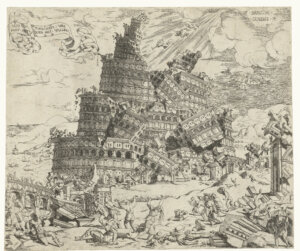
According to the 11th-century set of Irish texts known as Lebor Gabála Érenn, or The Book of the Invasions of Ireland, there once lived a man called Fénius Farsaid — “Irishman the Pharisee.”
If the weirdness of this name is not hitting home for you, it’s a bit like if I told you my name was “Jewess the Druid.” “Fénius,” a predecessor of the modern word “Fenian,” connotes an Irish person. “Farsaid” is the medieval Irish word for “Pharisee.” Though the term is now mostly reserved for insulting hypocrites in an obscure way, in biblical times it referred to a strict Jewish sect active in ancient Judea.
How did this early example of Irish-Jewish crossover earn his name? Lebor Gabála Érenn reports that he was one of the 72 chieftains who built the Tower of Babel. When it crumbled and God cursed humankind with multilingualism, he set up camp in the Tower’s remains and ordered his scholars to go out and study the babble of the world’s newborn languages. On his own, he explored Hebrew, Greek and Latin alphabets (hence the “Farsaid”). As a capstone project, Fénius blended together the best elements of all the world’s languages to make the perfect tongue: Irish (hence the “Fénius”).

Fast forward almost one thousand years after Lebor Gabála Érenn was written, and you get me, Fénius Farsaid in reverse: he was an Irishman interested in the Jews; I am a Jewish woman fascinated by the Irish. There are many ways to measure a life, but mine might as well be thought of as a 22-year-long montage of fanatical Irish-themed memories: as a child, reading Maeve Binchy’s Chestnut Street and Frank McCourt’s Angela’s Ashes; as a tween, writing a racy work of historical fiction called Ballyhill inspired by the Irish Rebellion of 1798; as a teen, shaking my computer in rage when 23 & Me reported I was 0% Irish; as a young woman, discovering Seamus Heaney, W. B. Yeats, James Joyce and Maggie O’Farrell; and as whoever I am now, writing this confessional essay.
I do not know when or how this obsession took root, though some evidence suggests that I have a genetic predisposition towards loving the Irish. The story goes that my great-great grandfather Barnett Shapiro did not know his birthday. But on his way from Poland to America, he passed through London, where he mixed with Irish immigrants in the East End. He found them so delightful that when he arrived at Ellis Island and was asked his birthday, he, a Jewish man whose first language was Yiddish, proudly declared he was born on St. Paddy’s Day, 1888.
This recessive shamrock gene skipped a generation and reappeared in my Grandpa Barry, or “Gramps.” When I was 12 or so, he presented me with a copy of Snow in August, a novel by the Irish-American journalist and novelist Pete Hamill, a man as tender as he was hard-boiled. According to the book’s back cover, I could expect a tale of an unlikely, Brooklyn-bred friendship between a young Irish-American lad named Michael Devlin and an Orthodox rabbi named Judah Hirsch. I admit I was skeptical. Gramps had already busted his credibility several times by hounding me to read his personal favorites like Young Visitor to Mars, Hardy Boys and back-issues of Flash Gordon. But against my better judgment, I read the book. And then I read it again.
It’s hard to say why this book etched itself into me so deeply. Maybe as a fifth-generation Brooklyn Shapiro, I was hard-wired to like it. But what I remember best about the book is not the plot or any particular line, but how I felt while reading it. Snow in August made me feel that magical realism was not exclusive to jungle climates like Gabriel García Márquez’s Macondo, or Italo Calvino’s invisible cities. There were labyrinths of wonder built right under Brooklyn, like a subway system for the spirit. Pete Hamill taught me how to hear the rumble. In his Brooklyn, it was possible for a golem to rise up against your tormentors, for the dead to return for a final dance, for snow to fall in the middle of August.
Maybe you’ll be relieved to hear that in the 10 intervening years since I first read this book, I’ve tempered my admiration of the Celts by finding some Irish literature that enrages me. In my freshman year of college, I read James Joyce’s Ulysses and wanted to clobber him with it. At the recommendation of my playful Bronxonian druid of an English teacher, Ted Cleary, I read Flann O’Brien’s experimental novel At Swim-Two-Birds and was wracked by alternating warp-spasms of amusement and fury. (As Oscar Wilde, another great Irishman-of-letters, would say, “When critics disagree, the artist is in accord with himself.”)
But most recent and vivid among my Irish memories is the pilgrimage I made to peaty Erin this past March. I had been in Oxford for a term abroad, and when the “vac” (British for “vacation”) struck, my friends Cindy, Gemma and I set out for the stretch of western Irish coastline known as the “Wild Atlantic Way.” We walked the misty Cliffs of Moher, where we were attacked by angry winds. We took refuge in pubs and soaked up pints of Guinness, plates of beef stew and hours of foot-tapping fiddling sessions that gave enthusiastic tourists and taciturn locals a reason to engage with each other. We rode a see-sawing ferry to the Aran Islands and back, and learned that time works differently when you’re on the brink of barfing.

When I think of that week in Ireland, I remember the horizon at sundown. Behind the dark green hills, the clouds looked like silhouettes of other hills somewhere far away. The wind plunged down my collar and shimmied up my pant legs. I could see no end to the ocean, only the thin line where sky and water met in some unreachable place. I feared the vastness of the world, and loved it at the same time.
In a way, that wild Atlantic scene was repeating what many Irish writers had been trying to tell me for years: Life is immense, often surprising, and occasionally tragic. Still, why not hope? The words of Seamus Heaney’s poem “The Gravel Walks” provide a lodestar for living: “Walk on air against your better judgment.”
Poetic spirits in the Jewish world have come to uncannily similar conclusions. Rabbi Abraham Joshua Heschel once described himself as “an optimist against my better judgment,” a parallel with Heaney that might have delighted Fénius Farsaid. Even a central premise of Judaism — that the messianic age when “nation will not lift up sword against nation” will arrive someday — would be impossible without a commitment to walking on air against your better judgment until that day comes.
Nobody is born knowing how to walk, let alone knowing how to walk on air. But in his poem “The Cure at Troy,” Seamus Heaney describes how to take those first steps —
“So hope for a great sea change
On the far side of revenge.
Believe that a further shore is reachable from here.
Believe in miracle
And cures and healing wells.”
Believe that snow could come next August.
The post Looking for snow in August: My lifelong obsession with the Irish appeared first on The Forward.
Uncategorized
‘Heil’ Mary? New Atlanta Falcons logo inspires Nazi comparisons
If there was something off about the logo the Atlanta Falcons unveiled on social media Wednesday, whoever runs their accounts did, uh, not see it.
Behind the black falcon graphic that began appearing on the football team’s helmets in the 1960s was a new background — a flag of red, tan, black and white vertical stripes. To thousands of people who responded to the logo, it looked distinctly German — in a 1930s kind of way.
“The Atlanta Falcons are preparing to invade Poland,” one fan wrote.
A day after its posting, the new profile picture had unleashed a deluge of Nazi memes in the 4,000-plus replies on X. One picture swapped in the logo for Nazi flags in the background of a historical photo of a Hitler rally. Another edited the Falcon claw to look like a Nazi salute.
Others depicted Hitler in a Falcons cap, references to Inglourious Basterds and the Battle of the Bulge and a World War II joke invoking a blown lead in Super Bowl LI.
“Falcons were up 28-3 at Dunkirk,” that tweet read.
The Falcons’ snafu enters a small but growing catalogue of Reich-coded brand mixups. Who can forget the German national soccer team’s ‘44’ soccer jerseys? There was also the swastika-emblazoned Hallmark gift wrap; the accidental Hitler mugs; and (for my money) the worst of the bunch, Zara’s concentration camp uniform shirt.
All of those have been addressed; so far, the Falcons’ has not. We’ve reached out to them for comment.
The post ‘Heil’ Mary? New Atlanta Falcons logo inspires Nazi comparisons appeared first on The Forward.
Uncategorized
Netanyahu’s Torah exemption pledge highlights election stakes
Sometimes a statement can contain multitudes, or at least provide a crystallizing moment in an election campaign. So it was when Benjamin Netanyahu, while criticizing the detention of about 40 Haredi draft evaders by military police at Ben-Gurion Airport this week, declared in a radio interview: “We need to protect the world of the Torah … But whoever doesn’t study must serve in the military.”
Netanyahu was effectively saying that yeshiva study should continue to be, as it has been under an informal arrangement, a free pass out of military service – and he went on to repeat a pledge to turn this into law. It is a position opposed by the overwhelming majority of Israelis.
The statement came amid such a calamitous two-week stretch for Netanyahu’s campaign leading up to the Oct. 27 election that it has some people joking that agents of the opposition might have infiltrated Likud headquarters and taken charge.
In a tragicomic episode, one of Netanyahu’s chief propagandists called leading opposition candidate Gadi Eisenkot – a former military chief who is of Moroccan Jewish background – a “monkey” who is under the control of Ashkenazi elites.
Yinon Magal, who has described himself as a vessel for Netanyahu’s messaging, made the comments on Channel 14, the pro-Netanyahu propaganda TV channel where he is the leading host. He later filmed himself explaining that the simian reference, in Israel’s mafia parlance, merely refers to a junior criminal who is a puppet of more heavyweight mafiosi. His clarification did little to stem the tide of criticism.
As Netanyahu awkwardly tried to distance himself, he also charged that opposition figures had used racist slurs, referring to a recent podcast interview with businesswoman Galia Albin in which she said his supporters are Mizrahis who plan to vote for him mindlessly.
Then came leaked comments (made last year) by Haredi Rabbi Dov Lando, leading spiritual leader of the Netanyahu-allied United Torah Judaism party – proclaiming that Zionism had brought disasters upon the Jewish people, that life under Arab rule would have been preferable and that religious Zionist soldiers were being killed because their rabbis taught them “distorted Torah.” Once again, outrage boiled over, and received mostly silence from the Likud.
Donald Trump’s enthusiastic endorsement of Netanyahu might have qualified as good news – but the U.S. president seemed to connect a Bibi reelection to a renewed assault against Iran. That rests on the dubious assumption that Israelis are eager for another few weeks (or more) in bomb shelters.
A punctuation mark arrived a few days later with reports, albeit unverified, that Netanyahu actually had planned to attack Iran earlier this month but was blocked by Trump. Many expected that scenario, which would have been interpreted as a gambit to delay, by dint of national emergency, an election in which he’s badly trailing in credible polls.
Polling is not available on every such twist and turn of the campaign, but decades of studying Israel and a nose to the ground tell me none of this is popular. And there is no question that most Israelis want to end the draft evasion by Haredim. Recent polls put support for that at 85 percent, which essentially means all non-Haredim.
The issue, as I have said before, is easily the most effective axe for the opposition to grind – because the current situation with the Haredim is utterly untenable.
Tens of thousands of Haredi men of military age remain outside the draft system, while soldiers and reservists from other communities carry an increasingly intolerable burden that has ,in many cases, reached hundreds of days a year.
Whether all those registered as yeshiva students genuinely study – a central question for some people – should be beside the point. Why should Torah study confer a privilege unavailable to Israelis studying physics, medicine, engineering or law? Why should one form of education exempt citizens from defending the country while every other form does not?
The consequences of the Haredi parties’ extortion extend far beyond the army. Israel has created an incentive system in which prolonged religious study preserves military exemptions, public subsidies and a way of life often characterized by economic dependence. Many Haredi educational institutions reject the core curriculum essential for participation in a modern workforce, even as the state helps finance them.
This is an extraordinary arrangement for a country whose security depends on its economic strength, and whose economic strength depends on scientific education, technological innovation and a highly skilled workforce.
Demography makes the issue existential. Haredim already account for roughly one-sixth of Israel’s population, and their exceptionally high birth rates – almost seven children per family on average – mean their share will continue to skyrocket. Unless patterns of education, employment and military participation change dramatically, Israel faces the prospect of an ever-smaller proportion of its citizens supporting and defending an ever-larger population.
The danger is compounded by the mobility of the people on whom Israel’s prosperity depends. Engineers, scientists, entrepreneurs and physicians have opportunities elsewhere. If enough conclude that the country’s trajectory has become irreversible, the resulting brain drain could be catastrophic.
Earlier this year, my friend Rabbi Hershel Grossman arranged for me to meet senior rabbis associated with the Mir and Hebron yeshivot. They were gracious and pleasant, but strikingly candid about their opposition to compulsory core education, military service and ordinary employment whenever these conflicted with Torah study. More troubling was their confidence that demographic change would eventually give their community decisive political power.
The necessary alternative is a comprehensive overhaul of the incentives governing Haredi education, military service and employment. Every child should receive a core curriculum. Young adults should perform military or meaningful national service, with appropriate accommodations for religious observance. Public funding should encourage economic participation rather than prolonged dependence.
Opposition parties promise various versions of such plans. None of this will be easy, and it will not be accomplished by dialogue alone. But the alternative is a version of national suicide. There is no question that – alongside accountability for Oct. 7 and the demand for an independent state commission of inquiry – the future of Haredi military service, education and economic participation belongs at the center of this election.
So why would Netanyahu effectively say that studying Torah should entitle an able-bodied young man to exemption from military service?
There are several possible explanations for this – and the rest of the parade of seeming political misjudgments.
One might be a calculated strategy of mobilizing the base through fear and resentment rather than persuading the center. This might be useful in various scenarios involving a messy outcome of the election.
The others might be overpowering hubris, a toxic contempt for the public or the myriad other pathologies that often accompany too long a time in power.
The post Netanyahu’s Torah exemption pledge highlights election stakes appeared first on The Forward.
Uncategorized
Tidbits: A publishing firm for Jewish writers excluded by mainstream publishers
Tidbits is a Forverts feature of easy news briefs in Yiddish that you can listen to or read, or both! If you read the article and don’t know a word, just click on it and the translation appears. Listen to the report here:
אין ניו־יאָרק איז די וואָך געגרינדט געוואָרן אַ פֿאַרלאַג פֿאַר ייִדישע און ישׂראלדיקע שרײַבער וואָס זאָרגן זיך, אַז זייער אָפּשטאַם אָדער מיינונגען קאָנען שטערן צום פּובליקירן זייערע ביכער.
לויט אַ סטאַטיסטיק פֿונעם מחבר מעג קין, איז בײַ די הויפּט־פֿאַרלאַגן, צווישן 2023 און 2024, געפֿאַלן מיט 76% די צאָל בעלעטריסטישע ביכער, וואָס דערמאָנען ייִדן, ייִדישקייט אָדער ישׂראל.
„הײַלײַן פּאָבלישינג סטודיאָ“, וואָס האָט דעביוטיִרט אין ענגלאַנד מיט אַ חודש צוריק, האָט געעפֿנט אַן אַמעריקאַנער צווײַג אין מאַנהעטן בײַ „פּאָרט סאַיִד“, דעם רעסטאָראַן פֿונעם וועלטבאַרימטן קוכער איל שני (עיאַל שאַני).
„הײַלײַן“ איז לאַנצירט געוואָרן דורך ניל בלער, דעם לאַנגיאָריקן ליטעראַרישן אַגענט פֿון דזשיי קיי ראָלינגס — דער שרײַבערין פֿון די האַרי־פּאָטער ביכער.
„איך האָב שוין פֿון לאַנג באַמערקט, אַז אַ צאָל שרײַבער קענען נישט געפֿינען קיין פֿאַרלאַג,“ האָט בלער געזאָגט. „נישט צוליב דער קוואַליטעט פֿון זייער שרײַבן אָדער אַ דוחק פֿון אָריגינעלע געדאַנקען, נאָר ווײַל זייער וועלטבאַנעם שטימט נישט מיטן קוקווינקל פֿון די פֿאַרלאַגן — אָדער אפֿשר ווײַל זייער משפּחה־נאָמען איז אַ ייִדישער אָדער ישׂראלדיקער.“
די פּראָבלעם, זאָגט ער, איז געוואָרן נאָך ערגער נאָך די טעראָריסטישע אַטאַקן פֿונעם זיבעטן אָקטאָבער, האָט בלער געזאָגט. ער האָט למשל דערמאָנט די שוועריקייטן בײַם געפֿינען אַ הויפּטשטראָמיקן בריטישן פֿאַרלאַג פֿאַר אַ בוך פֿון אלי שרבי (עלי שאַראַבי) וועגן זײַנע איבערלעבונגען ווי אַן ערובֿניק אין עזה — נישט געקוקט אויף דעם וואָס אין אַמעריקע האָט מען שוין געהאַט פֿאַרקויפֿט הונדערטער טויזנטער עקזעמפּלאַרן דערפֿון. צום סוף האָט זײַן בוך אַרויסגעגעבן אַ קליינער בריטישער פֿאַרלאַג, „סוויפֿט בוקס“.
„הײַלײַן“ וועט באַשטיין פֿון צוויי אימפּרעזומס: „אָדעסאַ עדישאָנס“ און „אַנטידאָט בוקס“. „אָדעסאַ עדישאָנס“, אָנגעפֿירט פֿונעם רעדאַקטאָר דזשעקי קלײַן, וועט דרוקן ייִדישע און ישׂראלדיקע בעלעטריסטיק און פֿאַקטפּראָזע אויף טעמעס פֿאַרבונדן מיט דער ייִדישער געשיכטע, אַנטיסעמיטיזם, פֿילאָסאָפֿיע, עסן און קולטור.
„אַנטידאָט בוקס“ וועט דרוקן פֿאַקטפּראָזע מיט אַ שייכות צו טעכנאָלאָגיע, עטיק, דעמאָקראַטיע, אידענטיטעט און מאַכט.
קלײַן האָט געזאָגט, אַז מע וועט אויך באַטראַכטן מאַנוסקריפּטן פֿון אַראַביש־ישׂראלדיקע און נישט־ייִדישע שרײַבער, וואָס זייער אַרבעט פֿאַרנעמט זיך מיט דער ייִדישער קולטור, געשיכטע אָדער געדאַנקען.
צו לייענען וועגן דעם אויף ענגליש גיט אַ קוועטש דאָ.
To read about this in English click here.
The post Tidbits: A publishing firm for Jewish writers excluded by mainstream publishers appeared first on The Forward.
