


Uncategorized
Mamdani condemns swastika graffiti at Brooklyn yeshiva as ‘disgusting and heartbreaking’
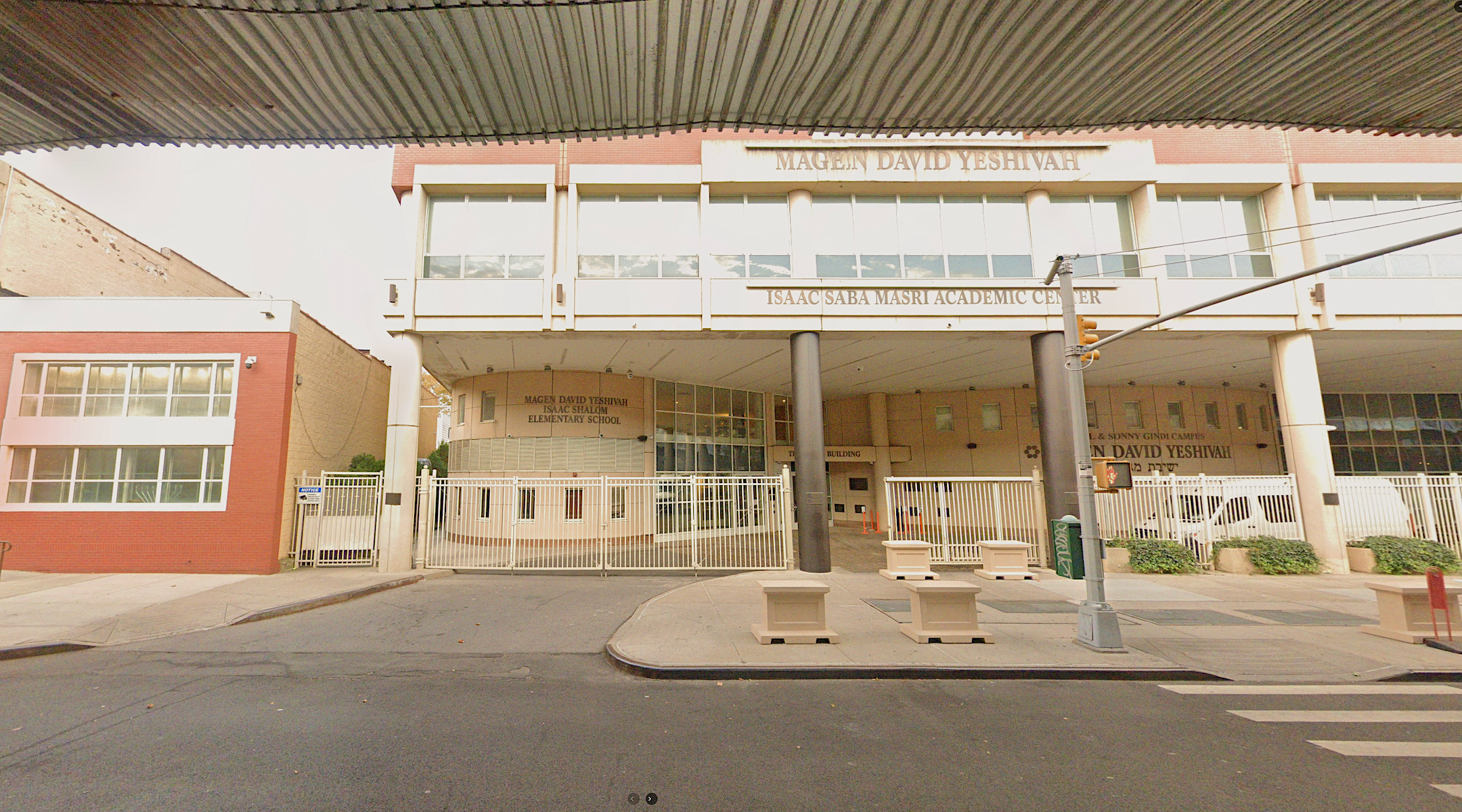
The incident that prompted Zohran Mamdani’s first condemnation of local antisemitism since he was elected mayor took place just minutes after the race was called in his favor.
Two red swastikas were spray-painted on Magen David Yeshivah in Brooklyn on Tuesday night, according to footage shared on social media and the New York Police Department, which said the vandalism occurred at 9:53 p.m.
Other Jewish sites in the city were also vandalized, Gov. Kathy Hochul said without offering details.
At the time, Mamdani was on the verge of giving a victory speech that reiterated a pledge to protest Jewish New Yorkers. On Wednesday, he condemned the Magen David Yeshivah vandalism specifically.
“This is a disgusting and heartbreaking act of antisemitism, and it has no place in our beautiful city,” wrote Mamdani in a post on X. “As Mayor, I will always stand steadfast with our Jewish neighbors to root the scourge of antisemitism out of our city.”
A spokesperson for the NYPD said Wednesday afternoon that there had been no arrests and an investigation into the incident was ongoing. The incident was being investigated as a hate crime, the spokesperson said.
Magen David Yeshiva declined to comment on the vandalism. Its principal reportedly told families that security had been increased in response to the graffiti.
The school is located in Gravesend, a hub of New York City’s Sephardic Jewish community. It had required parents to prove they had registered to vote before the school year, as part of a push within the community to oppose Mamdani largely because of his rhetoric on Israel.
Two-thirds of the neighborhood’s voters cast their ballots for former Gov. Andrew Cuomo during the general election, compared to 22% for Mamdani.
Outgoing New York City Mayor Eric Adams did not immediately issue a public comment on the vandalism. Hochul condemned the vandalism in a post on X, where she said the yeshiva was “one of several Jewish sites defiled last night with spray-painted swastikas.”
An NYPD spokesperson said that a construction site located on McDonald Avenue and Bay Parkway, about a block from the school, was also vandalized with a swastika. The spokesperson could not say whether the second location was a Jewish institution.
UJA-Federation of New York condemned the vandalism in a post on X, writing, “This act is a painful reminder of the rising tide of antisemitism that continues to threaten Jewish communities across New York.”
Some of Mamdani’s critics challenged him to respond to the vandalism. The Republican Jewish Coalition, which hosted a convention where Mamdani was a liberal punching bag in Las Vegas last weekend, took to Facebook to demand he denounce it.
“This reprehensible and odious vandalism must be unequivocally condemned by City leaders, especially Mayor-Elect Mamdani,” the RJC said in a post that went up nine minutes after Mamdani’s. “It is his solemn responsibility to protect ALL New Yorkers, and this is his first true test of leadership.”
At a press conference Wednesday morning in Queens, Mamdani told reporters that he was looking forward to “being the mayor for every person that calls this city home,” including the “Jewish New Yorkers that voted for our campaign and those that didn’t.”
“I take the issue of antisemitism incredibly seriously,” he continued, in response to a question about the Anti-Defamation League’s new monitor to track his administration’s actions. “And last night in my speech, I spoke about how my City Hall will stand steadfast with Jewish New Yorkers in fighting the scourge of antisemitism across the city and making that clear in the actions that we deliver on from January 1st.”
—
The post Mamdani condemns swastika graffiti at Brooklyn yeshiva as ‘disgusting and heartbreaking’ appeared first on Jewish Telegraphic Agency.
Uncategorized
Michigan’s El-Sayed doubles down: Israel ‘not an ally’
(JTA) — Abdul El-Sayed, the Democratic Senate nominee in Michigan, is doubling down on his view that Israel is not a U.S. ally as the Nov. 3 midterm elections draw closer.
El-Sayed, a vocal critic of Israel who faces former Republican Rep. Mike Rogers in one of the country’s most competitive Senate races, told ABC News on Monday that Israel is “not actually our friend.”
“An ally that takes your money to push you into wars you shouldn’t be fighting is not an ally,” said El-Sayed, referencing Israel’s reported lobbying of the United States to enter into a war with Iran.
He compared Israel with a friend who “keeps bumming off [your kid’s] money” and “talks about them behind their back and then gets them into fights with other friends.”
“What would you tell your kid to do with that friend? You’d probably tell them, maybe it’s not actually your friend,” he said.
El-Sayed made similar remarks in an interview with MS NOW on Thursday, saying that “the government of Israel has done nothing but use us” and “has done terrible things with our money.”
He added that he would continue to question whether Israel was an ally regardless of the outcome of Israel’s election on Oct. 27, as Prime Minister Benjamin Netanyahu, who has served as Israel’s leader for most of the past 18 years, seeks another term.
“Netanyahu is one part of it, but the Israeli military has done heinous things, like heinous things, full war crimes, genocide,” said El-Sayed. “So I think we got to just get serious about whether or not we as a country should be subsidizing that government.”
El-Sayed previously affirmed that he does not consider Israel an ally to the United States in his first bitter debate with Rogers on Oct. 8. The candidates will meet for a final debate on Wednesday.
He told MS NOW that he was “committed to the safety and security” of Jewish voters, some of whom have pressured him to moderate his views on Israel. “Now, we may have differences when it comes to Israel, but the things that unite us are a lot bigger,” he said.
This article originally appeared on JTA.org.
The post Michigan’s El-Sayed doubles down: Israel ‘not an ally’ appeared first on The Forward.
Uncategorized
Trump endorsement of Netanyahu blasted by liberal policy advocates, Democrats
(JTA) — A day after President Donald Trump endorsed Prime Minister Benjamin Netanyahu in the Israeli election eight days from now, U.S. policy analysts, Democratic lawmakers and liberal advocacy groups slammed the decision.
Trump announced his support for Netanyahu, who is running for reelection, in a Sunday Truth Social post that described the Israeli leader as “a Great Warrior Prime Minister” and a critical partner in eliminating the Iranian threat. Netanyahu has been trailing former IDF chief-of-staff Gadi Eisenkot in recent surveys.
Tali deGroot, vice president of political and digital strategy for the liberal Zionist group J Street, described Trump’s declaration as “an endorsement of endless war for Israelis,” in a statement sent to the Jewish Telegraphic Agency. She warned of “endless occupation and control of Palestinian life and land, and Israel’s growing isolation on the world stage.”
“The president is once again acting against the wishes of American taxpayers and choosing to uphold a failed, unpopular foreign policy that has brought devastation to Israelis, Palestinians and countless civilians,” deGroot added.
A spokesperson for the American Israel Public Affairs Committee, meanwhile, said that the lobby had no comment about the endorsement.
David Makovsky, director of the Program on Arab-Israel Relations at the Washington Institute for Near East Policy, criticized Trump’s decision, writing on X that “in one fell swoop, Trump has broken with the longstanding U.S. practice of avoiding explicit endorsements in Israeli elections.” The president, Makovsky added, went a step further by threatening to sever a partnership against Iran if Israelis choose a different leader.
“It is up to the Israeli people to choose their own leader and threatening that the U.S. will walk away from the conflict with Iran is beyond stunning,” Makovksy said.
Makovsky also pointed out that “a Trump endorsement is no electoral guarantee,” noting that Trump and Vice President JD Vance’s support for Viktor Orbán in Hungary did not end in a victory.
“The ultimate test is assembling a 61-seat Knesset majority,” Makovsky added. “Yet Netanyahu appears more focused on preventing an Eisenkot-led coalition from reaching that threshold than on demonstrating a viable path to 61 seats himself.”
Sen. Chris Van Hollen, a Democrat from Maryland, offered another scathing perspective, observing that “authoritarians of a feather flock together.”
“They started a war together,” Van Hollen stated. “They crack down on press freedom together. They lie about everything together.”
Rep. Analilia Mejia, a New Jersey Democrat running for reelection, said that the endorsement “tells us everything we need to know about both of these men.” She then went on to list Netanyahu, North Korea leader Kim Jong Un, Orbán and Russian President Vladimir Putin, adding that “this guy has a ‘type.’”
On the other side of the aisle, Rep. Carlos Gimenez, a Republican from Florida, reposted a video in which Netanyahu thanked Trump for his support. The congressman then added that “America will always stand with the Jewish State of Israel and our dear friend Prime Minister Netanyahu, who has championed our alliance for decades.”
Matt Brooks, CEO of the Republican Jewish Coalition, said he believes that “President Trump is incredibly popular with the people of Israel,” in a written statement to JTA.
“His support will carry considerable weight as Israelis make their choice for Prime Minister in a pivotal election this month,” Brooks added.
American Orthodox Rabbi Shmuley Boteach likewise celebrated the endorsement “by our great President Trump,” writing on X that he has “known and loved BIBI Netanyahu for some 35 years.”
Conservative radio personality Mark Levin described Trump’s Truth Social post as “an extraordinarily strong statement,” while accusing the opposition of “barking about election interference.”
“Trump makes clear it’s also in our national security interest for Netanyahu to remain PM,” Levin stated, calling complaints “unserious and a partisan political whine.”
Conservative influencer Evan Kilgore, on the other hand, fumed at Trump’s decision. Kilgore, whose X profile says “Christ is King,” announced that he is “so done with the GOP,” following Trump’s endorsement of Netanyahu. Kilgore described Trump as “TOTALLY fu*king subverted by Jewish and Zionist interests.”
Political analysts are divided as to whether Trump’s official support would have any sway on the results of an election 6,000 miles away.
Joyce Karam, editor-in-chief of the Washington-based site Al-Monitor, described the endorsement as a signal to both Israel and Iran that renewed escalation and a push for regime collapse could occur after the U.S. midterm elections. She also predicted that Trump’s backing could tip the balance in a tight race where neither side holds a majority.
However, Dov Waxman, director of the Israel Studies program at the University of California, Los Angeles, expressed doubt that support from Trump, who has become less popular in Israel, could significantly influence Netanyahu’s election chances.
“For a long time, most polls have shown his bloc falling well short of a parliamentary majority,” Waxman added.
This article originally appeared on JTA.org.
The post Trump endorsement of Netanyahu blasted by liberal policy advocates, Democrats appeared first on The Forward.
Uncategorized
Macklemore’s ‘Free Palestine’ tour will benefit group that called Oct. 7 a ‘prison break’
(JTA) — Macklemore, the rapper of hits such as “Thrift Shop” and “Can’t Hold Us,” is facing backlash from Jewish organizations over plans to donate proceeds from his forthcoming concert tour to the Palestinian Youth Movement, which described the Hamas-led Oct. 7 attacks on Israel as a “prison break.”
The rapper was dropped on Sept. 14 from an opening slot on Ed Sheeran’s U.S. stadium tour after making pro-Palestinian remarks onstage. He announced his “Free Palestine” tour on Sept. 24, pledging that all proceeds would benefit organizations supporting Palestinians. PYM is among 12 organizations named as beneficiaries.
The tour includes concerts in Dublin on Oct. 26, Paris on Oct. 29 and London on Oct. 30.
Macklemore received a surge of support after being dropped from Sheeran’s tour, with all of Sheeran’s remaining opening acts quitting in solidarity. He said on Instagram that the “Free Palestine” tour “sold out immediately.”
PYM is a grassroots movement of Palestinian and Arab youth in the United States, Canada and Britain. On Oct. 7, 2024, the first anniversary of the Hamas attacks, the group described the assault as a “prison break” and called the fighters “the men who broke through” in an essay published in The New Inquiry.
“Those fighters had trained for months, and now found themselves stepping foot onto the same hills and plains that their grandfathers and grandmothers had lived upon,” said PYM, without mentioning the killing and abduction of Israeli civilians.
PYM also said a week after the attacks, “Understand Palestinian resistance as fundamentally just and as a means of survival for our people; it will not stop in the weeks and months to come, and you must be prepared not to waver again.”
Jewish and pro-Israel groups have slammed Macklemore for supporting PYM. The Jewish Leadership Council, which represents British Jewish and pro-Israel groups, told The Jewish Chronicle, “When the PYM describes the 7 October massacre as a ‘prison break’, it risks legitimizing violence against Jews.”
The Israeli-American Council, which petitioned Sheeran to drop Macklemore, told Fox News Digital that “Live Nation and the concert organizers must now publicly explain their vetting process and ensure that concert proceeds do not benefit organizations that justify violence against innocent civilians.”
Macklemore, Live Nation and the Palestinian Youth Movement did not immediately respond to requests for comment.
This article originally appeared on JTA.org.
The post Macklemore’s ‘Free Palestine’ tour will benefit group that called Oct. 7 a ‘prison break’ appeared first on The Forward.
