


Uncategorized
‘Mensch of Manhattan’ Lasher wins over Bores in fight for Nadler’s seat, media projects
(New York Jewish Week) — Micah Lasher has defeated Alex Bores in the battle for retiring Rep. Jerry Nadler’s Manhattan congressional seat, according to media projections Tuesday night.
In the race for the 12th Congressional District, the most Jewish in the country, Lasher had 40,106 votes, or 39.1 percent, and Bores collected 35,822 votes, or 35 percent, with 87 percent of the ballots counted.
The crowded field in the Democratic primary also included John F. Kennedy grandson Jack Kennedy Shlossberg, public health expert Nina Schwalbe, and George Conway, a Republican-turned-Democrat and Trump antagonist. All three were trailing well behind Lasher.
During his victory speech, Lasher pointed to both his and the district’s Jewish identity.
“It is an enormous point of pride that I will be representing the most Jewish congressional district in the country,” Lasher said. “I will always stand up for our community with pride.”
He also received a loud ovation after he thanked “the rabbis and Jewish community leaders” who helped the campaign.
A number of Lasher’s political allies and former bosses spoke, including Nadler, who’s represented the upper West Side since 1992, Gov. Kathy Hochul, Comptroller Mark Levine, and Manhattan Borough President Brad Hoylman-Sigal, who told the JTA that Lasher would be a bridge between Mayor Zohran Mamdani and the Jewish community.
Holyman-Sigal called Lasher the “mensch of Manhattan.”
Lasher thanked Nadler for his decades of service and mentorship, saying he taught Lasher things like “vision, compassion, and how to canvass voters outside Zabar’s.”
Nadler is “as much an institution in Manhattan as Central Park and pastrami on rye,” Lasher said.
The House seat — which covers the Upper West and Upper East sides and midtown Manhattan, and is seen as a crown jewel in New York politics — opened up after Nadler announced last fall that he would retire at the end of this term.
Nadler’s preferred heir was Lasher, a Jewish State Assembly member who has worked for the progressive stalwart and other prominent politicians such as Gov. Kathy Hochul and former Mayor Mike Bloomberg. Lasher has the support of those former bosses, plus much of the West Side political establishment.
Fellow Assembly member Bores, meanwhile, has built a coalition that includes both pro-Israel moderates and progressive groups critical of the Jewish state by emphasizing that he will be tough on artificial intelligence companies. Former congresswoman Carolyn Maloney, who represented much of Manhattan’s East Side from 1993 until 2023, is among Bores’ supporters.
On the subject of Israel, the makeup of the NY-12 race has been unlike other contested New York City races: Elsewhere, at least one of the two leading candidates has accmused Israel of committing a genocide in Gaza and supports placing conditions on U.S. military aid to Israel.
But Lasher and Bores both describe themselves as pro-Israel and anti-Prime Minister Benjamin Netanyahu of Israel, and neither one supports blocking weapons sales to the Jewish state.
Mamdani is himself a voter in the district as a resident of Gracie Mansion and who cast his ballot a few days ago, during the early voting period, at the Metropolitan Museum of Art. He has declined to weigh in publicly on the race. The mayor endorsed two democratic socialist candidates and Brad Lander — his Jewish ally who accuses Israel of genocide, and has positioned himself against both offensive and defensive military aid to Israel — in other races.
Lasher and Bores have both consistently advocated for universally applying the existing Leahy Law, which bars the U.S. from providing military assistance to foreign military units that violate human rights with impunity.
Schlossberg has criticized Lasher and Bores for their stance, calling it an “insufficient answer,” and advocates for blocking offensive weapons sales to Israel while still funding the Iron Dome defensive missile system. He is the only of the top-four candidates to call for conditions on aid to Israel and halting any weapons sales. After initially leading in early polls, Schlossberg’s support appears to have fallen amid questions over his lack of experience.
Conway, an anti-Trumper and longtime attorney who was married to former Donald Trump staffer Kellyanne Conway, rounds out the top four in the polling.
Throughout the election, candidates convened for forums at numerous synagogues in the heavily Jewish district — 23.3% of constituents are Jewish, according to a 2024 study — and answered questions related to antisemitism, Israel and other Jewish-related issues.
Lasher has said at multiple forums that he doesn’t see anti-Zionism as being precisely the same thing as antisemitism, but that “often when you see one you see the other.”
He and Bores have both touted their support for a statewide “buffer zone” bill — which Lasher introduced in response to pro-Palestinian demonstrations outside synagogues — that would curb protests outside houses of worship. Meanwhile, Schlossberg has pointed out at Jewish forums that the first policy his campaign released was “Jack’s Fast-Track Plan,” which would fast-track a doubling of funds for the Nonprofit Security Grant Program that funds security at houses of worship and community centers.
During a June forum at Upper West Side synagogue B’nai Jeshurun, Lasher said he felt “exhausted” by how much the political dialogue — both in the NY-12 race and more broadly — is “obsessed” with Israel.
Lasher is sure to win in November’s general election in the heavily Democratic district where he will face only token Republican opposition.
The post ‘Mensch of Manhattan’ Lasher wins over Bores in fight for Nadler’s seat, media projects appeared first on The Forward.
Uncategorized
As Trump betrays Ukraine, it’s beginning to feel a lot like Munich
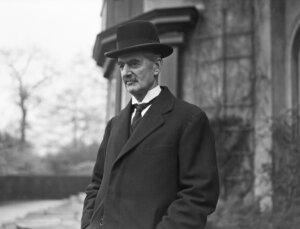
In Munich on Sept. 30, 1938, the leaders of Britain and France signed an agreement with Adolf Hitler that caved to the Nazi leader’s demand that Germany be given a chunk of Czechoslovakia. Five months later, Hitler ordered the German military to forcibly take the remainder of the neighboring country.
On Oct. 9, 2026, Donald Trump and Vladimir Putin struck a deal allowing Russia to sell diesel fuel to global markets, most importantly to the US. Then Trump waived a package of sanctions on Russia that had been passed by Congress. By replenishing Russia’s war coffers, it is likely more Ukrainians will die because of these twin gifts from America’s president to the warmongering Russian autocrat.
Why is Trump doing this? He seems to be hoping the diesel deal will help him avert disaster in the upcoming midterms. Or maybe there’s more to it than that. Perhaps Trump seriously thinks that this will get him the Nobel Peace Prize by ending the war in Ukraine through helping Putin win it. Perhaps it’s one more scheme to further enrich himself and his family. Or maybe Putin really does have something on Trump.
In any event, it feels like Munich all over again.
There are some remarkable parallels between Czechoslovakia’s predicament in 1938 and Ukraine’s nine decades later: separatists in two vulnerable Central European democracies were encouraged and supported by a neighboring authoritarian regime that sought to seize adjacent territory under the pretext of protecting a minority from oppression.
And at the center of both narratives is betrayal: of Czechoslovakia by Britain and France, and Ukraine by Trump.

In the spring and summer of 1938, Konrad Henlein, leader of the Nazi-allied Sudeten German Party in Czechoslovakia, held secret meetings with Hitler and other Nazi officials. They concocted a plan: Cause so much disorder in the Sudetenland that the Czech government would declare martial law, thus creating an excuse for German troops to march in to protect the ethnic German minority.
Tensions that had long existed along the Czech frontier erupted into gunfire and death in the Sudeten town of Habersbirk on the morning of Sept. 13, 1938. A mob of German separatists hung a swastika banner from a church tower, stormed the police station, kidnapped the wife of a cop, and engaged in gunfights with police officers that lasted hours. Four Czech police officers and four insurgents died. Outbreaks of violence, terror and torture raged along the border for days, backed by Freikorps paramilitary troops who crossed from Germany and by SA and SS men who took part in cross-border sabotage and armed attacks.
The uprising had the desired impact. Just 17 days later — on Sept. 30, 1938 — Britain, France, Italy and Nazi Germany signed the Munich Agreement, yielding to Hitler’s demand that the Sudetenland be ceded to him. After landing at an airport outside London, Prime Minister Neville Chamberlain waved a document in his hand and jubilantly proclaimed:
“The settlement of the Czechoslovak problem which has now been achieved is, in my view, only the prelude to a larger settlement in which all Europe may find peace.”
“I believe it is peace for our time,” Chamberlain said later that day.
But it didn’t take long for Hitler to show he could not be trusted. Hitler’s army marched into Czechoslovakia on March 15, 1939. Germany’s invasion of Poland followed less than six months later, and by 1942 German forces controlled territory spanning from the Atlantic Ocean to deep inside the Soviet Union.
Ethnic Germans’ uprising in Czechoslovakia in 1938 found an echo nine decades later in Ukraine’s Donbas region, where unrest that began with pro-Russia protests in 2014 evolved into the war Russia has been waging on its neighbor for nearly five years.
In the spring of 2014, paramilitary units led by Russian intelligence officers stormed government office buildings in several towns and cities in Donbas, seizing weapons and clashing with police. In a scene reminiscent of the Habersbirk siege of 1938, on April 14, 2014, pro-Russian militants seized the police station in Horlivka, beat up the police chief, and murdered a member of the city council, whose body was found in a river. Similar clashes occurred throughout Donbas.
Two Kremlin-backed pseudo-states soon emerged: the Donetsk People’s Republic and the Luhansk People’s Republic. Russia funneled tanks, artillery, air defense systems and fighters into Donbas, fueling a war between separatists and Ukrainian forces that dragged on for years.
Like Hitler in the Sudetenland, Russia’s de facto occupation of Donbas was not enough for Vladimir Putin. His eyes were on all of Ukraine, and he spent years manufacturing pretexts for the full-scale invasion that began on Feb. 24, 2022.
Trump has been buttering up Putin for more than a decade, starting with his 2015 campaign for president, when he effusively praised the ruthless Russian autocrat’s leadership style. Putin is a “strong leader,” is “far more respected than our president,” meaning the immensely popular Barack Obama, and was someone he “would get along with very well,” Trump said back then.
Trump’s admiration for Putin took on ominous tones after becoming president. During a press conference after the two leaders’ 2018 Helsinki summit, Trump questioned intelligence findings on Russian election interference and said he believed Putin’s denial. “I don’t see any reason it would be Russia,” Trump told reporters, with the Russian strongman standing at his side.
After Russia’s invasion of Ukraine in 2022, during Biden’s presidency, Trump called it “a pretty smart move,” praised Putin as a “genius,” and also said it wouldn’t have happened if Trump was still president, remarks that were amplified by Russian state media.
During Trump’s second term, his buddy-buddy relationship with Putin has turned into a virtual strategic alliance, as the American president repeatedly makes moves and statements that seem designed to please the Russian autocrat. There are Trump’s threats to abandon NATO, his humiliation of Ukraine President Volodymyr Zelensky during a February 2025 meeting inside the Oval Office, and most recently Trump’s demand that Ukraine cease its drone attacks on Russian oil refineries, his call for Zelensky’s ouster, and envoy Steve Witkoff thanking Putin for being a “humanitarian.”
Putin has proposed a summit between himself, Trump, and Chinese leader Xi Jinping to discuss ending the war in Ukraine. It’s notable that Ukraine has not been invited. This is also what happened in Munich nine decades ago, when Czech delegates were excluded from the room, and others decided Czechoslovakia’s fate.
Last October, aboard Air Force One, Trump told reporters the Donbas region should be “cut up,” leaving most of it in Russian hands.
“Let it be cut the way it is,” he said. “They can negotiate something later on down the line.”
It seems the fate Trump envisions for Ukraine is similar to the one Hitler envisioned for Czechoslovakia. It would be naïve to think that Putin’s expansionist ambitions would stop there.
The post As Trump betrays Ukraine, it’s beginning to feel a lot like Munich appeared first on The Forward.
Uncategorized
A Chabad Jew was stabbed in NYC. He returned the next day to continue wrapping tefillin.
(JTA) — Less than 24 hours after he was stabbed in midtown Manhattan, Yosef, a Chabad-Lubavitch man from Crown Heights, was back on the same street where he’d been assaulted, popping into Diamond District businesses as usual to help employees wrap tefillin.
Yosef, 26, who did not share his last name to maintain his privacy, told the Jewish Telegraphic Agency that he was back on 47th Street on Thursday afternoon, the day after the stabbing, without missing a beat in his Monday-through-Thursday rounds even as police investigate the incident as a possible hate crime.
A number of the people he visited pieced together that the widely circulated footage of a man being stabbed the previous night was of him.
“They were in shock. They were obviously scared for me,” said Yosef, who has been wrapping tefillin and distributing Shabbat candles to Jewish Diamond District employees for about three years. He started that routine when his father, a Chabad Jew who works in the jewelry business, realized he needed his son’s help to handle the demand for those acts. Yosef told Chabad.org that he was “still shaken” by the attack a day later.
Still, he told JTA, “We can’t allow some hate to stop us.”
Yosef said he felt it was important to communicate that message because “we need more mitzvahs in the world, we need more light in the world.”
Yosef was taken to Bellevue Hospital on Wednesday evening around 6 p.m., where medical staff assessed that he had no internal bleeding and would not need stitches. No arrests have been made, but the assailant has been described as a woman in her 40s.
The attack has renewed concerns about security that have faced Chabad adherents and institutions, which often host public events and maintain a visible street presence. But the threat didn’t diminish their presence in midtown Manhattan on Friday.
Multiple Chabad men stood under a bright yellow tent on the sidewalk wrapping tefillin for a steady stream of workers in the heavily Jewish Diamond District.
“The Rebbe says that the way to defeat darkness is only through the addition of light,” said Shmuel Cohen, who was handing out small photographs of the movement’s late leader, the Lubavitcher Rebbe Menachem Mendel Schneerson.
Cohen told JTA that he had not heard about the attack that took place just down the block two days earlier, though his partner under the sidewalk tent had. Cohen said that the best way to respond is through “the observance of Torah and mitzvot without being ashamed of our Judaism but presenting it to everyone.”
Also on Friday, Chabad officials met with New York Police Department representatives for their annual meeting about security ahead of Chabad’s international conference in Crown Heights, the Brooklyn neighborhood where the movement is headquartered. The conference begins on Nov. 5.
Chabad has been targeted in multiple high-profile attacks in the past year, including the deadly Bondi Beach shooting in Australia in December. The following month, a man rammed a car into the doors of the Chabad-Lubavitch headquarters in Brooklyn, raising further questions over how the movement should balance its commitment to making its events accessible with security.
Meanwhile, Jews have been targeted in more than half of hate crimes committed in New York City in 2026, despite making up about 12% of the city’s population.
“Security is our top priority. Our goal is to provide an environment where every participant feels safe and can fully experience the purpose and spirit of the gathering,” said Rabbi Mendy Kotlarsky, a top organizer of the upcoming conference.
In the wake of the attack, Yosef said he is not concerned about going out in public as a visibly Jewish person and doesn’t plan to change how he approaches the world.
“I was wearing the same clothes on Tuesday and Wednesday and Thursday,” he said. “I didn’t change my routine.”
This article originally appeared on JTA.org.
The post A Chabad Jew was stabbed in NYC. He returned the next day to continue wrapping tefillin. appeared first on The Forward.
Uncategorized
They met on a Birthright trip then married. Now this American Israeli couple’s internet fame has turned to infamy.
Ethan and Hila Klein first met at Yad Vashem — Israel’s Holocaust museum — in 2007, a meet-cute they recounted, giggling, years later for their millions of YouTube followers.
“I think I went up to her and said something like, ‘They had it coming, don’t you think?’” said Ethan, known for his edgy humor and infamous internet trends, including Vape Nation and Papa Bless. “No I didn’t say that. I wonder if you would have laughed though.”
They were on a Birthright trip, Ethan an American and Hila an Israeli soldier on leave to join the group. Soon after the trip ended, Ethan moved to Israel to be with Hila, and the two began making videos under the name H3H3 Productions (the H for Hila and the 3 standing in as an E for Ethan). They married, moved to America, and started a popular podcast.
A Jewish love story, until Thursday, when Hila, now mother to their three children, accused Ethan publicly of having a months-long affair.
“The betrayal I feel is immeasurable,” Hila said in an Instagram post. “My only family on this side of the world. How do I even begin to make sense of this?”
Ethan reposted her statement.
Their podcast is run by a handful of crew members who often chime in and participate in various skits and bits. The crew also shared a statement saying they stand with Hila and refuse to work with Ethan, though they added they don’t know what this will mean for the future of the show.
A couple roiled by Oct. 7
The left-leaning, secular couple’s videos and podcasts focused primarily on pop culture, internet drama and general politics, not Jewish or Israeli issues.
Both Ethan and Hila would make statements sometimes when tensions in Israel flared, and they would occasionally speak out against IDF actions that upset them.
In 2021, Ethan started a podcast with political commenter Hasan Piker, a controversial left-wing influencer, called Leftovers, a nod to their leftist politics.
Then came Oct. 7.
Ethan, an American Israeli dual citizen like Hila, was horrified by the attacks but quick to call the IDF genocidal in the aftermath. In their first episode together after Oct. 7, Ethan and Piker said the show would continue through their disagreements. The episode was tense, and it was their last.
As Piker’s rhetoric on Israel intensified and became at times antisemitic, the two began a nasty internet feud, culminating in a nearly five-hour livestreamed debate.
Piker posted about the news of the affair on X, sharing a video of Ethan and expressing disgust for men who cheat.
“Now this is a high caliber man [with] good morals,” Piker said sarcastically. He also posted “Judge me by my enemies” after sharing Hila’s statement.
Hila, who owns a makeup and clothing company, increasingly came under scrutiny by Piker and others after Oct. 7 for her service in the IDF. Artists refused to work with her. One model she hired publicly disavowed her after finding out she was Israeli.
The couple was harassed, sometimes online, sometimes in-person, as they attempted to take what they viewed as a nuanced stance in the aftermath of Hamas’ attack on Israel and the ensuing war in Gaza. The united front seemed to fortify their relationship, as Ethan, ever outspoken, routinely came to his wife’s defense.
Their show lost thousands of subscribers, but loyal fans stuck with them — fans who now say they are gutted and confused by the news of the affair. Many in disbelief noted that Ethan had Hila’s face tattooed on his arm less than two years ago as a surprise for her.
“The greatest thing a man can do for his children is to love their mother,” says the quote surrounding the tattoo.
The Forward attempted to contact the Kleins through their work emails and did not immediately hear back.
The post They met on a Birthright trip then married. Now this American Israeli couple’s internet fame has turned to infamy. appeared first on The Forward.
