


Uncategorized
Sarah Hurwitz, former Obama speechwriter, creates firestorm with remarks about Holocaust education
(JTA) — In the safe confines of a gathering of Jewish fundraising and communal professionals, Sarah Hurwitz’s remarks about antisemitism and Holocaust education earned polite applause. By the time they made it to social media, they’d become kindling in a rhetorical firestorm over the Gaza war — and the uses and abuses of Jewish memory.
Hurwitz — a former speechwriter for both Barack and Michelle Obama who has written two books about her embrace of her Jewish identity as an adult — was one of three panelists Nov. 16 at the opening plenary of the General Assembly of the Jewish Federations of North America in Washington. They were asked to address antisemitism and Jewish identity at a “crossroads.”
Speaking from notes, she began her remarks with the fairly uncontroversial observation that “young people” are exposed to a media diet that amplifies the fringe, including antisemitic influencers like Nick Fuentes. She also made the somewhat more contentious point that images of “carnage” in Gaza are making it hard for defenders of Israel like her to debate “facts and arguments” with younger Jews.
But then she veered into talking about Holocaust education, suggesting that the Jewish “bet” on promoting Holocaust education had backfired, at least as a vaccine against antisemitism.
“Holocaust education is absolutely essential,” she said. “But I think it may be confusing some of our young people about antisemitism, because they learn about big, strong Nazis hurting weak, emaciated Jews, and they think, ‘Oh, antisemitism is like anti-black racism, right? Powerful white people against powerless black people.’ So when on Tiktok, all day long, they see powerful Israelis hurting weak, skinny Palestinians, it’s not surprising that they think, ‘Oh, I know the lesson of the Holocaust is you fight Israel. You fight the big, powerful people hurting the weak people.’”
Hurwitz’s framing could be seen as descriptive, explaining how the emotional structure of Holocaust education — emphasizing victimhood, power imbalance and trauma — leads some students to align emotionally with Palestinians rather than with Jews. She went on to suggest that moral lessons from the Shoah are often taught in a way that’s too binary — oppressed vs. oppressor, powerless vs. powerful — without helping students understand how antisemitism functions in complex ways, even when Jews have sovereignty and power.
But beyond the GA audience, the backlash was fast and fierce. Instagram and Reddit filled up with posts accusing her of saying, as one post put it, “that it was a mistake to teach Americans that genocide is bad.”
Jenin Younes, legal director of the American-Arab Anti-Discrimination Committee, accused Hurwitz of using Holocaust trauma to silence criticism of Israel’s military operations.
“Holocaust education is not failing,” she said. “It’s succeeding — because it is teaching young people to recognize oppression and call it out, even when it doesn’t serve political agendas.”
Progressive Jews also objected. “She’s not disagreeing with the moral lesson that we should stand against the powerful harming the vulnerable,” wrote Rabbi Sandra Lawson on Substack. “She’s upset that people are applying it universally. The lesson was supposed to stay contained, meant only for certain victims.”
The point of Holocaust education, wrote journalist Spencer Ackerman, is “[n]ot to exceptionalize Jewish suffering, but to activate solidarity. To recognize that there is a continuum of atrocity perpetrated by dominant classes against subjugated ones.”
Hurwitz’s remarks about a central pillar of Jewish advocacy may have been tailor-made for the JFNA crowd, made up of mainstream Jewish professionals uneasy about whether current tools — Holocaust education, Israel trips, anti-antisemitism training by pro-Irael groups — can stack up against the anti-Israel messages young people encounter. JFNA has joined several initiatives aimed at presenting a more “nuanced” view of the war in Gaza, with the goal of countering misleading or anti-Israel narratives in the mainstream and social media.
But Hurwitz also entered a decades-old — and, since Oct. 7, increasingly fraught — debate over the goals of Holocaust education. Does “never again” mean a universal call to protect human rights and prevent genocide, or is it a narrower call to make sure Jews are never again vulnerable to mass murder? And if the latter, does that somehow inoculate Israel from accusations that it can, in the interest of self-defense, oppress a weaker people?
That debate was at the heart of a dust-up in September, when Los Angeles’ Holocaust museum deleted an Instagram post that proclaimed, “‘Never again’ can’t only mean never again for Jews.” The graphic showed six interlocked arms of different colors, one with an Auschwitz tattoo. Another slide declared: “Jews must not let the trauma of our past silence our conscience.”
The museum explained that it deleted the post because it was “easily open to misinterpretation by some to be a political statement reflecting the ongoing situation in the Middle East.” Indeed, appreciative supporters of Palestine and angry supporters of Israel read the original post as a statement about the death toll and hunger crisis in Gaza.
Ben Ratskoff, an assistant professor at Occidental College in Los Angeles, wrote that the museum’s retraction “reflects a deeper turn away from the universalist approach that has been at the heart of institutional Holocaust memory culture since the 1990s.” Elie Wiesel, he noted, framed the Holocaust as “a Jewish tragedy with universal implications and applications.” In 2000, the Stockholm Declaration, which founded the International Holocaust Remembrance Alliance, also declared that “the Holocaust will always hold universal meaning.”
“Teaching about the Holocaust,” the U.S. Holocaust Memorial Museum explains on its web site, “can inspire students to think critically about the past and their own roles and responsibilities today.”
Israeli historian Amos Goldberg noted in July that Holocaust memory in the West deals with a deep tension between two sentiments. In the first, “human rights-oriented” version, “the world pledged itself to human rights, to curbing nationalism, and to strengthening democracy as a lesson from the Holocaust.” The second sentiment, he writes, “was empathy toward the Jews as the primary victims of Nazism, and their perception as Europe’s ultimate ‘Other.’”
With Israel facing accusations of genocide in Gaza — including from Israeli scholars like Goldberg, the International Association of Genocide Scholars and the Israeli human rights group B’Tselem — these divergent lessons of the Holocaust have been fiercely debated, and sometimes weaponized.
After the massacre of Oct. 7, supporters of Israel invoked the Holocaust to express their feelings of vulnerability. “The murderers of Hamas are guided by the exact same goal” as the Nazis, Israeli Prime Minister Benjamin Netanyahu declared at Israel’s official Holocaust Remembrance Day commemoration in 2024. Many pointed out that Oct. 7 was the deadliest day for Jews since the Holocaust, implying a parallel of effect if not scope.
Palestinians and their supporters also invoked the Holocaust, a comparison that intensified as the war ground on and accusations of “genocide” made the comparison at least implicit.
Jewish groups not only denied the accusation of genocide, but rejected the comparison, whether made by Hamas or the United Nations special rapporteur on Palestine.
“These comparisons are not simply misguided or exaggerated; they have a double-edged effect,” wrote Simone Roadan-Benzaquen, managing director of the American Jewish Committee’s Europe office, in January. “On one hand, they trivialize the Nazi atrocities by equating them with a contemporary conflict, tragic as it may be, that differs fundamentally in purpose and scope. On the other, they invert historical roles, casting Jews — victims of an unparalleled genocide — as today’s oppressors….
“The result is an assault on memory itself.”
Hurwitz served as chief speechwriter for Hillary Clinton during the 2008 presidential campaign, later as senior speechwriter to Barack Obama, and, from 2010 to 2017, as head speechwriter for Michelle Obama. After leaving government, Hurwitz wrote about her personal journey from “lapsed” or “cultural” Jew to one more deeply engaged with its core texts, rituals and history. Her two books on that journey have made her a popular draw on the Jewish lecture and podcast circuit.
It’s by no means clear if Hurwitz intended to say, as critics charge, that Holocaust education was a mistake because it fostered sympathy for the Palestinians. She did not respond to a request for an interview.
But in her latest book, “As a Jew,” published in September, she does argue that Holocaust education fails if it doesn’t explore the full historical scope of antisemitism, or, taking inspiration from the writer Dara Horn, if it doesn’t show how Jews lived in addition to how they died.
“If the main thing you know about antisemitism is the Holocaust, it’s easy to get the impression that antisemitism originated sometime in the twentieth century, and the Holocaust was a one-off — that out of nowhere, after just a few decades of hating Jews, the civilized world lost its mind and started killing them,” she writes.
Her book also includes a spirited defense of Israel, which puts her in the crosshairs of anti-Zionists and other harsh critics of Israel. At the GA, Hurwitz may have been describing the limitations of Holocaust education in teaching about antisemitism, but she waded directly into a fight about applying the lessons of the past to the crises of today.
The post Sarah Hurwitz, former Obama speechwriter, creates firestorm with remarks about Holocaust education appeared first on The Forward.
Uncategorized
How Billy Wilder and B&H Dairy birthed ‘The Only Living Pickpocket in New York’
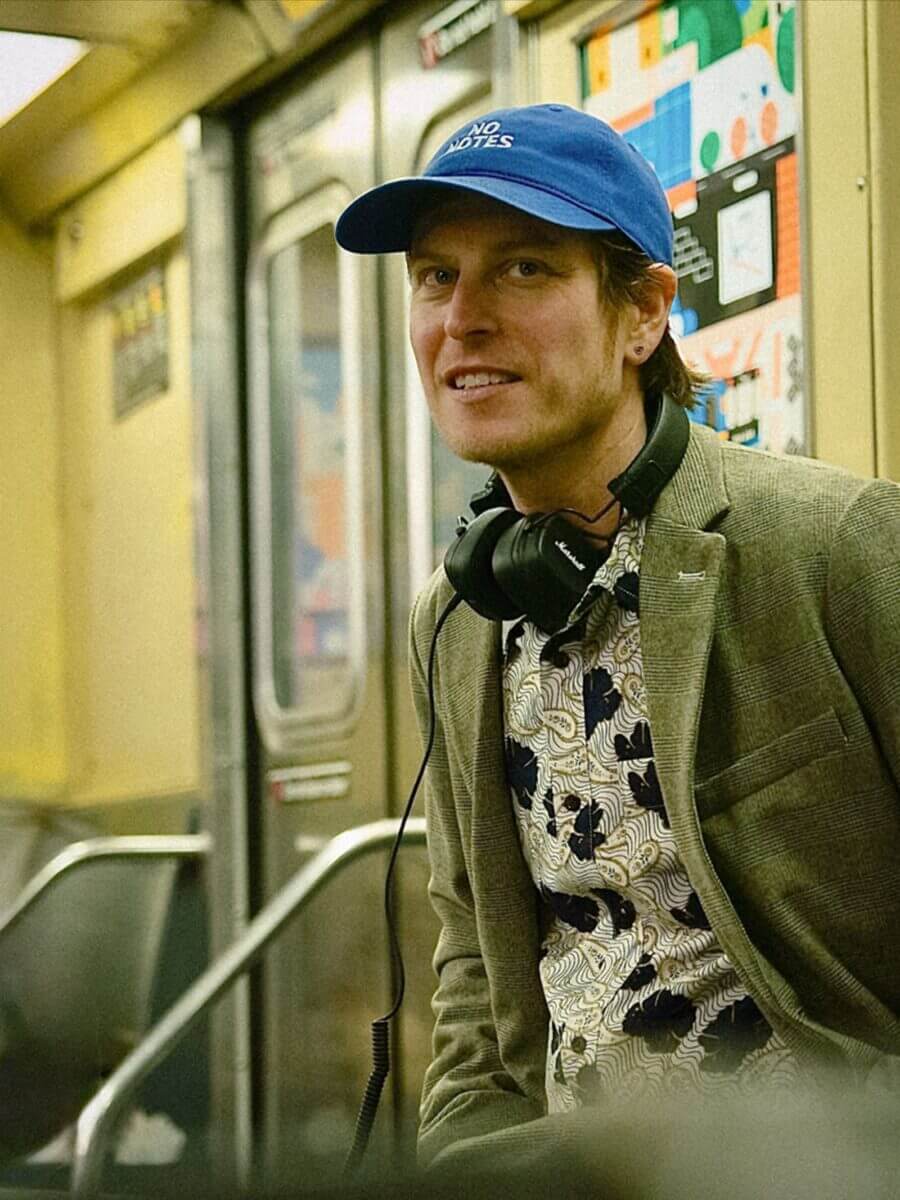
Noah Segan’s crime thriller The Only Living Pickpocket in New York has drawn comparisons to NYC auteurs Spike Lee, Elaine May and John Cassavettes. While the writer-director is far from anxious about these influences, he notes another, less obvious touchpoint: a Billy Wilder comedy.
“There’s a line in The Apartment, where the very kindly Jewish neighbor doctor says to Jack Lemmon’s character, after he’s been through all of this meshugas with his apartment,” Segan, wearing a shirt that reads “I [Image of a heart-shaped pretzel] New York,” said in a Zoom interview.
The neighbor advises Lemmon’s befuddled, hyper-gentile character to “be a mensch.” In explaining what it means, he says, “just be a person.”
In Pickpocket, Harry Lehman (John Turturro), the titular gentleman thief, calls his neighbor across the hall a mensch for looking out for his wife. Her response: “I’m just being a person.”
While the film, about what happens when an old-school filcher accidentally lifts a high-tech MacGuffin, has its share of grit and cynicism for an increasingly impersonal, online world, its open-hearted menschlikeit shines through.
I spoke with Segan about the film, his sophomore feature after his 2022 Jewish vampire romp Blood Relatives, about Yiddish, B&H Dairy and whether Turturro is the GOAT of non-Jewish actors playing Jews. The following conversation has been edited for length and clarity.
How did you arrive at this idea of an ode or elegy to a Luddite New Yorker?
I looked in the mirror. (Laughs) I’m sort of a Luddite New Yorker — at heart. But a realist, I guess.
It started with a character. It started with Harry. You go, “OK, what is he going through? How is he functioning? What are his challenges?” And then you go, “Oh man, this guy is New York. And this can happen in New York. And I’m from New York.” You’re looking for patterns, you’re looking for the thing that works for you — but is it a chicken and the egg? Is it New York? Is it Harry? Are they the same thing? But once you get those two aspects, the rest of it can blossom naturally.
Your embodiment of New York is an old Jewish guy.
The embodiment of me is an old Jewish guy! (He fishes out a chai necklace from under his collar.) I got my little chai. Represent for the Forward.

In your previous film, Blood Relatives, you were a Jewish vampire. You said in an interview you were thinking about the fear of “otherness.” I’m wondering if there’s something in that choice of making Harry Jewish. Someone with community, but kind of on the margins. Obviously, in New York we don’t think of ourselves as being marginal, but maybe it’s indicating a change.
I think for the first film, part of the conversation was how to discuss otherness through both a realistic lens: that of a Jew, and through a cinematic lens, that of a vampire. The more you think about things like blood libel, the more you think about things like how Jews were murdered, all of that colors that dynamic. In Pickpocket, it’s a little bit different because Harry isn’t really an “other” he is one of. Not just because there are lots of Jews in New York, but there’s lots of everybody in New York!
I think that New York is often unified less based on religious and racial lines, much more so on socioeconomic lines, which of course is something this movie talks about.
Part of the texture there is Yiddish as a kind of lingua franca. We have Giancarlo Esposito and Lori Tan Chinn — older, non-Jewish characters. They all use it. I know we all say “schlep,” but I teach kids at City College, they don’t all know the word “mensch.” Is that a disappearing part of New York for you, in the same way Harry is recognizing his obsolescence?
To me, it’s not a disappearing part because I run into it all the time, and I think most New Yorkers know a little bit of Yiddish, just like most New Yorkers know a little bit of Spanish and that’s how you get by.
You’ve spoken of the Jewish-Italian handshake, a principle in casting that lets Robert DeNiro play Ace Rothstein and James Caan play Sonny Corleone. I have long maintained that John Turturro is probably the greatest living non-Jewish portrayer of Jews.
I think the idea with John is that he embodies New York to such a degree, that he truly does get to do any version of a New York character. This is a guy who just is New York, and so if you let him be a New York-coded character, it is what it is. It is whatever it needs to be. That man knows more about Philip Roth than anybody I’ve ever met, which makes me feel like that makes him definitely an honorary Jew.
Harry’s doorpost has a mezuzah and he goes to visit his daughter and there’s a wreath on the door. I was wondering about that bit of set dressing.
The mezuzah on the door — it’s like painted over. The idea that it had been there a long time was really important to me. That this is a matter of fact of one’s life. There is probably a question of how much Harry’s culture and religion influenced his daughter, who he left at a young age, and her choices to identify or not with that. Obviously, who knows who she married and how they practice. There are Jews who feel jolly and put a wreath on their door, so there’s no rule about that. But I do think that it is safe to say that there were historic, cultural, ethnic identifying aspects that Harry did not pass on. And that is part of the tragedy, of course, of leaving one’s family.
Did you shoot the film before the death of the MetroCard, and do you think Harry would have been able to figure out OMNY? I feel like the transition from tokens might have been difficult for him.
The transition from tokens was definitely difficult for him. We still had MetroCards when we shot the movie. I think it was a combo. But he doesn’t have a phone to tap! So what’s he gonna do? He’s gonna get an OMNY card and load it up? I mean, I guess that’s sort of like having a MetroCard.
The other day my phone died, so I just used my credit card. So you could do that in theory.
I don’t know if Harry has a credit card.
He deals in cash.
I think what he’s doing is he’s just waiting for somebody to open the emergency door for him. And then he passes them a couple bucks.
How do you think he would feel about Mamdani and the Knicks championship?
I don’t know if Harry votes. I think he likes to stay off the rolls. The more off-the-grid he could be, the better. But I do think that he would be very pleased about the Knicks. I don’t know if he’d be as pleased as John is. But I think he would be very pleased about the Knicks.
We feel that the days of Harry and his analog life are numbered, but there’s also a glimmer of hope when we see him mentoring a younger guy in the old ways of the five-finger discount.
All hope is never lost, especially in New York. New York is a hopeful place. Because it is sarcastic and cynical and has a sense of humor and it’s very fast. People think that that somehow makes it not an optimistic or hopeful place. But no. New Yorkers are the most resilient people on earth — that’s why the all the Jews move here!
Any there other Jewish tidbits that you’re not going to get a chance to to speak about with the general press?
You picked up on B&H right?
I don’t know if I did!
The first scene with Harry, he’s having his matzo brei at B&H.
Oh! I wasn’t thinking of B&H Dairy. I was thinking of B&H Photo.
There used to be a whole cottage industry of these places that that showed up at the turn of the century called B&H, and people go, “Well, why is it called B&H.” It’s Baruch Hashem. It wasn’t anybody’s name. It was just like, ‘Well, I guess thank God we opened up a store.’
(Author’s Note: Regrettably, in the case of the dairy establishment, this tidbit, while widely believed, appears to be apocryphal; the founders of B&H, who catered to Yiddish actors on Second Ave. were named Abie Bergson and Jack Heller and gave their initials to the enterprise.)
B&H is such a great example of New York because it is still kosher. It is still signed off on by a rabbi. The rabbi puts the stamp on it. Remains kosher. It is run by a Catholic Polish lady, her Muslim-Egyptian husband, and the head chef is Mexican. And if you buy the T-shirt, the T-shirt says “Challah por favor.”
It is a great New York, multi-ethnic, multicultural institution, and I’m very proud that we got to shoot there.
The post How Billy Wilder and B&H Dairy birthed ‘The Only Living Pickpocket in New York’ appeared first on The Forward.
Uncategorized
A synagogue and Jewish-owned shops damaged in French riots
(JTA) — PARIS – Jewish-owned shops in Marseille were set ablaze and a synagogue in Paris was vandalized as part of widespread property damage caused by riots across France Saturday and Sunday, according to the Jewish Community Protection Service.
It is too early to assess the full extent of the riots protesting the rising cost of living and the damage they’ve caused, but various elements in the media have described them as civil unrest and chaos.
From Lille in the north to Marseille in the south and in the major cities in between, media estimate that nearly 800,000 people took to the streets and some 2,000 shops were vandalized or looted. Public buildings were set on fire, and hundreds of people or more were injured, including 150 police officers, with thousands arrested.
The riots followed a student uprising that blocked entrances to high schools across the country in recent weeks. Palestinian flags and keffiyas have been a recurring motif in most of the violent protests, acts of vandalism and looting.
But according to SPCJ, known as the Service de Protection de la Communaute Juive in French, there was no evidence that Jewish institutions or businesses were deliberately targeted.
Vandals broke into the Ohalei Yaakov synagogue in Paris’ 19th district overnight between Saturday and Sunday. On Sunday morning, members of the Jewish community discovered that their temporary place of worship had been broken into. The permanent synagogue building is currently undergoing renovations.
Inside the sanctuary, prayer books, tefillin, and various objects — taken from boxes and cupboards — were found scattered on the floor. The rabbi’s office was also searched. Despite the mess, the Torah scrolls appeared to be unharmed.
According to a member of the synagogue committee, the incident primarily points to an attempted theft. The suspects may have been looking for money, but nothing was believed to be missing.
This article originally appeared on JTA.org.
The post A synagogue and Jewish-owned shops damaged in French riots appeared first on The Forward.
Uncategorized
How much will Trump’s endorsement help Netanyahu?
(JTA) — JERUSALEM – Within minutes of President Donald Trump endorsing Prime Minister Benjamin Netanyahu in a post on Truth Social Sunday, Netanyahu’s campaign team had released a 30-second clip showing all the times Trump has lavished praise on the Israeli leader over the past few years.
With polls showing that Netanyahu and his governing coalition are slipping in their struggle to retain power in the upcoming Oct. 27 election and lag behind the opposition bloc, an endorsement from the president of the United States is a powerful statement.
But is it enough to tip the scales?
“I don’t think it will change anything,” said Ilana Shpaizman, a senior lecturer in the Department of Political Studies at Bar-Ilan University.
Of course, she said, “Netanyahu will say this is the proof that I’m a leader and all that, and I can speak to Trump … But so what? His followers already know that and they believe in him. They don’t need the endorsement.”
Those who oppose him, Shpaizman continued, “know that Trump forced him (Netanyahu) to accept the ceasefire in Gaza and accept the hostage deal, and that Trump runs the show around Iran. So they also don’t need the endorsement either,” Shpaizman said.
Some pundits speaking on Israeli news outlets criticized Trump for “interfering” in Israel’s election, while others put it down to the fact that Trump does not want America to return to fighting Iran alone if Netanyahu, who is hawkish on Iran, is replaced by someone less willing to act militarily. If Netanyahu loses, that is a scenario that could play out.
“This is the first time ever that the president, at least publicly, endorses a candidate in Israel’s election,” Bushinsky, a political commentator and former adviser to Netanyahu, told the Jewish Telegraphic Agency.
Bushinsky said he remembered Netanyahu complaining about U.S. intervention in previous elections in 1999 and 2001, when presidents less enamored of him were in office. He even pushed for an initiative that would block foreign funding for election campaigns.
Now, Bushinsky said, “I guess he is not complaining,” adding that the endorsement serves Netanyahu in two ways.
First, it signals that Trump thinks that Netanyahu is the most suitable guy for the job. Second, it puts Netanyahu’s election campaign back on track, refocusing attention on an issue where Netanyahu is strong – Iran.
“It lets him say ‘I can now finish a job, and I can finish a job with Trump,’ and ‘without Trump or without me, the job will not be finished,’” said Bushinsky.
He said that in the last few days, the political debate had pivoted to other issues such as Ashkenazim vs Sephardim, the draft law and the contentious efforts by the outgoing government to overhaul the judiciary.
“This [endorsement] is the ultimate campaign boost for Netanyahu,” Bushinsky said.
But that boost might not be enough.
Most of the polls taken in recent days show the opposition bloc led by former IDF chief Gadi Eisenkot pulling ahead of Netanyahu’s ruling coalition, but give neither bloc enough seats to gain the necessary 61 of 120 seats in Israel’s parliament, the Knesset, to form the next government.
“I think this might give Netanyahu one more seat, one more mandate, but not more than that,” said Bushinsky.
Prof. Tamar Hermann, director of the Israel Democracy Institute’s Viterbi Center for Public Opinion and Policy Research, said that the timing of Trump’s support for Netanyahu in this election race had come both “too late and too early.”
“It’s too late because people have already decided electoral preferences. They may shift within each bloc, but will not move between the blocs because of this,” she said. “And it’s too early because there are nine days to go to the elections, and we can already see other American leaders spilling some cold water over what he said, even on the Republican side of the aisle.”
This criticism, Hermann continued, will be transmitted to Israeli voters, and they will see that Trump is facing a huge battle in the upcoming midterm elections.
“The image of President Trump has deteriorated significantly since April 26, when he started the negotiations with Iran,” she said, pointing to one of the IDI’s recent public opinion surveys that found the president’s popularity had plummeted after he stopped the war with Iran without totally removing the threats against the State of Israel.
According to that poll, the Israeli public’s confidence in Trump as someone dedicated to Israel’s security fell from around 70% to just 42%.
“In my view, the endorsement will not make a big change,” Hermann added. “It will just strengthen Netanyahu’s political supporters, who will see it as a sign that he is still the internationally known figure that even the president of the United States is endorsing.”
She concluded, “The meaning of endorsement in Israel is totally different than in the United States … we are not that used to this kind of move, and it will not make people change their minds.”
This article originally appeared on JTA.org.
The post How much will Trump’s endorsement help Netanyahu? appeared first on The Forward.
