


Uncategorized
The Holocaust Torah that survived a Mississippi synagogue fire was brought there by the state’s only survivor

When firefighters cleared Beth Israel Synagogue after an arson attack this month, the library floor was slick with water and ash. Prayer books lay swollen and blackened. Smoke clung to the sanctuary walls.
Two Torah scrolls burned. A third Torah did not.
That Torah, displayed for decades in a glass case near the front of the synagogue, survived unscathed. Its presence at Beth Israel was not incidental. It was brought to Mississippi by Gilbert Metz, the state’s only concentration camp survivor — a man who retrieved it from Europe and brought it to the American South. It, too, had survived the Nazis.
“The million dollar question is: How in the hell did he get to Mississippi?” his grandson, Joseph Metz, recalled in an interview on Tuesday.
From Auschwitz to Jackson
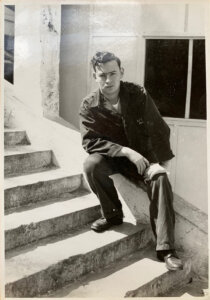
Gilbert Metz was born in 1929 in Alsace-Lorraine, France. At 13, the family was forced into hiding. When people fled Nazi Germany, they often gathered silver or jewelry. Gilbert’s mom packed her prayer books and Rashi commentary instead. She had taught her son Hebrew and Talmud, and she refused to leave those books behind.
They snuck back and forth to their summer home in northeastern France, but were eventually captured by the Nazis and sent to an internment camp. From there, a 14-year-old Metz and his family were sent to Auschwitz. His mother and 10-year-old sister were murdered in the gas chambers shortly after their arrival. His father later met the same fate.
Metz survived multiple concentration camps, including Auschwitz and Dachau, and was liberated by American troops in April 1945. He was eventually bar mitzvahed after the Holocaust at 16, a delayed rite marking a childhood interrupted and then resumed.
Relatives who had settled in Mississippi sponsored Metz to come to the United States. He finished high school in Natchez, attended Tulane University, and served in the U.S. Army during the Korean War — at one point having to reapply for citizenship after being deployed overseas.
He eventually moved to Jackson, where he raised a family and became a traveling salesman before co-founding Metz Industries, a wholesale lingerie business that sold brassieres, hosiery and feather boas to stores across the region — the work of an ordinary American life rebuilt mile by mile. He and his wife, Louise, were married for more than 50 years.
Bringing the Torah to Mississippi
In 1992, Robert Berman, a longtime congregant and former Beth Israel president, heard about an international effort to restore and redistribute scrolls damaged, desecrated or orphaned during the Holocaust. He and his sisters, Joan and Brenda, along with their families donated the funds to acquire one. Shul leaders decided there was only one person who should retrieve it.
Metz and his son, Lawson, traveled to London to bring the Torah back to Jackson. At a restoration warehouse, he was shown piles of scrolls — some burned, some torn, some riddled with bullet holes — many painstakingly pieced together from fragments. They chose a Torah rescued from Prague and took turns carrying it on their laps during the international flight.
Other Torahs rescued from the Holocaust made similar southern journeys, to congregations in Alabama, Louisiana, and Tennessee. Joseph Metz said his grandfather felt honored to be the one chosen from Beth Israel to collect the Torah, and that bringing it to Mississippi was closure for him — a full-circle moment.
A welcoming committee from the shul — including Berman, the rabbi and others — greeted the Metzs and the Torah at Jackson’s airport. “They sang prayers,” recalled Berman, now 94.
Beth Israel held a dedication ceremony at the synagogue and the Torah was installed in a glass case near the front doors, where it remained for decades. The words “Memory sustains humanity” is etched across the top of the case. Next to it hangs a photograph of Metz as an adult wearing the yellow star he was forced to wear under Nazi rule.
The scroll is displayed unfurled to a chapter in Exodus that comes after the Red Sea has closed behind the fleeing Israelites and before the Ten Commandments are given — a narrow span of time when survival has been achieved but meaning has not yet arrived. The scroll has remained that way for years, suspended between catastrophe and covenant.
“The congregation understood exactly whose story that Torah represented,” said Stuart Rockoff, a historian and longtime member of the 165-year-old Beth Israel. “This was a synagogue with one Holocaust survivor.”
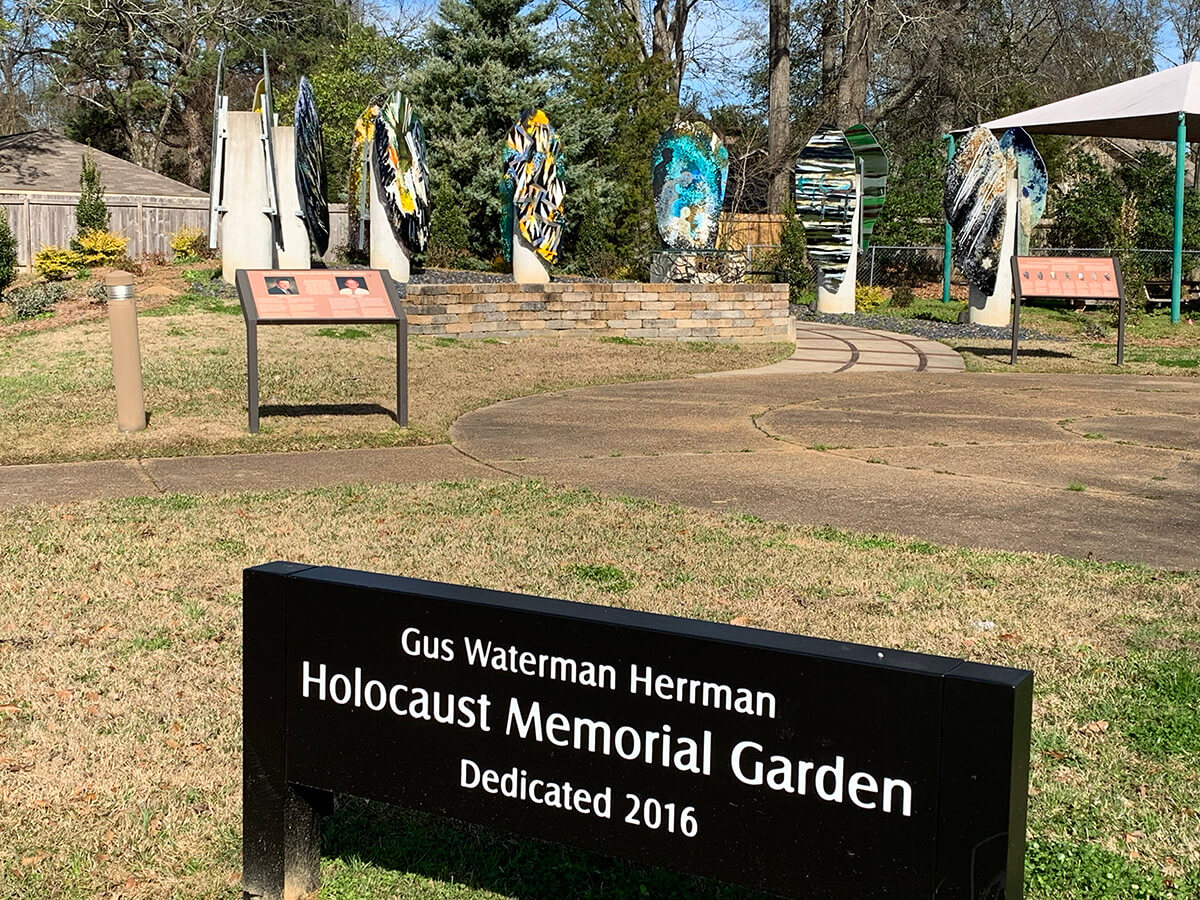
Behind its building, Beth Israel also maintains a Holocaust memorial garden, dedicated to Metz and to Gus Waterman Herrman, a U.S. Army officer from Mississippi who fought in Europe during World War II and later became a philanthropist. The garden, which features stained-glass sculptures and is used for Yom HaShoah commemorations, was not damaged in the fire.
Berman’s daughter, Deborah Silver, had her bat mitzvah and wedding at the synagogue. She’s now a jazz singer, nominated for a Grammy this year, and plans to perform charity concerts in New York City and Jackson to benefit the shul. “We will be back,” she said, “and we will recover.”
Surviving another act of antisemitism
Saturday’s fire at Beth Israel is being investigated by federal authorities as a possible hate crime. A local teen, Stephen Spencer Pittman, confessed to igniting the blaze.
The bulk of the damage was concentrated in the library and administrative offices, which are also home to the Institute of Southern Jewish Life. It’s the same part of the building targeted in a 1967 Ku Klux Klan bombing.
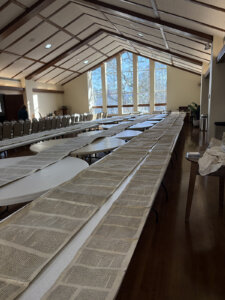
After the fire, the congregation moved the Torahs to the nearby Northminster Baptist Church, which offered its space. There, five Torah scrolls from the sanctuary were carefully unfurled and laid out across long tables, allowing soot and smoke to dissipate.
On the advice of a sofer, a ritual scribe, the Holocaust Torah was not unrolled.
“It’s extremely delicate,” said Sarah Thomas, Beth Israel’s vice president. She said it appeared to have no visible damage and is now wrapped and stored for safekeeping until the congregation is able to move back into the building.
The Torah’s survival can be explained without invoking a miracle: it was protected by its glass case and by where it stood. Still, for those who know its history, the moment carried weight.
What survives
Gilbert Metz spent decades speaking publicly about his Holocaust experience. His oral testimony is preserved in Holocaust archives, and his story has been taught in schools across Mississippi.
That inheritance was also ritual: For decades at Beth Israel, the shofar on the High Holidays was blown by Metz’s son, Lawson, and later by his grandson, Joseph.
Joseph Metz — now the president of the Jewish federation in Mobile, Alabama — has written a book about his grandfather’s survival, Behind the Silent Doors — a phrase Gilbert used to describe the gas chambers. Joseph regularly appears at Holocaust remembrance events and in classrooms. When he does, he pins his grandfather’s yellow star to his jacket before he speaks — the same object that once marked Gilbert for death now marking the story as one that refuses to disappear.
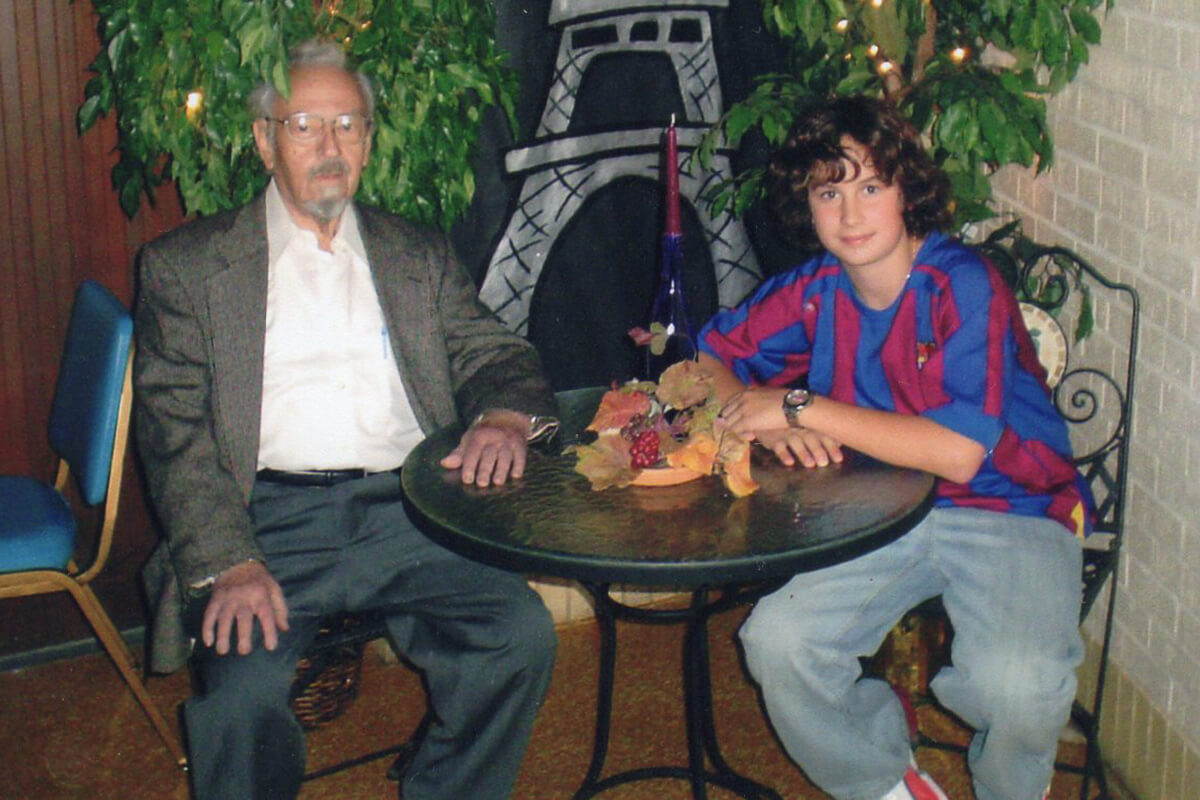
Metz, who died at 78 in 2007, bore the tattooed number the Nazis assigned him at Auschwitz for the rest of his life: 184203. Joseph and his sister, Caroline, each later chose to replicate the number on a tattoo of their own, as an inheritance. He said his grandfather survived so the story would not end with him, but be carried forward.
The Torah Metz carried across an ocean — and across a lifetime — remains.
The post The Holocaust Torah that survived a Mississippi synagogue fire was brought there by the state’s only survivor appeared first on The Forward.
Uncategorized
Lula’s reelection puts the brakes on Latin America’s pro-Israel shift
(JTA) — BUENOS AIRES – Brazilians reelected Luiz Inácio ‘Lula’ da Silva as president, defeating the center-right senator Flavio Bolsonaro, putting the breaks on a regional shift toward closer ties with Israel.
The current president, a left-wing leader of Partido dos Trabalhadores (Workers Party), obtained 51.79% of the valid votes, while Bolsonaro received 48.21%.
Bolsonaro, of the Liberal Party, had pledged a close diplomatic partnership with Israel and cultivated ties with Prime Minister Benjamin Netanyahu, while Lula has become a critic of Israel’s military campaign in Gaza. Bolsonaro said he did not accept the election results, although it is not clear how he could challenge them.
In January 2024, Lula’s government endorsed South Africa’s decision to bring a genocide case against Israel before the International Court of Justice. A month later, Lula compared Palestinian suffering in Gaza to Hitler’s murder of the Jews, triggering a diplomatic crisis between Brazil and Israel. Brazil’s Jewish umbrella organization, CONIB, publicly condemned the comparison as a distortion that offended the memory of Holocaust victims and their descendants.
The remarks were also criticized by the Holocaust Museum of Buenos Aires. Sen. Bolsonaro promised a big shift toward Israel when he spoke on June 28, 2026, in Buenos Aires in a meeting with Jewish leaders. “In 2027, Brazil will not only once again have an ambassador to Israel, but will also take the step of moving its embassy to Israel’s capital, Jerusalem,” he said.
That night he also lauded the 120,000 Jews in Brazil, saying, “They are men and women who rank among the brightest in Brazilian medicine, industry, science, culture and business.”
After Bolsonaro finished ahead of Lula in the first round on Oct. 4, Netanyahu sent a message the following day on X: “Congratulations @FlavioBolsonaro on yesterday’s vote and good luck in the final. I look forward to restoring the extraordinary friendship between Israel and Brazil. Best wishes for your great victory, my friend.”
Since 2023, several Latin American countries have strengthened ties with Israel, in some cases reversing policies adopted by their predecessors, among them:
Argentine President Javier Milei elected in 2023, who makes support for Israel central to his foreign policy and meets with families of hostages Hamas abducted in its deadly Oct. 7, 2023, raid on Israel, which launched the current war;
Bolivian President Rodrigo Paz Pereira, elected in 2025, who restored diplomatic relations with Israel severed by his predecessor;
President Nasry Asfura of Honduras, elected in 2025, who immediately formally recognized Israel’s new ambassador, a process his predecessor left in limbo;
Chilean President José Antonio Kast, elected in 2025, who is rebuilding ties with Israel diminished by his predecessor;
and Colombian President Abelardo de la Espriella, elected in May, who restored diplomatic ties with Israel severed by his predecessor, sent his foreign minister to inaugurate an embassy in Jerusalem and pulled out of the ICJ genocide case against Israel.
This article originally appeared on JTA.org.
The post Lula’s reelection puts the brakes on Latin America’s pro-Israel shift appeared first on The Forward.
Uncategorized
In anti-Muslim speech, Trump says Jews who support El-Sayed should be ‘ashamed’
(JTA) — President Donald Trump disparaged Jewish voters who support Abdul El-Sayed, Michigan’s Democratic Senate nominee, at a rally in Port Huron on Sunday.
“Any Jewish person that supports this guy should be ashamed of themselves,” Trump told some 4,000 supporters in the city north of Detroit, where he stumped for Republican nominee Mike Rogers. “You should never speak to them again.”
Hundreds of Michigan Jews have pledged to vote for El-Sayed, who polls indicate is narrowly leading Rogers in a race key to determining control of the Senate. Another subset of Jews has pressured El-Sayed, a staunch critic of Israel, to defend “Jewish safety — including for Zionist Jews” and “Jewish sovereignty in Israel.” Still others have urged their community members to reject El-Sayed outright and back Rogers.
El-Sayed opposes U.S. military aid to Israel, saying the country has committed genocide in Gaza and is “not an ally.” Those positions divided the Democratic party during his primary campaign against pro-Israel U.S. Rep. Haley Stevens, whom he narrowly bested in August. A former public health official, El-Sayed has also emphasized affordability in healthcare, housing and education. He has made a concentrated push to reach undecided Jewish voters in the homestretch before the Nov. 3 midterm election, hiring a Jewish outreach director last week.
Trump has in the past accused Jews who vote for Democrats of being “disloyal to Jewish people” and “disloyal to Israel.”
He said at the Port Huron rally that he is “polling at 99% in Israel,” which will hold national elections on Tuesday.
Trump did not cite evidence for the claim, which is unsupported by publicly available surveys. While he has historically scored high popularity among Israelis, a poll by the Jewish People Policy Institute in June found the Israeli public’s trust in him was declining. The poll said that 12% of Israelis reported having a great deal of trust in Trump, down from 21% in May, while the share of Israelis with complete distrust in him rose from 32% to 37%.
Trump joined his comments about Jews and Israel to anti-Muslim rhetoric about El-Sayed, who would become the first Muslim in the Senate if he is elected.
Trump baselessly called El-Sayed a “jihadist Muslim Brotherhood member” who was “on the side of the terrorists,” adding that he would “have to go through a metal detector before he’s allowed to go into the Senate.”
He threatened that “if Abdul and the Democrats win, they will open the floodgates and invite hordes of jihadists to our shores, creating a nightmare of violence and terror until you cannot even have a Christmas.”
Trump claimed that El-Sayed’s half sister, Eman Abdelhadi, celebrated the Hamas attacks on Israel on Oct. 7, 2023. On the first anniversary of the attack, Abdelhadi posted a video that said, “no matter how great the brutality, the oppression, the intensity of what we’re going through, the horizon of justice is just around the corner,” according to The New York Times. She did not directly mention or celebrate the violence.
Trump also said that El-Sayed’s mother had “worked for an organization that gave hundreds of thousands of dollars to Osama bin Laden and al-Qaeda.” A Times investigation reported that El-Sayed’s mother worked as a nurse in Missouri for a Muslim aid group that was later designated by the U.S. government as a supporter of terrorist groups. She was never accused of wrongdoing.
El-Sayed’s campaign has said that he “disagrees” with his sister on “a number of political positions and the rhetoric she’s chosen to use, including on foreign policy.” He was raised by his father and stepmother and has said that he had little relationship with his biological mother while growing up.
Former President Barack Obama campaigned with El-Sayed in Detroit on Saturday, saying the candidate was “fighting for change, real change, that will get money out of politics and put money in your pocket.”
This article originally appeared on JTA.org.
The post In anti-Muslim speech, Trump says Jews who support El-Sayed should be ‘ashamed’ appeared first on The Forward.
Uncategorized
CAIR Connecticut urges Greenwich schools to stop using Eisner Camp over Israel ties
(JTA) — GREAT BARRINGTON, Mass. – Greenwich Public Schools in Connecticut said it would proceed with a planned fall trip for sixth graders at a Jewish camp in Massachusetts as planned this week, despite pressure from a Muslim advocacy organization over the camp’s Israeli symbols and Israel-related programming.
CAIR Connecticut, the state chapter of the Council on American-Islamic Relations, objected to the trip, saying that programming at Eisner Camp in Great Barrington “incorporates connections to Israel,” the chapter’s board chair Farhan Memon wrote in a letter to Greenwich Superintendent of Schools Toni Jones dated Oct. 13.
The four-day Greenwich Schools field trip was organized by the Outdoor Classroom project, which works with seven locations in New England, including Eisner. Four of the camps are affiliated with Christian organizations, and two have no religious affiliation. With its clients, Outdoor Classroom coordinates nature-related learning programs for kids.
Memon wrote that some parents in Greenwich had viewed a video and photos of previous school events at Eisner and “identified Israeli flags and yellow ribbons prominently displayed in spaces used during school visits.”
“At the very least, spaces used by Greenwich students on any school trip should be free of national and political displays,” Memon wrote.
Eisner director Paul Isserles said in a statement shared with the Jewish Telegraphic Agency: “We welcome Outdoor Classroom to use our camp facilities. Throughout the year many outside organizations rent our facilities for various programs. URJ Eisner Camp is proud to have an Israeli flag displayed for our camp programs.”
When it comes to visiting groups, “Frankly, we are not regularly asked to do anything to remove those symbols or to cover them,” said Union for Reform Judaism president Rabbi Rick Jacobs in a telephone interview with JTA. “Because to be honest, we wouldn’t.”
Answering Memon’s letter on Oct. 14, Jones wrote in an email that her school district “acknowledges that individuals and families have vastly different views regarding global events” and that it intends to “provide an inclusive and safe educational environment for all Greenwich Public School students, including when they are on field trips under our care.”
She added that she had “made it clear to a few families that we will not take a political or religious stand.” JTA has seen both the CAIR letter and the email response.
CAIR Connecticut did not respond to JTA’s query.
CAIR’s national website says the organization promotes interfaith dialogue and “condemns all acts of violence against civilians by any individual, group or state.”
The Reform movement founded the 600-acre camp in 1958 as the Joseph Eisner Camp Institute for Living Judaism. It is located in the Berkshire Hills south of the town center of Great Barrington.
It is one of more than a dozen of the movement’s overnight camps in the North America. Many of those camps are rented throughout the year by groups that have nothing to do with Judaism, URJ’s Rabbi Jacobs said. “If a group rents the camp, they come up with their own agenda,” he said.
He added, “There are flags and other symbols of Judaism and of Israel in our camps, and we’re proud of that.”
Some parents had raised concerns about the venue as early as March. CAIR urged the district to stop using the camp in the Oct. 14 letter.
Removing decorations from the camp would not be enough, he said, noting that parents were upset after seeing promotional material about Eisner bringing Jewish campers to visit Israeli army bases under the Gadna, an Israeli military youth program.
A July 2019 post on Eisner Camp’s website says a group of participants in its Israel trip chose Gadna, stayed at an army base, practiced drills and learned to shoot at a target.
“URJ Eisner Camp participants who go to Israel have not participated in Gadna since 2023,” camp director Isserles said in a statement provided to JTA. “Our Israel programming at camp and in Israel is focused on Jewish identity, community, education, and connection to Israel.”
What CAIR is saying is that “A Jewish institution can be an unfit place for public-school children because it is visibly Jewish and identifies openly with Israel,” wrote blogger and Eisner alumnus Rabbi Jeff Salkin in his “Unfiltered” Substack on Oct. 19.
“A Jewish institution should not have to hide its Jewish identity to count as a fit place for other people’s children. You would not ask a church camp to remove a cross, or a Muslim camp to take down a crescent. A standard that demands such hiding makes Jewish identity itself the problem,” Salkin wrote.
This article originally appeared on JTA.org.
The post CAIR Connecticut urges Greenwich schools to stop using Eisner Camp over Israel ties appeared first on The Forward.
