


Uncategorized
Trump and Biden officials clash over campus antisemitism actions as federal investigation kicks off
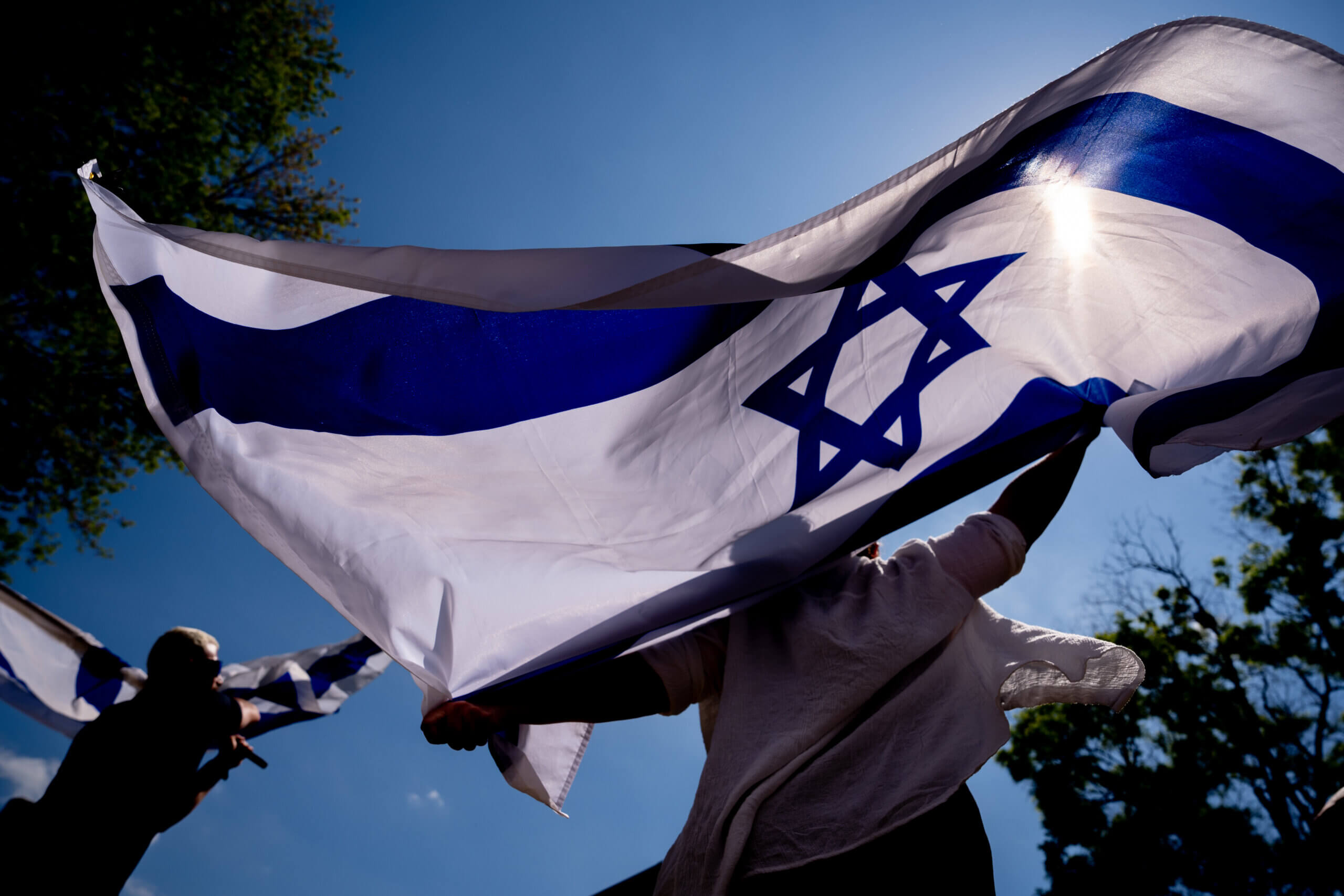
The first hearing held as part of a federal investigation into how the Trump administration has sought to counter campus antisemitism turned into a showdown between Democratic and Republican officials over how civil rights laws are being enforced.
Craig Trainor, who ran civil rights investigations at the Education Department for most of last year, described his predecessors in the Biden administration as unable to stop what he called “coordinated harassment and violence against Jewish students” and said its approach had been “equivocal, craven and pathetic.”
Matt Nosanchuk, who worked in same department under former President Joe Biden, defended his team’s work and said the White House under Trump is no longer concerned with helping Jewish students: “In the name of combating antisemitism, the current administration has built a Trojan horse to unleash a frontal, ideological attack on higher education.”
And Mondaire Jones, a former Democratic congressman from New York and current member of the U.S. Commission on Civil Rights, which is conducting the federal probe, accused the Trump officials who testified of violating federal law by refusing to turn over documents the commission requested as part of its inquiry. “You have a statutory obligation to comply,” Jones said.
The all-day hearing, which also included dueling analyses of civil rights law from academics and testimony from Jewish college students, is part of the first independent federal investigation into how the government has responded to allegations of antisemitism on college campuses. The bipartisan commission, whose members are appointed by Congress and the president, currently has a narrow Democratic majority and chair.
“When we started this project I thought there was no chance this could be anything other than bipartisan and free from sniping and partisanship about who did a better job,” J. Christian Adams, a Republican member of the commission, said at one point. “Alas, like everything else around here, that dream has died.”
The civil rights commission said it expects to release its findings and potential recommendations in the fall, although by that point it may be deadlocked between Democratic and Republican appointees and unable to reach agreement. Trump has unsuccessfully sought to remove its Democratic chair, Rochelle Garza.
Dueling views of federal actions
Several of the witnesses at the hearing focused on the Trump administration’s diminishment of the federal government’s capacity to investigate claims of antisemitism through its mass layoffs, which took a heavy toll at the departments of education and justice. The Education Department has closed 7 of its 12 regional offices and laid off around half of the employees tasked with enforcing civil rights laws before bringing many of them back to work in January.
Alyssa Lareau, a 16-year veteran of the civil rights division at the Justice Department who left last March, told the commission that the Trump administration appeared to violate federal law by freezing billions of dollars in grants to universities accused of tolerating antisemitism without following the rigorous process required and that courts had ruled several of the freezes to be illegal.
“Title XI has a detailed process for terminating federal funding,” said Lareau, referring to the section of civil rights law that applies to most antisemitism claims. “DOJ appears to not have adhered to the procedures mandated by Title XI or its own Title XI regulations.”
But Trainor argued that the Biden administration had let bureaucracy serve as an excuse for not taking sufficient action against the “mobs” and “hateful hordes” he described as brutalizing Jewish students on campus following the Oct. 7 Hamas attack in Israel and subsequent Gaza war.
“The president, when he was campaigning to Make America Great Again in 2024, promised to put an end to this,” Trainor said. “And he did.”
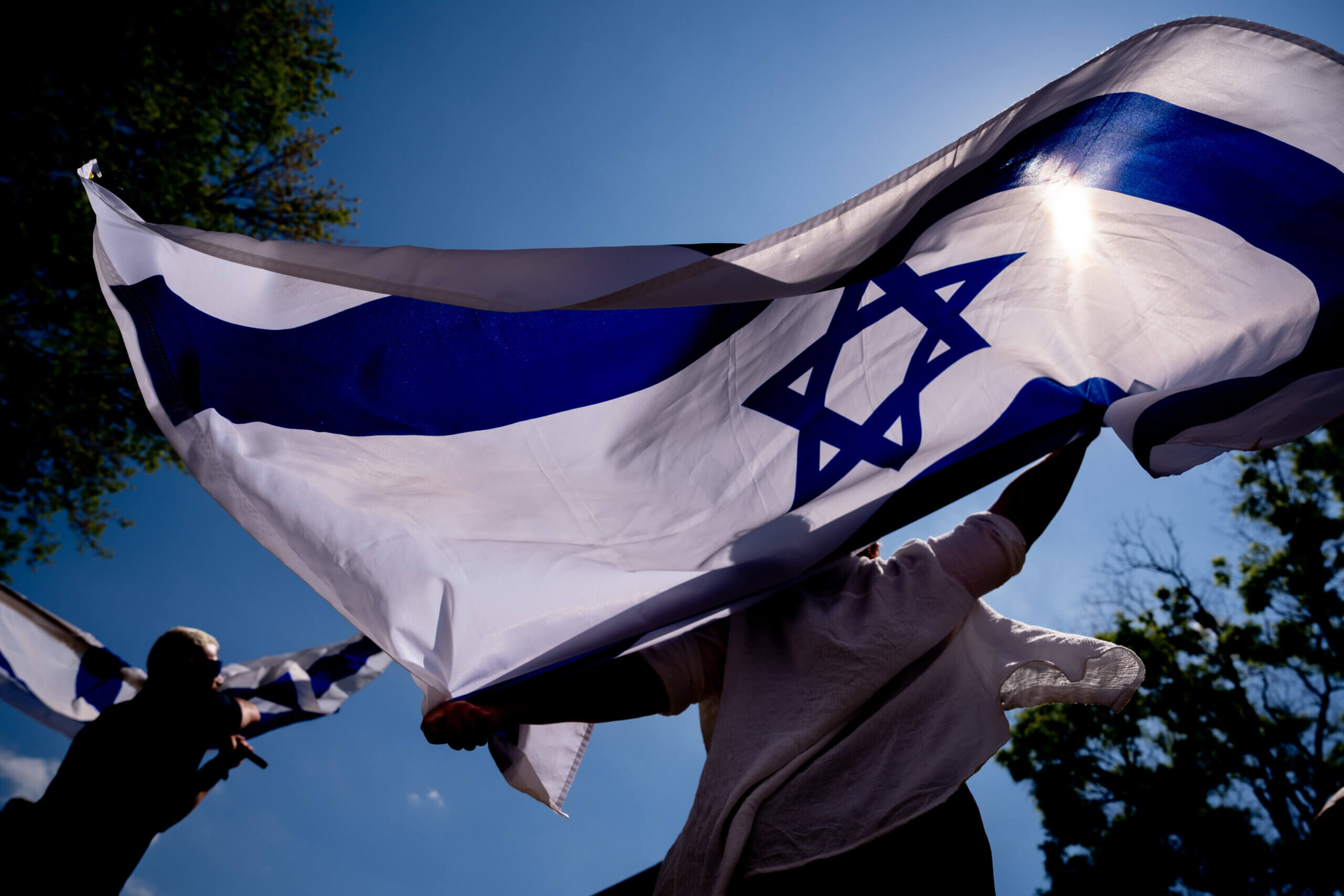
The Trump administration has made countering what it has described as antisemitism on the political left, and especially on college campuses, a top priority. That has included creating a special task force of its own to address it and reaching unprecedented settlements with elite schools that include Columbia, Brown, Cornell and the University of California, Los Angeles.
Some Jewish students have credited the Trump administration for lighting a fire under university administrations they felt had been reluctant to crack down on campus activism they felt created an antisemitic environment on their campuses. Others have described feeling like political pawns.
Sarah Silverman, a Jewish sophomore at Harvard, told the commission that the Justice Department had used the story of a mezuzah being removed from her doorframe as evidence in its attempt to strip research funding from the university and make its students ineligible to receive federal financial aid.
“How does destroying and discrediting educational institutions fight antisemitism?” she asked.
Most American Jews have also expressed skepticism of the White House’s approach. None of its main tactics — including attempting to deport international students who spoke out against Israel during the Gaza war — have received majority approval in surveys of the Jewish community, even as Jews remain alarmed by the level of domestic antisemitism.
Early in the panel, several legal scholars and activists voiced opposite views on whether strident anti-Zionist activism could create the kind of hostile environment for Jewish students that schools are required by law to prevent.
Benjamin Eidelson, an expert in anti-discrimination at Harvard Law School, argued that anti-Zionism could not be treated as a de facto form of antisemitism because “no views about Zionism or Israel are inherent in anyone’s ancestry.”
Eidelson said he was sympathetic to Jewish students who felt alienated by campus protests but “not everything that’s bad is a violation of Title XI.”
Mark Goldfeder, director of the pro-Israel National Jewish Advocacy Center, took the opposite tack. He brought a rock from Mount Zion in Jerusalem to demonstrate that Zionism was linked to the ancestral Jewish connection to Israel.
“Excluding someone based on where their ancestors are from — or based on an identity rooted in where they’re from — is not only wrong, it’s national origin discrimination and civil rights law forbids it,” he said.
The post Trump and Biden officials clash over campus antisemitism actions as federal investigation kicks off appeared first on The Forward.
Uncategorized
VIDEO: A Hasid gives us a tour of Morocco in Yiddish
דער ירושלימער יוטוב־שטערן וועלוול קירשנבוים האָט לעצטנס אַרויסגעשטעלט אַ ווידעאָ אויף ייִדיש פֿון אַ פּרעכטיקן וויזיט, וואָס ער האָט געמאַכט אין מאַראָקאָ. עס באַגלייט אים זײַן חבֿר אַבֿרהם פּרץ.
אינעם ווידעאָ זעט מען ווי קירשנבוים דאַוונט שחרית מיט די אָרטיקע ייִדן און באַזוכט אַ גוט אָפּגעהיטענעם בית־עולם, וווּ עס ליגן באַערדיקט גרויסע צדיקים ווי למשל הרבֿ חיים בן עתר (1696–1743), באַקאַנט ווי דער „אור החיים“. „מענטשן מיינען, אַז נאָר אין אייראָפּע זענען דאָ קבֿרים פֿון צדיקים!“ זאָגט קירשנבוים.
מיר זעען אַ גרויסע, שיינע שיל מיט אַ פֿײַנער אַרכיטעקטור אין קאַזאַבלאַנקאַ; דעם גרויסן אַראַבישן שוק, וווּ קירשנבוים קויפֿט זיך אײַן מלבושים פּונקט ווי די מאַראָקאַנער גייען אָנגעטאָן. ער באַוווּנדערט אויך די שיינע טיי־גלעזער און טשײַניקן, וואָס מע פֿאַרקויפֿט דאָרט, און באַקענט זיך מיט אַ ייִדישן סוחר וואָס האַנדלט מיט זילבער און גאָלד, פּונקט אַזוי ווי זײַן טאַטע און זיידע האָבן געטאָן פֿאַר דור־דורות.
The post VIDEO: A Hasid gives us a tour of Morocco in Yiddish appeared first on The Forward.
Uncategorized
Conservative and Christian movies are coming for Hollywood
A star-studded new movie set in a Soviet prison is coming out in November. James Franco and Rob Lowe anchor the cast of Confession, playing a brutal prison guard and an imprisoned dissident professor, and a disheveled Nick Nolte appears as a fellow prisoner.
These actors were once huge gets, and their names could convey legitimacy to a project. Nolte and Franco both have received Academy Award nominations. Lowe was a member of the Brat Pack, and was a regular on The West Wing.
Confession, written by Ben Shapiro and produced by the rightwing tabloid-esque news site The Daily Wire, is not the expected fare for actors with that kind of name recognition; Shapiro’s screenwriting aspirations have been the target of ridicule for years.
Nevertheless, this isn’t the only Daily Wire production getting big names; Danny Trejo signed onto a pro-ICE movie about Minneapolis in the aftermath of the Renee Good shooting, and Jonathan Majors led Run, Fight, Hide: Infidels earlier this year.
Each one of these actors has been, in some way, canceled or in career doldrums so may have been more open to working with The Daily Wire. And some have claimed that they did not know who Shapiro was, or what his politics were; Trejo’s son, Gilbert, said his 82-year-old father did not endorse ICE and was misled about the movie before he signed his contract.
Movie studios have struggled through the pandemic and the streaming era, both of which have tanked box office receipts, leaving the field open for movies from offbeat production studios. In addition to The Daily Wire, there has been a whole ream of Christian movies attempting to shift the stereotype of bible movies — that they’re preachy, low-budget straight-to-TV affairs with cardboard acting — to something more prestigious, or at least profitable.
The Christian company Angel Studios has been placing screenings of the half philo-semitic, half-antisemitic Jesus TV series The Chosen in movie theaters across the country, produced the right-wing hit The Sound of Freedom and is pumping out faith-based movies like the animated King of Kings Christmas story and David, a kiddie movie about the biblical king. Recently, Pinnacle Peak Pictures, another faith-based production company, premiered Daniel and the Fiery Furnace, another bible movie that was notable enough to merit a review in The New York Times. (Though admittedly it wasn’t a particularly positive one.)
For decades, Hollywood, and the media industry at large, has been associated with liberalism, progressive politics and diversity. (This is part of why conservative conspiracy theorists often insist that Jews control the media.) Even when conservatives are in power, satirical movies have poked fun at the ruling class — Team America: World Police spoofed George W. Bush’s foreign policy, while M*A*S*H critiqued Richard Nixon. During the current Trump administration, we’ve seen One Battle After Another lambasting immigration policies and rising white nationalism, Eddington on misinformation and populism, and The Apprentice depicting Trump directly.
But a rising number of higher-budget, bigger releases from the right wing, whether The Daily Wire’s conservative political parables or the Christian fables, are bringing a new kind of messaging — about the importance of God and country, about gender roles, about about the centrality of Jesus to the U.S. — to the American movie-going public.
This is no accident. A group of powerful conservative Christians, many of whom worked on Project 2025, are proponents of the Seven Mountains Mandate, a blueprint for Christian nationalism that instructs Christians to gain influence and control over the “seven mountains” of society — which include media, entertainment and the arts. The Mandate is part of the New Apostolic Reformation, a decentralized evangelical movement embraced by millions of Americans.
Jeremy Boreing, the director of many Daily Wire movies — though he has since left the company — said on a podcast hosted by businessman Patrick Bet-David that “It had always been part of our strategy to move into making culture, not just criticizing culture” as a way of proving that “there is a future where conservatives aren’t losing. There’s a future where we have political power and cultural power.”
Cultural power, of course, requires more than just a lot of movies; they have to be well-done, or at least appear to be. Previous Daily Wire productions, as well as other right-wing, MAGA movie ventures, have been hacky. Lady Ballers, about an unsuccessful men’s basketball team pretending to be women so they can dominate the league, was an unsubtle, unfunny and ultimately unwatchable spoof of transgender athletes. And even plenty of higher-budget attempts, like Daniel and the Fiery Furnace, can still fall victim to wooden acting and writing.
But now, with the financial success of movies like The Sound of Freedom and biblical parables like The Chosen, bigger stars are being drawn to projects like the Daily Wire’s lineup of pro-ICE, anti-immigration and anti-LGBTQ movies. With those bigger stars may come new audiences who might not have watched a Christian movie or Daily Wire project otherwise. And where there is money and viewers, mainstream Hollywood will go, too, no matter how progressive people expect the industry to be. We’ve already gotten a biblical epic from Amazon Prime, with The House of David, and there are likely to be many more to come.
After all, it wasn’t so long ago, after all, that Cecil DeMille’s The Ten Commandments was the biggest movie in town.
The post Conservative and Christian movies are coming for Hollywood appeared first on The Forward.
Uncategorized
‘Heil’ Mary? New Atlanta Falcons logo inspires Nazi comparisons
If there was something off about the logo the Atlanta Falcons unveiled on social media Wednesday, whoever runs their accounts did, uh, not see it.
Behind the black falcon graphic that began appearing on the football team’s helmets in the 1960s was a new background — a flag of red, tan, black and white vertical stripes. To thousands of people who responded to the logo, it looked distinctly German — in a 1930s kind of way.
“The Atlanta Falcons are preparing to invade Poland,” one fan wrote.
A day after its posting, the new profile picture had unleashed a deluge of Nazi memes in the 4,000-plus replies on X. One picture swapped in the logo for Nazi flags in the background of a historical photo of a Hitler rally. Another edited the Falcon claw to look like a Nazi salute.
Others depicted Hitler in a Falcons cap, references to Inglourious Basterds and the Battle of the Bulge and a World War II joke invoking a blown lead in Super Bowl LI.
“Falcons were up 28-3 at Dunkirk,” that tweet read.
The Falcons’ snafu enters a small but growing catalogue of Reich-coded brand mixups. Who can forget the German national soccer team’s ‘44’ soccer jerseys? There was also the swastika-emblazoned Hallmark gift wrap; the accidental Hitler mugs; and (for my money) the worst of the bunch, Zara’s concentration camp uniform shirt.
All of those have been addressed; so far, the Falcons’ has not. We’ve reached out to them for comment.
The post ‘Heil’ Mary? New Atlanta Falcons logo inspires Nazi comparisons appeared first on The Forward.
