


Uncategorized
When does criticizing Israel become antisemitism? Ask Mark Ruffalo
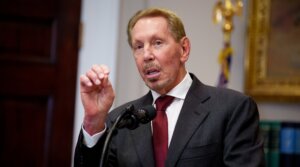
American actor Mark Ruffalo on Saturday denied that he is antisemitic, one day after Paramount accused the actor of invoking antisemitic tropes in his campaign against the studio’s $111 billion bid to acquire Warner Bros. Discovery.
The clash lands as Paramount is trying to clear the last major obstacle to closing the Warner Bros. Discovery deal: a lawsuit filed by California and 11 other state attorneys general seeking to block it on antitrust grounds.
“The accusation that I am antisemitic is appalling and fundamentally dishonest,” Ruffalo said on Saturday. “Criticizing the actions of the Israeli prime minister, a military technology contract, or the executives who supply it is not the same as criticizing Jewish people.”
Now, what started as a celebrity spat has turned into a stand-in for a much bigger fight: When does criticizing Israel’s government turn into hating Jews?
Ruffalo and his defenders say targeting a defense contractor’s technology and a media family’s wealth is ordinary corporate criticism. Paramount and its allies say invoking Israel in a business dispute imports old tropes about Jewish power and money into a fight that has nothing to do with Jews. The same argument has played out over campus protests, in Congress and across the globe since the Oct. 7, 2023, Hamas attacks on Israel.
The dispute began Friday, when Ruffalo posted a 2024 clip of former Oracle CEO Safra Catz reportedly discussing “profoundly scary technologies” the company built for the Israeli military after Oct. 7. Along with the clip, Ruffalo wrote that the war in Gaza was “a genocide, which was built on an apartheid system of oppression powered by Oracle.”
Larry Ellison, who co-founded Oracle and has an estimated net worth of around $200 billion, has personally backstopped $40.4 billion in equity financing for his son David Ellison’s Paramount to acquire Warner Bros. Discovery.
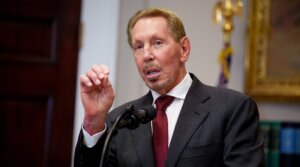
Ruffalo called the elder Ellison a “classic Oligarch” and warned that the “most destructive and inhuman forces in the world” would soon sit inside an important media company if the merger succeeds. The deal would give the family control of CNN. It already owns CBS News.
Paramount fired back. “We are, as always, troubled when antisemitic tropes are invoked in purported service of a business dispute,” a company spokesperson told The Wrap, a Hollywood trade publication. “Words like ‘genocide’ and ‘apartheid,’ applied to a corporate transaction, aren’t just wrong — they’re a bridge too far, and they cheapen the very real suffering those words are meant to describe.” The company added that the episode “exposes the true motivation of some who have advocated opposition to this transaction.”
It’s not the first time Paramount has made that argument. Axios reported in June that company executives believed antisemitism was fueling opposition to the merger more broadly, pointing to the Ellisons’ Jewish identity and Larry Ellison’s friendship with Israeli Prime Minister Benjamin Netanyahu.
Ruffalo pushed back on social media Saturday refuting the accusation that he is antisemitic and adding: “Everything I know about acting, activism, and humanism has been profoundly shaped by the Jewish friends, colleagues, and loved ones who have been integral and family throughout every point of my life.”
An advocate and activist
Ruffalo, 58, is best known for playing the Hulk in the Marvel cinematic universe and has been nominated for four Academy Awards, for his performances in The Kids Are All Right, Foxcatcher, Spotlight and Poor Things.
He has also built a reputation as one of Hollywood’s most consistent activists, campaigning for environmental causes and protesting against the Trump administration. This fight is the latest flashpoint in the actor’s history of pro-Palestinian activism.
Since the Hamas attack on Israel, he has frequently called out Israel’s military action in Gaza, notably wearing an Artists4Ceasefire pin to the 2024 Oscars. In September 2024, he was among more than 700 SAG-AFTRA members who signed a letter demanding the actors’ union publicly call for a Gaza ceasefire and protect pro-Palestinian members from what they described as industry blacklisting.
In September 2025, he said he supported efforts to “boycott, divest, sanction, and prosecute” Israel. And just 10 days before the Oracle post, he joined Javier Bardem, Susan Sarandon and other artists in a statement arguing that despite the U.S.-brokered truce in place since October 2025, “there is no ceasefire in Gaza.”
That history is why three prominent voices in the fight against antisemitism sided with Paramount over the weekend.
“Words matter, and so does the willingness to draw a line when legitimate debate gives way to antisemitic tropes,” wrote Jim Berk, CEO of the Simon Wiesenthal Center, praising the studio for “refusing to allow prejudice to masquerade as political or corporate criticism.”
He went on: “Invoking Israel in an issue where it is completely irrelevant is a textbook case of obsession and demonization.”
Creative Community for Peace, a Hollywood group that pushes back on boycotts of Israel, went further, with executive director Ari Ingel accusing Ruffalo of fusing “hostility toward Israel and Zionism with Jewish-associated wealth, media ownership, oligarchic power and ominous warnings about concentrated control into a single narrative.”
Jonathan Greenblatt, the CEO of the Anti-Defamation League, called Ruffalo’s posts “cynical and sickening.”
Antisemitism vs. anti-Zionism
The fight lands amid the worst stretch of global antisemitism in decades. Researchers at Tel Aviv University found that 20 Jews were murdered in antisemitic attacks worldwide last year, the highest toll in more than 30 years — a count that includes a gunmen who killed more than a dozen people at a Hanukkah celebration on Sydney’s Bondi Beach in December.
As incidents rise, and amidst Israel’s ongoing campaign in Gaza and its war with Iran, the country’s standing in the world has cratered.
A Pew Research Center survey of 36 countries this spring found a median of 67% hold unfavorable views of Israel, with opinion growing more negative since 2025 in most countries where Pew has trend data. Even in the U.S., Israel’s staunchest ally, Americans no longer clearly side with Israelis over Palestinians for the first time since Gallup began asking in 2001 — a reversal driven largely by independents and voters under 35.
Where the merger stands
Representatives for Paramount and California are expected to meet Monday for preliminary talks, at Paramount’s request, though people briefed on the discussions cautioned there’s no guarantee they will lead anywhere. The Writers Guild has also sued to block the deal.
The stakes of delay are real: if the deal doesn’t close by October, Paramount would owe Warner Bros. Discovery shareholders hundreds of millions of dollars in fees. If there is no resolution, a trial is set for March.
The post When does criticizing Israel become antisemitism? Ask Mark Ruffalo appeared first on The Forward.
Uncategorized
UK adopts sweeping measures against antisemitism in schools
(JTA) — The U.K. has adopted sweeping measures to combat antisemitism in English schools, prompting pushback from the country’s largest teachers’ union.
The move came after a new government-commissioned review found that three in five Jewish students reported experiencing antisemitism in English schools. The most common incidents were jokes, stereotypes and comments about Jewish people. About half of respondents who witnessed or experienced antisemitism said the incidents were not reported, most often because they did not think they would be taken seriously.
The government on Wednesday accepted 27 recommendations from the report, including dedicated antisemitism training for leaders and staff, improved recording of antisemitic incidents and moves to build a better understanding of Jewish life, identity and contemporary antisemitism.
The government commissioned the report following a spate of high-profile attacks on Jews in Britain, including an attack on a synagogue in Manchester last year that left two men dead.
The report’s author, Sir David Bell, the vice chancellor of the University of Sunderland and former chief inspector of schools in England, recommended addressing antisemitism distinctly from other forms of racism. He argued that antisemitism was a “uniquely complex” problem because of intertwined racial and religious dimensions, since Jewish identity can encompass both an ethnicity and a religion, along with expressions of prejudice that hold all Jews responsible for the actions of Israel.
The government will also encourage English schools to adopt the International Holocaust Remembrance Alliance (IHRA) working definition of antisemitism. The definition is supported by many mainstream Jewish organizations and has been adopted by 47 countries, including the U.K., but critics say that it conflates some forms of antisemitism with criticism of Israel.
British Education Secretary Lucy Powell called Bell’s review a “generational moment” and said that “implementation is now my priority.”
However, the National Education Union, the largest union representing teachers, lecturers, teaching assistants and support staff in the United Kingdom and Europe, raised concerns on Wednesday about recommending the IHRA definition for schools. NEU general secretary Daniel Kebede said in a statement that the definition “risks deepening the problem rather than tackling it, and actively undermining efforts to confront antisemitism.”
“The IHRA’s contested framing risks blurring the line between antisemitism and legitimate criticism of the Israeli government and the genocide in Gaza, leaving teachers with uncertainty when they need clarity,” said Kebede. He cited a risk that “children who cannot critically explore issues through classroom discussion will instead seek their answers in online and unsafe groups.”
Kebede also encouraged Britain’s Department for Education to strengthen guidance on all forms of racism, not only antisemitism, saying that 65% of teachers report they have not received any antiracism training in the past year.
The Board of Deputies of British Jews, an umbrella organization for British Jewish communities, celebrated the antisemitism report and the government’s adoption of its proposed measures. The group specifically praised the report’s “clear recommendations that schools and local authorities follow government guidelines by adopting the IHRA Working Definition of Antisemitism as a tool to deepen understanding of contemporary antisemitism.”
“We remain concerned about undue external influence on schools driven by narrow political agendas, and tendentious materials seeping into schools and increasing disharmony, and we will continue to press for vigilance against this,” said the Board of Deputies.
The post UK adopts sweeping measures against antisemitism in schools appeared first on The Forward.
Uncategorized
Orthodox Jewish man stabbed in midtown Manhattan
(New York Jewish Week) — An Orthodox Jewish man is in stable condition after being stabbed on Wednesday evening in the Diamond District of midtown Manhattan. Police are investigating the attack as a possible hate crime.
Police told the Jewish Telegraphic Agency that the NYPD’s Hate Crimes Task Force is investigating the incident as a possible antisemitic attack, and Manhattan Shomrim — the Jewish community watch group — has asked people to share footage as police search for the suspect. No arrests have been made.
The victim was identified by police as a 26-year-old man, and Orthodox Jewish outlet COLLive identified him as a resident of Crown Heights, the neighborhood that is home to the Chabad-Lubavitch Hasidic movement’s headquarters.
He was taken to Bellevue Hospital in stable condition. Police said they were called at about 5:50 p.m. on Wednesday after the man was stabbed in the back with “an unknown sharp object” on 47th Street near Fifth Avenue. ABC7 reported that the victim told investigators he believed he was stabbed with a needle or syringe.
According to the Chabad website, which published an interview with the victim, he is a recently ordained Hasidic rabbi named Joseph, who commutes to Midtown each day to wrap tefillin with Jewish merchants. The attacker, Joseph told the website, was a woman who seemed to be following him prior to the stabbing.
The attack comes as Jewish New Yorkers have been targeted in more than half of the hate crimes committed in New York City this year, despite making up about 12% of the city’s population.
In July, an assailant stabbed two men on the Upper West Side, including one who was leaving a synagogue, while yelling “Allahu akbar,” and was charged with committing hate crimes.
Louis Keene contributed reporting.
The post Orthodox Jewish man stabbed in midtown Manhattan appeared first on The Forward.
Uncategorized
VIDEO: A Hasid gives us a tour of Morocco in Yiddish
דער ירושלימער יוטוב־שטערן וועלוול קירשנבוים האָט לעצטנס אַרויסגעשטעלט אַ ווידעאָ אויף ייִדיש פֿון אַ פּרעכטיקן וויזיט, וואָס ער האָט געמאַכט אין מאַראָקאָ. עס באַגלייט אים זײַן חבֿר אַבֿרהם פּרץ.
אינעם ווידעאָ זעט מען ווי קירשנבוים דאַוונט שחרית מיט די אָרטיקע ייִדן און באַזוכט אַ גוט אָפּגעהיטענעם בית־עולם, וווּ עס ליגן באַערדיקט גרויסע צדיקים ווי למשל הרבֿ חיים בן עתר (1696–1743), באַקאַנט ווי דער „אור החיים“. „מענטשן מיינען, אַז נאָר אין אייראָפּע זענען דאָ קבֿרים פֿון צדיקים!“ זאָגט קירשנבוים.
מיר זעען אַ גרויסע, שיינע שיל מיט אַ פֿײַנער אַרכיטעקטור אין קאַזאַבלאַנקאַ; דעם גרויסן אַראַבישן שוק, וווּ קירשנבוים קויפֿט זיך אײַן מלבושים פּונקט ווי די מאַראָקאַנער גייען אָנגעטאָן. ער באַוווּנדערט אויך די שיינע טיי־גלעזער און טשײַניקן, וואָס מע פֿאַרקויפֿט דאָרט, און באַקענט זיך מיט אַ ייִדישן סוחר וואָס האַנדלט מיט זילבער און גאָלד, פּונקט אַזוי ווי זײַן טאַטע און זיידע האָבן געטאָן פֿאַר דור־דורות.
The post VIDEO: A Hasid gives us a tour of Morocco in Yiddish appeared first on The Forward.
